Overview

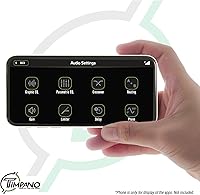
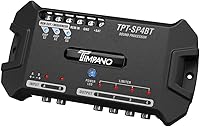
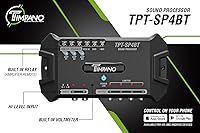
The Timpano TPT-SP4BT Bluetooth DSP Car Audio Processor is a compact, app-controlled signal processor that brings genuine tuning flexibility to car audio builds without demanding a premium budget. Timpano is a smaller brand with roots in the car audio enthusiast market, known for offering capable hardware at accessible prices — and this unit fits that profile well. You control everything from your phone over Bluetooth, which means no wired remote cluttering your dash or glove box. Beyond basic signal shaping, it includes a built-in battery voltmeter and a sequencer function that set it apart from simpler processors sitting in the same price range.
Features & Benefits

What makes this DSP processor worth a close look is how much tuning capability it packs into a box roughly the size of a deck of cards. Each of the four RCA outputs can be shaped independently — you get a 15-band graphic EQ with ±12dB of range, crossover filters, time alignment, and phase inversion, all adjusted in real time through the app. A built-in frequency generator and pink noise output mean you can calibrate your system without hunting down separate test tools. The Bluetooth connection reaches roughly 15 meters, which is genuinely practical when you want to step outside the car and hear adjustments as they happen.

Best For

This Bluetooth signal processor makes the most sense for DIY car audio builders who want real DSP-level control without spending what high-end branded units command. It is a natural fit for anyone working with a factory head unit, since the high-level inputs let you tap speaker wires directly — a situation where signal cleanup makes an audible difference. The sequencer is particularly useful if your build involves multiple amplifiers or a powered subwoofer, letting you program which components power on first to avoid startup thumps and pops. If you prefer tuning from your phone rather than wrestling with laptop software, the Timpano unit suits that approach well.

User Feedback

Buyers generally praise quick initial setup and find the app intuitive once they get comfortable with DSP concepts. The sequencer gets called out specifically by installers as a standout inclusion that is not common at this price point. That said, Bluetooth connectivity is not without criticism — some users report occasional drop-outs or app instability, which is worth weighing honestly. A handful of buyers have raised questions about long-term durability and whether support is responsive when problems arise; being a smaller brand, that uncertainty is real. Build quality reactions are mostly positive, though the lightweight form factor surprises some buyers who expect something more substantial in hand.

Pros

  • Independent EQ, crossover, and time alignment on all four outputs gives serious tuning depth for the price.
  • High-level inputs make it compatible with factory radios right out of the box, no aftermarket head unit required.
  • The sequencer feature handles power-on and power-off sequencing for up to three accessories, a rare inclusion at this price.
  • Bluetooth tuning from up to 15 meters away means you can actually hear changes while standing outside the vehicle.
  • Built-in pink noise and frequency generator remove the need for separate calibration tools during setup.
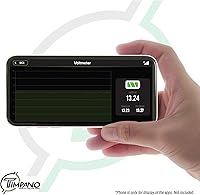
  • The battery voltmeter logs current, minimum, and maximum voltage, adding useful system monitoring beyond audio alone.
  • Compact dimensions make installation straightforward even in tight under-dash or trunk locations.
  • App setup is generally considered intuitive by buyers who are new to DSP tuning.
  • FCC certified and works with both Android and iOS devices without platform limitations.

Cons

  • Bluetooth app stability has drawn complaints, with some users reporting drop-outs or connection issues mid-session.
  • Timpano offers limited brand support infrastructure compared to established DSP manufacturers, which matters if issues arise post-purchase.
  • The lightweight build feels less substantial than similarly priced competitors, raising questions for some buyers about longevity.
  • No PC or wired control option exists — if the app misbehaves, you have no fallback tuning method.
  • Documentation and setup guides are basic, which can frustrate buyers new to digital signal processing concepts.
  • Long-term reliability data is limited given the brand's smaller market presence and relatively recent product history.
  • The sequencer output current limit of 180mA per channel may not suit all high-draw accessory configurations.

Ratings

The Timpano TPT-SP4BT Bluetooth DSP Car Audio Processor has been evaluated by our AI system after analyzing verified buyer reviews from global markets, with spam, bot-generated, and incentivized feedback actively filtered out. Scores reflect a balanced synthesis of what real users praised and where they ran into genuine frustrations — nothing is glossed over. Both the standout strengths and the recurring pain points of this Bluetooth signal processor are transparently represented in the categories below.
Value for Money
88%
For buyers who have priced out dedicated DSP units from established brands, the feature-to-cost ratio here is hard to argue with. Independent EQ, crossover, time alignment, and a sequencer at this price tier is a combination that typically costs significantly more elsewhere, and most users come away feeling they got more than they paid for.
A handful of buyers feel the value calculation shifts if the app proves unreliable on their specific device, since the hardware is only as useful as the software controlling it. Those who factor in potential support costs or replacement risk with a smaller brand may see the value proposition as slightly less compelling.
App Usability
74%
26%
Most users find the companion app intuitive enough to get up and running within a single install session, which matters a lot for DIYers who are learning DSP concepts on the fly. The real-time adjustment feedback over Bluetooth — being able to hear a crossover change instantly — is consistently called out as a practical strength.
Bluetooth drop-outs and occasional app instability are the most frequently cited complaints across user reviews, particularly on certain Android versions. When the connection breaks mid-tuning session, there is no wired fallback, which leaves some users stuck until they force-close and reopen the app.
Signal Processing Depth
91%
The 15-band EQ with ±12dB of range per output, combined with independent crossover filters, phase inversion, and time alignment on all four channels, gives this processor a level of tuning depth that most buyers in this price range simply do not expect. Users building multi-amp systems report being able to get genuinely tight, well-integrated sound that would otherwise require a far more expensive unit.
The processing capability does come with a learning curve — buyers without prior DSP experience sometimes feel overwhelmed by the number of parameters available. Without solid reference documentation, new users may spend considerable time experimenting before achieving meaningful results.
Factory Radio Compatibility
89%
The inclusion of high-level inputs is a genuine selling point for the large segment of buyers who are not replacing their factory head unit. Users report clean signal extraction from OEM radios in a variety of vehicles, making this a practical upgrade path that does not require tearing out the dashboard.
Signal quality from high-level inputs can vary depending on the factory radio's output characteristics, and some users note a slight noise floor increase compared to a direct RCA connection. Buyers with particularly noisy factory systems may need to invest extra time in gain staging to minimize interference.
Sequencer Function
86%
The three-output sequencer is consistently singled out by reviewers as the feature they did not know they needed until they used it. Being able to program the power-on and power-off order of amplifiers and accessories eliminates startup thumps cleanly, which is a real quality-of-life improvement for anyone running a multi-component system.
The 180mA per-output current limit means the sequencer is strictly a trigger signal for remote turn-on wires — it cannot directly power accessories — and this trips up a few buyers who misunderstand its function before installing. The three-output ceiling may also feel limiting for very complex builds with more than three sequenced components.
Bluetooth Connectivity
67%
33%
When the connection is stable, the roughly 15-meter Bluetooth range is a genuine practical advantage — being able to stand outside the car and adjust settings while music plays is a more intuitive tuning experience than sitting inside with a laptop. Most users in favorable RF environments report consistent pairing.
Bluetooth reliability is the most polarizing aspect of this DSP processor, with a notable minority of users experiencing frequent drop-outs that disrupt tuning sessions. The absence of any wired control alternative means connectivity problems have no workaround, which frustrates buyers who encounter them.
Build Quality
71%
29%
The compact form factor is well-suited for installations in tight under-dash or trunk spaces, and most buyers report no obvious defects or loose connections out of the box. The surface-mount design is straightforward to secure in a permanent location.
The lightweight construction — just 6.4 ounces — leaves some buyers uncertain about long-term durability, particularly in high-vibration installation environments. A few reviewers describe the chassis as feeling less substantial than competing units, which raises questions about how it holds up over years of daily use.
Calibration Tools
83%
Having a built-in frequency generator and pink noise output removes a step from the calibration process that normally requires a separate audio source or test equipment. Users who actively use these features report that they save meaningful time during setup and can verify their crossover points without additional tools.
The onboard calibration tools are functional but basic — buyers who are used to advanced RTA integration or real-time spectrum analysis in higher-end DSP software will find these tools limited. They work well as a starting point but are not a substitute for a proper acoustic measurement setup.
Battery Voltmeter
79%
21%
The built-in voltmeter tracks current, minimum, and maximum battery voltage, which is a genuinely useful addition for users running power-hungry audio systems. Buyers with upgraded alternators or auxiliary batteries appreciate having a quick read on electrical health without installing a separate monitor.
The voltmeter is a supplementary feature rather than a precision instrument, and buyers with serious electrical monitoring needs will still want a dedicated gauge. It is a welcome bonus for casual awareness but not deep enough for diagnosing complex charging system issues.
Ease of Installation
82%
18%
Users with intermediate car audio experience consistently describe the physical installation as clean and manageable, with the compact dimensions making placement flexible. The inclusion of both RCA and high-level inputs means most systems only need a straightforward wiring run to the processor.
First-time DSP installers sometimes underestimate the time required to properly configure all parameters after the hardware is in place. The learning investment for software setup is meaningfully higher than the physical wiring effort, which catches some buyers off guard.
Brand Trust & Support
58%
42%
Timpano has cultivated a loyal following in the car audio enthusiast community, and buyers who have had positive past experiences with the brand tend to approach this unit with reasonable confidence. The FCC certification provides a baseline regulatory assurance that the unit meets emissions standards.
As a smaller brand, Timpano does not offer the same support infrastructure as established names, and several buyers have reported slow or inconsistent responses when reaching out with post-purchase issues. For buyers who place high value on after-sale support, this is a real and honest concern.
App Stability Over Time
63%
37%
Users who find a stable configuration on their specific phone model tend to stick with it and report consistent behavior over repeated sessions. App updates have addressed some earlier bugs, suggesting the development team is at least actively maintaining the software.
There are enough reports of settings behaving unexpectedly after app updates or OS upgrades to warrant caution. Buyers who tune their system once and rarely revisit it are less affected, but users who regularly adjust their EQ or crossover settings encounter stability issues more frequently.
Output Flexibility
87%
Four independently configurable RCA outputs give builders meaningful routing options — dedicated channels for tweeters, midrange, subwoofer, and a spare for fill speakers are all realistic configurations. The output gain range from -45dB to +15dB provides enough adjustment range to match nearly any amplifier's input sensitivity.
With only four outputs, more complex multi-way active systems may find themselves limited if they want full active crossover control across more than two amplifier channels. Buyers planning six or more output channels will need to look at more expensive processors.
Frequency Response
85%
A rated response of 10Hz to 22kHz at 0dB covers the full audible range and reaches deep enough into sub-bass territory to be useful for subwoofer applications without needing external high-pass filtering. Users building systems with dedicated 10-inch or 12-inch subwoofers report no issues with low-frequency extension.
Measured real-world frequency response can deviate from rated specifications depending on installation environment and downstream amplifier characteristics, and Timpano does not publish third-party measurement data to verify claims. Buyers accustomed to laboratory-validated specs from premium brands may find the lack of independent testing data unsatisfying.

Suitable for:

The Timpano TPT-SP4BT Bluetooth DSP Car Audio Processor is a strong fit for hands-on car audio enthusiasts who want meaningful tuning control without committing to the cost of a flagship DSP brand. It works especially well for anyone stuck with a factory head unit — the high-level inputs let you connect directly to existing speaker wiring, and the four independent output channels give you real flexibility to run separate amplifiers for highs, mids, and bass. DIY builders who run multiple amplifiers will appreciate the sequencer function, which lets you program which components power on and off in a specific order, preventing the kind of startup thumps that plague poorly organized systems. If you prefer managing your audio setup from a smartphone rather than hauling out a laptop and USB cable, this unit aligns well with that workflow. It also doubles as a basic electrical monitor, which is a practical bonus for anyone running a high-demand audio system on their car battery.

Not suitable for:

Buyers who need rock-solid software reliability or expect responsive brand support should think carefully before committing to this DSP processor. Timpano is a smaller operation, and while the hardware delivers solid value, it does not carry the ecosystem backing of established names like AudioControl or Helix — if something goes wrong after the return window closes, resolution may be slower or less certain. The Bluetooth app has drawn mixed feedback on stability, so anyone who finds wireless connectivity frustrations genuinely aggravating may prefer a unit with a dedicated wired controller or PC-based tuning software. This Bluetooth signal processor is also not the right tool for professional installers or shop environments where consistent, repeatable performance and detailed technical documentation are non-negotiable. Finally, buyers expecting a physically robust, hefty unit may be underwhelmed — the lightweight construction, while practical for tight installs, does not convey the same build confidence as pricier competitors.

Specifications

  • Output Channels: The unit provides 4 RCA outputs, each independently configurable for crossover, EQ, time alignment, phase inversion, and gain.
  • Inputs: Accepts signal via 2 RCA line-level inputs or 2 high-level speaker inputs, making it compatible with both aftermarket and factory head units.
  • Equalizer: Each output channel includes a 15-band graphic equalizer with a gain range of ±12dB per band for detailed frequency shaping.
  • Output Gain: Output gain is adjustable from -45dB to +15dB per channel, allowing fine control over signal levels sent to downstream amplifiers.
  • Frequency Response: The processor handles audio from 10Hz to 22kHz at 0dB, covering the full audible spectrum and extending into sub-bass territory.
  • Max Output Voltage: Maximum output voltage is 5.6Vpp, which is sufficient to drive most aftermarket amplifier inputs without additional buffering.
  • Sequencer Outputs: Three relay-style sequencer outputs (S1, S2, S3) each support up to 180mA, enabling programmable power-on and power-off sequencing for connected accessories.
  • Bluetooth Range: Wireless control operates over Bluetooth with a usable range of approximately 15 meters between the processor and the paired mobile device.
  • App Compatibility: The companion app is available for Android 5.0 or higher and iOS 12 or higher, supporting real-time parameter adjustments from a smartphone or tablet.
  • Power Supply: The unit operates on a DC supply between 10V and 15V, drawing approximately 170mA at 12.6V under normal operating conditions.
  • Voltmeter: A built-in battery voltmeter displays current, minimum, and maximum voltage readings, providing a basic electrical health monitor for the vehicle.
  • Calibration Tools: Onboard frequency generator (10Hz to 22kHz) and pink noise output allow acoustic calibration without requiring a separate signal source or test equipment.
  • Dimensions: The processor measures 3.15 x 2.36 x 0.5 inches (L x W x H), making it compact enough to tuck into most under-dash or trunk locations.
  • Weight: The unit weighs 6.4 ounces, reflecting its lightweight construction suited for surface-mount installation in tight spaces.
  • Mounting Type: Designed for surface mounting, the processor can be secured in a fixed location using the provided hardware without requiring a specialized enclosure.
  • Certification: The Timpano unit carries FCC certification, confirming it meets United States regulatory standards for electronic emissions and wireless operation.
  • What's Included: The retail box contains the processor unit itself; buyers should verify whether RCA cables or remote wire accessories are included before purchase.

Related Reviews
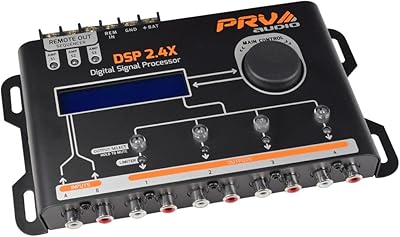
PRV Audio DSP 2.4X Digital Signal Processor
80%
91%
Value for Money
87%
Signal Transparency
89%
Crossover Performance
88%
EQ Flexibility
86%
Sequencer & REM Output
More
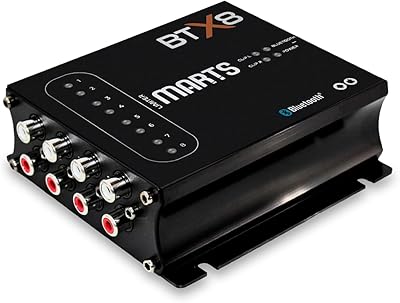
Marts Digital BTX8-DSP 8-Channel Bluetooth DSP Processor
76%
88%
Signal Routing Flexibility
91%
EQ & Tuning Depth
86%
Crossover Filter Quality
67%
Bluetooth App Control
72%
Build Quality & Fit
More
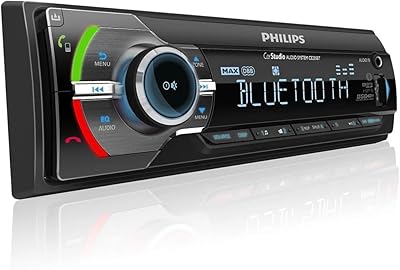
Philips Single Din Bluetooth Car Stereo
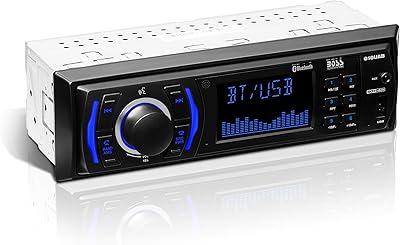
74%
78%
Sound Quality
74%
Bluetooth Performance
83%
AM/FM Reception
67%
Hands-Free Calling
76%
Ease of Installation
More
BOSS Audio 616UAB Single DIN Car Stereo
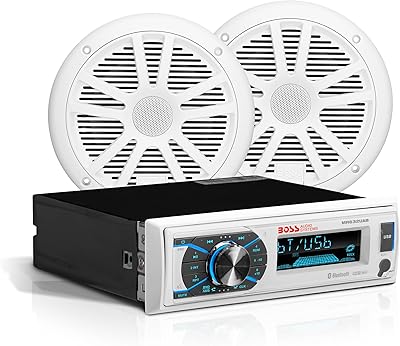
76%
93%
Value for Money
74%
Bluetooth Performance
91%
Ease of Installation
67%
Sound Quality
82%
FM/AM Reception
More
BOSS Audio MCK632WB.6 Car Stereo Kit
72%
88%
Value for Money
84%
Ease of Installation
71%
Bluetooth Performance
61%
Audio Quality
79%
Speaker Durability & Weatherproofing
More
Planet Audio P350MB Single Din Car Stereo
74%
78%
Bluetooth Connectivity
86%
Ease of Installation
81%
Hands-Free Calling
74%
Voice Assistant Integration
62%
Audio Output Quality
More
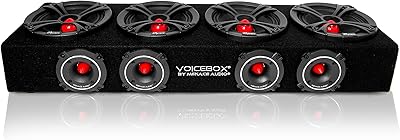
Menace Audio MA-VB6525-4R 4x6.5 Midrange Enclosure
72%
88%
Sound Output & SPL Performance
83%
Build Quality & Enclosure Construction
81%
Ease of Installation
76%
Value for Money
67%
Tweeter Balance & High-Frequency Tuning
More
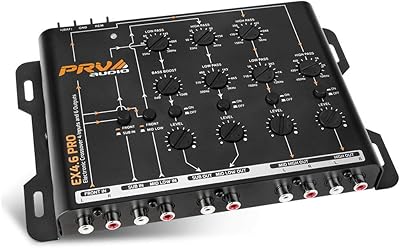
PRV Audio EX4.6PRO 4-Way Electronic Crossover
82%
91%
Signal Quality
93%
Output Headroom
62%
Build Quality
84%
Value for Money
87%
Tuning Flexibility
More
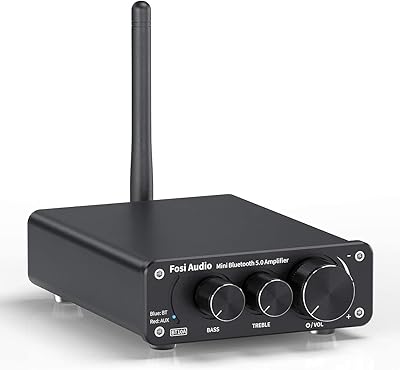
Fosi Audio BT10A
Fosi Audio BT10A
81%
93%
Value for Money
82%
Sound Quality
91%
Noise Floor
84%
Bluetooth Performance
67%
Power Output
More
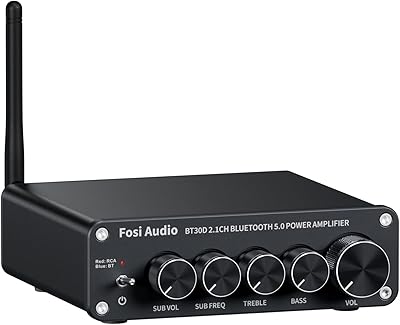
Fosi Audio BT30D
Fosi Audio BT30D
78%
83%
Sound Quality
88%
Subwoofer Performance
81%
Bluetooth Connectivity
91%
Value for Money
62%
Build Quality
More

FAQ

It works with factory radios. The high-level inputs let you tap directly into your existing speaker wiring, so there is no need to replace your head unit to use this DSP processor.

Everything is managed through a free smartphone app available for both Android and iOS devices. There is no physical wired remote or onboard display, so your phone is the only control interface. This keeps the install clean but does mean the app experience matters quite a bit.

The sequencer controls the order in which your audio accessories power on and off. For example, you can tell it to turn on your amplifiers before your subwoofer, which prevents loud startup thumps or pops. If you are running multiple amps or any powered components, it is genuinely useful — not just a gimmick.

Bluetooth range is rated at roughly 15 meters, which is enough to stand a short distance outside the vehicle and hear how your adjustments sound in real time. In practice, obstructions like metal doors can reduce that range somewhat.

Most buyers report that the initial wiring is straightforward, especially if you are familiar with basic car audio installs. The app is reasonably intuitive, though understanding concepts like crossover points and time alignment will take some learning if you are starting from scratch. There are community resources and YouTube walkthroughs that help fill the gap.

Yes, that is one of the most common use cases for this type of processor. The four independent outputs let you dedicate channels to your highs, midrange, and subwoofer separately, each with its own crossover and EQ settings.

Some users have reported occasional connectivity drop-outs or minor app instability, particularly on certain Android versions. It is not universal, but it is worth being aware of. If rock-solid wireless reliability is a hard requirement for you, this is a real consideration.

No — the sequencer outputs are relay-style trigger signals rated at 180mA each, designed to activate the remote turn-on wire on an amplifier, not power it directly. They are not capable of supplying the current an amplifier needs to run on their own.

DSP settings are stored in the unit's internal memory and are not lost when power is interrupted, so you should not need to reprogram everything after a battery disconnect.

It can be, but shops that are unfamiliar with this brand may prefer working with processors they already know, like those from AudioControl or Helix. If your installer is open to learning the app interface, the tuning capability is genuinely solid for the price point — but confirm with them before purchasing.

Where to Buy