Overview

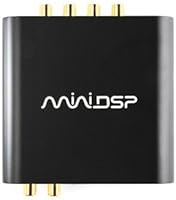
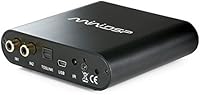
The miniDSP 2x4 HD Digital Signal Processor has been a go-to unit for serious audio hobbyists since its arrival in 2016, and the fact that it still commands a loyal following nearly a decade later says something real about its staying power. Inside that compact black enclosure, you get both a 400MHz DSP processor and a high-resolution USB audio DAC — two functions that most competing boxes charge separately for. It accepts analog, USB, and TOSLINK optical inputs, giving you flexibility depending on your source setup. At its price point, this is squarely a prosumer tool — not something you pick up casually, but well within reach for a committed enthusiast.
Features & Benefits

The signal routing — 2 inputs to 4 outputs — is where the real flexibility lives. You can run active crossovers, manage a subwoofer, apply per-channel parametric EQ, or dial in time-alignment delay to compensate for driver placement in a custom enclosure. FIR and IIR filter support means you can go as deep as you want. Four presets store your configurations onboard, and a bundled remote lets you switch between them without touching a computer. The Device Console software, connected over USB, is your control center for all of this — and the plugin ecosystem extends functionality further, though some plugins carry separate license fees worth factoring into your overall budget.

Best For

This DSP processor is built for people who know exactly what problem they are trying to solve. DIY speaker builders running active crossovers across multiple drivers will get the most from it — the processing headroom and filter options are genuinely deep. Home theater integrators dealing with subwoofer blending or room-mode correction will find it equally capable. It also fits well in compact car audio installs where a full rack-mount processor would be overkill. If you are already using a simpler miniDSP unit and hitting its limits, moving up to the 2x4 HD is a well-trodden path in the community. First-time DSP buyers without a specific project in mind may want to start somewhere less involved.

User Feedback

With a 4.6-star average across more than 300 ratings, this signal processor has clearly earned its place in the prosumer audio space. Experienced users consistently highlight its low noise floor and transparent signal path as standout qualities, and the depth of control packed into such a small enclosure comes up repeatedly as a genuine surprise. On the other side, the setup process is not quick. Multiple buyers flag that getting real results requires significant time in the Device Console and, often, diving into community threads on DIYAudio. Plugin licensing costs are another recurring note — the purchase price is not the whole story. Beginners without a defined project tend to be the least satisfied with this unit.

Pros

  • Packs a 400MHz DSP processor and high-resolution DAC into a single compact enclosure.
  • Supports analog, USB, and TOSLINK optical inputs — flexible enough for most source setups.
  • Parametric EQ, FIR and IIR filters, and time-alignment delay cover nearly every real-world correction scenario.
  • Four onboard presets let you switch between room configurations without reopening software.
  • Bundled remote makes preset switching genuinely hands-free during listening sessions.
  • Transparent signal path and low noise floor consistently praised by experienced users.
  • Active DIYAudio and miniDSP community means practical help is never far away.
  • Long market track record since 2016 with sustained updates and ecosystem support.
  • Doubles as a quality USB DAC, eliminating the need for a separate source component in some setups.

Cons

  • Setup is time-intensive — expect hours of configuration before achieving optimal results.
  • Device Console software has a steep learning curve that can discourage less technical users.
  • Some advanced processing features require purchasing additional plugin licenses beyond the unit price.
  • No onboard display makes real-time monitoring of settings impossible without a connected computer.
  • Only two input channels limits use cases requiring more complex multi-source routing.
  • Plugin licensing costs are not clearly communicated upfront, leading to budget surprises for some buyers.
  • Community support, while excellent, is largely informal — official documentation can feel sparse for edge cases.
  • Beginners without a defined audio project tend to struggle to justify the investment.

Ratings

The scores below for the miniDSP 2x4 HD Digital Signal Processor were generated by our AI engine after analyzing verified purchase reviews from buyers worldwide, with spam, incentivized feedback, and bot activity actively filtered out. Ratings reflect the genuine range of experiences — from enthusiastic DIY builders who consider this unit indispensable, to first-time DSP buyers who found the setup process more demanding than expected. Both strengths and real pain points are transparently represented in every category.
Sound Quality & Transparency
93%
Experienced listeners consistently describe the signal path as clean and neutral — exactly what you want when the whole point is precision audio correction. Users running active speaker builds report that the low noise floor holds up even at high output levels, with no audible coloration introduced by the DSP stage itself.
A small number of buyers with highly resolving reference systems report that the analog input stage, while solid, does not quite match the transparency of significantly more expensive outboard converters. This is a minor note and unlikely to matter in most practical installations.
Processing Depth & Flexibility
96%
The combination of parametric EQ, FIR and IIR filters, crossovers, and time-alignment delay in a single box is genuinely hard to match at this price tier. DIY builders tackling complex multi-way active speaker systems or room correction projects report that this signal processor handles scenarios that would require multiple separate units from less capable competitors.
The breadth of processing options can feel overwhelming to users who only need basic adjustments. A few buyers noted they used only a fraction of the available tools because the full feature set requires a level of acoustic knowledge that casual users do not always have.
Ease of Setup
51%
49%
For users with prior DSP or signal processing experience, the Device Console software is logical and well-organized. Those coming from other miniDSP products in particular find the interface familiar and the workflow efficient once the initial learning investment has been made.
New users consistently flag setup as the biggest friction point. Getting from unboxing to a properly tuned system requires real time — multiple hours at minimum — and the documentation does not always bridge the gap between hardware capability and practical application. Beginners without a specific project or audio background frequently report feeling lost early in the process.
Value for Money
78%
22%
Buyers who fully leverage the processing capabilities — active crossovers, room correction, subwoofer integration — overwhelmingly feel the unit earns its price. Getting a 400MHz DSP processor and a quality USB DAC in a single compact box is a genuine functional consolidation that justifies the investment for serious project work.
The sticker price does not tell the whole cost story. Several users were caught off guard by additional plugin license fees required to unlock specific advanced features, which pushed their total outlay noticeably higher than anticipated. For buyers who only need basic EQ, cheaper alternatives exist.
Software & Ecosystem
74%
26%
The Device Console software covers an impressive range of configuration options, and the broader miniDSP plugin ecosystem means the unit can grow with your project. Cross-platform support for both Windows and macOS is a genuine plus, and firmware updates have continued to arrive years after the product launched.
The software interface has a utilitarian feel that prioritizes function over user experience, and the learning curve is steep for anyone not already familiar with DSP concepts. Plugin licensing is handled through a separate process that some users found confusing, and a handful of buyers reported stability quirks when running Device Console on certain operating system versions.
Build Quality & Enclosure
82%
18%
The metal enclosure feels solid and purposeful — well-suited to permanent installs inside speaker cabinets, equipment racks, or custom car audio builds. The compact footprint at 2 x 10 x 6 inches gives integrators meaningful flexibility without sacrificing the feeling that this is a professional-grade piece of hardware.
The front panel is minimal to the point of offering almost no visual feedback during operation — no display, no level meters, no indicators beyond basic status LEDs. Users who want to monitor what the unit is actually doing at a glance will need to stay connected to the software.
Input Source Versatility
88%
Covering analog, USB, and TOSLINK optical in a single input section gives this DSP processor unusual versatility for its size. Home theater users can feed it directly from a TV optical output, while studio or computer-based setups benefit from the clean USB audio path.
With only two input channels total, users with more complex multi-source routing needs will hit a ceiling fairly quickly. There is no Bluetooth or AES/EBU input, which matters for certain professional or modern consumer setups.
Preset Management
83%
Four storable presets cover a surprising number of real-world use cases — different room configurations, headphone vs. speaker listening, or separate EQ profiles for different content types. The included remote makes switching between them genuinely convenient without reopening software.
Four presets is limiting for users with complex or frequently changing configurations, particularly those managing multiple rooms or speaker systems from a single unit. Preset labels are not displayed anywhere on the hardware itself, so recalling which preset number corresponds to which setup relies entirely on the user's own organizational discipline.
Community & Support Resources
89%
The DIYAudio community and miniDSP's own user forums represent a genuinely valuable support ecosystem that sets this product apart from competitors with similar specs but smaller followings. Real-world configuration examples, troubleshooting threads, and user-shared preset files are readily available and actively maintained.
Official support from miniDSP itself is adequate but not exceptional — response times can be slow, and the official documentation does not always keep pace with firmware changes. For edge cases or advanced configurations, community forums are effectively the primary support channel, which means buyers are partially dependent on volunteer knowledge.
FIR Filter Implementation
87%
Having FIR filter capability at this price point is genuinely notable — it opens up linear-phase crossover designs that are meaningful for time-coherent speaker builds. Experienced DSP users cite FIR support as one of the primary reasons they chose this unit over cheaper alternatives.
FIR filter design is a technically demanding discipline that requires external tools and measurement software to use effectively. Users without background in impulse response work will likely leave this capability entirely untouched, which means they are effectively paying for a feature they cannot access.
Subwoofer Integration
91%
Home theater users targeting subwoofer blending report excellent results — the combination of adjustable low-pass crossover, phase control, and time-alignment delay provides all the tools needed to integrate a sub cleanly into a room. This is one of the most consistently praised use cases across the user review base.
Users expecting auto-calibration similar to AV receivers with built-in room correction (like Audyssey or Dirac) will be disappointed. Everything here is manual, which is powerful but requires either measurement tools like REW or a strong working knowledge of acoustic principles.
Compact Form Factor
86%
The small enclosure is a real advantage for custom installs where space is at a premium — inside speaker cabinets, under car seats, or in tight AV furniture. Several buyers specifically cited the size-to-capability ratio as the deciding factor over larger outboard DSP units.
The compact size comes at the cost of front-panel controls and visual feedback. There are no knobs, no screen, and no way to meaningfully interact with the unit without either a connected computer or the remote, which limits operational visibility in permanent installations.
Long-Term Reliability
84%
The product has been on the market since 2016 with consistent availability and no reported discontinuation, which itself speaks to a stable design. Long-term owners report very few hardware failures, and the unit is confirmed to still be receiving software support years into its lifecycle.
As with any product tied to proprietary software, there is an underlying dependency on miniDSP continuing to support the Device Console platform. A small number of users have noted that certain operating system updates have temporarily broken software compatibility until a patch was issued.

Suitable for:

The miniDSP 2x4 HD Digital Signal Processor is purpose-built for audio enthusiasts who have a specific, technically demanding project in mind. DIY speaker builders running active crossovers across multiple drivers will find the processing depth here genuinely hard to match at this price tier. Home theater hobbyists trying to blend a subwoofer cleanly into a room, or tame low-frequency modes without spending on a full-featured room correction suite, will feel right at home with this unit. It also makes strong sense for anyone already using a simpler miniDSP unit who keeps bumping against its processing limits — the upgrade path is well-documented and the community support is real and active. Car audio enthusiasts working on custom installs who need compact outboard DSP rather than a large chassis processor will appreciate how much horsepower fits into this enclosure.
Not suitable for:

If you are new to DSP processing and expect a plug-and-play experience out of the box, the miniDSP 2x4 HD Digital Signal Processor is likely to frustrate you. The Device Console software requires meaningful setup time, and getting the most from parametric EQ, FIR filters, and crossover configuration means doing real homework — not just running a quick wizard. Buyers who want basic tone control or a simple volume knob solution will find this unit far more involved than their use case demands. It is also worth knowing upfront that certain advanced capabilities are gated behind additional plugin licenses, which add to the total cost and are not always obvious at the point of purchase. Casual listeners upgrading from a standard stereo receiver without a defined optimization goal are unlikely to recoup the investment this unit requires.

Specifications

  • Input Channels: The unit provides 2 input channels, accepting analog, USB, and TOSLINK optical sources.
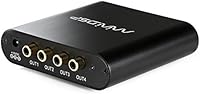
  • Output Channels: Four independent output channels allow flexible routing to multiple amplifiers, drivers, or subwoofers.
  • DSP Processor: A 400MHz DSP processor handles all real-time signal processing tasks onboard.
  • DAC Function: A built-in high-resolution digital-to-analog converter allows the unit to serve as a USB audio DAC as well as a processor.
  • Stored Presets: Up to four independent processing configurations can be saved and recalled directly on the device.
  • Filter Types: Supported processing blocks include parametric EQ, crossovers, time-alignment delay, and both FIR and IIR filters.
  • Input Connectivity: Accepts analog line-level input, USB audio from a computer, and TOSLINK optical digital input.
  • USB Connectivity: A USB port connects to the Device Console software on a PC or Mac for configuration and firmware updates.
  • Remote Control: An infrared remote control is included for hands-free preset switching without requiring a connected computer.
  • Dimensions: The enclosure measures 2 x 10 x 6 inches, making it compact enough for rack shelves, custom cabinets, or car installs.
  • Color & Build: The unit ships in a black finish with a solid metal enclosure suited to permanent installation environments.
  • In the Box: Package includes the processor unit, remote control, power supply, USB cable, and a Device Console software access code.
  • Software: miniDSP Device Console software provides full configuration access over USB on both Windows and macOS platforms.
  • Plugin Support: The unit is compatible with the miniDSP plugin ecosystem, though some advanced plugins require separate license purchases.
  • Model Number: The official model designation is 2x4 HD, manufactured by miniDSP.
  • Market Availability: This product has been commercially available since July 2016 and remains an active, non-discontinued product.
  • Customer Rating: The unit holds a 4.6 out of 5 star rating based on 318 customer ratings on Amazon.

Related Reviews
SSP 2.8 Digital Signal Processor & Equalizer
85%
91%
Audio Performance
88%
Ease of Use
84%
Preset Options
90%
Sound Customization
80%
Setup & Installation
More
Taramp's Pro 2.6S Digital Signal Processor Equalizer
85%
92%
Sound Clarity and Performance
85%
Ease of Setup
90%
Sound Control Precision
88%
Compatibility with Audio Systems
80%
Advanced Tuning Options
More
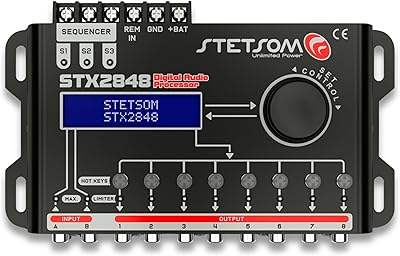
Stetsom STX 2848 DSP Crossover & Equalizer 8 Channel Digital Signal Processor
86%
88%
Performance and Sound Control
85%
Ease of Use
89%
Build Quality
90%
Audio Customization Flexibility
80%
Setup and Installation
More
Blaupunkt EP1600X Digital Bass Processor
70%
84%
Bass Restoration Performance
81%
Parametric Bass Control
78%
Signal Cleanliness
54%
Ease of Installation
77%
Value for Money
More
Soundstream BX-12W Digital Bass Processor
77%
88%
Sound Performance
91%
Ease of Installation
79%
Remote Control Usability
76%
Build Quality
87%
Subsonic Filter Effectiveness
More
ARNOTTCASA Amplified HD Digital TV Antenna
74%
71%
Signal Reception
83%
Value for Money
88%
Ease of Setup
63%
Amplifier Performance
61%
Build Quality
More
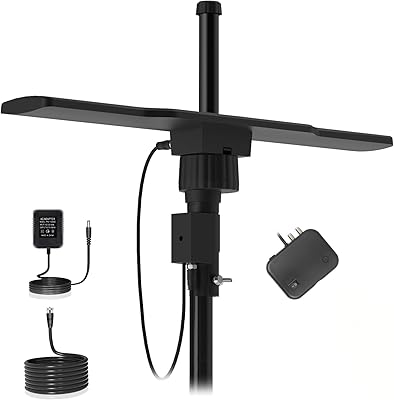
Jadeley AN-5013ORV Outdoor Rotating TV Antenna
72%
74%
Signal Reception Quality
82%
Motorized Rotation
67%
Dual-TV Support
63%
Build Quality & Materials
71%
Weather Resistance
More
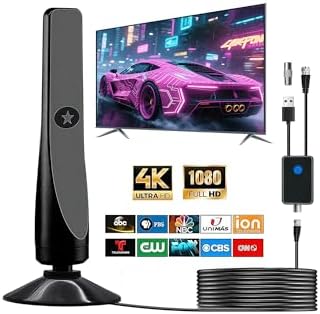
UltraPro Outdoor 70-Mile HD TV Antenna
76%
73%
Signal Reception
61%
Range Accuracy
82%
Installation Ease
78%
Build Quality
81%
Weather Resistance
More
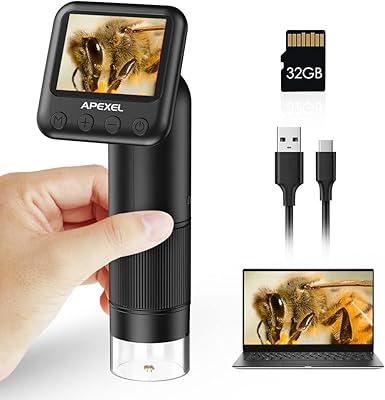
Evil Eye 800X Handheld Digital Microscope
78%
91%
Ease of Use
68%
Image Quality
94%
Portability
61%
Build Quality
76%
Battery Life
More
PIBIDI UHD-3942 Outdoor TV Antenna
74%
72%
Signal Reception
78%
Motorized Rotation
81%
Amplifier Performance
69%
Build Quality
86%
Ease of Installation
More

FAQ

Once you have programmed your presets using the Device Console software, the unit runs completely standalone. You only need a computer for initial setup or when you want to change your configuration. The included remote handles preset switching day to day.

Yes, that is actually one of the most common use cases. With 2 inputs and 4 outputs, you can split a stereo signal into separate high and low frequency paths and apply independent EQ and level control to each driver. FIR and IIR crossover filters give you plenty of flexibility over the crossover point and slope.

Yes, the Device Console software runs on both macOS and Windows, so Mac users are fully supported for setup and configuration.

Honestly, plan for a learning curve. The hardware itself is straightforward to connect, but dialing in parametric EQ, setting crossover points, and using time alignment delay correctly takes real time and patience. Most new users lean heavily on the DIYAudio community forums and miniDSP's own documentation, both of which are genuinely useful resources.

It works very well for that purpose. You can apply a low-pass filter to the subwoofer output channel, adjust the crossover frequency to blend with your mains, and use time-alignment delay to compensate for the physical distance of the sub from your listening position. Many home theater builders use this signal processor specifically for this task.

Yes, and this is worth knowing upfront. The base unit covers a solid range of processing out of the box, but certain advanced features — such as specific room correction plugins or additional processing modules — require purchasing separate plugin licenses through the miniDSP ecosystem. Depending on what you plan to do, those additional costs can be meaningful.

Yes. If your TV or streaming device has a TOSLINK optical output, you can feed it directly into this DSP processor. That makes it useful for improving the audio chain from a TV source without needing a separate DAC or converter box.

Each output channel supports multiple parametric EQ bands — the exact count depends on the firmware and plugin configuration, but in standard operation users typically have access to around 10 biquad filter stages per channel, which is more than enough for practical room and driver correction work.

It can absolutely be used in car audio installs. The compact footprint makes it practical to mount in tight spaces, and many custom car audio builders use it to manage active multi-way speaker systems or integrate a subwoofer cleanly. You will need to account for power supply compatibility in a 12-volt environment, which typically involves a DC-to-DC converter or a dedicated car-specific power solution.

No, the four presets are stored onboard in non-volatile memory, so they survive power cycles. Your configurations remain intact whether the unit is powered off normally or loses power unexpectedly. The only time you would need to reconnect to the software is if you actively want to modify a preset.

Where to Buy