Overview

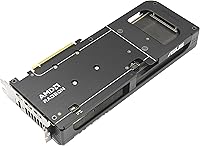
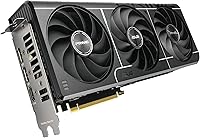
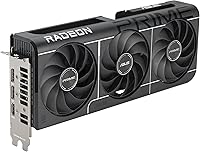
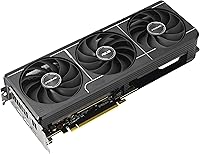
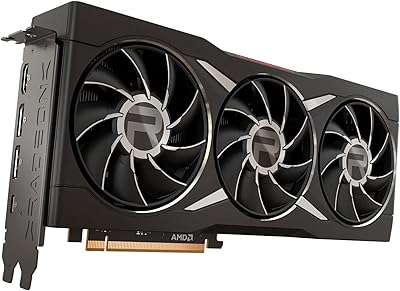
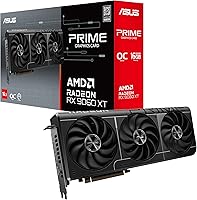
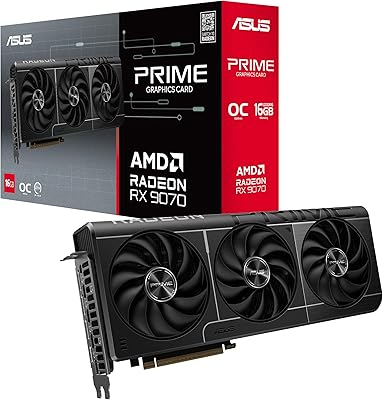
The ASUS RX 9060 XT 16GB Graphics Card represents AMD's push into the upper-mid range with its latest RDNA 4 architecture, arriving with specifications that turn heads at this price tier. The standout figure is the 16GB of GDDR6 VRAM — most competitors at a comparable price ship with half that. ASUS slots this into their PRIME lineup, which has always prioritized dependable engineering over RGB spectacle, making it particularly attractive to builders who want a card that just works. PCIe 5.0 support and a 2.5-slot footprint round out the practical compatibility case. Expect strong 1440p performance and a credible, if not dominant, entry into 4K gaming.
Features & Benefits

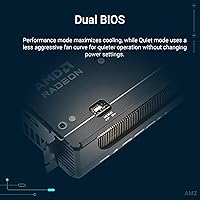
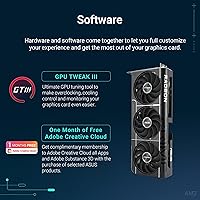
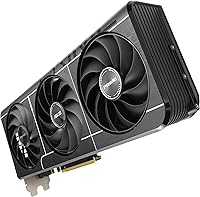
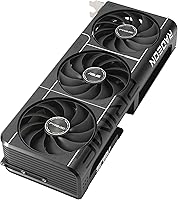
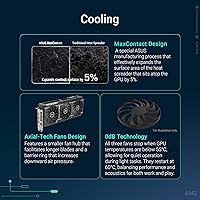
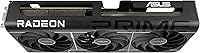
ASUS reworked the Axial-Tech cooling system for this generation, shrinking the fan hub to allow longer blades and adding a barrier ring that pushes more air directly onto the heatsink — the real-world result is lower temperatures under sustained loads without the fans spinning aggressively. A physical dual BIOS switch lets you toggle between Quiet and Performance profiles without touching any software, which is more convenient than it sounds. Idle and light workloads trigger 0dB fan-stop, so the card goes completely silent when cooling isn't needed. Dual ball-bearing fans are rated to outlast sleeve-bearing designs, and Auto-Extreme manufacturing reduces solder defects. GPU Tweak III handles monitoring and basic overclocking adequately, though it's not the most polished software around.

Best For

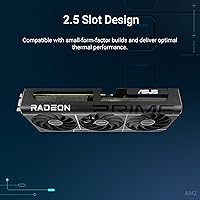
This Radeon card is most squarely aimed at builders chasing high-refresh 1440p gaming — that's where the RDNA 4 architecture delivers its best return, and 16GB of VRAM means you won't hit memory walls in modern titles or in the near future. Content creators running GPU-accelerated tasks like video rendering or AI-assisted workflows will appreciate that headroom without paying workstation-tier pricing. The 2.5-slot, 12-inch design fits comfortably in mid-tower and even some compact cases where larger cards won't. If your setup is already quiet and you'd like to keep it that way, passive idle cooling is a genuine practical advantage. Upgraders coming from a mid-range card that's three or four years old will feel a clear generational step up.

User Feedback

With a 4.6-star average across more than 300 ratings, the ASUS PRIME RX 9060 XT is landing well with buyers. Thermal performance and build quality are the most frequently praised aspects, with many reporting the card runs cooler than expected under sustained gaming loads, and the VRAM headroom draws consistent appreciation. On the critical side, some buyers flag that AMD's drivers for the fresh RDNA 4 architecture still carry rough edges, and the companion software feels less refined than what competing platforms offer. It's also worth keeping in mind that this card launched in mid-2025, so long-term durability data is still accumulating — early signals are encouraging, but it's too soon for a definitive reliability verdict.

Pros

  • 16GB of GDDR6 VRAM is unusually generous at this price point and provides genuine future-proofing for memory-hungry games.
  • The ASUS PRIME RX 9060 XT runs cooler than many rivals, thanks to a redesigned fan system that actually moves air efficiently.
  • A physical dual BIOS switch gives you real control over noise and performance without needing to open any software.
  • The 2.5-slot design fits cases where thicker cards simply cannot go, opening up more build options.
  • Fan-stop idle mode keeps the card completely silent during desktop use, browsing, or light media playback.
  • Dual ball-bearing fans are built to last longer than cheaper sleeve-bearing alternatives found on competing cards.
  • PCIe 5.0 support means this card will not be bottlenecked by the interface in any current or near-future platform.
  • HDMI 2.1 and DisplayPort 2.1 outputs cover every modern display standard without requiring adapters.
  • At 1.9 pounds, this Radeon card is light enough to avoid stressing older motherboard PCIe slots.
  • Community ratings of 4.6 stars across hundreds of buyers reflect genuine, broad satisfaction rather than a small sample fluke.

Cons

  • AMD's RDNA 4 drivers are still relatively new and can carry instability quirks that more mature platforms avoid.
  • GPU Tweak III gets the job done for monitoring and overclocking but feels less refined than competing software ecosystems.
  • Buyers reliant on CUDA or Nvidia-exclusive creative tools will face real workflow friction switching to this AMD card.
  • Long-term reliability data is limited given the mid-2025 launch date — early adopters always carry some uncertainty.
  • This Radeon card is not a strong value pick for dedicated 4K gaming at high frame rates in the most demanding titles.
  • The PRIME line prioritizes stability over outright performance, so enthusiasts chasing maximum clock speeds may feel constrained.
  • No Nvidia DLSS equivalent at the same maturity level — AMD's upscaling technology is competitive but not yet universally supported across all game titles.
  • Availability and pricing can fluctuate significantly for newly launched GPUs, making it harder to time a purchase optimally.

Ratings

The scores below for the ASUS RX 9060 XT 16GB Graphics Card were generated by our AI system after analyzing verified purchaser reviews from global marketplaces, actively filtering out incentivized, duplicate, and bot-driven submissions to surface genuine buyer sentiment. Both the strengths that earned this Radeon card its strong reception and the recurring friction points that prevent a perfect score are transparently reflected in each category.
1440p Gaming Performance
91%
Buyers consistently report that this Radeon card handles 1440p titles with headroom to spare, hitting high frame rates in competitive shooters and maintaining smooth performance in open-world games without needing to compromise on texture quality. The RDNA 4 architecture delivers a clear step up for users upgrading from the previous generation.
A handful of buyers noted that extremely demanding titles with ray tracing enabled at 1440p can cause frame rate dips that require settings adjustments. It is not a 1440p card that maxes out every slider in every game effortlessly.
VRAM Capacity
94%
The 16GB GDDR6 figure genuinely differentiates this AMD graphics card from most rivals at its price point, and buyers — especially content creators and future-focused gamers — cite it as a primary purchase driver. Running texture-heavy mods or GPU-accelerated AI tools without hitting memory limits is a practical daily benefit many users highlight.
For pure 1080p gaming, 16GB is more headroom than most users will realistically need today, so buyers on a tight budget targeting only that resolution may find they are paying for capacity they cannot yet use fully.
Thermal Performance
89%
Thermal results are among the most praised aspects across buyer reviews, with many reporting temperatures that stay well within comfortable ranges during extended gaming sessions. The redesigned Axial-Tech fans appear to do their job effectively, keeping the card cool without requiring aggressive fan speeds that would generate significant noise.
A small subset of buyers in poorly ventilated cases noted that temperatures climbed higher than expected under sustained workloads, suggesting the cooling system benefits noticeably from adequate case airflow rather than working independently of it.
Noise Levels
88%
The 0dB fan-stop feature is consistently highlighted by buyers who use their PCs in home office or shared living environments — the card is genuinely silent at idle and during light tasks. Under moderate gaming loads, most users describe the fan noise as unobtrusive rather than absent, which is a realistic outcome for this class of cooler.
At full load or in Performance BIOS mode, the fans do spin up audibly, and a few buyers with open or mesh-panel cases found the sound more noticeable than expected. It is not loud by GPU standards, but it is not whisper-quiet under pressure either.
Build Quality
93%
ASUS PRIME cards carry a reputation for solid construction, and this generation continues that trend — buyers frequently note the card feels robust and well-assembled out of the box. The Auto-Extreme manufacturing process is cited as a trust signal by more technically aware buyers who appreciate the reduced risk of solder defects.
The aesthetic is deliberately understated, with no RGB lighting or premium shroud design, which is the right call for the PRIME lineup but can feel plain to buyers who want their build to look as impressive as it performs.
4K Gaming Capability
67%
33%
This Radeon card is capable of running games at 4K resolution, and in less demanding titles or older games buyers report playable results without heavy quality compromises. For 4K media playback and streaming, it handles the task cleanly.
In modern AAA titles at 4K with high settings, the card struggles to maintain consistently smooth frame rates, and buyers who purchased expecting strong 4K gaming performance have expressed disappointment. This is firmly a 1440p GPU that can visit 4K, not one built to live there.
Driver Stability
63%
37%
AMD's driver release cadence has been consistent since launch, and many buyers report a smooth experience after installing the latest recommended drivers. Long-term AMD users accustomed to occasional driver quirks tend to rate their experience more positively, as they know the process of managing updates.
First-time AMD converts and buyers expecting Nvidia-level driver polish have flagged instability in specific game titles and occasional crashes following driver updates. The RDNA 4 driver stack is still maturing, and this is the most commonly cited frustration in otherwise positive reviews.
Software Experience
61%
39%
GPU Tweak III provides the core functionality most users need — real-time temperature and clock monitoring, fan curve adjustment, and basic overclocking controls are all present and accessible to non-technical users willing to explore the interface.
Compared to competitors' software suites, GPU Tweak III feels dated and less intuitive, and several buyers note that it can feel clunky during initial setup. It covers the essentials, but users coming from other ecosystems often find themselves wishing for a more refined experience.
Value for Money
86%
The combination of 16GB VRAM, RDNA 4 architecture, and ASUS PRIME build quality at this price tier strikes most buyers as a genuinely strong proposition, particularly when compared to competing cards that offer 8GB at similar or higher prices. Buyers frame it as paying a fair rate for meaningful headroom.
A few buyers tracking GPU pricing closely note that market availability and launch demand pushed street prices above the stated MSRP in the early weeks, which slightly erodes the value case. At full MSRP it is compelling; above it, the calculus becomes more competitive.
Slot & Case Compatibility
92%
The 2.5-slot design and 12-inch length fit cleanly into a wide range of mid-tower cases, and buyers with smaller enclosures specifically call this out as a deciding factor. It occupies meaningfully less physical space than triple-slot alternatives without sacrificing cooling performance.
Buyers with very compact ITX cases still need to verify their specific enclosure's GPU clearance, as 12 inches is not universally compatible with the smallest form-factor builds on the market.
Display Output Options
87%
HDMI 2.1 and DisplayPort 2.1 cover every current display standard a buyer at this tier is likely to own, including high-refresh 1440p monitors and 4K displays. Buyers connecting to multiple monitors or running a modern TV alongside a gaming monitor find the outputs fully adequate.
The card offers only two display outputs, which limits users who want to run three or more monitors simultaneously. Multi-display productivity setups may require additional hardware considerations.
Overclocking Headroom
72%
28%
The Performance BIOS profile provides a solid baseline for users who want extra clock headroom without manual tuning, and GPU Tweak III gives more adventurous buyers manual control over voltage and clocks. Early overclockers report modest but real gains above the factory boost clock.
The PRIME lineup is tuned for reliability and thermals rather than maximum frequency, so the absolute overclocking ceiling is lower than what enthusiast-tier or factory-overclocked board partner variants of the same chip can achieve.
Long-term Reliability
74%
26%
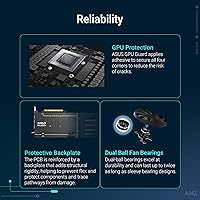
ASUS's Auto-Extreme manufacturing and dual ball-bearing fans are engineering choices that point toward above-average longevity, and the brand's track record with previous PRIME-series cards gives buyers reasonable confidence in the platform's durability.
The card only launched in mid-2025, so multi-year reliability data simply does not exist yet. Early adopters are inherently taking on some uncertainty, and it would be premature to assign a high reliability score without more time in the field across a broad install base.
Content Creation Utility
84%
The 16GB VRAM figure has tangible daily value for creators running GPU-accelerated video exports, AI upscaling tools, or 3D rendering workloads — tasks that can saturate 8GB cards and cause slowdowns. Buyers using the card for a hybrid work-and-game setup consistently rate this aspect highly.
AMD's compute ecosystem for professional creative tools remains behind Nvidia's in software maturity, particularly for applications that are optimized specifically for CUDA. Buyers running specialized professional software should verify AMD compatibility before committing.

Suitable for:

The ASUS RX 9060 XT 16GB Graphics Card is a strong match for PC builders who want a capable 1440p gaming card with meaningful VRAM headroom and do not want to pay flagship prices to get it. If your monitor runs at 1440p and 144Hz or higher, this Radeon card is designed precisely for that use case — the RDNA 4 architecture handles modern titles at that resolution without breaking a sweat, and 16GB of GDDR6 memory ensures you are not chasing upgrades every time a new memory-hungry game drops. Content creators who use GPU-accelerated tools like video encoders, AI upscalers, or 3D rendering software will also find real value in that VRAM figure without having to step into workstation-tier hardware. The 2.5-slot, 12-inch footprint makes it genuinely compatible with mid-tower and many compact cases where larger triple-slot cards simply do not fit. Buyers who care about a quiet desk environment will appreciate the passive idle mode, which keeps the system completely silent during everyday tasks. If you are upgrading from a mid-range card that is three or more years old and want a clear, tangible performance improvement without overcomplicating your build, this AMD graphics card makes a compelling case.
Not suitable for:

The ASUS RX 9060 XT 16GB Graphics Card is not the right pick for every buyer, and it is worth being clear about where it falls short. If your primary goal is native 4K gaming at consistently high frame rates in demanding titles, this card will get you into 4K, but it is not purpose-built for that resolution — a higher-tier GPU will serve you better there. Buyers who are deeply embedded in Nvidia's ecosystem, particularly those relying on DLSS, CUDA-based creative tools, or specific Nvidia-only software features, will find the AMD platform requires meaningful adjustment and may not fully replicate that experience. The card launched in mid-2025, meaning AMD's drivers for this architecture are still maturing — users who prioritize a rock-solid, day-one software experience may want to wait a few driver cycles before committing. Those who prefer a comprehensive, polished first-party software suite for tuning and monitoring may find GPU Tweak III underwhelming compared to alternatives. Finally, if you are targeting the absolute bleeding edge of performance at any cost, the PRIME lineup's reliability-over-performance philosophy means there are faster, albeit bulkier and pricier, options on the market.
Specifications

  • GPU Architecture: Built on AMD's RDNA 4 architecture, the Radeon RX 9060 XT delivers a meaningful generational improvement in performance-per-watt over its predecessors.
  • Video Memory: Equipped with 16GB of GDDR6 VRAM, giving this card roughly double the memory capacity of most competing cards in the same price tier.
  • Memory Speed: The GDDR6 memory operates at 2800 MHz, providing sufficient bandwidth for high-resolution textures and GPU-accelerated compute workloads.
  • GPU Clock Speed: The GPU boost clock reaches 7000 MHz, enabling responsive frame delivery in demanding gaming and creative applications.
  • PCIe Interface: Uses a PCIe 5.0 interface, ensuring full compatibility with current-generation motherboards while remaining backward compatible with PCIe 4.0 slots.
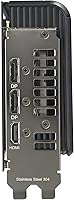
  • Display Outputs: Offers one HDMI 2.1 port and one DisplayPort 2.1 port, supporting modern high-refresh and high-resolution displays without adapters.
  • Max Resolution: Capable of driving displays up to 7680x4320 pixels (8K), though optimal day-to-day performance targets 1440p gaming workloads.
  • Form Factor: The 2.5-slot design offers a practical middle ground between compact single-slot cards and bulky triple-slot models, fitting most mid-tower cases.
  • Card Length: Measures 12 inches in length, which is compatible with the majority of standard mid-tower and full-tower PC cases.
  • Card Weight: Weighs 1.9 pounds, light enough that most motherboard PCIe slots will not require additional GPU support brackets.
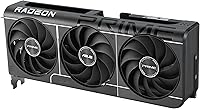
  • Cooling System: Uses ASUS Axial-Tech dual fans featuring elongated blades and a barrier ring that directs airflow more efficiently onto the heatsink surface.
  • Fan Bearings: Dual ball-bearing fan construction is rated for a significantly longer operational lifespan compared to conventional sleeve-bearing fan designs.
  • Idle Fan Mode: 0dB fan-stop technology halts the fans entirely during idle or light-load scenarios, keeping the system acoustically silent when full cooling is not needed.
  • BIOS Profiles: A physical dual BIOS switch on the card allows users to toggle between a Quiet profile and a Performance profile without any software interaction.
  • Manufacturing: Produced using ASUS Auto-Extreme automated manufacturing, a process designed to reduce solder joint defects and improve long-term component reliability.
  • Tuning Software: Compatible with GPU Tweak III, which provides real-time monitoring, fan curve customization, and basic overclocking controls for this Radeon card.
  • Amazon Ranking: Ranked #57 in the Computer Graphics Cards category on Amazon, reflecting strong early sales momentum following its mid-2025 launch.
  • Customer Rating: Holds a 4.6 out of 5 star average rating based on 316 customer reviews, indicating broadly positive reception among early buyers.

Related Reviews

AMD Radeon RX 6950 XT Graphics Card
72%
92%
4K Gaming Performance
94%
VRAM Capacity & Bandwidth
51%
Power Consumption
48%
Physical Size & Case Fit
67%
Driver Stability
More
ASUS Prime RX 9070 OC Graphics Card
82%
91%
Gaming Performance at 1440p
88%
Thermal Management
87%
Noise Levels
84%
Build Quality & Feel
67%
Driver Stability & Software
More
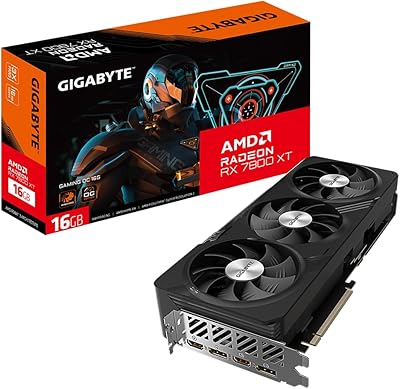
GIGABYTE RX 7800 XT 16GB Graphics Card
78%
91%
1440p Gaming Performance
88%
Thermal Management
93%
VRAM & Future-Proofing
79%
Value for Money
61%
Driver & Software Experience
More
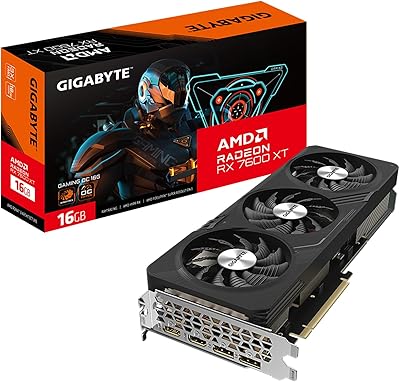
GIGABYTE RX 7600 XT 16GB Graphics Card
80%
88%
Value for Money
84%
1080p Gaming Performance
72%
1440p Gaming Performance
93%
VRAM Capacity
86%
Thermal Performance
More
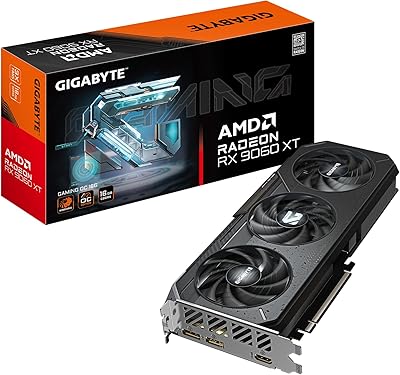
GIGABYTE Radeon RX 9060 XT Gaming OC 16G
83%
93%
1440p Gaming Performance
96%
Memory Capacity (VRAM)
89%
Thermal Management
84%
Acoustic Performance
87%
Build Quality & Materials
More
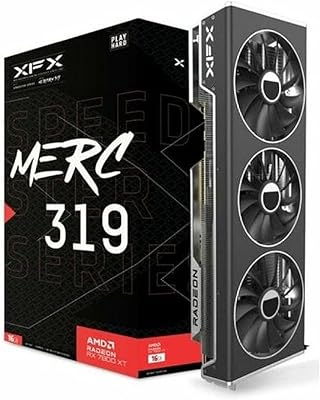
XFX Speedster MERC319 RX 7800 XT 16GB GDDR6 Graphics Card
85%
91%
Overall Performance
94%
Gaming Performance at 4K
88%
Cooling Efficiency
87%
Value for Money
85%
Build Quality
More
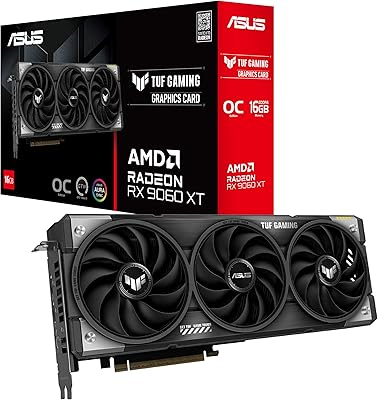
ASUS TUF Gaming Radeon RX 9060 XT 16GB GDDR6 OC Edition
88%
94%
Gaming Performance
92%
Cooling Efficiency
89%
Build Quality
88%
Ease of Installation
91%
Thermal Management
More
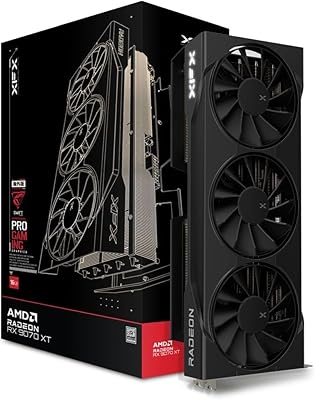
XFX Swift RX 9070 XT 16GB Graphics Card
78%
93%
Gaming Performance at 1440p
78%
4K Gaming Capability
91%
Thermal Performance
82%
Noise Levels
89%
Build Quality
More
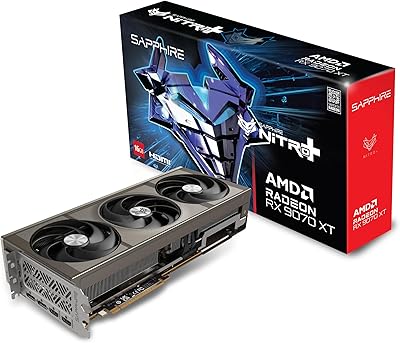
Sapphire Nitro+ RX 9070 XT 16GB
82%
92%
Gaming Performance
88%
Thermal Management
91%
Noise Level
93%
VRAM Capacity & Bandwidth
74%
Ray Tracing Performance
More
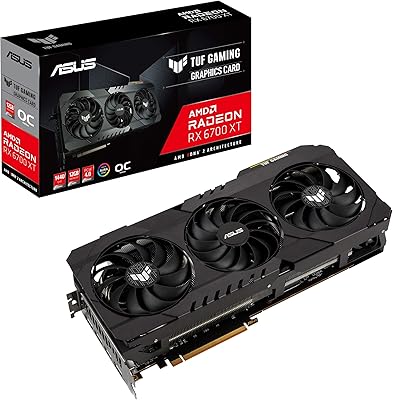
ASUS TUF RX 6700 XT Graphics Card
76%
88%
1440p Gaming Performance
91%
Thermal Management
93%
Build Quality
84%
Fan Noise
67%
Driver Stability
More

FAQ

Yes, 1440p is very much the sweet spot for this Radeon card. The RDNA 4 architecture handles modern titles at that resolution comfortably, and the 16GB of VRAM means you are unlikely to hit memory limits even in the most demanding current games. Pairing it with a 1440p 144Hz or 165Hz monitor is a natural fit.

It can run games at 4K, but with some caveats. You will likely need to dial back settings in the most demanding titles to maintain smooth frame rates. If 4K at maximum settings and high frame rates is your primary goal, a higher-tier card will serve you better. For 4K media playback and lighter workloads, it handles that without issue.

Almost certainly yes. At 12 inches long and a 2.5-slot width, the ASUS PRIME RX 9060 XT is specifically sized to work in standard mid-tower builds. Just double-check your case's stated maximum GPU length before ordering, as some budget mid-towers have tighter clearances.

Most users report it stays reasonably quiet during gaming sessions. At idle or during light desktop use, the fans stop completely under 0dB mode, so you will hear nothing at all. Under sustained gaming loads the fans spin up, but the Axial-Tech design keeps them from needing to run at high speeds to maintain good temperatures.

It is a small physical toggle on the card itself that switches between two pre-programmed firmware profiles. Quiet mode prioritizes lower fan speeds and reduced noise, while Performance mode allows the card to run the fans harder and potentially hit higher sustained clocks. The key benefit is that you do not need any software to change it — just flip the switch with the PC powered off.

Yes, like all AMD Radeon cards, it supports FreeSync over both its HDMI and DisplayPort outputs. If you have a FreeSync-compatible monitor, variable refresh rate will work natively. It also supports HDMI Forum VRR, which extends adaptive sync to some HDMI-connected displays.

AMD offers FSR (FidelityFX Super Resolution) which works across a wide range of games and does not require specific AMD hardware — meaning it also runs on Nvidia cards. However, Nvidia's DLSS, particularly DLSS 3 with frame generation, is generally considered more mature and produces sharper results in supported titles. FSR 3 has closed the gap meaningfully, but if DLSS support in specific games is a dealbreaker, that is worth factoring into your decision.

It works fine in a PCIe 4.0 slot. PCIe is backward compatible, so this AMD graphics card will slot into a 4.0 motherboard without any configuration needed. You may see a negligible bandwidth difference in highly synthetic benchmarks, but in real gaming and creative workloads, PCIe 4.0 x16 is not a bottleneck for this card.

Both, honestly. Most current titles at 1440p do not push past 12GB, but some open-world games with high-resolution texture packs and games running ray tracing at higher settings are already brushing against that threshold. For content creators using the GPU for rendering, AI tools, or video work, 16GB has immediate practical value. For pure gaming, it is genuine headroom that should keep the card relevant longer than an 8GB alternative.

As with any newly launched GPU architecture, AMD's drivers for RDNA 4 are still maturing. A small number of early buyers have noted occasional instability in specific games or after driver updates. AMD typically resolves these issues through regular driver releases, and the situation has been improving, but if you are sensitive to any early-adopter software friction, it is worth monitoring AMD's release notes before purchasing.

Where to Buy