Overview

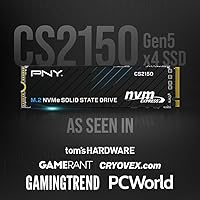
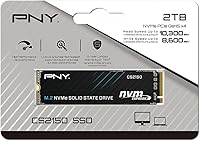
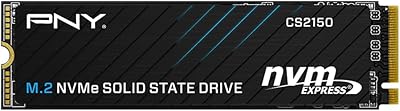
The PNY CS2150 2TB Gen5 NVMe SSD arrived in December 2024, and it lands at a moment when Gen5 storage is finally crossing into realistic territory for mainstream builders. PNY isn't a newcomer chasing hype — the brand has decades of history in memory and storage components, which counts for something. This Gen5 SSD uses a standard M.2 2280 form factor, meaning it fits most modern desktops and laptops without hassle. That said, keep expectations calibrated: the headline speeds matter most in sustained, data-heavy workloads. Casual browsing or spreadsheet work won't feel any different from a good Gen4 drive. Long-term reliability data is simply too early to call.

Features & Benefits

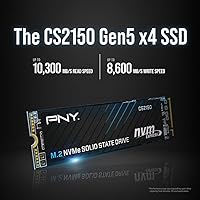
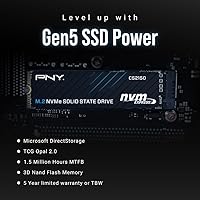
The CS2150's peak sequential read of 10,300 MB/s and write of 8,600 MB/s sound extraordinary, but their real value shows when moving large files — think exporting a 4K video timeline or batch-transferring RAW photo archives. For gamers, Microsoft DirectStorage lets supported titles stream textures directly to the GPU, which cuts down stuttering during asset-heavy scenes. Those running local AI models for image generation will also notice a lift when the drive isn't the bottleneck. On the security front, TCG Opal 2.0 handles encryption at the hardware level, keeping sensitive data protected without a CPU penalty. A 5-year limited warranty with TBW-backed coverage and 24/7 US support rounds things out.

Best For

This Gen5 SSD makes the most sense for builders who've already invested in a PCIe Gen5-capable platform — think Intel Z790 boards or AMD X670E and B650E setups. It's a strong fit for video editors and photographers who routinely shuffle large RAW or 4K files and feel the friction of slower storage every day. PC gamers chasing shorter load times in DirectStorage-enabled titles will get a real benefit too, provided the rest of the system can keep up. Anyone running local AI models on-device — Stable Diffusion or similar — will appreciate not having the drive be the bottleneck. Users who need hardware-level encryption with no software overhead also have a compelling reason to consider it.

User Feedback

With 124 ratings averaging 4.7 out of 5 at the time of writing, early reception to this PNY drive is encouraging — though it bears repeating that the drive only launched in late 2024, so the pool reflects early adopters rather than long-term owners. Installation ease and real-world speed consistency come up often as positives. The recurring concern, predictably, is heat: Gen5 thermal output is significant, and multiple buyers flag that a separate heatsink is effectively required to maintain stable performance — yet one isn't included in the box. Factor in that additional cost and clearance check before ordering. The overall picture looks good, but the long-term story is still being written.

Pros

  • Sequential read speeds up to 10,300 MB/s translate to noticeably faster transfers when working with large media files.
  • TCG Opal 2.0 hardware encryption secures sensitive data at the drive level with no CPU performance penalty.
  • Microsoft DirectStorage support delivers real reductions in asset streaming times on compatible gaming titles.
  • The standard M.2 2280 form factor ensures broad compatibility across a wide range of modern desktops and laptops.
  • A 5-year limited warranty backed by TBW ratings offers solid long-term purchase confidence for a storage drive.
  • 24/7 US-based technical support is a meaningful differentiator that many competing storage brands simply do not match.
  • Early buyer ratings average 4.7 out of 5, with consistent praise for straightforward installation and real-world speed.
  • At 2TB, this Gen5 SSD provides ample headroom for large game libraries, video projects, and local AI model storage.
  • 3D NAND construction supports solid write endurance, making it suitable for sustained, high-demand workloads over time.
  • Local on-device AI inference tasks like image generation benefit meaningfully from high sustained sequential throughput.

Cons

  • Gen5 drives run significantly hotter than Gen4 alternatives — a heatsink is effectively required but not included in the box.
  • PCIe Gen5 x4 motherboard support is mandatory to reach advertised speeds; Gen4 platforms cannot access full performance.
  • With around 124 ratings at launch, long-term endurance data is still too limited to draw reliable durability conclusions.
  • Everyday tasks like web browsing and office work show no real-world improvement over cheaper, proven Gen4 options.
  • The price premium over Gen4 drives is only justified when workloads genuinely and consistently stress sequential throughput.
  • AI performance benefits are restricted to local, on-device inference only — cloud-based AI tools see no storage advantage.
  • Moving to a Gen5-capable platform can add significant motherboard and CPU costs on top of the drive purchase itself.
  • As a late-2024 release, independent long-term endurance testing and third-party benchmark comparisons remain largely unavailable.

Ratings

Our AI scoring system for the PNY CS2150 2TB Gen5 NVMe SSD was built by processing verified purchase reviews from real buyers worldwide, with automated filters actively removing incentivized, bot-generated, and duplicate submissions before any score is assigned. Each rating category reflects a genuine cross-section of user experience — frustrations included, not just praise. Both the drive's standout capabilities and its meaningful limitations are transparently represented across every dimension scored below.
Sequential Read Speed
93%
Buyers who moved from Gen4 drives report a perceptible difference when copying large RAW photo shoots or exporting 4K timelines — tasks where sustained sequential throughput matters. Peak reads of 10,300 MB/s mean large file operations that once took tens of seconds finish in a fraction of the time, which genuinely changes creative workflows.
These headline speeds only materialize with a PCIe Gen5 x4 slot — on a Gen4 board, the drive behaves like any Gen4 SSD. Buyers running casual workloads like web browsing or document editing will see no difference from a drive costing half the price, since those tasks rarely stress sequential read performance at all.
Sequential Write Speed
91%
At up to 8,600 MB/s sequential write, this Gen5 SSD handles ingest-heavy tasks — ingesting footage from a high-speed camera card or writing large database backups — without the drive becoming a bottleneck. Users editing directly on the drive, rather than copying files to it, particularly notice how smoothly sustained write workloads are handled.
Write speed, like read speed, is contingent on the PCIe Gen5 interface being available — without it, real-world write figures drop to Gen4 levels. Some users also note that write performance can fluctuate under very prolonged sustained workloads as the drive heats up, reinforcing the importance of proper thermal management.
Thermal Management
58%
42%
For users whose motherboards include a built-in M.2 heatsink cover — common on mid-range and high-end boards — thermal performance is largely handled without any extra effort. Those buyers report that drive temperatures stay within acceptable ranges during typical mixed workloads, with no throttling observed under normal use.
No heatsink is included in the box, which is a real problem for builders with budget or entry-level boards that lack integrated M.2 cooling. Multiple buyers flag noticeable thermal throttling during extended sustained transfers when no heatsink is fitted, and the added cost of a quality aftermarket solution is a legitimate surprise expense.
Value for Money
78%
22%
Compared to where Gen5 pricing sat at launch, the CS2150 lands at a competitive point for the throughput it delivers. Buyers who actively need Gen5 speeds — video professionals, heavy AI users, power-focused PC builders — consistently feel the value proposition holds up when measured against the workload gains they actually experience day to day.
For general users, the Gen5 premium is hard to justify when a solid Gen4 drive handles everyday tasks at a noticeably lower price. The hidden cost of sourcing a heatsink separately — if your board lacks one — further chips away at overall value for buyers who did not factor that in upfront.
Installation Ease
88%
Installation ease is consistently one of the most praised aspects among verified buyers, with many noting they had the drive running in under ten minutes — including first-time builders. The standard M.2 2280 format means no adapters or special tools are needed; it drops straight into the slot on any compatible motherboard without fuss.
Buyers who assumed the process was entirely plug-and-play sometimes overlooked the need to enable the drive in BIOS or initialize it before use, which added unexpected steps. A small number of users on compact mini-ITX builds also report that heatsink clearance above the M.2 slot created fitment complications.
Build Quality
82%
18%
The physical drive feels solid and well-manufactured, consistent with what buyers expect from a brand like PNY with decades of component production experience. Early adopters note that the PCB quality and component layout appear clean and professional, which builds confidence even without access to independent teardown data.
As a late-2024 release, there is not yet enough real-world wear data to make firm statements about long-term physical durability. Independent teardowns and component-level analyses are still sparse, so some cautious buyers prefer to wait for third-party endurance evaluations before committing to a newer-generation drive.
Platform Compatibility
74%
26%
The M.2 2280 form factor ensures physical compatibility across a broad range of desktop builds and many laptops, and the drive does function in Gen4 slots — useful for buyers who plan to upgrade their motherboard later. For those already on Z790, X670, or B650 platforms, compatibility is a complete non-issue.
The requirement for a Gen5 slot to unlock full performance means a significant portion of current PC owners simply cannot run this drive at its rated speeds, given how many Gen4 boards are still in active daily use. Laptop compatibility is particularly hit-or-miss, as Gen5 M.2 slots remain rare in current consumer notebooks.
Hardware Encryption
89%
TCG Opal 2.0 hardware encryption is executed entirely by the drive's onboard controller, meaning professionals securing client files or business data get full-disk protection with zero CPU overhead. Users in regulated industries or those managing sensitive personal archives find this feature genuinely useful rather than merely a marketing footnote.
The encryption feature requires compatible software or a TCG Opal-compatible security suite to activate and manage — it does not enable itself automatically out of the box. Home users outside a security-sensitive context will likely never use it, making it a neutral feature rather than a meaningful one for a large portion of buyers.
Gaming Performance
71%
29%
Gamers running DirectStorage-compatible titles report noticeably shorter initial scene load times and reduced stutter when streaming high-resolution assets — a tangible, if situational, win. On supported platforms, the CS2150's throughput allows the GPU to access game data at a rate that removes storage as the bottleneck during asset-intensive sequences.
The vast majority of games on the market do not yet support DirectStorage, so for traditional titles, Gen5 speed offers no advantage over Gen4 — load times will feel identical. Buyers gaming exclusively on non-DirectStorage titles are paying a premium for a feature with minimal practical gaming impact at this point in time.
Creative Workload Performance
87%
For video editors and photographers, this is the category where feedback is most consistently positive — buyers moving large ProRes or RAW files report that the drive keeps pace with demanding sustained read-write cycles without visible slowdowns. Scrubbing through high-bitrate 4K timelines directly off the drive is reportedly smooth and responsive.
Thermal throttling under prolonged creative sessions — particularly long export queues or batch processing without adequate heatsink coverage — can shave peak write performance noticeably. This is less a flaw in the drive's capability and more a reminder that thermal infrastructure matters as much as the drive itself in a heavy creative rig.
Warranty & Support
92%
A 5-year warranty backed by TBW endurance ratings gives buyers a concrete safety net covering a meaningful usage period, not a token one-year gesture. The inclusion of 24/7 US-based technical support is an above-average commitment for a storage drive, and users who have reached out report prompt and knowledgeable responses.
The warranty, while comprehensive, requires buyers to stay within the TBW threshold — exceeding it voids that element of coverage. Because the drive is still relatively new to market, real-world warranty claim experience across a broad user base has not yet been widely reported, so practical claims processing speed remains largely unverified.
Long-term Reliability
67%
33%
Early adopters consistently report stable operation, no data errors, and speeds that hold up across their first several months of use — encouraging signs for a newly launched drive. PNY's established track record in flash storage manufacturing provides at least a reasonable baseline of confidence in component and assembly quality.
With fewer than 200 ratings at time of analysis and a launch date of December 2024, there is simply not enough longitudinal data to make strong claims about three-year or five-year durability. Buyers who prioritize proven reliability backed by years of independent user data should weigh that gap carefully before purchasing.
DirectStorage Integration
76%
24%
For gamers invested in a DirectStorage-enabled title on a Gen5 platform, this PNY drive handles the GPU-direct asset streaming pipeline without issue — frame pacing during asset-heavy sequences is visibly smoother on compatible hardware. As the supported title list grows, this integration will become progressively more impactful.
DirectStorage adoption is still limited — the technology is not universally supported across the gaming library, and its benefits are invisible in non-compatible titles. Buyers purchasing the drive specifically for this feature today are making a bet on future software support rather than activating a feature with broad current applicability.
AI Workstation Performance
79%
21%
Users running local AI inference — image generation, model fine-tuning, or weight loading for on-device large language models — report that the drive's throughput keeps model initialization times low and avoids storage-side bottlenecks during data-intensive pipelines. For serious on-device AI hobbyists and researchers, that headroom is genuinely appreciated.
The AI performance benefit is firmly restricted to local, on-device workloads — cloud-based AI tools like hosted image generators or remote LLM services are entirely unaffected by local storage speed. Many buyers enticed by the AI-ready positioning overestimate how broadly this applies, which can lead to misaligned purchase expectations.

Suitable for:

The PNY CS2150 2TB Gen5 NVMe SSD is genuinely worth considering for users whose daily workflows push storage to its limits — not just people who enjoy impressive benchmark numbers. Video editors cutting 4K or higher-resolution timelines will feel the difference when scrubbing through footage or exporting large project files, as will photographers who routinely batch-transfer dense RAW archives. PC gamers with a Gen5-capable platform — Intel Z790, AMD X670, or B650 boards — running DirectStorage-enabled titles will see shorter asset load times, though the rest of the system needs to be up to the task too. Professionals handling confidential data who want encryption handled at the hardware level, without any software overhead or performance cost, will find TCG Opal 2.0 a practical fit. Those building or upgrading a local AI workstation for on-device inference tasks — running image generation models or fine-tuning smaller language models locally — will also benefit from a drive that doesn't become the system bottleneck.
Not suitable for:

The PNY CS2150 2TB Gen5 NVMe SSD is not the smart choice for every buyer, and it's worth being direct about that. If your current motherboard maxes out at PCIe Gen4, you will physically be unable to run this drive at its rated speeds — you'd be paying a Gen5 premium for Gen4 performance, which makes no sense. Casual users who primarily browse, stream video, or work in productivity apps won't notice any difference compared to a well-regarded Gen4 drive that costs noticeably less. Heat is also a real concern: Gen5 drives run significantly hotter than their predecessors, and without a quality heatsink — which is not included in the box — sustained performance can degrade; that's an added cost and a case clearance factor to plan around. Finally, buyers who prioritize proven, long-term reliability should be aware that this drive only launched in late 2024, meaning independent endurance data is still limited, and waiting for a more mature ownership pool would be a reasonable call.

Specifications

  • Storage Capacity: The drive provides 2TB of usable storage, suitable for large game libraries, 4K video project archives, local AI model files, and extensive RAW photo collections.
  • Interface: It uses a PCIe Gen5 x4 NVMe interface, requiring a Gen5-capable M.2 slot to operate at its rated throughput speeds.
  • Form Factor: The M.2 2280 form factor fits the standard M.2 slot found on most modern desktop motherboards and a range of compatible laptops.
  • Sequential Read: Peak sequential read speed reaches up to 10,300 MB/s under optimal load conditions, measured via the PCIe Gen5 x4 interface.
  • Sequential Write: Peak sequential write speed reaches up to 8,600 MB/s, enabling sustained high-throughput performance during large file transfers and media exports.
  • NAND Type: The drive uses 3D NAND flash memory, which stacks memory cells vertically to improve storage density and contribute to write endurance over the drive's lifespan.
  • Encryption: TCG Opal 2.0 hardware-level encryption is built into the drive controller, securing stored data without placing any processing load on the host CPU.
  • DirectStorage: Microsoft DirectStorage support allows compatible PC games to stream texture assets directly from the drive to the GPU, bypassing traditional CPU bottlenecks in supported titles.
  • Compatibility: The drive is designed for internal installation in desktop PCs and laptops equipped with a PCIe Gen5 x4 M.2 slot, with backward compatibility at reduced speeds in Gen4 and Gen3 slots.
  • Warranty: PNY provides a 5-year limited warranty backed by a TBW endurance rating, offering coverage against drive failure within the specified write workload threshold.
  • Customer Support: Buyers have access to 24/7 US-based technical support directly from PNY, which is a less common offering among consumer storage drive manufacturers.
  • Drive Weight: The drive weighs 0.352 ounces, consistent with the compact, lightweight profile typical of M.2 2280 form factor solid-state drives.
  • Heatsink Included: No heatsink or thermal pad is included in the retail package, meaning buyers must rely on a motherboard-integrated heatsink or source an aftermarket solution separately.
  • Installation Type: This is an internal solid-state drive designed exclusively for direct M.2 slot installation on a motherboard; it is not suitable for use as an external or portable storage device.
  • Launch Date: The CS2150 was first made available in December 2024, making it one of the more recently introduced consumer-grade Gen5 NVMe drives on the market.

Related Reviews
PNY CS2150 1TB Gen5 NVMe SSD
82%
93%
Sequential Read Speed
87%
Sequential Write Speed
62%
Thermal Management
88%
Gaming Performance
71%
Platform Compatibility
More
Crucial T710 2TB Gen5 NVMe SSD
88%
96%
Performance
94%
Speed (Read/Write)
90%
Thermal Management (Cooling)
88%
Ease of Installation
70%
Software Experience
More
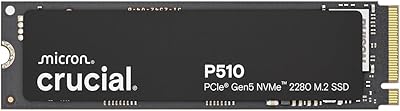
Crucial P510 2TB Gen5 NVMe SSD
85%
94%
Sequential Read Performance
91%
Sequential Write Performance
62%
Thermal Management
93%
Installation & Setup
74%
Data Migration Software
More
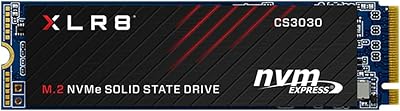
PNY XLR8 CS3030 4TB NVMe SSD
85%
88%
Sequential Read Performance
84%
Sequential Write Performance
86%
Real-World Speed Consistency
67%
Thermals & Heat Management
81%
Capacity & Storage Value
More
Crucial T705 2TB PCIe Gen5 NVMe SSD
84%
98%
Sequential Read Performance
91%
Game Loading Efficiency
56%
Thermal Management
94%
Video Rendering Speed
93%
DirectStorage Integration
More
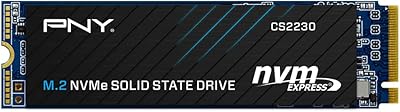
PNY CS2230 2TB M.2 NVMe Internal SSD
80%
88%
Read/Write Performance
91%
Value for Money
94%
Installation Ease
67%
Thermal Management
89%
Compatibility
More
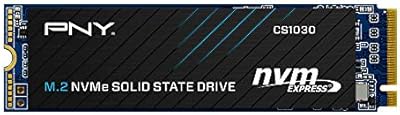
PNY CS1030 2TB M.2 NVMe SSD
77%
91%
Value for Money
83%
Read Speed Performance
72%
Write Speed Performance
88%
Boot & Load Times
94%
Installation Ease
More
PNY XLR8 CS3140 2TB NVMe SSD
81%
93%
Sequential Read Speed
89%
Sequential Write Speed
91%
Thermal Management
62%
Value for Money
84%
Random Read/Write
More
Crucial T700 2TB Gen5 NVMe M.2 SSD
82%
96%
Sequential Read Performance
93%
Sequential Write Performance
71%
Thermal Management
67%
Platform Compatibility
88%
Random I/O Performance
More
PNY CS2241 2TB M.2 NVMe Gen4 SSD
83%
88%
Sequential Read Performance
83%
Sequential Write Performance
86%
Real-World Speed Gains
91%
Value for Money
67%
Thermal Management
More

FAQ

Yes, you need a motherboard with a PCIe Gen5 x4 M.2 slot to reach the advertised throughput — platforms like Intel Z790 or AMD X670 and B650 boards typically include one. The drive will physically seat in Gen4 and Gen3 slots too, but speeds will be capped at whatever that interface supports. If you are unsure about your slot generation, check your motherboard manual or the manufacturer's spec page before purchasing.

No, there is no heatsink included. Gen5 drives produce considerably more heat than Gen4 alternatives, so running one without any thermal management under sustained load is not advisable. Many mid-to-high-end motherboards ship with an M.2 heatsink cover that works perfectly well, but if yours does not have one, factor in the cost and physical clearance of an aftermarket heatsink before you order.

It depends on your laptop's M.2 slot specification. The drive uses the M.2 2280 form factor and needs PCIe Gen5 x4 support to run at its rated speeds; most current consumer laptops have Gen4 slots, so you would get reduced throughput. It will still function, just not at peak performance. Check your laptop's service manual or upgrade documentation to confirm slot generation and physical size compatibility before buying.

TCG Opal 2.0 is a hardware encryption standard built directly into the drive's controller chip, meaning the drive handles all encryption and decryption internally with no CPU overhead. For professionals handling sensitive client data, financial records, or legal files, it is a practical, low-friction way to protect stored information. For home users focused on gaming or general media storage, it is simply a feature sitting quietly in the background — useful if your needs ever change, but not something you need to actively manage.

For the majority of games, the honest answer is: not dramatically. Traditional game load times are already fast enough on Gen4 drives that Gen5's extra headroom goes largely unnoticed in day-to-day play. The real-world benefit shows up in titles that specifically support Microsoft DirectStorage, which streams game assets directly to the GPU — a growing but still limited list. If DirectStorage-native gaming is a priority for you, the advantage is genuine; otherwise, a well-reviewed Gen4 drive at a lower price will feel nearly identical for most titles.

The AI benefit applies specifically to local, on-device workloads — things like running image generation models such as Stable Diffusion on your own hardware, loading large language model weights, or processing AI-generated media files. The drive's high throughput ensures it is not the system bottleneck during those storage-intensive operations. It has no effect on cloud-based AI tools like Midjourney or ChatGPT, which process everything remotely and never interact with your local storage at all.

It is genuinely one of the simpler hardware installation tasks. You locate the M.2 slot on your motherboard, remove the retention screw or clip if present, slide the drive in at a slight upward angle until it seats firmly, then press it flat and secure it. The whole process usually takes under five minutes. If your motherboard has an integrated heatsink cover over the M.2 slot, remove it first, install the drive, and replace the cover on top for thermal management.

Early user feedback is encouraging — buyers consistently report that real-world speeds match expectations and that the installation experience is trouble-free. That said, this drive only reached market in late 2024, so independent long-term endurance testing is still thin. The 5-year warranty with TBW backing provides a reasonable safety net, but if proven multi-year reliability data is a deciding factor for you, a Gen4 drive with a longer ownership track record is the more conservative option right now.

For most users, yes. Two terabytes comfortably holds dozens of installed games alongside a working media archive, leaving room for project files and application data. Video professionals working in high-bitrate RAW or uncompressed formats may fill it faster, but 2TB is a very usable size as a primary high-speed drive, particularly if you have a secondary drive for cold storage or completed project archives.

Three things are worth confirming: first, that your motherboard has a PCIe Gen5 x4 M.2 slot — check the spec sheet or manual, not just the product listing. Second, that the slot supports the M.2 2280 length, which is standard but worth verifying on compact or small-form-factor boards where shorter sizes are sometimes used. Third, check whether your board already includes an M.2 heatsink, since you will want thermal coverage for a Gen5 drive. If all three check out, you should have no compatibility issues.

Where to Buy

Newegg.com
In stock $399.00
B&H Photo-Video-Audio
In stock $399.99