Overview

The Pioneer GM-D9701 Mono Class D Car Amplifier sits firmly in the upper tier of Pioneer's amplifier range — serious enough for dedicated bass builds, but not so exotic that installation becomes a science project. It delivers 500W RMS at 4 ohms, climbing to 1200W RMS at 1 ohm, which in practice means the kind of headroom that lets a quality subwoofer breathe without clipping or compression. The compact metal chassis keeps the footprint manageable for trunk builds or under-seat installs. Available since early 2019 and still actively sold, it has built a track record that newer releases simply haven't had time to match.
Features & Benefits

Class D amplification is worth a quick explanation if you haven't encountered it before: unlike older Class AB designs, Class D topology converts power far more efficiently, generating less heat and drawing less from your vehicle's electrical system. The GM-D9701 pairs that efficiency with 1-ohm stability, so whether you're running a single 2-ohm sub or wiring a dual voice coil configuration down to 1 ohm, the amp holds steady without thermal shutdowns. Add a 100dB signal-to-noise ratio and a frequency range stretching from 10Hz to 240kHz, and you're getting bass reproduction that is genuinely clean — not just loud.

Best For

This Pioneer mono amp is a natural fit for anyone building around a single subwoofer where deep, controlled bass matters more than raw noise. It particularly shines for enthusiasts running low-impedance loads — 1 or 2 ohm — where lesser amps tend to struggle or simply shut down. Space-constrained builds benefit from the manageable footprint, and anyone stepping up from an entry-level amplifier will notice a tangible difference in impact and clarity, not just on paper. If your priority is honest, musical output rather than chasing inflated peak wattage claims, this Class D subwoofer amplifier is well worth serious consideration.

User Feedback

Across more than 400 ratings, this Pioneer mono amp holds a 4.5-star average, and the feedback tells a consistent story. Buyers frequently describe the bass as clean and full rather than muddy or strained — a real-world quality that separates it from cheaper alternatives. Installation earns positive marks too, with users appreciating the logical terminal layout. Where problems arise, they almost always trace back to setup: poor ground connections or undersized power wiring that limits what the amp can actually deliver. Longevity reports are encouraging, with many users still running the same unit years later. Wire it properly from day one and it rewards you.

Pros

  • Stable 1-ohm operation lets you push demanding subwoofer configurations without thermal shutdowns or output drops.
  • Class D efficiency means the amp runs cool and puts less strain on your vehicle's electrical system than older designs.
  • A 100dB signal-to-noise ratio produces genuinely clean bass, free from the hiss and hum that undercuts cheaper amplifiers.
  • The GM-D9701 has been on the market since 2019 and is still actively sold, giving it a real-world track record to evaluate.
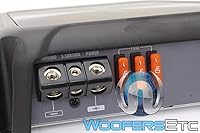
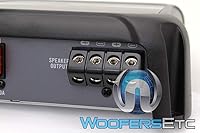
  • Terminal labeling is clear and logically arranged, making the wiring process straightforward even for first-time installers.
  • The metal enclosure feels solid and built to last, not like a product that will show wear after one summer in a hot trunk.
  • Frequency response extending down to 10Hz captures sub-bass detail that many amplifiers in this class simply roll off.
  • Over 400 buyer ratings averaging 4.5 stars reflects consistent satisfaction across a wide range of real-world installs.
  • Multiple long-term users report reliable performance after years of regular use, which matters more than any spec sheet claim.

Cons

  • Getting full rated power requires proper gauge power and ground wiring — undersized cable is the most common cause of disappointing results.
  • A poor ground connection can cause noise, instability, or protection shutdowns, so grounding shortcuts cost you real performance.
  • Single-channel mono design means you will need a separate amp entirely if you ever want to power full-range speakers.
  • Higher electrical demand at 1-ohm loads may require an upgraded alternator or capacitor in vehicles with weaker charging systems.
  • At its size and weight, finding a clean, secure mounting spot in smaller vehicles takes more planning than compact micro amps require.
  • No built-in Bluetooth or app-based tuning — all adjustments are manual, which is standard but worth knowing if you expect modern conveniences.
  • The enclosure size, while not excessive, is larger than some ultra-compact Class D alternatives that fit under seats more easily.

Ratings

The scores below for the Pioneer GM-D9701 Mono Class D Car Amplifier were generated by our AI rating engine after analyzing verified buyer reviews from global markets, with spam, bot-submitted, and incentivized feedback actively filtered out before scoring. Each category reflects both the genuine strengths enthusiasts praise and the friction points that real installers have encountered in day-to-day builds. Nothing has been smoothed over — where buyers struggled, the scores reflect it.
Bass Output Quality
93%
Buyers across a wide range of vehicle types consistently describe the low-end output as tight, powerful, and free from the muddiness that plagues cheaper amplifiers. In daily listening scenarios, the difference between this amp and entry-level alternatives is immediately noticeable — bass hits with authority without smearing into surrounding frequencies.
A small number of users feel the absolute ceiling of bass impact depends heavily on the subwoofer pairing and enclosure tuning, meaning the amp alone cannot compensate for a poorly designed box. Those running modest subwoofers may feel the amp's capability exceeds what the rest of the system can express.
Power Delivery Consistency
88%
Real-world users running the GM-D9701 at 1 and 2 ohms report stable, consistent output even during extended high-volume listening sessions, which is where many competing amps start to throttle or protect. The Class D design plays a clear role here, keeping thermal stress low and allowing sustained delivery without noticeable compression.
Achieving full rated power is contingent on proper wiring, and several buyers who initially reported underwhelming output later traced the issue to undersized power cable or a high-resistance ground connection. The amp delivers what it promises, but only when the supporting electrical infrastructure meets its demands.
Installation Experience
84%
The terminal layout is logically organized and clearly labeled, which experienced installers and first-timers alike appreciate when working in tight trunk spaces under poor lighting. Multiple buyers note that the physical setup process itself was among the least frustrating they have encountered in this product category.
The amp's physical footprint, while not excessive, does require some forward planning for vehicle-specific fitment — it is not a small unit and will not disappear easily into underseat locations in compact cars. A small subset of users also wished for more detailed printed documentation included in the box for first-time amp buyers.
1-Ohm Stability
91%
Running a subwoofer at 1 ohm places significant stress on an amplifier, and the GM-D9701 handles it with reliability that buyers specifically call out as a deciding factor in their purchase. In builds where dual voice coil subs are wired down to 1 ohm for maximum output, this amp consistently holds stable without triggering protection modes under normal operating conditions.
At sustained 1-ohm loads, the amp does place real demand on a vehicle's charging system, and owners of older vehicles with weaker alternators have reported voltage sag and occasional resets during peak bass transients. This is a physics-level limitation rather than a product defect, but it requires planning that some buyers underestimate.
Thermal Management
86%
Class D efficiency means the GM-D9701 converts a higher proportion of electrical energy into audio output rather than wasted heat, and buyers who have owned Class AB amps previously often comment on how comparatively cool this unit runs after long listening sessions. That translates to greater confidence in enclosing it in tighter spaces.
In fully enclosed, unventilated installations — such as inside a sealed custom box wall with no airflow — some users have reported occasional thermal protection triggers during prolonged high-power use in summer months. The amp manages heat well under normal conditions, but it is not immune to environment-driven thermal stress.
Build Quality
82%
18%
The all-metal enclosure feels substantial and purposeful, not the hollow, lightweight shell that buyers sometimes encounter at this price tier. The overall fit and finish conveys a product built for real installations in vehicles that will see daily use, vibration, and temperature swings over multiple years.
Some buyers note that the external finish shows minor scuffing relatively easily during installation, particularly if the unit needs to be repositioned in a tight space. A handful of reviewers also feel the mounting hardware included could be more robust given the amp's overall weight.
Signal Cleanliness
89%
The 100dB signal-to-noise ratio translates clearly to real-world listening — even at moderate volume levels with the car parked and the stereo idling, background hiss is essentially absent. Buyers who have dealt with noisy ground loops on cheaper amps often highlight this cleanliness as one of the most immediately perceptible improvements.
A minority of users have experienced noise introduced not by the amp itself but by ground loop issues created during installation, which can be mistakenly attributed to the unit. Proper grounding technique resolves this in virtually all reported cases, but diagnosing it can be frustrating for less experienced installers.
Value for Money
81%
19%
Positioned in the upper-mid tier of the mono amplifier market, this Pioneer mono amp delivers performance characteristics that buyers typically associate with spending significantly more, particularly in terms of 1-ohm stability and output cleanliness. Long-term owners frequently note that the cost-per-year of ownership feels justified given the amp's durability record.
Buyers comparing sticker price against raw wattage alone may feel that competing brands offer higher peak numbers for less money, without fully accounting for real-world stability, noise floor, or build longevity. The value proposition is strongest for buyers who understand what they are evaluating and weakest for those shopping purely by peak wattage figures.
Compatibility Range
78%
22%
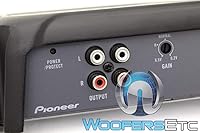
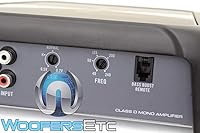
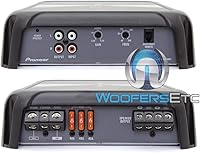
The GM-D9701 works with a wide range of head units — including aftermarket receivers with full-range preamp outputs and factory stereos when paired with a line output converter — giving it flexibility across different build starting points. Its variable gain and onboard crossover controls help dial it into diverse subwoofer pairings without requiring external processors.
Because it is strictly a mono subwoofer amplifier, buyers who later decide they want to expand their system to include amplified door speakers will need an additional unit entirely — there is no growth path within this single component. Factory head unit integration also adds cost and complexity that buyers sometimes overlook when budgeting their build.
Longevity & Reliability
87%
Users who purchased the GM-D9701 in its early release years report that the amp continues to perform consistently years into ownership, with no degradation in output quality or stability under normal use conditions. That multi-year reliability track record is genuinely difficult to fake in online reviews and reflects meaningful product durability.
A small number of buyers report early failures, typically within the first few months, often correlated with improper electrical setup rather than manufacturing defects. While the failure rate appears low relative to total ownership volume, Pioneer's warranty and support process receives mixed feedback from those who did need to use it.
Frequency Accuracy
83%
The 10Hz lower frequency boundary means this amp resolves genuine sub-bass content that many amplifiers clip or simply cannot reproduce — a distinction that matters in genres like hip-hop, EDM, and cinematic soundtracks where ultra-low fundamentals contribute to physical impact and immersion. Audiophile-leaning buyers specifically note the accuracy of low-end tonality.
For casual listeners who are not deliberately running test tones or listening analytically, the extended low-frequency capability may go largely unnoticed without a correspondingly capable subwoofer and enclosure to translate it into audible and tactile output. The amp's frequency performance is a ceiling that the rest of the system must be able to reach.
Ease of Tuning
74%
26%
The onboard controls for gain, subsonic filter, and bass boost are accessible and functional for most standard subwoofer setups, giving installers enough adjustment range to dial in a clean, well-integrated sound without relying on external processors. Experienced users can get a solid tune fairly quickly using the controls on the unit itself.
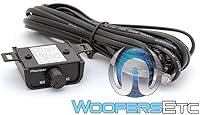
All tuning is done manually on the physical unit, which can be inconvenient when the amp is mounted in an out-of-reach location inside a trunk or behind a panel. There is no companion app or remote adjustment interface beyond an optional separately purchased bass knob, which limits real-time fine-tuning while driving for most users.
Packaging & Unboxing
69%
31%
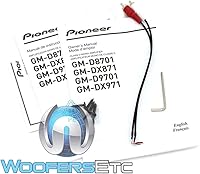
The amp arrives securely packed with adequate protection for shipping, and buyers generally report receiving the unit in undamaged condition — an important baseline given how frequently high-power electronics arrive damaged when packaging is insufficient. The box contents are straightforward and include what is needed to begin a basic installation.
Several buyers note that the included accessories are minimal, with no wiring kit, mounting screws of sufficient length, or comprehensive instruction manual included in the box. For experienced installers this is a non-issue, but buyers new to amplifier installation may feel under-supported out of the box.
Form Factor & Fitment
76%
24%
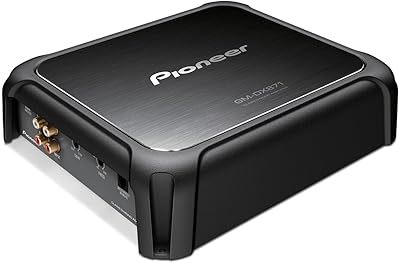
The surface-mount design and flat profile make the GM-D9701 easier to secure cleanly in a trunk build compared to amps with irregular or raised topographies. Its proportions work well when mounted horizontally against the floor or wall of a subwoofer enclosure without requiring unusual custom fabrication.
At just under 13 inches in two dimensions, the amp is noticeably larger than ultra-compact Class D alternatives that have entered the market in recent years, and it will not fit cleanly under the seats of most passenger vehicles. Buyers with very limited installation real estate should measure their available space carefully before purchasing.

Suitable for:

The Pioneer GM-D9701 Mono Class D Car Amplifier is built for a specific type of buyer, and those buyers tend to love it. If your primary goal is driving a single high-performance subwoofer with clean, controlled power — rather than running full-range speakers across multiple channels — this amp is designed exactly for that job. It is especially well-matched for enthusiasts who plan to wire a subwoofer at 1 or 2 ohms, since the GM-D9701 holds stable at those lower impedances where many competing amps struggle or overheat. Builders working within tight physical constraints, such as compact trunk builds or custom enclosures, will appreciate the manageable footprint without sacrificing meaningful output. It also makes strong sense for anyone upgrading from an entry-level amplifier who wants a noticeable improvement in bass authority and clarity, not just a bigger number on a spec sheet.
Not suitable for:

The Pioneer GM-D9701 Mono Class D Car Amplifier is not the right choice for every audio project, and being honest about that matters. If you need to power door speakers, tweeters, or a full multi-channel system, this amp simply cannot do that — it is a single-channel mono unit intended solely for subwoofer duty. Buyers expecting a plug-and-play experience with minimal electrical planning may also run into frustration: the amp requires proper power wiring gauge and a solid, low-resistance ground connection to perform as rated, and shortcuts in either area will limit what you actually hear. Those on a tight installation budget who are not prepared to invest in quality wiring, a suitable fuse, and potentially a capacitor or upgraded alternator for demanding builds should recalibrate their expectations. If your listening priorities lean toward crisp highs and detailed midrange rather than bass impact, the money is better spent elsewhere in your system.
Specifications

  • Amplifier Class: This amp uses Class D topology, which converts power more efficiently than traditional Class AB designs, resulting in less heat output and lower current draw from your vehicle's electrical system.
  • RMS Power (4Ω): At a 4-ohm load, the amplifier delivers 500W RMS of continuous, sustained power — the figure that actually matters for real-world listening performance.
  • RMS Power (2Ω): Wired to a 2-ohm load, output climbs to 800W RMS, making it well-suited for single dual voice coil subwoofers wired in parallel.
  • RMS Power (1Ω): At a 1-ohm load, the amplifier reaches its peak rated continuous output of 1200W RMS, providing maximum headroom for demanding low-impedance subwoofer configurations.
  • Peak Power: Pioneer rates the maximum peak power output at 2400W, though real-world listening performance is best evaluated against the RMS figures.
  • Channels: This is a single-channel mono amplifier, designed exclusively for subwoofer applications and not intended to drive full-range speakers or tweeters.
  • Min. Impedance: The amplifier is stable down to 1 ohm, allowing compatibility with low-impedance subwoofer wiring configurations without risk of thermal shutdown or oscillation.
  • Frequency Response: The amplifier covers a frequency range of 10Hz to 240kHz, ensuring accurate reproduction of deep sub-bass frequencies with no low-end roll-off.
  • Signal-to-Noise: A signal-to-noise ratio of 100dB means the output is exceptionally clean, with background noise kept well below audible thresholds even at high volume levels.
  • Dimensions: The unit measures 4.33 x 12.99 x 12.99 inches, offering a compact enough footprint for trunk builds while still housing the hardware needed for high-output performance.
  • Weight: The amplifier weighs 7.89 pounds, reflecting its solid metal construction without being impractically heavy for installation in enclosed spaces.
  • Enclosure Material: The chassis is constructed from metal, which contributes to structural rigidity and assists with passive heat dissipation during sustained high-power operation.
  • Mounting Type: Designed for surface mounting, the amplifier can be secured directly to a flat surface inside a trunk, under a seat, or within a custom enclosure wall.
  • Operating Voltage: The amplifier is rated for operation at up to 16 volts, making it compatible with standard 12V automotive electrical systems including those with slightly elevated charging voltages.
  • Certification: The GM-D9701 carries FCC certification, confirming it meets United States federal standards for electromagnetic interference and radio frequency emissions.
  • Model Number: The official model number is GM-D9701, used across Pioneer's product documentation, warranty registration, and authorized dealer listings.
  • Brand: Manufactured and sold under the Pioneer Car brand, a division of Pioneer Corporation with decades of history in automotive audio equipment.
  • Availability: The amplifier was first made available in January 2019 and remains an active, non-discontinued product as of the time of this review.

Related Reviews
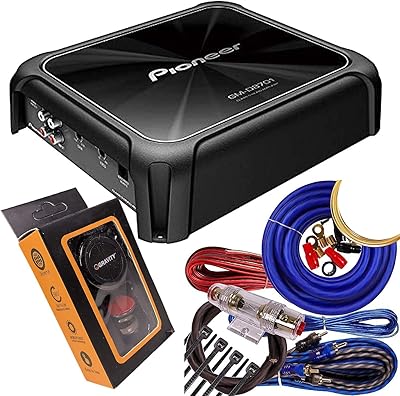
Pioneer GM-D8701 1600W Class D Mono Amplifier
83%
88%
Bass Performance
90%
Power Output
85%
Installation Process
89%
Compact Design
62%
Heat Management
More
Pioneer GM-DX871
Pioneer GM-DX871
78%
78%
Power Output & Performance
83%
Build Quality
91%
Compact Form Factor
69%
Installation Experience
86%
Low-Pass Filter Range
More
Stinger MT-1500.1 Monoblock Car Amplifier
74%
83%
Bass Output Performance
57%
Rated vs Real-World Power
74%
Build Quality
62%
Heat Management
88%
Ease of Installation
More
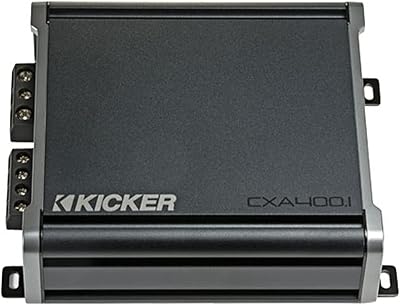
Kicker CXA400.1 Mono Car Amplifier
79%
86%
Sound Clarity
71%
Power Output Accuracy
91%
Installation Ease
67%
Build Quality
78%
Thermal Performance
More
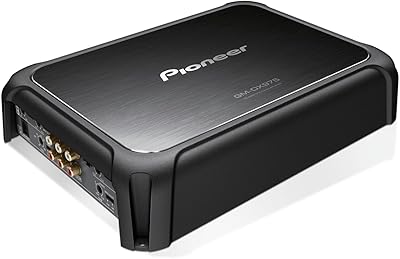
Pioneer GM-DX975 5-Channel Car Amplifier
81%
88%
Sound Quality
83%
Power Delivery
81%
Build Quality
71%
Thermal Management
74%
Ease of Installation
More
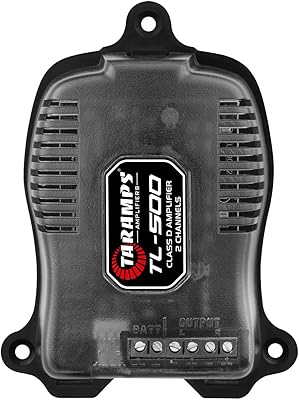
Taramp's TL 500 2-Channel Car Amplifier
74%
88%
Value for Money
91%
Ease of Installation
74%
Sound Quality
62%
Power Output
67%
Build Quality
More
Pyle INV1000DBA 2000W Class D Car Audio Amplifier
85%
88%
Sound Quality
92%
Power Output
85%
Build Quality
80%
Ease of Installation
89%
Protection Features
More
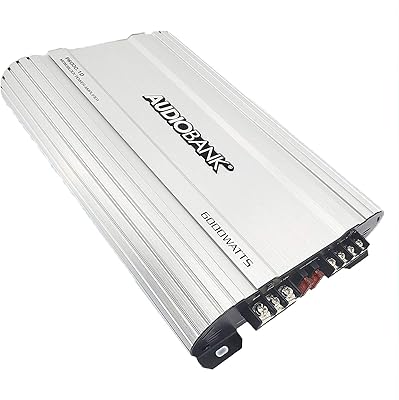
Audiobank P6001 6000W Class D Monoblock Car Amplifier
86%
90%
Audio Performance
87%
Ease of Installation
91%
Thermal Protection
85%
Build Quality
89%
Power Output
More
Planet Audio MB2000.1D Class D Car Amplifier
86%
94%
Power Output
88%
Sound Quality
85%
Build Quality
90%
Size and Portability
75%
Efficiency & Heat Management
More
MTX Thunder1000.1 Class D 1000W Mono Amplifier
87%
91%
Performance & Power Output
88%
Bass Enhancement
85%
Compact Design & Installation
89%
Heat Dissipation & Durability
87%
Bass Boost Functionality
More

FAQ

The GM-D9701 pairs well with subwoofers in the 10-inch to 15-inch range, provided the sub's RMS power handling is matched appropriately to the amp's output at your chosen impedance. A single high-quality 12-inch or 15-inch subwoofer wired to 1 or 2 ohms is a common and well-matched combination.

No — this is a mono amplifier built strictly for subwoofer use. It outputs a single channel, which means it cannot drive a stereo pair of speakers. If you need amplification for door speakers or a full-range system, you will need a separate multi-channel amp.

At the power levels this amp can draw, you should use at minimum 4-gauge power and ground wiring — and many installers prefer 0-gauge for 1-ohm builds to ensure the amp gets full current without voltage drop. Undersized wiring is the most common reason buyers report the amp underperforming, so do not cut corners here.

Yes, it can work with a factory head unit, but you will likely need a line output converter (LOC) to convert the speaker-level signal from a stock stereo into a preamp-level RCA signal the amp can accept. Some installers also use a signal processor in this setup to improve tuning control.

Class D amplifiers run significantly cooler than older Class AB designs because they waste far less energy as heat. Under normal conditions with adequate airflow, this amp stays at manageable temperatures. Just make sure it is not enclosed in a completely sealed, unventilated space.

Pioneer recommends using an appropriately rated fuse as close to the battery as possible — typically in the 150A to 200A range for 1-ohm builds pulling maximum power. Check Pioneer's official documentation for your specific wiring configuration, and never omit the main fuse for safety reasons.

No. This is already a mono amplifier, meaning there is no second channel to bridge. The 1-ohm output rating is effectively its maximum power configuration, and no additional bridging is possible or necessary.

It works with both. A sealed box tends to produce tighter, more accurate bass, while a ported enclosure typically delivers higher output and deeper extension. The choice comes down to your listening preference and the subwoofer manufacturer's enclosure recommendations — the amp itself is agnostic to enclosure type.

At 1-ohm loads, this amp draws significant current, and vehicles with weak factory alternators may experience dimming headlights or voltage sag under heavy bass hits. If you plan to run it near its maximum output regularly, it is worth checking your alternator's output rating and considering a high-capacity capacitor or an upgraded alternator.

Pioneer sells compatible remote bass level controllers separately, and the GM-D9701 includes a bass boost control on the unit itself. If remote knob access is important for your install — which is useful when the amp is mounted out of reach in a trunk — check that the controller you purchase is listed as compatible with this specific model.

Where to Buy