Overview

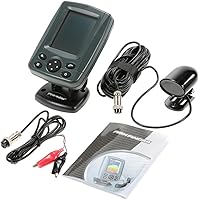
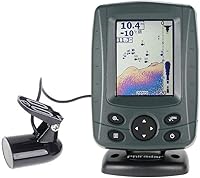
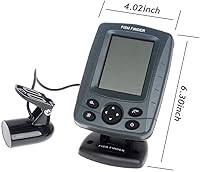
The Phiradar FF688C 3.5″ Color LCD Fish Finder sits comfortably in the entry-to-mid-range category — capable enough for weekend anglers, but without the complexity of a full chartplotter or GPS system. What immediately stands out is its sunlight-readable color screen, a 3.5″ TFT display that holds up well when you are squinting across a bright lake at noon. The dual-frequency sonar, running at 200KHz and 83KHz, means you can scan a tighter column below the boat or sweep a wider cone depending on conditions. This fish finder handles lakes, rivers, reservoirs, and even nearshore saltwater with real confidence, making it a genuinely versatile tool for casual and semi-serious fishing alike.
Features & Benefits

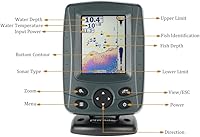
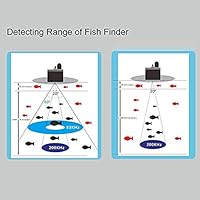
The FF688C runs two sonar frequencies simultaneously — the 200KHz beam delivers precise, narrow readings useful in deeper water, while the 83KHz beam sweeps a broader cone, helpful in shallower or weedy environments. Depth detection reaches down to 240ft under ideal conditions, though real-world performance varies based on water clarity and turbulence. The 100-level sensitivity adjustment is genuinely practical: beginners can leave it on auto, while experienced anglers can dial it in to cut interference from vegetation. The unit also reads bottom composition — distinguishing grass, sand, and rock — helping you understand where fish may be holding. Add audible alarms and a chart freeze function, and this Phiradar unit earns its keep out on the water.

Best For

This fish finder is a natural fit for kayak and small-boat anglers who want reliable depth and fish detection without mounting a bulky, expensive unit. Weekend bass, walleye, or catfish fishermen will appreciate the bottom composition readings when trying to locate structure. If you are upgrading from an older single-frequency flasher, the FF688C offers a clear step forward without overwhelming you with complex menus. The 15-language support is a quietly useful feature for anyone who fishes internationally or shares gear within a multilingual group. To be straightforward: this unit will not replace a dedicated chartplotter and has no GPS — but for core fish-finding tasks, it holds its own confidently.

User Feedback

With a 4.0-star average across more than 340 ratings, the FF688C has built a solid reputation, and the consistent praise centers on screen clarity in daylight, straightforward setup, and how approachable the interface is for first-time fish finder users. Several buyers note being genuinely surprised by how well it performs relative to pricier units. That said, the criticism worth taking seriously involves the transducer cable, which some users find too short for certain boat configurations, and the non-waterproof buttons — a real concern the manufacturer itself acknowledges. A handful of reviews also flag occasional false readings in heavily vegetated water. None of it is a dealbreaker, but buyers should go in with clear expectations.

Pros

  • Dual-frequency sonar gives better coverage versatility than single-beam units at this price tier.
  • The color LCD screen holds up well in direct sunlight, making it genuinely readable on the water.
  • Setup is fast and beginner-friendly — most anglers are fishing within minutes of unboxing.
  • Bottom composition detection helps identify grass, sand, and rock for smarter fish targeting.
  • Compact and lightweight enough for easy kayak mounting and between-trip portability.
  • Support for 15 languages adds real-world value for international anglers and shared gear situations.
  • Audible depth and fish alarms free you to focus on rod handling instead of watching the screen.
  • The stop-chart freeze feature is a small but practical touch that experienced sonar users will appreciate.
  • At its price point, the FF688C delivers sonar performance that genuinely surprises many buyers.

Cons

  • Non-waterproof buttons create real anxiety during rain or spray — a significant oversight for a marine device.
  • Included transducer cable is too short for many larger boats and some kayak configurations.
  • False readings in heavily vegetated or debris-filled water reduce confidence in detection accuracy.
  • The 240ft depth rating is misleading in practice; murky or turbulent conditions cut performance noticeably.
  • Button responsiveness can degrade over time, especially with repeated exposure to humid conditions.
  • No GPS or chartplotter integration limits usefulness for anglers who need navigation alongside sonar.
  • Icon-based fish identification can misread baitfish schools or debris, frustrating experienced sonar users.
  • The alarm volume is too soft to cut through wind or engine noise in typical outdoor conditions.

Ratings

The Phiradar FF688C 3.5″ Color LCD Fish Finder has been evaluated across hundreds of verified buyer experiences worldwide, with our AI rating system actively filtering out incentivized, bot-generated, and outlier reviews to surface what genuine anglers actually think. Scores reflect both where this unit earns real confidence and where it falls short — nothing is glossed over. The result is a transparent, category-by-category breakdown that helps you decide whether this fish finder matches your specific fishing style and expectations.
Sonar Detection Accuracy
77%
23%
Most anglers report reliable fish and bottom detection in lakes, ponds, and slow rivers at typical recreational depths. The dual-frequency setup gives the FF688C an edge over single-beam units at this price tier, and users targeting catfish or walleye near structured bottoms often praise the consistency of readings.
In heavily vegetated water or areas with significant suspended debris, false echoes are a recurring frustration. Detection accuracy also degrades noticeably beyond 150ft in murky conditions, meaning the advertised 240ft ceiling is more theoretical than practical for many buyers.
Display Quality
84%
The 3.5″ color TFT screen draws consistent praise for being genuinely readable in bright outdoor light — a real differentiator at this price point. Colors are distinct enough to separate bottom composition, fish icons, and depth readings without straining your eyes on a sunny afternoon.
Viewing angles are limited, so positioning matters more than you might expect on a rocking kayak or small boat. A handful of users also note that the display feels slightly washed out in extreme direct sunlight compared to premium units with higher-brightness panels.
Ease of Setup
88%
Getting the FF688C up and running is genuinely straightforward — most buyers report being on the water within minutes of opening the box. The menu structure is logical, and even anglers with no prior fish finder experience describe the initial setup as stress-free.
The transducer mounting hardware is basic, and users with non-standard hull shapes or kayak configurations sometimes need additional hardware to get a secure, properly angled mount. Instructions could be clearer for attaching the transducer to certain surface types.
Build Quality & Durability
62%
38%
The overall unit feels reasonably solid for its weight class, and the screen housing handles normal outdoor handling without obvious flex or creaking. For casual weekend use, most buyers find it holds up adequately across a season or two without issues.
The non-waterproof buttons are a genuine weak point that the manufacturer itself acknowledges — and buyers feel it. Splashing from waves or rain creates real anxiety about longevity. Several reviewers report button responsiveness degrading over time, particularly in humid marine environments.
Transducer & Cable
58%
42%
The included transducer performs competently in typical freshwater scenarios, and the dual-frequency capability means you are getting more sonar versatility than the cable quality might suggest. For pond fishing or calm lake use, most users find it adequate out of the box.
Cable length is a recurring complaint — it simply does not reach comfortably on larger boats or unconventional kayak setups without an extension. The transducer housing also feels lightweight relative to the rest of the unit, raising durability questions for long-term use in rougher water.
Sensitivity & Adjustability
79%
21%
Having 100 sensitivity levels sounds like marketing overkill, but experienced anglers genuinely appreciate the fine-grained control when fishing weedy flats or targeting fish suspended mid-column. The auto-zoom bottom tracking reduces the need for constant manual adjustment in varying depth conditions.
Beginners may find the sensitivity range overwhelming without guidance, and the manual does not do a great job explaining optimal starting points for different environments. Getting the best performance in mixed-bottom or vegetated water takes real trial and error before it clicks.
Bottom Composition Reading
73%
27%
The ability to distinguish between grass, sand, and rock on screen is a meaningful feature for anglers who care about habitat targeting. Bass and catfish anglers in particular report using this information actively to decide where to anchor or drift.
The differentiation is not always consistent — transitional zones between bottom types can show ambiguous readings, and weed-heavy areas sometimes produce cluttered displays that make interpretation harder. It is a useful tool but one that requires experience to read confidently.
Multi-Language Support
91%
Fifteen languages covering everything from Korean and Japanese to Greek and Danish is an unusually broad offering at this tier. International anglers and fishing clubs that share equipment across language groups find genuine, practical value in this feature.
The translation quality for a few of the less common languages has drawn minor criticism, with some users noting awkward phrasing in menus. It is a non-issue for English, Spanish, and German users, but worth knowing if your preferred language is one of the less mainstream options.
Depth Range & Precision
71%
29%
Reading depth to one-tenth of a unit — whether in feet or meters — gives anglers a precise picture of exactly where the bottom sits, which matters when anchoring or drifting specific structures. Coverage down to 80 meters handles the vast majority of freshwater and nearshore scenarios.
The 240ft maximum is a best-case figure under ideal, clear-water conditions. In practice, murky or turbulent water can cut effective depth performance significantly, and buyers who fish deeper reservoirs or coastal channels may find the unit inconsistent beyond moderate depths.
Fish Identification & Icons
69%
31%
The large and small fish icon differentiation is a helpful shortcut for newer anglers learning to interpret sonar returns, and the depth indicator attached to each icon removes guesswork when trying to set lure depth. It reads cleanly on the color display.
More experienced sonar users often prefer raw arch returns over interpreted icons, since the icon mode can occasionally misrepresent baitfish schools or debris as fish. The icon system is a good teaching tool but limiting once you develop real sonar-reading skill.
Alarm System
74%
26%
Both the fish alarm and the depth alarm function reliably, which is genuinely useful when you want to stay focused on rod handling rather than watching the screen. Setting a minimum depth alarm when navigating shallow flats is a practical safety feature on a small boat.
The alarm tone is not particularly loud in outdoor conditions with wind or motor noise, which reduces its real-world usefulness unless you are fishing in calm, quiet environments. There is no vibration option, which would have helped in noisy settings.
Portability & Size
86%
At just over two pounds and with a compact footprint, this fish finder genuinely earns its reputation as a grab-and-go unit. Kayak anglers consistently highlight how easy it is to mount, reposition, or pack away between trips without dedicated storage solutions.
The compact size does mean a smaller display than full-console units, which can be a limiting factor when multiple anglers are trying to read the screen simultaneously or when viewing from a slightly awkward angle on a pitching boat.
Value for Money
82%
18%
A recurring theme in buyer reviews is genuine surprise at how much capability this unit delivers relative to its asking price. For anglers who want to step beyond a basic flasher without investing in a full chartplotter system, the FF688C hits a solid middle ground.
A few buyers who fish regularly or in demanding conditions report feeling the build quality does not quite justify the price once the button or cable issues emerge. There are slightly cheaper units with comparable sonar, and slightly pricier ones with meaningfully better construction.
User Interface & Navigation
76%
24%
The menu layout is clean and logically organized, and switching between chart modes or adjusting range takes only a few button presses once you are familiar with the layout. The stop-chart freeze feature is particularly well-executed and useful mid-session.
Button travel and feedback feel a bit soft, which combined with the non-waterproof concern makes frequent menu interaction feel less confident than it should. A few users also report that certain menu transitions are slower than expected when switching between sonar modes.

Suitable for:

The Phiradar FF688C 3.5″ Color LCD Fish Finder is built for recreational and semi-serious anglers who want a meaningful upgrade from entry-level flashers without committing to the cost and complexity of a full chartplotter system. Weekend fishermen working lakes, ponds, slow rivers, or calm coastal inlets will find the depth detection and bottom composition readings genuinely useful for locating fish-holding structure without a steep learning curve. Kayak anglers and small-boat owners in particular benefit from the compact footprint and lightweight build — it mounts cleanly without eating up limited deck space. Freshwater anglers targeting bass, walleye, or catfish will appreciate being able to distinguish between grass, sand, and rocky bottom on the same screen. The 15-language menu also makes this Phiradar unit a smart pick for international fishing trips or gear shared across a multilingual club or family.
Not suitable for:

Anglers fishing from larger vessels, in deep offshore water, or in consistently murky conditions will likely find the FF688C frustrating rather than helpful. The advertised 240ft depth ceiling is a best-case figure — real-world performance in low-visibility water can fall well short of that, making this unit a poor fit for reservoir anglers targeting deep structure or anyone fishing beyond shallow coastal zones. The non-waterproof buttons are a hard limitation for anyone fishing in rain, heavy spray, or saltwater splash environments where moisture exposure is essentially unavoidable. Serious or competitive anglers accustomed to high-resolution sonar units with GPS integration and precise target separation will find this fish finder underpowered for their needs. If transducer cable length is a constraint on your specific boat or rigging setup, budget for an extension before purchasing — the included cable comes up short for many non-standard configurations.

Specifications

  • Display: Features a 3.5″ TFT color LCD panel (V320XH240 resolution) designed for sunlight-readable visibility in outdoor conditions.
  • Sonar Frequencies: Operates on dual-beam sonar at 200KHz (narrow, precise) and 83KHz (wider cone coverage) simultaneously.
  • Depth Range: Detects depth from approximately 2ft (0.6m) down to a maximum of 240ft (80m) under ideal water clarity conditions.
  • Depth Precision: Displays depth readings in one-tenth unit increments for fine-grained accuracy in both feet and meter modes.
  • Output Power: Delivers 800 watts peak power and 100 watts RMS, providing strong sonar signal transmission across the supported depth range.
  • Sensitivity: Offers 100 adjustable sensitivity levels, allowing users to manually fine-tune sonar response or rely on automatic bottom tracking.
  • Bottom Detection: Identifies and displays three distinct bottom composition types — grass, sand, and rock — to assist habitat-based fish targeting.
  • Fish Identification: Uses large and small fish icons with individual depth indicators to help anglers interpret sonar returns without reading raw arches.
  • Alarm System: Includes an audible fish detection alarm and a configurable depth alarm with a user-selectable range of 3 to 99ft.
  • Languages: Supports 15 menu languages including English, Russian, French, German, Spanish, Japanese, Korean, Chinese, Italian, and more.
  • Unit Toggle: Allows the user to switch displayed measurements between feet and meters to suit personal preference or regional convention.
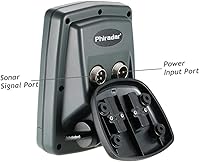
  • Power Source: Powered by an external DC power supply; no internal rechargeable battery is included or built into the unit.
  • Water Resistance: The control buttons are explicitly not waterproof and should not be exposed to direct water immersion or heavy spray.
  • Package Weight: The complete packaged unit weighs 2.03 pounds, making it practical for kayak mounting and portable transport.
  • Package Dimensions: Ships in a box measuring 7.36 x 7.01 x 5 inches, compact enough for easy storage in a tackle bag or gear locker.
  • Model Number: Manufactured by Phiradar under model designation FF688C; the product has not been discontinued as of the latest available data.
  • UPC: The product carries UPC code 611517025594 for retail identification purposes.
  • Chart Functions: Includes a stop-chart freeze feature that locks the current sonar display on screen at any point during a fishing session.

Related Reviews
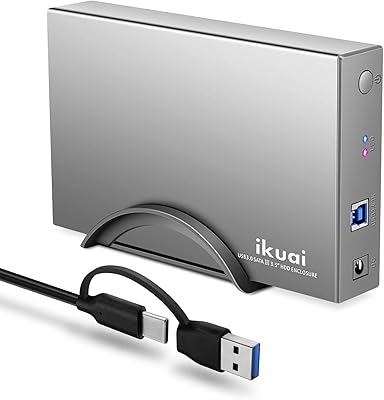
ikuai 3.5″ USB 3.0 Hard Drive Enclosure
80%
93%
Ease of Setup
71%
Build Quality
62%
Cable Quality & Reliability
88%
Drive Compatibility
74%
Data Transfer Speed
More
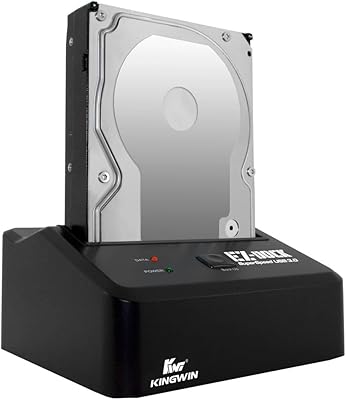
Kingwin EZD-2535U3 Hard Drive Docking Station
80%
93%
Ease of Setup
88%
Drive Compatibility
76%
Transfer Speed
81%
Build Quality
84%
Hot-Swap Functionality
More
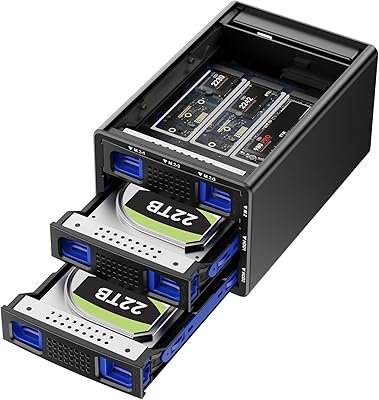
Cenmate 5-Bay Hybrid HDD/NVMe Enclosure
73%
83%
Build Quality
78%
Thermal Management
71%
Transfer Speed
69%
RAID Functionality
76%
Drive Compatibility
More
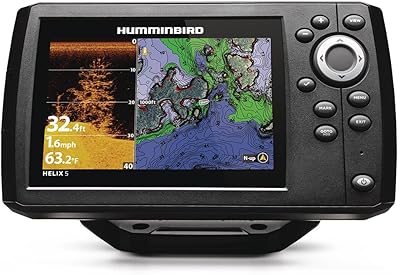
Humminbird Helix 5 CHIRP DI GPS G3 Fish Finder
79%
88%
Sonar Image Clarity
86%
GPS Accuracy
79%
AutoChart Live
67%
Display Visibility
83%
Ease of Use
More
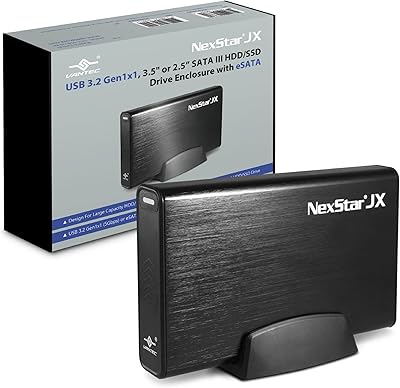
Vantec NexStar JX 3.5″ HDD Enclosure
76%
93%
Ease of Setup
78%
Transfer Speed — USB
86%
Transfer Speed — eSATA
74%
Thermal Management
67%
Build Quality
More
Syba 5 Bay 2.5″/3.5″ SATA HDD External RAID Enclosure SY-ENC50122
85%
87%
Performance
91%
Ease of Use
89%
Build Quality
85%
Data Transfer Speed
90%
RAID Flexibility
More
Avantree Audikast 3 Bluetooth TV Transmitter
79%
83%
Audio Quality
78%
Latency Performance
91%
Optical Volume Boost
86%
Dual Link Connectivity
74%
Wireless Range
More
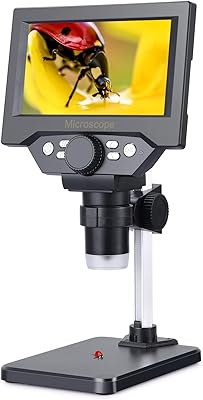
Koolertron 5.5-inch LCD Digital Microscope

75%
78%
Image Clarity
83%
Screen Quality
71%
Build Quality
86%
Stand & Adjustability
67%
Magnification Range
More
Taza Premium Sandalwood Natural Soap 5.3 oz Pack of 3
90%
95%
Hydration Performance
92%
Gentleness on Sensitive Skin
88%
Fragrance Appeal
90%
Lather Quality
94%
Skin Softness After Use
More
Schwarzkopf Keratin Color 5.6 Warm Mahogany Hair Color Cream

87%
94%
Effectiveness for Gray Coverage
89%
Color Vibrancy and Intensity
85%
Hair Softness After Use
92%
Ease of Application
90%
Longevity of Color
More

FAQ

Not fully. The unit itself is designed for outdoor marine use, but the manufacturer explicitly states that the control buttons are not waterproof. You will want to be careful during rain or heavy spray — consider a protective cover for the keypad if you fish in wet conditions regularly.

Setup is genuinely straightforward for most anglers. You mount the transducer, connect it to the unit, and power it via a DC source — typically a boat battery. No advanced wiring knowledge is required, and most buyers report being ready to fish within 15 to 20 minutes of unboxing.

This is one of the most common complaints from buyers. The included cable works fine on kayaks and small aluminum boats, but on larger vessels or unconventional hull setups, it often comes up short. Budget for a transducer cable extension if your boat is more than a basic small craft.

The FF688C is rated for use in the ocean, rivers, and lakes, so saltwater use is supported. That said, given the non-waterproof buttons, you should be especially careful about salt spray exposure and rinse the unit with fresh water after saltwater sessions to extend its lifespan.

Honestly, treat 240ft as the theoretical ceiling rather than a reliable everyday figure. In clear, calm water you can get close to that, but in murky, weedy, or turbulent conditions the effective depth drops noticeably. For typical lake and river fishing depths — say, under 100ft — performance is much more consistent.

It runs on DC power, so a standard 12V boat battery is the most common source. Many anglers also use portable lithium power stations or sealed lead-acid batteries for kayak use, which works well as long as the output voltage matches the unit's requirements.

By default, this Phiradar unit uses fish icons with depth markers, which makes it easy for beginners to spot fish quickly. More experienced sonar readers who prefer raw arch returns may find the icon mode limiting, though the display mode can be adjusted through the menu settings.

Think of it this way: the 200KHz beam is narrower and more precise, which is useful in deeper water or when you want a focused picture directly below the boat. The 83KHz beam sweeps a wider angle, covering more water horizontally — helpful in shallower areas or when you are trying to locate fish across a broader zone.

Weedy environments are a known weak spot for this fish finder. The sonar can struggle to differentiate between dense vegetation and actual fish returns, which produces cluttered or inaccurate readings. Dialing in the sensitivity manually can help reduce false echoes, but some ambiguity in heavy weed cover is unavoidable.

Yes, language switching is built right into the menu and covers 15 options including English, Spanish, German, French, Japanese, Korean, and several others. Changing it takes only a few button presses and does not require any reset or reconfiguration of your other settings.

Where to Buy