Overview

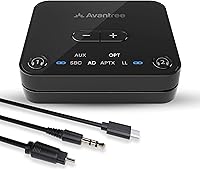
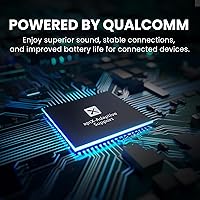
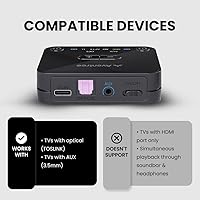
The Avantree Audikast 3 Bluetooth TV Transmitter is a practical, mid-range solution for anyone who wants to add wireless headphone audio to a TV without buying a new one. It connects via optical (TOSLINK) or 3.5mm AUX — and that compatibility boundary matters. If your TV only has HDMI ARC or eARC outputs, this transmitter will not work for you, full stop. That caveat aside, the device runs on a Qualcomm QCC3056 chipset with Bluetooth 5.3, offering stable performance and low-latency streaming. It draws power from a cord, so there are no batteries to charge on the transmitter itself.
Features & Benefits

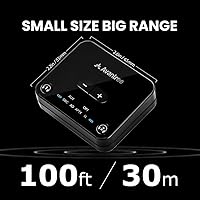
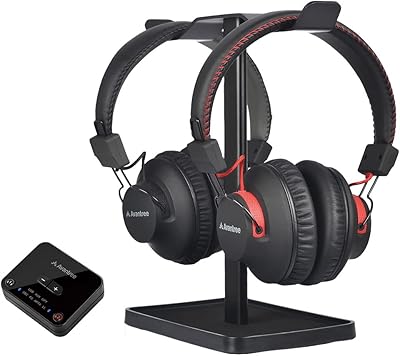
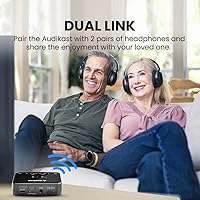
The standout here is aptX Adaptive support, which delivers noticeably cleaner, lower-latency audio when paired with compatible headphones — though standard headphones will fall back to aptX or SBC, with less impressive results. One genuinely useful addition is the optical volume boost of up to 6dB, which addresses a real and persistent annoyance: many optical transmitters output frustratingly low, unadjustable volume levels. The Audikast 3 fixes that. Dual Link connectivity lets two Bluetooth headphones pair simultaneously, which is handy for watching TV with a partner. Range is rated at 100ft, though expect real-world performance to drop in rooms with walls or interference.

Best For

This Avantree transmitter makes the most sense for TV owners who already have a set with an optical or AUX audio output and want a reliable, low-fuss way to go wireless. It is a particularly strong fit for couples who watch together but prefer individual volume control, and for anyone who has struggled with low-volume optical audio on a previous transmitter. Users with aptX Adaptive-compatible headphones will get the best results, but even standard Bluetooth users benefit from the stable connection and extended range. Those who need hearing assistance at higher volumes will also find the boost feature genuinely useful rather than a gimmick.

User Feedback

With over 6,700 ratings and a 4.2-star average, the Audikast 3 has clearly found a real audience. Buyers frequently praise how straightforward it is to set up and how much better the optical volume performs compared to older transmitters. The Dual Link feature draws consistent appreciation from couples and shared-household users. On the downside, a recurring frustration involves compatibility — some buyers purchase the device without realizing their TV only has HDMI outputs, leading to returns. There are also occasional mentions of latency with non-aptX headphones, so pairing device choice matters more than the product listing might suggest.

Pros

  • Optical volume boost of up to 6dB solves a genuine problem that most competing transmitters ignore entirely.
  • Dual Link lets two people share TV audio on separate headphones with no splitters or extra hardware.
  • Qualcomm QCC3056 chipset delivers stable, consistent connections during long multi-hour viewing sessions.
  • aptX Adaptive support brings low-latency, high-quality audio at a price point where this codec is rarely found.
  • Setup takes under two minutes — plug in the cable, power up, pair your headphones, done.
  • Firmware updates via the official support page mean the device can improve after purchase.
  • Compatible with a wide range of headphones including AirPods and Bose, not locked to the Avantree ecosystem.
  • Compact and light enough to sit unobtrusively behind any TV stand without cluttering the space.
  • No onboard battery means no charging routine and no degradation of transmitter performance over time.

Cons

  • HDMI-only TVs are fully incompatible — a detail many buyers miss until the device is already unboxed.
  • Real-world range drops significantly in homes with thick walls or dense wireless environments.
  • SBC fallback for standard headphones produces noticeably average audio quality compared to aptX Adaptive.
  • The optical volume boost does not apply to AUX connections, which some buyers discover only after setup.
  • Firmware updates require manual steps via an external page — less experienced users often skip them entirely.
  • Latency with non-low-latency headphones is visible enough to disrupt lip-sync during dialogue-heavy content.
  • Certain hearing aid models are explicitly incompatible, limiting usefulness for some accessibility-focused buyers.
  • The corded power requirement makes moving the device between rooms more cumbersome than expected.

Ratings

The Avantree Audikast 3 Bluetooth TV Transmitter has been scored by our AI system after analyzing thousands of verified global buyer reviews, with spam, bot-generated, and incentivized feedback actively filtered out. The scores below reflect what real users consistently experienced — strengths and frustrations alike — across a wide range of home setups and headphone types. Where the device genuinely delivers, the scores show it; where real buyers hit walls, those pain points are represented just as honestly.
Audio Quality
83%
Users with aptX Adaptive-compatible headphones frequently describe the audio as noticeably cleaner and more detailed than what they expected at this price point. The Qualcomm chipset keeps the signal stable, and for TV dialogue and cinematic content, most found the clarity genuinely impressive compared to older transmitters.
Those using standard Bluetooth headphones — falling back to SBC — report a more ordinary experience, and a handful noted that the gap between codec tiers is bigger than expected. aptX Adaptive is the sweet spot, and buyers without compatible headphones may feel underwhelmed.
Latency Performance
78%
22%
Paired with aptX Adaptive or aptX Low Latency headphones, lip-sync is tight enough that most users stopped noticing it entirely during normal TV watching. This is the core use case, and for buyers with the right headphone pairing, it holds up well across drama, sports, and film content.
Users with standard AirPods or non-low-latency Bluetooth headphones reported a visible audio delay that broke the viewing experience. This is a codec limitation, not a defect, but the product listing does not make the dependency clear enough, leading to disappointment.
Optical Volume Boost
91%
This feature consistently draws praise from buyers who previously lived with frustratingly quiet optical audio from other transmitters. The ability to push output up by 6dB via optical specifically addresses a real gap in the market, and many users described it as the single reason they chose this device.
The boost applies only to optical connections — AUX users do not benefit. A small number of buyers expected universal volume enhancement and were caught off guard when the feature did not apply to their setup.
Dual Link Connectivity
86%
Couples and roommates repeatedly highlight Dual Link as the feature that sold them. Being able to pair two separate headphones simultaneously — whether both are aptX Adaptive or a mixed pair — removes the friction of taking turns or using a splitter cable. It works reliably in practice.
A few users noted that connecting two very different headphone models occasionally required re-pairing one device after the other was switched off and back on. It is not a dealbreaker, but dual-device management adds a small layer of setup complexity.
Wireless Range
74%
26%
In open-plan living rooms and studio apartments, buyers generally found the range comfortable — walking to the kitchen or stepping briefly out of the room without losing connection was a commonly mentioned benefit. For typical domestic use, it handles standard distances well.
The 100ft spec is line-of-sight, and real-world performance varies sharply. Users in homes with thick walls, multiple rooms, or heavy Wi-Fi traffic reported dropouts at distances well under the advertised figure. Managing expectations on range is important for this device.
Ease of Setup
88%
Setup consistently gets positive marks. Buyers describe plugging in the optical cable, powering the device, and pairing a headset in under two minutes with no app required. For less tech-savvy users — including older buyers setting this up on a bedroom TV — the simplicity is a genuine selling point.
The one recurring issue is confusion about which audio output port the TV actually has. Users who assumed their TV had optical output but only had HDMI ARC ran into a hard wall, and a few blamed the transmitter rather than the TV. Clearer pre-purchase guidance would reduce these incidents.
TV Compatibility
63%
37%
For TVs that do have optical or 3.5mm AUX outputs — which covers a wide range of mid-age and older sets — compatibility is straightforward. Buyers with such TVs rarely reported connection issues at the hardware level.
This is the category with the most buyer friction. A meaningful share of negative reviews trace back to HDMI-only TVs, particularly certain Samsung and LG smart TV models. The incompatibility is clearly documented, but buyers still miss it, making this a significant source of returns and one-star reviews.
Build Quality
77%
23%
The device feels solid and purposeful for its size. At 0.16kg and compact enough to sit unobtrusively behind or beside a TV, most users found it well-constructed for the price. Ports feel firm, and the unit does not run warm under extended use.
A small number of buyers noted that the plastic casing feels lightweight in a way that reads as fragile rather than minimal. It is unlikely to withstand drops or rough handling, which is a minor concern given it typically stays stationary.
Codec Compatibility
69%
31%
Supporting aptX Adaptive, aptX, and SBC means the Audikast 3 can technically pair with almost any Bluetooth headphone on the market. Buyers with Avantree-branded headphones like the Aria Me and Audition 3 get the best performance tier by design.
The tiered codec experience creates an uneven playing field. Buyers with premium third-party headphones that do not support aptX Adaptive may feel the transmitter underdelivers, and the product marketing leans heavily on the top-tier experience without sufficiently flagging the SBC fallback.
Firmware & Longevity
81%
19%
The ability to update firmware via Avantree's support page is appreciated by more technically engaged buyers, who see it as a sign that the company intends to support the device past its launch window. Some updates have reportedly addressed early pairing stability issues.
The update process requires visiting an external support page and following manual steps, which less experienced users tend to skip or find confusing. Automatic update delivery would be a meaningful improvement for mainstream buyers.
Value for Money
84%
At its price point, the combination of aptX Adaptive support, optical volume boost, and dual-device connectivity is genuinely competitive. Buyers who did their research before purchasing consistently rate it as well-priced relative to the feature set on offer in this category.
Buyers who purchased it expecting universal TV compatibility or who own non-aptX headphones often feel the value proposition does not land for them. The device earns its price only when the setup conditions are right, which makes it feel overpriced to users in the wrong configuration.
Portability & Form Factor
79%
21%
The compact dimensions make it easy to tuck away neatly near a TV stand or media unit. It does not demand attention, which is exactly what most users want from a utility device sitting in their living room or bedroom setup.
The corded power requirement means it is not a grab-and-go solution. Users who hoped to move it between rooms regularly find the power cable adds friction, and the lack of a built-in battery limits its flexibility compared to some battery-powered alternatives.
Connection Stability
82%
18%
Under normal living-room conditions, the Bluetooth 5.3 connection holds steady without dropout complaints in the majority of reviews. Continuous multi-hour TV watching sessions are handled reliably when the headphones remain within reasonable range.
Interference from crowded 2.4GHz environments — dense apartment buildings with many competing devices — does surface as a concern in a subset of reviews. It is not a chronic issue, but buyers in signal-heavy environments may notice occasional stuttering.
Headphone Compatibility Breadth
76%
24%
AirPods, Bose headphones, Sony models, and most mainstream Bluetooth audio devices pair without issue. The device is not locked into the Avantree ecosystem, which buyers consistently appreciate, especially those who already own premium headphones from other brands.
Certain hearing aid models — specifically noted as Philips HearLink — are explicitly incompatible, and some niche Bluetooth audio devices have reported inconsistent pairing behavior. For mainstream headphones this is a non-issue, but specialist device users should verify before buying.

Suitable for:

The Avantree Audikast 3 Bluetooth TV Transmitter is a strong pick for anyone who wants to add wireless headphone audio to an existing TV without replacing the set or rewiring anything. It works best when your TV has an optical (TOSLINK) or 3.5mm AUX audio output — a common feature on TVs from the past decade. Couples and roommates will find genuine value in the Dual Link feature, which lets two people listen on separate headphones simultaneously without any splitters or workarounds. If you have struggled with frustratingly low optical volume on a previous transmitter, the built-in 6dB boost for optical connections directly addresses that problem. Users who own aptX Adaptive or aptX Low Latency-compatible headphones will get the most out of this Avantree transmitter, with tight lip-sync and cleaner audio that punches above what this price tier normally delivers. It is also a sensible choice for hard-of-hearing viewers who need both volume flexibility and reliable wireless range within a typical living room.
Not suitable for:

The Avantree Audikast 3 Bluetooth TV Transmitter is the wrong tool if your TV only outputs audio via HDMI ARC or eARC — a situation that catches a surprising number of buyers off guard, particularly with newer Samsung and LG smart TV models. Before purchasing, check your TV's physical ports; if optical and AUX are absent, this device simply will not work, regardless of how it is configured. Buyers who own standard Bluetooth headphones without aptX or aptX Low Latency support should also lower their expectations — fallback to SBC is functional but noticeably less impressive, and latency may be visible during fast-moving content. If you need to move your transmitter between multiple rooms or televisions regularly, the corded power setup adds friction that a battery-powered alternative would not. Users with certain hearing aid models — Philips HearLink is specifically flagged as incompatible — should verify device support before buying. Finally, anyone expecting full 100ft range through multiple walls will likely be disappointed; that figure assumes a clear line of sight.

Specifications

  • Bluetooth Version: The device uses Bluetooth 5.3 for improved connection stability and reduced interference compared to older Bluetooth standards.
  • Chipset: Powered by the Qualcomm QCC3056 chipset, which handles codec processing, connection management, and power efficiency.
  • Audio Codecs: Supports aptX Adaptive, aptX, and SBC — with aptX Adaptive delivering the highest audio quality and lowest latency when both devices are compatible.
  • Audio Inputs: Accepts audio via optical (TOSLINK) or 3.5mm AUX input; no HDMI, RCA direct input, or USB audio input is supported.
  • Optical Format: Processes PCM and LPCM optical audio signals, which covers standard stereo TV audio from most broadcast and streaming sources.
  • Volume Boost: Optical connections benefit from an up to +6dB volume boost, addresssing the low fixed-output issue common with optical audio on many TVs.
  • Dual Link: Can maintain simultaneous Bluetooth connections to two separate headphones or speakers at the same time.
  • Wireless Range: Rated operating range is up to 100ft (30m) under line-of-sight conditions; real-world range will vary depending on walls and interference.
  • Bluetooth Profiles: Supports A2DP for stereo audio streaming and AVRCP for basic playback control from connected headphones.
  • Power Input: Powered via corded connection at 5V with a current draw between 500mA and 2A; no internal battery is present.
  • Dimensions: The unit measures 6.5 x 5.5 x 1.5 cm, making it compact enough to sit discreetly beside or behind most TV setups.
  • Weight: Weighs 0.16 kg (5.6 oz), which keeps the unit light and easy to position without requiring any mounting hardware.
  • Firmware: User-upgradable firmware is available through Avantree's official support page, allowing performance and compatibility improvements post-purchase.
  • Compatible TVs: Works with any TV that has a functional optical (TOSLINK) or 3.5mm AUX audio output port.
  • Incompatible TVs: Does not work with TVs that only offer HDMI ARC, HDMI eARC, or built-in Bluetooth as their audio output options.
  • Headphone Support: Compatible with AirPods, Bose, and any Bluetooth headphones or speakers supporting aptX Adaptive, aptX Low Latency, or standard SBC.
  • Incompatible Devices: Certain hearing aid models are not supported, including Philips HearLink devices, due to Bluetooth profile incompatibilities.
  • Brand & Origin: Manufactured by Avantree, a brand with over 20 years of Bluetooth audio product development experience.

Related Reviews

Avantree HT41899 Bluetooth Headphones for TV
86%
86%
Sound Quality
92%
Ease of Setup
89%
Audio Sync
74%
Comfort for Extended Use
93%
Dual Headphone Support
More
HomeSpot Bluetooth Transmitter for TV BTADP-128
86%
89%
Performance & Sound Quality
94%
Ease of Setup
84%
Battery Life
91%
Connectivity & Range
88%
Dual Device Pairing
More
ifofo 3-in-1 Bluetooth 5.0 Audio Adapter
79%
88%
Ease of Setup
84%
Bypass Mode Performance
79%
Audio Latency
71%
Wireless Range
76%
Dual Device Pairing
More
1Mii SafeFly Pro Bluetooth Transmitter Receiver
81%
91%
Ease of Setup
88%
OLED Display Usefulness
83%
Audio Latency Performance
74%
Airplane Compatibility
86%
Dual Headphone Sharing
More
MOREGAX M18 Bluetooth Audio Receiver Transmitter
74%
91%
Ease of Setup
78%
Connection Stability
73%
Audio Quality
88%
Port Compatibility
67%
Wireless Range
More
APETOO Bluetooth 5.3 Earbuds
83%
88%
Sound Quality
75%
Bluetooth Connectivity
90%
Comfort & Fit
70%
Battery Life
85%
Noise Cancellation
More
August MR285 Bluetooth Transmitter Receiver
78%
83%
Ease of Setup
76%
Bluetooth Connectivity Stability
78%
NFC Pairing Performance
79%
Audio Quality
72%
Latency Performance
More
OAKCHA 13.3″ Portable TV
84%
85%
Display Quality
88%
Battery Life
94%
Portability
90%
Connectivity Options
87%
Media Format Compatibility
More
Swiitech T1 Bluetooth Transmitter Receiver
75%
91%
Ease of Setup
83%
Connection Stability
74%
Latency Performance
52%
Device Compatibility
79%
Build Quality
More
FiiO BTA30Pro Bluetooth Receiver/Transmitter
84%
94%
Audio Quality
80%
Setup & Installation
88%
Bluetooth Range & Connectivity
85%
Portability & Design
86%
Build Quality
More

FAQ

It depends on which audio outputs your specific Samsung model has. Many newer Samsung smart TVs have moved to HDMI ARC or eARC only, which this transmitter does not support. Check the back of your TV — if you see a square TOSLINK optical port or a 3.5mm headphone-style output, you are good to go. If it is HDMI ports only, this device will not connect.

For tight lip-sync, you need headphones that support aptX Adaptive or aptX Low Latency. With those, the audio stays in sync during normal TV watching. If you are using standard Bluetooth headphones that fall back to SBC — like basic AirPods models — you may notice a visible delay, especially during dialogue or live content. It is worth checking your headphone's codec support before purchasing.

No — the +6dB volume boost only applies to optical (TOSLINK) connections. If you connect via the 3.5mm AUX input, you will not get the boost. This is a common point of confusion, so it is worth knowing upfront if volume is a key concern for your setup.

Yes, that is exactly what the Dual Link feature is designed for. You can pair two separate Bluetooth headphones simultaneously and both will receive audio from the same TV source. They do not need to be the same brand or model, though both will perform best if they share a compatible codec.

The 100ft rating is under ideal, unobstructed conditions. In a typical home, expect reliable performance within a single open room. Once you move into a hallway, through a wall, or into an adjacent room, range will drop noticeably — especially if there is a lot of competing Wi-Fi traffic. For walking around a standard living room or kitchen, it holds up well.

No app is required for basic setup — pairing is handled directly via Bluetooth in the standard way. Firmware updates do require visiting Avantree's official support page and following manual steps, but they are not mandatory for everyday use. Most buyers get up and running without needing to update anything at all.

Yes, AirPods pair without issue. However, AirPods do not support aptX or aptX Adaptive, so they will connect using SBC. That means audio quality will be standard rather than the premium tier this transmitter is capable of, and you may notice some latency. For casual TV watching it is fine, but if low latency is critical, aptX Low Latency headphones are a better match.

The Avantree Audikast 3 Bluetooth TV Transmitter is corded and does not have an on-board battery or a physical power switch on the unit itself. Most users leave it plugged in continuously and it draws minimal power at idle. If you want to power it down, you would simply unplug it from its power source.
Optical is generally the better choice if it is available, since it carries a cleaner digital signal and also gives you access to the volume boost feature. The AUX input is a solid fallback if optical is occupied by another device or if your TV's optical output has signal issues, but you will miss out on the +6dB boost.

Yes — any Bluetooth speaker or soundbar that supports A2DP audio streaming can be paired with this transmitter, the same way a headphone would be. The same codec rules apply: for the best audio quality and lowest latency, the speaker should support aptX Adaptive or aptX Low Latency. Dual Link works with speakers too, so you could theoretically run two Bluetooth speakers simultaneously if needed.

Where to Buy