Overview

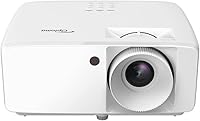
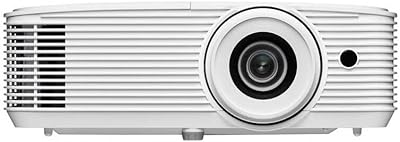
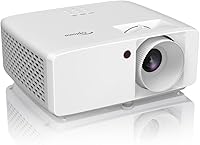
The Optoma HZ40HDR Laser Home Theater Projector enters the market at a point where laser-based projection is finally within reach for serious home theater fans and dedicated gamers alike. Unlike lamp-based units that degrade over time and need periodic bulb replacements, the HZ40HDR runs on DuraCore laser technology — a light source rated for up to 30,000 hours of use. At 9 pounds and compact enough to sit on a shelf or coffee table, it doesn't demand a dedicated room. The 4,000-lumen output is what really turns heads at this tier, giving buyers a legitimate shot at watchable images without blackout curtains.
Features & Benefits

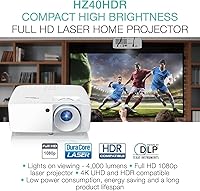
The DuraCore laser light source is the centerpiece here. With no lamp to replace, ongoing costs drop to near zero, and the rated 30,000-hour lifespan means this laser projector could outlast several generations of flat-panel TVs. Brightness sits at 4,000 lumens with a 300,000:1 contrast ratio — impressive figures, though real-world results in a bright room still depend on screen gain and wall color. Native Full HD resolution pairs with HDR and HLG support for noticeably richer images. The dedicated Gaming Mode targets low input lag, and dual HDMI 2.0 ports with HDCP 2.2 handle modern sources without compromise.

Best For

Optoma's compact laser model hits a practical sweet spot for a few specific buyer profiles. Home theater owners tired of replacing expensive projector lamps will appreciate the low-maintenance laser setup, particularly in a semi-permanent installation. Gamers chasing a large-screen experience will find the dedicated Gaming Mode worthwhile — though input lag figures should be independently verified against their specific console or PC before committing. The HZ40HDR also suits classrooms and small conference rooms given its brightness and flexible keystone range. Support for portrait and 360-degree orientations adds genuine versatility for unconventional or creative mounting situations.

User Feedback

With 80 reviews averaging 4.0 out of 5 stars, this laser projector lands in broadly positive territory without being universally loved. Buyers consistently praise the out-of-the-box image quality and how little effort setup requires — keystone correction and optical zoom provide enough flexibility for imperfect rooms. The sharpest complaints cluster around two areas: built-in audio that most owners consider barely adequate, and frustration over the 4K claim. The projector accepts a 4K input signal but outputs at native 1080p — a distinction that catches some buyers off guard. Gaming-focused reviewers are generally satisfied, though performance-oriented users recommend confirming input lag independently before purchasing.

Pros

  • DuraCore laser technology means no bulb replacements and a rated lifespan of up to 30,000 hours.
  • 4,000 lumens of brightness handles moderate ambient light far better than most competitors at this price.
  • HDR and HLG support adds visible color depth when watching compatible streaming content.
  • Out-of-the-box image quality earns consistent praise — minimal calibration needed for most users.
  • 360-degree and portrait orientation support opens up mounting options most projectors simply don't allow.
  • Dual HDMI 2.0 ports with HDCP 2.2 cover modern source devices without adapters or compromises.
  • Compact 9-pound form factor fits naturally on a shelf, table, or ceiling mount without dominating the room.
  • Keystone correction up to ±30° in both directions makes off-center placement genuinely workable.
  • Long-term cost of ownership is lower than lamp projectors when factoring in zero replacement bulb expenses.

Cons

  • Native output is 1080p only — the 4K signal support is frequently misunderstood and does not equal 4K image quality.
  • Built-in speakers are widely considered inadequate for serious home theater use.
  • Independent input lag benchmarks for Gaming Mode are limited, making it hard to verify claims for competitive gaming.
  • Only two HDMI ports means adding a streaming stick immediately limits you to one remaining source connection.
  • No built-in wireless streaming — a separate dongle or device is required for Netflix, Disney+, and similar services.
  • Optical zoom range of 1.1x is narrow, requiring careful throw distance planning before installation.
  • Brightness performance in rooms with large uncovered windows falls short of what the lumen spec implies.
  • Remote control layout receives consistent mild criticism for feel and menu navigation ergonomics.
  • With just 80 reviews at the time of writing, long-term reliability data is still maturing compared to older models.

Ratings

The Optoma HZ40HDR Laser Home Theater Projector has been scored across 13 performance categories using AI analysis of verified global buyer reviews, with spam, bot-submitted, and incentivized feedback actively filtered out before any scoring was applied. The result is an honest, data-driven portrait of where this laser projector genuinely excels and where real owners have run into friction. Strengths and shortcomings are weighted equally — nothing is glossed over.
Brightness & Ambient Light Performance
88%
At 4,000 lumens, the HZ40HDR is one of the brighter options at this price tier, and owners in living rooms with curtains partially open report watchable images where dimmer projectors simply wash out. For evening movie sessions with a few lights on, most users say it holds up surprisingly well without heavy calibration.
In rooms with large windows or strong overhead lighting, the image still softens noticeably — brightness specs don't account for screen gain or wall reflectivity. A handful of buyers in unusually bright spaces were underwhelmed compared to what the lumen figure suggested.
Image Quality & Color Accuracy
83%
Out-of-the-box color accuracy earns consistent praise, with HDR and HLG support adding visible depth to compatible content. Users watching 4K HDR-sourced streams (downscaled to native 1080p output) frequently comment that skin tones and shadow detail look natural without needing manual color adjustments.
Color precision at the edges of the image can drift slightly, particularly in wide-screen setups. Enthusiasts who calibrate displays professionally note that the default color profile skews slightly warm, which casual users may not notice but purists will want to correct.
Native Resolution & Sharpness
74%
26%
For a 1080p laser projector, sharpness on text-heavy content and fast-motion sports is genuinely strong — most users report a clean, detailed image at screen sizes up to 120 inches. The Full HD output looks solid when projecting onto a quality screen rather than a plain wall.
This is a 1080p native projector, and buyers expecting 4K sharpness because of the 4K signal input support will be disappointed. The distinction between signal pass-through and native output resolution is a recurring source of confusion and frustration in reviews.
Gaming Performance & Input Lag
79%
21%
The dedicated Gaming Mode is a genuine addition, not just a label — users pairing this laser projector with consoles and mid-range gaming PCs report noticeably snappier response compared to the projector's standard mode. For casual-to-midcore gaming at large screen sizes, the experience is considered more than acceptable by most gaming reviewers.
Hardcore competitive gamers remain cautious, as independent verified input lag measurements for this specific model are limited. Users sensitive to display latency — particularly in fast-paced shooters — are advised to test before committing, since manufacturer claims alone are rarely sufficient for that audience.
Laser Light Source & Longevity
93%
The DuraCore laser engine is rated for up to 30,000 hours, which is one of the strongest practical arguments for choosing this over any lamp-based alternative. Owners who previously spent on replacement bulbs every two to three years appreciate that ongoing cost is effectively removed from the equation.
Since the product launched in mid-2023, long-term real-world data on laser degradation over years of heavy use is still limited. A small number of reviewers flag that laser brightness can diminish subtly over time even within rated lifespan, though none report dramatic early decline.
Installation Flexibility
81%
19%
Support for ±30° horizontal and vertical keystone correction, combined with 1.1x optical zoom and 360-degree orientation including portrait mode, makes Optoma's compact laser model adaptable to setups that would stump less flexible projectors. Ceiling mounting and off-center placements are handled without serious compromise.
The 1.1x zoom range is narrower than some competitors, meaning precise throw distance calculations are necessary before purchasing. Buyers who anticipated more lens shift flexibility for edge-case installations occasionally report the need to physically reposition the unit more than expected.
Setup & Ease of Use
86%
First-time projector owners frequently highlight how straightforward the initial setup is — auto keystone correction and clear input switching make the first session largely painless. The menu system is considered intuitive by most non-technical buyers.
The remote control receives mild but recurring criticism: button layout is functional but not ergonomically refined, and navigating deeper settings menus on a large projected interface can feel slightly cumbersome. A few users wished for a dedicated app-based control option.
Built-in Audio
51%
49%
For quick business presentations or casual daytime use in a pinch, the onboard speakers can handle basic audio duties in a quiet room. Users who need an all-in-one solution for non-critical environments find it adequate for short sessions.
Built-in audio is probably the most consistently criticized aspect across reviews. The sound output is thin, lacks bass, and gets overshadowed by ambient room noise at moderate volumes — nearly all home theater users report connecting an external soundbar or AV receiver immediately after setup.
Contrast & Black Levels
77%
23%
A 300,000:1 contrast ratio delivers genuinely dark blacks in a properly darkened room, which is a strong result for a projector in this class. Dark sci-fi and thriller content benefits noticeably, with shadow areas retaining detail rather than collapsing into flat gray.
In mixed-light environments, perceived contrast drops significantly — this is a physics constraint no projector fully escapes, but it is worth noting. Some users found that dynamic contrast adjustments introduce visible pumping artifacts during scene transitions in darker films.
Build Quality & Design
78%
22%
At 9 pounds and with a compact footprint, the HZ40HDR feels substantially built without being unwieldy. The white housing resists scuffs reasonably well, and buyers who ceiling-mount the unit appreciate that ventilation design keeps it from running hot even during extended sessions.
The overall chassis aesthetic is functional rather than distinctive — it blends into a home theater shelf without standing out, which some buyers prefer, but those who want a premium-looking unit may find it a bit utilitarian. Port placement on the rear is slightly awkward for wall-adjacent installations.
Connectivity & Input Options
82%
18%
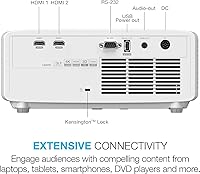
Dual HDMI 2.0 ports with HDCP 2.2 cover the majority of modern source devices without requiring adapters, and the 4K signal pass-through adds a layer of forward compatibility for buyers who may upgrade their source hardware in the future. USB connectivity handles basic media playback cleanly.
The absence of wireless streaming built into the unit is a friction point for buyers accustomed to smart projectors. A streaming stick resolves this, but it consumes one of only two HDMI ports, which then limits simultaneous connections to one additional source device.
Value for Money
76%
24%
When you factor in laser longevity — no replacement bulb costs over the product's lifespan — the total cost of ownership argument for Optoma's compact laser model is compelling compared to lamp-based alternatives at lower entry prices. Buyers with a long-term view consistently rate it as a smart spend.
Buyers primarily focused on upfront cost, and who don't intend to use the unit for several years, may find the value proposition less obvious. At this price point, native 4K projectors are appearing from competing brands, which makes the 1080p ceiling a harder sell for some buyers doing side-by-side comparisons.
Throw Distance & Screen Size Range
80%
20%
A throw ratio of 1.21 to 1.59:1 gives the HZ40HDR a usable range of placement distances for achieving a 100-inch image, and the 1.1x optical zoom provides modest adjustment without digital quality loss. Most living room setups fall comfortably within this range.
For very large rooms where buyers want a 120-inch-plus image at significant throw distances, or for very small rooms requiring a short-throw solution, this projector is not the right match. The throw ratio is firmly in standard territory, limiting its adaptability to unusual room dimensions.

Suitable for:

The Optoma HZ40HDR Laser Home Theater Projector is a strong match for home theater enthusiasts who are ready to graduate from lamp-based projectors and want a low-maintenance setup they can leave in place for years without worrying about bulb replacements or significant brightness degradation. If your living room or media room has standard lighting — not a blacked-out cave, but not a sun-drenched open-plan space either — the 4,000-lumen output gives you real flexibility that weaker projectors simply cannot offer. Gamers who want a large-screen experience without building a dedicated gaming room will find the HZ40HDR's Gaming Mode a practical addition, especially for console gaming where response times are more forgiving than in competitive PC play. It also earns serious consideration from educators and small business users who need a bright, reliable projector for daytime presentations — the brightness and versatile keystone correction make it adaptable to rooms that aren't set up specifically for projection.
Not suitable for:

Buyers expecting 4K sharpness should look elsewhere — the Optoma HZ40HDR Laser Home Theater Projector accepts 4K input signals but outputs natively at 1080p, and that distinction matters significantly if you are coming from a 4K television and expecting a comparable experience on the big screen. Competitive gamers who require verified, sub-20ms input lag will need to research independent measurements carefully, as the Gaming Mode's performance claims are not yet extensively benchmarked by third parties for this specific model. If you rely on built-in audio and have no plans to add a soundbar or external speakers, the onboard sound will likely frustrate you within the first viewing session. Buyers working in very bright environments — rooms with large windows and no blackout options — should also temper expectations, since no 1080p projector at this price fully overcomes challenging ambient light. And if wireless streaming out of the box is a priority, the absence of built-in Wi-Fi or smart TV functionality adds a step that some buyers find inconvenient.
Specifications

  • Light Source: DuraCore laser technology replaces traditional lamp systems, delivering consistent brightness with no bulb replacements required over the unit's lifespan.
  • Brightness: Rated at 4,000 lumens, enabling usable image quality in rooms with moderate ambient light without requiring complete blackout conditions.
  • Contrast Ratio: A 300,000:1 contrast ratio produces deep blacks and bright highlights, particularly effective during dark-scene content in controlled lighting environments.
  • Native Resolution: Full HD 1920x1080 pixels is the native output resolution; the projector accepts 4K input signals but downscales them to 1080p for display.
  • HDR Support: Compatible with both HDR and HLG formats, allowing richer color grading and improved luminance range from supporting source devices and streaming services.
  • Throw Ratio: A throw ratio of 1.21 to 1.59:1 means the projector needs to be placed roughly 10 feet 9 inches from the screen to produce a 100″ image.
  • Optical Zoom: A 1.1x optical zoom range provides modest placement flexibility without any digital quality loss during zoom adjustment.
  • Keystone Correction: Supports ±30° keystone correction on both horizontal and vertical axes, accommodating off-center placements and non-standard installation angles.
  • Orientation Support: Certified for 360-degree and portrait mode operation, enabling ceiling, floor, rear-projection, and vertical mounting configurations.
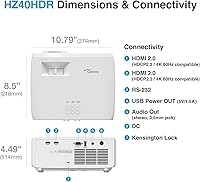
  • Inputs: Equipped with two HDMI 2.0 ports supporting HDCP 2.2 and 4K plus 1080p HDR signal input, along with USB connectivity for media playback.
  • Gaming Mode: A dedicated High Performance Gaming Mode reduces input lag compared to the standard viewing preset, designed for console and PC gaming use cases.
  • Laser Lifespan: The DuraCore laser light source is rated for up to 30,000 hours of operational life under normal usage conditions.
  • Dimensions: The projector body measures 8.5 x 10.79 x 4.49 inches, making it compact enough for shelf, tabletop, or ceiling mount installations.
  • Weight: At 9 pounds, the unit is manageable for a single person to install on a ceiling mount bracket or reposition between rooms.
  • 3D Support: Full 3D projection is supported, enabling compatible 3D content playback with appropriate glasses and source material.
  • Power Efficiency: Laser-based operation consumes less power than equivalent lamp projectors, and the unit supports low-power consumption modes during idle or standby states.

Related Reviews

Optoma HD39HDR Home Theater Projector
87%
91%
Image Quality
93%
Brightness
88%
Gaming Performance
86%
Noise Level
85%
Setup & Installation
More
Optoma HD146X Home Theater Projector
74%
88%
Image Brightness
83%
Image Sharpness & Clarity
74%
Contrast & Black Levels
69%
Color Accuracy
77%
Gaming Performance
More
Optoma GT3500HDR 1080p Full HD Home Laser Projector
88%
91%
Image Quality
87%
Brightness
85%
Ease of Setup
82%
Portability
90%
Design & Build Quality
More
Optoma UHZ66 4K UHD Laser Projector
86%
94%
Image Quality
92%
Brightness Performance
76%
Ease of Setup
90%
Build Quality
89%
Gaming Performance
More
Optoma GT1090HDR Short Throw Laser Projector
89%
94%
Picture Quality
92%
Brightness Performance
88%
Ease of Installation
90%
Gaming Performance
85%
Build Quality
More
BenQ TK800M 4K UHD Home Theater Projector
86%
93%
Picture Quality
89%
Brightness
91%
Gaming Performance (Low Input Lag)
85%
Ease of Setup
88%
Connectivity Options
More
BenQ TK860i 4K Smart Home Theater Projector
85%
91%
Picture Quality
88%
Ease of Setup
87%
Connectivity Options
65%
Sound Quality
82%
Streaming Performance (Android TV)
More
Optoma HD30LV 1080p Full HD Home Projector
84%
91%
Image Quality
89%
Brightness Performance
88%
Portability
85%
Gaming Performance (Low Input Lag)
90%
Setup & Installation
More
Formovie Theater Ultra Short Throw 4K Laser Projector
86%
94%
Picture Quality
88%
Ease of Setup
85%
Audio Performance
77%
Brightness
90%
Connectivity
More
BenQ HT2060 1080p Home Theater Projector
79%
93%
Color Accuracy
81%
Image Sharpness
76%
HDR Performance
89%
Gaming Performance
67%
Brightness & Room Versatility
More

FAQ

It outputs at native 1080p — full stop. The Optoma HZ40HDR Laser Home Theater Projector can accept a 4K signal from a source device like a UHD Blu-ray player or a streaming stick, but it downscales that signal to 1080p before displaying it. If true 4K sharpness is what you are after, this is not the right unit for that.
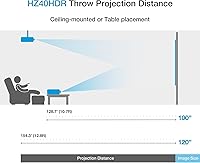
You will need approximately 10 feet 9 inches of throw distance to hit a 100-inch image. The throw ratio is 1.21 to 1.59:1, and the 1.1x optical zoom gives you a little room to adjust without physically moving the unit. It is worth running the numbers for your specific screen size before finalizing placement.

Yes, more so than most projectors in this class. At 4,000 lumens, the image holds up reasonably well in a room with curtains drawn or overhead lighting at low levels. That said, a room flooded with direct sunlight through uncovered windows will still wash it out — brightness has limits no matter the spec sheet.

Users report a real difference in responsiveness when switching into Gaming Mode versus the default cinema preset. It is well-regarded for console gaming at large screen sizes. If you are a competitive PC gamer who needs sub-20ms input lag guarantees, you should look for independent benchmark measurements before purchasing, as manufacturer-claimed figures alone are not always sufficient for that use case.

No. The DuraCore laser light source is a sealed system with no user-replaceable lamp. It is rated for up to 30,000 hours, which for most households represents well over a decade of regular use. This is one of the most practical advantages laser projectors have over traditional lamp-based models.

Functional, but not something you would want to rely on for a real movie night. The onboard audio is adequate for presentations or casual daytime use in a quiet room, but nearly every home theater user who reviews this laser projector ends up pairing it with a soundbar or AV receiver almost immediately. Budget for external audio if sound quality matters to you.

Yes, and that is actually one of the HZ40HDR's stronger installation features. It supports 360-degree projection including portrait mode, so ceiling, floor, rear-projection, and vertical configurations are all on the table. Combined with ±30° keystone correction in both directions, it handles imperfect rooms better than many competitors.

Yes, either device plugs into one of the two HDMI 2.0 ports without issue. Just be aware that the HZ40HDR has no built-in Wi-Fi or smart TV platform, so a streaming stick is the standard way to get Netflix, Disney+, and similar services working. Using one HDMI port for a streaming stick leaves only one port free for other sources.

In a properly darkened room, the 300,000:1 contrast ratio does a solid job producing genuine blacks rather than flat gray. Where it softens is in mixed-light environments — any ambient light in the room will lift the black floor noticeably. For dedicated home theater setups with good light control, dark-scene performance is considered strong at this price tier.

For a long-term installation, almost certainly yes. Lamp projectors need bulb replacements every 3,000 to 5,000 hours, and quality replacement lamps are not cheap. Over several years of regular use, those costs add up quickly. The laser system in Optoma's compact laser model eliminates that expense entirely, which changes the total cost of ownership calculation significantly in its favor.

Where to Buy