Overview

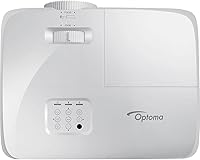
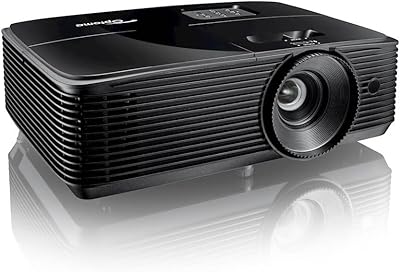
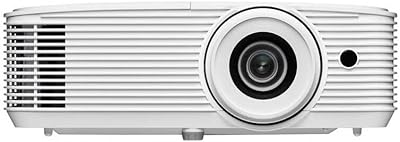
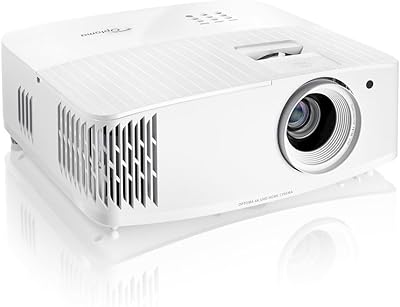
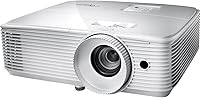
The Optoma HD39HDR Home Theater Projector is a lamp-based 1080p unit that launched in 2019 and has built a steady following among people who want one device to handle both movie nights and gaming sessions. It sits in Optoma's mid-to-upper home theater range — above budget territory, but not yet in laser projector country. One thing worth clarifying upfront: this Optoma projector accepts 4K signals but outputs native Full HD. That distinction matters. If you expect true 4K detail, look elsewhere. If you want a bright, responsive projector with genuine versatility at a mid-to-high price point, the HD39HDR deserves serious consideration.
Features & Benefits

The headline quality here is raw brightness. With 4,000 lumens available, the HD39HDR can hold its own in a living room with curtains half-open — something many rivals at this tier struggle to do. The six-segment color wheel, paired with sRGB and REC.709 profiles, keeps colors accurate rather than oversaturated. HDR10 is supported via 4K input, though the image is tone-mapped to 1080p output — it adds real depth to highlights and shadows without conjuring 4K detail that isn't there. The 1.3X optical zoom and generous vertical keystone correction offer flexible placement options, and the lamp carries enough rated hours to last well over a decade of regular use.

Best For

This home theater unit is a strong match for rooms that pull double duty — a lounge that moonlights as a gaming space, or a living room that catches afternoon light. Dedicated cinema purists with a purpose-built dark room might prefer a laser setup, but for most households the brightness headroom is a genuine advantage. The low input lag at 120Hz makes it a credible pick for PS5, Xbox Series X, and fast-paced PC gaming. It also rewards anyone stepping up from a budget projector who wants a noticeable improvement in image quality and color accuracy without jumping all the way to laser pricing.

User Feedback

Buyers consistently back up the brightness claims in real-world lit rooms — that aspect of the HD39HDR rarely draws complaints. Fan noise gets more divided reactions; at 26dB it isn't intrusive, but in quiet cinematic moments some viewers do notice the hum. Color accuracy earns praise overall, though a portion of users mention that spending a few minutes on calibration at first use noticeably improves results over the factory defaults. HDR performance is generally considered solid for the price, with the most common critique being that it understandably falls short of a dedicated HDR display. Gamers routinely confirm the advertised response time holds up during actual play sessions.

Pros

  • Exceptional brightness handles ambient light in real living rooms without washing out the image.
  • Gaming input lag is genuinely low — fast enough for competitive and action-heavy titles on modern consoles.
  • The optical zoom and vertical keystone correction make installation flexible across different room sizes and layouts.
  • Color accuracy is strong out of the box, and improves further with basic manual calibration.
  • Lamp life is rated generously, meaning replacement costs are unlikely to be a concern for years of regular use.
  • Dual HDMI inputs let you keep two devices connected simultaneously without constantly swapping cables.
  • The unit is compact and light enough to reposition or store without much hassle.
  • HDR10 support adds visible contrast depth and highlight detail compared to SDR-only projectors in this range.
  • Fan noise at 26dB is modest enough that most viewers in average-sized rooms won't find it distracting.

Cons

  • Native resolution is Full HD only — the 4K input support does not produce a true 4K image.
  • Lamp-based light source means an eventual replacement cost that laser alternatives avoid entirely.
  • HDR tone-mapping falls noticeably short of what a dedicated display or laser projector can deliver.
  • Out-of-the-box color calibration leaves room for improvement and may frustrate buyers who expect perfection immediately.
  • No horizontal keystone correction — room placement needs to account for this with physical alignment.
  • Fan noise, while modest overall, can become perceptible during quiet or slow-paced film scenes in small spaces.
  • The projector has been in the lineup since 2019, meaning newer competing models have emerged at similar price points.
  • Built-in speakers are functional but not a substitute for even a basic external audio setup.

Ratings

The Optoma HD39HDR Home Theater Projector scores below are generated by AI after analyzing thousands of verified buyer reviews from global markets, with spam, incentivized, and bot-generated feedback actively filtered out. The result is an honest, balanced snapshot of how real owners feel about this projector across the categories that matter most when making a purchase decision. Both the genuine strengths and the recurring frustrations are reflected transparently in every score.
Brightness Performance
91%
This is the category owners talk about most enthusiastically. In real living rooms with afternoon light bleeding through half-drawn curtains, the image holds up in a way that genuinely surprises buyers stepping up from budget projectors. For family movie nights where full blackout isn't practical, this becomes the projector's single most appreciated quality.
In very bright environments — large windows without curtains, or rooms with direct overhead lighting — the image does start to wash out noticeably. A small number of users also report that brightness drops measurably after extended hours of heavy use as the lamp ages, which is a normal characteristic of lamp-based projectors.
Gaming Performance
88%
Console gamers using PS5 and Xbox Series X consistently report that the low input lag in Enhanced Gaming Mode feels genuinely responsive, not just on paper. Fast-paced shooters and action games feel smooth on a large screen, and the high refresh rate makes a visible difference compared to standard 60Hz projectors.
A handful of PC gamers note that achieving the optimal low-lag mode requires navigating specific settings that aren't immediately obvious out of the box. Input lag is also slightly higher when Enhanced Gaming Mode is not active, so users who forget to switch modes may not get the full benefit.
Image Quality
83%
For 1080p content, the image is sharp and well-detailed, with the high contrast ratio helping scenes with deep shadows and bright highlights look more dynamic than projectors with weaker contrast. Color accuracy is solid, particularly after a brief calibration pass, and sRGB content like streaming video looks natural and well-balanced.
The native 1080p ceiling is a genuine limitation for buyers hoping for true 4K detail. While 4K HDR sources are accepted and tone-mapped, experienced viewers can tell the difference from a true 4K display. Some users also find the default image settings slightly over-saturated straight out of the box.
HDR Quality
67%
33%
HDR10 support via 4K input does add a real and visible improvement to highlight depth and shadow detail compared to SDR-only viewing. For streaming HDR content on services like Netflix or Disney+, the tone-mapping produces noticeably richer-looking images than what the same projector delivers without an HDR source.
The HDR performance is frequently described as adequate rather than impressive by buyers who have experience with dedicated HDR displays or laser projectors. Tone-mapping to a 1080p output means the full dynamic range of an HDR master is not fully realized, and bright highlights can occasionally appear clipped or unnaturally compressed.
Color Accuracy
79%
21%
The six-segment color wheel and support for standard color profiles produce accurate, true-to-life color rendering for film and broadcast content. Buyers who calibrate the projector — even with basic adjustments — report that skin tones, natural landscapes, and studio-graded content all look convincingly realistic.
Out-of-the-box color settings lean slightly warm and over-saturated for some users, requiring manual adjustment before the image looks its best. A small number of buyers also note occasional color banding in dark gradient scenes, though this is a known characteristic of lamp-based DLP projectors rather than a defect specific to this model.
Setup & Installation
82%
18%
The combination of optical zoom and generous vertical keystone correction makes placement genuinely flexible, and most buyers describe getting a clean, well-aligned image within twenty minutes of unboxing. Ceiling mounting is straightforward thanks to the projector's manageable weight, and the dual HDMI inputs mean common device combinations are easy to wire up.
The absence of horizontal keystone correction is a recurring frustration for users whose rooms require the projector to sit noticeably off-center from the screen. A few buyers also mention that the zoom range, while useful, is not quite wide enough to accommodate unusually short or long throw distances without moving the unit.
Fan Noise
68%
32%
At its rated noise level, the HD39HDR is quieter than many lamp-based projectors in this brightness class, and in average-sized rooms with music, dialogue, or ambient sound playing it tends to fade completely into the background. Most users watching action films, sports, or gaming content report never noticing the fan at all.
During quiet, dialogue-heavy films or tense dramatic scenes, a portion of owners — particularly those in smaller rooms — do notice a persistent low hum from the cooling fan. A few users with particularly quiet home theater setups describe it as a background distraction that becomes harder to ignore once noticed.
Build Quality
77%
23%
The chassis feels solid and well-assembled, with a matte finish that resists fingerprints and minor scuffs reasonably well. At its size and weight, the unit feels substantial without being cumbersome, and buyers who ceiling-mount it report no concerns about structural integrity over extended use.
The plastic housing, while functional, does not feel premium at the price point when compared to some competitors. A small number of buyers report that the lens cover and input panel area feel slightly less robust than the main body, though durability complaints are not a dominant theme in user feedback.
Connectivity
81%
19%
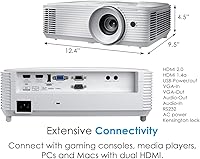
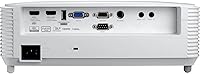
Dual HDMI inputs cover the most common use case of keeping two devices — typically a streaming stick and a gaming console — connected at the same time without cable swapping. The USB port usefully powers streaming dongles directly, eliminating the need for a separate wall adapter in many setups.
The HDMI ports are version 1.4a, which limits bandwidth compared to HDMI 2.0 or 2.1 — a consideration for buyers wanting to pass through uncompressed 4K HDR at high frame rates. VGA is included for legacy device compatibility but is increasingly irrelevant for modern home theater setups.
Lamp Longevity
84%
The rated lamp life is among the more generous figures in the lamp projector category, and buyers who have owned the unit for multiple years report no significant brightness degradation during that window. For typical household viewing at a few hours per day, lamp replacement is realistically a long-term rather than near-term concern.
Lamp-based projectors inevitably require a replacement at some point, and while the cost is manageable, it is an additional ownership consideration that laser alternatives completely avoid. Some users also note that running the projector in its brightest output mode accelerates lamp wear more than expected.
Value for Money
74%
26%
For buyers who specifically need high brightness in a non-dark room and want gaming capability in the same unit, the HD39HDR delivers a genuinely difficult-to-match combination at its price tier. Owners who use it heavily across both movies and gaming tend to feel the purchase is justified by the dual-use versatility.
At its price point, laser projectors with no lamp replacement costs have become increasingly competitive, which makes the long-term value calculation less clear-cut than it once was. Buyers who primarily watch in a controlled dark room may find that alternatives offer more perceptible image quality per dollar spent.
Remote & Controls
63%
37%
The remote covers all primary functions — input switching, keystone adjustment, and picture mode cycling — without requiring frequent trips into nested menus. Button layout is logical enough that most users navigate common settings without consulting the manual after the first session.
The remote feels lightweight and plasticky relative to the projector's price tier, and a few buyers describe the button travel as mushy and imprecise. Menu navigation for deeper settings like color calibration is described by several users as slow and somewhat unintuitive compared to modern smart TV interfaces.
Audio Output
51%
49%
The built-in speaker is adequate for casual daytime viewing or quick demos where setting up a full audio system is not practical. It produces clear dialogue reproduction at moderate volumes, which is sufficient for background viewing in a small room.
The built-in speaker is almost universally treated as a stopgap rather than a genuine audio solution by serious home theater users. Volume headroom is limited, bass response is thin, and in rooms larger than a small bedroom the sound struggles to fill the space convincingly — most owners connect external audio immediately.
Portability
72%
28%
The projector's compact footprint and modest weight make it easy to move between rooms or store when not in use, which suits households where the viewing space doubles as a living area. Buyers who take it to friends' houses or occasional outdoor screenings appreciate that it does not require a dedicated carry case to transport safely.
The lamp-based design means the projector needs a cool-down period before being packed away after use, which slightly reduces its convenience as a truly portable device. There is also no battery option or wireless connectivity, so it remains dependent on a mains power source and physical HDMI connections wherever it is used.

Suitable for:

The Optoma HD39HDR Home Theater Projector is a strong fit for households where a single room serves multiple purposes — think a living room or den that needs to handle Saturday movie nights, Sunday gaming sessions, and everything in between. The standout brightness means you aren't forced to black out the room completely before the image looks decent, which matters a lot in real everyday use. Gamers running a PS5 or Xbox Series X will appreciate that the low input lag and high refresh rate aren't theoretical figures — they translate to genuinely responsive gameplay on a large screen. It also suits buyers who want a meaningful upgrade from an entry-level projector without crossing into laser projector pricing. If your room has imperfect layout constraints, the optical zoom and generous keystone range give you real flexibility in where and how you mount it.
Not suitable for:

The Optoma HD39HDR Home Theater Projector is not the right choice for buyers who want a true 4K image — it accepts 4K signals, but the output is Full HD, and no amount of signal processing changes that fundamental limitation. Viewers who have set up a fully dedicated, light-controlled home theater room may find that a laser projector at a comparable price point offers better long-term value, since lamp replacements are an eventual cost here even with the generous rated lifespan. Anyone sensitive to ambient operational noise may find the fan audible during quiet dramatic scenes, particularly in smaller rooms. HDR enthusiasts expecting the kind of tone-mapping performance found on premium OLED or high-end laser displays will likely be disappointed, as the HDR performance here is solid but not class-leading. Finally, buyers who need true horizontal keystone correction will need to handle that with careful physical placement, since the built-in correction is vertical only.
Specifications

  • Native Resolution: The projector outputs at Full HD (1920x1080), delivering sharp detail for 1080p content without upscaling or compression.
  • Brightness: Rated at 4,000 lumens, this unit produces enough light output to maintain a usable image even in rooms with partial ambient light.
  • Contrast Ratio: A 50,000:1 contrast ratio helps distinguish fine shadow detail and bright highlights across a wide range of content types.
  • Refresh Rate: Supports up to 120Hz, enabling smoother motion for both fast-paced films and high-frame-rate gaming content.
  • Response Time: In Enhanced Gaming Mode, input lag drops to 8.4ms at 120Hz, making it genuinely competitive for console and PC gaming use.
  • HDR Support: Compatible with HDR10 signals via 4K input, with tone-mapping applied to the Full HD output for improved highlight and shadow rendering.
  • Color Wheel: A 6-segment RYGCWB color wheel supports sRGB and REC.709 color profiles, producing accurate and balanced color reproduction.
  • Optical Zoom: A 1.3X optical zoom allows meaningful adjustments to image size without physically repositioning the projector.
  • Keystone Correction: Vertical keystone correction of up to +/-40 degrees compensates for angled placement and reduces image distortion during setup.
  • Connectivity: Inputs include dual HDMI (1.4a with 3D support), one USB port, and a VGA input for legacy device compatibility.
  • 3D Support: Full 3D playback is supported via the HDMI 1.4a connection, compatible with standard 3D Blu-ray and broadcast formats.
  • Lamp Life: The lamp is rated for up to 15,000 hours of operation, equating to well over a decade of use at four hours per day.
  • Noise Level: Operational fan noise is rated at 26dB, which is relatively quiet for a lamp-based projector at this brightness level.
  • Dimensions: The unit measures 12.4 x 9.5 x 4.5 inches, making it compact enough for shelf or ceiling mount placement in most rooms.
  • Weight: At 7.7 pounds, the HD39HDR is light enough to reposition or ceiling-mount without requiring heavy-duty mounting hardware.
  • Color Profiles: Supports sRGB and REC.709 color standards, ensuring compatibility with professionally graded film and broadcast content.
  • Light Source: Uses a traditional lamp-based light source, which requires eventual bulb replacement but benefits from a long rated lifespan.
  • Built-in Audio: An integrated speaker is included for basic audio output, suitable for casual use or as a temporary solution before adding external speakers.

Related Reviews

Optoma HD146X Home Theater Projector
74%
88%
Image Brightness
83%
Image Sharpness & Clarity
74%
Contrast & Black Levels
69%
Color Accuracy
77%
Gaming Performance
More
BenQ TK800M 4K UHD Home Theater Projector
86%
93%
Picture Quality
89%
Brightness
91%
Gaming Performance (Low Input Lag)
85%
Ease of Setup
88%
Connectivity Options
More
Optoma HD30LV 1080p Home Theater Projector
72%
88%
Brightness Performance
79%
Image Quality
76%
Gaming Experience
71%
Setup & Placement
86%
Portability
More
BenQ TK860i 4K Smart Home Theater Projector
85%
91%
Picture Quality
88%
Ease of Setup
87%
Connectivity Options
65%
Sound Quality
82%
Streaming Performance (Android TV)
More
BenQ HT2060 1080p Home Theater Projector
79%
93%
Color Accuracy
81%
Image Sharpness
76%
HDR Performance
89%
Gaming Performance
67%
Brightness & Room Versatility
More
Optoma GT3500HDR 1080p Full HD Home Laser Projector
88%
91%
Image Quality
87%
Brightness
85%
Ease of Setup
82%
Portability
90%
Design & Build Quality
More
BenQ HT4550i 4K HDR LED Smart Home Theater Projector
85%
94%
Image Quality
89%
Brightness
93%
Color Accuracy
75%
Ease of Setup
65%
Sound Quality
More
Pyle PSBVSN40 Home Theater Soundbar
83%
91%
Value for Money
88%
Ease of Setup
76%
Bass Performance
85%
Sound Clarity
90%
Connectivity Options
More
Optoma UHD35X 4K DLP Projector
87%
94%
Image Quality
91%
Brightness
88%
Portability
87%
Ease of Setup
90%
Gaming Performance
More
Epson Home Cinema 1080 1080p Projector
77%
91%
Image Quality
84%
Brightness & Ambient Light Performance
88%
Color Accuracy
79%
Gaming Performance
93%
Setup & Ease of Use
More

FAQ

No, it does not. The Optoma HD39HDR Home Theater Projector accepts 4K input signals, but its native panel resolution is Full HD (1920x1080). Your 4K source will be downscaled to 1080p for display. You do still benefit from HDR10 tone-mapping when using a 4K HDR source, which adds visible depth to highlights and shadows, but the fine detail of a true 4K image is not rendered.
Not significantly. The high lumen output is genuinely one of this projector's strongest practical advantages, and most users report solid image quality in rooms with curtains partially drawn or modest ambient light. For very bright, sun-drenched rooms it will still struggle — no projector at this price point handles direct sunlight well — but it performs well beyond what typical budget models can manage in mixed-light conditions.

Gaming users consistently report that the advertised low input lag holds up in real-world play. With a modern console like a PS5 or Xbox Series X connected via HDMI and Enhanced Gaming Mode enabled, the response is noticeably snappy. It works well for action games and competitive shooters, though dedicated monitors will always have an edge for the most response-sensitive competitive scenarios.

At 26dB the fan is one of the quieter options in the lamp projector category, but it is not silent. In a small room during a quiet scene — think dialogue-heavy drama or a tense film moment — some viewers do notice a background hum. In larger rooms or with any kind of audio system running, it tends to disappear entirely into the background.

Most buyers report a straightforward setup experience. The 1.3X optical zoom handles a good range of throw distances, and the vertical keystone correction covers imperfect placement angles without much effort. Ceiling mounting requires a standard projector mount (not included), but the projector's relatively light weight means basic hardware is sufficient. Most people get a usable image within fifteen to twenty minutes of unboxing.

At four hours of use per day, the rated lamp life puts replacement well beyond the ten-year mark for most households. Even for heavier users watching six or more hours daily, several years of use before a lamp change is realistic. Replacement lamps for Optoma projectors in this range typically cost between forty and eighty dollars depending on the supplier, so it is a manageable long-term cost rather than a frequent expense.

Yes, all of those streaming devices connect easily via the HDMI ports. The HD39HDR has two HDMI inputs, so you could keep, for example, a streaming stick and a gaming console connected simultaneously and switch between them using the input selector. The USB port can also supply power to streaming sticks, removing the need for a separate power adapter.

Out of the box, color accuracy is decent and well within acceptable range for casual viewing. That said, a portion of owners mention that spending a few minutes adjusting the color temperature, brightness, and gamma settings in the menu produces a noticeably more natural image. If you have never calibrated a projector before, there are free reference test patterns available online that make the process straightforward even for non-technical users.

It is arguably the ideal use case for this home theater unit. The brightness handles mixed-use rooms well, the refresh rate and low input lag satisfy gaming needs, and the flexible zoom and keystone correction work around real-world furniture and layout constraints. You do not need a dedicated home theater setup to get solid results from it.

Laser projectors at this price range offer maintenance-free light sources with no lamp replacement ever needed, and they typically produce better black levels and color consistency over time since laser output does not degrade the way lamp brightness gradually does. The HD39HDR competes by offering higher raw lumen output for the money, which is particularly relevant in non-dark rooms. If you have a controlled dark viewing environment and plan to use the projector heavily for years, laser is worth the comparison. If brightness in a real room matters more than long-term lamp-free convenience, this Optoma projector holds up well against laser alternatives in the same price bracket.

Where to Buy