Overview

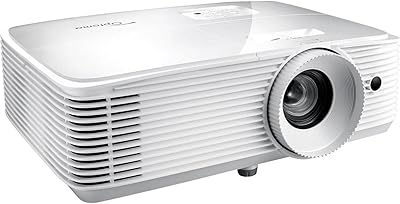
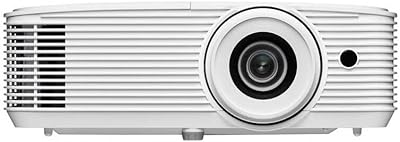
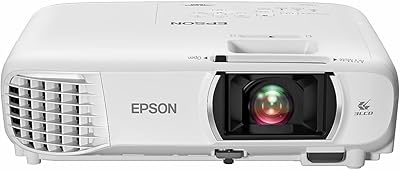
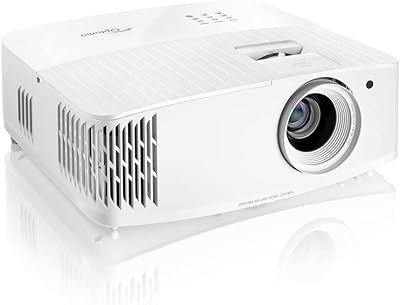
The Optoma HD146X Home Theater Projector sits in a practical sweet spot — a mid-range 1080p unit built for people who want a genuine big-screen experience without the complexity or cost of a dedicated cinema room. Optoma has a solid track record in projection, and this model reflects that: dependable rather than flashy. At 3600 lumens, it handles rooms with some ambient light reasonably well, which matters far more in everyday use than raw spec comparisons suggest. Whether you're setting up for a Friday movie night or plugging in a console, this Optoma projector holds its own without demanding a perfectly blacked-out room or a professional AV installation.
Features & Benefits

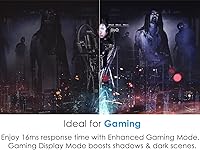
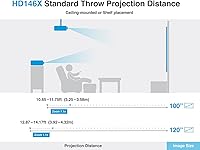
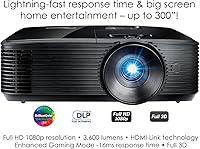
The HD146X delivers full 1080p resolution with a 25,000:1 contrast ratio, meaning dark scenes hold real detail rather than collapsing into muddy grey. The brightness is the headline — enough lumens to project a watchable image with the blinds half-open, something many cheaper alternatives struggle with. Gaming Mode drops input lag to 16ms, which works fine for action games, platformers, or sports titles; just don't expect it to satisfy competitive players who need sub-10ms response. The Game Display Mode lifts shadow visibility noticeably in dark scenes. A 120-inch image requires roughly 13 to 14 feet, and the 1.1x optical zoom plus vertical keystone correction give you real flexibility on placement without a full room reconfiguration.

Best For

This home theater projector is a natural fit for apartment dwellers and living room setups where pulling the curtains is as close as you'll get to a blackout. Families after big-screen movie nights or weekend sports viewing without a major AV investment will find plenty to like. It's also a reasonable pick for casual gamers — someone playing FIFA or Zelda from the couch, not someone grinding competitive ranked modes where every millisecond matters. HDMI-CEC support ties power cycling to your source device, which is a small but genuinely appreciated convenience. Buyers who need to connect multiple sources simultaneously, however, will quickly feel the pinch of the single HDMI port.

User Feedback

Among owners who have lived with the HD146X for a while, brightness and ease of setup consistently come up as genuine highlights — most get it running in under 30 minutes. That said, two complaints surface regularly. First, fan noise at higher brightness settings is audible; not disruptive during action scenes, but noticeable in quiet dialogue. Second, color accuracy out of the box tends to run warm and slightly oversaturated, and while a quick manual calibration fixes this, it is an extra step many casual buyers do not anticipate. Long-term owners generally report solid lamp performance, though some note heat buildup during extended multi-hour sessions. Overall, the trade-offs are real but workable.

Pros

  • 3600 lumens delivers a genuinely watchable image even with partial ambient light in the room.
  • Full 1080p resolution keeps the picture sharp and detailed on screens well over 100 inches.
  • Setup takes most buyers under 30 minutes, with minimal fuss getting to a calibrated image.
  • Vertical keystone correction and optical zoom allow flexible placement without precise positioning.
  • Gaming Mode makes the HD146X a comfortable choice for casual and single-player console gaming.
  • HDMI-CEC automatically powers the projector on and off with your connected source device.
  • Game Display Mode visibly improves shadow detail in dark game environments without heavy manual tuning.
  • Lamp life rated up to 15,000 hours means replacement costs stay low over several years of regular use.
  • The USB-A power port lets you run a streaming stick directly without a separate wall adapter.
  • Solid mid-range value from an established projector brand with a track record for reliable hardware.

Cons

  • A single HDMI port is a genuine limitation for anyone running more than one source device.
  • Factory color settings run warm and oversaturated — accurate color requires manual calibration after setup.
  • Fan noise increases noticeably at full brightness, which becomes distracting during quiet scenes.
  • Built-in audio is too thin for group viewing; an external speaker or soundbar is practically essential.
  • No short-throw capability makes this Optoma projector unsuitable for very small or compact rooms.
  • Extended sessions at high brightness generate meaningful heat and may trigger automatic dimming.
  • Black levels degrade visibly in rooms with any residual ambient light, limiting the cinematic experience.
  • No built-in streaming platform or wireless connectivity means a separate media device is always required.
  • Edge sharpness can soften at wider zoom settings, noticeable to detail-oriented viewers on large screens.

Ratings

The scores below reflect our AI-assisted analysis of verified global buyer reviews for the Optoma HD146X Home Theater Projector, with spam, bot-generated, and incentivized submissions actively filtered out before scoring. We looked at thousands of real-world accounts — from living room movie setups to console gaming sessions — to give you an honest picture of where this projector genuinely delivers and where it falls short.

Image Brightness
88%
Most buyers were genuinely impressed by how well the HD146X holds up in rooms with ambient light. Afternoon viewing with the blinds partially closed — a situation that kills most budget projectors — produced a watchable, vibrant image that owners didn't expect at this price tier.
A portion of users noted that at maximum brightness the image can look slightly washed out in terms of color depth, and the fan noise increases noticeably. Blackout curtains still produce a meaningfully better experience for evening movie watching.
Image Sharpness & Clarity
83%
Full 1080p resolution lands well on large screens, and reviewers consistently praised the level of fine detail in movies and sports content. Text and facial features read cleanly even on 100-inch-plus projections, which is not always a given in this segment.
Some long-term users reported mild softness toward the edges of the frame, particularly at wider zoom settings. It is not dramatic, but viewers with a critical eye — especially those coming from a high-end TV — will notice the difference on close inspection.
Contrast & Black Levels
74%
26%
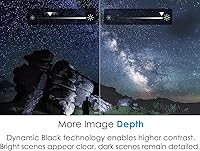
The 25,000:1 contrast ratio produces punchy highlights and reasonably deep shadows in a properly darkened room. Action films with lots of scene variety look dynamic, and the Game Display Mode does lift shadow detail in darker game environments in a noticeable way.
In any room with residual light, black levels suffer considerably — blacks shift toward dark grey, and shadow detail becomes muddy. This is a hardware limitation common at this price, not a flaw unique to this unit, but it matters if dark cinematic content is your primary use.
Color Accuracy
69%
31%
After manual calibration, color rendering improves substantially. Skin tones look natural, and saturated content like animated films or sports broadcasts reproduces with good punch. The REC.709 color standard provides a solid foundation for accurate tuning.
Out of the box, the factory default picture mode runs warm and oversaturated, which catches many casual buyers off guard. Achieving accurate color requires time in the settings menu — a step that is straightforward for AV hobbyists but frustrating for buyers who expected plug-and-play accuracy.
Gaming Performance
77%
23%
For casual and single-player gaming — RPGs, platformers, open-world adventures — the 16ms input lag in Gaming Mode is genuinely comfortable. Console gamers report that the big-screen experience adds real immersion to titles like action-adventure games without the input feeling sluggish.
Competitive or fast-reflex gamers will hit a ceiling here. The 16ms lag is fine for relaxed play but noticeable enough in high-speed multiplayer scenarios that dedicated gaming projectors at higher price points are a better fit. The HD146X is not marketed as a competitive gaming device, and the performance reflects that honestly.
Setup & Installation
86%
Buyers consistently highlight how quickly this Optoma projector goes from box to working image — many report under 30 minutes for a full setup. The vertical keystone correction and 1.1x optical zoom give real flexibility in positioning, reducing the need for precise shelf or mount placement.
Ceiling mounting requires a compatible third-party mount sold separately, which adds cost and planning. A small number of users also found that achieving a perfectly rectangular image still required more tweaking than expected, particularly in rooms where the projector cannot be placed exactly centered.
Connectivity & Ports
56%
44%
HDMI-CEC is a genuinely useful touch — the projector powers on and off automatically when the connected source device does, which removes a small but daily friction point. The USB-A port provides power for streaming sticks like a Roku or Fire Stick without needing a separate wall adapter.
The single HDMI port is the most cited frustration in user reviews, and for good reason. Anyone running a streaming device alongside a console — or two consoles — needs a separate HDMI switch, adding clutter and cost. For a projector positioned as a versatile home entertainment hub, this feels like a meaningful oversight.
Built-in Audio
58%
42%
The onboard speaker is adequate for casual background viewing or situations where running a soundbar or external speaker simply is not practical. It covers dialogue clearly enough for a solo viewing session in a small room.
Anyone watching with more than one or two people will find the built-in audio underwhelming — volume and bass are both limited. Most owners who care about sound quality connect an external Bluetooth speaker or soundbar via the 3.5mm audio out fairly quickly after unboxing.
Fan Noise
61%
39%
At standard brightness settings, fan noise sits at a level most users describe as background hum — present but not intrusive during typical movie or TV content where ambient sound covers it naturally.
Pushing the projector to full brightness — as many do in brighter rooms — triggers a noticeable uptick in fan speed. During quiet dramatic scenes or pauses in gameplay, several reviewers described the fan as distracting. It is not a dealbreaker, but it is a consistent complaint among buyers who watch in near-silent environments.
Throw Distance & Screen Size
84%
The standard throw ratio works well for typical living rooms and medium-sized apartments. Projecting a 100 to 120-inch image from around 13 feet is achievable in most lounge configurations without furniture rearrangement, which is a practical win for the average buyer.
There is no short-throw option, so very small rooms — under 10 feet in depth — will limit you to a noticeably smaller image. Buyers in studio apartments or compact spaces should measure carefully before purchasing, as the throw distance leaves little room for compromise.
Build Quality & Design
72%
28%
The chassis feels solid and purposeful — not premium plastic, but certainly not flimsy. At 8.2 pounds it has enough heft to feel substantial on a shelf without being awkward to reposition occasionally.
The aesthetic is strictly functional, with no design concessions for buyers who care about the projector being visible in a living space. The lens cover is not built-in, and a few users mentioned the feet feel slightly imprecise when leveling on uneven surfaces.
Lamp Longevity
79%
21%
The rated lamp life of up to 15,000 hours in Eco mode is a legitimate selling point, and long-term owners — those past the one-year mark — largely report no significant brightness degradation under regular use patterns of a few hours per day.
Running consistently at full brightness reduces lamp lifespan meaningfully, and replacement lamps carry an additional cost buyers should factor in. A small number of reviewers reported faster-than-expected brightness fade when the projector was used heavily in bright-room mode for extended periods.
Heat Management
66%
34%
For typical 2 to 3-hour viewing sessions, heat output is manageable and the projector runs without triggering any thermal warnings. The ventilation design keeps the unit stable during normal home use.
Extended marathon sessions — think 5-plus hours — generate noticeable heat from the exhaust vent, and a handful of long-term reviewers mentioned automatic brightness reduction kicking in during prolonged high-brightness use. For all-day events or back-to-back movie nights, ventilation clearance around the unit matters.
Value for Money
81%
19%
For buyers who need a bright, 1080p projection experience in a real-world living room — not a dedicated dark home theater — the HD146X delivers a strong return. The combination of brightness, resolution, and setup convenience at this price tier is difficult to match from other established brands.
Buyers who discover the single HDMI limitation, the need for external audio, and the color calibration learning curve after purchase sometimes feel the value proposition is lower than the upfront number suggests. The total cost of a complete setup — HDMI switch, soundbar, mount — can push the real spend noticeably higher.

Suitable for:

The Optoma HD146X Home Theater Projector is a strong match for buyers who want a genuinely large screen without converting a spare room into a dedicated cinema. If your setup is a living room or apartment lounge where pulling the curtains is the most light control you can realistically manage, the brightness here does real work — you are not squinting at a dim image the moment afternoon sun comes through. Families who want a flexible screen for weekend movie nights, sports events, and the occasional console gaming session will find the dual-purpose design practical and the setup uncomplicated. Casual gamers who play single-player or co-op titles and care more about screen size than split-second reaction advantage will be comfortable with the input lag in Gaming Mode. It also suits first-time projector buyers who want something that works reliably out of the box without requiring a deep dive into AV calibration — HDMI-CEC alone saves enough daily friction to matter.
Not suitable for:

The Optoma HD146X Home Theater Projector is a harder sell for buyers with specific, demanding requirements around connectivity or competitive gaming. If you regularly switch between multiple HDMI sources — a streaming box, a games console, and a laptop, for example — the single HDMI port will become a recurring annoyance rather than a minor inconvenience, and budgeting for an HDMI switch should be factored in from day one. Competitive or reflex-dependent gamers who need sub-10ms response times should look at projectors built explicitly for that use case, as 16ms, while fine for casual play, is not where you want to be in fast-paced online multiplayer. Buyers who prioritize cinematic black levels and shadow depth — those coming from a high-end OLED TV, for instance — will find the contrast in anything less than a fully dark room disappointing. Anyone who needs built-in streaming apps, smart TV functionality, or wireless connectivity will also need to look elsewhere, as this is a straightforward projection device with no onboard platform.
Specifications

  • Resolution: Native resolution is 1920x1080 Full HD, delivering sharp detail across screen sizes up to and beyond 120″.
  • Brightness: Rated at 3600 lumens, providing enough output for use in rooms with partial ambient light without a fully blacked-out environment.
  • Contrast Ratio: Specified at 25,000:1, supporting a meaningful difference between bright highlights and darker shadow areas in the projected image.
  • Input Lag: Reduces to 16ms in dedicated Gaming Mode, suitable for casual and single-player gaming on consoles or PC.
  • Throw Distance: Projects a 120″ image from approximately 13 to 14 feet away, following a standard throw ratio appropriate for typical living room depths.
  • Optical Zoom: Features 1.1x optical zoom, allowing minor size adjustments to the projected image without physically relocating the unit.
  • Keystone Correction: Offers ±40° vertical keystone correction to digitally correct image distortion when the projector cannot be placed perfectly level with the screen.
  • Lamp Life: Rated up to 15,000 hours in Eco mode, significantly reducing long-term replacement costs under regular household use patterns.
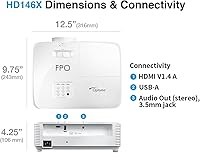
  • Connectivity: Includes one HDMI 1.4a input with 3D support, one 3.5mm audio output, and one USB-A port delivering 1.5A power for streaming devices.
  • HDMI-CEC: Supports HDMI-CEC, enabling the projector to power on and off automatically in sync with a connected HDMI-CEC-compatible source device.
  • 3D Support: Compatible with active 3D content via the HDMI 1.4a input, requiring compatible 3D glasses and a 3D-capable source.
  • Built-in Audio: Includes an integrated mono speaker for basic audio output, with a 3.5mm jack available for connecting external speakers or a soundbar.
  • Color Standard: Supports REC.709 color standard, providing a reference baseline for accurate color reproduction in HD video content after calibration.
  • Dimensions: Measures 9.5 x 12.4 x 4.3 inches, compact enough for shelf placement or ceiling mounting with a compatible third-party bracket.
  • Weight: Weighs 8.2 pounds, making it manageable for occasional repositioning while stable enough for a fixed shelf or mount installation.
  • Display Technology: Uses DLP (Digital Light Processing) projection technology, which contributes to its sharp pixel structure and reliable long-term brightness consistency.
  • Game Display Mode: Dedicated Game Display Mode enhances shadow detail and boosts visibility in dark scenes, tailored for horror, action, and stealth game genres.
  • Power Source: Operates on standard AC power via an included power cable, with no battery or alternative power option supported.

Related Reviews

Optoma HD39HDR Home Theater Projector
76%
91%
Brightness Performance
88%
Gaming Performance
83%
Image Quality
67%
HDR Quality
79%
Color Accuracy
More
Optoma HD30LV 1080p Home Theater Projector
72%
88%
Brightness Performance
79%
Image Quality
76%
Gaming Experience
71%
Setup & Placement
86%
Portability
More
BenQ TK800M 4K UHD Home Theater Projector
86%
93%
Picture Quality
89%
Brightness
91%
Gaming Performance (Low Input Lag)
85%
Ease of Setup
88%
Connectivity Options
More
BenQ TK860i 4K Smart Home Theater Projector
85%
91%
Picture Quality
88%
Ease of Setup
87%
Connectivity Options
65%
Sound Quality
82%
Streaming Performance (Android TV)
More
BenQ HT2060 1080p Home Theater Projector
79%
93%
Color Accuracy
81%
Image Sharpness
76%
HDR Performance
89%
Gaming Performance
67%
Brightness & Room Versatility
More
Optoma GT3500HDR 1080p Full HD Home Laser Projector
88%
91%
Image Quality
87%
Brightness
85%
Ease of Setup
82%
Portability
90%
Design & Build Quality
More
BenQ HT4550i 4K HDR LED Smart Home Theater Projector
85%
94%
Image Quality
89%
Brightness
93%
Color Accuracy
75%
Ease of Setup
65%
Sound Quality
More
Bobtot B38 5.1 Home Theater Speaker System
74%
78%
Sound Quality for Room Size
61%
Bass Performance
74%
Surround Sound Immersion
86%
Connectivity & Input Range
72%
Setup & Installation Ease
More
Optoma UHD35X 4K DLP Projector
87%
94%
Image Quality
91%
Brightness
88%
Portability
87%
Ease of Setup
90%
Gaming Performance
More
Epson Home Cinema 1080 1080p Projector
77%
91%
Image Quality
84%
Brightness & Ambient Light Performance
88%
Color Accuracy
79%
Gaming Performance
93%
Setup & Ease of Use
More

FAQ

Yes, and this is actually one of the stronger points of the HD146X. At 3600 lumens, it handles rooms with the blinds drawn or indirect daylight coming through reasonably well. Full direct sunlight will still wash it out, but for typical evening or partial-shade conditions, the image stays watchable and fairly vibrant.

It depends entirely on what you're playing. For single-player games, RPGs, sports titles, or co-op couch gaming, 16ms feels responsive and comfortable. If you're playing competitive online shooters where reaction time genuinely matters, it starts to show — most dedicated competitive players prefer sub-10ms. This Optoma projector is built for casual and immersive gaming, not tournament play.

To fill a 120″ screen, you'll need roughly 13 to 14 feet between the lens and the wall or screen. For a 100″ image, around 11 feet should work. The 1.1x optical zoom gives you a little flexibility, but this is a standard throw projector, so very small rooms under 10 feet deep will limit your screen size significantly.

Yes, that setup works well. The USB-A port on the projector provides enough power (1.5A) to run a Fire Stick or Roku Streaming Stick without needing a separate wall plug. Just connect the streaming stick to the HDMI input and power it via the USB-A port — it is a clean, minimal setup that many users rely on as their primary streaming configuration.

This is the most common frustration with the Optoma HD146X Home Theater Projector — there is only one HDMI input, so you cannot have both connected simultaneously without an HDMI switch. An HDMI switch (typically inexpensive) solves the problem, but it is an extra purchase and a small added step that buyers should plan for before they set things up.
Not quite. The default picture mode tends to run warm and slightly oversaturated, which looks punchy at first but is not accurately color-balanced. Spending 10 to 15 minutes in the picture settings to reduce the color temperature and adjust saturation produces a noticeably more natural result. It is not a complicated process, but it is worth doing before you settle in for your first proper movie night.

At standard brightness it is a consistent background hum that most people stop noticing within a few minutes. If you push the brightness to its maximum — which you might do in a brighter room — the fan ramps up and becomes more audible. During quiet scenes in a film or a pause in gameplay, some people find it noticeable. It is not a dealbreaker, but if you are very sensitive to ambient noise, it is worth being aware of.

Ceiling mounting works well with this projector, but the mount is not included — you will need to purchase a compatible third-party ceiling mount separately. The projector has a standard tripod mounting thread on the bottom. Make sure the mount you choose supports the unit's 8.2-pound weight and allows for the vertical keystone adjustment you will likely need to dial in the image geometry from a ceiling position.

Optoma rates the lamp at up to 15,000 hours in Eco mode, which at two to three hours of daily use translates to well over a decade. Running at full brightness shortens that lifespan, and some long-term owners who use the projector heavily at maximum output have reported faster brightness fade. For typical household use, though, lamp replacement should not be a concern for many years.

There is no built-in smart TV platform or wireless streaming capability on the HD146X — it is a dedicated projection device, not a smart projector. You will always need an external source: a streaming stick, a Blu-ray player, a games console, or a laptop connected via HDMI. For buyers who want an all-in-one smart display, this is not the right choice. For those who already have a media ecosystem and just want a big-screen output, it is a non-issue.

Where to Buy