Overview

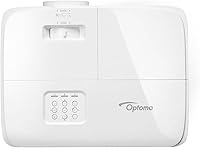
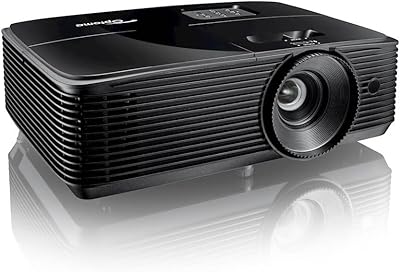
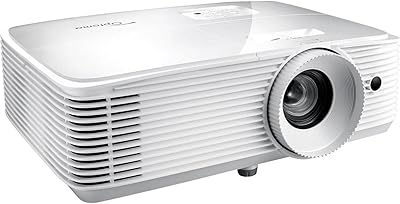
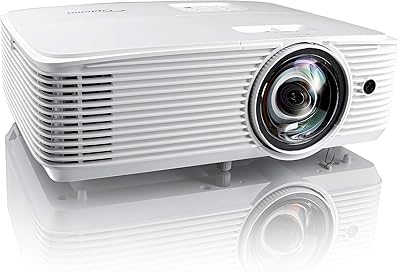
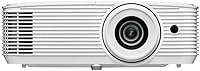
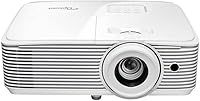
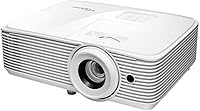
The Optoma HD30LV 1080p Home Theater Projector is a compact, lamp-based DLP unit that Optoma released in mid-2023, slotting into the middle tier of the home projector market. At just over 6 lbs, this Optoma projector is light enough to carry between rooms or take to a backyard setup — a practical advantage that heavier units simply cannot offer. It currently holds a 4.3-star rating on Amazon, though the pool of 67 reviews is still relatively limited, so that score reflects early adopter impressions more than a wide consensus. The overall pattern, however, leans positive.
Features & Benefits

Where this home theater projector earns its keep most is brightness. 4,500 lumens is genuinely strong for this tier, meaning you can run it in a living room with lights on and still get a sharp, watchable image. Worth clarifying upfront: the HD30LV accepts 4K UHD and HDR signals through its HDMI 2.0 port but outputs at native 1080p — that distinction matters if you're coming from a 4K TV. A 22,000:1 contrast ratio rewards darker viewing conditions, and the dual HDMI inputs, 1.1x optical zoom, and vertical keystone correction give you real flexibility when positioning it in different spaces.

Best For

The HD30LV suits anyone who wants a large-screen experience without converting a room into a blacked-out home cinema. People watching movies in moderately lit spaces will appreciate the brightness headroom, and casual to mid-level gamers benefit from the dedicated low-lag gaming mode. Portability is a genuine plus here — under 7 lbs means it moves without fuss. One practical note: you need roughly 11 feet of throw distance to reach a 100-inch image, so measure your room before purchasing. Buyers stepping up from an entry-level projector will notice the improvement in brightness and connectivity right away.

User Feedback

With 67 ratings skewing positive, early impressions of this Optoma projector are encouraging, though it is still too early for a fully broad verdict. Buyers frequently praise performance in lit rooms, noting it holds up where cheaper alternatives wash out. On the other side, fan noise draws occasional complaints — typical of lamp-based projectors but worth knowing if you watch in quiet spaces. Color accuracy receives mixed responses, and a handful of buyers mention the keystone adjustment takes some patience to dial in. Importantly, lamp replacement costs are a long-term consideration any prospective buyer should factor into their decision before purchasing.

Pros

  • 4,500 lumens handles ambient light well — you do not need to black out the room to get a watchable image.
  • Dual HDMI inputs let you keep a streaming device and a gaming console connected at the same time.
  • At just over 6 lbs, the HD30LV is light enough to carry between rooms or pack for outdoor screenings.
  • The low-lag gaming mode makes large-screen console gaming genuinely practical, not just a workaround.
  • Accepts 4K UHD and HDR signals, so your source content is not artificially limited by the input stage.
  • A 22,000:1 contrast ratio rewards darker viewing conditions with noticeably more depth and punch.
  • 1.1x optical zoom and vertical keystone correction give real flexibility when positioning the projector.
  • Optoma is a reputable, established brand with a track record of projector support and reliability.
  • The compact footprint fits on a standard shelf or side table without dominating the room.
  • Setup is approachable for first-time projector buyers, with adjustments that do not require professional calibration.

Cons

  • Native output is 1080p only — buyers expecting a true 4K image will be disappointed regardless of the source signal.
  • Lamp replacement is an eventual and unavoidable additional cost that LED or laser units do not carry.
  • Fan noise can be noticeable in quiet rooms, which may distract during dialogue-heavy or low-volume content.
  • Roughly 11 feet of throw distance is needed for a 100-inch image, which rules out smaller apartments or tight spaces.
  • The review pool of 67 ratings is still limited, making it hard to gauge long-term reliability with confidence.
  • Color accuracy has drawn mixed responses from early buyers, and out-of-box calibration may need adjustment.
  • Only one HDMI 2.0 port is available — the second input is HDMI 1.4a, which limits bandwidth for that connection.
  • Keystone correction is vertical only at plus or minus 30 degrees, which may not be enough for unusually angled setups.

Ratings

The scores below for the Optoma HD30LV 1080p Home Theater Projector were generated by our AI system after analyzing verified buyer reviews from multiple global markets, with spam, bot-submitted, and incentivized feedback actively filtered out. Each category reflects the honest spread of real user experiences — strengths and frustrations alike — so you get a transparent picture before committing to a purchase.
Brightness Performance
88%
This is consistently the most praised aspect of the HD30LV. Buyers repeatedly note they can run it in a living room with overhead lights on and still get a sharp, punchy image — something most projectors in this range simply cannot deliver. For family movie nights without full blackout setups, that matters enormously.
A small number of buyers found the brightness slightly uneven toward screen edges in larger image sizes, and pushing the projector to maximum lumens can accelerate lamp wear. In very bright, sunlit rooms the image still struggles, as no lamp projector at this tier fully wins that battle.
Image Quality
79%
21%
At 1080p with a 22,000:1 contrast ratio, the HD30LV produces a detailed, well-defined picture that holds up solidly for movies and TV. HDR content looks noticeably more dynamic in moderately dim rooms, with shadow detail that budget projectors typically flatten out entirely.
It is emphatically not a 4K projector, and buyers who expected otherwise based on the 4K input compatibility were disappointed. Color accuracy out of the box draws mixed feedback — some users report needing calibration adjustments to get skin tones and saturated colors looking natural.
Gaming Experience
76%
24%
The dedicated gaming mode reduces input lag to a point where casual and mid-level console gaming feels responsive on a large screen. Several buyers specifically called out PlayStation and Xbox sessions as noticeably improved compared to non-gaming projector modes they had used before.
Competitive or fast-paced online gamers may still find the lag less forgiving than a dedicated gaming monitor or TV. The low-lag mode also tends to reduce some image processing quality, which is a trade-off that purists notice during cutscenes or cinematic game sequences.
Setup & Placement
71%
29%
The 1.1x optical zoom and vertical keystone correction give buyers a workable range of placement options without needing a perfectly centered position. Most first-time projector owners report getting a usable image within a few minutes of unboxing, which is a genuine ease-of-use win.
The keystone correction is vertical only, which becomes a real limitation if your projector cannot sit level with the screen horizontally. Several buyers also flagged that achieving a perfectly squared image takes more patience than expected, particularly when using keystone at its limits.
Portability
86%
At just over 6 lbs with a compact footprint, the HD30LV is one of the more genuinely portable options in its brightness class. Buyers have reported taking it between rooms, carrying it to friends' homes, and setting it up outdoors for events without any real hassle.
It still requires a power outlet, so true wireless portability is not on the table. The carry experience also depends heavily on whether you invest in a dedicated carrying case, as the unit ships without one and the chassis corners can snag on bags.
Build Quality
73%
27%
The physical construction feels solid and well-finished for the price tier — the casing does not flex or creak under normal handling, and the lens housing feels properly secured. Buyers who have owned cheaper projectors note it feels like a meaningful step up in material quality.
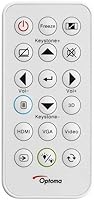
The remote control drew criticism from several buyers for feeling lightweight and cheap relative to the projector itself. A handful of reviews mentioned minor cosmetic scuffs arriving out of the box, suggesting packaging could be more protective during transit.
Fan Noise
58%
42%
In normal viewing conditions with any ambient sound — a fan, air conditioning, background noise — most users do not find the fan intrusive enough to break immersion. At moderate brightness settings the fan runs quieter than at full power, which helps in typical home environments.
In a quiet room during a late-night movie, the fan is noticeable, and this comes up repeatedly in buyer feedback as a genuine frustration. Lamp-based projectors inherently need active cooling, so this is a structural trade-off rather than a defect, but it is still a real consideration.
Connectivity
82%
18%
Dual HDMI inputs covering both HDMI 2.0 and HDMI 1.4a mean you can keep a streaming device and a console plugged in simultaneously without swapping cables. The HDMI 2.0 port handles 4K source signals and HDR content correctly, which covers the needs of most modern living room setups.
Two HDMI ports is functional but not generous — users with multiple devices will eventually be rotating cables. The absence of built-in wireless connectivity or smart TV functionality means you are always reliant on an external streaming stick or player, which adds a cable to manage.
Value for Money
74%
26%
Relative to similarly priced lamp-based 1080p projectors, the HD30LV delivers above-average brightness and a more complete input set, which makes the upfront cost feel justified for buyers focused on brightness and versatility in a real living space.
The lamp replacement cost down the line chips away at the value equation compared to laser alternatives, some of which are available at comparable price points. Buyers on a strict long-term budget should account for eventual bulb costs before deciding the initial price is the full story.
HDR & Color Depth
67%
33%
HDR and HLG compatibility gives the projector more headroom when handling high-dynamic-range content, and buyers watching HDR movies in a properly dimmed room report a noticeably richer visual experience than standard SDR content on comparable units.
The real-world HDR impact is constrained by the lamp brightness ceiling and native 1080p output, so the effect is subtler than what you see on a dedicated HDR television. Color volume in bright HDR scenes can feel compressed, and the improvement over non-HDR content is modest in well-lit rooms.
Throw Distance Flexibility
62%
38%
The throw ratio works well for medium-sized rooms, and at roughly 11 feet for a 100-inch image, it suits a standard living room layout comfortably. The 1.1x optical zoom provides a small buffer for fine-tuning image size without moving the projector physically.
Buyers in smaller apartments or short rooms quickly discover that the throw ratio limits their screen size options, which has caused genuine disappointment in several reviews. Unlike short-throw projectors, there is no workaround for tight spaces — you simply cannot get a large image from a close distance.
3D Performance
61%
39%
Full 3D support via HDMI 1.4a is a feature not always present at this price level, and buyers who specifically sought out 3D-capable projectors appreciated having it available without moving to a higher-priced tier.
3D usage requires compatible active shutter glasses that are sold separately, which adds cost and friction for buyers who were not aware of this requirement upfront. The 3D content library has also shrunk significantly in recent years, making this a niche benefit for most modern buyers.
Long-Term Reliability
64%
36%
Optoma has a track record as a reputable projector manufacturer, and early buyers of the HD30LV have not flagged widespread hardware failure issues in the review pool, suggesting reasonably solid build reliability in the early product lifecycle.
The review pool of 67 ratings is still too small to draw strong conclusions about long-term durability, and lamp-based units inherently carry more maintenance risk over time than lamp-free alternatives. It is simply too early to rate this category with full confidence.

Suitable for:

The Optoma HD30LV 1080p Home Theater Projector is a strong fit for people who want a large-screen experience in a real living space — not a purpose-built, light-controlled home theater. Its 4,500-lumen output means you can actually use it with lamps on, which is how most households genuinely watch content. Casual and mid-level gamers will find the dedicated low-lag gaming mode practical for console sessions on a big screen without investing in a dedicated gaming projector. The compact size and sub-7-lb weight make it a solid pick for anyone who wants flexibility — moving it between rooms, setting it up for a backyard movie night, or packing it for a trip. Buyers upgrading from an entry-level projector will notice a real step up in brightness and input options, particularly the dual HDMI setup that handles modern streaming sticks and gaming consoles simultaneously.
Not suitable for:

The Optoma HD30LV 1080p Home Theater Projector is not the right call for buyers who have their hearts set on a true 4K picture — this unit accepts 4K signals but outputs at native 1080p, so the distinction is real and visible if you are coming from a 4K display. Anyone with a room shorter than roughly 11 feet will struggle to hit a 100-inch image without the screen feeling cramped or requiring awkward placement. Lamp-based projection also carries a longer-term cost that LED and laser alternatives avoid — eventually the bulb needs replacing, which adds to the total cost of ownership. Buyers who watch in a quiet room late at night may find the fan noise distracting, particularly during slower or dialogue-heavy scenes. If your primary use case is a dedicated, dark home cinema where contrast and black levels are the priority, there are laser alternatives at a similar price point worth considering.
Specifications

  • Display Resolution: The projector outputs at native 1920x1080 (Full HD) resolution across all content sources.
  • Brightness: Rated at 4,500 ANSI lumens, making it usable in rooms with moderate ambient lighting.
  • Contrast Ratio: A 22,000:1 contrast ratio delivers deeper blacks and more visible shadow detail in darker environments.
  • Light Source: Uses a traditional replaceable lamp, which will require bulb replacement after extended hours of use.
  • Signal Compatibility: Accepts 4K UHD, HDR, and HLG input signals, though output remains at native 1080p resolution.
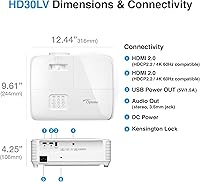
  • HDMI Inputs: Equipped with one HDMI 2.0 port (HDCP 2.2) and one HDMI 1.4a port with full 3D signal support.
  • Throw Distance: Requires approximately 10.89 feet of distance to project a 100-inch image diagonally.
  • Zoom: Features 1.1x optical zoom for minor image size adjustments without physically moving the projector.
  • Keystone Correction: Offers vertical keystone correction of plus or minus 30 degrees to compensate for angled placement.
  • Gaming Mode: Includes a dedicated low input lag gaming mode suited for console and PC gaming on a large screen.
  • 3D Support: Full 3D content playback is supported via the HDMI 1.4a input connection.
  • Connectivity: Inputs include dual HDMI ports and USB connectivity for added peripheral or media flexibility.
  • Dimensions: The unit measures 9.61 x 12.44 x 4.25 inches, fitting comfortably on a shelf or side table.
  • Weight: Weighs 6.35 lbs, light enough to reposition between rooms or transport to outdoor setups.
  • Aspect Ratio: Native 16:9 aspect ratio aligns with standard widescreen HD and UHD content formats.
  • Manufacturer: Made by Optoma Technology Inc., a brand with a long-standing presence in the consumer projector market.
  • Model Number: The official model designation is HD30LV, released in June 2023.
  • Power Source: Mains-powered unit; includes one lithium metal battery for the included remote control.

Related Reviews

Optoma HD146X Home Theater Projector
74%
88%
Image Brightness
83%
Image Sharpness & Clarity
74%
Contrast & Black Levels
69%
Color Accuracy
77%
Gaming Performance
More
Optoma HD39HDR Home Theater Projector
76%
91%
Brightness Performance
88%
Gaming Performance
83%
Image Quality
67%
HDR Quality
79%
Color Accuracy
More
Optoma GT3500HDR 1080p Full HD Home Laser Projector
88%
91%
Image Quality
87%
Brightness
85%
Ease of Setup
82%
Portability
90%
Design & Build Quality
More
BenQ HT2060 1080p Home Theater Projector
79%
93%
Color Accuracy
81%
Image Sharpness
76%
HDR Performance
89%
Gaming Performance
67%
Brightness & Room Versatility
More
Optoma EH412ST Short Throw 1080P Projector
86%
88%
Brightness in Well-Lit Environments
91%
Setup and Installation Ease
84%
Image Quality and Clarity
89%
Portability and Weight
72%
Sound Quality (Built-In Speaker)
More
BenQ TK860i 4K Smart Home Theater Projector
85%
91%
Picture Quality
88%
Ease of Setup
87%
Connectivity Options
65%
Sound Quality
82%
Streaming Performance (Android TV)
More
BenQ TK800M 4K UHD Home Theater Projector
86%
93%
Picture Quality
89%
Brightness
91%
Gaming Performance (Low Input Lag)
85%
Ease of Setup
88%
Connectivity Options
More
BenQ HT4550i 4K HDR LED Smart Home Theater Projector
85%
94%
Image Quality
89%
Brightness
93%
Color Accuracy
75%
Ease of Setup
65%
Sound Quality
More
GKLPO 1080P Projector
86%
88%
Image Quality
92%
Wi-Fi Connectivity
89%
Bluetooth Connectivity
90%
Portability
85%
Setup & Ease of Use
More
NISOO Z1 1080P Projector
87%
93%
Image Quality
81%
Brightness
88%
Color Accuracy
84%
Audio Performance
90%
Connectivity Options
More

FAQ

It only accepts 4K signals — the native output resolution is 1080p. So if you plug in a 4K Blu-ray player or a 4K streaming stick, the projector will display the content at 1080p. That is still a sharp, detailed image on a large screen, but it is not a true 4K projector and should not be treated as one.

To get a 100-inch diagonal image, you need roughly 10.9 feet between the lens and the screen. If your room is shorter than that, the image will be smaller — the 1.1x optical zoom gives you a little flexibility, but not a lot. Measure your space before purchasing, especially in apartments or smaller rooms.

Yes, and this is one of its genuine strengths. At 4,500 lumens, the image holds up reasonably well with lamps on or in a room with indirect natural light. You will still get a better picture with the lights dimmed, but you do not need a blacked-out room to enjoy it.

It depends on your sensitivity to background noise. Lamp-based projectors inherently run a cooling fan, and some owners of this unit have flagged it as noticeable during quiet scenes. If you tend to watch late at night in complete silence, it is worth factoring in. For most casual viewing environments with any ambient sound, it fades into the background.

Lamp life on projectors like this typically ranges from around 4,000 to 6,000 hours depending on the brightness mode you use. Replacement lamps for Optoma projectors generally run anywhere from roughly 60 to 120 dollars, so it is a real long-term cost to factor into your budget, unlike LED or laser units that do not require bulb replacements.

The Optoma HD30LV 1080p Home Theater Projector includes a dedicated gaming mode specifically designed to reduce input lag, which makes it a practical option for console and PC gaming. It is not aimed at competitive esports players who need extremely low lag, but for casual to mid-level gaming on a large screen it performs well enough that most players will not notice a problem.
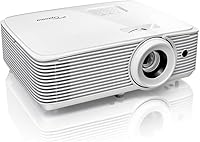
The dual HDMI inputs cover most modern devices — streaming sticks, gaming consoles, laptops, Blu-ray players, and cable boxes all connect without adapters. The HDMI 2.0 port handles 4K and HDR signal sources, while the HDMI 1.4a port supports 3D content. There is also USB connectivity for additional peripheral use.

Yes, it includes the projector unit, a remote control with a battery, and a power cable. You will need to supply your own HDMI cable to connect a source device, as these are typically not included. A separate screen or blank wall surface is also needed, as no projection screen is bundled with the unit.

Ceiling mounting is a common setup for DLP projectors like this one, and the HD30LV supports it. You would need a compatible third-party ceiling mount bracket sized for its footprint. Keep in mind that ceiling mounting may require flipping the image orientation in the projector settings, which is a standard feature on units like this.

The main practical difference you notice moving up from a budget projector is brightness — 4,500 lumens is meaningfully higher than the 2,000 to 3,000 lumens typical of entry-level units, which translates directly into a more usable image in real-world lighting conditions. The dual HDMI inputs and HDR compatibility also give it more flexibility than most budget alternatives, which often cut corners on connectivity.

Where to Buy