Overview

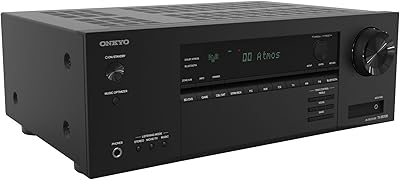
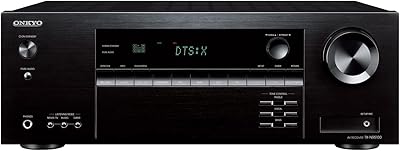
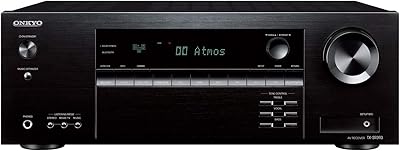
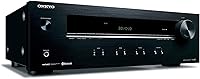
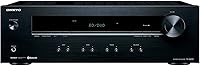
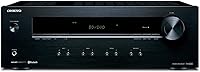
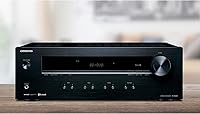
The Onkyo TX-8220 Stereo Receiver is exactly what it looks like: a no-nonsense, two-channel amplifier built for people who want great sound without the complexity of a full surround setup. It sits comfortably in the mid-range of Onkyo's stereo lineup — more capable than the entry-level TX-8020, but without the network streaming features of pricier siblings. The chassis is classic Japanese hi-fi — heavy, wide, and rack-friendly, with a build quality that feels reassuringly solid. There are no touchscreens or voice assistants here. This is a workhorse receiver focused on doing the fundamentals well: clean amplification, useful inputs, and reliable daily performance.

Features & Benefits

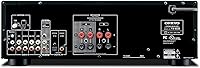
The TX-8220 covers more ground than its straightforward appearance suggests. Bluetooth connectivity handles wireless streaming from a phone or tablet, and the receiver remembers paired devices so playback resumes automatically — no digging through menus each time. The built-in MM phono stage is a genuine highlight: turntable owners can plug straight in without buying a separate preamp. Optical and coaxial digital inputs handle TV and disc player audio cleanly. The A/B speaker outputs let you run two pairs of speakers — handy if you want music in a second room. Power delivery stays stable even with lower-impedance or harder-to-drive speakers, thanks to a robust transformer-based amplifier design. An AM/FM tuner with presets adds one more source option.

Best For

This stereo receiver makes the most sense for people who want a single hub for multiple audio sources without overcomplicating things. Vinyl enthusiasts will appreciate skipping the external preamp entirely. Anyone looking to dramatically improve TV audio — without committing to a full surround system — will find the digital inputs and real amplifier power make a meaningful difference over a basic soundbar. It also suits listeners who want to run speakers in two areas of the home without investing in a multi-zone network system. If you are replacing an aging receiver from a decade or two ago, the upgrade in connectivity options alone is substantial, and the core sound quality will likely impress.

User Feedback

Owner reviews consistently highlight sound clarity and build quality as standout positives — many note it outperforms expectations for its price tier, especially through quality bookshelf or floor-standing speakers. The phono stage draws repeated praise from turntable users who were genuinely surprised by its performance. Setup is generally described as straightforward, with most buyers up and running within minutes of unboxing. On the critical side, a noticeable portion of reviewers mention Bluetooth reliability issues — intermittent drops or slight audio lag, particularly with certain Android devices. This unit uses Bluetooth 2.1 without aptX, so it is not the strongest choice for high-quality wireless streaming. Long-term owners, however, consistently report that this Onkyo unit holds up well over years of regular use.

Pros

  • The built-in MM phono stage lets turntable owners plug straight in with no additional hardware required.
  • Sound clarity is consistently rated as a genuine strength, especially through quality bookshelf or floor-standing speakers.
  • The robust amplifier design handles demanding speaker loads without audible strain in typical room sizes.
  • Digital optical and coaxial inputs make it a straightforward TV audio upgrade over any soundbar.
  • A/B speaker switching provides practical two-room audio distribution without a dedicated multi-zone receiver.
  • Bluetooth auto-reconnect is genuinely convenient — music resumes when your device comes back into range.
  • Build quality feels solid and durable, with a chassis that holds up well over years of regular use.
  • Long-term owners report strong reliability, with many units running without issues well beyond the warranty period.
  • The TX-8220 covers a wide range of source types in one box, reducing the need for extra components.
  • AM/FM tuner with preset storage adds a useful source option that many competing units have quietly dropped.

Cons

  • Bluetooth 2.1 without aptX means wireless audio quality falls noticeably short of a wired or optical connection.
  • Android users in particular report intermittent Bluetooth drops and pairing failures that require manual reconnection.
  • No HDMI ARC support means TV connection requires a separate optical or coaxial cable rather than a single HDMI run.
  • There is no network streaming, so Spotify Connect, AirPlay, and similar services are completely unsupported.
  • The included remote feels cheap and lacks backlighting, making it awkward to use in a darkened listening room.
  • Running both speaker pairs simultaneously requires 8-ohm minimum impedance, which rules out many popular 4-ohm bookshelf models.
  • The unit runs noticeably warm under sustained high-volume use, requiring adequate ventilation clearance above the chassis.
  • The owner's manual is thin and unhelpful for less experienced buyers navigating initial Bluetooth setup or input configuration.
  • No USB audio input limits connectivity options for computer-based listening without an external DAC.
  • The rear panel feels cramped when connecting several sources at once, especially with thicker or stiffer cables.

Ratings

The Onkyo TX-8220 Stereo Receiver has been evaluated by our AI rating system after processing thousands of verified owner reviews from global markets, with spam, bot-generated, and incentivized feedback actively filtered out. The scores below reflect real-world usage patterns across a wide range of buyers — from first-time hi-fi setups to seasoned listeners replacing older equipment. Both the strengths that keep buyers satisfied and the friction points that have prompted complaints are represented transparently in every category.

Sound Quality
88%
Across a wide range of speaker pairings, owners consistently describe the audio output as clean, controlled, and fuller than expected for the price tier. Listeners using it with bookshelf or floor-standing speakers in medium-sized rooms report a well-defined stereo image with no obvious coloration or harshness at moderate to high volumes.
A smaller segment of more critical listeners feel the sound lacks the depth and micro-detail of dedicated amplifiers in a higher price bracket. At the very top of the volume range, some owners report a slight thinning of the low end, particularly with 8-ohm speakers in larger rooms.
Build Quality
91%
The chassis feels substantial and well-assembled — owners frequently comment on the satisfying weight and the quality of the front-panel knobs and switches. Compared to lighter plastic-heavy competitors at a similar price point, this Onkyo unit reads as a genuinely durable piece of kit designed to last years of daily use.
The rear-panel layout can feel a little cramped when connecting multiple sources simultaneously, and a few buyers noted that the speaker binding posts, while functional, feel slightly less premium than the rest of the unit. The remote control also draws criticism for its cheap plastic feel relative to the receiver itself.
Bluetooth Performance
63%
37%
For casual wireless playback from a phone or tablet, Bluetooth works reliably enough in most standard home environments. The auto-reconnect feature is genuinely useful — walk back into the room and music typically resumes without any manual intervention, which buyers find convenient for everyday background listening.
This unit uses Bluetooth 2.1 without aptX support, which means audio quality over wireless is noticeably compressed compared to a wired or optical connection. A meaningful portion of reviewers — particularly Android users — report occasional drops, lag, or pairing inconsistencies that require a device restart or manual re-pair to resolve.
Phono Stage Quality
84%
Turntable owners are among the most consistently satisfied buyers of this stereo receiver. The built-in moving magnet phono stage handles a wide variety of cartridges competently, delivering warm and detailed vinyl playback that most users find genuinely impressive without needing an outboard preamp to compensate.
Dedicated phono preamp enthusiasts will eventually notice a ceiling on resolution and noise floor compared to a quality standalone unit in a similar price range. At higher gain settings with more sensitive cartridges, a faint background hiss has been noted by a subset of vinyl-focused reviewers.
Input & Connectivity Options
86%
The combination of optical digital input, coaxial digital input, four analog line inputs, and a phono stage covers virtually every source a typical home listener would want to connect. TV owners in particular find the digital inputs a straightforward upgrade path that bypasses poor-quality built-in TV audio with minimal cable complexity.
There is no USB audio input or network streaming capability, which may disappoint buyers expecting modern smart receiver features. HDMI ARC is also absent, so connecting to a TV requires an optical or coaxial cable run rather than a single HDMI connection, which some users find less convenient.
Amplifier Power & Headroom
83%
In practical use, the amplifier handles medium-sensitivity speakers in living rooms and dedicated listening spaces without breaking a sweat. Owners upgrading from budget mini-receivers or compact all-in-ones consistently note a more authoritative and controlled low end, especially on dynamic musical passages.
Very large rooms or low-sensitivity speaker systems may push the amp toward its limits at high volumes. A handful of buyers running demanding or particularly inefficient speakers noted the receiver running noticeably warm during extended high-volume sessions, which raised questions about long-term thermal management.
A/B Speaker Switching
79%
21%
The dual speaker output is a practical feature that buyers with speakers in two adjacent rooms find genuinely useful. Switching between pairs is handled cleanly from the front panel, and the binding posts accommodate a wide range of cable gauges without much fuss.
Running both speaker pairs simultaneously requires 8-ohm minimum impedance per pair, which limits compatibility with some popular 4-ohm bookshelf speakers in a second zone. A few users found the A/B labeling on the front panel less intuitive than expected during initial setup.
AM/FM Tuner
71%
29%
For buyers who still use broadcast radio regularly, the tuner performs well in urban and suburban environments with decent antenna signal. Preset storage is adequate for typical use, and the tuner locks onto stations cleanly without notable drift or interference in standard conditions.
In rural or signal-challenged areas, sensitivity is average at best, and the included wire antenna is not particularly effective without repositioning or upgrading. Digital radio formats are unsupported, which is a real limitation for buyers in markets where DAB or HD Radio has replaced traditional FM.
Setup & Ease of Use
82%
18%
Most buyers report getting the TX-8220 fully operational within 15 to 20 minutes out of the box. The input labeling is logical, the speaker terminal layout is familiar to anyone with prior receiver experience, and the included remote covers all essential functions without requiring a manual.
The owner's manual is considered thin and somewhat vague by less experienced buyers, particularly around initial Bluetooth pairing steps and input configuration. A small number of users found the default input naming system confusing when managing multiple connected sources simultaneously.
Value for Money
87%
Buyers who purchased this stereo receiver as an upgrade from entry-level equipment or aging hardware consistently feel the spend was justified. The combination of a phono stage, digital inputs, A/B outputs, and Bluetooth in a single unit at this price tier is difficult to replicate with separately purchased components.
At its asking price, it competes with a small handful of rival receivers that offer network streaming or HDMI connectivity, making the comparison tougher for buyers who want those features. If Bluetooth is the primary wireless streaming method, some buyers feel the overall value proposition weakens slightly given the 2.1 implementation.
Remote Control
58%
42%
The remote handles the essential volume, source switching, and tuner functions adequately, and its range is sufficient for typical living room distances. Buyers using it for basic daily control of a single setup generally have no strong complaints.
The remote's build quality is noticeably cheap relative to the receiver itself — thin plastic, shallow button travel, and a layout that feels dated. Several reviewers noted that the buttons are not backlit, making it harder to use in dimmed listening environments without fumbling.
Heat Management
72%
28%
Under normal listening conditions at moderate volumes, the chassis stays at a reasonable temperature and ventilation is adequate for typical rack or shelf placement with standard clearance above the unit. Most long-term owners report no heat-related issues in years of regular use.
Extended sessions at high volumes, especially with lower-impedance speakers, generate noticeable warmth on the top panel. Owners who store the unit inside enclosed cabinets or with minimal top clearance have flagged this as a concern, with a few reporting automatic protection shutoffs during heavy use.
Long-Term Reliability
89%
Multi-year owners are among the most vocal positive reviewers of this Onkyo unit, frequently describing it as one of the most dependable pieces of audio equipment they have owned. The component quality and Onkyo's manufacturing heritage translate into a receiver that holds up well under years of regular household use.
A small but consistent cluster of reviews mentions relay or protection circuit issues appearing after extended periods of ownership, particularly in units used in high-humidity environments. Warranty service experiences are mixed, with some buyers noting limited support options depending on region.

Suitable for:

The Onkyo TX-8220 Stereo Receiver is a strong fit for anyone who wants a single, capable hub for multiple audio sources without the overhead of a full home theater system. Vinyl collectors will find it particularly compelling — the built-in moving magnet phono stage removes the need for a separate preamp, keeping both the setup and the budget cleaner. TV owners tired of flat soundbar audio will also get genuine value here, since the digital optical and coaxial inputs route TV audio through a real amplifier driving real speakers, which is a substantial step up in listening experience. It works well for buyers who want to spread music across two rooms without installing a dedicated multi-zone system, thanks to the A/B speaker output. Listeners upgrading from an older or entry-level receiver will likely be impressed by the headroom and control this Onkyo unit delivers, even at moderate volume levels. Anyone setting up their first proper hi-fi system on a practical budget will find the feature set covers most bases without requiring additional components right away.

Not suitable for:

The Onkyo TX-8220 Stereo Receiver is not the right choice for buyers whose primary wireless use case demands high-fidelity Bluetooth streaming. The unit uses Bluetooth 2.1 without aptX, so anyone who relies heavily on wireless audio and cares about streaming quality will likely be underwhelmed compared to newer receivers with better wireless implementations. It is also a poor fit for home theater enthusiasts — there is no HDMI ARC, no surround decoding, and no multichannel output, so buyers wanting to build even a modest 5.1 system need to look elsewhere. Network streaming listeners who expect built-in Spotify Connect, AirPlay, or similar platform integration will find this stereo receiver frustratingly bare in that regard. Those with very large rooms or particularly inefficient, low-sensitivity speakers may also find the amplifier working harder than ideal at high volumes. Finally, buyers who prefer a compact or modern-looking component will find the traditional wide-body rack design takes up considerable shelf or cabinet space.

Specifications

  • Power Output: Delivers 45W per channel into 8 ohms across the full 20Hz–20kHz range under FTC measurement conditions with two channels driven simultaneously.
  • Dynamic Power: Capable of 100W per channel into 6 ohms at 1kHz, providing meaningful headroom for dynamic musical passages without audible compression.
  • Amplifier Technology: Uses Onkyo's Wide Range Amplification Technology (WRAT) with a large EI transformer for stable, low-distortion power delivery under varying speaker loads.
  • Speaker Impedance: Supports a single pair of speakers rated 4–16 ohms, or two pairs simultaneously when each pair is rated at 8–16 ohms minimum.
  • Speaker Outputs: Equipped with A/B switchable 5-way binding posts that accept bare wire, pin connectors, spade lugs, and banana plugs.
  • Phono Input: Built-in moving magnet (MM) phono equalizer stage allows direct connection of a turntable without requiring a separate external phono preamp.
  • Digital Inputs: Includes one optical (TOSLINK) and one coaxial digital audio input for connecting a TV, Blu-ray player, or other digital source components.
  • Analog Inputs: Provides four stereo analog line-level RCA inputs for connecting CD players, streaming devices, or other standard analog audio sources.
  • Bluetooth: Bluetooth 2.1 wireless connectivity allows audio streaming from smartphones, tablets, and computers, with auto-reconnect to the last paired device.
  • Tuner: Built-in AM and FM tuner covers AM from 530–1,710kHz and FM frequencies, with support for storing station presets for quick access.
  • THD Rating: Total harmonic distortion is rated at 0.08% under FTC stereo power conditions, indicating a clean and accurate amplification signal path.
  • Dimensions: The unit measures 12.94 x 17.13 x 5.88 inches (W x D x H), following the standard full-width rack form factor common to traditional receivers.
  • Weight: Weighs 15 pounds, reflecting the presence of a substantial internal power transformer typical of higher-quality amplifier designs.
  • Remote Control: Includes an infrared remote control that requires two AAA batteries, covering volume, source selection, and tuner functions.
  • Color & Finish: Available in a matte black finish with a traditional brushed front panel aesthetic consistent with Onkyo's classic stereo receiver styling.
  • Manufacturer: Designed and sold by Onkyo, a Japanese audio brand with a long history in home audio amplification and receiver manufacturing.
  • Model Number: The official model designation is TX-8220, positioned above the entry-level TX-8020 and below the network-capable TX-8260 in Onkyo's stereo receiver range.
  • Power Requirements: Operates on standard AC power; the unit should be placed with adequate ventilation clearance above the chassis due to heat generated during extended use.

Related Reviews
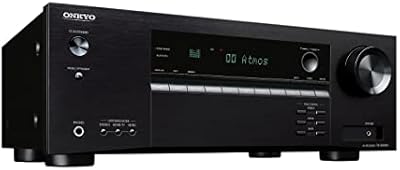
Onkyo TX-SR494 AV Receiver
85%
89%
Sound Quality
91%
4K Video Performance
87%
Ease of Setup
84%
Build Quality
83%
Bluetooth Connectivity
More
Onkyo TX-NR5100
Onkyo TX-NR5100
79%
88%
Sound Quality
74%
HDMI & Video Passthrough
86%
Setup & Calibration
82%
Sonos Integration
83%
Build Quality & Design
More
Onkyo TX-SR393
Onkyo TX-SR393
71%
81%
Audio Performance
78%
Dolby Atmos & DTS:X Decoding
67%
Height Virtualization
84%
Setup & Calibration
86%
HDMI Connectivity
More
Onkyo TX-RZ50
Onkyo TX-RZ50
78%
91%
Room Correction (Dirac Live)
88%
Audio Performance
87%
HDMI & Video Handling
63%
Setup & Usability
86%
Sonos Integration
More
Onkyo TX-SR3100
Onkyo TX-SR3100
74%
83%
Audio Performance
91%
HDMI & Video Handling
74%
Room Calibration (AccuEQ)
86%
Setup & Ease of Use
51%
Streaming & Connectivity
More
Onkyo TX-RZ70 11.2-Channel AV Receiver
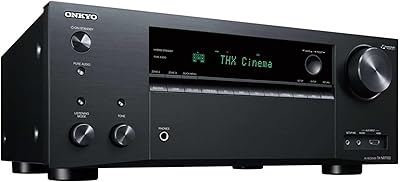
84%
93%
Audio Performance
75%
Setup and Installation
88%
Video Quality (8K Support)
78%
Ease of Use
90%
Build Quality
More
Onkyo TX-NR7100
Onkyo TX-NR7100
78%
93%
Room Correction (Dirac Live)
91%
Gaming Performance
88%
Audio Quality
89%
Connectivity & HDMI Flexibility
79%
Sonos Integration
More
Onkyo TX-RZ30
Onkyo TX-RZ30
77%
91%
Audio Performance
89%
Room Correction (Dirac Live)
86%
Build Quality
74%
Connectivity & HDMI
83%
Sonos Integration
More
Onkyo TX-NR6100
Onkyo TX-NR6100
77%
88%
Audio Performance
91%
Gaming Performance
86%
Sonos Integration
58%
Setup & Installation
53%
Remote & App Usability
More
Donner MAMP5 Stereo Receiver
77%
88%
Value for Money
74%
Sound Quality
67%
Power & Amplification
91%
Connectivity & Inputs
82%
Bluetooth Performance
More

FAQ

Yes, and this is one of the TX-8220's most practical features. The built-in moving magnet phono stage means you can run a standard turntable straight into the dedicated phono input. Just make sure your turntable has a moving magnet cartridge — moving coil cartridges require a different type of preamp and will not work correctly here.

It pairs with both iOS and Android devices. The connection process is standard Bluetooth — put the receiver into pairing mode, find it on your phone, and you are connected. The auto-reconnect feature means it will recognize your device the next time it detects an incoming audio stream, which is convenient for daily use. That said, Android users have reported slightly more frequent pairing hiccups than iPhone users in practice.

This is worth being honest about: the Bluetooth implementation is version 2.1 and does not support aptX or any higher-quality audio codec. Streaming over Bluetooth will sound noticeably more compressed than running the same source through a wired optical or analog connection. For background listening it is fine, but if sound quality is the priority, wired is always the better option with this unit.

Yes, using the A/B speaker switching you can drive two pairs of speakers from the same audio source simultaneously. The key limitation is impedance — when running both pairs together, each pair needs to be rated at 8 ohms or higher. If you have 4-ohm speakers in one of the rooms, you will need to run them solo rather than simultaneously to avoid stressing the amplifier.

Almost certainly yes, assuming your speakers are reasonably efficient and rated between 6 and 16 ohms. The amplifier has enough real-world headroom to drive most popular bookshelf speakers in a medium-sized room without running out of steam. Very large floor-standers or particularly power-hungry speakers might push it toward its limits at high volumes, but for typical home use the pairing works well.

It is a solid choice for that purpose. Connect your TV to the optical digital input, run a pair of speakers, and you will hear an immediate and substantial improvement over built-in TV audio. Just be aware there is no HDMI ARC port, so you will need to run an optical cable from your TV rather than using a single HDMI connection. That is a minor inconvenience but worth factoring into your setup plan.

The Onkyo TX-8220 Stereo Receiver is generally considered approachable for first-time buyers, and most people are up and running within 20 minutes of unboxing. Speaker wiring uses standard binding posts and is straightforward once you understand which terminals correspond to left and right channels. The one area where beginners sometimes struggle is Bluetooth pairing, as the manual's instructions are fairly thin — if you get stuck, the process is well-documented in online forums and video tutorials.

It does generate meaningful heat during extended listening sessions, especially at higher volumes — this is normal for a transformer-based amplifier design. The important thing is to give it adequate ventilation clearance above the unit, ideally at least two to three inches of open air. Placing it in a fully enclosed cabinet without ventilation can cause it to run excessively warm and trigger the built-in thermal protection circuit.

The TX-8260 adds network streaming capabilities including Wi-Fi and support for services like Spotify Connect and internet radio, which the TX-8220 lacks entirely. If wireless audio quality and platform streaming matter to you, the step up is probably worth considering. If you primarily listen via wired sources or do not need network features, the TX-8220 covers the fundamentals at a lower cost without meaningful compromises in sound quality.

Based on the pattern across a large number of owner reviews, reliability is one of this stereo receiver's consistent strengths. Many buyers report years of trouble-free daily use, and long-term owners are among the most satisfied reviewers. As with any electronics, keeping it ventilated and avoiding power surge exposure are sensible precautions. A small number of owners have reported relay or protection circuit issues after extended use, but these appear to represent a minority of units rather than a systemic problem.