Onkyo TX-NR6100


Overview
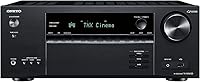
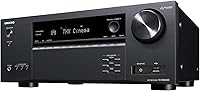
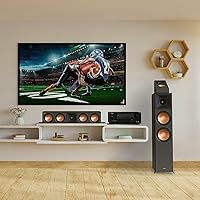
The Onkyo TX-NR6100 sits in a comfortable spot for serious home theater buyers — capable enough to satisfy demanding listeners, yet not priced into the stratosphere where only dedicated enthusiasts dare to go. Onkyo has been building AV receivers since before most people knew what surround sound was, and that experience shows in how this unit is put together. The 7.2-channel configuration handles modern speaker layouts with room to grow, while THX certification gives you an objective quality baseline rather than just marketing language. What genuinely sets it apart from many competitors at this level is its Sonos integration — a rare feature that bridges the gap between traditional AV setups and whole-home audio ecosystems.
Features & Benefits
This Onkyo receiver is built around a genuinely modern HDMI backbone. With HDMI 2.1 support, it can pass 4K at 120 frames per second and even 8K at 60Hz — meaning whatever display technology you adopt over the next few years, you are unlikely to outgrow this unit quickly. For console gamers specifically, features like Variable Refresh Rate and Auto Low Latency Mode mean your PS5 or Xbox Series X communicates directly with your TV through the receiver without adding noticeable lag. On the audio side, Dolby Atmos and DTS:X decoding are both present, and the Height Virtualizer lets you approximate an overhead sound effect without physically mounting ceiling speakers.
Best For
This AV receiver makes the most sense for a few distinct types of buyers. If you are coming from an older receiver — something 5.1 without Atmos or proper HDMI 2.1 — the jump in capability here is significant. Console gamers who route their PS5 or Xbox through a receiver rather than directly into a TV will appreciate dedicated gaming modes and the low-latency pass-through. Sonos households are probably the most natural fit; adding full 7.2 surround without abandoning an existing Sonos setup is a genuine draw. The Zone 2 HDMI output is also worth noting if you have a second screen in another room that needs independent 4K content.
User Feedback
With close to 900 ratings averaging 4.2 stars, most buyers land in satisfied territory — but the picture is not uniformly glowing. Sound quality and gaming performance draw consistent praise, and owners who use it with Sonos frequently mention how smoothly that integration works in practice. The criticisms are more about the experience around the audio than the audio itself: several reviewers find initial setup and calibration genuinely intimidating, especially if they are new to AV receivers. The companion app and physical remote have each drawn complaints about usability. A handful of owners mention firmware update experiences worth researching before buying. That said, long-term owners tend to describe solid value retention relative to what comparable receivers cost.
Pros
- THX certification across four distinct listening modes delivers objectively clean, uncolored audio in real home theater conditions.
- HDMI 2.1 support future-proofs your setup for 4K at 120Hz and beyond without needing a new receiver for years.
- VRR and Auto Low Latency Mode work reliably with PS5 and Xbox Series X, cutting input lag noticeably during gameplay.
- Dolby Atmos Height Virtualizer creates convincing overhead effects even in rooms without ceiling speaker installations.
- Works with Sonos Certified status integrates cleanly into existing Sonos households without requiring a full ecosystem overhaul.
- Zone 2 HDMI output lets two rooms play fully independent 4K content simultaneously from one receiver.
- Apple HomeKit and Google Assistant support enable hands-free control that actually works for daily routines.
- Long-term owners consistently rate value retention as strong relative to competing receivers at the same price tier.
- The 7.2-channel configuration handles modern speaker layouts and leaves room to expand as your setup grows.
Cons
- Initial setup and calibration carry a steep learning curve that has frustrated many first-time AV receiver buyers.
- The companion app is widely criticized for connectivity drops and a dated, unreliable interface.
- Only three HDMI inputs is a real limitation for users running multiple consoles, a streamer, and a Blu-ray player at once.
- The physical remote has a crowded button layout with poor backlighting, making it awkward in a dark theater room.
- Alexa voice control is entirely absent, locking out a significant portion of smart home users.
- Some firmware updates have temporarily broken HDMI handshake behavior or app connectivity for a subset of owners.
- The receiver runs noticeably warm during extended high-volume sessions, raising questions about long-term thermal performance.
- Sonos integration requires a separately purchased Sonos Port, adding cost that is not always clear upfront.
- In larger rooms or with less efficient speakers, 80 watts per channel may leave buyers wanting more dynamic headroom.
Ratings
The Onkyo TX-NR6100 has been scored by our AI system after parsing and filtering verified global buyer reviews — removing incentivized, duplicate, and bot-flagged submissions to surface what real owners actually experience. The result is a transparent breakdown that captures both what this AV receiver genuinely excels at and where it falls short of expectations for certain buyers.
Audio Performance
Gaming Performance
Sonos Integration
Setup & Installation
Remote & App Usability
HDMI Connectivity
Build Quality
Smart Home Integration
Value for Money
Dolby Atmos & Surround Decoding
Multi-Room Capability
Network & Wireless Performance
Firmware & Long-Term Support
Amplifier Power & Headroom
Suitable for:
The Onkyo TX-NR6100 is built for buyers who want a single hub that handles both a serious home theater setup and next-gen console gaming without compromise. If you are upgrading from an older receiver that predates Dolby Atmos or HDMI 2.1, the jump in capability here is substantial and immediately noticeable in everyday use. Console gamers who route a PS5 or Xbox Series X through their AV system rather than directly into a TV will find the low-latency gaming modes and VRR support genuinely impactful during fast-paced gameplay. Households already invested in the Sonos ecosystem are perhaps the most natural fit of all — the Works with Sonos Certified status means you are not abandoning your existing multi-room setup, just expanding it with full surround capability. Families with a second TV in another room will also get practical use from the Zone 2 HDMI output, which lets two different rooms play completely independent 4K content simultaneously. If you want certified, measurable audio quality backed by decades of AV engineering without stepping into flagship pricing territory, this receiver sits in a genuinely productive sweet spot.
Not suitable for:
Buyers who have never set up an AV receiver before should go in with realistic expectations — the Onkyo TX-NR6100 is not a plug-and-play device, and the initial calibration and HDMI configuration process has frustrated more than a few first-timers. If your primary use case is background music or casual stereo listening, you are paying for a feature set — gaming modes, multi-zone HDMI, 7.2 channel processing — that will likely sit unused, and simpler alternatives would serve you better for less. Alexa users will hit a wall immediately, since Amazon voice assistant support is absent and there is no obvious workaround beyond a third-party integration. Anyone who relies heavily on a smartphone app to control their AV equipment day-to-day may find the companion app experience underwhelming compared to what competing brands offer at similar price points. Buyers with very large dedicated theater rooms or particularly demanding, low-sensitivity speaker packages may also find the 80-watt-per-channel output less headroom than they need without adding external amplification. If firmware reliability is a non-negotiable concern based on past experiences with AV equipment, it is worth reading recent owner reports carefully before committing.
Specifications
- Channels: The receiver supports a 7.2-channel surround configuration, meaning it can power seven discrete speaker channels and manage two independent subwoofer outputs simultaneously.
- Power Output: Each of the seven amplifier channels delivers 80 watts, providing sufficient headroom for most mid-sensitivity home theater speaker packages in rooms up to approximately 400 square feet.
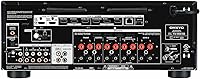
- HDMI Inputs: Three HDMI 2.1-capable inputs are included on the rear panel, supporting bandwidth sufficient for 4K at 120Hz and 8K at 60Hz pass-through without signal compression.
- HDMI Outputs: Two HDMI outputs are provided: a primary output for the main display and a discrete Zone 2 output that carries independent 4K video and audio to a second room.
- Audio Decoding: The unit decodes Dolby Atmos, DTS:X, Dolby TrueHD, DTS-HD Master Audio, and includes the Dolby Atmos Height Virtualizer for simulated overhead effects without ceiling speakers.
- THX Certification: The receiver carries full THX certification with four dedicated listening modes — cinema, gaming, music, and surround EX — each tuned to match THX reference standards for that content type.
- Gaming Features: HDMI 2.1 gaming enhancements include Variable Refresh Rate (VRR), Auto Low Latency Mode (ALLM), Quick Frame Transport (QFT), and eARC support for low-latency audio return.
- Sonos Compatibility: The unit holds Works with Sonos Certified status, allowing it to join an existing Sonos system via a Sonos Port accessory and respond to volume and input commands from the Sonos app.
- Smart Assistants: Apple HomeKit and Google Assistant are both natively supported, enabling voice-based control of power, volume, and input selection through compatible smart home setups.
- Wireless: Built-in dual-band Wi-Fi and Bluetooth are included, supporting network streaming, firmware updates over the air, and wireless audio playback from mobile devices.
- Dimensions: The unit measures 21 x 18.64 x 10.64 inches (W x D x H), requiring a shelf or rack space with adequate depth and at minimum 2–3 inches of clearance above for ventilation.
- Weight: At 22.9 pounds, this AV receiver is a substantial piece of equipment that typically requires two people for installation into a rack or enclosed AV furniture.
- Surround Modes: Beyond THX modes, the receiver includes a broad library of DSP listening modes covering concert hall, studio, rock, jazz, and other acoustic environments for music playback.
- Zone 2 Audio: In addition to the Zone 2 HDMI video output, the receiver supports independent Zone 2 audio distribution, allowing a separate room to receive a different audio source than the main zone.
- Remote Control: A multi-function infrared remote is included in the box and requires two AAA batteries; it covers all primary functions but lacks backlighting for use in darkened rooms.
- Launch Date: The receiver was first made available in August 2021 and as of the time of writing remains an active product that has not been discontinued by Onkyo.
- Model Number: The official model identifier is TXNR6100M2BMMP, which may be relevant when searching for firmware updates, replacement parts, or compatible accessories.
- Voice Control: Google Assistant and Apple HomeKit are supported natively; Amazon Alexa is not natively supported, which limits hands-free control for households built around the Amazon ecosystem.
Related Reviews
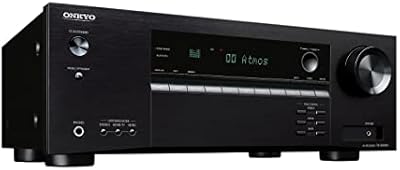
Onkyo TX-SR494 AV Receiver
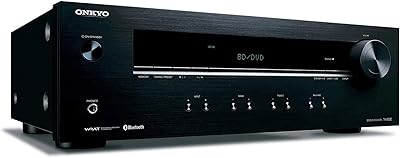
Onkyo TX-8220 Stereo Receiver
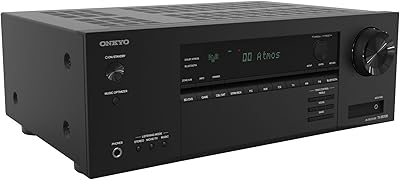
Onkyo TX-SR3100
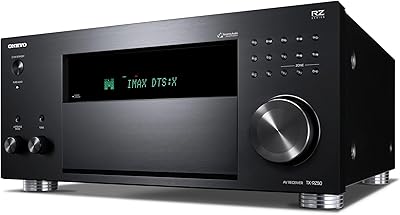
Onkyo TX-RZ50
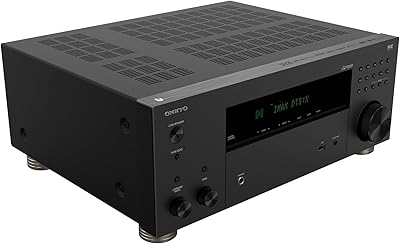
Onkyo TX-RZ30
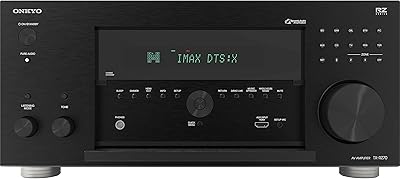
Onkyo TX-RZ70 11.2-Channel AV Receiver
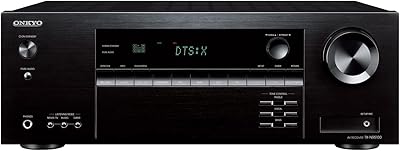
Onkyo TX-NR5100
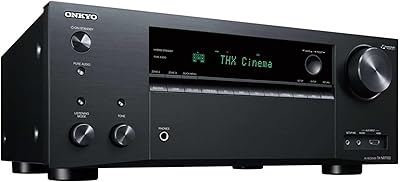
Onkyo TX-NR7100
Onkyo TX-SR393