Overview

The Okinos Cypress 3 Wood Micro ATX Case arrived at an interesting moment — wood-accented PC cases are carving out a real niche for people who'd rather their rig sit on a desk without looking like it belongs at a LAN party. Okinos is a relatively new brand, but they're building a reputation specifically around this aesthetic. At its price point, it competes directly with generic black metal towers that prioritize nothing beyond function. This is a compact mini-tower, not a chassis engineered for extreme builds, and it doesn't pretend to be. Since launching in late 2024, it's collected strong early ratings from over 180 buyers — a promising start for a case targeting a specific, underserved audience.
Features & Benefits

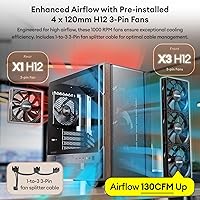
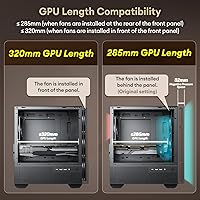
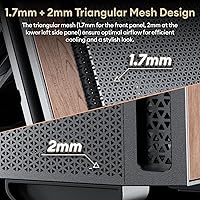
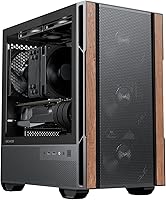
The real draw here is the front panel. Those walnut inserts are actual wood — not a printed decal or textured plastic trying to pass as something it's not. That distinction matters for longevity and feel, even if the wood covers only portions of the front, not the entire chassis. Airflow comes from four pre-installed 120mm fans running at 1000 RPM through a three-sided mesh design with fine 1.7mm front openings. They're 3-pin non-PWM, meaning your motherboard can't dynamically control their speed — a trade-off worth knowing upfront. GPU clearance reaches up to 320mm with the fans repositioned, covering most mid-range cards comfortably. The Type-C 3.2 Gen 2 front port at 10Gbps is a standout inclusion at this price.

Best For

This wood-accented mATX case is a natural fit for anyone building a PC meant to live in a living room or home office — somewhere that benefits from a quieter, more refined-looking machine. It's especially well-suited for first-time builders since the four included fans remove one variable from an already complex process. Buyers running mid-range GPUs like an RTX 4060 or RX 7600 will have no clearance issues whatsoever. It's also a solid pick if you're upgrading from an older case and want something that looks less like server hardware. Where it falls short is with enthusiasts chasing fine-grained fan control or synchronized lighting — this case simply isn't built with that audience in mind.

User Feedback

Among buyers, the Cypress 3 Wood has earned a 4.8-star average across over 185 ratings — and the praise tends to cluster around three things: the wood panel quality, how easy the build process is, and the out-of-box airflow setup. People seem genuinely surprised by how solid the walnut accents feel in person. On the critical side, those who want their fans tied to a motherboard header for speed ramping will find the non-PWM setup limiting, and there's no ARGB to speak of. Cable management in a compact mATX interior gets a mixed reception — manageable, but not roomy. Packaging appears sturdy enough to protect the wood panels, with few reported damage complaints on arrival.

Pros

  • Genuine walnut wood accent panels give the Cypress 3 Wood a warm, furniture-grade look that's rare at this price tier.
  • Four 120mm fans come pre-installed, so you can power on and start testing thermals immediately after the build.
  • The three-sided mesh intake keeps air moving freely, avoiding the stagnant hotspots common in cheaper enclosed cases.
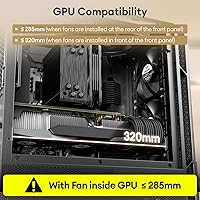
  • GPU clearance stretches to 320mm when fans are repositioned to the front, covering most mainstream graphics cards without issue.
  • A Type-C 3.2 Gen 2 front port running at 10Gbps is a genuinely useful inclusion that many cases at this price level skip entirely.
  • The bundled 1-to-3 fan splitter simplifies wiring and keeps the interior tidier than expected for a compact build.
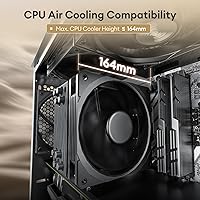
  • CPU cooler height clearance of 164mm accommodates a wide range of popular tower air coolers without compatibility concerns.
  • A 4.8-star average from over 185 buyers suggests build quality consistently meets real-world expectations, not just spec-sheet promises.
  • Bottom-mounted PSU support up to 330mm gives flexibility to use virtually any standard ATX power supply without issue.
  • The mATX and ITX motherboard compatibility makes this wood-accented case a viable option across a wide range of platform configurations.

Cons

  • The 3-pin non-PWM fans cannot be speed-controlled through a motherboard header, limiting any meaningful thermal tuning.
  • No ARGB means this case won't integrate with synchronized lighting ecosystems that many modern builders consider standard.
  • Cable management space inside the mATX chassis is tight — bulky GPU power connectors and thick PSU cables require deliberate, patient routing.
  • No radiator mounting positions are listed, putting liquid cooling entirely out of reach for this build.
  • The walnut wood is confined to front panel accent strips only — the rest of the chassis is standard painted steel, which may disappoint buyers expecting a richer premium feel.
  • Okinos is a newer brand with a limited track record, which can raise uncertainty around long-term warranty support.
  • The tempered glass side panel is solid with no mesh cutouts, which constrains airflow options for builders who want ventilation on multiple sides.
  • With only four expansion slots, anyone planning a multi-card or heavily accessorized build will quickly run out of room.

Ratings

Our AI rating engine processed verified global buyer reviews for the Okinos Cypress 3 Wood Micro ATX Case, actively cross-filtering incentivized submissions, bot patterns, and duplicate accounts to surface what real builders actually experienced. The scores below reflect a transparent synthesis of both genuine strengths and recurring frustrations — nothing has been softened or cherry-picked. Whether this wood-accented mATX case earns its praise or falls short in specific areas, you'll find an honest picture across every dimension that matters for a purchase decision.

Aesthetic Design
93%
This is where the Cypress 3 Wood genuinely separates itself from the competition — the genuine walnut front panel accents create a warm, furniture-grade impression that almost no other case at this price even attempts. Builders placing this on a desk or media console next to wooden furniture consistently describe the aesthetic as the decisive reason they chose it over a generic black tower.
The wood accent is confined to the front panel inserts, while the top, side, and rear panels remain standard black painted steel — an inconsistency that's noticeable up close. A handful of buyers expecting a more holistic wood-wrapped design were mildly surprised by how much plain metal remains visible from other angles.
Value for Money
87%
Four pre-installed fans, a Type-C 3.2 Gen 2 front port, genuine walnut accents, and a tempered glass panel bundled together in a single package is a difficult combination to beat at this price tier. Most buyers conclude they received considerably more visual character and practical functionality than the cost would lead them to expect.
The value equation softens for buyers who immediately swap out the non-PWM fans for PWM alternatives, since that adds both cost and effort to what should be a ready-to-run experience. Enthusiasts who factor in that upgrade may find the effective cost-to-value ratio closer to average rather than exceptional.
Build Quality
83%
The steel chassis feels reassuringly solid during the build process — panels fit together cleanly and nothing flexes or rattles once components are seated. Buyers consistently report that the overall construction doesn't betray the mid-range price point the way cheaper cases from less established brands often do.
A segment of builders noted that the front mesh grilles feel slightly less rigid than the main chassis panels, and the side panel occasionally needs minor adjustment to seat fully flush. It's not a structural concern, but it does keep this case a step below genuinely premium construction.
Airflow & Cooling
76%
24%
The three-sided mesh intake combined with four pre-installed fans delivers capable airflow for the case's size and price class — builders running mid-range GPUs like an RTX 4060 report CPU and GPU temperatures that hold comfortably under typical gaming and productivity workloads. The 1.7mm front mesh openings are fine enough to filter debris while still moving meaningful air volume.
Fixed at 1000 RPM with no PWM control, the included fans can't ramp airflow upward during heavy load periods, which limits the thermal headroom available during sustained high-performance tasks. Builders running thermally demanding CPUs or GPUs will likely need to replace the stock fans to get adequate temperature management.
Component Compatibility
71%
29%
GPU clearance stretching to 320mm with fans repositioned handles most mainstream mid-range cards comfortably, and the 164mm CPU cooler height accommodates a wide range of popular tower air coolers including bulkier dual-tower designs. For a standard mATX gaming or home theater build, the fit-out window covers the vast majority of realistic hardware choices.
High-end GPUs exceeding 320mm, any form of liquid cooling, and full ATX motherboards are all non-starters in this chassis. With only four expansion slots and no radiator support, builders planning future scalability or thermally intensive workloads will likely find themselves outgrowing this case faster than expected.
Ease of Installation
84%
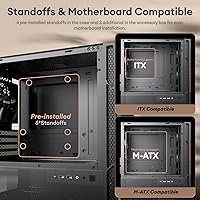
Pre-installed fans and a bundled splitter cable eliminate two of the more tedious steps that frustrate first-time builders, and the nine total standoffs — six pre-installed plus three in the box — mean the motherboard installation is well-supported from the start. The overall assembly experience draws consistently positive feedback from newcomers who appreciate the reduced setup friction.
The compact mATX interior makes working around components trickier than in a full mid-tower, and builders accustomed to more spacious cases will feel the tightness when reaching into corners to secure cables or tighten rear screws. A modular PSU shifts from being a nice-to-have to a practical necessity in this form factor.
Fan Noise
77%
23%
Running at 1000 RPM, the four stock fans produce a soft, consistent background hum rather than an intrusive drone — a meaningful advantage for living room setups or shared work environments where noise discipline matters. Most buyers describe the idle and light-load sound profile as unobtrusive and easy to tune out.
Because the fans run at a fixed speed regardless of system load, they don't quiet down during light tasks or idle periods the way a PWM-controlled system would, which some users find unnecessarily persistent. There is also no way to reduce their speed without swapping the fans entirely, since no voltage reduction is possible through standard motherboard headers.
Front I/O
81%
19%
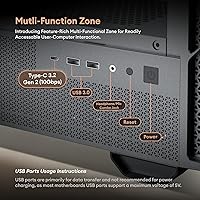
A Type-C 3.2 Gen 2 port delivering 10Gbps at the front of the case is a forward-thinking inclusion that most competing cases at this price tier omit entirely, and two USB 3.0 ports alongside audio jacks cover daily peripheral needs for the majority of users. Buyers working with external SSDs or modern smartphones particularly appreciated the fast Type-C connection.
There is no USB 2.0 port on the front panel, which is a minor inconvenience for users with older peripherals or motherboards that have used all their available USB 3.0 internal headers. The front I/O also lacks a second Type-C port for users who regularly connect multiple modern devices simultaneously.
Wood Panel Quality
86%
Buyers who have lived with this wood-accented mATX case for several months consistently report that the walnut panels show no significant warping, discoloration, or peeling under standard indoor conditions. The finish is treated well enough to hold up against the minor humidity and temperature variations typical of a home office or living room environment.
Natural wood accent panels are inherently more sensitive to prolonged direct sunlight and elevated humidity than plastic or aluminum alternatives — factors that accelerate fading and warping over time. Buyers placing this case near south-facing windows or in less climate-controlled rooms should factor in that the panels may age less predictably than the rest of the chassis.
Cable Management
61%
39%
With a modular PSU and deliberate pre-planning, the routing channels provide enough space to achieve a reasonably tidy build interior. The included fan splitter cable at least reduces the number of individual fan leads running to the motherboard, which helps keep one common clutter source under control.
The space behind the motherboard tray is genuinely tight, and thick 24-pin ATX cables or chunky GPU power connectors make the rear cover difficult to seat neatly. This is the single area where buyer frustration most consistently clusters, regardless of experience level, and it's a direct consequence of the compact mATX footprint.
Packaging
78%
22%
The majority of buyers report receiving the case in pristine condition, with the walnut wood accents arriving intact and unscratched — a reassuring outcome given how visually damaging transit damage would be on a natural wood surface. The internal cushioning is adequate for standard courier handling.
A noticeable minority of buyers have flagged minor cosmetic damage on arrival, including scuffs on the steel panels or slight corner compression, suggesting the packaging doesn't fully account for rough transit conditions. Given that this is a premium-aesthetic product with real wood components, slightly more protective packaging would be a meaningful quality-of-life improvement.
Brand Reliability
66%
34%
Early buyer sentiment toward Okinos is broadly positive, and the brand appears focused on building a coherent identity within the wood-accented case niche rather than spreading across a diluted product line. Most buyers report no meaningful quality control issues within the first several months of use.
Okinos lacks the established track record of veteran case manufacturers, which creates genuine uncertainty around long-term warranty responsiveness and parts availability if something goes wrong after the return window closes. For buyers who weigh brand confidence heavily alongside product quality, that shorter history is a legitimate and fair hesitation.
Expandability
56%
44%
Additional fan mounting positions at the top, bottom, and rear give builders some flexibility to supplement or replace the stock fans as thermal needs evolve, and ITX motherboard compatibility provides a slightly smaller form factor option within the same chassis. The case isn't completely rigid as a platform.
With no radiator support, only four expansion slots, and a hard mATX size ceiling, this case offers limited runway for upgrading a build over time. Buyers who anticipate moving to a longer high-end GPU, adding an AIO cooler, or significantly expanding their card configuration will realistically need a different case before long.

Suitable for:

The Okinos Cypress 3 Wood Micro ATX Case is genuinely well-matched for a specific kind of builder: someone who wants a capable, compact PC that doesn't look out of place next to a bookshelf, a media console, or a wooden desk. If your setup leans toward a home office aesthetic or a living room entertainment system, the walnut wood front panel accents do real work — they soften what would otherwise be just another black metal box. First-time builders will also find this case approachable, since four fans come pre-installed with a splitter cable already in place, cutting down on the variables that tend to overwhelm newcomers. Mid-range GPU users — those running cards in the RTX 4060 or RX 7600 range — will have plenty of clearance without needing to plan around it. Budget-conscious buyers who want their machine to stand out visually without paying for premium all-aluminum enclosures will get a lot of mileage from this case. It's also a strong fit for upgraders stepping out of older, utilitarian towers who want something that reflects a more considered, grown-up aesthetic.

Not suitable for:

The Okinos Cypress 3 Wood Micro ATX Case, despite its strengths, will frustrate a specific class of builder who cares about granular control and deep customization. If you want to manage fan curves from your motherboard's BIOS or a dedicated controller, the included 3-pin non-PWM fans simply won't cooperate — you get one fixed speed and that's it. ARGB enthusiasts looking to sync lighting across their entire build will find nothing here to work with, since these fans are plain non-addressable units with no lighting whatsoever. Power users planning to install a high-end GPU longer than 320mm — RTX 4080 Super or RTX 4090 class cards, for instance — will hit clearance limits that can't be resolved without removing intake fans entirely. Liquid cooling is effectively off the table as well, since no radiator mount positions are listed for this chassis. Anyone building on a full ATX platform or needing more than four expansion slots should look elsewhere.

Specifications

  • Form Factor: Micro ATX mini-tower chassis with support for both M-ATX and ITX motherboards.
  • Dimensions: External dimensions measure 372mm x 210mm x 402mm (14.65″ x 8.27″ x 15.83″).
  • Weight: The case weighs 4.3 kg (9.46 lbs) without any components installed.
  • Front Panel: The front panel features genuine walnut wood accent inserts on both sides — not a film, decal, or vinyl wrap.
  • Included Fans: Four 120mm 3-pin non-PWM fans are pre-installed at 1000 RPM, with a 1-to-3 fan splitter cable included in the box.
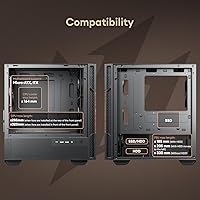
  • GPU Clearance: Maximum GPU length is 285mm with fans rear-mounted, or up to 320mm when fans are repositioned to the front of the panel.
  • CPU Clearance: Maximum CPU air cooler height clearance is 164mm, accommodating most popular tower air coolers.
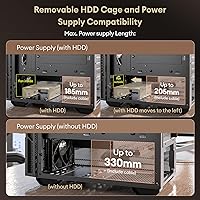
  • PSU Support: Bottom-mounted power supply bay supports PSUs up to 330mm in length.
  • Front I/O: Front connectivity includes one Type-C 3.2 Gen 2 port (10Gbps), two USB 3.0 ports, audio jacks, a power button, and a reset button.
  • Expansion Slots: The chassis provides four expansion slots for graphics cards and add-in cards.
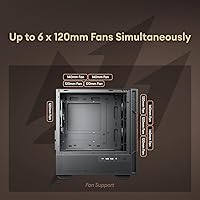
  • Fan Mounting: Additional fan positions support 2x120mm or 2x140mm at the top, 2x120mm at the bottom, and 1x120mm at the rear.
  • Airflow Mesh: The front panel uses a 1.7mm triangular mesh and the lower-left side panel features 2mm mesh openings for a three-sided intake airflow path.
  • Radiator Support: No liquid cooling radiator mounting positions are available in this chassis design.
  • Side Panel: A tempered glass side panel is included for a clear view of internal components; it has no ventilation cutouts.
  • Standoffs: Six motherboard standoffs come pre-installed inside the case, with three additional standoffs supplied in the accessory box.
  • Color & Finish: The chassis is finished in black steel with genuine walnut wood accent panels on the front; no integrated RGB or lighting elements are included.

Related Reviews
Okinos Aqua 3 Micro-ATX PC Case
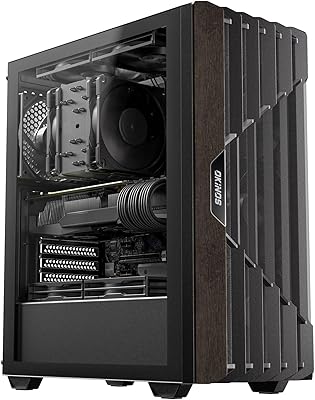
76%
93%
Visual Design
81%
Build Quality
68%
Airflow & Cooling
89%
Value for Money
86%
Front I/O & Connectivity
More
Okinos Cypress 5 AIR Mid-Tower PC Case
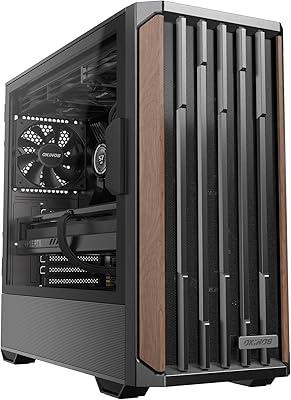
78%
91%
Aesthetic Design
88%
Front I/O & Connectivity
86%
Value for Money
84%
Side Panel Design
83%
Hardware Compatibility
More
Okinos Cypress 7 Walnut Wood ATX Mid-Tower Case
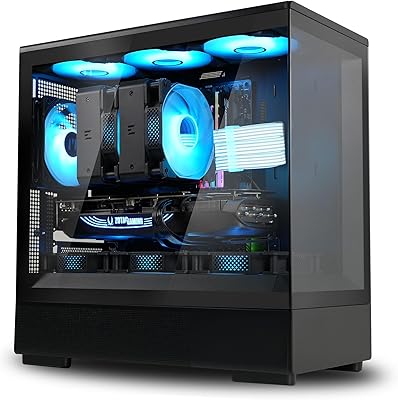
83%
94%
Aesthetic Design
88%
Build Quality
79%
Cooling Performance
76%
GPU Compatibility
86%
Front I/O
More
Zalman P10 Micro-ATX Mini Tower Case
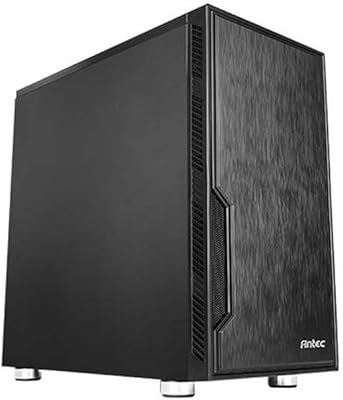
78%
83%
Build Quality
91%
Aesthetic Design
87%
Panel Usability
84%
Cable Management
72%
Cooling Potential
More
Antec VSK10 Micro-ATX Case
82%
88%
Cooling Performance
85%
Build Quality
70%
Cable Management
90%
Airflow Support
78%
Ease of Installation
More
ASUS A21 Micro ATX Mid Tower Case
80%
91%
Value for Money
88%
Cable Management
86%
BTF Compatibility
93%
Component Clearance
89%
Ease of Assembly
More
Corsair Crystal 280X RGB Micro-ATX Case
77%
94%
Aesthetics & Visual Design
91%
RGB Lighting Quality
88%
Build Quality & Materials
74%
Cable Management
87%
Cooling Potential
More
Okinos Aqua 9 Mid Tower PC Case
80%
94%
Aesthetic Design
78%
Build Quality
83%
Airflow Performance
91%
Cooling Capacity
88%
Value for Money
More
ASUS Prime AP201 Micro ATX PC Case
80%
93%
Airflow Performance
91%
Cooling Compatibility
84%
Build Quality
92%
GPU Compatibility
89%
Tool-Free Panel Access
More
AsiaHorse Pegasus MATX Mid-Tower PC Case
77%
93%
Aesthetics & Visual Design
81%
Build Quality & Materials
89%
Interior Space & Layout
74%
Cooling Potential
67%
AIO Radiator Compatibility
More

FAQ

Both of those cards should fit comfortably. The Cypress 3 Wood supports GPU lengths up to 285mm with intake fans rear-mounted, or up to 320mm if you move them to the front position. Most RTX 4070-class cards fall well within that range, so clearance shouldn't be an issue for mainstream mid-to-upper cards.

Unfortunately, not with the included fans. They're 3-pin non-PWM, which means your motherboard can't send dynamic speed-control signals to them — they run at a fixed 1000 RPM regardless. If granular fan curve control is important to you, swapping them out for PWM fans is straightforward. For most everyday builds, though, the fixed speed is reasonably quiet and perfectly adequate.

It's genuine walnut wood — not a vinyl wrap, printed film, or embossed plastic. That said, the wood covers the accent inserts on either side of the front face, not the entire enclosure; the rest of the chassis is standard painted steel. For what it is, the panels feel and look solid in person, and that distinction from imitation finishes is noticeable.

No, it doesn't. There are no radiator mounting positions in this chassis, so all-in-one liquid coolers and custom loops are off the table. This case is built around air cooling, and with 164mm of CPU cooler clearance, there's plenty of room for capable tower coolers like a Thermalright Peerless Assassin or a DeepCool AK620.

It's workable, but you'll need to be deliberate about it. The mATX interior is compact by nature, and there isn't a generous amount of slack behind the motherboard tray. Using a modular PSU helps significantly since you can avoid routing cables you don't need. Most buyers describe it as manageable rather than spacious, so planning your cable path before you start plugging things in is strongly recommended.

You can replace or supplement the included fans since there are additional mounting positions available. However, this walnut wood PC case has no built-in ARGB controller or dedicated lighting headers, so any addressable fans you add would need to connect to your motherboard's ARGB headers or a separate controller. There are also no integrated lighting strips or ambient effects built into the chassis itself.

No — this is strictly a Micro ATX and ITX chassis. Full ATX boards are physically larger and won't fit within these dimensions. If you're planning a standard ATX build, you'll need to look at a mid-tower or full-tower enclosure instead.

At 1000 RPM, the four included fans are on the quieter side. They produce a mild background hum rather than anything intrusive — closer to a library computer than a workstation under load. For a living room or home office setup where noise matters, the stock fans should be acceptable for most people, especially in a build that isn't running sustained heavy workloads.

Under normal indoor conditions, the panels should age well without noticeable warping or fading. Real wood can be sensitive to prolonged direct sunlight and significant humidity changes, so placement matters. Keep this wood-accented mATX case away from windows with strong direct sun exposure and you should have no issues long-term.

It's one of the more naturally suited options in this price range for an HTPC. The walnut wood aesthetic blends well with living room furniture rather than screaming gaming rig, the fans are quiet enough to avoid interfering with audio during movies or music, and the compact mATX footprint keeps things unobtrusive. Just confirm your GPU and CPU cooler fall within the clearance limits, and you'll have a machine that looks like it belongs next to your TV.

Where to Buy