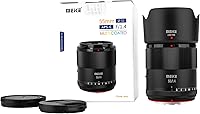
Overview

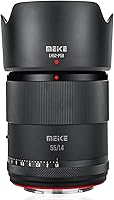
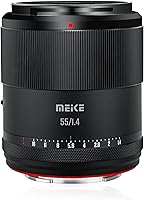
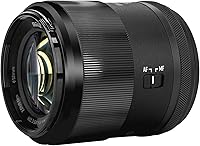
The Meike 55mm F1.4 Nikon Z Mount Lens enters a small but growing category of third-party autofocus primes built for Nikon's Z system, targeting APS-C shooters who want a fast portrait focal length without paying first-party Nikkor prices. On a crop-sensor body like the Z50, Z30, or Zfc, 55mm translates to roughly 82mm equivalent — a classic short-telephoto framing that flatters faces and compresses backgrounds nicely. Meike has been steadily expanding its mirrorless lineup, and this lens sits firmly in the entry-to-mid-range tier. Full-frame Z owners on the Z5, Z6, or Z9 can use it too, but only in crop mode. The story here is value-to-performance ratio, not spec-sheet prestige.

Features & Benefits

The F1.4 maximum aperture is the headline here — it lets you separate subjects from backgrounds with genuine depth and gives breathing room in dim light without cranking ISO. The STM stepping motor handles autofocus quietly, which matters for video work or candid portraits. Optically, the 8-group, 11-element design includes one extra-low dispersion element and multi-coating that keeps chromatic aberration and flare noticeably managed for this price tier. The nine-blade rounded aperture produces pleasantly circular bokeh, something portrait photographers will appreciate. The 52mm filter thread is a practical bonus — one of the most common sizes around. One honest caveat: firmware updates require a USB-C connection and an Android device only. Mac and iPhone users are out of luck, at least for now.

Best For

This fast portrait lens is squarely aimed at Nikon Z APS-C owners — particularly Z50, Z30, and Zfc shooters — who want the creative benefits of a fast prime without Nikkor pricing. It works well for portrait and lifestyle photographers who care more about background blur and low-light capability than chasing corner-to-corner sharpness. Budget-conscious video creators will find the quiet STM motor useful for run-and-gun work. It is also a strong fit for photographers stepping up from a kit zoom for the first time. One group to approach with caution: full-frame Z body owners. This Meike prime is designed for APS-C coverage, so shooting on a Z6 or Z7 means mandatory crop mode, which reduces effective resolution and limits versatility.

User Feedback

With a 4.6-star average across 129 ratings — solid for a lens that only launched in April 2024 — the 55mm F1.4 has earned a genuinely positive reception. Buyers consistently praise image sharpness at mid-range apertures and background blur quality, noting this Meike prime punches above its weight for portrait work. Build quality gets favorable mentions too, with the lens feeling more substantial in hand than its modest 292g might suggest. On the downside, some users report autofocus hesitation in low-contrast conditions, which is not unusual for a third-party lens at this tier. The Android-only firmware update process draws recurring frustration from Apple users. Reviewers who compare it to Nikkor Z primes generally agree it does not match Nikon optically, but find the value case hard to dismiss.

Pros

  • The F1.4 aperture produces genuine background blur that flatters portrait subjects and helps in low light.
  • STM autofocus runs quietly, making this 55mm F1.4 a practical choice for budget video work.
  • At 292g, this fast portrait lens is light enough to carry all day without fatigue.
  • Nine rounded aperture blades create smooth, circular bokeh that holds up well even wide open.
  • Multi-coating visibly reduces flare and ghosting in backlit shooting conditions.
  • The 52mm filter thread is one of the most common sizes, keeping accessory costs low.
  • Supports both autofocus and manual focus, giving shooters flexibility depending on the situation.
  • Firmware is updatable via USB-C, meaning Meike can push autofocus improvements after purchase.
  • A 4.6-star average across 129 ratings is a strong early signal for a third-party lens launched in 2024.
  • Optical performance at moderate apertures earns consistent praise from buyers who compared it against its price point.

Cons

  • Autofocus can hunt or hesitate in low-contrast scenes, which is frustrating for fast or unpredictable subjects.
  • Firmware updates require an Android device — iPhone and Mac users have no supported update path at all.
  • APS-C-only image circle means full-frame Z body owners lose significant resolution by shooting in crop mode.
  • Meike is a smaller brand with a shorter track record than Nikon, so long-term support is harder to predict.
  • The minimum focusing distance of 0.61m limits close-up work and makes tight product or detail shots difficult.
  • Wide-open sharpness in the corners lags behind what first-party Nikkor primes deliver at the same aperture.
  • No weather sealing of any kind, which restricts shooting in rain or dusty outdoor conditions.
  • The review base, while positive, is still relatively small for a definitive long-term reliability verdict.
  • Build quality, while decent for the price, does not match the tactile confidence of metal-barreled Nikkor lenses.
  • No optical stabilization, which can be a drawback on bodies that lack in-body image stabilization like the Zfc.

Ratings

The Meike 55mm F1.4 Nikon Z Mount Lens has been scored by our AI system after analyzing verified buyer reviews from multiple global markets, with spam, bot activity, and incentivized feedback actively filtered out. Scores reflect the honest distribution of both praise and frustration across real shooting scenarios, from portrait sessions to casual video work. Strengths and recurring pain points are weighted equally so you get a clear picture before committing.

Value for Money
91%
This is where the 55mm F1.4 earns its strongest marks. Buyers who compared it to first-party Nikkor primes consistently noted they got far more usable performance per dollar than expected from a third-party lens. For Z50 and Zfc shooters on a tight budget, the cost-to-capability ratio is hard to argue with.
A handful of buyers who pushed into more demanding work — events, low-light street, or fast-moving subjects — felt the value proposition weakened when autofocus reliability became an issue. At that point, the savings start to feel less compelling.
Bokeh Quality
86%
Portrait photographers were consistently pleased with how background highlights render. The nine rounded blades keep out-of-focus circles smooth and even, and subject separation at F1.4 is strong enough to give images a polished, intentional look even in cluttered environments.
At closer focus distances, some onion-ring patterning appears in bright highlight balls, which purists will notice. Bokeh also loses some smoothness toward the frame edges, a common trait in fast primes at this price tier.
Image Sharpness
78%
22%
Center sharpness at F1.4 is genuinely good for a lens in this category — faces and subjects placed in the middle of the frame come out clean and well-resolved. Stop down to F2.8 or F4 and the overall image quality steps up noticeably, making it a capable workhorse for controlled portrait sessions.
Corner sharpness wide open is clearly soft, and while that matters less for portrait work, it becomes obvious in landscape or architecture shots. Chromatic aberration is visible in high-contrast edges shot wide open, though multi-coating limits flare more effectively than the fringing.
Autofocus Performance
69%
31%
For everyday portrait shooting in decent light, the STM motor locks on quickly enough that most users reported no friction in their workflow. Candid sessions and controlled studio-style setups generally went smoothly, and the focus transition is quiet enough for clean on-camera audio during video.
Low-contrast scenes expose the system's limits — plain backgrounds, overcast flat light, or subjects in similar-toned clothing caused noticeable hunting in a meaningful share of reviews. This is not a sports or wildlife lens, and treating it like one will produce inconsistent results.
Build Quality
74%
26%
The physical construction exceeded expectations for many buyers, particularly those accustomed to plasticky third-party lenses of the past. The barrel feels solid without any rattling, and at 292g it has enough heft to feel intentional in hand without weighing down a compact body like the Zfc.
There is no weather sealing whatsoever, which limits outdoor use to dry conditions only. The exterior finish, while clean, does not have the premium feel of metal-barreled glass, and long-term durability under heavy daily use remains an open question given the lens only launched in 2024.
Low-Light Capability
82%
18%
The F1.4 aperture gives shooters real breathing room in dim environments — indoor events, evening portraits, and restaurant shoots all become viable without needing to push ISO into noise-heavy territory. Buyers who moved from a kit zoom specifically for this reason were largely satisfied.
Autofocus reliability drops in dark environments, so while exposure is manageable, getting a sharp lock on a moving subject in low light is not guaranteed. Manual focus becomes a more practical option in those conditions, which not every user is comfortable with.
Video Usability
76%
24%
The STM motor is quiet enough that it rarely appears in on-camera recordings, which is a genuine advantage for solo video creators using the Z30 or Zfc without external audio. The focal length also works naturally for talking-head content and environmental storytelling at a comfortable working distance.
The absence of optical stabilization means handheld video requires technique or a stabilized body to avoid drift. Focus breathing — a slight shift in field of view during refocusing — is present and will bother videographers who want smooth, clean focus pulls.
Compatibility Range
63%
37%
For the target audience of APS-C Nikon Z shooters, compatibility is straightforward and reliable. Electronic communication with the Z50, Z30, and Zfc works as expected, and EXIF data passes through correctly for aperture control and metadata logging.
The APS-C image circle limitation is a hard constraint that shrinks the potential audience significantly. Full-frame Z users are forced into crop mode, and Meike's Android-only firmware update path cuts out a large share of buyers who rely on Apple hardware entirely.
Firmware & Support
48%
52%
The fact that firmware updates are available at all — and downloadable from Meike's site with real-time updates — is a step above what some budget third-party lenses offer. Buyers who completed a firmware update on Android reported the process worked without complications.
The Android-only restriction is a genuine problem for the substantial portion of photographers using iPhones and Macs. There is no workaround, and if a future firmware update addresses a meaningful autofocus issue, those users are simply locked out until Meike expands platform support.
Handling & Ergonomics
81%
19%
The lens balances well on compact APS-C bodies without front-heaviness, and the focus ring has a smooth, consistent rotation that manual focus users appreciated. Mounting and unmounting from Z-mount bodies was reported as clean and secure across the board.
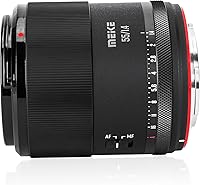
There is no physical AF/MF switch on the barrel, which means toggling focus modes requires going into camera menus — a minor but real friction point during fast-moving shoots where switching quickly matters.
Flare & Ghosting Control
77%
23%
Multi-coating does a credible job keeping flare controlled in moderately backlit scenes, and buyers shooting portraits in window light or outdoors with the sun in the upper frame generally found results cleaner than expected for a budget prime.
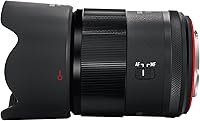
Direct strong light sources — shooting into a setting sun or bright studio strobe — still produce visible ghosting artifacts. Using a lens hood helps, though Meike's included accessories vary by purchase, so confirm what is in the box before shooting.
Filter Compatibility
88%
The 52mm thread is one of the most standardized filter sizes in photography, meaning polarizers, variable NDs, and UV filters are available from every major brand at competitive prices. Buyers who already owned 52mm filters from other lenses reported zero compatibility issues.
There is little to criticize here beyond the fact that the lens does not ship with a UV filter or protective glass, so that is an additional purchase for buyers who want front element protection out of the box.
Portability
85%
At 292g, this fast portrait lens is light enough to carry in a jacket pocket or a small shoulder bag without the weight becoming noticeable over a full day of shooting. Paired with the compact Z30 or Zfc, the overall kit stays genuinely travel-friendly.
The lens dimensions, while compact, mean it protrudes enough from slim Zfc bodies to prevent truly pocketable carry. Users who wanted the smallest possible profile for street shooting found the size slightly limiting compared to pancake-style options.

Suitable for:

The Meike 55mm F1.4 Nikon Z Mount Lens is the kind of purchase that makes the most sense for Nikon Z APS-C shooters — Z50, Z30, and Zfc owners especially — who have outgrown their kit zoom and want to experience what a fast prime actually feels like without a significant financial commitment. On a crop sensor, 55mm gives you an effective field of view close to 82mm, which is a flattering and practical focal length for portraits, street photography, and everyday subjects. Portrait photographers who prioritize background separation and smooth bokeh over clinical sharpness will find this lens delivers where it counts most. Budget-conscious video creators also stand to benefit from the quiet STM autofocus motor, which avoids the focus-hunting noise that ruins otherwise clean audio. Beginners stepping into prime lens shooting for the first time will appreciate having autofocus that actually works, rather than being forced into fully manual glass.

Not suitable for:

Photographers shooting on full-frame Nikon Z bodies — the Z5, Z6, Z7, Z9, or their second-generation variants — should think carefully before buying this Meike prime, since it only covers the APS-C image circle, meaning you are locked into crop mode and give up a meaningful chunk of your sensor resolution. If you are a working professional who needs consistent, reliable autofocus in challenging conditions like dim wedding venues or fast-moving subjects against plain backgrounds, the occasional hesitation some users report in low-contrast scenes could become a real obstacle. Apple device users face a specific friction point: firmware updates require an Android phone, so if Meike releases a fix for an autofocus bug down the road, iPhone or Mac users have no straightforward path to applying it without borrowing hardware. Photographers who plan to invest long-term in high-quality glass and prioritize optical consistency, corner sharpness, and weather sealing will find that Nikon's own Z-mount primes, while considerably more expensive, better match those expectations.

Specifications

  • Focal Length: Fixed 55mm focal length, equivalent to approximately 82mm on a full-frame camera when used on an APS-C sensor body.
  • Max Aperture: Maximum aperture of F1.4 allows for strong background separation and capable performance in low-light environments.
  • Min Aperture: Minimum aperture closes down to F16, giving photographers full control over depth of field across a wide range of lighting conditions.
  • Lens Mount: Designed exclusively for the Nikon Z mount, with native electronic communication for autofocus and aperture control.
  • Sensor Coverage: Covers the APS-C image circle natively; full-frame Z bodies can use this lens only in crop mode, reducing effective sensor resolution.
  • Autofocus System: STM (stepping motor) autofocus enables smooth, quiet focus transitions suited to both stills and video work.
  • Focus Modes: Supports both autofocus and manual focus, with the ability to switch between modes as shooting conditions require.
  • Optical Design: Internal construction consists of 11 elements arranged in 8 groups, incorporating one extra-low dispersion element and two high-refractive-index elements.
  • Lens Coating: Multi-layer coating is applied to suppress chromatic aberration, flare, and ghosting across a range of lighting angles.
  • Aperture Blades: Nine rounded diaphragm blades produce smooth, circular bokeh highlights that remain well-shaped even at mid-range apertures.
  • Filter Thread: 52mm front filter thread accepts a wide range of commonly available and affordably priced filter accessories.
  • Min Focus Distance: Minimum focusing distance of 0.61m (approximately 2 feet) limits close-up or macro-style shooting.
  • Weight: Lens weighs 292g (9.9 oz), making it light enough for extended handheld use across a full day of shooting.
  • Firmware Update: Firmware can be updated via a USB-C port using the Meike official website, but this process is supported on Android devices only — not Apple Mac or iOS.
  • Compatible Bodies: Natively compatible with the Nikon Z50, Z30, and Zfc; also works on Z5, Z6, Z6II, Z7, Z7II, and Z9 when those bodies are set to APS-C crop mode.
  • Aperture Range: Full aperture range spans F1.4 through F16, covering everyday portrait, street, and available-light shooting scenarios.

Related Reviews
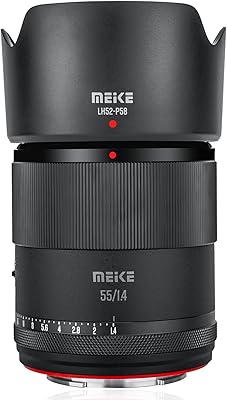
Meike 55mm F1.4 Sony E-Mount Prime Lens
76%
83%
Image Sharpness
88%
Bokeh Quality
76%
Autofocus Speed & Accuracy
81%
Low-Light Performance
63%
Build Quality & Materials
More
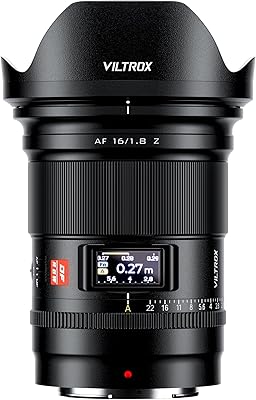
Viltrox AF 16mm F1.8 Wide Angle Lens
82%
91%
Optical Sharpness
84%
Chromatic Aberration Control
78%
Autofocus Performance
83%
Video Usability
88%
LCD Display Utility
More
Meike 55mm F1.4 Fujifilm X Mount Lens
78%
88%
Image Sharpness
91%
Bokeh Quality
67%
Autofocus Speed
93%
Value for Money
74%
Build Quality & Finish
More
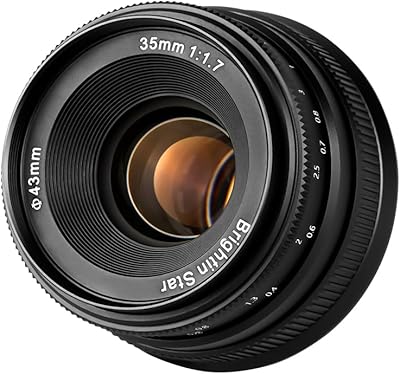
Brightin Star 35mm F1.7 Lens for Nikon Z-Mount Mirrorless Cameras
86%
88%
Image Quality
85%
Manual Focus Control
90%
Portability & Weight
87%
Build Quality
91%
Low-Light Performance
More
Meike 85mm F1.8 Nikon F Portrait Lens
75%
91%
Value for Money
76%
Image Sharpness
83%
Bokeh Quality
61%
Autofocus Speed
72%
Autofocus Accuracy
More
Nikon Z5 Full-Frame Mirrorless Camera
81%
92%
Image Quality
88%
Low-Light Performance
83%
Autofocus Performance
91%
In-Body Image Stabilization
86%
Build Quality & Ergonomics
More
Meike 35mm F1.4 MFT Lens
84%
89%
Sharpness & Image Quality
74%
Manual Focus Usability
91%
Build Quality
87%
Low Light Performance
92%
Value for Money
More
Sony SEL24F14GM 24mm F1.4 GM Wide-angle Lens
84%
96%
Sharpness Wide Open
93%
Bokeh Quality
94%
Low-Light Performance
89%
Autofocus Speed & Accuracy
88%
Build Quality & Weather Sealing
More
Lightdow 85mm f1.8 Portrait Lens for Nikon F-Mount Cameras
83%
92%
Value for Money
88%
Sharpness
65%
Manual Focus Ease
83%
Build Quality
90%
Bokeh/Background Blur
More
Meike 25mm F1.8 Sony E-Mount Lens
78%
88%
Build Quality
74%
Optical Sharpness
81%
Bokeh & Background Blur
77%
Low-Light Performance
83%
Manual Focus Experience
More

FAQ

It will physically mount and communicate with full-frame Z bodies like the Z6 or Z7, but the lens only covers an APS-C image circle. That means your camera will automatically switch into crop mode, which reduces the effective resolution you are working with. If you shoot primarily on a full-frame body, you would get more out of a lens designed for full-frame coverage.

The STM motor is responsive enough for portraits and general photography at a comfortable pace. That said, in low-contrast situations — think a subject wearing a plain shirt against a similarly toned wall — some users have reported occasional hesitation. It does not match the consistency of Nikon's own Z-mount primes, but for the price point, most buyers find it more than adequate.

Unfortunately, no. Meike's firmware update process requires an Android device with a USB-C connection to the lens. There is no iOS or macOS support at this time. If a firmware update becomes important down the line — say, to fix an autofocus bug — you would need access to an Android phone to apply it.

Yes, it works quite well for video on those bodies. The STM stepping motor is quiet enough that it rarely bleeds into on-camera audio, and the 55mm focal length on APS-C gives you a flattering field of view for talking-head or documentary-style work. Just keep in mind there is no optical stabilization, so you will want steady hands or a gimbal for smoother footage.

For a lens at this price, the bokeh is genuinely pleasing. The nine rounded blades keep highlight circles smooth and circular rather than polygonal, which is noticeable in busy backgrounds. It does not have the ultra-creamy, almost three-dimensional quality of premium portrait glass, but for everyday portraits and lifestyle work, it holds its own comfortably.

No, it has no weather sealing of any kind. Shooting in light rain or dusty environments carries a real risk of damage. If you frequently work outdoors in unpredictable conditions, factor that into your decision.

Yes, and that is one of the practical upsides of this fast portrait lens. The 52mm thread size is extremely common, so polarizers, UV filters, and ND filters in that size are easy to find and inexpensive. If you already own 52mm filters from another lens, they will work right away.

Center sharpness at F1.4 is decent — subjects in focus look clean and well-defined, which is what matters most for portrait work. The corners are softer at maximum aperture, as is typical for fast primes in this price range. Stop down to F2.8 or F4 and sharpness across the frame improves noticeably. If you need edge-to-edge crispness wide open, this is not the lens for that job.

The minimum focusing distance is 0.61m, which is just under two feet. That is fine for head-and-shoulders portraits or general subjects, but it rules out close-up detail shots or anything approaching macro work. If you want to photograph small objects or fill the frame with a face at tight range, you will hit the limit quickly.

The 55mm F1.4 feels reasonably solid for a third-party lens in this category — it does not rattle or feel cheap in hand, and the 292g weight gives it a sense of substance without being heavy. It is not metal-barreled like higher-end Nikkor primes, and the finish is more functional than premium. For the price, most buyers find the build quality meets expectations without any unpleasant surprises.