Overview

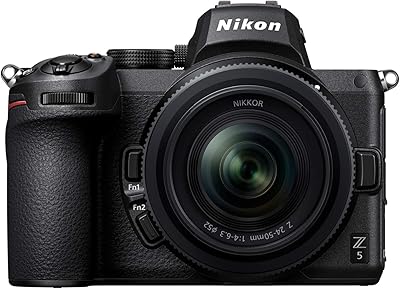
The Nikon NIKKOR Z 28mm f/2.8 Special Edition Lens is a compact, retro-styled prime built for Nikon's Z-mount mirrorless lineup — and it wears its classic looks with genuine confidence. Unlike most modern lenses that prioritize clinical aesthetics, this one nods to an older era of camera design, which is either exactly what you want or entirely beside the point depending on your taste. It works on both FX and DX bodies, though DX shooters should know the field of view shifts to a 42mm equivalent — closer to a normal lens than a wide one. Think of this as a well-rounded everyday prime, not a specialized professional tool.
Features & Benefits

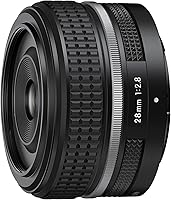
The retro barrel design is not just cosmetic — it genuinely complements heritage bodies like the Nikon Zfc in a way that feels cohesive rather than accidental. The custom control ring is a practical touch; you can assign it to aperture, ISO, or exposure compensation depending on how you prefer to shoot. Autofocus runs on dual stepping motors that are nearly silent, which matters if you shoot video and cannot tolerate focus-hunting noise bleeding into audio. The lens also focuses surprisingly close — under eight inches from your subject — opening up detail shots a typical wide prime would not allow. At 5.6 ounces, you will barely notice it in a bag.

Best For

This compact Z-mount lens hits a sweet spot for a few specific types of shooters. Street photographers will appreciate how unobtrusive it looks and feels — small, quiet, and easy to handle in tight spaces. If you own a Zfc or Z30, the retro Nikon prime is arguably the most visually compatible option in the lineup, matching the camera's silver-and-black aesthetic far better than any standard modern lens. Travelers packing light will find the compact size and solid image quality a reasonable trade-off. Videographers shooting run-and-gun content benefit from the silent motor, and it also works well as a first prime for Z-system beginners stepping up from a kit zoom.

User Feedback

Buyers consistently rate the 28mm special edition highly, with most praise landing on build quality feel, image rendering character, and — predictably — how good it looks paired with a Zfc. The close-focus capability surprises people in the best way; many reviewers did not expect to use it and end up relying on it regularly. The main criticism that surfaces is the f/2.8 maximum aperture — shooters expecting more background blur or stronger low-light performance sometimes feel let down, especially knowing faster Z-mount primes exist at a premium. DX users generally adapt to the 42mm field of view without much trouble, though a handful wished for something a bit wider.

Pros

  • The retro design is a genuine differentiator — it looks purposeful and distinctive, not like a cheap plastic kit lens.
  • Silent dual-motor autofocus makes this compact Z-mount lens a practical choice for video work without audio bleed.
  • At 5.6 ounces, it disappears into a small bag and adds almost nothing to daily carry weight.
  • Center sharpness at moderate apertures is strong enough to satisfy most enthusiast shooters without heavy post-processing.
  • The minimum focus distance of 0.63 feet opens up close-up compositions most standard wide primes simply cannot achieve.
  • The reassignable control ring adds a meaningful layer of tactile control for shooters who prefer keeping hands on the lens.
  • Pairs visually and functionally with all Nikon Z-mount bodies, covering both FX and DX format cameras without compromise.
  • The overall build quality feels solid and premium relative to its price tier — nothing rattles or flexes under normal use.
  • Natural color rendering and smooth out-of-focus transitions give images an organic look that holds up well for travel and street work.

Cons

  • f/2.8 produces gentle background blur at best — portrait shooters expecting strong subject separation will be underwhelmed.
  • No weather sealing limits use in rain or dusty outdoor environments, a meaningful gap for an everyday carry lens.
  • Corner softness wide open at f/2.8 is noticeable on flat subjects and full-frame bodies in critical shooting scenarios.
  • DX shooters get a 42mm equivalent field of view, which feels nothing like a wide-angle lens in practice.
  • The lens cap feels noticeably cheaper than the barrel quality suggests, a small but recurring frustration among buyers.
  • Low-contrast or dim scenes can cause the autofocus to hesitate before locking, which disrupts the flow of candid shooting.
  • No optical image stabilization means handheld video on bodies without IBIS requires extra technique or external support.
  • The control ring lacks click detents in some shooting modes, making accidental exposure adjustments easier than they should be.

Ratings

The Nikon NIKKOR Z 28mm f/2.8 Special Edition Lens has been scored by our AI system after analyzing verified buyer reviews from global markets, with spam, bot-generated, and incentivized feedback actively filtered out. This retro Nikon prime earns consistently strong marks across most categories, though a few real limitations surfaced repeatedly enough to reflect honestly in the scores. Both the genuine strengths and the frustrations real shooters encounter are represented transparently below.
Image Sharpness
88%
Buyers shooting street scenes and everyday subjects consistently report crisp center sharpness that holds up well even when viewed at full resolution on a monitor. At moderate apertures like f/5.6, edge-to-edge clarity satisfies most enthusiast shooters without any post-processing trickery needed.
Wide open at f/2.8, some corner softness appears — noticeable if you are shooting flat subjects like documents or architectural details where edge definition matters. It is not a dealbreaker, but pixel-peepers shooting full-frame wide open will notice it.
Autofocus Performance
83%
The dual stepping motor system is genuinely quiet, and most video shooters report clean focus transitions without audible hunting noise in recorded audio. In decent light, subject acquisition is snappy and reliable for walking subjects on busy streets.
In low light or low-contrast scenes, a handful of users noted hesitation before the lens locks focus — not unusual for this class, but worth knowing if fast-moving low-light subjects are your primary use case. It does not match the speed of higher-end Z-mount primes.
Build Quality & Feel
84%
Despite its compact size, the lens feels reassuringly solid in hand — not plasticky or cheap as some budget primes tend to feel. The retro barrel finish and control ring have a tactile quality that buyers frequently call out as punching above the price point.
There is no weather sealing, which limits use in light rain or dusty environments. A few users also noted the lens cap feels flimsy relative to the barrel itself, a minor but recurring complaint in reviews.
Retro Design & Aesthetics
94%
This is where the 28mm special edition genuinely stands apart from nearly everything else in the Z-mount lineup. Paired with the Zfc or Z30, the visual cohesion is striking — buyers regularly mention getting compliments on the camera-and-lens combo in public.
The retro styling is entirely a matter of personal preference, and on more modern-looking Z bodies it can feel slightly incongruous. If you care purely about optics and not looks, the standard non-special-edition version may suit you better.
Value for Money
81%
19%
For the asking price, this compact Z-mount lens offers a compelling mix of optical quality, compact size, and a distinctive look that is hard to replicate with other Z-mount options at the same tier. Buyers entering the prime lens world on the Z system find it a satisfying first step.
Some users feel the f/2.8 maximum aperture is a limitation that becomes more noticeable after the initial excitement fades, particularly when comparing it to slightly pricier f/1.8 alternatives that offer meaningfully more light and background separation.
Aperture & Low-Light Capability
71%
29%
For casual low-light shooting — indoor gatherings, dim cafes, evening walks — f/2.8 on a modern Z-series sensor performs acceptably, especially when paired with in-body image stabilization on compatible bodies. Buyers on FX bodies particularly benefit from the wider field of view in these situations.
f/2.8 is a modest maximum aperture for a prime lens in 2024, and buyers who assumed it would rival faster 35mm or 50mm primes at f/1.4 or f/1.8 have been disappointed. Background blur is gentle rather than dramatic, which underwhelms portrait or bokeh-focused shooters.
Portability & Size
93%
At 5.6 ounces and a very slim profile, this is one of those lenses that disappears into a small bag or coat pocket without thought. Travel photographers and daily walkers consistently praise how little it adds to the overall carry weight of their kit.
The compact dimensions, while a major plus, do mean the lens can feel slightly unbalanced on larger FX bodies. It pairs best physically with smaller Z bodies — on something like a Z6 III it can feel a touch undersized in the hand.
Close-Focus Capability
86%
Getting within roughly 0.63 feet of a subject opens up compositional options most shooters do not expect from a standard wide prime. Food shots, textured surfaces, and small objects all benefit, and several reviewers mention using this feature far more than anticipated.
It is not a true macro lens, and the magnification ratio will not satisfy dedicated close-up photographers looking for life-size reproduction. Think of it more as a bonus feature than a core strength — useful, but not a replacement for a dedicated macro.
Video Usability
82%
18%
Silent autofocus and smooth focus transitions make this a solid choice for vloggers and run-and-gun video work. The control ring reassignment adds genuine flexibility, letting videographers adjust exposure on the fly without touching the camera body menus.
There is no optical image stabilization in the lens itself, so handheld video shooters need to rely entirely on in-body stabilization. On bodies without IBIS, footage can look noticeably shaky without a gimbal or careful technique.
Control Ring Usability
78%
22%
The ability to reassign the control ring to aperture, ISO, or exposure compensation is a practical feature that experienced shooters adapt to quickly. It adds a layer of tactile control that many buyers appreciate in fast-moving shooting situations.
The ring action is smooth but lacks hard stops or click detents in some modes, which can make precise adjustments trickier without glancing at the display. A few users found themselves accidentally shifting exposure settings when gripping the lens.
Compatibility & Versatility
80%
20%
Working across both FX and DX format Z-mount bodies without any caveats is a genuine practical advantage, especially for shooters who might upgrade bodies over time. It also covers a useful focal range — 28mm on FX is a classic reportage width.
DX shooters get a 42mm equivalent field of view, which shifts the character of the lens significantly — closer to a normal lens than a wide one. Buyers expecting a wide-angle feel on a crop-sensor body may be caught off guard if they do not check the math beforehand.
Rendering & Color Character
87%
The optical rendering has a pleasant character — colors come through with natural saturation, and the out-of-focus transitions have a smooth quality that works well for environmental portraits and travel photography. Buyers describe the look as organic rather than clinical.
Some technically inclined users note mild barrel distortion at close focus distances, which is mostly corrected automatically in-camera but can require attention when shooting raw files with geometric precision requirements like architecture.
Ease of Use for Beginners
85%
The straightforward design, silent autofocus, and intuitive control ring make this retro Nikon prime approachable for shooters new to prime lenses. There is very little to configure out of the box, and the lens pairs naturally with Nikon Z body menus beginners are already learning.
The lack of an aperture ring with click stops — unlike some competing lenses — means beginners must rely on body controls for aperture adjustment in some configurations, which adds a small learning curve for those coming from older DSLR systems.

Suitable for:

The Nikon NIKKOR Z 28mm f/2.8 Special Edition Lens is purpose-built for enthusiast photographers who want a compact, characterful prime they can carry everywhere without thinking about it. It is an especially natural fit for Nikon Zfc and Z30 owners, where the retro barrel design creates a visually cohesive setup that turns heads in the best way. Street photographers will find the small footprint and silent autofocus genuinely useful — this is a lens you can raise to your eye quickly without drawing attention or disturbing a scene. Travel shooters who refuse to lug heavy glass will appreciate how little it adds to a bag, and the close minimum focus distance gives them compositional flexibility that a standard kit zoom simply cannot match. Videographers doing solo run-and-gun work also benefit from the near-silent focus motors, which keep ambient audio clean without needing an external microphone workaround. Beginners stepping into prime lenses for the first time on the Z system will find it approachable, rewarding, and honest about what it is.

Not suitable for:

Photographers whose primary concern is maximum light-gathering or dramatic background blur will likely find the Nikon NIKKOR Z 28mm f/2.8 Special Edition Lens frustrating over time — f/2.8 is a respectable aperture, but it is noticeably outclassed by the f/1.8 primes available in the Z-mount ecosystem, which separate backgrounds far more convincingly in portraits and low-light environments. Professional shooters working in demanding conditions should also note the absence of weather sealing, which rules this retro Nikon prime out for serious outdoor or event work where rain or dust is a realistic factor. DX-format users expecting a wide, expansive field of view should know upfront that the crop factor shifts the effective angle to roughly 42mm — closer to a standard normal lens than a classic wide, which changes the shooting experience considerably. Sports photographers and wildlife shooters will find the autofocus adequate for casual subjects but not fast or tenacious enough for erratic, fast-moving targets. Anyone expecting macro-level magnification from the close focus distance will also be disappointed — it is a useful bonus feature, not a substitute for a dedicated macro lens.

Specifications

  • Focal Length: Fixed 28mm focal length, providing a moderately wide angle of view on full-frame FX bodies.
  • Maximum Aperture: Maximum aperture of f/2.8, offering solid light transmission for a compact standard prime lens.
  • Minimum Aperture: Minimum aperture of f/16, giving shooters a wide exposure range for varied lighting conditions.
  • Lens Mount: Nikon Z bayonet mount, compatible exclusively with the Nikon Z mirrorless camera system.
  • Format Coverage: Covers both FX (full-frame) and DX (crop-sensor) Nikon Z-mount bodies without vignetting or performance loss.
  • DX Equivalent: On DX-format bodies, the effective field of view equals approximately 42mm due to the 1.5x crop factor.
  • Minimum Focus: Minimum focusing distance of 0.63 feet (approximately 0.19 meters), enabling close-up compositions from a short working distance.
  • Autofocus System: Dual stepping motor (STM) autofocus system designed for near-silent, smooth focus transitions suitable for video capture.
  • Control Ring: A customizable control ring on the lens barrel can be assigned to aperture, ISO, focus, or exposure compensation via camera settings.
  • Weight: The lens weighs 5.6 ounces (approximately 160 grams), making it one of the lightest options in the Z-mount prime lineup.
  • Dimensions: Compact physical dimensions of 1.69 inches in length and 2.81 inches in diameter (approximately 43mm x 71mm).
  • Filter Thread: 52mm front filter thread, compatible with standard circular polarizers, ND filters, and UV protective filters.
  • Optical Design: The lens comprises 9 elements arranged in 8 groups, including aspherical elements to control distortion and aberrations.
  • Aperture Blades: 7-blade rounded diaphragm designed to produce relatively smooth, circular out-of-focus highlights at wider apertures.
  • Weather Sealing: This lens does not include weather or dust sealing, limiting its suitability for use in rain or heavily dusty environments.
  • Image Stabilization: No optical image stabilization is built into the lens; stabilization relies entirely on in-body systems in compatible Z-mount cameras.
  • Special Edition Styling: Features a retro-inspired barrel design with a classic silver and black finish, distinct from the standard all-black version of this lens.
  • Model Number: Official Nikon model number is 20110, sold as a Nikon USA model with corresponding domestic warranty coverage.

Related Reviews
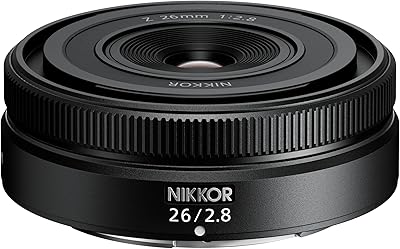
Nikon NIKKOR Z 26mm f/2.8 Pancake Lens
85%
94%
Portability & Size
88%
Image Quality & Sharpness
85%
Build Quality & Durability
92%
Value for Money
90%
Compatibility with Nikon Z Series
More
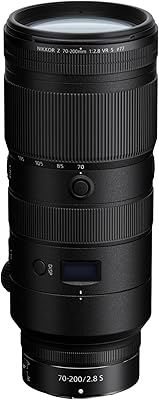
Nikon NIKKOR Z 70-200mm f/2.8 S Telephoto Zoom Lens
84%
96%
Optical Sharpness
93%
Autofocus Performance
91%
Image Stabilization
94%
Build Quality
89%
AF Motor Noise
More
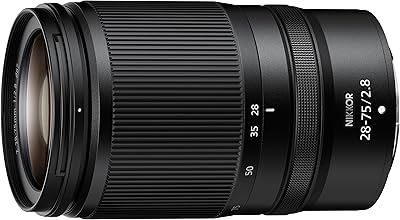
Nikon NIKKOR Z 28-75mm f/2.8 Zoom Lens
85%
83%
Image Sharpness
78%
Build Quality
86%
Autofocus Performance
91%
Video Usability
94%
Portability & Weight
More
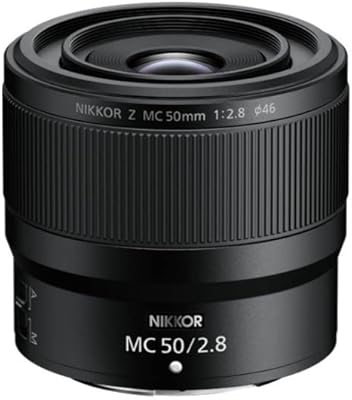
Nikon NIKKOR Z MC 50mm Macro Lens
84%
93%
Image Sharpness
91%
Macro Performance
72%
Autofocus Performance
84%
Build Quality & Durability
89%
Size & Portability
More
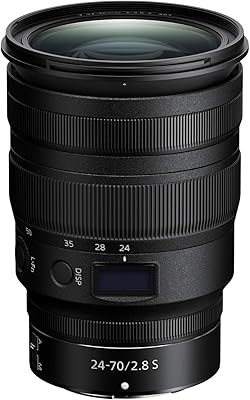
Nikon NIKKOR Z 24-70mm f/2.8 S Zoom Lens
87%
93%
Autofocus Speed & Accuracy
91%
Video Performance
94%
Optical Image Quality
96%
Build Quality
89%
Weather Sealing
More
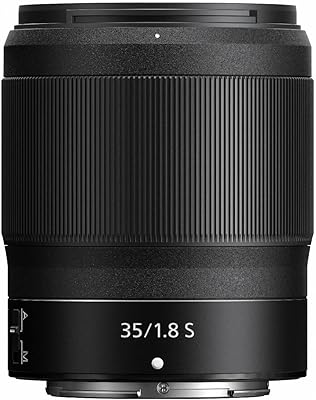
Nikon NIKKOR Z 35mm f/1.8 S Lens
86%
96%
Optical Sharpness
93%
Autofocus Performance
91%
Bokeh & Background Rendering
89%
Build Quality & Weather Sealing
92%
Low-Light Performance
More
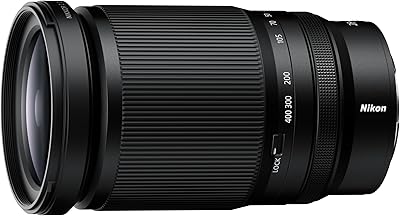
Nikon NIKKOR Z 28-400mm f/4-8 VR Lens
79%
96%
Zoom Range Versatility
91%
Image Stabilization (VR)
78%
Optical Sharpness
76%
Autofocus Performance
73%
Build Quality & Durability
More
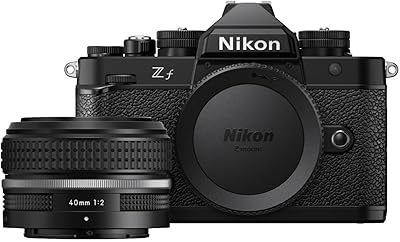
Nikon Z f
Nikon Z f
80%
93%
Build Quality & Design
91%
Image Quality
82%
Autofocus Performance
76%
Video Capabilities
84%
In-Body Stabilization
More
Nikon Z5 Full-Frame Mirrorless Camera
81%
92%
Image Quality
88%
Low-Light Performance
83%
Autofocus Performance
91%
In-Body Image Stabilization
86%
Build Quality & Ergonomics
More
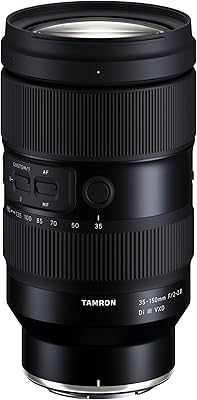
Tamron 35-150mm F/2-2.8 Di III VXD for Nikon Z
85%
82%
Autofocus Performance
91%
Image Quality (Sharpness & Color Accuracy)
88%
Build Quality & Durability
85%
Ease of Use & Ergonomics
87%
Portability & Weight
More

FAQ

Yes, and honestly this retro Nikon prime was practically made for the Zfc. The silver-and-black barrel finish matches the Zfc body almost perfectly, creating a cohesive vintage-inspired setup. It fits any Nikon Z-mount body, but the Zfc pairing is particularly popular for a reason.

On a DX-format body like the Zfc or Z30, the effective field of view is equivalent to about 42mm on a full-frame camera. That puts it firmly in normal-lens territory rather than wide-angle — great for portraits and everyday shots, but do not expect the expansive wide perspective you get shooting 28mm on a full-frame body. If wide is your priority on DX, this may feel a touch narrow.

It handles moderately active subjects well in good light, but this compact Z-mount lens is not optimized for rapid, unpredictable movement. For relaxed family moments, casual pet portraits, or kids sitting relatively still, it works fine. If you are chasing a sprinting dog or a toddler mid-run, a faster telephoto with more aggressive autofocus tracking would serve you better.

Yes, the dual stepping motors are genuinely quiet — quiet enough that in most shooting scenarios the focus sound will not bleed into recorded audio through the camera's built-in microphone. It is one of the more video-friendly features of this lens and a real practical advantage for vloggers or documentary-style shooters.

The core optical formula is essentially the same between the two versions. The special edition stands out through its retro-styled barrel design, with the distinctive silver-accented finish that complements heritage Nikon Z bodies. If looks and aesthetics matter to you, the special edition is worth it; if you just want the optics and prefer a more understated appearance, the standard version covers the same ground.

No, it does not. There is no dust or moisture resistance built into this lens, so shooting in rain, heavy humidity, or dusty outdoor conditions carries real risk. If you frequently shoot in challenging weather, you would need to factor in additional protection like a rain sleeve, or consider a weather-sealed lens from Nikon's more premium lineup.

The minimum focusing distance is about 0.63 feet, which is quite close for a standard prime. In practice, you can fill the frame with relatively small objects — think a cup of coffee, a flower, or a product for social media shots. It is not a true macro lens and will not give you life-size magnification, but it offers noticeably more close-focus flexibility than most wide primes in this category.

It depends on your expectations. On a modern Nikon Z sensor with solid high-ISO performance, f/2.8 is workable for indoor available-light photography — dim restaurants, home interiors, evening events. But if you are chasing strong background blur or shooting in genuinely dark conditions, f/2.8 has real limits. The Z-mount 28mm f/2.8 is a light and capable everyday lens, not a dedicated low-light specialist.

The front filter thread is 52mm, which is a common and affordable size. Standard 52mm circular polarizers, ND filters, and UV protective filters all fit without issue. Protective UV filters are a popular addition given the lens lacks weather sealing — it at least keeps the front element safe from dust and accidental contact.

It is genuinely one of the better entry points into Z-mount prime shooting. The autofocus is reliable, the size makes it approachable, and the image quality rewards you quickly compared to a kit zoom. The main thing to set expectations around is aperture — at f/2.8, background blur is pleasant but not dramatic. If you go in knowing that, the learning curve on this lens is low and the shooting experience is enjoyable.