Overview

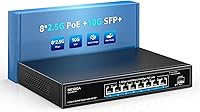
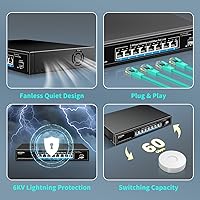
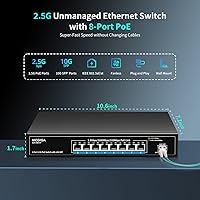
The NICGIGA S25-0801P 8-Port 2.5G PoE Switch lands in an interesting spot: it brings genuine 2.5Gbps speeds to a price point where most buyers are still stuck choosing between basic gigabit unmanaged switches. That matters because WiFi 6 access points routinely push beyond 1Gbps in real-world throughput, and a standard gigabit uplink quietly becomes the bottleneck nobody notices until they run a speed test. This 2.5G PoE switch also throws in a 10G SFP+ uplink — a feature you rarely see at this tier — letting you connect to a NAS or upstream router without choking aggregate traffic. The all-metal, fanless chassis makes it practical for closets, media cabinets, or any always-on setup where fan noise is unwelcome. No configuration required; plug it in and it works.

Features & Benefits

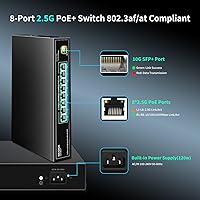
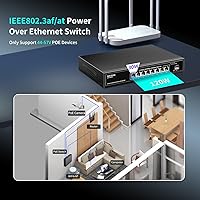
Each of the eight ports delivers up to 2.5Gbps with PoE+, rated at 30W per port under IEEE 802.3af/at — enough to power WiFi 6 APs, IP cameras, and VoIP phones without a separate power adapter. One critical detail before buying: the switch only supports 44–57V PoE devices, so double-check compatibility if you have older or non-standard powered equipment. The shared 120W budget is another number to internalize — run four 30W devices simultaneously and the remaining ports fall back to data-only. The 10G SFP+ uplink keeps upstream traffic from becoming a chokepoint, and built-in 6KV surge protection adds durability that plastic-chassis competitors rarely match. Auto MDI/MDIX handles cable type automatically, which is a small but genuinely useful convenience.

Best For

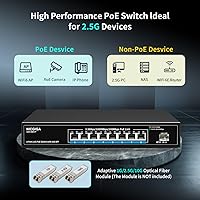
This unmanaged PoE switch hits its stride in home lab and SOHO environments where the network needs to do more than gigabit but the user does not want to deal with managed switch complexity. It works particularly well powering a cluster of WiFi 6 access points — each AP gets a dedicated 2.5G link instead of sharing a single uplink — or feeding a multi-camera NVR setup where 4K streams eat bandwidth quickly. NAS users who push large file transfers across the local network will notice the difference over plain gigabit. The caveat: if you need VLAN segmentation, QoS prioritization, or any console-level control, the NICGIGA switch is not the right tool. It is built for simplicity, and within that scope, it does the job well.

User Feedback

Buyers have settled around a 4.3-star average, and the consistent praise covers three things: easy setup, noticeable speed gains over gigabit, and a build quality that feels more substantial than the price suggests. The metal chassis reportedly stays warm but not worrying under sustained PoE load, which aligns with what you would expect from passive cooling at this wattage. Where reviews get more cautious is around the 120W shared budget — a few buyers discovered the hard way that maxing out all eight ports simultaneously is not realistic. SFP module compatibility has also drawn occasional comments, so using a vetted module rather than a generic one is worth the extra care. Support response and the one-year warranty have generally drawn positive remarks.

Pros

  • Each port runs at a true 2.5Gbps, giving WiFi 6 access points the bandwidth headroom they actually need.
  • The 10G SFP+ uplink prevents the switch itself from becoming a choke point when aggregate traffic builds up.
  • Fanless passive cooling means zero noise — a real advantage in home and small office installs.
  • Solid all-metal chassis feels durable and dissipates heat better than plastic alternatives at this price.
  • Plug-and-play setup requires no software, no login, and no prior networking knowledge.
  • IEEE 802.3af/at compliance covers a wide range of PoE devices including cameras, APs, and VoIP phones.
  • Built-in 6KV surge protection adds a layer of hardware safety that budget switches often skip.
  • Auto MDI/MDIX eliminates the need to worry about crossover vs. straight-through cable types.
  • Wide operating temperature range makes the NICGIGA switch usable in unheated spaces like garages or server closets.
  • One-year warranty backed by lifetime technical support offers reasonable post-purchase peace of mind.

Cons

  • The 120W shared PoE budget is easy to miscalculate — max out all eight ports and some devices will not get power.
  • Only supports 44–57V PoE devices, which can create compatibility surprises with older or non-standard equipment.
  • No VLAN, QoS, or any managed feature means zero control over traffic prioritization or network segmentation.
  • A single 10G SFP+ uplink is the only high-speed exit point — there is no redundancy or link aggregation option.
  • SFP module compatibility is not universal; generic or off-brand modules have caused issues for some buyers.
  • The metal chassis can run noticeably warm under sustained high-wattage PoE loads, which may concern some users.
  • No web interface or status dashboard makes it harder to diagnose connectivity issues when something goes wrong.
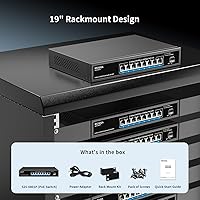
  • At just under 11 inches wide, it does not fit standard 19-inch rack rails without an adapter bracket.

Ratings

The scores below were generated by our AI system after analyzing verified buyer reviews worldwide, with spam, bot submissions, and incentivized feedback actively filtered out to ensure the results reflect genuine ownership experience. Based on that analysis, the NICGIGA S25-0801P 8-Port 2.5G PoE Switch earns strong marks in performance and build for its price tier, while a handful of real-world constraints around power budgeting and compatibility pull certain scores noticeably lower. Both the highlights and the friction points are represented transparently, so you can make a clear-eyed decision.

Network Performance
88%
Buyers who upgraded from gigabit switches consistently report tangible throughput gains, especially when feeding multiple WiFi 6 access points from the same device. NAS transfers and 4K camera streams run noticeably smoother, and the non-blocking architecture means ports do not compete with each other under mixed load.
A small number of users noted that the 2.5G link speed only materializes if the connected device also supports 2.5GbE — otherwise it falls back to 1G or lower, which surprises buyers who assume every port will always run at full speed.
PoE Reliability
79%
21%
For setups with moderate power demands — a few WiFi 6 APs and a handful of cameras — the PoE delivery is stable and consistent, with devices powering on cleanly and staying online without negotiation drops during normal operation.
The shared 120W budget is the recurring sticking point: buyers who loaded up all eight ports with high-draw devices reported some ports failing to deliver power or cycling on and off. The 44–57V voltage restriction has also caused compatibility failures with certain older PoE cameras.
Build Quality
84%
The all-metal chassis stands out at this price point — buyers frequently comment that it feels more substantial than comparable plastic-bodied switches, and the solid construction inspires confidence for long-term always-on deployment in home labs and small offices.
A few reviewers noted that the metal finish shows fingerprints easily and that the LED indicators, while functional, are positioned such that they are hard to read at an angle when the unit is mounted flat on a shelf.
Thermal Management
76%
24%
Under typical mixed loads, the fanless design keeps the chassis at a manageable warmth that the metal body dissipates effectively — buyers installing the switch in media cabinets or bedroom closets appreciate not having to account for fan noise or vibration.
Under sustained high-wattage PoE loads across most ports, the chassis does get noticeably warm to the touch, and a handful of buyers in warmer climates or enclosed spaces reported thermal throttling concerns, suggesting that adequate clearance around the ventilation slots is not optional.
Ease of Setup
93%
This is where the NICGIGA switch earns its most enthusiastic praise — users with no prior networking experience report getting it fully operational within minutes, simply by plugging in cables. Auto MDI/MDIX removes the crossover cable guesswork, and automatic PoE device detection just works.
The simplicity cuts both ways: when something does not work as expected, there is no status dashboard or diagnostic interface to consult, which leaves less experienced buyers unsure whether the problem is the switch, the cable, or the connected device.
Value for Money
86%
The combination of eight 2.5GbE PoE+ ports and a 10G SFP+ uplink at this price tier is genuinely difficult to match, and most buyers feel they got more hardware capability per dollar than they expected, particularly when comparing against branded alternatives with similar specs.
A segment of buyers felt the value equation weakened once they ran into the PoE budget ceiling or the voltage compatibility issue, since resolving either often requires adding supplementary hardware that was not factored into the initial purchase cost.
SFP+ Uplink Utility
71%
29%
Buyers who already own a 10G-capable router or NAS find the SFP+ uplink genuinely useful, effectively preventing the switch from becoming an upstream bottleneck when multiple 2.5G ports are active simultaneously.
Generic or third-party SFP+ modules have produced inconsistent results for a meaningful subset of buyers, and the lack of a built-in 10G RJ45 uplink option means users without existing fiber infrastructure must purchase a copper transceiver separately before the uplink is usable.
Device Compatibility
67%
33%
Standard modern PoE devices — current-generation WiFi 6 APs, IP cameras, and VoIP phones — connect and power up reliably, and the backward compatibility with non-PoE devices for data-only connections works exactly as advertised.
The 44–57V PoE voltage restriction is the most-cited compatibility issue in negative reviews, catching buyers off guard when connecting legacy security cameras or non-standard powered devices that fall outside this range and simply receive no power.
Noise Level
96%
Completely silent in every operational condition — no fan, no coil whine, nothing. Buyers who placed this switch in living rooms, recording studios, and bedrooms specifically call out the silence as a decisive reason they chose this model over alternatives.
There is genuinely little to criticize here; the only marginal note is that the passive cooling trade-off means heat must go somewhere, so silence comes at the cost of a warmer chassis in demanding environments.
Surge Protection
81%
19%
The 6KV lightning protection specification is well above what budget switches typically offer, and buyers in storm-prone regions or areas with unstable power grids specifically mention it as a deciding factor, giving them confidence in the hardware surviving indirect electrical events.
Real-world surge events are difficult to verify through reviews, so while the spec is credible and appreciated, its effectiveness under actual conditions is not something buyers have been able to validate directly in the review pool.
Power Budget Clarity
58%
42%
Once buyers understand the 120W shared model and plan their device load accordingly, the power budget is perfectly adequate for moderate mixed-use setups — several reviewers mention calculating their PoE draw beforehand and having no issues whatsoever.
The product listing creates genuine confusion by stating 30W per port without prominently flagging the 120W shared ceiling, and this is the single most common source of negative reviews — buyers discover the constraint only after devices start dropping power unexpectedly.
Long-Term Stability
82%
18%
The majority of longer-term owners report the switch running continuously for months without reboots, dropped connections, or performance degradation, which is the baseline expectation for always-on network hardware and one that this switch meets reliably in typical deployments.
A small but consistent cluster of reviews mentions occasional port instability after extended uptime at high PoE loads, suggesting the thermal stress of running near budget ceiling over long periods may affect reliability in some units.
Warranty and Support
74%
26%
Buyers who have needed assistance report generally positive experiences with NICGIGA support response times, and the lifetime technical support commitment beyond the one-year hardware warranty is a meaningful differentiator compared to many competitors at this price.
Support quality appears inconsistent based on review patterns — some buyers received fast, helpful responses while others described difficulty getting meaningful technical assistance beyond basic troubleshooting steps, particularly for nuanced compatibility questions.
Physical Footprint
77%
23%
The compact desktop form factor suits shelf and cabinet installs well, and at 3 lbs the unit is light enough to wall-mount or position flexibly without needing a dedicated rack enclosure, which home lab and SOHO buyers particularly appreciate.
The non-standard width means rack mounting requires a separate adapter bracket that does not come in the box, and buyers who assumed it would fit a standard 19-inch rack discovered this only after receiving the unit.

Suitable for:

The NICGIGA S25-0801P 8-Port 2.5G PoE Switch is a strong fit for home lab enthusiasts and small office users who have already invested in WiFi 6 access points and are realizing that a standard gigabit switch is quietly throttling their wireless performance. If you are running two or more WiFi 6 APs, a NAS, and a handful of PoE cameras off the same switch, this is exactly the kind of hardware that stops your local network from being its own bottleneck. NVR-based security setups benefit particularly well here — 4K PoE cameras generate a lot of sustained traffic, and having a dedicated 2.5G link per camera rather than sharing a single gigabit uplink makes a measurable difference. The fanless metal chassis also makes it a natural choice for anyone mounting gear in a living room cabinet, bedroom closet, or any environment where a humming fan would be an irritation. If your needs are straightforward — power some devices, move data fast, and never touch a configuration interface — this unmanaged PoE switch covers that ground efficiently.

Not suitable for:

The NICGIGA S25-0801P 8-Port 2.5G PoE Switch is not the right call if your network requires any form of traffic management. There is no VLAN support, no QoS prioritization, no port mirroring, and no console or web interface of any kind — what you see is what you get, and that is a deliberate design choice, not an oversight. Buyers running mixed networks where guest isolation or traffic segmentation is a security requirement should look at a managed switch instead. The 120W shared PoE budget is another meaningful constraint: if you plan to run eight devices that each draw close to 30W, you will hit the ceiling well before all ports are loaded, which could cause devices to drop power or fail to negotiate PoE at all. There is also a device compatibility caveat that catches people off guard — this switch only supports PoE devices operating in the 44–57V range, so older or non-standard powered equipment may simply not work. Finally, anyone needing redundant uplinks, link aggregation, or more than one 10G connection upstream will find this hardware too limited.

Specifications

  • PoE Ports: The switch provides 8 x 2.5GbE ports, each capable of delivering Power over Ethernet to connected devices.
  • Uplink Port: A single 10G SFP+ uplink port allows high-speed connection to an upstream router, NAS, or core switch.
  • PoE Standard: All eight ports comply with IEEE 802.3af and 802.3at, supporting a broad range of powered devices up to 30W per port.
  • PoE Budget: The total shared PoE power budget is 120W, distributed across all active powered ports simultaneously.
  • PoE Voltage: Only devices operating within the 44–57V PoE voltage range are supported; non-standard voltages outside this range will not negotiate power.
  • Data Rate: Each port supports auto-negotiation across 100Mbps, 1Gbps, and 2.5Gbps link speeds depending on the connected device.
  • Management: The switch is fully unmanaged with no web interface, CLI, or configuration software — it operates automatically upon connection.
  • Chassis: The enclosure is constructed from metal, providing structural rigidity and passive heat dissipation without mechanical cooling.
  • Cooling: Passive fanless cooling is used, with double-sided ventilation slots to allow natural airflow across the internal components.
  • Surge Protection: Built-in 6KV lightning surge protection is present on all ports to guard against electrical transients and indirect lightning events.
  • Operating Temp: The switch is rated for continuous operation between -10°C and 50°C, making it suitable for a range of indoor environments.
  • Dimensions: The unit measures 10.6 x 7.1 x 1.7 inches, a desktop footprint that does not conform to standard 19″ rack mounting without an adapter.
  • Weight: The switch weighs 3 lbs, reflecting its all-metal construction while remaining easy to reposition or wall-mount.
  • Cable Handling: Auto MDI/MDIX on all ports eliminates the need to differentiate between straight-through and crossover Ethernet cables.
  • Forwarding: The switch uses non-blocking store-and-forward architecture, ensuring no internal bandwidth contention between ports.
  • Compatibility: Ports are backward compatible with non-PoE devices, providing data-only connections automatically when no powered device is detected.
  • Warranty: NICGIGA provides a one-year hardware warranty alongside a lifetime technical support commitment for registered purchasers.

Related Reviews
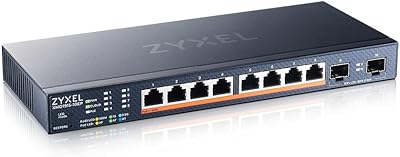
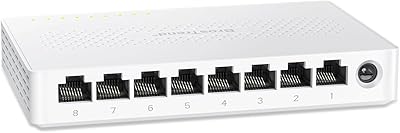
Zyxel XMG1915-10EP 8-Port 2.5G PoE Switch
81%
78%
PoE Performance
84%
Cloud Management
86%
Setup & Onboarding
81%
Build Quality
89%
2.5G Port Speed
More
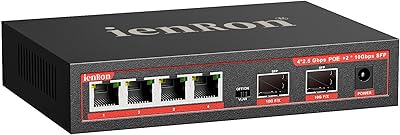
ienRon 6-Port 2.5Gb PoE Switch with 2-Port 10Gb SFP+
85%
86%
Performance
91%
Ease of Setup
88%
PoE Power Delivery
84%
Build Quality
93%
Fanless Operation
More
BrosTrend 8-Port 2.5G Unmanaged Switch
83%
93%
Port Speed Consistency
96%
Ease of Setup
61%
Build Quality
74%
Thermal Performance
91%
Value for Money
More
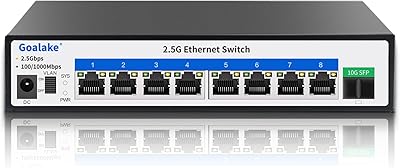
Goalake 8-Port 2.5G Ethernet Switch
80%
91%
Port Count & Configuration
88%
Throughput & Switching Performance
93%
Ease of Setup
79%
Build Quality & Materials
96%
Fanless & Noise Level
More
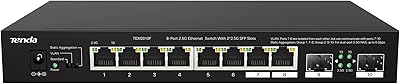
Tenda TEM2010F 8-Port 2.5G Ethernet Switch
77%
96%
Ease of Setup
91%
Network Performance
94%
Noise Level
82%
Build Quality
67%
Thermal Management
More
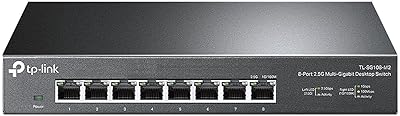
TP-Link TL-SG108-M2 8-Port 2.5G Unmanaged Switch
81%
93%
Network Performance
97%
Ease of Setup
89%
Build Quality
74%
Thermal Management
81%
Value for Money
More
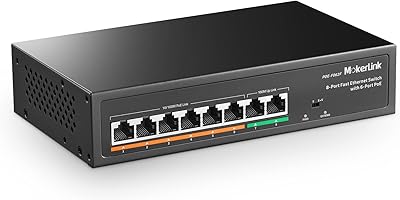
MokerLink POE-F062F 8-Port PoE Switch
86%
91%
Value for Money
88%
Performance Stability
95%
Ease of Installation
85%
PoE Power Output
82%
Build Quality
More
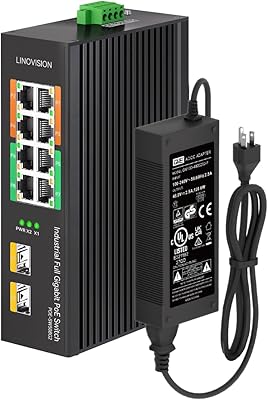
LINOVISION POE-SW508G Industrial 8-Port PoE++ Switch
77%
91%
Power Delivery
88%
Build Quality
93%
PoE Watchdog
84%
Installation Ease
86%
Thermal Performance
More
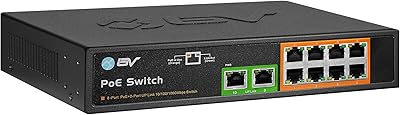
BV-Tech POE-SW802G 8-Port Gigabit PoE+ Switch
79%
94%
Ease of Setup
88%
PoE Reliability
67%
Power Budget
61%
Build Quality
91%
Value for Money
More
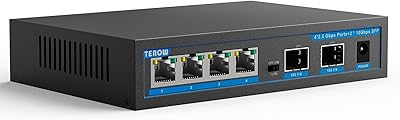
TEROW 4-Port 2.5G 2-Port SFP+ Network Switch
81%
93%
Value for Money
96%
Ease of Setup
88%
Port Performance & Link Stability
71%
SFP+ Port Compatibility
84%
Build Quality & Materials
More

FAQ

Not simultaneously at 30W each — that would require 240W, and the total shared budget is 120W. In practice, plan around your actual device draw: a typical WiFi 6 AP pulls around 15–20W, a PoE camera roughly 10–15W. Mix those and you have plenty of headroom, but maxing out every port with high-draw devices will cause some to drop PoE negotiation.

Yes, the ports auto-negotiate down to 1Gbps or even 100Mbps, so older devices connect without any issues. The PoE power delivery works at those lower link speeds too, as long as your device operates within the 44–57V range that the switch supports.

The SFP+ port accepts standard 10G SFP+ modules, but compatibility is not universal across all generic or third-party options. Using a reputable brand or a module specifically listed as compatible is the safer route — a few buyers have reported issues with very cheap unbranded modules failing to link up reliably.

No, it does not. This is a fully unmanaged switch, which means there is no VLAN support, no QoS, no port mirroring, and no configuration interface of any kind. If you need to segment traffic or prioritize certain devices, you will need a managed switch instead.

Warm to the touch is the most common description from buyers running sustained PoE loads, but not alarmingly hot. The metal enclosure acts as a heat sink, and as long as you leave some clearance around the ventilation slots on both sides, the switch handles the thermal load without issue in most indoor environments.

The uplink is an SFP+ port, not an RJ45 port, so you do need an SFP+ module to use it. If your router has an RJ45 2.5G or 10G port, you can use an SFP+ to RJ45 copper transceiver module. If your router only has a 1G RJ45 port, you can still connect using a 1G SFP module, though you will lose the uplink speed advantage.

It is genuinely fanless — there is no fan at all. Passive cooling only, which means zero mechanical noise under any operating condition. For anyone installing networking gear in a bedroom, living room, or recording space, this is a meaningful difference over switches with variable-speed fans.

The most common cause is the device operating outside the 44–57V PoE voltage range that this switch supports. Check your device's spec sheet for its PoE voltage requirement. Also verify the total power draw across all currently active PoE ports is not exceeding 120W, as devices that negotiate last may be refused power if the budget is already consumed.

Not without an adapter bracket — the unit is desktop-sized at 10.6 inches wide, which does not align with the 19-inch rack standard. Some buyers use third-party 19-inch rack mount shelves or adapter kits, but nothing is included in the box for rack installation.

Based on buyer feedback, support responsiveness has generally been positive. NICGIGA also advertises lifetime technical support alongside the one-year hardware warranty, which is useful for setup questions even after the warranty period ends. Keep your purchase receipt and order confirmation accessible in case you need to initiate a warranty claim.