Overview

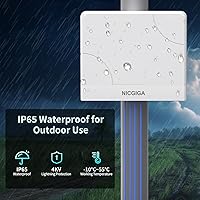
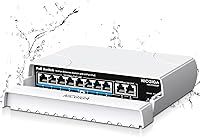
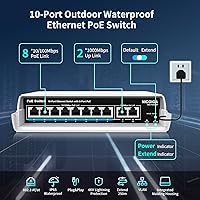
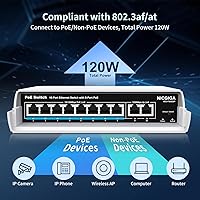
The NICGIGA NOS-FS0820GP 10-Port Outdoor PoE Switch is a straightforward, no-frills solution built for one primary job: powering and connecting IP cameras or wireless access points in outdoor environments where a standard indoor switch simply won't survive. The IP65-rated metal enclosure handles rain, dust, and temperatures ranging from -10°C to +55°C without complaint. Built-in 4KV lightning protection is a genuine differentiator at this price tier — outdoor gear often skips this entirely. Eight PoE ports plus two Gigabit uplinks cover most small surveillance setups without overcomplicating things. Plug it in, connect your cameras, and it works.
Features & Benefits

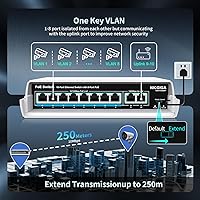
One of the more useful aspects of this outdoor PoE switch is its VLAN port isolation feature. When enabled, the eight PoE ports are cut off from each other — they can only talk to the uplink — which is a clean way to prevent cameras from accessing your internal LAN or communicating with each other. The 250m extender mode is helpful for reaching distant outbuildings, but read the fine print: speeds drop to 10Mbps in that mode, which is tight for cameras recording at higher resolutions. One more thing to sort out before buying: the packaging mentions 120W, but the real usable PoE budget is 78W across all eight ports.

Best For

This weatherproof switch hits its stride in small surveillance deployments — think four to eight cameras on the exterior of a home, retail location, or warehouse. IT installers working on building perimeters will appreciate that it needs zero configuration; there's no web interface, no CLI, nothing to touch. It also works well for extending a network to a detached garage, parking structure, or outbuilding where running power separately would be expensive or impractical. What it's not suited for is anything requiring granular traffic control, link aggregation, or managed VLAN tagging. If you need those, you're looking at a different category of switch entirely.

User Feedback

Buyers report that the NICGIGA switch delivers on its core promise: cameras power up reliably, setup takes minutes, and the housing holds up after months in the elements. The plug-and-play experience gets consistent praise from users who aren't networking professionals but needed something to just work. On the critical side, the 78W vs. 120W power budget confusion comes up frequently — some buyers felt misled by the headline figure. A few users noted that the extender mode's speed reduction caused buffering issues with higher-resolution camera feeds. Build quality is regarded as solid for the price, though a handful of reviewers wished the weatherproof seal were rated for more extreme conditions.

Pros

  • Truly plug-and-play — no software, web interface, or CLI needed to get cameras online.
  • IP65 weatherproof housing holds up reliably after months of outdoor exposure in rain and dust.
  • Built-in 4KV lightning protection is a meaningful safety net for exposed outdoor installations.
  • VLAN port isolation adds a layer of network security without requiring any manual configuration.
  • Two Gigabit uplinks prevent the uplink from becoming a bottleneck when connecting to an NVR or router.
  • Fanless metal chassis runs silently and eliminates the fan failure risk common in sealed enclosures.
  • 250m extender mode covers cable runs that would otherwise require an additional switch or media converter.
  • Compact and light enough to mount discreetly on an exterior wall or inside a small weatherproof enclosure.
  • Supports both 802.3af and 802.3at devices, giving flexibility across most standard IP camera brands.
  • One-year warranty and lifetime technical support offer reasonable coverage for the price tier.

Cons

  • The 120W headline figure is misleading — the real usable PoE budget across all ports is 78W.
  • Extender mode cuts network speed to 10Mbps, which is insufficient for high-resolution or high-bitrate camera streams.
  • No management interface means zero visibility into port status, power draw, or connected device diagnostics.
  • Only 48V DC PoE devices are supported, which can catch buyers off guard when mixing device types.
  • PoE ports run at 10/100Mbps, not Gigabit, which limits future-proofing as camera technology advances.
  • No support for 802.3bt (PoE++), ruling out higher-draw devices like certain PTZ cameras or Wi-Fi 6 APs.
  • Cannot be rack-mounted in a standard enclosure without additional brackets, which are not included.
  • Power detection is automatic but offers no per-port power cycling or remote reboot capability.

Ratings

The scores below reflect an AI-driven analysis of verified global buyer reviews for the NICGIGA NOS-FS0820GP 10-Port Outdoor PoE Switch, with spam, incentivized, and bot-generated feedback actively filtered out before scoring. Each category is assessed against real installation experiences — from backyard surveillance rigs to commercial parking lot deployments — so both the strengths and the genuine frustrations are represented without sugar-coating.

Ease of Setup
93%
Buyers consistently praise how fast this switch gets a surveillance system running — unbox, mount, plug in cameras, done. There is no login portal, no firmware wizard, no configuration file to upload. Installers report having all eight cameras live within minutes of mounting the unit.
The flip side of zero configuration is zero feedback — there are no status indicators beyond basic port LEDs, so if something is not working, the switch gives you almost nothing to diagnose the problem. Users troubleshooting a dead port have little to work with beyond rebooting and swapping cables.
Weatherproofing
87%
The IP65-rated metal enclosure earns consistent praise from buyers who have left it exposed through full rain seasons, including heavy downpours and high-humidity summers. Several installers noted the housing showed no signs of rust or seal degradation after six to twelve months of outdoor use, which is a meaningful result at this price point.
A handful of users in coastal or tropical climates reported surface corrosion around the cable entry ports after extended use, suggesting the housing holds up better in temperate conditions than in salt-air or persistently wet environments. The switch also does not include any weatherproofing for the cable openings themselves, leaving that responsibility entirely to the installer.
PoE Reliability
84%
The vast majority of buyers report stable, continuous PoE delivery to connected cameras with no random reboots or power drops under normal loads. The automatic powered device detection works accurately, and the switch handles mixed 802.3af and 802.3at devices on the same unit without issue.
The 78W versus 120W power budget discrepancy trips up buyers who load all eight ports with higher-draw cameras and then experience instability. Users who did the math upfront had no issues; those who took the 120W headline at face value occasionally ran into brownout-style behavior on ports seven and eight when the system was under full load.
Build Quality
79%
21%
The all-metal chassis feels noticeably more substantial than similarly priced plastic-bodied switches, and buyers frequently comment that it installs and stays put without flex or creaking. The fanless design also means there are no moving parts to fail, which adds real-world confidence for unattended outdoor deployments.
While the overall construction impresses for the price, some buyers found the port labeling to be faint and difficult to read in low-light installation conditions. A few users also noted that the mounting tabs feel like the weakest point on the unit, particularly when the switch is mounted vertically and subject to wind vibration.
Lightning Protection
82%
18%
The 4KV surge protection is one of the most cited reasons buyers choose this switch over cheaper alternatives, and several users credit it with surviving nearby lightning events that damaged other equipment on the same circuit. For installations on exposed rooftops, barn exteriors, or open parking structures, this built-in protection removes the need for a separate surge suppressor in most cases.
While 4KV is a reasonable protection level for residential and light commercial use, it is not a guarantee in high-strike-frequency areas, and the unit does not specify a clamping response time. Users in areas with frequent direct-strike exposure should still invest in proper grounding and additional line protection rather than relying solely on the built-in surge rating.
Extender Mode
61%
39%
The 250m cable extension capability genuinely solves a real problem for installers who need to reach a camera or access point far beyond the standard 100m Ethernet limit without adding a second switch or media converter. Users who deployed it for outbuildings or remote gate cameras found it worked reliably at distance when conditions were right.
The mandatory speed reduction to 10Mbps is a hard wall that frustrates buyers who discover it after purchase. Anyone running 1080p cameras at higher bitrates, or multiple streams over a single extended run, will encounter buffering or dropped frames. The extender mode is workable for basic surveillance but poorly matched to modern high-resolution camera setups.
Port Speed
58%
42%
For standard 1080p IP cameras running H.265 compression, the 100Mbps Fast Ethernet PoE ports provide adequate throughput with comfortable headroom to spare. Buyers using this switch purely as a camera aggregator feeding into a Gigabit NVR report no noticeable performance issues under typical conditions.
The 100Mbps ceiling on PoE ports is a genuine limitation as 4K and higher-bitrate cameras become mainstream, and buyers planning a multi-year installation may find this switch becomes the bottleneck sooner than expected. The absence of Gigabit PoE ports at this price point is not unusual, but it is a trade-off worth acknowledging before committing.
VLAN Isolation
74%
26%
The port isolation VLAN feature adds a meaningful security layer for buyers who want cameras segmented from the rest of their LAN without setting up a managed switch. Installers who deploy cameras at rental properties or small business locations appreciate that compromising one camera does not expose the rest of the internal network.
The VLAN implementation is binary — it is either on or off for all ports simultaneously, with no ability to isolate individual ports selectively. Buyers who need more nuanced segmentation, such as isolating specific cameras while allowing others to communicate, will find this all-or-nothing approach too blunt for their needs.
Value for Money
88%
At this price tier, getting an IP65-rated metal enclosure, 4KV lightning protection, VLAN isolation, and a 250m extender mode in a single unmanaged switch is genuinely difficult to replicate from competing brands. Most buyers who compared alternatives concluded this switch delivered more outdoor-specific features per dollar than anything else in the category.
The value calculation shifts if you run into the 78W power budget ceiling or need the extender mode for high-res cameras, since both limitations may force you to buy a second switch or upgrade sooner than planned. Buyers who understand these constraints upfront tend to rate the value highly; those who discovered them post-purchase feel less positive.
Thermal Management
81%
19%
The fanless metal chassis passively dissipates heat without any noise or moving parts, and buyers in warm climates report the unit running warm but stable even during summer heat. The absence of a fan is particularly valued in sealed outdoor enclosures where dust accumulation would shorten fan lifespan quickly.
In direct sun exposure with high ambient temperatures approaching the 55°C operational ceiling, a small number of buyers reported the chassis becoming uncomfortably hot to the touch, raising questions about long-term component reliability in sun-baked installations. Shading the unit or mounting it inside a ventilated enclosure is advisable in extreme heat environments.
Compatibility
83%
The broad 802.3af/at compliance means this outdoor PoE switch works with virtually any standard IP camera on the market, and buyers report successful deployments alongside Hikvision, Dahua, Reolink, Amcrest, and Axis hardware without any compatibility issues. Non-PoE devices on the uplink ports also connect without any workaround required.
The strict 48V DC requirement for PoE ports catches some buyers off guard, particularly those trying to integrate older 24V passive PoE cameras from certain vendors. There is no passive PoE support whatsoever, so any camera that does not follow the 802.3af/at standard simply will not receive power from this switch.
Documentation & Support
63%
37%
NICGIGA offers lifetime technical support, and buyers who contacted them report reasonably prompt responses for a budget-tier brand. The one-year warranty provides a basic safety net that most competitors in this category match or fall short of.
The included documentation is minimal and leaves important nuances — like the 78W power budget reality and the extender mode speed limitation — inadequately explained. Several buyers only discovered these details through online forums or trial and error rather than from any included materials, which is a recurring complaint across reviews.
Mounting & Installation
71%
29%
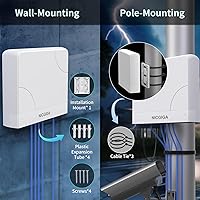
The compact dimensions and relatively light weight make it straightforward to mount on a wall or inside an outdoor enclosure without needing a second pair of hands. The built-in mounting points are positioned sensibly, and the overall footprint is small enough to fit inside standard weatherproof electrical boxes used by professional installers.
No mounting hardware or bracket is included in the box, which is a minor but genuine inconvenience for buyers who expected at least basic screws or a wall template. The mounting tabs are also slightly undersized relative to the overall chassis weight when cables are fully loaded, which can be a concern for vibration-prone installations.

Suitable for:

The NICGIGA NOS-FS0820GP 10-Port Outdoor PoE Switch is a practical fit for homeowners, property managers, and small business owners who need to run a handful of IP cameras on a building exterior without pulling a separate power run to each device. If you are mounting four to eight cameras across a parking lot, warehouse perimeter, or residential property, this switch handles the job cleanly with no configuration required. IT installers working on edge deployments — a remote node on the side of a building, a network drop in a detached structure — will appreciate the IP65 housing and 4KV lightning protection, which removes the need for a separate surge protector in most setups. The 250m extender mode is a genuine asset when cable runs push past the normal 100m Ethernet limit, provided your cameras record at lower resolutions where 10Mbps is sufficient. Anyone who values simplicity over configurability and needs outdoor-rated gear at a reasonable cost will find this switch punches above its weight class.
Not suitable for:

Buyers who need granular control over their network — managed VLANs, QoS prioritization, SNMP monitoring, or link aggregation — should look elsewhere, as the NICGIGA NOS-FS0820GP 10-Port Outdoor PoE Switch is strictly unmanaged and offers none of those features. If you plan to run high-resolution cameras at 4K or stream multiple feeds at higher bitrates over extended cable runs, the extender mode's hard cap of 10Mbps will cause buffering and dropped frames, making it unsuitable for demanding video workloads. The 78W usable PoE budget also becomes a real constraint if you intend to fully load all eight ports with power-hungry devices — the 120W figure on the box is not the working ceiling, and overestimating available power can cause instability across connected devices. Users in environments with temperature extremes well below -10°C or above +55°C will need a switch rated for harsher industrial conditions. Finally, anyone requiring 802.3bt (PoE++) support for high-draw devices like pan-tilt-zoom cameras or certain Wi-Fi 6 access points should note this switch tops out at 802.3at, capping at 30W per port.
Specifications

  • PoE Ports: Eight 10/100Mbps Fast Ethernet ports support IEEE 802.3af and 802.3at standards, delivering up to 30W per port to connected devices.
  • Uplink Ports: Two Gigabit (1000Mbps) uplink ports allow connection to routers, NVRs, or backbone switches without creating a throughput bottleneck.
  • PoE Power Budget: The usable PoE power budget across all eight ports is 78W total, despite a 120W figure appearing on some packaging materials.
  • Weatherproof Rating: The metal enclosure carries an IP65 ingress protection rating, meaning it is fully dust-tight and protected against low-pressure water jets from any direction.
  • Lightning Protection: Integrated 4KV lightning surge protection is built into the unit to reduce the risk of damage from nearby strikes or electrical transients.
  • Operating Temp: Rated for continuous operation between -10°C and +55°C (14°F to 131°F), covering most temperate outdoor climates year-round.
  • Extender Mode: An optional 250m extender mode stretches cable runs well beyond the standard 100m Ethernet limit, though port speed is reduced to 10Mbps when active.
  • VLAN Support: Port isolation VLAN mode cuts communication between PoE ports while preserving uplink access, adding a basic layer of network segmentation.
  • Switch Capacity: Total non-blocking switch fabric capacity is 12Gbps, sufficient for the eight Fast Ethernet PoE ports and two Gigabit uplinks running simultaneously.
  • Chassis Material: The outer housing is constructed from metal, providing structural durability and passive heat dissipation without requiring a cooling fan.
  • Cooling Design: The unit is fully fanless, eliminating noise and removing a common mechanical failure point in sealed outdoor enclosures.
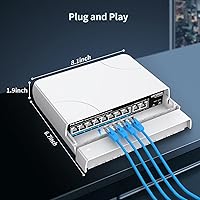
  • Dimensions: The switch measures 8.1 x 6.7 x 1.9 inches (approximately 206 x 170 x 48mm), making it compact enough for wall or pole mounting.
  • Weight: The unit weighs 2.19 lbs (approximately 1.0 kg), light enough for single-person installation on a wall bracket or enclosure.
  • Input Voltage: Requires a 48V DC power input; only 48V PoE-compatible powered devices are supported, which is standard for 802.3af/at equipment.
  • Configuration: No software, web interface, or command-line setup is required; the switch is fully plug-and-play from the moment it is powered on.
  • MDI/MDIX: Automatic MDI/MDIX detection means straight-through or crossover cables can be used interchangeably without adapters.
  • PD Detection: Automatic powered device detection identifies whether a connected device supports PoE and withholds power from non-PoE devices to avoid damage.
  • Warranty: NICGIGA provides a one-year product warranty along with lifetime technical support for this switch.

Related Reviews
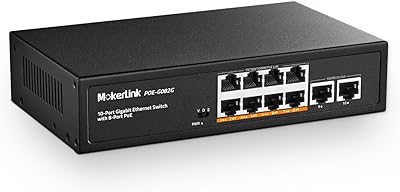
MokerLink POE-G082G 10-Port Gigabit PoE Switch
78%
94%
Ease of Setup
88%
PoE Reliability
83%
Build Quality
91%
Value for Money
71%
Thermal Management
More
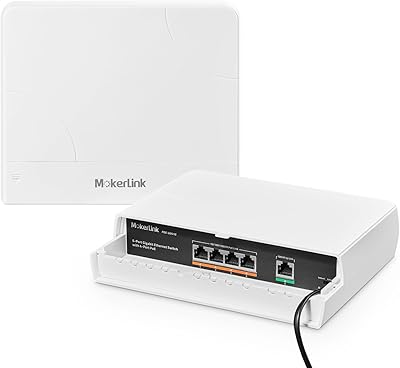
MokerLink POE-G041GO Outdoor Gigabit PoE Switch
81%
93%
Ease of Setup
84%
PoE Power Delivery
78%
Build Quality
76%
Weather Resistance
88%
Value for Money
More
SICSOLINK 10-Port PoE+ Switch
85%
91%
Value for Money
96%
Ease of Installation
84%
Build Quality
89%
Performance Reliability
93%
Noise Level
More
Goalake 10-Port Managed PoE Switch
76%
93%
Value for Money
88%
Ease of Setup
61%
Port Speed Performance
74%
PoE Power Budget
67%
Cloud Management App
More
YuLinca 6-Port Gigabit PoE Switch with 4 PoE+ Ports
87%
95%
Ease of Installation
88%
PoE Functionality
91%
Build Quality
87%
Performance and Speed
94%
Fanless Operation (Noise)
More
NICGIGA GS2421P 24-Port PoE+ Gigabit Switch
77%
91%
Value for Money
93%
Ease of Setup
78%
PoE Performance
84%
Build Quality
62%
Thermal Management
More
NICGIGA NIC-AI-FS1621GP 16-Port Unmanaged PoE Switch
76%
88%
Value for Money
93%
Ease of Setup
54%
PoE Port Speed
84%
PoE Power Delivery
79%
AI Watchdog Reliability
More
YuLinca G1002G 8-Port PoE Gigabit Switch
79%
94%
Ease of Setup
89%
Value for Money
82%
PoE Performance
76%
Build Quality
67%
Thermal Management
More
MokerLink 8-Port Outdoor Gigabit PoE Switch
81%
93%
Ease of Setup
84%
Build Quality
81%
PoE Performance
77%
Weather Resistance
89%
Gigabit Throughput
More
NICGIGA GS4802P 48-Port Gigabit PoE+ Switch
85%
89%
Value for Money
85%
Performance
92%
Setup & Installation
90%
Power Delivery for PoE Devices
87%
Build Quality & Durability
More

FAQ

Yes, the IP65 rating means the enclosure is sealed against dust and can handle direct water spray, which covers rain exposure in most real-world conditions. Buyers who have had it mounted outdoors for extended periods generally report no issues with water ingress. Just make sure cable entry points are properly weatherproofed with conduit or sealant on your end, since the switch itself does not seal around inserted cables.

The practical PoE power budget is 78W across all eight ports combined, not 120W as some packaging suggests. In real terms, if you load all eight ports simultaneously, each port averages under 10W — though individual ports can draw up to 30W each as long as the total stays under 78W. Plan your camera power draw carefully before assuming you can max out every port at once.

It works with any 802.3af or 802.3at compliant PoE device, which covers the overwhelming majority of IP cameras from brands like Hikvision, Dahua, Reolink, Axis, and others. The one firm requirement is that connected powered devices must operate on 48V DC — the switch will not power 24V passive PoE cameras, so double-check your camera specs before purchasing.

Extender mode allows the switch to push a signal up to 250m over a single Cat5e or Cat6 cable run, which is useful for reaching distant cameras or outbuildings. The catch is that all ports drop to 10Mbps when the mode is active. For cameras recording at 1080p with moderate compression, 10Mbps is workable, but 4K or high-bitrate streams will likely buffer or drop frames. Think carefully about your camera resolution before relying on this feature.

Absolutely — both VLAN isolation and extender mode are optional. By default, the switch operates as a standard unmanaged PoE switch with all ports communicating freely, which is the right setup for most home security systems where cameras just need to reach a single NVR.

The built-in 4KV surge protection is designed to absorb transient voltage spikes caused by nearby lightning strikes before they reach connected equipment. It is not a guarantee against a direct strike, but it provides meaningful protection compared to switches that omit surge protection entirely. For critical installations in high-lightning areas, pairing it with a proper grounding setup is still a good idea.

You can connect it upstream to a managed switch, and that upstream device will handle any traffic management or VLAN tagging on the uplink. However, the outdoor switch itself remains unmanaged — you cannot configure individual ports, monitor power draw per port, or remotely reboot a stuck camera from the switch side. For basic surveillance setups this is rarely a problem.

The rated lower limit is -10°C (14°F), which handles typical cold-weather climates in most of North America and Europe. If you are in an area that regularly drops below that — northern Canada, Scandinavia, high-altitude installations — you should look at a switch rated for harsher industrial temperatures, as operating below spec can shorten component lifespan or cause instability.

The switch does not include a standard rack-mount bracket, so wall or surface mounting would require a separate bracket or enclosure depending on your installation. For most outdoor deployments, installers mount it inside a weatherproof junction box or directly to a wall using the unit's own mounting points. Check that your planned mounting location accommodates the footprint of roughly 8 by 7 inches before ordering.

Yes, the two Gigabit uplink ports are standard Ethernet ports and pass data without powering the connected device, which makes them perfectly suited for connecting an NVR, router, or any non-PoE device. You get up to 1000Mbps on those uplinks, so even an NVR pulling multiple camera streams simultaneously should have plenty of headroom.