Overview

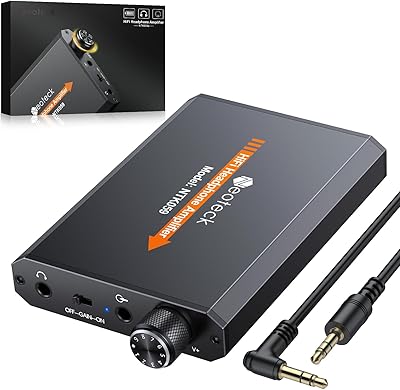
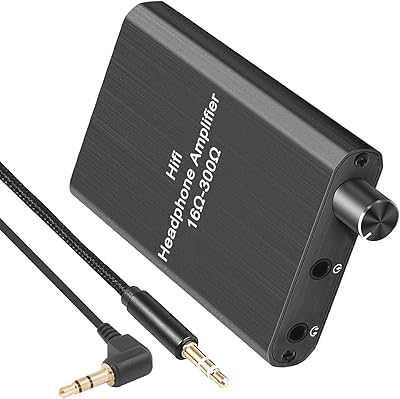
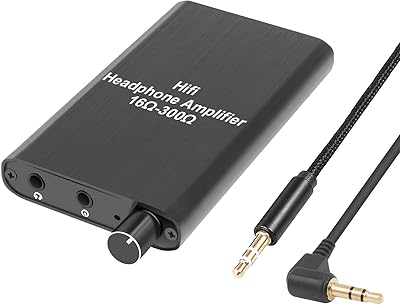
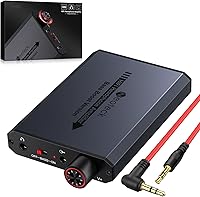
The Neoteck NTK153 Portable Headphone Amplifier is a compact, no-frills device aimed at listeners who want more from their headphones without spending a lot. It occupies a busy corner of the portable amp market, and what helps it stand out is the aluminum matte finish — it feels noticeably sturdier than what you'd expect at this price point. Supporting impedances from 16 to 300 ohms, it works with everything from cheap earbuds to more demanding over-ear cans. Add a Type-C charging port and up to eight hours of battery life, and it becomes a practical daily companion for commuters or anyone tired of their phone's anemic headphone output.
Features & Benefits

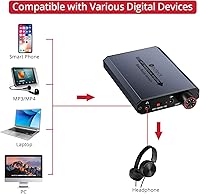
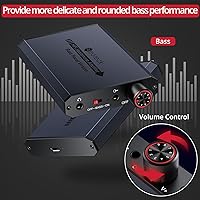
The most immediately useful feature on this portable amp is the physical bass boost toggle — flip it and you get a warmer, fuller low end without fiddling with any software EQ. On the technical side, the signal-to-noise ratio exceeds 120dB and total harmonic distortion sits at just 0.0003%, which translates to clean, quiet audio even at higher volumes. Both input and output use standard 3.5mm jacks, so it works straight out of the box with phones, laptops, and even PS5 controllers. One practical note: the manufacturer advises against using it while charging, worth knowing if you tend to listen at your desk with a cable plugged in. The slim profile makes it easy to pocket alongside a phone.

Best For

This headphone amplifier makes the most sense for anyone whose high-impedance headphones sound underpowered through a phone or laptop jack — that volume ceiling is often the main reason people start shopping for an amp in the first place. It also suits commuters who want better audio quality on the go but aren't interested in carrying a bulky dedicated stack. Gamers plugging headsets directly into a PS4 or PS5 controller will notice cleaner, louder output as well. If you prefer bass-forward listening, the hardware toggle is a genuinely convenient option. This isn't the right pick for serious audiophiles chasing transparency, but for casual everyday listening, it outperforms what your phone alone can manage.

User Feedback

Most buyers come away satisfied with the volume improvement, particularly those using higher-impedance headphones that their phones struggled to drive properly. The aluminum body gets consistent praise for feeling solid and well-made at this price. On the flip side, some users report a faint background hiss at higher gain levels, which can be distracting during quiet passages. The bass boost gets mixed reactions — some find it adds pleasing warmth, while others think it runs slightly overdone for balanced listening. Battery life generally lives up to the claimed eight hours in real-world use. A few buyers also question the advertised wattage figures, noting the output, while useful, feels more modest than the spec sheet implies.

Pros

  • Drives higher-impedance headphones noticeably louder and cleaner than a phone jack alone.
  • Aluminum matte body feels solid and premium relative to its price bracket.
  • Physical bass boost toggle is a convenient one-flip fix for listeners who want more low-end warmth.
  • Type-C charging works with cables most buyers already own, no hunting for legacy connectors.
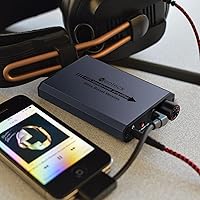
  • Slim enough to pocket or stack with a phone without feeling like extra cargo.
  • Wide 16–300 ohm impedance range covers the vast majority of consumer headphones on the market.
  • Real-world battery life closely tracks the claimed eight hours for most everyday use cases.
  • Compatible with PS4 and PS5 controllers, giving gamers a practical use beyond music listening.
  • Clean distortion specs translate to a quiet, natural-sounding signal for most everyday headphones.
  • Plug-and-play setup requires zero configuration — connect and start listening immediately.

Cons

  • Background hiss is noticeable with sensitive in-ear monitors, especially at higher volume settings.
  • Cannot be used while charging, which rules it out as a reliable fixed-location desktop solution.
  • Bass boost is all-or-nothing — no adjustment level means it can feel excessive on some headphones.
  • Output power falls short for genuinely demanding planar magnetic or high-end 300-ohm headphones.
  • No gain switch makes it harder to balance performance between low-impedance IEMs and power-hungry cans.
  • Volume wheel and buttons on some units develop looseness or wobble after extended daily use.
  • Lacks Bluetooth support entirely, limiting its appeal for users who have moved to wireless-first setups.
  • Advertised output wattage appears inconsistent with the device size, which erodes trust among technical buyers.
  • No mic pass-through or monitoring support, reducing usefulness for gamers in voice-chat situations.

Ratings

The scores below for the Neoteck NTK153 Portable Headphone Amplifier were generated by our AI engine after analyzing verified buyer reviews from global markets, with spam, bot activity, and incentivized submissions actively filtered out. The ratings reflect genuine listener experiences across a wide range of use cases — from daily commutes to desktop gaming setups. Both the strengths that keep buyers coming back and the friction points that temper enthusiasm are represented transparently in every category.

Sound Quality Improvement
83%
Buyers consistently report a meaningful jump in perceived audio clarity and volume when connecting higher-impedance headphones through this amp. For commuters using mid-tier over-ear cans, the difference versus plugging directly into a phone is immediately noticeable, particularly in stereo separation and low-level detail retrieval.
Listeners with reference-grade or critical-listening setups tend to find the improvement more modest than expected. A faint background hiss surfaces at higher gain levels, which is distracting during quiet acoustic or classical tracks where the noise floor matters most.
Bass Boost Performance
76%
24%
The physical toggle switch is a genuine convenience — flipping it on during a commute or workout adds satisfying warmth and body to bass-light headphones without needing any app or EQ adjustment. Users who enjoy bass-forward genres like hip-hop or electronic music find it adds real punch.
The boost is not subtle, and that divides buyers sharply. Audiophiles and fans of neutral-sounding headphones often leave it switched off permanently, finding it muddies the midrange. A multi-level adjustment rather than a simple on/off toggle would suit a wider range of listeners.
Build Quality
79%
21%
The aluminum matte body genuinely punches above its price tier in terms of feel. Most buyers are surprised by how solid it feels in hand compared to plasticky competitors at a similar price, and the finish holds up reasonably well to daily pocket and bag use over several months.
A few users have flagged that buttons and the volume wheel feel slightly loose after extended use, and the 3.5mm jacks on some units develop a subtle wobble over time. It is durable enough for casual daily use but should not be mistaken for a device built to professional standards.
Portability & Form Factor
91%
At under four inches long and weighing less than eight ounces, this headphone amplifier slips into a jeans pocket alongside a phone without bulk or discomfort. Commuters and travelers particularly appreciate how little space it takes up in a bag compared to similarly capable desktop-style units.
The device is slightly thicker than the slimmest competitors in this segment, which some users notice when clipping or stacking it with a phone using a rubber band. It is a minor gripe, but buyers expecting a truly flat profile may want to check dimensions carefully before purchasing.
Battery Life
81%
19%
Real-world battery performance closely matches the claimed eight hours for most buyers, which is enough for a full day of commuting or a long-haul flight without needing to stop and recharge. The Type-C connection means topping it up overnight with an existing phone charger is completely painless.
The manufacturer specifically advises against using the device while it charges, which is a genuine inconvenience for desktop listeners who want continuous playback at a fixed location. Some buyers overlook this advisory and report interference or quality degradation when they ignore it.
Compatibility
88%
Plugging into phones, laptops, tablets, and even PS4 and PS5 controllers all work without adapters thanks to the standard 3.5mm connections on both ends. Gamers in particular appreciate finding a budget amp that noticeably cleans up the often noisy controller headphone output on Sony consoles.
There is no Bluetooth support, which rules this device out for wireless workflows. Users who have already gone wireless with their phones and no longer carry a dongle may find the wired-only setup a step backward rather than an upgrade in day-to-day convenience.
Volume Output Power
67%
33%
For everyday headphones in the 16 to 150 ohm range, the output is more than sufficient to drive them louder and cleaner than a typical smartphone jack. The volume improvement is the single most praised aspect among buyers using mid-range consumer headphones for music and gaming.
The advertised output wattage figure raises eyebrows among technically informed buyers, as it appears inconsistent with the device's physical size and battery capacity. Owners of genuinely demanding planar magnetic or 300-ohm reference headphones report that the amp runs out of headroom noticeably before reaching satisfying listening volumes.
Value for Money
84%
Relative to similarly priced portable amps, this headphone amplifier offers a competitive feature set — bass boost, clean distortion specs, a decent build, and Type-C charging — in a single compact package. For first-time amp buyers, the entry cost feels justified given the audible improvement over unamplified phone output.
Buyers who have owned slightly pricier competitors often note that the step up in output quality and noise floor performance is significant enough to question whether saving a small amount was worth it. As a starter device it earns its price, but it has a fairly clear ceiling.
Ease of Use
93%
There is almost no learning curve. Plug in, adjust the volume wheel, toggle bass if desired — and that is the full operation. Buyers who find dedicated audio gear intimidating consistently highlight how approachable this amp is straight out of the box with zero configuration required.
The absence of any gain switch means users cannot fine-tune the amplification level for very sensitive in-ear monitors versus power-hungry over-ear headphones. That one extra control would meaningfully reduce the background hiss issue that some IEM users encounter at lower volume settings.
Noise Floor & Hiss
61%
39%
Under normal listening conditions with standard consumer headphones, the noise floor is low enough to go unnoticed, and the technical specs — particularly the THD+N figure — reflect a genuinely clean signal path for the price bracket. Most casual listeners will never register a problem.
Sensitive in-ear monitors expose a background hiss that becomes difficult to ignore during quiet passages or between tracks. This is a recurring complaint in user reviews and represents the amp's most consistent technical weakness, particularly for IEM users coming from a quiet source like a dedicated DAC.
Charging & Power Convenience
78%
22%
Switching to USB Type-C is a welcome practical choice — no hunting for a legacy cable, and most buyers already have one on hand. Charge times are reasonable, and the battery indicator, while basic, gives enough warning to avoid being caught short during a long commute.
The no-use-while-charging restriction is a real limitation that some buyers only discover after purchase. It effectively makes the device unsuitable as a permanent desktop solution, and a small number of users report the unit running noticeably warm if the advisory is ignored.
Gaming Audio Performance
74%
26%
Connecting this amp between a PS5 controller and a wired gaming headset delivers a clear volume and clarity boost over the raw controller output, which many gamers find thin and noisy. For casual console gaming sessions, it adds a level of audio presence that makes in-game positional sound more useful.
Dedicated gaming headsets with their own built-in amplification or USB audio processing derive little benefit from this device. It also lacks any surround sound processing or mic monitoring, so competitive gamers looking for those features will need a proper gaming DAC-amp rather than this portable solution.
Aesthetics & Design
82%
18%
The aluminum matte black finish looks clean and understated — it does not scream budget audio gear and pairs visually well with premium headphones. Several buyers mention that it looks more expensive than it is, which matters when using it in a public or professional setting.
The overall form factor is functional but conservative. There is nothing particularly distinctive about the design, and the control layout — volume wheel on one side, bass toggle on the other — feels slightly awkward to adjust one-handed while wearing headphones and walking.

Suitable for:

The Neoteck NTK153 Portable Headphone Amplifier is a practical choice for anyone who owns mid-range to higher-impedance headphones and finds their phone or laptop simply cannot drive them to a satisfying volume. Commuters and frequent travelers will appreciate how easily it slips into a bag without adding meaningful weight or bulk, and the eight-hour battery means it comfortably covers a full day of listening without a recharge mid-journey. It also makes a surprisingly good fit for gamers plugging wired headsets into a PS4 or PS5 controller, where the raw output is often thin and noisy. Budget-conscious listeners who want a tangible upgrade over phone-only playback — without committing to a full desktop DAC and amp setup — will find this headphone amplifier hits a reasonable sweet spot between price, portability, and performance. Anyone who enjoys bass-forward genres and wants a quick, physical way to add warmth without opening an EQ app will also find the toggle switch genuinely useful in daily use.
Not suitable for:

The Neoteck NTK153 Portable Headphone Amplifier has real limitations that make it the wrong tool for certain buyers, and it is worth being direct about them. Serious audiophiles using planar magnetic or high-end 300-ohm reference headphones will likely find it runs out of headroom before reaching the clean, controlled output those cans need — the advertised wattage figures look optimistic for a device this size, and critical listeners will notice. Users of sensitive in-ear monitors should also be cautious, as background hiss at higher gain levels is a documented issue that IEMs tend to expose more than over-ear headphones do. It is strictly a wired device, so anyone who has moved to a Bluetooth-first setup will find the 3.5mm-only workflow a step backward rather than a meaningful upgrade. It also cannot function as a permanent desktop solution in the way a plugged-in DAC-amp can, since the manufacturer advises against using it while charging — a genuine inconvenience for fixed-location listeners. If your priority is transparency, a low noise floor, or driving demanding headphones to their full potential, a slightly higher budget spent on a dedicated DAC-amp combo will serve you far better.
Specifications

  • Impedance Range: Supports headphones rated between 16 and 300 ohms, covering the vast majority of consumer and prosumer headphone models.
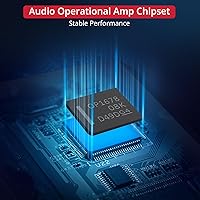
  • Signal-to-Noise Ratio: SNR exceeds 120dB, indicating a very low noise floor relative to the output signal under normal operating conditions.
  • Distortion (THD+N): Total harmonic distortion plus noise is rated at 0.0003%, reflecting a clean signal path with minimal audible coloration.
  • Audio Input: Single 3.5mm AUX input accepts a standard stereo analog signal from phones, laptops, MP3 players, tablets, and gaming controllers.
  • Audio Output: Single 3.5mm AUX output delivers amplified stereo audio to any compatible wired headphone or earphone.
  • Bass Boost: A dedicated hardware toggle switch activates a bass boost circuit, adding low-frequency emphasis without any software or app required.
  • Volume Control: A physical analog volume wheel allows continuous adjustment of output level independent of the source device volume.
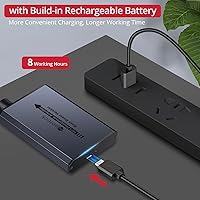
  • Battery Type: Built-in non-removable lithium polymer (LiPo) rechargeable battery powers the device without the need for disposable cells.
  • Battery Life: Rated for up to 8 hours of continuous playback on a full charge under typical listening conditions.
  • Charging Port: USB Type-C charging port accepts standard USB-C cables; the manufacturer advises against simultaneous use during charging.
  • Dimensions: Measures 3.8 x 2.4 x 0.59 inches, making it compact enough to pocket or carry alongside a smartphone.
  • Weight: Weighs 7.8 ounces, which is light enough for all-day carry without adding noticeable burden to a bag or pocket.
  • Body Material: Outer shell is constructed from aluminum with a matte finish, providing structural rigidity and a premium tactile feel.
  • Bluetooth: No Bluetooth functionality is included; the device operates exclusively via wired 3.5mm analog connections.
  • Compatibility: Works with smartphones, laptops, tablets, MP3 players, iPods, portable CD players, and PS4 and PS5 game controllers.
  • Gain Switch: No multi-stage gain switch is included; amplification level is controlled solely through the analog volume wheel.
  • Microphone Support: No microphone pass-through or mic input is provided, limiting use in voice-chat or recording applications.
  • Model Number: Manufacturer model number is NTK153, produced under the Neoteck brand.
  • Power Source: Device is powered entirely by its internal rechargeable battery; no wired power operation mode is supported during playback.

Related Reviews

Neoteck NTK059 Headphone Amplifier
78%
83%
Audio Clarity
88%
Gain Switch Utility
79%
Build Quality
93%
Portability
86%
Battery Life
More
Oneme Portable Headphone Amplifier
85%
88%
Sound Quality
93%
Battery Life
91%
Portability & Weight
85%
Build Quality
87%
Ease of Use
More
LVY A010 Portable Headphone Amplifier
81%
83%
Sound Quality Improvement
91%
Portability & Form Factor
61%
Build Quality & Materials
86%
Gain Switch Effectiveness
88%
Battery Life
More
TNP Products AMP_A1343 Headphone Amplifier
77%
88%
Value for Money
71%
Audio Performance
66%
Build Quality
94%
Ease of Setup
83%
Input Flexibility
More
FiiO KA15
FiiO KA15
84%
93%
Sound Quality
91%
Output Power
82%
Battery Impact & Power Management
74%
EQ & App Experience
78%
Build Quality
More
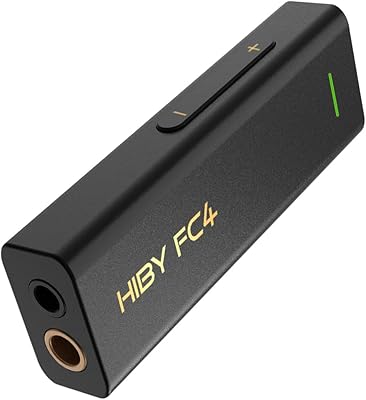
HiBy FC4
HiBy FC4
81%
91%
Sound Quality
93%
Balanced Output Performance
86%
Driving Power
74%
MQA Decoding
89%
Hi-Res Format Support
More
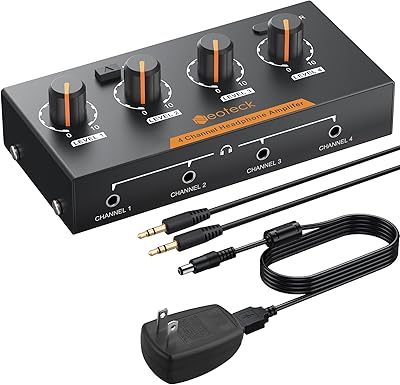
Neoteck NTK190us 4-Channel Stereo Headphone Amplifier
85%
88%
Sound Quality
85%
Build Quality
92%
Ease of Use
90%
Value for Money
89%
Noise Performance
More
Questyle M15C
Questyle M15C
82%
91%
Sound Clarity
93%
Noise Floor
86%
Balanced Output Quality
83%
Build Quality
88%
Portability & Form Factor
More
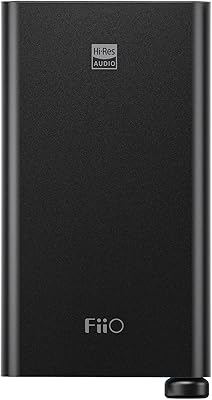
FiiO Q3 MQA Portable DAC Headphone Amplifier
87%
94%
Sound Quality
91%
Battery Life (AUX)
87%
Build Quality
89%
Portability & Size
88%
Compatibility
More
iFi hip-dac2
iFi hip-dac2
81%
91%
Sound Quality
88%
Build Quality
89%
Balanced Output Performance
74%
MQA Decoding
87%
Driving Power
More

FAQ

Yes, noticeably so. High-impedance headphones — particularly those rated above 100 ohms — are frequently underpowered by phone and laptop headphone jacks, resulting in low volume and compressed dynamics. Running them through this portable amp provides a clear step up in loudness and overall presence, though buyers with very demanding planar magnetic cans should temper expectations, as the output has its limits.

The manufacturer explicitly advises against this. Using the Neoteck NTK153 Portable Headphone Amplifier while it is connected to a charger can introduce electrical interference into the audio signal and raises safety considerations related to battery behavior. For desktop listening sessions, it is better to charge it fully beforehand and then unplug before use.
It is more pronounced than subtle — this is not a gentle tilt but a noticeable boost to the low-frequency range. Bass-heavy music genres like hip-hop and electronic respond well to it, but listeners who prefer neutral or balanced sound often leave the toggle off entirely. There is no intermediate setting, so you are either fully boosted or flat.

It will work, but you will need a USB-C to 3.5mm adapter or a Lightning to 3.5mm adapter (depending on your phone) to connect the amp to your device first. The amp itself uses standard 3.5mm connections on both ends, so the adapter bridging is on the source side, not the amp side.

This is a known limitation worth being upfront about. Sensitive IEMs can expose a background hiss, particularly at higher volume settings, which is audible during quiet passages or between tracks. Over-ear headphones with lower sensitivity tend to mask this issue more effectively. If IEMs are your primary listening tool, you may want to factor this in before purchasing.

A full charge typically takes around one to two hours via USB-C, though exact times can vary slightly depending on the charger output you use. The device does not ship with a charging brick, so you will use whatever USB-C adapter you already have on hand.

Yes, and it works well for casual gaming use. Plugging a wired headset into this amp, which then connects to the PS5 controller jack, delivers noticeably more volume and a cleaner signal compared to the raw controller output alone. It does not add surround sound processing or mic monitoring, so competitive gamers with more specific needs may want a dedicated gaming DAC instead.

The matte aluminum finish is reasonably durable for everyday carry, but it will pick up light surface scratches over time if you toss it loosely into a bag with keys or other hard objects. A small pouch or sleeve will keep it looking clean over the long haul. The structural integrity holds up well — it is primarily cosmetic wear to watch for.

At maximum volume, some users notice a slight degradation in signal quality or a marginal increase in noise floor, which is typical behavior for analog volume controls at the extreme end of their range. Listening at around 70 to 85 percent of maximum volume generally produces the cleanest output for most headphone pairings.

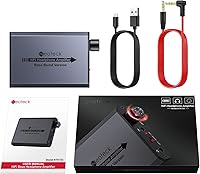
The unit ships with the amplifier itself, a USB-C charging cable, and a short 3.5mm audio cable for connecting to your source device. Documentation including a basic instruction sheet is also included. No carrying case or adapter is included in the standard package.