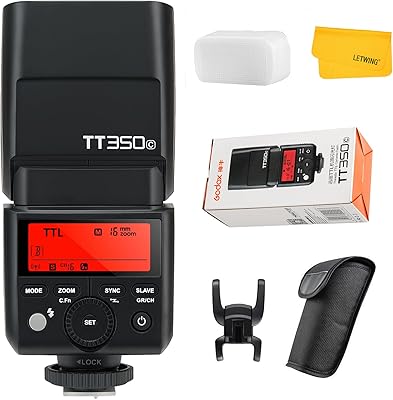
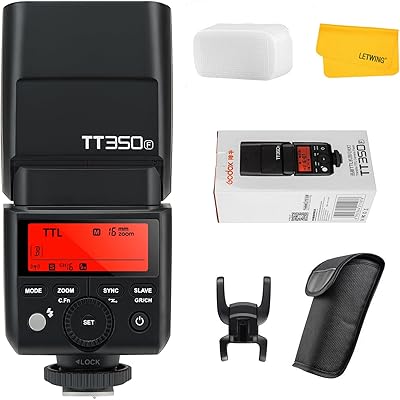
Overview

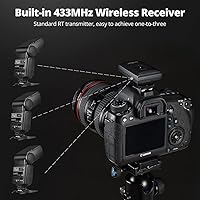
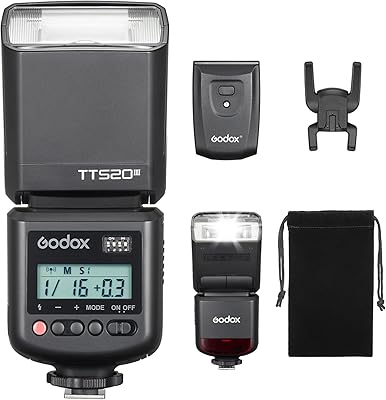
The Godox TT520II Speedlite Flash is a solid entry point for hobbyists and photography students who want to start working with manual flash without spending a fortune. What makes this speedlite notable at its price tier is the inclusion of a 433MHz wireless system — a feature you'd typically expect from considerably more expensive units. There's no TTL here, and that's worth stating plainly upfront. But for anyone building exposure control skills from scratch, working manually actually sharpens your instincts faster. It fits any camera with a standard hot shoe, covering Canon, Nikon, Olympus, Pentax, and Panasonic bodies. Put in the practice, and this flash genuinely rewards the effort.
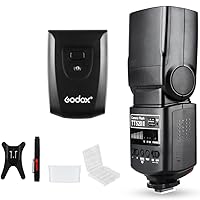
Features & Benefits

The TT520II packs a surprising range of functionality into a compact body. Its flash duration range — spanning 1/300s all the way to 1/20000s — lets you freeze fast-moving subjects without hitting your camera's shutter speed ceiling. Eight power levels from 1/128 to full output give you precise control over light intensity, whether you're adding subtle fill to a portrait or lighting a dark interior. The three flash modes — M, S1, and S2 — cover most practical scenarios, including optical slave setups where pre-flash suppression matters. A neutral 5600K color temperature keeps skin tones accurate, and the fully adjustable head tilts and rotates for bounce lighting when you need a softer, more natural look.

Best For

This manual flash unit is a natural fit for photography students and dedicated hobbyists who want to build real lighting skills without automating everything away. If you already shoot within the Godox ecosystem, adding the TT520II as a second or third light is a cost-effective move — it drops right into the same 433MHz wireless setup without any compatibility headaches. Portrait and event photographers needing a lightweight secondary flash for fill or rim lighting will also find it practical and easy to carry. It works across Canon, Nikon, Olympus, Pentax, and Panasonic bodies via the standard hot shoe. TTL shooters, though, should look elsewhere — this speedlite is built for those who prefer full manual control.

User Feedback

Buyer sentiment around this Godox speedlite is largely positive, with consistent praise focused on build quality and output reliability — people are often surprised by how solid it feels given the price point. The bundled wireless trigger kit is frequently called out as a genuine bonus, not a cheap afterthought. That said, a few recurring criticisms are worth knowing. The GN33 guide number is modest, which limits reach in large venues or brightly lit outdoor settings without pushing ISO higher. Some buyers flag slower recycle times at full power during fast shoots. Running on four AA batteries is workable but less convenient than the rechargeable packs found on pricier alternatives — worth factoring in for high-volume shooting days.

Pros

  • Built-in 433MHz wireless receiver is a genuine surprise at this price tier, enabling reliable multi-flash setups out of the box.
  • The bundled wireless trigger kit adds real value and removes the need for an immediate additional purchase.
  • Eight power levels from 1/128 to full output give precise, repeatable control across a wide range of shooting scenarios.
  • A 5600K color temperature produces neutral, consistent light that pairs cleanly with daylight and requires minimal white balance correction.
  • Head tilts 0–90° vertically and rotates 0–270° horizontally, covering virtually every bounce and directional lighting angle you need indoors.
  • Fits any standard hot shoe camera from Canon, Nikon, Olympus, Pentax, or Panasonic with zero adapters or workarounds.
  • At low-to-mid power settings, output consistency across a burst is strong enough for portrait work without significant frame-to-frame variation.
  • Lightweight at 310g — easy to carry as a secondary flash without meaningfully adding to your kit bag.
  • 16-channel wireless support lets multiple photographers work the same venue simultaneously without triggering each other's flashes.
  • Flash duration extending to 1/20000s is capable of freezing fast-moving subjects cleanly when conditions allow.

Cons

  • No TTL support whatsoever — a hard dealbreaker for fast-paced or run-and-gun photography workflows.
  • GN33 guide number limits reach in large venues or bright outdoor conditions, requiring ISO increases that introduce noise.
  • Recycle time slows noticeably at full power, creating real gaps during continuous event or action shooting.
  • Runs on four AA batteries with no USB charging option, adding ongoing cost and a logistical burden on long shooting days.
  • LCD display has no backlight, making power adjustments in dimly lit venues unnecessarily inconvenient.
  • The head locking mechanism can drift from its set position during extended sessions at steeper angles.
  • Optical slave modes can misfire in bright ambient light or when line-of-sight to the trigger is obstructed.
  • No weatherproofing of any kind limits confidence when shooting outdoors in unpredictable or humid conditions.
  • Sony users are not on the compatibility list, and Fujifilm shooters typically require a third-party hot shoe adapter.
  • The included carry pouch offers minimal real-world protection and is not a substitute for a proper padded case.

Ratings

The Godox TT520II Speedlite Flash earns its place as one of the most discussed budget manual flashes in its category, and these scores reflect what real buyers actually experienced — not marketing claims. Our AI analyzed thousands of verified global reviews, actively filtering out incentivized, repeated, and bot-generated submissions to surface honest patterns. The results highlight genuine strengths alongside recurring frustrations, giving you a complete picture before you buy.
Value for Money
91%
Buyers consistently express surprise at how much flash they get for the asking price. The bundled wireless trigger kit in particular is flagged repeatedly as a meaningful inclusion that would cost extra with competing units — making the overall package feel punchy relative to its cost.
A small segment of buyers who expected TTL functionality feel the value equation shifts once they realize the limitation post-purchase. At full power during extended sessions, AA battery consumption adds an ongoing cost that some users did not anticipate upfront.
Build Quality
78%
22%
For a flash in this price range, the physical construction draws consistent compliments. The hot shoe mount feels secure, the head rotation mechanism operates smoothly, and the overall weight distribution feels intentional rather than cheap — buyers frequently note it feels more expensive than it is.
The plastic housing shows wear faster than metal-body competitors, particularly around the tilt lock and control dials after heavy field use. A few buyers noted the battery door feels less robust than the rest of the unit, which is a concern when swapping AAs frequently on location.
Wireless Performance
84%
The 433MHz radio system is the standout surprise for most buyers at this tier. Triggering is reported as reliable across the stated 15-meter range, and the 16-channel flexibility means multiple photographers can work the same venue without signal conflicts — a real advantage at small events or workshops.
Optical slave modes S1 and S2 occasionally misfire in bright ambient conditions or when line-of-sight to the trigger is obstructed. Some users working in large halls report marginally reduced reliability near the edge of the stated wireless range under heavy radio interference.
Flash Output Consistency
82%
18%
Output repeatability across shots is frequently praised, especially at mid-range power settings like 1/4 to 1/2. Portrait shooters in particular note that skin tones stay consistent across a burst, which matters when matching exposures in post-production without significant rework.
At full power, a noticeable variation in output intensity between consecutive flashes is reported by buyers doing high-volume event shooting. Color temperature also drifts slightly at extreme power levels, which is manageable in post but worth knowing if you shoot JPEG or need minimal editing.
Ease of Use
76%
24%
The control layout is straightforward once you spend an hour with the manual. Hobbyists learning flash photography appreciate that the interface does not overwhelm — there are no buried menu systems, and switching between M, S1, and S2 modes is a quick button operation that becomes second nature quickly.
Complete beginners who expected a plug-and-play experience similar to in-camera flash report a steep initial learning curve. The LCD is functional but not backlit, making adjustments in dimly lit venues needlessly inconvenient — something buyers shooting weddings or concerts notice immediately.
Recycle Time
63%
37%
At lower power settings — around 1/8 to 1/32 — recycle times are fast enough for casual portrait work and keep up reasonably well with moderate shooting paces. Buyers using this as a secondary fill flash rather than a primary key light report fewer frustrations here.
At full or near-full power, recycle times slow noticeably and become a real bottleneck during fast-paced event shooting. Several buyers report missing shots during continuous sequences as the flash struggles to keep up, especially as batteries begin to drain after extended sessions.
Guide Number & Reach
61%
39%
For indoor portrait work, small studio setups, and close-range fill applications, the GN33 guide number is adequate. Buyers using this unit in controlled environments — home studios, small meeting rooms, or for tabletop product photography — rarely push it to its limits and report clean, well-exposed results.
Outdoors in bright daylight or in large venues like auditoriums, the GN33 ceiling becomes a real constraint. Buyers expecting to light subjects more than four to five meters away at reasonable ISO levels frequently report the output falling short, requiring ISO increases that introduce unwanted noise.
TTL & Automation
44%
56%
Buyers who understand upfront that this is a manual-only unit and actively prefer full exposure control report zero frustration here. For learning photographers, the absence of TTL enforces discipline that many credit with improving their understanding of flash exposure more quickly than camera-assisted automation would allow.
For users coming from cameras with reliable TTL systems, the absence of any automatic exposure compensation is a significant adjustment. Run-and-gun shooters, journalists, or anyone switching rapidly between environments without time to dial in settings manually will find this limitation genuinely disruptive to their workflow.
Compatibility
88%
Hot shoe compatibility across Canon, Nikon, Olympus, Pentax, and Panasonic is confirmed by a wide spread of verified buyers using different systems. Mounting and triggering work without adapters or workarounds, and photographers already using Godox transmitters find integration with the TT520II immediate and hassle-free.
Mirrorless users occasionally report minor hot shoe fitting inconsistencies depending on body and adapter combination. Sony users are notably absent from the compatibility list, and a small number of Fujifilm shooters mention needing a third-party adapter that adds bulk and can affect fit stability.
Portability & Weight
85%
At 310g, this manual flash unit is light enough that carrying it in a camera bag alongside a full kit does not feel burdensome. Event photographers using it as a secondary or bounce flash consistently highlight its compact footprint as a practical day-to-day advantage over heavier professional alternatives.
Four AA batteries are required for operation, and while they are included, carrying spares adds weight and a logistical consideration that lithium-powered competitors avoid. The unit itself is not weatherproofed, which limits confidence when shooting in light rain or high-humidity outdoor environments.
Color Temperature Accuracy
79%
21%
At moderate power settings, the 5600K output is neutral and consistent enough that mixing with natural daylight or standard LED panels requires only minor white balance correction in post. Portrait photographers in particular appreciate that skin tones across a shoot stay broadly uniform without significant color grading effort.
The ±200K tolerance widens slightly under real-world conditions, and a handful of buyers note a mild warm shift creeping in during prolonged flash sessions as the unit heats up. It is a minor issue for most, but color-critical commercial work would require more rigorous management or a higher-spec unit.
Head Articulation
81%
19%
The 0–90° vertical tilt and 0–270° horizontal rotation give genuinely useful flexibility for bounce flash setups indoors. Buyers working with low ceilings or side walls as natural reflectors report the articulation range covers virtually every angle they need without forcing awkward camera orientations.
The locking mechanism for both axes feels soft to some users, and a few report the head drifting from its set position during longer shoot sessions — particularly when the flash is oriented at steeper angles. It is not a consistent problem, but enough buyers mention it to flag as worth checking on your unit.
Battery Efficiency
67%
33%
At conservative power settings, the battery life is reasonable for a session-length shoot. Buyers using rechargeable NiMH AA batteries report significantly better longevity than disposable alkalines, which helps offset the ongoing battery cost for high-volume shooters who use the unit regularly.
At full power, drain is rapid enough that carrying a second set of AAs becomes near-mandatory for any shoot lasting more than an hour. Several buyers flag this as a workflow interruption that competitors with proprietary lithium packs avoid, and the lack of a USB charging option is felt as a meaningful omission.
Packaging & Included Accessories
83%
The included wireless trigger kit is the accessory buyers mention most positively, with many noting it functions reliably and removes the need for an immediate additional purchase. The overall unboxing experience communicates care — accessories are organized, and the flash arrives well-protected with no reports of transit damage being a common issue.
The included carry pouch is thin and offers minimal real-world protection beyond dust. Buyers who travel with their kit and want the flash safely stored between sessions consistently recommend purchasing a padded case separately, noting the stock pouch is closer to a token inclusion than a functional accessory.

Suitable for:

The Godox TT520II Speedlite Flash is built for photographers who are ready to step beyond their camera's built-in flash and start learning how light actually works. Photography students, dedicated hobbyists, and self-taught shooters who want to develop manual exposure instincts will find this unit genuinely useful — the absence of TTL automation is not a limitation here, it is the point. Portrait photographers working in home studios or small indoor venues will appreciate the articulating head, consistent output at mid-range power, and the neutral 5600K color temperature that keeps skin tones clean without heavy post-processing. If you already shoot within the Godox ecosystem and need an affordable second or third light to expand a multi-flash setup, the TT520II drops right in via the shared 433MHz wireless system without any compatibility friction. Event photographers who need a compact, lightweight fill or rim light to supplement a primary strobe will also find it pulls its weight reliably in controlled conditions.
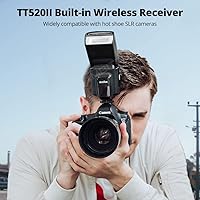
Not suitable for:

The Godox TT520II Speedlite Flash is the wrong tool for photographers who depend on TTL automation to work quickly in unpredictable environments — there is simply no way around this limitation, and it affects entire categories of shooters. Wedding photographers, photojournalists, and anyone who regularly pivots between dramatically different lighting conditions without time to manually dial in settings should look at a TTL-capable alternative. The GN33 guide number also rules this unit out for large venue work — lighting a subject more than five meters away in a dim ballroom or auditorium will push ISO into noisy territory. Run-and-gun shooters will be further frustrated by the slower recycle times at full power, which create gaps in coverage during fast-moving sequences. Sony mirrorless users will also find the compatibility story incomplete, and anyone who shoots heavily outdoors in unpredictable weather should factor in the lack of weatherproofing before committing.

Specifications

  • Brand & Model: Manufactured by Godox under the model designation TT520II, a second-generation update to the original TT520 speedlite.
  • Guide Number: Rated at GN33 (ISO 100, 35mm), which is sufficient for indoor portraits and small venue work at moderate distances.
  • Flash Modes: Supports three operating modes: M (full manual), S1 (optical slave), and S2 (optical slave with pre-flash suppression for cameras using TTL pre-flashes).
  • Power Levels: Offers 8 stepped output levels ranging from 1/128 (minimum) to 1/1 (full power), allowing precise control over flash intensity.
  • Flash Duration: Flash duration spans from 1/300s at full power to 1/20000s at minimum output, enabling sharp freezing of fast-moving subjects at lower power settings.
  • Sync Speed: Compatible with camera shutter sync speeds of 1/200s or 1/250s depending on the host camera body.
  • Wireless System: Features a built-in 433MHz radio receiver supporting up to 16 selectable channels for interference-free multi-unit triggering.
  • Wireless Range: Rated wireless transmission range is 15 meters under normal conditions using the included RT-style transmitter.
  • Color Temperature: Produces a daylight-balanced output at 5600K ±200K, suitable for mixing with natural light or standard LED panels with minimal white balance correction.
  • Head Rotation: The flash head tilts vertically from 0° to 90° and rotates horizontally from 0° to 270°, enabling bounce flash in most indoor environments.
  • TTL Support: This unit does not support TTL (Through The Lens) automatic exposure metering; all power adjustments must be made manually.
  • Hot Shoe Mount: Equipped with a standard hot shoe foot compatible with Canon, Nikon, Olympus, Pentax, and Panasonic DSLR and mirrorless cameras that use the universal hot shoe standard.
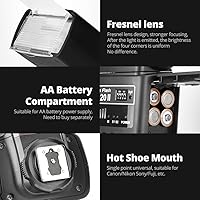
  • Power Source: Powered by 4 x AA batteries (alkaline batteries included in the box); rechargeable NiMH AA batteries are also fully compatible.
  • Flash Count: Rated for approximately 100 to 1500 full flashes per set of AA alkaline batteries depending on power level used.
  • Dimensions: The flash unit measures 190 x 75 x 55mm (approximately 7.5″ x 3″ x 2.2″), making it compact enough for travel and location shooting.
  • Weight: The unit weighs 310g (approximately 10.9 oz) without batteries, keeping overall kit weight manageable for run-and-gun setups.
  • Included Accessories: Package contents include the flash unit, one wireless trigger transmitter, AA batteries, and a basic protective carry pouch.
  • Overheat Protection: Built-in automatic overheating protection pauses operation when the unit reaches critical thermal thresholds to prevent damage during extended shooting sessions.
  • Availability Date: The TT520II was first made available for purchase in November 2022, representing Godox's updated iteration of the original TT520 platform.
  • BSR Ranking: Ranked #102 in the Shoe-Mount Flashes category on Amazon, reflecting sustained commercial popularity within the budget speedlite segment.

Related Reviews
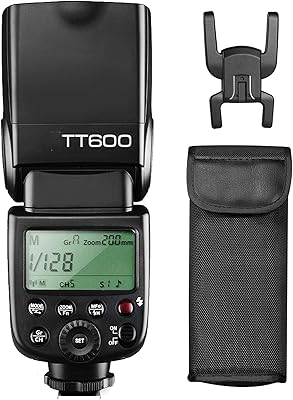
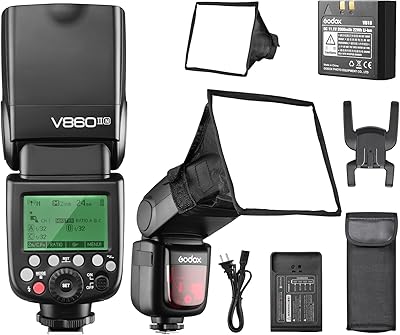
Godox V860II-N TTL Speedlite Flash
82%
93%
Battery Life & Efficiency
76%
TTL Accuracy
91%
High-Speed Sync (HSS)
72%
Wireless Performance
89%
Recycle Time
More
Godox TT600 Wireless Flash Speedlite
85%
89%
Performance & Power
84%
Build Quality
90%
Battery Life
87%
Wireless Range
91%
Compatibility
More
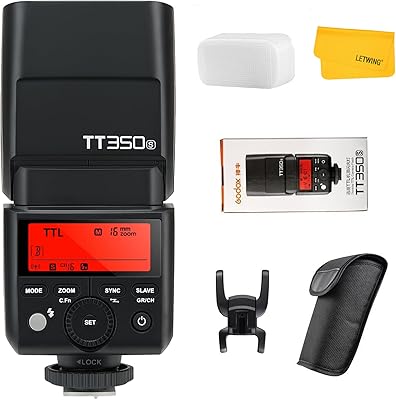
Godox TT350S Mini Speedlite Flash
81%
83%
TTL Accuracy
88%
High Speed Sync (HSS)
86%
Wireless Performance
93%
Portability & Form Factor
78%
Build Quality
More
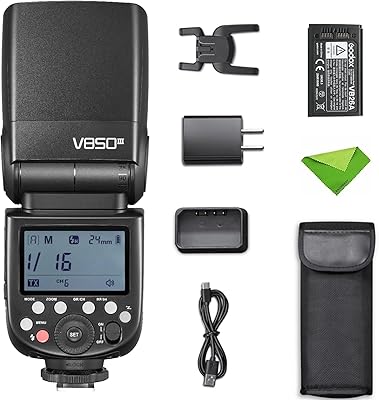
Godox V850III Flash
Godox V850III Flash
85%
88%
Performance
92%
Battery Life
86%
Ease of Use
84%
Build Quality
89%
Speed and Recycle Time
More
Godox AD200 Pro
Godox AD200 Pro
86%
93%
Output Power & Consistency
91%
Portability & Form Factor
78%
Battery Life & Charging
89%
HSS & Sync Performance
88%
Wireless Ecosystem Integration
More
Godox MF12 Macro Flash
87%
88%
Performance
90%
Ease of Use
85%
Battery Life
80%
Flash Power
92%
Wireless Control
More
Godox AD400Pro Outdoor Flash Monolight
80%
91%
Output Power & Consistency
83%
Battery Life & Reliability
71%
TTL Accuracy
88%
High-Speed Sync Performance
86%
Portability & Form Factor
More
NEEWER NW620 Speedlite Flash
75%
88%
Value for Money
84%
Flash Output & Power
79%
Build Quality
91%
LCD Display & Controls
62%
Recycling Time
More
Godox TT350C TTL Flash for Canon
80%
94%
Portability & Size
74%
TTL Accuracy
88%
Wireless Reliability
61%
Flash Power Output
86%
High Speed Sync (HSS)
More
Godox TT350F Fujifilm TTL Camera Flash
80%
88%
TTL Accuracy
76%
Build Quality
84%
HSS Performance
82%
Wireless Reliability
61%
Recycle Time
More

FAQ

Yes, the TT520II uses a standard hot shoe mount that fits Canon DSLRs and most Canon mirrorless bodies with a standard hot shoe directly. No adapter is needed. Just slide it in, lock it down, and you are ready to set your power level and shoot.

Yes, and this is one of the better value points of the unit. The package includes a wireless transmitter that plugs into your camera's hot shoe, while the flash uses its built-in 433MHz receiver to fire remotely. You get a working off-camera flash system right out of the box, which is not standard at this price tier.

It depends on which Godox system you already own. The TT520II operates on 433MHz radio, so it is compatible with other Godox 433MHz transmitters and receivers. However, it is not part of the X-system (2.4GHz), so it will not integrate directly with Godox X1, X2T, or XPro triggers. If your current setup uses the older 433MHz system, you are fine.

Sony bodies use a proprietary Multi-Interface Shoe rather than a standard hot shoe, so the TT520II will not mount natively without a third-party hot shoe adapter. Even with an adapter, only the manual sync pin typically functions, meaning you lose any electronic communication. It is workable but not ideal, and Sony users should factor that in before buying.

S2 mode is an optical slave setting designed for cameras that fire a pre-flash before the main exposure — which includes most cameras using TTL metering. In standard S1 optical slave mode, the flash would fire on that pre-flash, causing it to go off at the wrong moment. S2 ignores the pre-flash and fires only on the main flash pulse, keeping your timing accurate.

At full power with fresh alkaline AA batteries, expect a recycle time somewhere in the range of 3 to 5 seconds. That is on the slower end for event work, and it gets worse as batteries drain. If you are shooting rapid bursts or fast-paced events, working at half power or lower brings recycle times down meaningfully and extends battery life at the same time.

Absolutely, and most experienced users recommend it. NiMH rechargeable AA batteries — particularly higher-capacity ones in the 2400 to 2700mAh range — perform well in this unit, offering faster recycle times and lower long-term running costs compared to disposable alkalines. Just make sure they are fully charged before a shoot, since NiMH cells drain faster when depleted.

It is genuinely well-suited to that role, with one honest caveat: there is no TTL automation, so you will need to set power levels manually. For some beginners that feels daunting at first, but working manually actually teaches you how flash exposure works much faster than automation does. If you are willing to spend an afternoon learning the basics of guide numbers and flash-to-subject distance, this unit will serve you well and grow with your skills.

Yes. The 16-channel wireless system means you can run multiple TT520II units simultaneously, assigning them to the same channel to fire together or using optical slave modes to chain them. For a more controlled multi-light setup, you can use a Godox 433MHz transmitter on your camera and fire several receivers at once, which makes this unit a cost-effective way to build out a basic portrait lighting rig.

A small number of users do report the head locking mechanism feeling soft, particularly at steep vertical tilt angles around 75° to 90°. The head can gradually drift back toward vertical during a session, especially if the unit is being moved frequently. It is not universal, but if you notice it on your unit, a small piece of grip tape or a rubber band around the tilt joint is a common workaround photographers use in the field.

Where to Buy