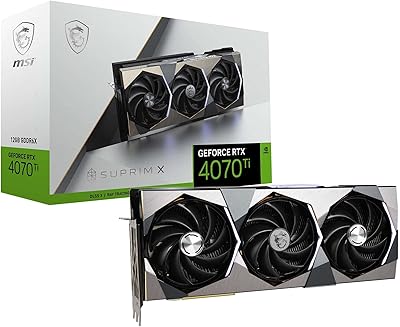
Overview

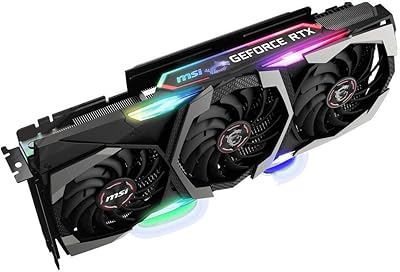
The MSI RTX 4070 Gaming X Trio GPU sits in an interesting spot in the RTX 4070 lineup — it's not the cheapest way to get on the Ada Lovelace train, but it's meaningfully better equipped than a reference-clocked board. Ada Lovelace brings genuine improvements: better ray tracing throughput, DLSS 3 with Frame Generation, and real efficiency gains over Ampere. The card itself is a substantial triple-slot build, heavy enough to feel premium without being unwieldy. Whether the price premium over budget AIB options is justified depends on how much you value thermals and noise — and in this case, the answer leans yes.

Features & Benefits

The TORX Fan 4.0 cooling is where this card really distinguishes itself — under extended gaming sessions, it stays noticeably quieter than most mid-range boards at full load, which is hard to appreciate until you've sat next to a cheaper card screaming through a long session. The factory overclock pushes the boost clock to 2625 MHz, and while you won't feel every extra megahertz, the headroom translates to marginally better frame pacing in demanding titles. The 12GB of GDDR6X is well-suited to 1440p, where texture-heavy games don't hit a VRAM ceiling, though 4K ultra settings will stretch it. Four display outputs — including HDMI 2.1 — round out a versatile package, and DLSS 3 Frame Generation makes a real difference in supported titles.

Best For

This triple-fan RTX 4070 is an easy recommendation for 1440p high-refresh gaming — that's the resolution where it consistently delivers strong frame rates without needing to compromise on settings. Gamers coming from a GTX 1070, 1080, or even an RTX 2080 will feel a tangible jump in both raw performance and efficiency. It's also a reasonable pick for light content creation: 12GB of VRAM gives you room to work with 4K timelines or moderate 3D scenes without constant memory warnings. If you're building in a mid-tower or larger case and care about running things quietly, the Gaming X Trio fits that brief well. Ray tracing at 1440p is genuinely playable too, especially with DLSS 3 handling the heavier lifting.

User Feedback

With a 4.6-star rating across over 140 verified purchases, MSI's overclocked RTX 4070 earns its reputation mostly through consistent thermal performance and build quality. Buyers repeatedly mention how cool and quiet the card runs even during long sessions — and the packaging draws praise for feeling appropriate to the price point. On the critical side, a handful of owners flag the card's 14.5-inch length as a tight fit in smaller cases, so measure twice before ordering. A few buyers also question whether the premium over a base RTX 4070 is worth it compared to the RTX 4070 Super, which has entered the market at a competitive price. Isolated DOA reports exist but appear to be outliers rather than a pattern.

Pros

  • Triple-fan TORX cooling keeps temperatures low and noise levels impressively controlled during long gaming sessions.
  • Factory overclock to 2625 MHz delivers real-world frame rate benefits without any manual tuning required.
  • 12GB of GDDR6X provides comfortable headroom for 1440p gaming and light 4K content creation workflows.
  • DLSS 3 and Frame Generation support meaningfully extend playable performance in a growing library of titles.
  • Four versatile display outputs — including HDMI 2.1 — make multi-monitor and high-resolution display setups straightforward.
  • Power efficiency is noticeably better than previous-generation Ampere cards at comparable performance levels.
  • Build quality feels premium out of the box, with solid construction and packaging that matches the price tier.
  • Rated 4.6 out of 5 stars across over 140 buyers, with consistent praise for stability and out-of-box reliability.
  • Ada Lovelace architecture brings hardware ray tracing improvements that make demanding lighting effects more viable at 1440p.

Cons

  • At nearly 14.6 inches long, the card will not fit many compact or smaller mATX cases without modification.
  • The price premium over base RTX 4070 AIB options is hard to justify if thermals and acoustics are not priorities.
  • Native 4K at ultra settings in demanding titles pushes the card to its limits — DLSS assist is often necessary.
  • The RTX 4070 Super offers a wider memory bus and competitive performance at a price that overlaps with this card.
  • AMD's RX 7800 XT delivers comparable rasterization performance at a lower price point for buyers not invested in DLSS.
  • At 2.67 pounds, the card is heavy enough that motherboard sag support is worth factoring into your build plan.
  • The factory overclock leaves limited headroom for enthusiasts who want to push manual overclocking further.
  • A small number of buyers reported DOA units, suggesting quality control is not entirely without exceptions.

Ratings

The scores below for the MSI RTX 4070 Gaming X Trio GPU were generated by our AI after analyzing verified purchase reviews from buyers worldwide, with spam, incentivized, and bot-flagged submissions actively filtered out before scoring. Each category reflects the honest distribution of real user sentiment — strengths are credited where earned, and genuine pain points are not smoothed over. The result is a transparent, category-by-category breakdown that gives you a realistic picture of what owning this card actually feels like.

1440p Gaming Performance
92%
Buyers consistently report that the Gaming X Trio handles 1440p gaming with authority — modern titles like Cyberpunk 2077 and Alan Wake 2 run smoothly at high settings without needing aggressive quality compromises. The factory overclock adds a tangible buffer that keeps frame rates stable even during GPU-intensive set pieces.
A small segment of buyers running very CPU-limited systems found that the GPU's capability occasionally goes underutilized, masking its true ceiling. The gains over a stock-clocked RTX 4070 are real but not dramatic enough to notice in every title.
Thermal Performance
93%
Under sustained load in warm room conditions, this triple-fan RTX 4070 consistently keeps junction temperatures well within comfortable ranges — buyers running hour-long gaming sessions report GPU temps that most single or dual-fan cards would struggle to match. The thermal headroom also means the card rarely needs to throttle to protect itself.
The card does exhaust a meaningful amount of warm air inside the chassis rather than venting it out the rear bracket, which can raise overall case temperatures slightly in poorly ventilated builds. Buyers with compact airflow setups noted this more than those running mesh-front cases.
Noise Levels
91%
Acoustic comfort is one of the most praised aspects across buyer feedback — the TORX Fan 4.0 system stays remarkably quiet during casual and mid-intensity gaming, and even under heavy load it stays well below the intrusive threshold that cheaper blower-style or single-fan cards hit. Multiple buyers switching from older cards specifically highlighted how much quieter their system became.
At truly maximum load — sustained stress tests or extended GPU-compute tasks — the fans do ramp up audibly, which some open-desk users found slightly noticeable in quiet rooms. This is a minor point and not representative of typical gaming use.
Build Quality
89%
The physical construction of the Gaming X Trio consistently draws compliments from buyers who have handled multiple GPU generations — the shroud feels rigid, the backplate adds structural integrity, and nothing rattles or flexes unexpectedly. For a card at this price point, the fit and finish sets a standard that cheaper AIB options clearly do not match.
The card's weight of 2.67 pounds puts real stress on PCIe slots over time, and buyers without a GPU support bracket in place have flagged visible motherboard sag after extended use. MSI does not include a bracket in the box, which feels like an oversight at this price.
Value for Money
71%
29%
Buyers who specifically need the combination of strong 1440p performance, premium cooling, and quiet operation tend to feel the Gaming X Trio justifies its cost. The factory overclock, build quality, and noise levels together represent a real package upgrade over bargain AIB options, and the 4.6-star satisfaction score reflects that most buyers feel they got what they paid for.
The RTX 4070 Super's arrival in the market at an overlapping price point has made the value calculation noticeably harder — buyers comparing the two find it difficult to choose the standard RTX 4070, even in a premium MSI trim. Those who are price-sensitive and willing to tolerate more noise can find RTX 4070 cards with nearly identical gaming performance for meaningfully less money.
4K Gaming Capability
67%
33%
The Gaming X Trio can drive 4K gaming in a number of titles, particularly older or well-optimized games, and DLSS Quality mode makes 4K output genuinely playable in a much wider range of scenarios. Buyers using it on 4K displays for lighter workloads or less demanding titles reported satisfactory results.
Native 4K at maximum settings in modern, graphically demanding games regularly exposes the limits of the 192-bit memory bus, and buyers who purchased this card primarily for 4K gaming found themselves leaning on DLSS more heavily than anticipated. Those expecting a native 4K experience without image reconstruction assistance will likely be disappointed.
Ray Tracing Performance
78%
22%
At 1440p with DLSS active, ray tracing in titles like Returnal or Dying Light 2 is a practical and visually rewarding experience — Ada Lovelace's improved RT cores make a noticeable difference over what RTX 20-series buyers were used to. Buyers specifically upgrading for better ray tracing reported genuine satisfaction with the results.
Ray tracing without DLSS assist at 1440p can push frame rates low enough to feel choppy in the most demanding titles, limiting the card's RT appeal for buyers who prefer native rendering. At 4K with ray tracing enabled, performance drops to levels most buyers would find unacceptable for regular play.
DLSS 3 & Frame Generation
88%
In titles that support DLSS 3 and Frame Generation — a list that has grown considerably — buyers report that the feature genuinely transforms the experience, pushing frame counts well beyond what the hardware alone could achieve. For 1440p gamers at high refresh rates, this is a practical advantage that AMD cards in the same price bracket cannot replicate.
Frame Generation introduces a small amount of latency that competitive or reflex-dependent gamers can occasionally perceive, and the feature is only available in a subset of titles. Buyers who primarily play unsupported games see no benefit from this differentiator.
Physical Fit & Size
63%
37%
For buyers with mid-tower or full-tower cases, the card slots in without drama — its length is within the supported range of most mainstream cases, and installation is straightforward. Buyers with roomy builds reported a clean, confident fit with no clearance surprises.
At 14.56 inches, this is a genuinely large card, and a recurring complaint from buyers involves discovering after purchase that it does not fit their specific case without physical modification or component removal. The product listing does not prominently warn buyers about this, and several reviews mention frustration around the sizing mismatch.
Display Output Versatility
87%
The combination of three DisplayPort 1.4a outputs and one HDMI 2.1 port covers virtually every monitor or display scenario a buyer is likely to encounter — multi-monitor setups, high-refresh-rate displays, and modern TVs are all well served. HDMI 2.1 in particular is valued by buyers who run a gaming monitor alongside a living room screen.
There is no USB-C or Thunderbolt output, which limits compatibility with certain ultrawide and high-end creative displays that require it. This is unlikely to affect most gamers but is worth noting for creative professionals.
Power Efficiency
84%
Buyers upgrading from RTX 20-series or GTX 10-series cards consistently note that MSI's overclocked RTX 4070 delivers significantly more performance per watt than what they were used to, and several mention that their system runs cooler overall as a result. Ada Lovelace's efficiency improvements translate to real electricity and heat savings over time.
The factory overclock does push power draw slightly above the reference RTX 4070 spec, which buyers running modest 650W power supplies should keep in mind. It is not a power-hungry card by modern standards, but the headroom it demands is real.
Out-of-Box Experience
86%
Buyers frequently praise the packaging as appropriate for the price — the card arrives well protected and feels premium before it is even installed. Most users report a completely smooth first boot with no driver hiccups or configuration surprises.
A small but consistent number of buyers reported receiving DOA units, which — while not statistically alarming given the rating volume — suggests quality control is not entirely without gaps. The absence of any GPU support bracket or installation accessory in the box is a recurring minor complaint.
Content Creation Suitability
76%
24%
For buyers doing light-to-moderate creative work — 4K video editing in DaVinci Resolve, moderate 3D scenes in Blender, or photo culling workflows — the 12GB of GDDR6X provides comfortable working headroom that prevents the memory errors and slowdowns common with 8GB cards. Buyers who split time between gaming and creative tasks find it a practical dual-purpose card.
Buyers attempting heavier AI-assisted workloads, high-poly simulation, or multi-stream video processing reported hitting the 12GB VRAM ceiling faster than expected. The 192-bit bus also limits memory bandwidth compared to workstation-oriented alternatives, making this a competent but not specialized creative tool.
Driver & Software Stability
83%
The overwhelming majority of buyers report stable, crash-free operation across a wide range of titles and system configurations — long gaming sessions, driver updates, and productivity use all proceed without notable issues for most users. MSI's Afterburner software works reliably with the card for those who want to monitor or adjust performance manually.
A handful of buyers encountered initial driver conflicts when upgrading from older NVIDIA generations without performing a clean driver installation first — a known issue not specific to this card but worth flagging for first-time NVIDIA upgraders. Isolated reports of instability in specific titles appear in the reviews but do not represent a systemic pattern.

Suitable for:

The MSI RTX 4070 Gaming X Trio GPU is the right card for PC builders who want a strong 1440p experience without spending flagship money. If you game at 1440p on a high-refresh monitor — 144Hz or higher — this card handles modern titles with headroom to spare, and DLSS 3 with Frame Generation pushes frame rates even further in supported games. Upgraders coming from GTX 10-series or RTX 20-series cards will feel the generational jump immediately, both in raw performance and in how much quieter and cooler the system runs. Light content creators who occasionally work with 4K video timelines or moderate 3D scenes will also appreciate the 12GB of VRAM, which prevents the bottlenecks that smaller buffers cause during rendering or export. Anyone building in a full-size or mid-tower case who wants a card that runs cool under sustained load without turning the PC into a wind tunnel will find the triple-fan cooling genuinely impressive in daily use.

Not suitable for:

Buyers expecting a true 4K Ultra gaming card without compromise should look elsewhere — the Gaming X Trio handles 4K, but you will need to lean on DLSS or dial back settings in demanding titles to maintain smooth frame rates, which may frustrate those who want native 4K at max settings. If your case is a compact mini-ITX or a tighter mATX chassis, the nearly 14.6-inch card length is a real physical obstacle, and fitting it may require removing drive cages or other components. Budget-conscious shoppers comparing AIB RTX 4070 options will find cheaper boards that perform nearly as well at stock speeds, making the premium harder to justify unless thermals and noise are a priority. The RTX 4070 Super has also entered the market at a competitive price point with a wider memory bus, so buyers open to spending a little more should weigh that option seriously before committing. Finally, professional workstation users running GPU-compute tasks that require large VRAM — think AI model inference or high-poly 3D scene rendering — will hit the 12GB ceiling faster than they might expect.

Specifications

  • GPU Chip: Built on the NVIDIA GeForce RTX 4070 chip using the Ada Lovelace architecture, which brings improved ray tracing cores and DLSS 3 support over the previous Ampere generation.
  • VRAM: Equipped with 12GB of GDDR6X memory, providing ample headroom for 1440p gaming and light creative workloads such as video editing and 3D rendering.
  • Memory Interface: Uses a 192-bit memory bus, which delivers sufficient bandwidth for smooth 1440p performance while showing some constraints at native 4K ultra settings.
  • Boost Clock: Factory overclocked to a 2625 MHz boost clock, running higher than the reference RTX 4070 spec out of the box without requiring manual tuning.
  • Memory Speed: The GDDR6X memory operates at an effective speed of 1920 MHz, contributing to responsive texture streaming in demanding game environments.
  • Display Outputs: Offers three DisplayPort 1.4a ports and one HDMI 2.1 port, supporting up to four simultaneous displays and resolutions as high as 7680x4320.
  • Cooling System: Uses MSI's TORX Fan 4.0 triple-fan array, which keeps temperatures stable under sustained gaming loads while running noticeably quieter than many competing cards in this class.
  • Card Length: Measures 14.56 inches in length, making it one of the longer cards in its tier and requiring a mid-tower or larger case for comfortable installation.
  • Card Width: Spans 5.51 inches in width and occupies three expansion slots, so builders should verify slot clearance on their motherboard before purchasing.
  • Card Weight: Weighs 2.67 pounds, which is substantial enough that using a GPU support bracket is recommended to prevent motherboard sag over time.
  • DLSS Support: Supports DLSS 3 including Frame Generation, which can significantly increase frame rates in compatible titles by generating additional frames using AI.
  • NvLink: NvLink is supported, though multi-GPU configurations are only viable in specific professional or compute applications, not standard consumer gaming.
  • Architecture: Built on NVIDIA's Ada Lovelace architecture, which offers better performance-per-watt and improved hardware ray tracing efficiency compared to RTX 30-series Ampere cards.
  • Max Resolution: Capable of driving displays up to 7680x4320 (8K), though gaming at that resolution natively is not practical and requires DLSS upscaling for reasonable frame rates.
  • User Rating: Holds a 4.6 out of 5 star rating across more than 140 verified purchasers on Amazon, reflecting strong overall satisfaction with build quality, thermals, and stability.

Related Reviews
MSI RTX 3070 Gaming X Trio Graphics Card
76%
93%
Thermal Performance
91%
Noise Levels
89%
1440p Gaming Performance
88%
Build Quality
74%
Value for Money
More
MSI GeForce RTX 3060 Gaming X Trio 12G
84%
91%
Gaming Performance
94%
Cooling Efficiency
87%
Build Quality
89%
Value for Money
70%
Compatibility with Cases
More
MSI RTX 4090 Gaming X Trio GPU
84%
93%
Thermal Performance
89%
Noise Levels
96%
Raw Gaming Performance
91%
VRAM & Memory
88%
Build Quality
More
MSI GeForce RTX 2080 Ti Gaming X Trio
87%
94%
Gaming Performance
91%
Ray Tracing Quality
88%
Thermals and Cooling
90%
Build Quality
65%
Noise Level Under Load
More
MSI GeForce RTX 3090 Ti Gaming X Trio 24GB
84%
94%
Gaming Performance
70%
Power Consumption
88%
Cooling Efficiency
65%
Size and Compatibility
92%
Overclocking Performance
More
MSI RTX 3060 Ti X Trio GPU
77%
93%
Thermal Performance
91%
Noise Levels
88%
1440p Gaming Performance
89%
Build Quality
67%
Value for Money
More
MSI GeForce RTX 3070 Ti Gaming X Trio 8GB
85%
92%
Gaming Performance
89%
Cooling Efficiency
88%
4K Gaming Experience
85%
RGB Customization
70%
Size & Compatibility
More
MSI GeForce RTX 3080 Ti Gaming X Trio 12G
86%
94%
Cooling Performance
92%
4K Gaming Performance
88%
Build Quality
91%
Noise Levels Under Load
85%
Installation and Setup
More
MSI RTX 3050 Gaming X 6G GPU
82%
78%
1080p Gaming Performance
84%
Thermal Management
71%
Value for Money
89%
Build & Physical Quality
93%
Form Factor & Compatibility
More
MSI GeForce RTX 4070 Ti SUPRIM X 12GB
86%
94%
Performance
92%
Cooling Efficiency
89%
4K Gaming Experience
72%
Size/Compatibility
90%
Build Quality
More

FAQ

It depends on your specific case, but most standard mid-towers accommodate cards up to 15 inches, so the Gaming X Trio's 14.56-inch length should fit with some room to spare. That said, compact mATX cases or smaller builds may require removing drive cages or other internal components. Always check your case's listed maximum GPU length before ordering.

Honestly, 1440p is where this triple-fan RTX 4070 really shines. At 4K, you can game comfortably in many titles, but you'll likely need to drop a few settings or lean on DLSS Quality mode to maintain consistently smooth frame rates. If you're primarily gaming at 4K and want native ultra settings, you'd be better served by a higher-tier card.

The TORX Fan 4.0 cooling on the Gaming X Trio is one of its strongest real-world advantages — it stays noticeably quieter than most mid-range cards under full load. During extended gaming sessions, you'll hear the fans, but they're far from intrusive. Multiple buyers specifically call out how quiet the system feels compared to their previous GPU.

NVIDIA recommends a 650W power supply for RTX 4070 builds, but given the factory overclock, a 750W unit gives you more comfortable headroom, especially if you have other power-hungry components like high-end CPUs or multiple drives. Make sure your PSU has the appropriate PCIe power connectors as well.

It's a meaningful upgrade. At 1440p you can expect roughly 30 to 50 percent better frame rates in most modern titles depending on the game, plus you gain access to DLSS 3 with Frame Generation, which wasn't available on Turing cards. Ray tracing performance is also considerably stronger on Ada Lovelace, so games with demanding lighting effects become more playable.

It depends on your priorities. If you run your PC in a quiet environment, care about sustained thermals during long sessions, or just want a card that feels genuinely premium, the extra cost makes sense. If you're just looking for RTX 4070 performance at the lowest possible price and aren't concerned about noise or cooling margins, a base AIB card will get you most of the way there for less money.

Yes. MSI's overclocked RTX 4070 has three DisplayPort 1.4a outputs and one HDMI 2.1 port, so running three or even four displays simultaneously is fully supported. The HDMI 2.1 port is particularly useful if one of your monitors or your TV requires HDMI rather than DisplayPort.

Ray tracing is supported and genuinely usable at 1440p, especially with DLSS turned on to recover frame rates. Without DLSS, ray tracing in graphically demanding titles can push performance lower than you'd want at high refresh rates. With DLSS Quality or Balanced mode active, you get good visual fidelity and smooth performance in most ray-traced games.

The RTX 4070 Super is a real consideration here — it has a wider 192-bit bus with more bandwidth and typically performs a step above the standard RTX 4070, often at a price that overlaps with this Gaming X Trio variant. The RX 7800 XT from AMD offers strong rasterization performance at a lower price but doesn't have DLSS 3 or Frame Generation, which matters in a growing number of titles. If NVIDIA's software ecosystem and DLSS are important to you, this card still holds its own — but shopping around is worth your time.

The vast majority of buyers report no issues out of the box, and the 4.6-star rating reflects generally strong quality control. A small number of purchasers have mentioned receiving DOA units, but this appears to be the exception rather than the rule. As with any GPU purchase, buy from a reputable retailer with a clear return policy, and test the card thoroughly within the return window.

Where to Buy