Overview

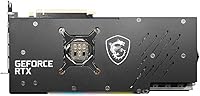
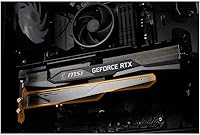
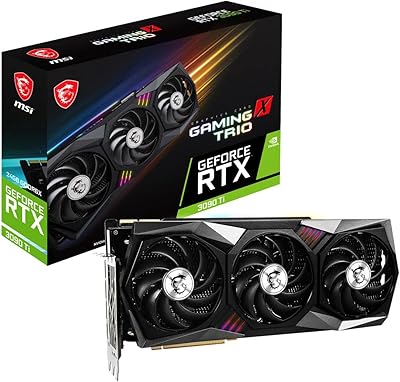
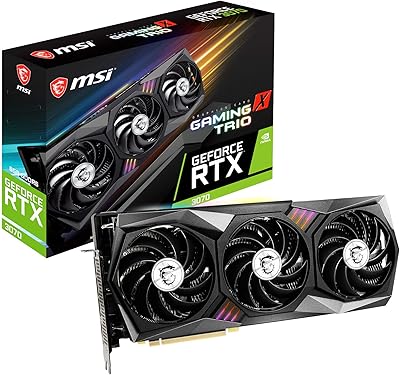
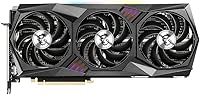
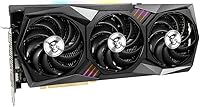
The MSI GeForce RTX 3080 Ti Gaming X Trio Graphics Card launched in mid-2021 as one of the most capable consumer GPUs NVIDIA's Ampere architecture had produced up to that point. While NVIDIA's own Founders Edition offered a clean reference design, this MSI RTX 3080 Ti takes a different approach — a large triple-slot, triple-fan configuration built for sustained performance rather than compact elegance. The 12GB GDDR6X VRAM on a 384-bit bus gives it meaningful headroom for 4K textures, ray tracing, and GPU-heavy creative workloads. This is unambiguously an enthusiast card; buyers arriving with mid-range expectations or a modest budget should look elsewhere.
Features & Benefits

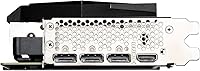
MSI's TRI FROZR 2S cooling is the centerpiece here. Three TORX Fan 4.0 fans use a paired-blade design that channels air more precisely than typical single-blade setups, keeping temperatures in check during extended gaming sessions without sounding like a small turbine. The Zero Frozr mode stops the fans entirely when the GPU isn't working hard, so your PC stays quiet during browsing, video playback, or light productivity. The boost clock sits at 1770 MHz — comfortably above NVIDIA's reference spec — while the 384-bit memory bus with 19 Gbps memory speed handles the bandwidth demands of high-resolution rendering. On the output side, three DisplayPort 1.4a ports and one HDMI 2.1 port cover most multi-monitor and 8K display configurations.

Best For

The Gaming X Trio is built for people who want to run games at 1440p or 4K with high refresh rates and aren't willing to cut corners on visual quality. Content creators will appreciate the 12GB GDDR6X buffer, which keeps GPU-accelerated rendering and video encoding workflows from bottlenecking on VRAM. The thermal headroom also makes it a reasonable candidate for overclocking if you're building a performance-tuned rig. That said, the card measures over 12 inches in length and occupies three slots, so case compatibility is a real concern — verify your chassis clearances before ordering. Users who spend significant time at the desktop outside of gaming will value the silent idle behavior that Zero Frozr delivers.

User Feedback

With a 4.6-star average across more than 100 verified ratings, this triple-fan GPU has earned consistent praise from buyers. Thermal performance and low noise levels come up repeatedly in positive reviews — owners report the card running cool even during extended sessions. The common friction point is physical size: at 12.76 inches long, it simply doesn't fit in all mid-tower cases, and several buyers flagged this only after purchase. A handful of reviewers also noted the importance of pairing it with a high-wattage PSU. The review pool, while favorable, is still relatively modest in volume, so it reflects a reliable but not exhaustive sample. On balance, buyers who did their homework on case clearance and power requirements have largely been satisfied with what they received.

Pros

  • Sustained thermal performance keeps the GPU running cool even during long, demanding gaming sessions.
  • Zero Frozr mode makes the card completely silent during light desktop use, browsing, or media playback.
  • The 12GB GDDR6X VRAM provides real headroom for 4K textures, GPU rendering, and memory-intensive creative workloads.
  • A 1770 MHz boost clock gives the Gaming X Trio a tangible performance edge over reference-clocked RTX 3080 Ti boards.
  • The 384-bit memory bus with 19 Gbps speed handles high-bandwidth workloads without becoming a bottleneck.
  • HDMI 2.1 support enables 4K high-refresh-rate output on a single cable, a practical advantage over older standards.
  • Triple DisplayPort 1.4a outputs make multi-monitor configurations straightforward without needing adapters.
  • The 4.6-star average across verified buyers reflects consistent real-world satisfaction rather than cherry-picked impressions.
  • PCIe Gen 4 compatibility keeps this card relevant for current and near-future platform upgrades.
  • MSI's TRI FROZR 2S cooler handles sustained overclocked loads without the fan noise that plagues thinner cooler designs.

Cons

  • At over 12 inches long, this triple-fan GPU will not physically fit in many popular mid-tower cases.
  • The triple-slot footprint can block adjacent PCIe lanes, complicating builds that require multiple expansion cards.
  • A high-wattage power supply is essential; budget PSUs are a real compatibility risk that adds to total system cost.
  • The review sample is relatively small, so edge-case reliability issues may not yet be well-represented in feedback.
  • Ray tracing performance, while supported, varies widely by title and does not guarantee a smooth experience at 4K with RT enabled.
  • The card's weight and size put stress on the PCIe slot over time without proper GPU support in the chassis.
  • Buyers in markets with limited GPU stock may find pricing inconsistent and availability unpredictable for this model.
  • Users upgrading from a mid-range build may need to replace the case, PSU, and cooling simultaneously to accommodate this card.

Ratings

The MSI GeForce RTX 3080 Ti Gaming X Trio Graphics Card scores below are generated by our AI after analyzing verified buyer reviews from global sources, with spam, bot activity, and incentivized submissions actively filtered out. The results reflect a candid picture of real ownership — including both the aspects buyers consistently praise and the friction points that surfaced across multiple independent accounts. Nothing has been smoothed over to favor the product.
Thermal Performance
93%
Buyers who run extended gaming sessions — multiple hours of demanding titles at 4K — consistently report the card staying well within safe temperature ranges without any manual fan curve adjustments. The TRI FROZR 2S cooler earns specific praise for maintaining stable thermals even when the GPU is pushed hard over long periods.
A small number of users in poorly ventilated cases reported higher-than-expected temps, suggesting ambient airflow in the chassis plays a meaningful role. The cooler does its job, but it cannot compensate for a build with inadequate case airflow on its own.
Noise Levels
88%
The Zero Frozr feature is a genuine daily-use advantage — during browsing, light productivity, or video playback, the fans stay completely off and the system is silent. Even under moderate gaming loads, buyers describe the fan noise as controlled and far less intrusive than blower-style designs or thinner coolers running at comparable temperatures.
Under sustained full-load gaming, particularly in warm environments, the fans do ramp up to an audible level. It is not disruptive for most users, but buyers who sit close to their open tower case and prefer near-silent operation in all scenarios may notice it.
Gaming Performance
91%
At 1440p and 4K, buyers report smooth, high-framerate gameplay in graphically demanding titles without needing to compromise on settings. The boosted clock speed translates to real-world gains that owners notice compared to reference-clocked cards, especially in GPU-bound scenarios.
Ray tracing at native 4K with effects fully enabled will strain even this card in the most demanding titles, and some buyers arrived with expectations that needed recalibrating. DLSS helps in supported games, but the experience is title-dependent rather than universally transformative.
VRAM & Memory Bandwidth
89%
Content creators running GPU-accelerated workflows in DaVinci Resolve or Blender specifically call out the 12GB buffer as the reason they chose this card over lower-VRAM alternatives. The wide 384-bit bus and 19 Gbps memory speed mean the card rarely feels memory-starved, even with high-resolution texture packs loaded.
While 12GB was a clear advantage at launch, the VRAM ceiling is beginning to show in a small number of next-generation titles with very high texture settings. It is not a pressing issue for most buyers today, but it is worth acknowledging for long-term planning.
Build & Physical Quality
86%
Buyers consistently describe the card as feeling substantial and well-built out of the box, with a solid backplate and a cooler shroud that does not flex or creak. The fit and finish matches what experienced builders expect from a premium MSI product at this tier.
The sheer size and weight of the card mean it puts noticeable stress on the PCIe slot without a GPU support bracket in place. Several buyers flagged the need to purchase a separate support brace, which feels like an oversight given the price point.
Cooling System Design
92%
The paired-blade TORX Fan 4.0 design earns consistent praise from technically informed buyers who compare airflow performance across cooler generations. Precision-machined heat pipes covering the full heatsink length are credited with spreading heat evenly, avoiding the hot-spot issues some competing coolers exhibit.
The triple-fan, triple-slot footprint is the direct result of this cooler's effectiveness, and not every buyer anticipated how much physical space it would demand inside their build. It is an engineering trade-off, but one that should be understood before purchase.
Case Compatibility
54%
46%
For users who planned ahead and verified clearances in full-tower or large mid-tower cases, installation was reported as smooth and straightforward. Builders who selected cases specifically rated for 330mm or longer GPUs had no issues.
Multiple buyers reported discovering only after delivery that the 12.76-inch card would not fit their existing mid-tower case, requiring an unplanned case upgrade. This is the single most common practical complaint in the review pool and a genuine pain point that a spec sheet glance can easily miss.
Power Efficiency
61%
39%
Buyers who went in knowing the 350W TDP and paired the card with a quality 850W PSU report stable, clean power delivery with no crashes or instability. The card performs as expected when the platform is properly provisioned.
At 350W under sustained load, this card is a significant power draw, and buyers who underestimated PSU requirements ran into instability or had to invest in a new power supply. Running it on a borderline 650W unit is a risk several reviewers learned about the hard way.
Driver Stability
77%
23%
The majority of buyers report a stable, trouble-free driver experience on Windows 10 and 11 from day one, with no unusual crashes or performance anomalies after standard NVIDIA driver installation. Long-term owners note no degradation in stability over time.
A minority of buyers encountered driver-related issues following specific NVIDIA updates, which is not unique to this card but is worth noting. Sticking to a known stable driver version resolved issues in most reported cases, though that is a workaround rather than a fix.
Connectivity & Outputs
84%
The combination of HDMI 2.1 and three DisplayPort 1.4a ports covers nearly every multi-monitor configuration a buyer might need, and the HDMI 2.1 spec specifically is a practical advantage for users connecting to a 4K TV or high-refresh display over a single cable.
Four total outputs is the standard for cards at this tier and there is nothing exceptional here beyond the HDMI 2.1 spec. Users who need more than four simultaneous displays will still require additional hardware.
Installation Experience
79%
21%
Buyers who are comfortable with PC building describe installation as no different from any other discrete GPU — slot it in, connect the power cables, install drivers, done. No unusual steps or complications were reported by experienced builders.
The card's weight and length make it harder to maneuver inside tighter cases compared to smaller dual-fan cards. First-time builders specifically noted that getting the power connectors seated while managing the card's bulk in a mid-tower required patience.
Overclocking Headroom
81%
19%
Enthusiast buyers who pushed the card beyond factory settings found meaningful additional headroom, with the TRI FROZR 2S cooler handling the extra heat load without the temperatures running away. Modest overclocks translated to tangible gains in GPU-heavy workloads.
Overclocking voids the warranty in most regions, and the factory boost clock is already elevated, which means the remaining headroom before hitting a thermal or power ceiling is smaller than on reference-clocked cards. Substantial overclocks require careful tuning rather than simple slider adjustments.
Value for Money
67%
33%
Buyers who specifically needed the 12GB GDDR6X buffer for professional creative work — and who compared this card to workstation alternatives at higher prices — generally felt the value proposition was defensible. For that specific use case, the price-to-capability ratio made sense at launch.
For purely gaming use, the price gap between this card and slightly lower-tier options is difficult to justify purely on framerate gains. A number of buyers acknowledged in their reviews that the premium requires a clearly defined use-case to feel worthwhile rather than excessive.
Multi-Monitor Support
83%
Buyers running three-monitor setups praised the triple DisplayPort 1.4a outputs for handling high-refresh configurations without needing a hub or adapter. The HDMI 2.1 port provides a clean connection option for users mixing a gaming monitor with a 4K display.
Four simultaneous outputs is the practical ceiling here, and NVIDIA's display output policy means not all four ports can be pushed to maximum bandwidth simultaneously in all configurations. Edge-case multi-display users may hit limitations that require testing before committing to a specific setup.
Long-Term Reliability
78%
22%
Given the relatively short period since the card's 2021 launch, early buyers who have run the card continuously for several years report no hardware failures or performance degradation. The robust cooler design and quality build materials appear to support long-term durability under regular use.
The review sample is not yet large enough to draw statistically robust conclusions about long-term failure rates. Buyers should ensure the card is adequately supported in the chassis to avoid PCIe slot stress over multi-year ownership.

Suitable for:

The MSI GeForce RTX 3080 Ti Gaming X Trio Graphics Card is a strong match for enthusiast PC builders who are targeting 1440p or 4K gaming and want a card that can sustain high framerates without thermal throttling under pressure. Content creators who rely on GPU-accelerated workflows — video encoding, 3D rendering, or machine learning tasks — will find the 12GB GDDR6X buffer genuinely useful rather than just a spec sheet talking point. The boosted 1770 MHz clock and wide 384-bit memory bus give the card meaningful overhead for demanding workloads, which is exactly what professionals who also game need from a single GPU. Users who care about noise levels during everyday desktop use will appreciate the Zero Frozr feature, which keeps the fans off entirely under light loads. If you are also running a multi-monitor setup or a high-refresh-rate 4K display, the HDMI 2.1 and triple DisplayPort 1.4a outputs mean you are unlikely to hit any connectivity limitations.
Not suitable for:

Buyers on a tight budget or those who primarily game at 1080p should look elsewhere — the premium price tier of this card is only justified when paired with a display and use-case that can actually stress it. The physical dimensions are a genuine obstacle: at 12.76 inches long and occupying three expansion slots, the Gaming X Trio will not fit in many compact or standard mid-tower cases, and skipping the clearance check before ordering is a costly mistake several buyers have already made. A high-wattage power supply — realistically 750W or more — is non-negotiable, so factor that into your total build cost if you are upgrading from a modest system. This card is also a poor fit for anyone expecting ray tracing or DLSS to deliver transformative results across all titles; those features are supported but their impact varies significantly by game. If you are assembling a small form factor build or working within tight spatial and power constraints, this triple-fan GPU is simply the wrong tool regardless of its raw performance.

Specifications

  • GPU Chip: Powered by the NVIDIA GeForce RTX 3080 Ti, built on NVIDIA's Ampere architecture with 10,240 CUDA cores.
  • VRAM: Equipped with 12GB of GDDR6X memory running at 19 Gbps for high-bandwidth rendering and 4K workloads.
  • Memory Bus: A 384-bit memory bus provides the wide data path needed to sustain performance in memory-intensive scenarios.
  • Boost Clock: The card boosts to 1770 MHz, sitting above NVIDIA's reference specification for additional performance headroom.
  • Interface: Uses a PCIe Gen 4 x16 interface, ensuring full bandwidth compatibility with current-generation motherboards.
  • Display Outputs: Connectivity includes three DisplayPort 1.4a ports and one HDMI 2.1 port for flexible multi-monitor or 8K display setups.
  • Max Resolution: Capable of driving displays up to 7680x4320 (8K) resolution via the HDMI 2.1 output.
  • Card Length: The card measures 12.76 inches (324mm) in length, requiring careful case compatibility checks before installation.
  • Card Height: At 5.51 inches tall, the card fits standard ATX bracket spacing but verify clearance in smaller chassis.
  • Slot Width: Occupies 2.2 inches across three expansion slots, which may block adjacent PCIe slots depending on board layout.
  • Cooling System: MSI's TRI FROZR 2S cooler uses three TORX Fan 4.0 fans with paired-blade technology for focused, efficient airflow.
  • Silent Mode: Zero Frozr technology stops all three fans completely when GPU temperatures are low, enabling silent idle operation.
  • Power Connectors: Requires two 8-pin PCIe power connectors; a quality 750W or higher power supply is strongly recommended.
  • TDP: The RTX 3080 Ti has a total graphics power rating of 350W under full load, consistent with the reference specification.
  • Model Number: MSI's official model identifier for this card is V389-058R, useful for warranty registration and driver verification.
  • Launch Date: This card was first made available in June 2021 as part of MSI's premium Gaming X Trio lineup.

Related Reviews
MSI GeForce RTX 2080 Ti Gaming X Trio
87%
94%
Gaming Performance
91%
Ray Tracing Quality
88%
Thermals and Cooling
90%
Build Quality
65%
Noise Level Under Load
More
MSI RTX 3060 Ti X Trio GPU
77%
93%
Thermal Performance
91%
Noise Levels
88%
1440p Gaming Performance
89%
Build Quality
67%
Value for Money
More
MSI GeForce RTX 3090 Ti Gaming X Trio 24GB
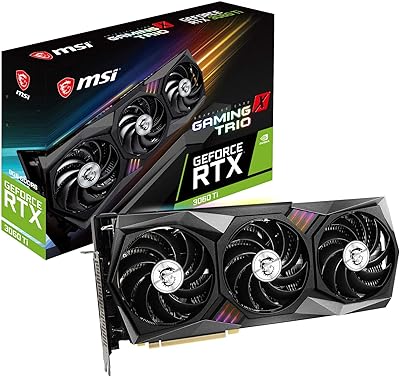
84%
94%
Gaming Performance
70%
Power Consumption
88%
Cooling Efficiency
65%
Size and Compatibility
92%
Overclocking Performance
More
MSI RTX 3070 Ti 8GB Graphics Card
82%
91%
Gaming Performance
93%
Thermal Management
88%
Noise Levels
67%
VRAM Headroom
92%
Build Quality
More
MSI RTX 3070 Gaming X Trio Graphics Card
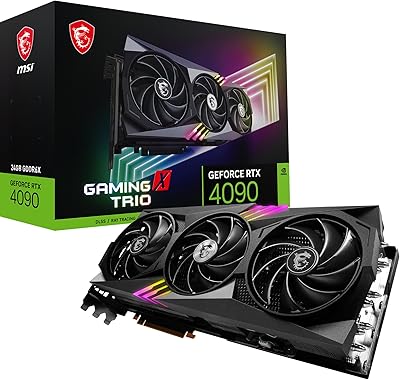
76%
93%
Thermal Performance
91%
Noise Levels
89%
1440p Gaming Performance
88%
Build Quality
74%
Value for Money
More
MSI GeForce RTX 3060 Gaming X Trio 12G
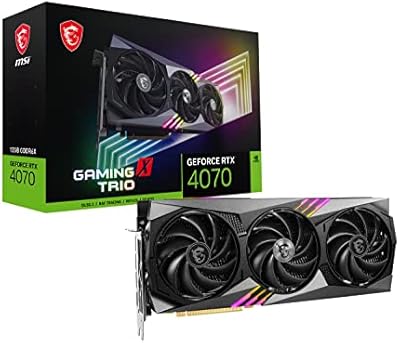
84%
91%
Gaming Performance
94%
Cooling Efficiency
87%
Build Quality
89%
Value for Money
70%
Compatibility with Cases
More
MSI RTX 4090 Gaming X Trio GPU
84%
93%
Thermal Performance
89%
Noise Levels
96%
Raw Gaming Performance
91%
VRAM & Memory
88%
Build Quality
More
MSI RTX 4070 Gaming X Trio GPU
82%
92%
1440p Gaming Performance
93%
Thermal Performance
91%
Noise Levels
89%
Build Quality
71%
Value for Money
More
MSI GeForce RTX 5070 Ti 16G Gaming Trio OC Plus
84%
94%
Gaming Performance
89%
Cooling Efficiency
90%
Build Quality
87%
Value for Money
75%
Power Consumption
More
GIGABYTE GeForce RTX 5070 Ti Gaming OC 16G
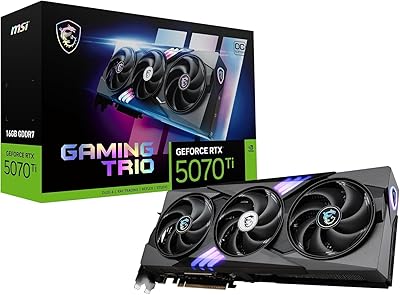
86%
91%
4K Gaming Performance
89%
Ray Tracing & DLSS 4
93%
Cooling Efficiency
94%
VRAM & Memory Speed
87%
Acoustic Performance
More

FAQ

Not necessarily. The Gaming X Trio is 12.76 inches long and takes up three slots, which rules out a surprising number of popular mid-tower cases. Before ordering, measure the GPU clearance length your case supports and check the slot count near your PCIe x16 slot. When in doubt, consult your case manufacturer's compatibility list.

MSI recommends a minimum 750W PSU, but if your system has a high-end CPU and multiple storage drives, giving yourself extra headroom with an 850W unit is a smarter move. Make sure your PSU has two free 8-pin PCIe connectors, or use the adapter cables if it only has 6+2-pin connectors.

Yes, both are supported as this is an RTX-class GPU. That said, ray tracing performance varies widely depending on the game and resolution — enabling it at 4K with all effects maxed will push even this card. DLSS can help recover frames in supported titles, but not every game has implemented it.

Under sustained gaming loads it produces audible fan noise, but most users report it stays noticeably quieter than blower-style or thinner cooler designs at similar load levels. At idle or during light tasks, the Zero Frozr feature keeps the fans off entirely, so you will not hear anything at all during everyday desktop use.

Yes, PCIe is backward compatible, so the card will work in a PCIe Gen 3 slot. You will see a small theoretical bandwidth reduction compared to Gen 4, but in practice this has a minimal impact on real-world gaming performance for most users.

Absolutely. The 12GB GDDR6X VRAM is a genuine advantage for GPU-accelerated workflows in applications like DaVinci Resolve, Blender, or After Effects, where running out of VRAM forces the workload onto system RAM and slows things down considerably. The high CUDA core count also benefits rendering times meaningfully.

You can run up to four displays simultaneously using the three DisplayPort 1.4a outputs and the single HDMI 2.1 port. All four outputs are active at the same time, so a quad-monitor setup is fully supported without any additional hardware.

Yes, the GPU is platform-agnostic. It connects via the PCIe slot, so it works with any current AMD or Intel platform that has a PCIe x16 slot. Just make sure your case, PSU, and physical clearances meet the card's requirements, regardless of the CPU platform you are on.

The Gaming X Trio handles 4K gaming well in most titles at high to ultra settings, delivering smooth framerates in many games without ray tracing enabled. Turn on full ray tracing at 4K and you will see frame rates drop depending on the title — DLSS can help in games that support it, but manage expectations based on the specific game.

Yes, the card supports overclocking through MSI Afterburner and similar tools. The TRI FROZR 2S cooler provides enough thermal headroom that modest overclocks are stable for most users. That said, overclocking does void the warranty in most regions, so it is worth weighing the modest performance gains against that trade-off.