
Overview

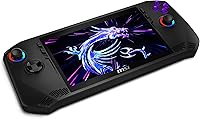
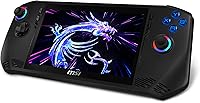
The MSI Claw 7 AI+ Gaming Handheld entered a crowded market in November 2024, landing after the Steam Deck OLED and ASUS ROG Ally X had already raised expectations considerably. What distinguishes this Windows handheld is its adoption of Intel’s Core Ultra 7-258V — a Meteor Lake architecture that marks a meaningful step forward from the first-generation Claw’s shakier graphics performance. Running Windows 11 Home is simultaneously its biggest selling point and its steepest friction point; seasoned PC gamers will love having their full library available, while newcomers may find navigating a desktop OS on a 7-inch screen more frustrating than expected. It sits at a premium price tier, which realistically narrows the audience to enthusiasts who already understand what they’re signing up for.

Features & Benefits

The Core Ultra 7-258V handles everyday gaming well — expect solid frame rates in indie titles and mid-tier games, but don’t push it expecting consistent 60fps in the most demanding AAA releases at max settings. The 7-inch 120Hz display is sharp and smooth, with colors that genuinely pop indoors, though brightness struggles in direct sunlight. Where MSI’s Intel-powered handheld pulls ahead is its 32GB LPDDR5 RAM, a spec that unlocks heavy emulation, background apps, and multitasking without breaking a sweat. The grip feels slightly wider than the ROG Ally, which some find natural and others find tiring over long sessions. Thunderbolt 4 rounds things out with docking and eGPU potential that rivals simply can’t match.

Best For

This Windows handheld makes the most sense for PC gamers who already have a Steam, Epic, or Xbox Game Pass library and want to take it anywhere. It’s ideal for commuters and travelers who squeeze in gaming on trains or flights and might occasionally need light productivity too. The RAM headroom is a genuine draw for emulation enthusiasts — running PS3 or Wii U titles benefits noticeably from 32GB in ways a lesser-equipped device can’t replicate. Buyers hoping to max out the most demanding modern releases will hit a ceiling, though. If you prefer Intel’s driver ecosystem over AMD’s and want a device that can double as a desktop via Thunderbolt when you’re home, this is one of the few handhelds that actually pulls it off.

User Feedback

Across 134 Amazon ratings landing at 4.2 stars, buyers tend to highlight the display and overall build quality as standout positives, with many noting the device feels premium in hand. The recurring frustrations are harder to overlook: fan noise under load is louder than many anticipated, and battery life in demanding titles rarely pushes past three hours. Some early adopters flagged driver instability at launch, though subsequent firmware updates resolved several of those complaints. Long-term owners tend to report higher satisfaction than initial reviewers, who often underestimate how much navigating Windows on a compact screen shapes the daily experience. The value debate against the Steam Deck OLED remains genuinely polarizing among buyers who carefully weighed both options.

Pros

  • 32GB of LPDDR5 RAM is genuinely rare in this device category and unlocks emulation and multitasking most rivals cannot match.
  • The 7-inch 120Hz IPS display delivers sharp, smooth visuals that hold up well for both gaming and media.
  • Thunderbolt 4 support opens the door to docking, eGPU setups, and fast charging in a way no competing handheld currently offers.
  • Full Windows 11 access means your existing PC game library works without re-purchasing or compatibility workarounds.
  • The Intel Core Ultra 7-258V handles indie and mid-tier titles with confidence and consistent frame delivery.
  • A 512GB NVMe SSD provides fast load times, and MicroSD expansion keeps storage from becoming a bottleneck.
  • Build quality and physical fit receive consistent praise from long-term owners, with a sturdy feel that rivals justify at this price tier.
  • Post-launch firmware updates have addressed early driver complaints, improving stability for buyers who come to it now.
  • Wi-Fi 6E connectivity keeps online and remote-play sessions reliable, even in congested network environments.

Cons

  • Fan noise under sustained gaming load is noticeably loud and can be disruptive in quiet settings.
  • Battery life in demanding titles regularly falls short of three hours, which is a real constraint for long travel sessions.
  • Navigating Windows 11 with thumbsticks and a small touchscreen is clumsy and takes genuine patience to get used to.
  • Intel Arc integrated graphics still trails AMD RDNA 3 in raw gaming performance at comparable power envelopes.
  • The premium price tier is hard to justify for buyers whose game library is modest or who game casually.
  • Outdoor visibility suffers in direct sunlight due to display brightness limitations, despite strong indoor performance.
  • Early adopters encountered driver instability at launch, which damaged first impressions even if later updates improved things.
  • The wider grip profile compared to the ROG Ally can cause hand fatigue during extended sessions for users with smaller hands.
  • Windows update prompts and background processes can interrupt gaming sessions in ways a purpose-built handheld OS would not.

Ratings

Our AI rating engine analyzed verified owner reviews for the MSI Claw 7 AI+ Gaming Handheld from global marketplaces, actively filtering out incentivized, bot-generated, and single-use reviewer accounts to surface what genuine long-term buyers actually experience. Scores reflect the full picture — where this Windows handheld earns real praise and where it falls short of expectations — so you can make a purchase decision based on honest signal, not marketing.

Gaming Performance
74%
26%
The Intel Core Ultra 7-258V handles indie titles, older AAA games, and mid-tier releases with confidence, and owners gaming on the go report smooth experiences in games like Hades II, Elden Ring at medium settings, and emulated PS3 titles. The Meteor Lake architecture is a clear step up from the first-generation Claw.
Cutting-edge titles at high settings push the integrated Arc GPU to its limits, resulting in frame dips that frustrate buyers who expected desktop-class output. Games like Cyberpunk 2077 or Alan Wake 2 require significant quality compromises to hit playable frame rates.
Display Quality
83%
The 7-inch 1920x1080 IPS panel at 120Hz is one of the most consistently praised aspects across owner reviews, with colors described as vivid and accurate for gaming content. The high refresh rate makes fast-paced games and scrolling feel noticeably smoother compared to 60Hz handheld displays.
Outdoor and bright-room use exposes the display’s brightness limitations, with several commuters noting that sunlight glare makes gaming on a train or at an outdoor table genuinely difficult. It is a strong indoor screen that struggles to translate that quality to variable lighting environments.
Battery Life
51%
49%
For very light tasks — browsing, video playback, or low-demand games — owners report getting through a reasonable stretch without needing to plug in. The included Lithium Polymer battery is at least adequate for short commutes when not running anything graphically intensive.
In real gaming conditions, particularly anything pushing the GPU hard, battery drain is fast enough that most owners carry a power bank as a matter of routine. Two to three hours in demanding titles is a realistic ceiling, and buyers expecting all-day handheld gaming will be repeatedly disappointed.
Build Quality
86%
Long-term owners consistently report that the chassis feels premium and holds up well through daily use, with no reports of significant flex, creaking, or degradation of the buttons or triggers over time. The matte black finish resists fingerprints reasonably well for a device handled constantly.
A small subset of reviewers noted that the shoulder buttons feel less tactile and firm compared to the ROG Ally X, which can make precision inputs in competitive games feel slightly imprecise. It is not a widespread complaint, but it comes up often enough to flag for buyers who prioritize controller feel.
Ergonomics & Comfort
71%
29%
Buyers with medium-to-large hands tend to find the wider grip profile comfortable for extended sessions, appreciating that the device fills the palms naturally without requiring an awkward stretch to reach the triggers. The trigger tension feels well-calibrated for both shooters and action games.
Users with smaller hands flag hand fatigue as a genuine issue after sessions longer than an hour, since the grip width requires more extension than rivals like the Steam Deck. The device also tips slightly heavier than it looks, which compounds fatigue during upright play on long flights.
Windows 11 Experience
58%
42%
For buyers who are already comfortable managing a Windows PC, the full desktop environment is a real advantage — installing mods, managing multiple game launchers, and running browser sessions alongside gaming are all genuinely possible in ways closed gaming OS devices cannot replicate.
Windows 11 was not designed for a 7-inch touchscreen controlled primarily by thumbsticks, and the friction shows constantly: update pop-ups interrupt sessions, the Start menu is clumsy to navigate with analog input, and first-time handheld users frequently describe the setup experience as overwhelming.
RAM & Multitasking
91%
32GB of LPDDR5 RAM stands out as one of the most practically impactful specs on this device, allowing emulation enthusiasts to run Yuzu or RPCS3 alongside Discord and a browser without any perceptible slowdown. It is a headroom spec that pays off over the long ownership period as games grow more memory-hungry.
The generous RAM is somewhat bottlenecked by the GPU in gaming contexts, meaning the memory ceiling rarely becomes the limiting factor in performance — the Arc graphics hit their wall first. Buyers prioritizing raw gaming over multitasking may find the extra RAM over 16GB underutilized in practice.
Storage & Expandability
79%
21%
The 512GB NVMe SSD delivers fast load times that make switching between titles quick and painless, and the MicroSD slot provides a convenient path to expansion without dongles or external drives. Owners building large libraries appreciate having both options available natively.
Modern AAA titles regularly exceed 80–90GB each, meaning serious library builders will exhaust the internal drive faster than expected and rely on MicroSD for overflow. MicroSD read speeds are slower than NVMe, so some owners notice marginally longer load times for games stored on the card.
Connectivity
88%
Thunderbolt 4 is a genuine differentiator in this product class, allowing MSI’s Intel-powered handheld to dock into a full desktop setup with a single cable — a use case that owners who work from home find surprisingly practical for switching between gaming and productivity modes.
Wi-Fi 6E performance is strong but only relevant in environments with a compatible router, leaving users on older network hardware with a standard Wi-Fi 6 or 5 experience. Bluetooth pairing with some audio devices has also been flagged as occasionally finicky in early firmware versions.
Fan Noise & Thermals
53%
47%
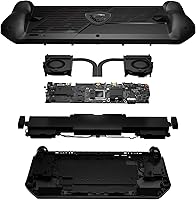
The cooling system does its job in keeping the device from throttling aggressively during sustained gaming, with few reports of significant performance drops from heat buildup even in longer sessions. Thermal management is functional and keeps the chassis from becoming uncomfortably hot to hold.
The fan ramps up to an audible level the moment the processor is under real load, and several owners describe it as a constant distraction in quiet settings. Gaming without headphones in a library, on public transit, or next to a sleeping partner is a noticeably intrusive experience.
Software & Driver Stability
67%
33%
Post-launch firmware updates meaningfully improved the driver stability that frustrated early adopters, and buyers purchasing this Windows handheld now benefit from a more refined software state than those who received it at launch. MSI’s update cadence has been viewed positively by the community.
The launch period left a lasting impression on early buyers, some of whom experienced crashes and GPU driver failures that required manual troubleshooting to resolve. Even after updates, occasional driver hiccups surface for some users depending on their specific game and peripheral configuration.
Value for Money
62%
38%
The hardware specifications — particularly the 32GB RAM, Thunderbolt 4, and NVMe SSD — are legitimately premium for a handheld, and buyers who use the docking and emulation features regularly feel the investment is justified. Those who wanted a capable all-in-one travel machine generally report satisfaction.
Buyers comparing it directly to the Steam Deck OLED at a lower price point often feel the value proposition is hard to defend unless they specifically need the Windows ecosystem or Intel’s feature set. For casual gaming alone, the premium is difficult to rationalize against well-established alternatives.
Portability
76%
24%
At 1.49 pounds, this Windows handheld is manageable for bag carry and does not cause shoulder fatigue the way heavier portable devices can over a long commute. Its dimensions fit comfortably in a standard backpack side pocket or small travel pouch.
The wider grip profile makes one-handed operation impractical, and the device is noticeably bulkier than a smartphone or Nintendo Switch Lite when packing light. Travelers prioritizing the smallest possible footprint may find the physical size a genuine consideration.

Suitable for:

The MSI Claw 7 AI+ Gaming Handheld is built for PC gamers who already have an established library on Steam, Epic, or Xbox Game Pass and want to carry it with them without compromise or re-purchasing titles on a closed platform. Frequent travelers and commuters will appreciate having a device that handles both a gaming session on a long flight and a quick spreadsheet or browser task during a layover — something a pure gaming handheld simply cannot do. Emulation enthusiasts in particular stand to gain from the generous 32GB of RAM, which lets demanding multi-platform emulators run with headroom to spare. The Thunderbolt 4 port adds a layer of long-term value for users who want to dock the device at home, connect an external GPU down the line, or fast-charge without hunting for proprietary accessories. Buyers who are already comfortable with Intel’s driver ecosystem and prefer its software tooling over AMD’s will also find the transition to this handheld far smoother than the spec sheet suggests.

Not suitable for:

Anyone expecting to run the latest AAA titles at high settings and stable frame rates should look carefully before committing, because the MSI Claw 7 AI+ Gaming Handheld, like every handheld in this class, has real thermal and power constraints that the spec sheet does not fully communicate. Casual gamers or first-time handheld buyers who have never managed Windows on a small screen will likely find the experience friction-heavy, from navigating the Start menu with thumbsticks to handling game launcher updates and Windows Defender prompts mid-session. Battery life is a genuine limitation in intensive titles, and buyers who expect to game for four or five hours unplugged on demanding software will be disappointed. Those on the fence between this and the Steam Deck OLED should honestly weigh whether the Windows ecosystem benefit justifies the premium, especially if their library already runs well under Proton. Anyone sensitive to fan noise in quiet environments should also be cautious, as the cooling system works audibly hard when the processor is under sustained load.

Specifications

  • Processor: Powered by the Intel Core Ultra 7-258V (Meteor Lake architecture), a mobile-optimized chip designed to balance performance and power efficiency in compact form factors.
  • GPU: Integrated Intel Arc graphics handle rendering duties, providing a meaningful improvement over the first-generation Claw’s Xe graphics in supported titles.
  • Display: A 7-inch IPS panel running at 1920x1080 resolution with a 120Hz refresh rate delivers sharp visuals and smooth motion during fast-paced gameplay.
  • RAM: 32GB of LPDDR5 memory is included, an unusually generous allocation for a handheld that benefits emulation workloads, multitasking, and memory-hungry game engines.
  • Storage: A 512GB NVMe SSD serves as the primary drive, offering fast load times and enough capacity for a solid library of installed titles before expansion is needed.
  • Expandable Storage: A MicroSD card reader allows straightforward library expansion without requiring external drives or USB adapters.
  • Connectivity: Wi-Fi 6E (802.11ax) and Thunderbolt 4 are both included, covering high-speed wireless networking and wired docking, eGPU, and fast-charging scenarios.
  • Operating System: Windows 11 Home comes pre-installed, giving access to the full PC software ecosystem including Steam, Epic Games Store, Xbox Game Pass, and standard desktop applications.
  • Input: A built-in gamepad controller layout with analog thumbsticks, triggers, bumpers, and a D-pad is integrated directly into the device body for portable play.
  • Battery: An internal Lithium Polymer battery is included and non-removable, with real-world playtime varying significantly based on in-game graphical load and display brightness settings.
  • Weight: At 1.49 pounds, the device sits in a comparable weight class to the ASUS ROG Ally and is slightly heavier than the base Steam Deck.
  • Dimensions: The unit measures 5.5 x 12.3 x 4.5 inches, making it a slightly wider handheld that fills the palms more fully than some competing devices.
  • Wireless Standard: Wi-Fi 6E support ensures low-latency connectivity on less-congested 6GHz bands, which is particularly useful for remote play and cloud gaming scenarios.
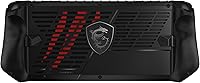
  • Color: Available in Black, with a matte finish on the grip areas designed to reduce fingerprint accumulation during extended sessions.
  • Platform: The device runs a full desktop-class operating system rather than a custom gaming OS, meaning software compatibility is as broad as any Windows PC.

Related Reviews
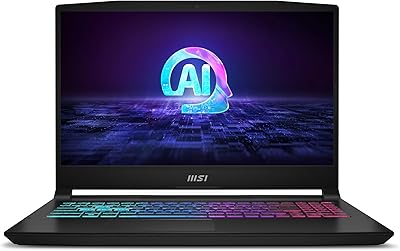
MSI Katana A15 AI B8VF-448US
73%
88%
Gaming Performance
84%
Value for Money
46%
Battery Life
87%
CPU Performance
67%
Display Quality
More
MSI Aegis ZS Gaming Desktop
78%
91%
1080p Gaming Performance
84%
Value for Money
93%
Ease of Setup
88%
Upgradeability
79%
Thermal Management
More
ASUS ROG Ally 7″ 120Hz FHD Gaming Handheld, AMD Ryzen Z1 Extreme, 16GB RAM, 512GB Storage
86%
93%
Performance
90%
Display Quality
91%
Portability
60%
Battery Life
87%
Ergonomics
More
MSI Katana A15 AI Gaming Laptop
67%
91%
Gaming Performance
88%
Display Quality
67%
Thermal Management
54%
Fan Noise
43%
Battery Life
More
MSI X670E Gaming Plus WiFi AM5 Motherboard
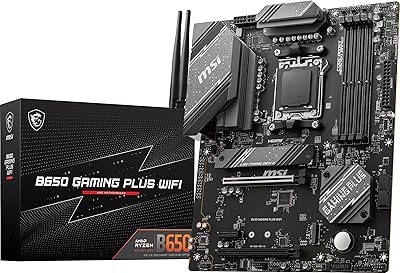
80%
86%
Build Quality
89%
Power Delivery
91%
PCIe 5.0 & Storage Support
71%
DDR5 Memory Compatibility
78%
BIOS Experience
More
MSI B650 Gaming Plus WiFi
80%
83%
Value for Money
88%
BIOS & Software Experience
91%
Power Delivery & Stability
84%
Wireless Connectivity
79%
Memory Performance & Overclocking
More
MSI RTX 3070 Gaming X Trio Graphics Card
76%
93%
Thermal Performance
91%
Noise Levels
89%
1440p Gaming Performance
88%
Build Quality
74%
Value for Money
More
Skytech Gaming Azure 3 Gaming PC, AMD Ryzen 7 9700X, NVIDIA RTX 5060, 32GB DDR5, 2TB SSD
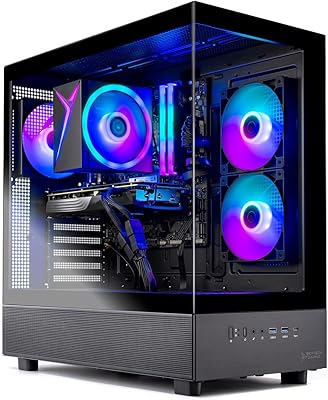
87%
94%
Performance
91%
Gaming Experience
92%
Value for Money
86%
Thermal Management
88%
Setup and Installation
More
Skytech Gaming Azure 3 Gaming PC, AMD Ryzen 7 5700, NVIDIA RTX 5060, 32GB RAM, 1TB SSD
87%
92%
Performance
94%
Graphics Quality
89%
Multitasking Performance
91%
Ease of Setup
88%
Cooling System
More
MSI G273QPF 27-inch QHD Gaming Monitor
78%
88%
Image Clarity
91%
Refresh Rate Performance
86%
Response Time
79%
Panel Quality
84%
Ergonomics & Stand
More

FAQ

Yes, since it runs full Windows 11, you can install the Steam client, log into your account, and start downloading games immediately after initial setup. There’s no compatibility layer or workaround needed — if a game runs on Windows, it runs here.

Honestly, it depends heavily on what you’re playing. Light indie titles or older games can stretch the battery reasonably well, but demanding 3D titles will drain it in roughly two to three hours. If long sessions away from an outlet matter to you, a power bank or regular charging breaks should be part of your routine.

It can be, especially at first. Navigating the taskbar, managing game launchers, and dealing with pop-up notifications are noticeably clunkier on a 7-inch display than on a desktop. Most users adapt over time and set up game mode shortcuts or front-end launchers like Playnite to smooth things out, but there is a real learning curve.

Under sustained load — particularly in more demanding titles — the fan is audible enough to notice without headphones. It’s not unusually loud by laptop standards, but in a quiet room or during a quiet game moment, it’s definitely there. Using headphones largely solves this as a practical concern.

Yes, the Thunderbolt 4 port supports video output to external displays and works with USB-C docks for a full desktop setup. You can connect a monitor, keyboard, and mouse and use it as a compact Windows PC when you’re home, which is one of the more compelling use cases for this device.

They serve slightly different audiences. This Windows handheld gives you native access to your entire PC library without Proton compatibility concerns and offers significantly more RAM, but the Steam Deck OLED has better battery life, a superior display panel, and a purpose-built gaming OS that’s just easier to live with day-to-day. If your library is PC-native and you value raw specs, the MSI wins; if you want a polished pick-up-and-play experience, the Steam Deck is still hard to beat.

Thunderbolt 4 does support eGPU enclosures in theory, and some users have experimented with this in docked mode to push higher frame rates on a connected monitor. That said, eGPU setups add significant cost and bulk, so it’s more of an enthusiast option than a mainstream use case.

For most users, 512GB gets you started comfortably — you can fit a decent mix of indie and mid-size titles without immediately hitting a wall. Modern AAA games that exceed 100GB will eat through it faster, so grabbing a high-speed MicroSD card alongside the device is a smart move if you plan on installing many large titles.

The grip is somewhat wider, which suits larger hands but can feel slightly tiring for users with smaller hands during long sessions. The triggers have a reasonable amount of travel and resistance. Thumbstick placement follows a standard symmetric layout, similar to an Xbox controller, which most PC gamers will find immediately familiar.

Yes, the early launch period had driver instability reports that frustrated some first adopters. MSI has since pushed firmware and driver updates that addressed the most common complaints. Buyers purchasing now are unlikely to hit those same issues, though keeping the device updated is still good practice with any Windows machine.

Where to Buy