Overview

The MINISFORUM BD790i X3D Mini-ITX Motherboard is one of the more genuinely unusual products to arrive in the small form factor space in recent years — a board that ships with a high-end laptop CPU soldered directly onto it, delivering desktop-caliber compute in a package that fits on a crowded desk without complaint. The centerpiece is AMD's Ryzen 9 7945HX3D, a Zen 4 chip with 3D V-Cache that gives this board legitimate credentials for serious gaming and heavy workloads alike. Launched in early 2025, the BD790i X3D sits at a premium price point, but for SFF builders who want to skip the usual motherboard-and-CPU balancing act, that investment starts to make real sense.

Features & Benefits

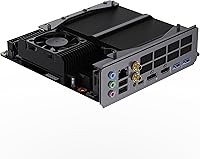
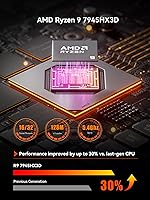
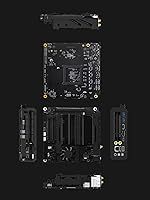
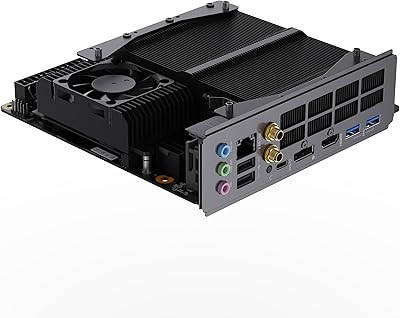
At the core of this Mini-ITX board is a 16-core, 32-thread processor boosting to 5.4 GHz, backed by 144MB of cache — a combination that genuinely matters in CPU-bound workloads and strategy-heavy games where low latency counts more than raw frequency. A PCIe 5.0 x16 slot handles discrete GPU duties, while two PCIe 5.0 M.2 slots push theoretical read speeds toward 10 GB/s. DDR5 memory scales to 96GB, providing serious headroom for content creation or virtualization. The pre-installed heatsink covers 80% of the board and works alongside an active SSD cooler to sustain performance during long sessions. Triple-display output and onboard WiFi 6E round out a thoughtfully equipped platform.

Best For

The BD790i X3D is built for a specific type of builder: someone who wants near-flagship CPU performance in a chassis compact enough to sit beside a monitor or disappear into a home lab rack. SFF gaming enthusiasts playing CPU-sensitive titles — grand strategy, simulation, or competitive shooters — will see measurable benefit from the 3D V-Cache architecture, though GPU-bound games will feel it less. Content creators who export video or juggle virtual machines fit the profile well, especially with that 96GB DDR5 ceiling. If your plan is to supply your own GPU, RAM, and storage and have everything else handled, this SFF motherboard is one of the more complete starting points available today.

User Feedback

Sitting at 4.2 out of 5 across 113 ratings since its early 2025 launch, buyer sentiment for this SFF motherboard is mostly positive, though not without real reservations. Repeat praise centers on performance per watt, the convenience of a premium CPU already integrated, and how little space the whole build ultimately consumes. The criticism, however, circles a harder fact: the soldered CPU means no upgrade path — what you buy is what you keep. Some early buyers flagged BIOS rough edges and noted the niche ecosystem makes community troubleshooting thinner than on mainstream AM5 platforms. With fewer than 200 reviews and a recent launch date, long-term durability remains an open question worth keeping in mind.

Pros

  • Having a Ryzen 9 7945HX3D pre-integrated saves real time and eliminates CPU compatibility guesswork entirely.
  • The 3D V-Cache architecture delivers meaningful frame rate improvements in CPU-bound games, especially at 1080p.
  • Dual PCIe 5.0 M.2 slots allow blindingly fast storage configurations that most Mini-ITX boards simply cannot match.
  • DDR5 support up to 96GB gives this SFF motherboard serious longevity for memory-heavy workloads.
  • Power consumption is genuinely lower than an equivalent desktop X3D build, which translates to quieter, cooler operation.
  • The pre-installed heatsink with 80% board coverage handles thermals adequately without requiring immediate aftermarket intervention.
  • Triple-display output from onboard ports means you can run a multi-monitor setup without touching the GPU slot.
  • WiFi 6E and Bluetooth 5.3 are onboard, so no extra adapters are needed for wireless-first desk setups.
  • At rank 88 in Computer Motherboards, early market reception is strong for such a specialized product.
  • For builders who want to add only GPU, RAM, and storage, the BD790i X3D delivers a remarkably complete starting point.

Cons

  • The soldered CPU is a hard ceiling — there is no upgrade path short of replacing the entire board.
  • BIOS software maturity is still catching up, and early buyers have reported rough edges that need patching.
  • The niche ecosystem means community support, tested RAM compatibility lists, and troubleshooting resources are thin.
  • Long-term reliability is genuinely unknown; the board has only been on the market since early 2025 with limited review volume.
  • Builders who already own a fast AM5 CPU will find no way to leverage it here — the platform is self-contained by design.
  • The premium price is harder to justify for GPU-bound gamers who won't consistently tap the 3D V-Cache advantage.
  • Thermal performance under simultaneous heavy GPU and CPU load has drawn mixed reactions from real users.
  • The ITX form factor limits PCIe slot count to one, which rules out multi-GPU or capture card setups entirely.
  • Socket F branding in the specs may cause confusion — buyers should verify RAM and case compatibility before purchasing.
  • Finding third-party repair or warranty support outside of MINISFORUM directly could prove difficult given the product's niche status.

Ratings

The scores below reflect our AI-driven analysis of verified buyer reviews for the MINISFORUM BD790i X3D Mini-ITX Motherboard, drawn from global purchase data with spam, bot-generated, and incentivized feedback actively filtered out. Each category is scored independently to give you an honest picture of where this board genuinely excels and where real buyers have run into friction. Both the standout strengths and the legitimate pain points are reflected transparently — nothing is rounded up to look more flattering.

CPU Performance
93%
Buyers consistently report that the 16-core Ryzen 9 7945HX3D holds its own against full desktop processors in demanding workloads — video exports finish fast, virtual machines run without dragging, and multitasking feels genuinely fluid even under pressure. The 3D V-Cache advantage shows up clearly in CPU-sensitive gaming scenarios.
In GPU-bound game workloads at higher resolutions, the CPU rarely becomes the bottleneck, meaning some buyers feel they are paying a premium for cache benefits that only certain use cases consistently unlock. Overclock-oriented users will also find the soldered design limits any tuning ambition.
Gaming Performance
84%
For strategy games, city builders, and simulation titles where the CPU is doing heavy lifting, the 3D V-Cache delivers noticeably smoother frame pacing and improved minimum frame rates — buyers in those genres tend to be the most enthusiastic. Running competitive shooters or older engines at 1080p also brings out the best in this chip.
In GPU-limited scenarios — which describes most AAA games at 1440p or 4K — the 3D V-Cache advantage largely disappears and the experience is dictated by whichever discrete GPU you pair with the board. A minority of buyers felt the gaming pitch was oversold relative to how they actually play.
Value for Money
71%
29%
Buyers who factor in the cost of sourcing a high-end desktop CPU separately often find the integrated approach more competitive than it first appears, especially when combined with the platform-complete nature of the board — WiFi, Bluetooth, display outputs, and cooling all included out of the box.
For buyers who already own compatible components or who price-shop against a traditional AM5 build with a desktop Ryzen X3D chip, the premium can feel hard to justify. Those primarily after pure dollar-per-core value will find better flexibility elsewhere, particularly given the zero CPU upgrade path.
Build Quality
81%
19%
The physical board feels solid and well-constructed, with the pre-installed heatsink covering an impressive portion of the PCB and the active SSD cooler giving the storage subsystem attention that many ITX boards overlook entirely. Component layout is thoughtful for the form factor.
Some buyers noted that the heatsink, while effective at moderate loads, adds enough height to create clearance issues inside certain compact cases — requiring more careful case selection than a bare board would. A small number of units arrived with minor cosmetic inconsistencies in the heatsink mounting.
Thermal Management
74%
26%
Under typical mixed workloads — browsing, media, light gaming, productivity — the fanless heatsink keeps the board quiet and temperatures in a comfortable range. The active SSD cooler ensures the PCIe 5.0 M.2 drives maintain full speed without throttling during sustained sequential reads or writes.
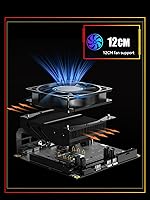
When both a high-TDP GPU and the CPU are under sustained load simultaneously, several buyers reported temperatures climbing closer to thermal limits than they expected, with the system becoming audibly stressed if no case fan is attached to the heatsink. Adding that 120mm fan is more of a necessity than an option for heavy-use scenarios.
Storage Capability
91%
Two PCIe 5.0 M.2 slots is a genuine differentiator in this form factor — buyers who installed Gen 5 NVMe drives reported access speeds that made large asset transfers and game load times feel almost instantaneous. Having both slots at full PCIe 5.0 bandwidth leaves no compromises for a dual-drive configuration.
Achieving those top-end speeds requires purchasing Gen 5 NVMe drives, which still carry a meaningful cost premium over Gen 4 alternatives — buyers who pair the board with older SSDs will not see the full potential. There is no 2.5-inch SATA support, so anyone with legacy storage needs an adapter or enclosure.
Memory Support
86%
Supporting up to 96GB of DDR5 puts this board well ahead of most Mini-ITX options in raw memory ceiling, which content creators and virtualization users in particular find genuinely reassuring for future workload growth. DDR5 bandwidth also pairs well with the Zen 4 architecture.
DDR5 compatibility can be finicky, and buyers who deviated from tested kit configurations occasionally ran into instability at rated speeds. MINISFORUM's official compatibility list is shorter than what you would find for a mainstream AM5 desktop board, making kit selection a slightly more careful process.
Connectivity & I/O
88%
Triple-display output through HDMI 2.1, DisplayPort 1.4, and USB-C means multi-monitor workflows are supported entirely from onboard ports — a genuinely useful feature for users who run the board without a discrete GPU or who want display redundancy. WiFi 6E and Bluetooth 5.3 cover wireless needs without any additional hardware.
The overall USB port count on the rear I/O is more limited than what typical ATX boards provide, which can feel restrictive for users with multiple peripherals, audio interfaces, or external drives that all want a direct connection. A powered hub becomes a near-necessity for heavily connected desks.
Upgradeability
38%
62%
Within the constraints of the platform, there is genuine flexibility in memory (up to 96GB), storage (two fast M.2 slots), and GPU choice — buyers can meaningfully upgrade several components of the system without replacing the board itself. WiFi 6E future-proofs the wireless side for current and near-future standards.
The soldered CPU is a hard, permanent ceiling and buyers who understand this before purchasing accept it — but those who discover it later often feel genuinely limited. There is no AM5 socket, no possibility of dropping in a future-generation processor, and no upgrade path beyond replacing the entire board when compute needs evolve.
BIOS & Software Maturity
62%
38%
Recent BIOS updates have addressed several early stability complaints, and buyers who updated firmware immediately after purchase generally reported a smoother experience than those who ran the shipping version. MINISFORUM appears active in pushing fixes based on community feedback.
For a product at this price tier, the BIOS still feels less polished than what flagship desktop board makers deliver — early buyers hit issues with RAM initialization, power profiles, and fan control that took multiple firmware revisions to resolve. The community knowledge base is also thin compared to mainstream AM5 platforms.
Noise Levels
83%
The default fanless heatsink configuration means the board itself contributes zero fan noise at idle and under light loads — buyers who use this board as a home media server, quiet workstation, or HTPC setup are particularly happy with how silent the system can be.
Once a case fan or GPU cooler enters the picture, noise levels are determined by those components rather than the board itself. Under sustained gaming loads, the GPU fan typically becomes the dominant sound source, which means the board's passive cooling advantage is somewhat context-dependent.
Power Efficiency
87%
Buyers running the board as an always-on home server or edge node consistently highlight the low idle and moderate-load power draw as a standout trait — the integrated HX-class CPU sips meaningfully less power than an equivalent full desktop processor would under the same workloads.
Under full multi-core stress, the power consumption climbs closer to desktop territory than some buyers anticipated based on the product marketing. Peak draw is still lower than a Ryzen 9 7950X3D desktop setup, but the gap is narrower at the high end than at idle.
Setup & Documentation
67%
33%
Buyers with prior SFF build experience generally find the board straightforward to install and configure — the pre-mounted heatsink removes one of the trickier steps, and the included documentation covers the essentials for getting a system up and running.
First-time builders or those coming from mainstream ATX platforms report a steeper learning curve, particularly around DDR5 kit selection and BIOS initial configuration. Community resources, third-party guides, and forum threads for this specific board are sparse compared to what a Gigabyte or ASUS product would have.
Long-term Reliability
69%
31%
Early buyers who have had the board for several months report no significant failure rates, and the physical construction suggests the cooling solution is designed with sustained workloads in mind rather than just peak burst performance.
With fewer than 150 reviews and a launch date in early 2025, there is simply not enough field data to assess long-term durability with confidence — this is an honest gap, not a known flaw. Buyers who need a proven reliability track record before committing to a premium purchase should factor this into their decision.

Suitable for:

The MINISFORUM BD790i X3D Mini-ITX Motherboard is purpose-built for a narrow but passionate audience that has outgrown the idea that serious performance requires a full-size tower. SFF enthusiasts who have spent time hunting for a way to build a genuinely fast machine in a compact chassis will find the integrated Ryzen 9 7945HX3D removes one of the biggest headaches — sourcing a compatible high-end CPU separately and hoping the thermals work out. Gamers who spend time in CPU-sensitive genres like grand strategy, city builders, or simulation titles will notice the 3D V-Cache advantage in ways that GPU-bound players simply won't. Content creators who need real multi-core throughput for video exports or parallel rendering, but work in a small apartment or shared office, get a credible workstation-class platform without sacrificing desk space. Home lab users and edge computing tinkerers who want low idle power draw alongside genuine compute headroom will also find this board a strong fit.

Not suitable for:

Buyers who expect to upgrade their CPU in two or three years should look elsewhere — the processor on the BD790i X3D is soldered to the board, which means your upgrade path is a new board entirely, full stop. Anyone building on a tighter budget will likely find better dollar-per-core value by pairing a mid-range AM5 motherboard with a desktop Ryzen chip, where the platform remains upgradeable. Hardcore GPU-bound gamers running titles where the CPU is rarely the bottleneck won't see the 3D V-Cache deliver the gains they might expect — the benefit is real but context-dependent. Those who rely heavily on community forums, large BIOS update histories, or mature third-party compatibility documentation may find the ecosystem around this board thin, given how recently it launched. Finally, buyers who need proven long-term reliability data before committing to a premium purchase should know that with just over 100 reviews and a launch date in early 2025, the track record here is still being written.

Specifications

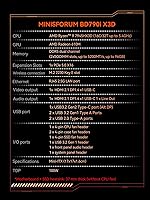
  • CPU: Integrates a soldered AMD Ryzen 9 7945HX3D processor based on Zen 4 architecture, running up to 5.4 GHz boost clock with 16 cores and 32 threads.
  • Cache: Equipped with 144MB of combined L2 and L3 cache, leveraging AMD 3D V-Cache technology for reduced memory latency in compute-intensive workloads.
  • Form Factor: Follows the Mini-ITX standard, making it compatible with compact SFF cases designed around that widely adopted small-board specification.
  • Memory Type: Supports DDR5 RAM with a maximum capacity of 96GB, providing substantial headroom for memory-intensive tasks like video editing and virtualization.
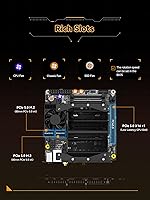
  • GPU Slot: Features a single PCIe 5.0 x16 slot for installing a discrete graphics card, supporting current-generation GPU bandwidth requirements.
  • Storage Slots: Includes two PCIe 5.0 M.2 slots capable of theoretical sequential read speeds up to 10 GB/s when paired with compatible NVMe drives.
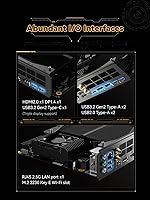
  • Display Output: Offers triple-display connectivity via HDMI 2.1, DisplayPort 1.4, and USB-C, all driven through the processor's integrated graphics without needing a discrete GPU.
  • Wireless: Ships with WiFi 6E and Bluetooth 5.3 onboard, covering both high-bandwidth wireless networking and short-range peripheral connectivity without additional adapters.
  • Cooling: Comes with a pre-installed fanless heatsink covering approximately 80% of the board surface, plus a dedicated active cooler for the M.2 SSD slots.
  • Fan Support: The included heatsink is designed to accommodate a standard 120mm case fan for active cooling when operating under sustained heavy loads.
  • Dimensions: Package measures 13.15 x 8.98 x 2.8 inches, and the board itself weighs 2.61 pounds as shipped.
  • Power Profile: Draws significantly less power than a comparable desktop AM5 build using a Ryzen 9 7950X3D, making it suited for energy-conscious or thermally constrained setups.
  • Manufacturer: Designed and produced by Micro Computer (HK) Tech Limited, operating under the MINISFORUM brand, which specializes in compact computing hardware.
  • Availability: First listed for sale on Amazon in March 2025, making this a recently launched product with a still-developing review base and BIOS update history.
  • Market Rank: Holds a Best Sellers Rank of #88 in the Computer Motherboards category on Amazon, reflecting solid early traction for a niche SFF product.
  • User Rating: Carries an aggregate customer rating of 4.2 out of 5 stars based on 113 ratings at the time of this review.
  • Model ID: The official model designation is BD790i X3D ITX, which should be used when searching for compatible accessories, BIOS updates, or technical documentation.
  • CPU Socket: Listed under Socket F classification in its product specifications, though buyers should note the CPU is soldered and not user-replaceable.

Related Reviews
MINISFORUM BD790I X3D Mini ITX Motherboard
78%
91%
CPU Performance
88%
Build Quality
84%
Thermal Management
89%
Storage Performance
61%
BIOS Maturity
More
ASRock A520M-ITX/AC Mini ITX Motherboard
87%
87%
Performance
91%
Build Quality
90%
Setup & Installation
85%
Wi-Fi and Bluetooth Connectivity
93%
Processor Compatibility
More
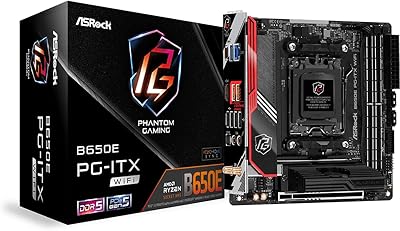
ASRock B650E PG-ITX WiFi Mini-ITX Motherboard
84%
88%
Performance
84%
Build Quality
91%
Wi-Fi Connectivity
72%
Overclocking Stability
89%
Compatibility
More
MINISFORUM 129i7 ITX Mini PC
85%
91%
Performance for Multitasking
78%
Gaming Capability (Light to Medium)
95%
Compactness and Design
89%
Customizability (RAM and Storage)
90%
Setup and Installation
More
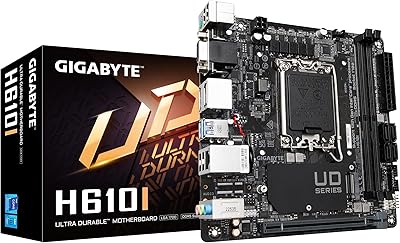
GIGABYTE H610I Mini-ITX Motherboard
85%
89%
Performance
85%
Build Quality
92%
Value for Money
91%
Ease of Installation
75%
Connectivity Options
More
ASRock B850i Lightning WiFi Mini ITX Motherboard
85%
91%
Performance
88%
Build Quality
93%
Overclocking Stability
89%
Connectivity
75%
Ease of Setup
More
GIGABYTE B550I AORUS PRO AX Mini-ITX Motherboard
84%
93%
Feature Density
88%
VRM & Power Delivery
91%
Wireless Connectivity
89%
Storage Options
74%
BIOS & Software
More
MINISFORUM 790S7 Mini ITX PC AMD Ryzen 9 7940HX
81%
88%
Overall Performance
65%
Thermals and Cooling
80%
Graphics Flexibility
90%
Build Quality
92%
Value for Money
More
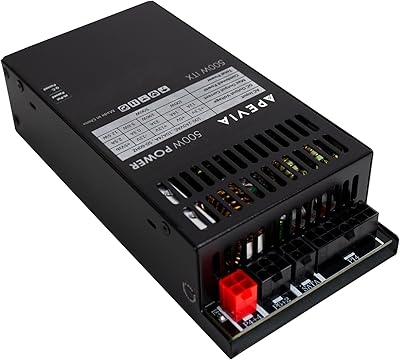
Apevia ITX-PFC500W 500W Flex ATX Power Supply
77%
88%
Cable Management
91%
Form Factor Compatibility
79%
Power Delivery & Rail Stability
54%
Fan Noise & Acoustics
72%
Build & Component Quality
More
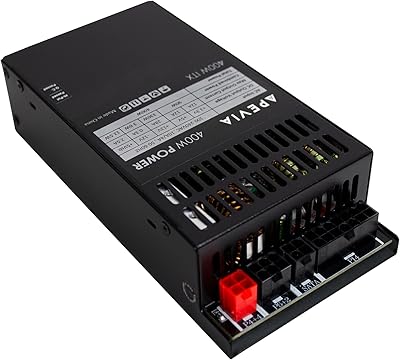
Apevia ITX-PFC400W 400W Flex ATX Power Supply
73%
88%
Modular Design
83%
Value for Money
91%
Form Factor Fit
54%
Fan Noise
63%
Cable Length
More

FAQ

No — and this is probably the most important thing to understand before buying. The Ryzen 9 7945HX3D is soldered directly to the board, so there is no socket and no upgrade path. If you outgrow the processor, you would need to replace the entire board, not just the chip.

The MINISFORUM BD790i X3D Mini-ITX Motherboard uses DDR5 memory and supports up to 96GB total. You'll want to check MINISFORUM's official compatibility list before purchasing, since DDR5 can be finicky with certain kits, especially at higher speeds or larger capacities.

No storage is included — you are buying the motherboard only. You will need to supply your own M.2 NVMe SSDs, though the two PCIe 5.0 M.2 slots mean you have room for some very fast drives if the rest of your build justifies the cost.

It follows the standard Mini-ITX footprint, so it should fit most ITX cases on the market. That said, the pre-installed heatsink adds notable height above the board, so double-check clearance specs for your specific case before ordering — especially slim or ultra-compact enclosures.

The pre-installed heatsink is fanless by default and handles moderate loads reasonably well. Under sustained heavy workloads — especially if you're also running a power-hungry discrete GPU — adding a 120mm fan to the heatsink is a smart move. The board supports one, and most users running it hard would benefit from the extra airflow.

The PCIe 5.0 x16 slot is compatible with current and recent-generation GPUs from both AMD and NVIDIA. Because this board excels at CPU-bound workloads, pairing it with a mid-to-high-end discrete GPU makes the most sense — though bear in mind your ITX case size and PSU wattage will also constrain your options.

It depends a lot on the game. In CPU-limited scenarios — grand strategy titles, simulation games, older engines running at high frame rates — the cache advantage is real and measurable. In GPU-bound games at 1440p or 4K, you likely won't notice much difference compared to a standard Ryzen 9 7945HX. The gains are most visible at 1080p or in games with high AI or physics calculations.

A handful of early buyers flagged BIOS roughness, which is not unusual for a product launched in early 2025 with a relatively small user base. MINISFORUM does push firmware updates, so checking for a BIOS update before first use is a reasonable precaution. The ecosystem is maturing, but it is not as battle-tested as boards from larger mainstream manufacturers.

Yes. The Ryzen 9 7945HX3D includes integrated Radeon graphics, and the board exposes HDMI 2.1, DisplayPort 1.4, and USB-C display outputs for exactly this use case. It works well for desktop productivity, light media work, and even modest gaming. You only need a discrete GPU if your workload demands it.

It is competitive but not obviously cheaper. When you add up a mainstream AM5 board, a Ryzen 9 7950X3D desktop CPU, and account for the larger case and power supply those require, the gap narrows. Where the BD790i X3D wins is simplicity, lower power draw, and footprint — not raw price-to-performance. If you are purely budget-optimizing and do not care about size, a traditional AM5 build may still offer more flexibility for the money.

Where to Buy