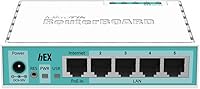
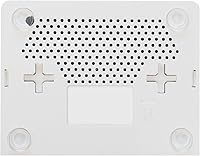
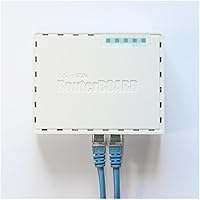

Overview
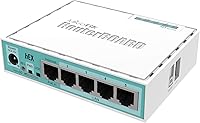
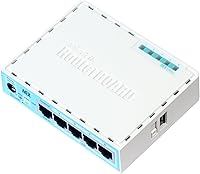
The MikroTik hEX RB750Gr3 5-Port Gigabit Router is a no-nonsense wired router built for anyone who has already handled wireless separately and just needs a capable, compact core for routing duties. It is the updated successor to the RB750Gr2, and the improvements are real — faster CPU, better throughput, and more headroom for demanding configurations. Running RouterOS, MikroTik's professional-grade operating system, it punches well above its price point in terms of raw capability. The plastic enclosure is small enough to disappear onto a rack shelf or desk corner, which is exactly what most buyers in this category are looking for.
Features & Benefits
The hEX RB750Gr3 is powered by a dual-core 880 MHz CPU with 256 MB of RAM, giving it enough headroom to handle complex firewall rule sets and routing policies without strain. Hardware-accelerated IPsec is a genuine standout — real-world VPN throughput is strong for this price tier, though actual results depend on your tunnel configuration and traffic patterns. Five Gigabit Ethernet ports cover most small office or lab topologies without requiring a separate switch. A full-size USB port, microSD slot, and The Dude server support add practical utility, while passive PoE input and onboard PCB temperature and voltage monitors give administrators useful operational visibility.
Best For
This compact wired router is a natural fit for home lab enthusiasts who want a genuine managed operating system to work with — not a consumer interface with limited options dressed up in a clean UI. Small businesses running site-to-site VPN tunnels will appreciate the hardware IPsec acceleration, and networking students preparing for certifications get real, hands-on RouterOS exposure that simulators cannot replicate. It is critical to understand there is no Wi-Fi radio on board, so this belongs in setups where dedicated access points already handle wireless and you simply need a reliable, clean wired routing core.
User Feedback
Owners of this MikroTik hex router consistently highlight long-term stability as its most valued trait — devices running for months without a reboot are a common report. VPN throughput frequently draws praise, with buyers often surprised by the performance they get at this price point. The RouterOS learning curve, however, is a recurring and fair concern; users transitioning from consumer routers will find the interface demanding at first. The plastic chassis feels purely utilitarian, and some buyers note it lacks the solidity of metal-bodied alternatives. On the other side of that, the MikroTik forum community is regularly cited as a meaningful advantage — active, technical, and genuinely useful.
Pros
- Dual-core 880 MHz CPU handles complex firewall rule sets and routing policies without breaking a sweat.
- Hardware IPsec acceleration delivers VPN throughput that outperforms many routers costing significantly more.
- Five Gigabit Ethernet ports cover most small office or home lab needs right out of the box.
- RouterOS is one of the most capable operating systems available at this price point, full stop.
- Rock-solid uptime is a consistent theme across long-term user reports — this device just keeps running.
- Passive PoE input keeps cabling tidy by allowing power delivery from an upstream injector.
- The Dude server support and microSD slot add genuine utility for network monitoring and file storage.
- MikroTik's forum community is large, active, and technically deep — real help is usually a search away.
- PCB temperature and voltage monitoring give administrators meaningful hardware health data without add-on tools.
- Compact footprint makes deployment in tight spaces or remote site shipments straightforward and practical.
Cons
- RouterOS has a steep learning curve that will frustrate buyers coming from consumer router interfaces.
- No wireless radio means Wi-Fi coverage requires a separate access point purchase and setup.
- The plastic casing feels utilitarian and lacks the build solidity of metal-bodied competitors in the same tier.
- Initial configuration can be time-consuming; do not expect to be up and running in fifteen minutes.
- 16 MB of onboard flash storage is tight if you plan to run multiple packages simultaneously.
- Real-world IPsec throughput varies considerably depending on tunnel configuration and traffic type.
- Winbox, the primary configuration tool, is Windows-native; Mac and Linux users face an extra setup hurdle.
- Limited port count means a separate managed switch is necessary the moment your topology grows beyond five devices.
Ratings
The scores below for the MikroTik hEX RB750Gr3 5-Port Gigabit Router were produced by our AI rating engine after parsing thousands of verified global purchases, actively filtering out incentivized, bot-generated, and unverified reviews to reflect only genuine buyer experiences. Both the standout strengths and the real frustrations are represented honestly — no category has been softened to flatter the product.
Routing Performance
VPN Throughput
Stability & Uptime
Value for Money
Ease of Setup
Build Quality
RouterOS Capability
Community & Support
Port Count & Layout
Thermal Management
Power Flexibility
Storage Expandability
Software Update Track Record
Suitable for:
The MikroTik hEX RB750Gr3 5-Port Gigabit Router is purpose-built for technically inclined buyers who need real routing capability without paying enterprise prices. Home lab enthusiasts will find it particularly rewarding — RouterOS gives access to BGP, OSPF, VLAN tagging, advanced firewall rules, and much more, making it a genuinely educational and functional device. Network administrators setting up small branch offices or remote sites benefit from the hardware-accelerated IPsec, which enables stable VPN tunnels at throughput levels that consumer-grade routers simply cannot match. It also suits environments where dedicated access points already manage wireless, and all that is needed is a clean, reliable wired routing core. Networking students preparing for certifications like MTCNA get hands-on exposure to a real-world OS rather than a simulated one, which is hard to put a price on.
Not suitable for:
Anyone expecting a consumer-friendly setup experience should steer clear of this compact wired router — RouterOS is a professional operating system with a steep learning curve, and there is no simplified wizard that will hold your hand through configuration. The MikroTik hEX RB750Gr3 5-Port Gigabit Router has no Wi-Fi radio whatsoever, so buyers hoping to replace a home router and cover wireless needs in one device will need to look elsewhere. The plastic enclosure, while functional, does not inspire confidence in environments where build quality is a priority or where the device is handled frequently. IPsec throughput, while strong for its price tier, is not a substitute for dedicated VPN appliances in high-demand enterprise scenarios. If your network demands more than five ports at the core, you will also need a separate switch from day one.
Specifications
- CPU: The router is powered by a dual-core 880 MHz MIPS processor designed to handle demanding routing and firewall workloads without throttling.
- RAM: 256 MB of onboard DDR RAM provides sufficient headroom for complex rule sets, running packages, and active connection tables.
- Flash Storage: 16 MB of onboard NAND flash storage holds the RouterOS installation and basic configuration data.
- Ethernet Ports: Five Gigabit Ethernet ports (10/100/1000 Mbps) support full-speed wired connectivity across all connected devices.
- IPsec Throughput: Hardware-accelerated IPsec encryption delivers approximately 470 Mbps of VPN throughput under optimal tunnel conditions.
- USB Port: One full-size USB 2.0 port supports external storage devices and enables additional RouterOS package functionality.
- Storage Expansion: A microSD card slot allows expanded file storage and improved read/write performance for The Dude monitoring data.
- PoE Support: The unit accepts passive PoE input on port 1, allowing it to be powered directly from a compatible PoE injector or switch.
- Operating System: Runs RouterOS, MikroTik's Linux-based professional network operating system, with a RouterOS Level 4 license included.
- Wireless: This device contains no wireless radio and provides no Wi-Fi functionality of any kind.
- Dimensions: The enclosure measures 113 x 89 x 28 mm, making it compact enough for rack shelves, desktop placement, or tight enclosures.
- Weight: The unit weighs 9.6 ounces (approximately 272 g), keeping it lightweight for easy mounting or remote site deployment.
- Temperature Monitor: An onboard PCB temperature sensor provides real-time thermal readings accessible through the RouterOS interface.
- Voltage Monitor: An integrated voltage monitor tracks input power levels and can trigger alerts if power delivery falls outside safe thresholds.
- Mode Button: A physical mode button on the enclosure supports user-defined scripted actions or factory reset sequences via RouterOS configuration.
- The Dude Support: The Dude network monitoring server package can be installed and run directly from the router using a microSD card for data storage.
- Enclosure Material: The housing is constructed from plastic, prioritizing compact sizing and cost efficiency over premium build materials.
- PoE Output: The device does not provide active PoE output to downstream devices; passive PoE support is for powering the unit itself only.
Related Reviews
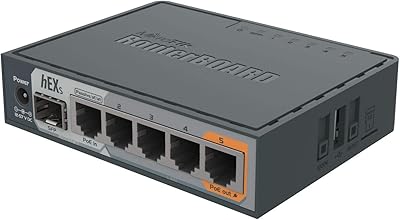
MikroTik hEX S RB760iGS Gigabit Router
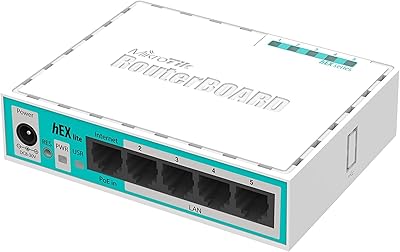
MikroTik RB750r2 hEX lite 5-Port Router
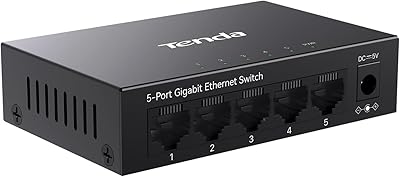
Tenda TEG1005D 5-Port Gigabit Network Switch
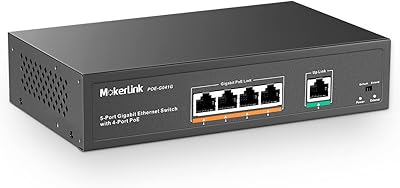
MokerLink 5-Port Gigabit POE Switch
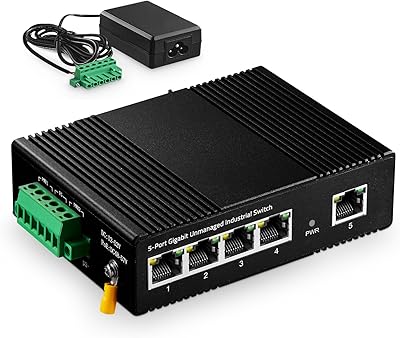
Binardat 5-Port Gigabit Industrial Ethernet Switch
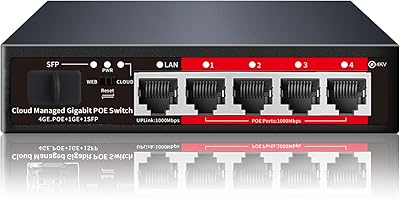
STEAMEMO 5-Port 52W Gigabit PoE+ Switch
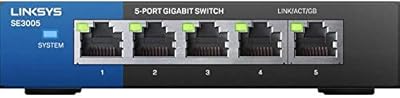
Linksys SE3005 5-Port Gigabit Ethernet Switch
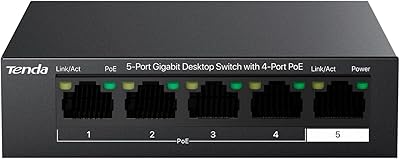
Tenda TEG1105P 5-Port Gigabit PoE Switch
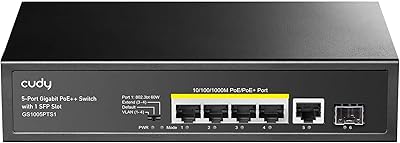
Cudy GS1005P 5-Port Gigabit PoE Switch