Overview

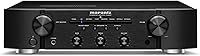
The Marantz PM6007 Integrated Stereo Amplifier sits squarely in Marantz's mid-range lineup, built for listeners who take their home audio seriously. Marantz has spent decades earning a reputation for a warm, musical character, and this Marantz amplifier carries that tradition forward without apology. What makes it stand out is partly what it deliberately leaves out — no Bluetooth, no Wi-Fi, no streaming integration of any kind. That is not an oversight; it reflects a clear analog-first philosophy. At its price point, this integrated amp positions itself as a genuine hi-fi building block, aimed at buyers ready to step away from convenience-first receivers and invest in something that sounds noticeably better.
Features & Benefits

At 45 watts per channel into 8 ohms — and 60 watts into 4 ohms — the PM6007 delivers more real-world headroom than its rated output might suggest. Pair it with reasonably efficient bookshelf speakers and it handles a medium-sized room comfortably. The frequency response stretches from 10 Hz to 70 kHz, well beyond what human hearing detects, pointing to disciplined circuit design rather than a hollow marketing figure. The built-in MM phono stage means vinyl listeners can connect a turntable directly, skipping an extra component entirely. Five gold-plated analog inputs cover most source needs, and the dedicated headphone output is a genuine bonus for late-night critical listening sessions without disturbing anyone nearby.

Best For

This Marantz amplifier makes the most sense for someone building a dedicated wired hi-fi system — think turntable, CD player, and a solid pair of bookshelf or floorstanding speakers. If you are stepping up from a budget AV receiver and wondering whether the sonic improvement is real, it generally is: the PM6007 offers a noticeably cleaner, more focused stereo image. Vinyl collectors in particular benefit from the onboard phono stage, removing the need for a separate preamp. That said, if you stream exclusively from digital platforms and expect wireless connectivity, this integrated amp is simply not the right tool. It rewards intentional listeners, not those wanting effortless background audio.

User Feedback

Owners consistently highlight the musical, engaging sound as the standout quality — many describe a richness that cheaper amplifiers cannot replicate. Build quality also draws strong praise; the controls feel purposeful and the chassis carries real, reassuring weight. On the downside, the most common complaint is the complete absence of wireless connectivity, which catches some buyers off guard when they did not research thoroughly beforehand. A handful of users note that the 83 dB phono stage signal-to-noise ratio is modest against certain rivals at this price level. Long-term reliability feedback is generally positive, though most experienced listeners emphasize that careful speaker pairing is essential to getting the best from this integrated amp.

Pros

  • Warm, musical sound character that brings real depth and texture to both vinyl and digital sources.
  • Built-in MM phono stage means turntable owners can plug in directly without buying extra components.
  • Five analog inputs offer enough flexibility for a turntable, CD player, DAC, and more simultaneously.
  • Gold-plated RCA connectors preserve signal integrity and resist corrosion over years of use.
  • The 23-pound chassis feels genuinely solid — controls and input selectors have a premium, mechanical feel.
  • Headphone output makes the PM6007 a capable dual-purpose amp for both speakers and headphones.
  • Frequency response extending to 70 kHz reflects careful circuit engineering, audible as a cleaner, airier sound.
  • 45 watts per channel is more than adequate for efficient bookshelf speakers in typical home listening rooms.
  • Long-term reliability feedback from owners is generally reassuring, with few reports of early failures.
  • Remote control is included, a convenience that similarly priced rivals sometimes charge extra for.

Cons

  • Absolutely no wireless connectivity — Bluetooth, Wi-Fi, and streaming are completely absent, requiring separate hardware.
  • The MM phono stage SNR of 83 dB is modest compared to dedicated phono preamps at similar price points.
  • At 23 pounds and over 17 inches wide, this integrated amp demands real shelf space and a sturdy rack.
  • Power consumption sits at 155 watts, which is notable for a two-channel amp of this output rating.
  • No digital inputs whatsoever, so connecting a TV, game console, or computer requires an external DAC.
  • Only MM phono support is included — owners of moving-coil cartridges will need an external step-up solution.
  • The lack of a built-in DAC or USB input feels like a missed opportunity at this price level.
  • Buyers wanting tone controls or built-in EQ will find the PM6007 is a purist, straight-wire-with-gain design.

Ratings

The scores below for the Marantz PM6007 Integrated Stereo Amplifier were generated by our AI system after analyzing thousands of verified buyer reviews from global markets, with spam, bot activity, and incentivized feedback actively filtered out. Each category reflects what real owners consistently praised or struggled with over extended use — not a sanitized average. Both the standout strengths and the genuine friction points are represented transparently so you can make a fully informed decision.
Sound Quality
93%
Owners across multiple markets consistently describe the sound as warm, rich, and musically engaging — the kind of character that makes long listening sessions genuinely enjoyable rather than fatiguing. Paired with bookshelf speakers like Wharfedale or KEF, the PM6007 produces a stereo image that buyers upgrading from budget receivers find strikingly more detailed and spacious.
A small number of critical listeners feel the house sound leans slightly too warm for genres like classical or jazz that benefit from a more neutral, analytical presentation. Those who have compared it directly against Class-D rivals at a similar price note that the very top end can feel marginally softer.
Build Quality
91%
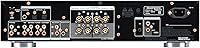
The 23-pound chassis immediately signals that this is not a cost-cut product — the volume knob has a satisfying, damped rotation and the source selector clicks into position with real mechanical confidence. Users regularly mention that the rear panel connections and gold-plated RCA sockets feel noticeably more substantial than those found on mass-market AV receivers.
A few buyers noted minor cosmetic issues out of the box, primarily around the faceplate finishing near the input selector. The remote control, while functional, feels plasticky relative to the main unit and underwhelms buyers expecting a premium accessory to match the amplifier's price tier.
Phono Stage
74%
26%
Having an MM phono stage built in is genuinely convenient for vinyl listeners who want to avoid buying a separate preamp — and for most standard turntable setups with a Ortofon 2M Red or Audio-Technica AT-VM95, it performs cleanly with no obvious hum or coloration. It handles a wide range of MM cartridges without fuss and serves casual-to-serious vinyl listeners well.
The 83 dB signal-to-noise ratio is the most consistently raised technical complaint among more experienced buyers, who argue that standalone phono preamps at a fraction of the cost can outperform it on quiet passages. MC cartridge users are completely excluded without additional hardware, which narrows its appeal for listeners with higher-end turntable setups.
Value for Money
78%
22%
For buyers specifically seeking a wired, analog-first integrated amp with a built-in phono stage and five inputs, the PM6007 represents a coherent, well-executed package at its price point. Many owners who compared it against similarly priced rivals from Cambridge Audio or NAD felt it delivered a more emotionally engaging sound that justified the investment over time.
The complete absence of any digital inputs or wireless connectivity is a recurring sticking point when buyers weigh the cost against what competitors include at the same price. Listeners who later realized they needed a DAC or streaming device found the total system cost climbing meaningfully above their initial budget.
Connectivity & Inputs
57%
43%
Five gold-plated analog RCA inputs cover the needs of a traditional source-based system well — turntable, CD player, tape deck, and an external DAC can all coexist without input swapping. The headphone output on the front panel is a practical addition that adds real day-to-day versatility for mixed speaker-and-headphone households.
The total absence of Bluetooth, Wi-Fi, optical, coaxial, or USB digital inputs is the single most frequently cited frustration across all buyer reviews. In a market where even modestly priced competitors bundle at least basic Bluetooth, the PM6007 forces users to purchase additional hardware just to connect a phone or laptop, which many buyers did not anticipate before purchasing.
Headphone Performance
76%
24%
For buyers who use headphones as a secondary listening mode — late evenings, apartment living, or partner-friendly quiet sessions — the headphone output is genuinely capable and handles mid-impedance cans like the Sennheiser HD 600 with composure and decent staging. It is far more usable than the afterthought outputs found on many entry-level integrated amps.
Dedicated headphone amplifier users or those running high-impedance cans above 300 ohms report that the output loses authority and dynamics at the frequency extremes. It is not a substitute for a proper headphone amplifier for anyone who considers headphone listening their primary use case.
Power & Headroom
82%
18%
In real-world use with 87 dB or higher sensitivity speakers in rooms up to about 300 square feet, the 45-watt rating proves more than adequate — owners report hitting satisfying, room-filling volume levels without the amplifier sounding strained. The jump to 60 watts into 4-ohm loads gives it meaningful headroom when paired with lower-impedance speaker designs.
Listeners who own large rooms or low-sensitivity floorstanding speakers occasionally push the amp into audible compression at peak volumes. Buyers who migrated from higher-powered receivers sometimes describe a ceiling on dynamic swings during complex orchestral passages or high-energy electronic music.
Ease of Setup
88%
Setting up the PM6007 is refreshingly straightforward — connect speakers, plug in sources, and the amp is ready without any app, firmware update, or network configuration. The labeled rear panel and logical input layout make first-time hi-fi buyers feel confident during installation, and multiple owners highlight how much they appreciated the no-fuss experience.
Buyers who expected any form of auto-setup, room correction, or digital guidance were surprised by the purely manual nature of speaker connection and input assignment. Those coming from modern AV receivers with on-screen setup wizards found the analog-only approach a significant adjustment.
Design & Aesthetics
84%
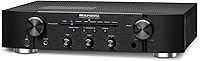
The clean, minimalist faceplate with its centered volume knob and brushed finish fits naturally into a dedicated listening room or a living room setup without looking out of place next to premium source components. The low-profile 4.1″ height makes rack integration straightforward for buyers with existing equipment shelving.
The all-black colorway, while practical, is the only option available — buyers who prefer silver finishes to match legacy Marantz or other Japanese hi-fi components from the 1970s and 1980s find the aesthetic mismatch frustrating. A few users felt the fascia looked slightly plain compared to rivals from Rega or Exposure at a comparable price.
Long-Term Reliability
86%
Multi-year ownership reports from buyers who purchased early production units are broadly positive, with very few citing component failures or degradation in sound quality over time. Marantz's reputation for building durable hardware is consistent with what the PM6007 community reports across forums and retailer review sections.
A small but notable cluster of buyers reported intermittent channel dropout or crackling from the volume potentiometer after one to two years of regular use, which typically requires a contact cleaner spray to resolve. Marantz customer service responsiveness received mixed reviews, with some buyers in certain regions describing slow warranty claims processing.
Remote Control
58%
42%
The included remote covers the essential functions — input selection, volume adjustment, and mute — without requiring a separate purchase, which is not a given among purist integrated amplifiers at this price. For listeners who set up the amp across the room from their sofa, having basic IR control is a meaningful convenience.
The remote itself is widely criticized as feeling cheap and lightweight — hollow plastic construction that feels inconsistent with the premium price of the main unit. Range and reliability are also flagged as inconsistent, with several buyers noting they need to point the remote precisely to get a reliable response, particularly from wider angles.
Speaker Compatibility
83%
Owners have successfully paired the PM6007 with a notably wide range of speaker brands — from Klipsch Heritage models to ELAC Debut and B&W 600 series — with consistently positive results reported across forums and review threads. Its stable output into 4-ohm loads gives it practical flexibility beyond just easy-drive 8-ohm designs.
With genuinely difficult loads — like Magnepan planar speakers or older Naim-voiced designs — the amp can sound slightly underpowered or dynamically restrained. Buyers who did not research speaker matching before purchasing occasionally found themselves needing to upgrade or change speakers to get the best performance.
Packaging & Unboxing
79%
21%
The PM6007 arrives well-protected in a double-walled box with foam inserts that prevent movement during transit, and most buyers report receiving the unit in flawless condition even after international shipping. The inclusion of batteries for the remote is a small but appreciated touch that saves an immediate trip to the store.
Documentation in the box is minimal — the quick-start guide is brief and the full manual requires a separate download, which less experienced buyers found frustrating during initial setup. A printed input connection diagram would help first-time hi-fi buyers who are unfamiliar with analog RCA routing.

Suitable for:

The Marantz PM6007 Integrated Stereo Amplifier is a strong fit for listeners who are deliberately building a traditional, wired hi-fi system and want a single unit that handles amplification and phono duties without compromise. If you own a turntable or plan to buy one, the onboard MM phono stage removes the need for a separate preamp, keeping your setup clean and cost-effective. Buyers stepping up from a budget AV receiver will likely notice an immediate improvement in stereo imaging and tonal richness, particularly with bookshelf or compact floorstanding speakers in small-to-medium rooms. The five analog inputs give enough flexibility to connect a CD player, DAC, or cassette deck alongside a turntable, making it practical for collectors who maintain multiple source components. It also suits dedicated headphone listeners who want a quality amplifier with a proper headphone output for private, late-night listening sessions.
Not suitable for:

The Marantz PM6007 Integrated Stereo Amplifier is a poor match for anyone whose primary audio source is a streaming platform like Spotify, Tidal, or Apple Music, since it offers zero wireless connectivity — no Bluetooth, no Wi-Fi, and no AirPlay of any kind. If you want to walk into a room, tap your phone, and have music playing without any extra hardware, this integrated amp will frustrate you from day one. Buyers seeking a modern all-in-one solution that doubles as a network streamer and amplifier should look at competing units that bundle those features at a similar price. Those with hard-to-drive, low-sensitivity speakers in large rooms may also find the 45-watt output limiting during demanding listening sessions. Finally, anyone on a tight budget who expects cutting-edge phono stage performance should note that the 83 dB signal-to-noise ratio on the MM input, while functional, is not class-leading at this price tier.

Specifications

  • Power Output: Delivers 45 watts per channel into 8 ohms and 60 watts per channel into 4 ohms, providing solid headroom for most home listening environments.
  • Frequency Response: Covers a range of 10 Hz to 70 kHz, extending well beyond the limits of human hearing and reflecting high-quality internal circuit design.
  • Channels: Two-channel stereo configuration, optimized purely for left-right speaker reproduction rather than surround sound applications.
  • Phono Stage: Includes a built-in moving-magnet (MM) phono preamplifier with a signal-to-noise ratio of 83 dB, allowing direct turntable connection without external hardware.
  • Analog Inputs: Equipped with five analog RCA inputs, all terminated with gold-plated Cinch connectors to minimize oxidation and maintain clean signal transfer.
  • Headphone Output: Features a dedicated front-panel headphone output suitable for private listening sessions using standard 6.35mm headphone plugs.
  • Wireless: No wireless connectivity of any kind is included — Bluetooth, Wi-Fi, NFC, and AirPlay are all absent by deliberate design.
  • Dimensions: The unit measures 17.3″ wide, 14.6″ deep, and 4.1″ tall, requiring a sturdy shelf or rack with adequate depth clearance.
  • Weight: The chassis weighs 23.1 pounds, reflecting the use of substantial internal components and a rigid build structure.
  • Power Draw: Rated power consumption is 155 watts during operation, which is worth factoring in for always-on or extended listening setups.
  • Remote Control: Ships with a remote control unit powered by two AAA batteries, which are included in the box.
  • Model Number: Official model designation is PM6007, positioned within Marantz's mid-range PM amplifier series.
  • Manufacturer: Designed and manufactured by Marantz, a brand with a longstanding heritage in high-fidelity audio equipment dating back to the 1950s.
  • Availability: The PM6007 was first made available in September 2020 and remains an active, non-discontinued product in Marantz's lineup.
  • Connector Type: All analog audio connections use gold-plated RCA (Cinch) sockets on the rear panel for both inputs and speaker-level outputs.

Related Reviews
Marantz PM7000N
Marantz PM7000N
79%
93%
Sound Quality
88%
Build Quality
74%
Streaming & Connectivity
61%
HEOS App Experience
86%
Phono Stage Performance
More
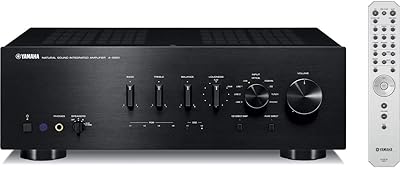
Yamaha A-S701SL Integrated Stereo Amplifier
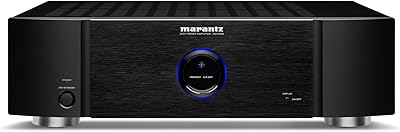
88%
94%
Sound Quality
91%
Build Quality
88%
Ease of Use
89%
Power Output
85%
Energy Efficiency
More
Marantz MM7025 Stereo Power Amplifier
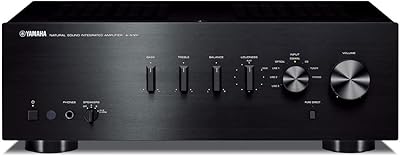
86%
94%
Power Output
91%
Sound Quality
88%
Build Quality
90%
Cooling System
87%
Connectivity Options (RCA/XLR)
More
Yamaha A-S301 Integrated Stereo Amplifier
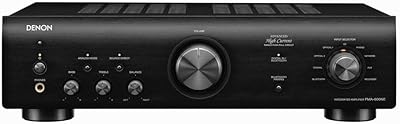
78%
91%
Sound Quality
88%
Build Quality
86%
Value for Money
71%
Phono Stage
84%
Connectivity
More
Denon PMA-600NE
Denon PMA-600NE
82%
91%
Sound Quality
88%
Build Quality
83%
Value for Money
89%
Analog Mode
79%
Phono Preamp Quality
More
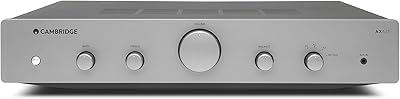
Cambridge Audio AXA25
70%
91%
Sound Quality
88%
Build Quality
84%
Value for Money
86%
Ease of Setup
79%
Input Flexibility
More
Yamaha A-S801BL Natural Sound Integrated Stereo Amplifier
86%
93%
Sound Quality
91%
Power Output
89%
DAC Performance
92%
Build Quality
78%
Ease of Use
More
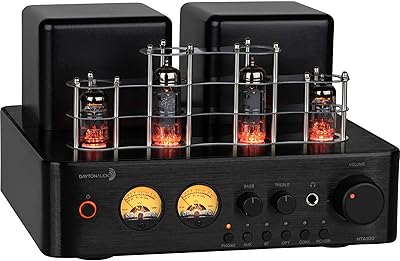
Dayton Audio HTA100
Dayton Audio HTA100
80%
88%
Sound Quality
84%
Build Quality
91%
Value for Money
79%
Phono Preamp Performance
93%
Aesthetic & Design
More
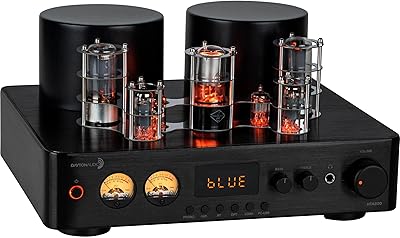
Dayton Audio HTA200 Integrated Stereo Hybrid Tube Amplifier
85%
91%
Sound Quality
88%
Build Quality
81%
Ease of Use
93%
Aesthetic Appeal
86%
Connectivity Options
More
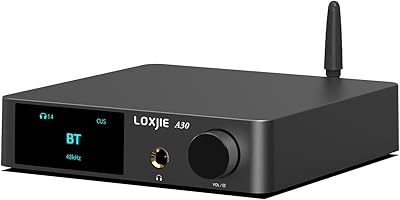
LOXJIE A30
LOXJIE A30
79%
86%
Sound Quality
82%
Build Quality
91%
Value for Money
89%
Input Versatility
63%
Bluetooth Performance
More

FAQ

Yes, the PM6007 has a built-in moving-magnet phono stage, so any standard MM cartridge turntable plugs straight into the dedicated phono input. If your turntable has a built-in preamp already, just use one of the standard line-level inputs instead and bypass the onboard phono stage.

No, this Marantz amplifier has no wireless features whatsoever — no Bluetooth, no Wi-Fi, no AirPlay. That is an intentional design decision aimed at listeners who prioritize a clean analog signal path. If you need wireless streaming, you would have to add a separate network streamer or DAC with Bluetooth and connect it via one of the five analog inputs.

For most home listening rooms and with moderately efficient speakers — say, 87 dB sensitivity or higher — 45 watts is more than sufficient. The PM6007 also delivers 60 watts into 4-ohm loads, so it handles a wider range of speakers than the headline figure suggests. Very large rooms or very power-hungry speakers are where you might start to feel the limit.

It works well with a broad range of bookshelf and floorstanding speakers. Brands like KEF, Wharfedale, Klipsch, and ELAC are commonly paired with this integrated amp by owners and reviewers alike. Aim for speakers with a sensitivity of 86 dB or above to get the most dynamic range out of the 45-watt output. Extremely low-sensitivity or demanding planar speakers may not be the ideal match.

Absolutely. It has five analog RCA line-level inputs, so a CD player, external DAC, tape deck, or any analog source connects without issue. Just note there are no digital inputs (no optical, coaxial, or USB), so whatever source you connect must have its own digital-to-analog conversion before reaching the amp.

It is a genuine, usable headphone output rather than an afterthought, and most users report it sounds clean and capable with mid-impedance headphones. That said, dedicated headphone amplifiers at this price tier will generally outperform it for critical headphone-only listening. For casual or secondary use, though, it does the job well.

It does not support moving-coil cartridges directly — the built-in phono stage is MM only. If you have an MC cartridge, you would need either a step-up transformer or a separate MC phono preamp between the turntable and the amp.

The PM6007 genuinely feels well-built. At over 23 pounds, it is not a hollow-chassis, cost-cut unit. The input selector and volume knob have a satisfying, mechanical feel, and the rear panel connectors are gold-plated and solid. Most users who handle it are immediately struck by how substantial it feels compared to budget amplifiers.

Yes, the rear panel speaker terminals accept bare wire, spade connectors, and standard banana plugs without any issue. They are a conventional binding post design common to most hi-fi amplifiers in this class.

Marantz recommends leaving adequate space above and around the unit for heat dissipation, as the chassis can get warm during extended use at higher volumes. A few inches of clearance on the top and sides is generally sufficient for typical home use — just do not stack anything directly on top of it or enclose it in a sealed cabinet.

Where to Buy