MakerFocus WiFi LoRa 32 Development Board

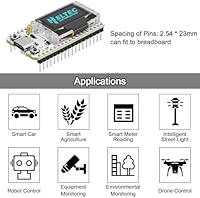
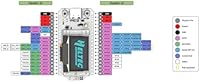
Overview
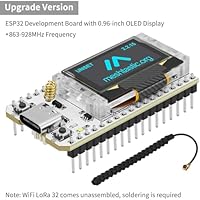
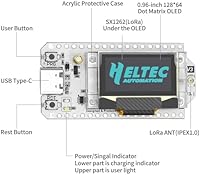
The MakerFocus WiFi LoRa 32 Development Board has been a fixture in the maker community since 2017, and it still holds up as one of the more practical all-in-one wireless prototyping platforms you can get your hands on. Pack WiFi, Bluetooth, and 915 MHz LoRa onto a board barely two inches long and you have something genuinely useful for IoT experimentation. The Meshtastic community in particular has embraced it enthusiastically — it flashes without drama and joins a mesh network quickly. A Type-C port and a small OLED display round things out, making this ESP32 LoRa board feel more considered than similarly priced alternatives.
Features & Benefits
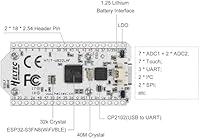
The hardware inside this WiFi LoRa 32 module is well-chosen for the price point. The Semtech SX1262 radio handles 915 MHz LoRa communication — a newer and generally more efficient chip than the older SX1276 found on competing boards, useful if you need to reach a gateway a kilometer or more away. An onboard CP2102 chip means you can plug in a USB cable and flash straight away, no separate adapter needed. Eight megabytes of flash gives you plenty of room for complex firmware, and the built-in battery management circuit means you can run off a small LiPo without any additional components.
Best For
This ESP32 LoRa board is an obvious pick for anyone setting up a Meshtastic mesh network — firmware support is well-tested and the community has documented the setup process thoroughly. Beyond that, it works well for Arduino-based IoT projects where you need long-range radio alongside WiFi without cobbling together multiple modules. Think remote soil moisture sensors reporting back to a farm gateway, or a GPS tracker pinging its position across open terrain. Developers on Windows, macOS, or Linux can all get up and running without OS-specific headaches. It is not the right fit for production hardware, but as a rapid prototyping platform, it punches well above its weight.
User Feedback
Across its 400-plus ratings, the MakerFocus LoRa dev board holds a solid 4.4 stars, and most buyers highlight how quickly it reaches a working state — plug in, flash, done. The compact footprint and onboard OLED get specific mentions as practical, day-to-day touches. Criticism tends to cluster around documentation: official resources can be sparse for true beginners, and a handful of users report inconsistent antenna performance over longer distances. Experienced ESP32 developers rarely complain; they know how to fill the gaps themselves. Newcomers occasionally hit a learning curve around driver installation or pin mapping. Build quality, to its credit, is rarely questioned — most buyers find it solid.
Pros
- Flashes quickly with no extra adapter needed, thanks to the onboard CP2102 USB-to-serial chip.
- The SX1262 LoRa radio is a newer, more efficient chip than what many competing boards offer at this price.
- Triple connectivity — WiFi, Bluetooth, and 915 MHz LoRa — eliminates the need to stack or wire separate modules.
- Meshtastic firmware compatibility is well-tested, making mesh network setup straightforward for most users.
- Built-in lithium battery management means you can power a field deployment from a small LiPo without extra circuitry.
- The 0.96-inch OLED display is a practical touch — useful for showing signal status or sensor readings during testing.
- Eight megabytes of flash provides generous room for complex firmware and over-the-air update buffers.
- Works out of the box on Windows, macOS, and Linux without hunting for obscure drivers.
- The IPEX U.FL antenna port lets experienced users upgrade or swap the LoRa antenna for longer-range builds.
- Compact dimensions make it easy to fit into enclosures or strap onto a backpack for portable Meshtastic nodes.
Cons
- Official documentation is sparse, and beginners often have to piece together setup guides from community forums.
- Antenna performance over maximum claimed distances can be inconsistent depending on environment and placement.
- Pin labeling on the board is small and can be difficult to read without a magnifier or printed reference sheet.
- No onboard GPS, so location-aware applications like Meshtastic tracking require an external module and extra wiring.
- The SH1.25 battery connector is non-standard and harder to source than the more common JST-PH 2.0 format.
- With only 512 KB of RAM, heavily concurrent firmware tasks can hit memory limits faster than expected.
- Customer support from the manufacturer is limited; resolution often depends on community goodwill rather than official channels.
- The included 915 MHz antenna is functional but basic — a worthwhile early upgrade for users prioritizing range.
Ratings
The scores below reflect our AI-driven analysis of verified global user reviews for the MakerFocus WiFi LoRa 32 Development Board, with spam, incentivized, and bot-generated feedback actively filtered out before scoring. Each category captures both what buyers genuinely love and where real frustrations emerge, giving you an honest picture of what to expect before you buy. Nothing has been smoothed over — the weak spots are scored as candidly as the strengths.
Ease of Setup
LoRa Radio Performance
Meshtastic Compatibility
Build Quality
Value for Money
Documentation Quality
Power Efficiency
OLED Display Usability
Antenna Upgrade Path
Cross-Platform Compatibility
Battery Integration
Arduino IDE Integration
Form Factor & Portability
Thermal Behavior
Suitable for:
The MakerFocus WiFi LoRa 32 Development Board is a strong fit for makers, hobbyists, and developers who want to experiment with long-range wireless communication without building a radio stack from scratch. It is particularly well-suited to Meshtastic enthusiasts who need a reliable, community-tested board they can flash and deploy into a mesh network the same afternoon. Remote sensing projects — think agricultural monitoring across large fields, asset tracking in areas without cell coverage, or simple weather station relays — are exactly where this board's combination of LoRa range and WiFi connectivity shines. Arduino developers who have outgrown simple Wi-Fi projects and want to explore LoRaWAN or point-to-point radio links will find the learning curve manageable. The onboard OLED and battery management also make it practical for portable, field-deployed builds where you need at-a-glance status and untethered power.
Not suitable for:
The MakerFocus WiFi LoRa 32 Development Board is a prototyping tool, not a finished product, and buyers who misunderstand that distinction tend to be the least satisfied. If you are looking for something to drop into a commercial or safety-critical application, this is not the right starting point — it lacks certifications and the kind of hardened, documented support you would need. Complete beginners with no prior microcontroller experience may struggle; official documentation from the manufacturer is thin in places, and troubleshooting often means leaning on community forums rather than a polished guide. Users who need 868 MHz for European LoRa deployments should also look elsewhere, as this specific variant targets the 915 MHz band used in North America and parts of Asia. Finally, anyone expecting plug-and-play consumer simplicity will be disappointed — this board rewards patience and a willingness to read datasheets.
Specifications
- Processor: Powered by an Espressif ESP32 dual-core CPU running at 240 MHz, providing ample processing headroom for concurrent wireless tasks.
- RAM: Onboard RAM is 512 KB, which is sufficient for most Arduino and Meshtastic firmware builds but worth keeping in mind for memory-intensive applications.
- Flash Storage: 8 MB of onboard flash storage gives developers generous space for firmware, file systems, and over-the-air update staging.
- LoRa Radio: Uses the Semtech SX1262 LoRa transceiver, a modern, power-efficient chip that improves on older SX1276-based designs in sensitivity and current draw.
- LoRa Frequency: Operates on the 915 MHz band, making it compatible with LoRaWAN infrastructure and Meshtastic deployments in North America and select regions.
- WiFi: Supports IEEE 802.11 b/g/n WiFi via the ESP32's integrated radio, using the onboard 2.4 GHz metal spring antenna.
- Bluetooth: Includes Bluetooth Classic and BLE via the ESP32 chipset, sharing the same 2.4 GHz onboard antenna as WiFi.
- USB Interface: Features a Type-C USB port for both power delivery and firmware flashing, replacing the older Micro-USB connector found on earlier revisions.
- USB-to-Serial: An integrated Silicon Labs CP2102 chip handles USB-to-serial conversion, eliminating the need for an external UART adapter during development.
- Display: Includes a 0.96-inch OLED screen with 128×64 pixel resolution, suitable for displaying sensor readings, connection status, or debug output.
- Battery Connector: Equipped with an SH1.25 2-pin battery connector and an onboard lithium battery charging and protection circuit for safe LiPo integration.
- Antenna (LoRa): Ships with a 915 MHz external antenna attached via SMA connector, with an additional IPEX U.FL footprint reserved for custom antenna installations.
- Dimensions: The board measures 2.05 × 1.00 × 0.05 inches, making it compact enough to fit in small project enclosures or wearable housings.
- Weight: Weighs just 0.16 ounces without a battery, keeping it practical for portable or weight-sensitive field deployments.
- Operating Voltage: Accepts 5V input via the Type-C port; the onboard regulator steps this down appropriately for the ESP32 and peripheral components.
- Compatible OS: Development is supported on Windows, macOS, and Linux, with CP2102 drivers available for all three platforms.
- Firmware Support: Compatible with the Arduino IDE, standard LoRaWAN libraries, and Meshtastic firmware, covering a wide range of hobbyist and IoT use cases.
- Number of Cores: The ESP32 contains two processing cores, allowing developers to offload radio or display tasks onto a separate core from the main application loop.
Related Reviews
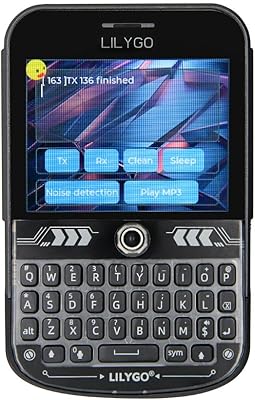
LILYGO T-Deck Plus ESP32-S3 915MHz
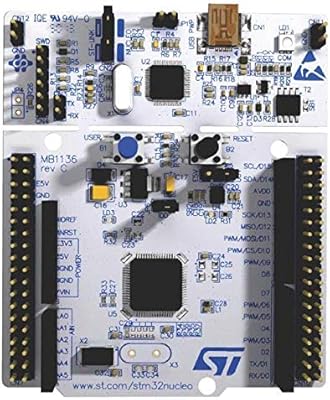
STMicroelectronics NUCLEO-L476RG
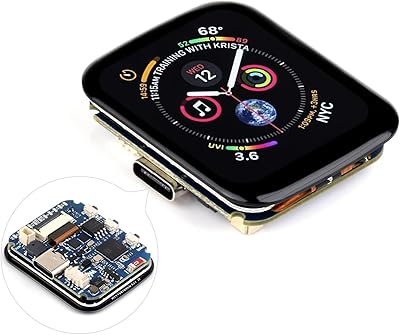
Waveshare ESP32-S3 1.69inch Touch Display Development Board

Pulp Riot Ten 10 Volume Premium Developer 32 oz
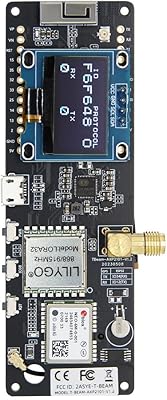
LILYGO T-Beam Meshtastic 915MHz
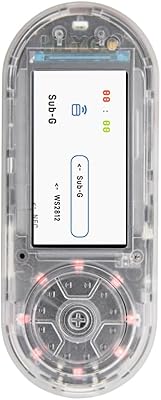
LILYGO T-Embed CC1101
Boogie Board Scribble n' Play Drawing Board
OKN AX210 WiFi 6E PCIe Card
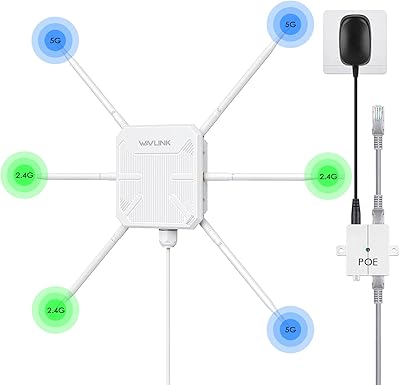
WAVLINK WN588HX3 WiFi 6 Outdoor Access Point