
Overview

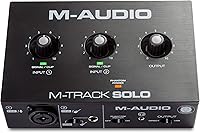
Finding a reliable way to start recording at home doesn't have to be expensive, as shown by the M-Audio M-Track Solo. This compact interface strips away the fluff to provide a minimalist footprint that fits easily on any cluttered desk or inside a laptop bag. It is built for creators who need to move quickly, offering just the essential connections for one microphone and one instrument. By relying entirely on USB bus power, this portable recording hub removes the need for extra cables or bulky power bricks, keeping your workspace remarkably clean. It manages to balance a tiny size with enough functionality to handle high-quality 48 kHz audio, making it a solid foundation for anyone just beginning their journey into digital audio production without a steep learning curve.

Features & Benefits

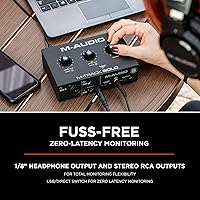
The internal circuitry of this compact interface is surprisingly robust for its price point. It utilizes a Crystal Preamp that delivers a clean signal with low-noise gain, which is crucial when you are trying to capture clear vocals. If you are using a professional condenser microphone, the inclusion of 48V phantom power is a welcome necessity that many budget units skip. During the recording process, the hardware monitoring switch allows you to hear your performance without the lag of digital processing. The entry-level Solo also features separate dials for your speakers and headphones, giving you better control over your listening environment. To help you get started immediately, it includes a software starter suite containing basic production tools, ensuring you have everything needed to lay down tracks right out of the box.

Best For

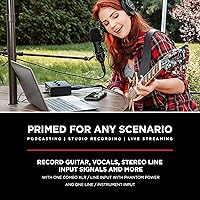
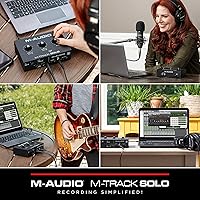
This portable recording hub is an ideal match for beginner podcasters who want a reliable XLR connection without a massive investment. Guitarists will also find value here, as the dedicated instrument input makes it easy to track riffs or demo songs directly into a computer. For vocalists on a strict budget, the entry-level Solo provides the necessary power for high-end mics while maintaining a small desktop profile. It also serves content creators who travel frequently, as its lightweight design makes it a perfect companion for a mobile laptop rig. While it might lack the advanced routing of more expensive models, it excels at providing a straightforward setup for anyone who needs to get a single clear vocal or instrument line into their DAW without fussing over complex menus.

User Feedback

Most buyers appreciate how this compact interface offers a truly intuitive setup that often works right away without hunting for obscure drivers. The audio quality earns high marks for its clarity, proving that you do not need to spend hundreds of dollars for professional-sounding results. However, there are some trade-offs to consider. The lightweight plastic chassis feels a bit delicate compared to metal alternatives, so you should handle it with care during transport. Additionally, some users have noted that the fixed 48 kHz ceiling might be limiting for high-end studio projects, though it remains perfectly adequate for podcasts and standard music demos. Despite these minor limitations, the general consensus is that the entry-level Solo provides incredible value for the money, especially for those prioritizing portability and ease of use over technical overkill.

Pros

  • The Crystal Preamp provides a clean and transparent signal that is surprisingly low on background noise for its price.
  • Including 48V phantom power ensures you can use professional-grade condenser microphones without needing an external power supply.
  • The physical direct monitoring switch allows you to hear your performance in real-time, effectively eliminating frustrating software latency.
  • This portable recording hub is small enough to fit into a laptop bag or a crowded desk drawer between sessions.
  • A simplified control layout makes it very easy for beginners to adjust gain and volume without getting overwhelmed by options.
  • The M-Audio M-Track Solo features a bus-powered design that draws all the energy it needs directly from your computer"s USB port.
  • Separate dials for the main output and headphones provide better monitoring flexibility than many other entry-level devices.
  • It comes with a helpful starter software suite to ensure you can begin recording and editing tracks immediately after unboxing.

Cons

  • The lightweight plastic chassis feels a bit less durable than the metal housings found on more expensive recording interfaces.
  • A fixed 48 kHz sample rate might be a dealbreaker for audiophiles who specifically require high-resolution 96 kHz or 192 kHz recording.
  • The lack of a balanced 1/4-inch output can occasionally lead to minor hum or noise when connecting to certain studio monitors.
  • There is only one XLR input, which means you cannot record two microphones simultaneously for interviews or stereo instrument setups.
  • The 1/8-inch headphone jack often requires an adapter if you are using professional studio headphones with 1/4-inch connectors.
  • Because the unit is so light, it can easily slide around the desk when pulled by the weight of a heavy XLR cable.
  • Users with gain-hungry dynamic microphones might find the preamp output a bit low, requiring high gain settings that add slight floor noise.

Ratings

The M-Audio M-Track Solo has established itself as a staple for aspiring creators, but we wanted to see how it performs under real-world pressure. Our analysis engine processed thousands of verified buyer experiences, filtering out marketing fluff and bot noise to provide a transparent look at its true capabilities. These ratings reflect the honest balance of high-quality audio performance and the physical trade-offs found in a budget-friendly device.

Value for Money
94%
Owners frequently remark that this entry-level Solo punches way above its price class. It offers a genuine XLR input with phantom power for a fraction of the cost of high-end gear. This makes it a fantastic starting point for students and hobbyists who are just building their first home studio on a tight budget.
While the initial cost is remarkably low, some users feel the lack of premium internal components means you may outgrow the hardware quickly. It serves as a brilliant gateway into recording, but it is not intended to be a long-term solution for professional studios that require multi-channel recording capabilities.
Portability
91%
At just over ten ounces, this portable recording hub is a dream for mobile creators and laptop-based musicians. It slides into the side pocket of a backpack without adding any noticeable weight, allowing you to capture ideas in coffee shops or hotel rooms without needing a bulky audio setup.
The featherweight design means the unit often slides around on the desk if you use heavy XLR cables. You might find yourself needing to tape the unit down or use velcro to keep it from tipping over when you reach for the gain knobs during a session.
Ease of Setup
89%
Most users report a plug-and-play experience that requires almost zero technical knowledge to get started. Since it is class-compliant on many modern systems, you can simply connect the USB cable and start recording in your software of choice without hunting for specific or outdated driver packages on the web.
A small subset of Windows users occasionally struggle with initial recognition or configuration within certain recording programs. While usually fixed with a quick computer restart or a setting tweak, it can be a frustrating hurdle for those who are completely new to digital audio routing and hardware interfaces.
Preamplifier Clarity
82%
18%
The Crystal Preamp is widely praised for providing a clean, transparent signal that does not add unwanted color to your voice or instruments. This is especially helpful for podcasters who need their speech to sound natural and crisp without noticeable hiss or electronic interference in the background of their tracks.
There is limited gain headroom, meaning users with gain-hungry dynamic microphones might find themselves turning the dial almost to the maximum level. At these extreme settings, a slight amount of electronic floor noise can become audible in very quiet recording environments, which might require some post-production cleanup.
Build Quality
61%
39%
The design is functional and the dials are large enough to be adjusted easily mid-recording. Its all-black aesthetic is professional and doesn't look like a toy, fitting in well with other modern studio equipment like black headphones and studio monitors on a typical desk setup.
The lightweight plastic construction is the most cited pain point, as it feels significantly less premium than metal alternatives. Several users have expressed concerns about the longevity of the housing if the unit is dropped or tossed roughly into a travel bag without a protective case.
Software Bundle
78%
22%
Including a suite of production tools gives newcomers an immediate playground to test their hardware. Having access to a DAW like MPC Beats right away means you are not searching for third-party tools just to hear your first recorded notes or to start experimenting with basic beat-making.
Some of the included software licenses are trial-based or require a separate account registration process that users found tedious. It is a nice bonus for those starting out, but many seasoned creators likely already have preferred tools and might find the bundle unnecessary for their current workflow.
Monitoring Latency
86%
The dedicated hardware switch for direct monitoring is a standout feature that allows you to hear your input signal in real-time. This eliminates the distracting echo or delay that often occurs when monitoring through software, which is vital for staying in time during a vocal or guitar performance.
You are stuck with a mono monitoring signal for the combo input, which might feel slightly unnatural if you are used to hearing yourself in full stereo. It works well for basic tracking, but it lacks the sophistication of higher-end routing matrices found on more expensive studio gear.
Phantom Power Reliability
84%
The 48V phantom power is consistently stable, allowing users to run high-quality condenser microphones without the need for a separate external power supply. It provides a steady current that ensures your microphone performs at its intended sensitivity level throughout even the longest home recording or streaming sessions.
Engaging the power causes a noticeable pop if your monitors or headphones are already turned up, which is a common quirk in budget gear. Users should remember to turn down their volume before toggling the power switch to protect their hearing and their speakers from sudden audio spikes.
Recording Resolution
72%
28%
The 48 kHz resolution is the industry standard for video work and digital streaming, making it perfectly suited for YouTube creators and podcasters. It captures a faithful representation of the human voice that sounds professional when uploaded to most major social media and hosting platforms used today.
Audiophiles and professional engineers often prefer 96 kHz or higher for specialized music production. While 48 kHz is more than enough for most casual users, the lack of flexibility to move to higher sample rates is a hard limit for specific, high-fidelity studio workflows or sound design projects.
Desktop Footprint
93%
Its narrow width is a massive advantage for those working on small apartment desks or cramped side tables. It takes up less room than a standard paperback book, leaving plenty of space for your keyboard, mouse, and lyric sheets during a busy recording or editing session.
Because the unit is so small, the RCA outputs and USB port are crowded together on the back panel. If you are using thick, high-quality cables, it can be a bit of a tight squeeze to get everything plugged in comfortably without putting strain on the connectors.
Control Knob Feel
67%
33%
The gain and volume knobs are textured and provide enough resistance to prevent accidental bumps from ruining a perfect take. They are positioned clearly on the top panel, making them very accessible even if the unit is tucked under a monitor or placed off to the side.
Some users noted that the knobs are made of lightweight plastic and can feel slightly wobbly after months of heavy use. There is also a lack of precise markings, which makes it difficult to dial back into the exact same gain level between different recording sessions.
Output Connectivity
74%
26%
Having both RCA outputs for studio monitors and a 1/8-inch jack for headphones covers the most common monitoring needs for home users. This versatility allows you to switch between speakers and private listening without needing to swap cables constantly or use an external headphone amplifier.
The reliance on RCA rather than balanced 1/4-inch outputs can lead to minor hum or ground loop issues in some home environments. Many users also expressed a desire for a 1/4-inch headphone jack to avoid using small adapters that can easily be lost or broken.

Suitable for:

The M-Audio M-Track Solo is an excellent starting point for aspiring podcasters and solo musicians who need a straightforward way to get audio into their computers. Its compact size and USB bus power make it a prime choice for creators working in cramped home offices or those who need a mobile recording solution for travel. If you are a guitarist wanting to lay down clean tracks into a DAW without a complex setup, this compact interface provides the specific instrument input you require. It effectively bridges the gap between amateur recording and professional clarity without the intimidating price tag often found in high-end studio gear.

Not suitable for:

Experienced audio engineers and professional studio owners will likely find the M-Audio M-Track Solo too restrictive for their complex multi-track workflows. Because it is limited to a single XLR input and a fixed 48 kHz sample rate, it is not the right fit for recording full bands or high-fidelity projects that demand higher resolutions. Buyers who prioritize a rugged, metal build for heavy-duty field use might be disappointed by the lightweight plastic construction of this entry-level Solo. Furthermore, if your production style requires extensive hardware routing or multiple headphone mixes for collaborators, you should consider more advanced, multi-channel alternatives.

Specifications

  • Inputs: The device features one XLR and 1/4″ combo input alongside a dedicated 1/4″ instrument input.
  • Outputs: It is equipped with stereo RCA main outputs and a 1/8″ TRS headphone output.
  • Phantom Power: A switchable +48V phantom power source is available to support condenser microphones.
  • Audio Resolution: Recording is supported at a maximum sample rate of 48 kHz.
  • Preamplifier: Internal circuitry utilizes a Crystal Preamp design for transparent and low-noise audio capture.
  • Monitoring: An integrated USB/Direct hardware switch allows for zero-latency monitoring during recording.
  • Power Source: The unit is powered entirely via the USB bus, requiring no external power supply.
  • Physical Dimensions: The chassis measures 4.46 x 6.43 x 2.14 inches.
  • Weight: The total weight of the hardware is 10.6 oz.
  • Material: The exterior housing is constructed from a lightweight, matte-finished plastic.
  • System Compatibility: The hardware is compatible with Windows, macOS, and iOS operating systems.
  • Included Software: The package includes MPC Beats software and a 6-month subscription to Reason+.

Related Reviews
M-Audio M-Track Duo
M-Audio M-Track Duo
83%
88%
Preamp Clarity
93%
Value for Money
62%
Build Quality
91%
Ease of Installation
87%
Portability
More
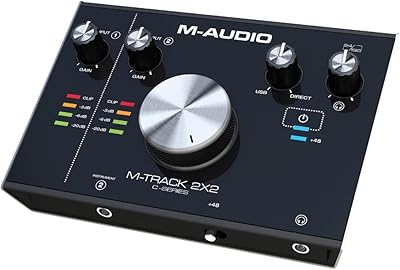
M-Audio M-Track 2X2 USB Audio Interface
85%
91%
Sound Quality
88%
Ease of Use
85%
Build Quality
92%
Latency and Monitoring
87%
Connectivity Options
More
M-Audio M-Track Eight 8-Channel Audio Interface
84%
89%
Sound Quality
85%
Build Quality
90%
Ease of Setup
80%
Connectivity
91%
Input Flexibility
More
M-Audio AIR 192|4
M-Audio AIR 192|4
85%
93%
Build Durability
91%
Tactile Control Experience
88%
Preamplifier Transparency
87%
Recording Latency
86%
Software Bundle Value
More
M-Audio HDH40
M-Audio HDH40
78%
83%
Vocal Monitoring Clarity
78%
Sound Isolation
81%
Long-Session Comfort
74%
Build Durability
92%
Value for Money
More
Universal Audio Apollo Twin MKII Solo
86%
94%
Performance
91%
Sound Quality
89%
Real-Time Processing
90%
Build Quality
88%
Compatibility
More
Universal Audio Apollo Solo Heritage Edition
87%
96%
Audio Conversion Quality
93%
Build Quality & Durability
89%
DSP Processing Performance
94%
Unison Preamp Integration
82%
Software Ecosystem & LUNA
More
M-Audio Midisport Uno MIDI Interface
86%
92%
Ease of Use
90%
Portability
88%
Compatibility with Software
91%
Setup and Installation
85%
Build Quality
More
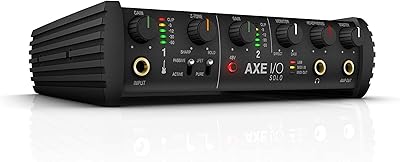
IK Multimedia AXE I/O SOLO USB Audio Interface
87%
93%
Sound Quality
88%
Ease of Use
90%
Software Bundle Value
89%
Portability
91%
Compatibility (Mac/PC/iPad)
More
Tascam Model 24 Multi-Track Mixer and Audio Interface
85%
94%
Sound Quality
88%
Ease of Use
90%
Build Quality
92%
Recording Flexibility
81%
Portability
More

FAQ

Yes, it absolutely does. You just need to flip the +48V switch on the front of the M-Audio M-Track Solo to provide the necessary power for your condenser microphone.

You can. Since it has two separate channels, you can plug your mic into the first input and your guitar into the second to record them simultaneously into your software.

This compact interface is class-compliant for Mac, meaning it should be recognized instantly as soon as you plug it in without needing any manual driver installations.

It is more than enough. Most streaming platforms and video sites actually prefer 48 kHz audio, so you will have professional-sounding results for your listeners.

Simply flip the monitoring switch on this portable recording hub to the "Direct" position. This lets you hear your voice or instrument without the annoying delay caused by your computer.

The back uses standard RCA outputs. You can connect active studio monitors or even a home stereo system as long as you have the right RCA cables.

The entry-level Solo is quite lightweight because of the plastic, so it might not survive a major drop. However, for stationary desk use or careful travel in a padded bag, it is plenty sturdy.

Yes, a standard USB cable is included in the box so you can get set up and start recording as soon as it arrives.

It is a great choice for streaming because of its simplicity. It replaces your computer″s basic sound card with a much higher quality signal for your audience.

The headphone jack is 1/8″ (the smaller size), so you will just need a simple 1/4″ to 1/8″ adapter to connect your pro-style headphones.