Overview

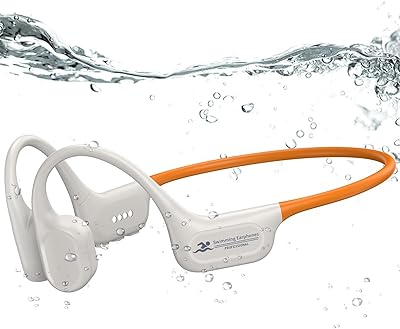
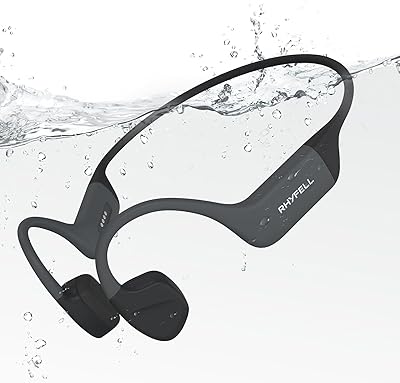
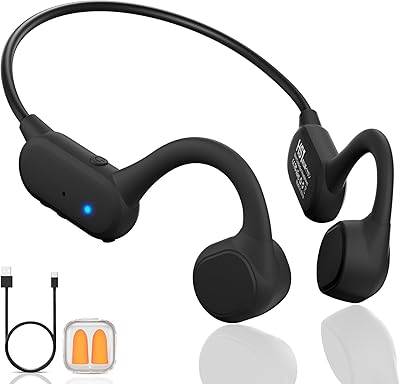
The LOBKIN X21 Bone Conduction Swimming Headphones enter a crowded category with a straightforward pitch: bone conduction technology at a price that doesn't require much deliberation. Instead of sitting inside or over your ears, they transmit sound through your cheekbones, leaving your ear canals open — genuinely useful whether you're navigating traffic on a morning run or catching a lifeguard's signal at the pool. At just 29 grams with a flexible titanium frame, they're barely noticeable during long sessions. The X21 operates in two distinct modes — Bluetooth for dry-land use and onboard MP3 for underwater listening — a practical split that rewards users who take a moment to understand how each one works.
Features & Benefits

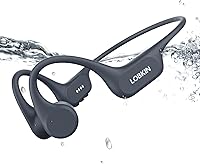
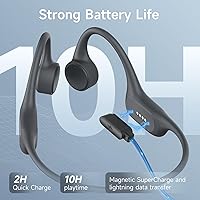
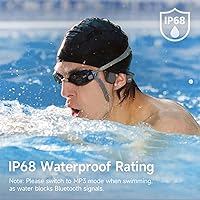
The IP68 waterproof rating is the headline spec here, and it earns its place — this isn't a vague splash-resistant claim but a genuine clearance for pool use. Because Bluetooth doesn't transmit through water (a physics limitation, not a product flaw), the onboard 32GB storage becomes the real workhorse for swimmers, holding thousands of tracks loaded in advance so your phone stays dry on the bench. Above water, Bluetooth 5.4 pairs quickly and holds a reliable connection within roughly ten meters. Battery life stretches to ten hours, and the two-hour charge time means a short top-up before a session is usually all you need. Memory foam ear hooks contribute meaningfully to stability during high-movement workouts.

Best For

These bone conduction headphones fit best in the hands of lap swimmers who want music without the clunky workaround of waterproof phone cases. Triathletes will appreciate having a single headset that moves from pool to bike to run, provided they stay on top of which mode they need for each leg. Road runners and cyclists get a genuine safety benefit from the open-ear design, since ambient awareness on public roads actually matters. This swim-ready headset also works well as a first entry into bone conduction for anyone curious about the format but hesitant to spend flagship prices to test the waters, so to speak. Gym-goers who dislike the isolation of traditional earbuds will find it a relaxed, comfortable daily option.

User Feedback

With over 500 ratings sitting at a 4.5-star average, the response to the X21 reflects real satisfaction rather than inflated scores. Buyers frequently point to waterproof reliability and the practical value of built-in storage as the reasons they'd recommend it. The honest edge of the feedback, though, concerns audio character: bone conduction inherently rolls off bass and allows some sound to escape to nearby people — neither issue is unique to this headset, but both are worth knowing before buying. A handful of reviewers note that the control buttons are awkward to find while wearing swim goggles. MP3 file transfer draws occasional friction from less tech-comfortable users, while battery performance in real-world use appears to align reasonably well with the stated spec.

Pros

  • IP68 waterproofing means genuine pool submersion use, not just rain or splash protection.
  • 32GB of storage comfortably holds thousands of tracks without needing a phone nearby.
  • At 29 grams, these bone conduction headphones are light enough to forget you are wearing them.
  • The titanium frame holds its shape over time and resists the warping that plagues cheaper sport headsets.
  • Bluetooth 5.4 pairs faster and holds a steadier connection than older-generation chips in rival budget models.
  • Ten hours of battery life covers even the longest training days without a mid-session recharge.
  • Open-ear design keeps cyclists and runners aware of traffic, dogs, and other hazards while listening.
  • The two-hour charge time is short enough that a quick plug-in before heading out is rarely an inconvenience.
  • Compatible with both iOS and Android, so it works regardless of which phone ecosystem you are in.
  • A strong 4.5-star average across 500-plus reviews suggests consistent real-world satisfaction, not a handful of outliers.

Cons

  • Bass response is noticeably thin compared to in-ear buds — bone conduction physics, not a defect, but still a letdown for certain listeners.
  • Sound leaks outward at moderate volume, which can disturb people sitting nearby in quiet settings.
  • Control buttons are reportedly difficult to locate and press accurately while wearing swim goggles.
  • Transferring MP3 files to the device requires manual file management, which is a friction point for less tech-savvy users.
  • No dedicated app means limited EQ control or firmware update options compared to more established competitors.
  • LOBKIN is a newer brand without the long-term reliability track record of more established names in the category.
  • Bluetooth cannot transmit underwater, so swimmers must remember to switch modes before every pool session.
  • The 10-meter Bluetooth range is adequate but not generous; obstacles and interference can reduce it further in practice.

Ratings

The scores below for the LOBKIN X21 Bone Conduction Swimming Headphones were generated by our AI system after analyzing verified purchaser reviews from global markets, with spam, incentivized, and bot-flagged submissions actively filtered out. The ratings reflect the honest distribution of buyer sentiment — strengths and frustrations weighted equally — so you get a clear picture of where this headset genuinely delivers and where it falls short.
Waterproof Reliability
91%
Swimmers consistently report confidence in the IP68 rating after repeated pool sessions, with no water ingress complaints dominating the feedback. Buyers who have used the headset across both chlorinated pools and open-water swims describe it holding up without issue over weeks of regular use.
A small subset of long-term users raise questions about seal durability after six-plus months of heavy chlorine exposure, which is worth monitoring. No widespread failure reports exist yet, but the brand's limited track record means long-term data is still thin.
Fit & Stability
84%
The titanium wraparound frame and memory foam contact points earn consistent praise for staying put during runs, cycling sessions, and lap swimming. Users with average head sizes report a secure, comfortable fit that doesn't require constant readjustment mid-workout.
Buyers with smaller or narrower heads occasionally find the fit looser than ideal, and the hook design can interact awkwardly with certain swim goggle straps. A small number of users note mild pressure discomfort during sessions exceeding two hours.
Audio Quality
58%
42%
For podcasts, audiobooks, and uptempo workout music, most users find the clarity of mids and highs more than adequate. Swimmers who primarily use the headset for motivation rather than critical listening report being satisfied with the overall sound experience.
Bass response is noticeably weak — an inherent trait of bone conduction technology, but one that still draws frequent disappointment from buyers expecting in-ear-level richness. Sound leakage at moderate volume is a real issue in quiet environments, and the frequency ceiling of 16 kHz means the audio ceiling is modest.
Battery Life
78%
22%
The majority of buyers confirm that real-world battery life lands close to the stated 10-hour figure under normal mixed-use conditions, which comfortably covers long training days or travel. A full recharge in around two hours is considered genuinely convenient by regular users.
A portion of reviewers report battery performance dropping noticeably at higher playback volumes, with some citing closer to 7–8 hours in practice. There is no battery indicator beyond basic audio cues, which can make it difficult to gauge remaining charge before a long session.
Onboard MP3 Usability
67%
33%
The 32GB storage capacity is widely appreciated — swimmers love not needing to manage a waterproof phone case or worry about streaming connectivity at the pool. Users who are comfortable with basic file management find the drag-and-drop transfer process quick and reliable.
Buyers less familiar with manual file transfers find the setup process frustrating, particularly those accustomed to app-based music sync. There is no playlist management interface on the device itself, so track organization must be done entirely on the source computer before transfer.
Bluetooth Performance
81%
19%
Bluetooth 5.4 earns positive remarks for fast, stable pairing with both iOS and Android devices during outdoor runs and gym sessions. Users switching between a phone and a tablet report the reconnection experience being notably smoother than with older-generation sport headphones.
A few users note occasional audio stuttering when the phone is stowed in a bag or jersey pocket during cycling, where the signal path is partially obstructed. The 10-meter range is adequate in open air but shrinks meaningfully in crowded environments like busy gyms.
Build Quality
77%
23%
The titanium frame feels premium relative to the price tier, and the ABS housing shows no signs of cracking or surface degradation under normal sport use. Multiple reviewers note the headset feels more solidly constructed than they expected given the accessible price point.
The charging port cover and magnetic charging connection feel like the most vulnerable components, with a handful of users reporting wear in those areas after extended daily use. The overall construction is competitive for the price but does not match the finish quality of top-tier alternatives.
Button Controls
61%
39%
On dry land, the physical buttons are generally described as responsive and easy to operate with one hand during a run. Users who cycle with the headset find the button layout manageable while wearing gloves in mild conditions.
The most consistent complaint across reviews involves button usability in the water — locating and pressing the right button while wearing swim goggles is genuinely awkward. Button labeling and tactile differentiation between controls is insufficient for confident operation without looking, which is a real limitation mid-lap.
Weight & Comfort
88%
At 29 grams, the headset is light enough that most users forget they are wearing it after a few minutes, which is meaningful praise for a device intended for multi-hour workouts. Runners in particular highlight the low-fatigue wearing experience compared to heavier over-ear sport headphones.
The memory foam contact points, while comfortable initially, can feel warm against the skin during high-intensity outdoor workouts in hot weather. A very small number of users with sensitive skin report mild irritation after prolonged contact, though this appears to be an edge case.
Value for Money
86%
Relative to established bone conduction brands, the X21 offers a compelling feature set — IP68 waterproofing, 32GB storage, Bluetooth 5.4, and a titanium frame — at a price that represents a meaningful saving. First-time bone conduction buyers in particular cite strong satisfaction given what they paid.
The value equation depends heavily on whether the format suits your listening habits; buyers who expected traditional headphone sound quality feel the purchase was misjudged regardless of price. Brand trust and long-term reliability are still unknowns that slightly temper the value proposition for cautious shoppers.
Ease of Setup
72%
28%
Pairing via Bluetooth is fast and largely trouble-free for the majority of users, with no complex app installation required. Out-of-the-box readiness is frequently cited as a positive — most buyers are using the headset within minutes of unboxing.
The MP3 setup process is a friction point specifically for less tech-comfortable users, and the manual's instructions for file transfer are considered sparse by a portion of buyers. Switching between Bluetooth and MP3 mode via button combinations takes some memorization before it becomes second nature.
Situational Awareness
89%
Road runners and cyclists consistently highlight the open-ear design as a practical safety feature that sealed earbuds simply cannot replicate. Hearing ambient traffic, trail hazards, or a training partner's call while music is playing is described as a meaningful quality-of-life difference by regular outdoor athletes.
In very noisy environments — busy roads, loud pools, crowded gyms — the open design means music can be harder to hear at safe volume levels. Users who want genuine noise isolation for focus or commuting will find the format fundamentally unsuited to that use case.
Charging & Cable
63%
37%
The two-hour charge time is considered fast enough for practical daily use, and most buyers are satisfied with the overall charging experience. The magnetic connection is convenient in the sense that it is easy to attach in low-light conditions.
The proprietary magnetic charging cable is a single point of failure — losing or damaging it means the headset is unusable until a replacement arrives. Reviewers note that the cable feels light and fragile relative to the device itself, and USB-C would have been a more future-proof choice.
Sound Leakage
49%
51%
In outdoor or pool environments where ambient noise is naturally high, the leakage is largely a non-issue and most users around you will not notice. Athletes training outdoors rarely report this as a problem in practice.
In quiet indoor settings — offices, libraries, quiet transit — the leakage is noticeable to people within a meter or two, which restricts where the headset can comfortably be used. This is a structural characteristic of open-ear bone conduction and cannot be resolved through volume management alone.

Suitable for:

The LOBKIN X21 Bone Conduction Swimming Headphones are a strong fit for anyone whose workouts regularly cross between water and dry land. Lap swimmers get the most direct benefit — the 32GB onboard storage means you load your playlist in advance and forget about your phone entirely once you're at the pool. Triathletes and multi-sport athletes will appreciate not having to swap between different devices for each discipline, since the X21 handles pool sets, bike rides, and runs from a single charge. Road runners and cyclists who train in traffic are another natural audience: hearing a car approaching or a cyclist calling out while your music plays is a real safety advantage that sealed in-ear buds simply can't offer. Budget-conscious shoppers curious about bone conduction but unwilling to pay premium prices for established names will find this a genuinely low-risk way to try the format without significant financial commitment.
Not suitable for:

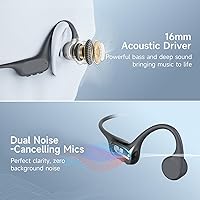
The LOBKIN X21 Bone Conduction Swimming Headphones are a poor match for anyone who buys headphones primarily for audio quality. Bone conduction as a technology trades bass response and overall richness for its open-ear design — that is not a flaw specific to this model, but a fundamental characteristic of the format, and listeners accustomed to full-range in-ear or over-ear sound will likely find the experience underwhelming. The open-ear nature also means sound leaks outward, making these uncomfortable for quiet environments like libraries, open-plan offices, or late-night use when others are sleeping. Buyers who are not comfortable transferring MP3 files manually to a device may find the offline music setup frustrating, since streaming is not an option once you enter the water. Anyone looking for active noise cancellation or deep sound isolation for focus work or commuting should look elsewhere entirely.
Specifications

  • Model: The unit is identified as model X21, manufactured by LOBKIN.
  • Driver Type: Audio is delivered via bone conduction drivers, which transmit sound through the cheekbones rather than the ear canal.
  • Bluetooth Version: The headset uses Bluetooth 5.4, offering faster pairing and more stable connectivity than previous generations.
  • Bluetooth Range: Wireless range extends up to 10 meters under typical open-air conditions.
  • Internal Storage: 32GB of onboard flash memory allows offline playback without a connected device.
  • Waterproof Rating: IP68 certification means the headset can withstand continuous submersion beyond 1 meter, making it suitable for pool use.
  • Battery Life: A full charge delivers up to 10 hours of continuous playback in either Bluetooth or MP3 mode.
  • Charge Time: The battery reaches full capacity in approximately 2 hours via the included charging cable.
  • Weight: The headset weighs 29 grams, placing it among the lighter options in the bone conduction category.
  • Frame Material: The wraparound frame is constructed from a flexible titanium alloy designed to resist warping over time.
  • Ear Fit: An open-ear hook style is used, with memory foam contact points that rest against the cheekbones rather than inside the ear.
  • Impedance: Driver impedance is rated at 8 Ohm.
  • Sensitivity: Sensitivity is specified at 86 dB.
  • Frequency Response: The stated frequency response extends up to 16 kHz.
  • Compatibility: The headset pairs with iOS and Android smartphones and tablets via standard Bluetooth.
  • Body Material: External housing is made from Acrylonitrile Butadiene Styrene (ABS) plastic.
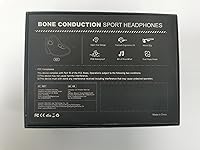
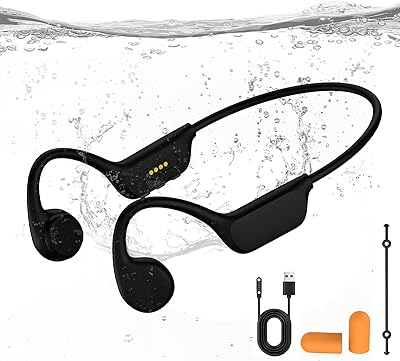
  • In the Box: Each unit ships with the headset, a magnetic charging cable, and a user manual.
  • Age Range: Designed for adults and teens; not intended for young children.

Related Reviews

Hostena X26 Bone Conduction Swimming Headphones


78%
83%
Waterproof Reliability
71%
Underwater Audio Performance
62%
Bone Conduction Sound Quality
88%
Comfort & Fit
86%
Battery Life
More
Rhyfell Swim 5 Bone Conduction Headphones 32GB
86%
89%
Sound Quality in MP3 Mode
92%
Waterproof Performance
85%
Comfort and Fit
80%
Battery Life
84%
Bluetooth Connectivity
More
KOPIDOE X7 32GB Bone Conduction Swimming Headphones
78%
88%
Waterproof Performance
84%
Fit & Stability
61%
Audio Quality
86%
Underwater Usability
83%
Battery Life
More
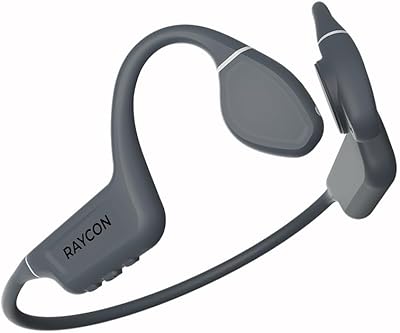
Raycon Bone Conduction Headphones RBB842
74%
91%
Water Resistance
93%
Situational Awareness
87%
Battery Life
63%
Audio Quality
82%
Fit & Stability
More
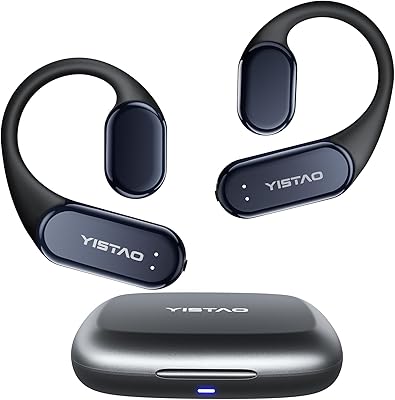
Yistao B8 Bone Conduction Open-Ear Headphones
77%
91%
Comfort & Fit
88%
Battery Life
86%
Waterproofing
63%
Audio Quality
51%
Sound Leakage
More
Hitarah X19 Bone Conduction Headphones
83%
90%
Comfort and Fit
72%
Sound Quality
85%
Battery Life
88%
Build Quality
93%
Waterproof Rating (IPX7)
More
Enerair A20 Bone Conduction Headphones
73%
84%
Value for Money
81%
Comfort & Fit
63%
Sound Quality
88%
Water & Sweat Resistance
76%
Battery Life
More
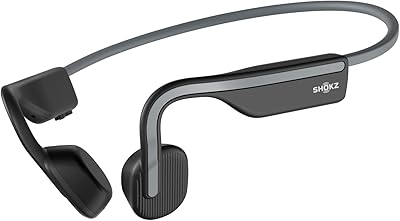
Shokz OpenMove
Shokz OpenMove
84%
96%
Situational Awareness
92%
Long-Term Comfort
88%
Build Quality & Durability
84%
Value for Money
91%
Charging Convenience
More
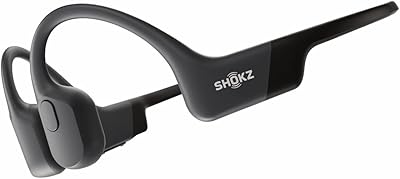
Shokz OpenRun
Shokz OpenRun
82%
97%
Situational Awareness
93%
Fit and Comfort
88%
Water and Sweat Resistance
84%
Battery Life
92%
Quick Charging Capability
More
PSIER X11 Bone Conduction Headphones
77%
88%
Comfort & Wearability
84%
Secure Fit During Activity
61%
Sound Quality
93%
Open-Ear Situational Awareness
52%
Sound Leakage
More

FAQ

The IP68 rating means these can handle genuine submersion, so lap swimming is fully supported. That said, Bluetooth signals do not travel through water, so you will need to load your music onto the 32GB internal storage and switch to MP3 mode before you get in the pool. Think of the two modes as separate tools: Bluetooth for dry land, onboard storage for the water.

No app is required. When you plug the headset into a computer using the included charging cable, it shows up as a USB storage device, just like a flash drive. You drag and drop MP3 or other compatible audio files directly into the folder. It is straightforward if you have ever moved files between a computer and a USB stick, though it may feel unfamiliar if you are used to streaming-only devices.

The titanium wraparound frame and memory foam contact points are designed to keep things stable during movement. Most swimmers report a secure fit during normal lap sessions, though an unusually aggressive flip turn or a very narrow head shape might need a short trial period to dial in the fit. They are considerably more stable than earbuds with no frame support.

Bone conduction headphones as a category have a distinct sound character: clear mids and highs, but noticeably reduced bass compared to in-ear buds. The X21 sits in the mid-range of the bone conduction market, so the audio is functional and enjoyable for podcasts, audiobooks, and uptempo music, but it will not satisfy listeners who want deep, rich sound. Setting that expectation upfront prevents disappointment.

Yes, some sound leakage is a natural consequence of the open-ear design — the vibrations that reach your cheekbones also radiate a small amount of sound outward. At moderate volume in a noisy pool environment it is rarely an issue, but in a quiet room or office it becomes noticeable to people sitting nearby. This is true of virtually all bone conduction headphones, not just the X21.

The Shokz OpenSwim is a well-established benchmark in swim-specific bone conduction headphones, and it is more expensive. The X21 offers similar core features — IP68 waterproofing, onboard MP3 storage, and an open-ear frame — at a lower price point. The trade-off is that Shokz has a longer track record and a more refined audio tuning. If you are new to bone conduction and want to test whether the format suits you before committing more money, the X21 is a reasonable starting point.

The device is designed around common audio formats including MP3. Based on the product category, WAV and WMA files are typically supported as well, though LOBKIN does not publish an exhaustive format list in the product specifications. Sticking to standard MP3 files at common bitrates is the safest approach to avoid compatibility issues.

Switching between modes is handled via the onboard control buttons — a press-and-hold combination toggles between Bluetooth and MP3 playback. The exact sequence is detailed in the included user manual. It takes a little practice to memorize the button layout, but most users get comfortable with it after a few sessions.

Yes, in Bluetooth mode the headset supports hands-free calls. The open-ear design actually works in your favor here: you can hear both the caller and your surroundings clearly, which is more practical on a run than a sealed in-ear setup. Call quality depends partly on ambient noise levels, as with any open-ear device.

Rinsing the headset with fresh water after each pool session is the standard recommendation for any IP68-rated swim headphone. Chlorine buildup over time can degrade seals and materials, so a quick rinse and air dry goes a long way toward extending the lifespan. Avoid submerging them in fresh water for extended soaking periods beyond normal use, and keep the charging port dry before plugging in.