Overview

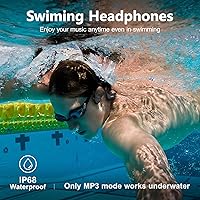
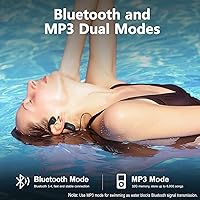
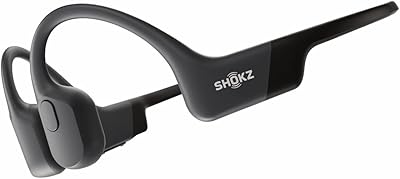
The Rhyfell Swim 5 Bone Conduction Headphones arrived at an interesting moment — more swimmers and triathletes than ever are hunting for reliable waterproof audio without paying a premium price. What makes these swim headphones worth a closer look is the dual-mode setup: underwater, you rely on onboard MP3 storage; on land, you pair via Bluetooth 5.4. One important clarification upfront — Bluetooth does not function while submerged, which is standard for this category but still catches buyers off guard. The open-ear design keeps ears unobstructed, which matters when you need to hear a coach, a lane partner, or passing traffic. A solid option for casual-to-moderate swimmers, not an audiophile device.
Features & Benefits

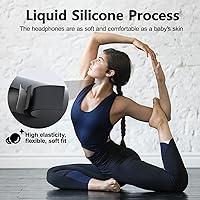
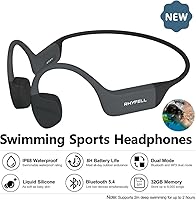
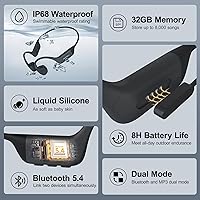
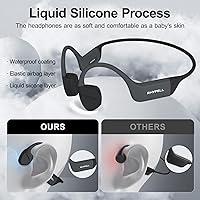
The IP68 waterproof rating is the headline feature here — these swim headphones can handle up to two meters of water depth for two hours, covering everything from pool training to open-water events. Onboard storage holds around 8,000 songs and supports a wide range of file types, so you load tracks once and leave your phone on the pool deck. At just 32 grams, the liquid silicone build is genuinely comfortable during long sessions; no hot spots, no ear fatigue. Battery life runs about eight hours on a charge, with a two-hour magnetic charging turnaround — workable for most weekly training schedules. The included silicone earplugs and adjustable neckband rope help lock the fit under a cap or alongside goggles, a practical touch.

Best For

The Rhyfell Swim 5 is a clear fit for lap swimmers and triathletes who want music or podcasts without bringing a phone poolside. Runners and cyclists benefit too — the open-ear format means you stay aware of traffic and terrain rather than being cut off from the world. Office workers who log hours in video calls have found the light, pressure-free fit genuinely useful as an all-day wear option. That said, if you expect punchy bass and detailed highs, this bone conduction swimmer will disappoint — consider a higher-end model with in-canal drivers instead. Budget-conscious athletes who want both pool and land coverage in one device get real value here.

User Feedback

Early buyers of this bone conduction swimmer have praised two things in particular: how securely it stays put during flip turns and how effortlessly the mode switch works between MP3 and Bluetooth. Several users note it feels noticeably lighter than traditional sports headphones. On the critical side, bass is thin — that is a physical reality of bone conduction technology, not a flaw unique to this device. A handful of less tech-savvy users found the MP3 file-loading process fiddly at first. The earplugs reduce water noise effectively, though most users treat them as optional for dry-land activities. Worth flagging: the product launched in mid-2025, so long-term durability data is still limited — keep that in mind before committing.

Pros

  • Genuinely waterproof to two meters deep, handling lap sessions and open-water training without worry.
  • 32GB of storage brings your entire music library to the pool with no phone required.
  • Open-ear bone conduction keeps you aware of coaches, traffic, and surroundings at all times.
  • At just 32 grams, these swim headphones barely register on your head during extended wear.
  • Eight hours of playback covers even the longest training blocks with charge to spare.
  • Dual-mode design gives you one device for both pool workouts and dry-land activity.
  • Magnetic charging cable reconnects easily and delivers a full charge in about two hours.
  • Included silicone earplugs and adjustable neckband rope help lock fit under a swim cap.

Cons

  • Bass response is noticeably thin — an honest limitation of bone conduction physics, not a defect.
  • Bluetooth is entirely non-functional underwater; you cannot stream from your phone in the pool.
  • Loading music requires manual file transfer to the device, which can frustrate less tech-savvy users.
  • Launched in mid-2025, so multi-year durability and seal reliability simply have not been tested yet.
  • Sound leakage is a real trait of open-ear designs — audible to others in quiet settings.
  • Rhyfell is a lesser-known brand, and long-term after-sales support remains an open question.
  • The neckband form factor feels unfamiliar at first for users coming from traditional in-ear styles.

Ratings

The scores below reflect an AI-powered analysis of verified buyer feedback for the Rhyfell Swim 5 Bone Conduction Headphones, sourced from global reviews with spam, bot activity, and incentivized submissions actively filtered out. Each category is scored based on patterns drawn from real-world usage reports, weighing what buyers consistently praised against the pain points they repeatedly raised. Both strengths and shortcomings are transparently reflected so you can make a confident, well-informed purchase decision.

Waterproof Performance
88%
The triple-sealed IP68 rating holds up in real pool conditions — users report completing full lap sessions, including flip turns and underwater push-offs, without audio cutout or device failure. Open-water swimmers and triathletes specifically appreciate not having to treat the headphones delicately during hard training blocks.
A recurring note from users is that the IP68 rating is validated in fresh water, and performance in saltwater or heavy surf remains less predictable. A handful of buyers also noted that the charging port seal requires deliberate attention before entry — leaving it unsecured is an easy mistake that can compromise the waterproof protection.
Audio Quality
61%
39%
For podcasts, audiobooks, and spoken-word content, these swim headphones deliver audio clear enough to follow comfortably during pool sessions or outdoor runs. The 16.1mm drivers push more overall volume than many competing bone conduction units, which users switching from older models often notice immediately.
Bass is genuinely thin — drum kicks, electronic music, and bass guitar lines lose most of their weight, which is an inherent physical limitation of bone conduction and not something a firmware update can fix. Listeners who primarily train to hip-hop, EDM, or bass-driven playlists are likely to find the sound profile underwhelming over time.
Fit & Stability
84%
The neckband-plus-rope combination does what it promises — once the silicone rope tension is dialed in, the headphones stay firmly anchored through flip turns, sprint sets, and aggressive open-water strokes. Runners report the same reliability on technical trails and during high-cadence intervals.
Getting the fit right the first time requires a few minutes of deliberate adjustment — the rope length and neckband position both need to be set correctly, which can feel fiddly compared to a standard in-ear pair. Users with unusually narrow or wide heads have occasionally reported that the default neckband tension does not sit comfortably without modification.
Comfort
89%
At just 32 grams and made entirely from liquid silicone, these swim headphones are easy to forget you are wearing — multiple users mention completing two-hour pool sessions or full workdays at a desk without any pressure soreness or skin irritation. The open-ear positioning also avoids the hot, stuffy feeling common with sealed over-ear designs.
A small number of users with particularly prominent cheekbone structures reported mild vibration discomfort at the transducer contact points during very long high-volume sessions. The neckband, while flexible, can feel slightly stiff on first use and typically needs a short break-in period to fully conform to the back of the neck.
Battery Life
86%
Eight hours of continuous audio at moderate volume covers multiple training sessions without mid-week charging becoming a chore — most users top up once or twice a week at most. The two-hour magnetic recharge turnaround is genuinely fast for this category, meaning a short rest between sessions gets you back to full power.
The stated eight-hour figure assumes 60% volume, and users who push higher — common outdoors against background noise — report real-world life closer to five or six hours. There is no battery indicator light on the unit itself, so knowing exactly how much charge remains means relying on audio prompts, which some users find imprecise.
Build Quality
73%
27%
The full liquid silicone construction feels durable and premium to the touch — it does not have the hollow, plasticky feel common in budget waterproof headphones. The button controls have a satisfying tactile click that holds up reliably through repeated wet-handed use across pool and outdoor sessions.
Rhyfell is a newer brand with a limited track record, and the Swim 5 launched in mid-2025, meaning there is simply no data yet on how the seals and internal components hold up after a year or more of regular pool use. A few early buyers noted minor surface scuffing on the transducer housing after repeated sessions with textured swim caps.
Ease of Use
71%
29%
Switching between MP3 and Bluetooth modes is handled by a single button hold — straightforward once learned, and most users have the muscle memory within a few sessions. The physical button layout is simple enough to operate by feel, even while wearing goggles or light gloves during outdoor winter workouts.
Loading MP3 files requires plugging into a computer and manually transferring tracks into a folder — there is no companion app, no wireless sync, and no streaming integration. For users accustomed to wireless earbuds that just pair and play, this file management step creates a friction point that comes up consistently in critical reviews.
Value for Money
83%
Getting 32GB storage, IP68 waterproofing, dual-mode functionality, and a comfortable bone conduction design in one package is hard to argue with at this price — competitors offering similar specs often cost significantly more. Budget-conscious triathletes and fitness beginners consistently call this one of the better purchases in their training kit.
Buyers expecting premium audio comparable to higher-end competitors may feel that spending a little more would have been worth it for better sound. The absence of a companion app, any volume display, and a more established support infrastructure are corners that feel lightly cut compared to what legacy audio brands deliver at similar prices.
Bluetooth Performance
79%
21%
Bluetooth 5.4 delivers noticeably faster initial pairing than older versions, and users report that reconnection to a previously paired device is essentially instant — useful when transitioning between swim and bike quickly during a triathlon brick session. Signal stability within the 10-meter range held up consistently in gym environments and on open roads.
The core frustration buyers return to is that Bluetooth cannot be used underwater — which, while technically expected, still generates disappointment from customers who did not read the product description carefully before purchasing. A small number of users in dense urban environments also reported occasional audio dropout in crowded Bluetooth-heavy spaces like busy subway platforms.
MP3 Setup Experience
67%
33%
Once the initial file transfer is complete, the onboard playback itself is reliable — format compatibility is broad, and the 32GB capacity is generous enough that most users never need to manage their library again after the first load. Podcast listeners and audiobook fans in particular report smooth, uninterrupted playback during long pool sessions.
The absence of a companion app or playlist management software means file organization is entirely manual, requiring users to build folder structures themselves on a computer. Non-tech-savvy users — particularly those unfamiliar with USB file management — have consistently flagged this as the most frustrating part of the entire setup process.
Situational Awareness
92%
This is where bone conduction design genuinely excels, and the Rhyfell Swim 5 delivers — users can hear lane-sharing swimmers, coach instructions, cycling traffic, and trail hazards without removing the headphones or pausing audio. Commuters specifically praise the ability to catch station announcements and navigation prompts while still listening to a podcast.
At higher volumes, bone conduction vibrations can create slight audio bleed — nearby people in quiet settings like a library or open-plan office may occasionally overhear what you are listening to. This is not unique to this model but is worth considering if you plan to wear these throughout a full shared workday at close desk proximity.
Charging System
77%
23%
The magnetic connector is one of the more practical design choices here — it snaps into alignment quickly even when hands are wet or fumbling poolside. A two-hour full recharge from empty means a brief lunch break or post-training rest is all it takes to be ready for the next day.
The charging cable is proprietary, meaning a lost or damaged cable requires sourcing a Rhyfell-specific replacement rather than grabbing a standard USB-C from a nearby store. Users who travel frequently or manage multiple proprietary cables have flagged this as a frustrating inconvenience in an era when universal charging standards are increasingly the norm.
Microphone Quality
69%
31%
For routine calls — during a commute, a run, or from a home desk — the built-in microphone handles standard conversations without the person on the other end constantly asking you to repeat yourself. Echo cancellation does reduce the hollow, reverb-heavy quality that plagues many bone conduction microphones in similar use cases.
In windy outdoor conditions during a road run or cycling session, the microphone picks up significant ambient noise that makes calls noticeably harder for the listener on the other end. Users looking to rely on this bone conduction swimmer for regular professional video calls or any kind of audio recording will find the microphone output falls well short of dedicated headset quality.
Accessory Quality
78%
22%
The included silicone earplugs are noticeably higher quality than the afterthought plugs that ship with many competing waterproof headphones — they seal comfortably without a vacuum feeling and meaningfully reduce pool echo during swimming. The adjustable neckband rope is soft and flexible, and users appreciate it being included in the box rather than sold separately.
The box includes only a single magnetic charging cable, and given its proprietary nature, losing it creates an immediate problem that a spare would have easily prevented. A few users also noted that the instruction manual, while adequate, would benefit from clearer visual diagrams for the mode-switching button sequences, particularly for first-time bone conduction users.

Suitable for:

The Rhyfell Swim 5 Bone Conduction Headphones make the most sense for swimmers who want to stop staring at a black line in silence — the onboard 32GB storage removes the need to waterproof a phone or carry a separate device. Triathletes who rotate between swim, bike, and run segments will appreciate the dual-mode flexibility: MP3 playback in the water, then Bluetooth pairing for the rest of the session. Runners and cyclists who care about road and trail awareness are a natural fit too, since the open-ear format lets you hear coaches, cars, and surroundings without ever removing the headphones. Remote and office workers who wear headphones for hours at a stretch will find the lightweight, pressure-free silicone construction noticeably kinder on the ears than traditional in-ear or over-ear alternatives. Budget-conscious athletes who want a single device that genuinely bridges pool and land-based training, without committing to separate premium products for each, will find the overall value proposition here compelling.
Not suitable for:

If you care deeply about audio quality — full bass, crisp highs, and an immersive listening experience — the Rhyfell Swim 5 Bone Conduction Headphones will fall short, because bone conduction technology has real acoustic limitations that no driver size fully compensates for. Swimmers who want to stream music directly from Spotify, Apple Music, or any app while in the water will be disappointed; Bluetooth is strictly a land-only feature, and underwater listening depends entirely on files you load manually onto the device beforehand. Users who are uncomfortable with drag-and-drop file management on a computer may find the MP3 setup process more cumbersome than expected, since there is no companion app to simplify the process. Anyone who trains regularly in rough open water or surf conditions should also be cautious — the IP68 rating handles calm pool submersion well, but the brand offers limited data on performance in more aggressive aquatic environments. Finally, buyers who already own dedicated waterproof audio gear and a solid Bluetooth headset may find little reason to consolidate into this crossover device.
Specifications

  • Brand & Model: Manufactured by Rhyfell under the Swim 5 product line, with internal model designation X16.
  • Audio Technology: Uses bone conduction to transmit sound vibrations through the cheekbones rather than into the ear canal, keeping ears fully open during use.
  • Driver Size: Each transducer measures 16.1mm across, which is on the larger end for bone conduction units and supports broader audio output.
  • Waterproof Rating: Certified IP68, allowing submersion in up to 2 meters of fresh water for up to 2 continuous hours.
  • Internal Storage: Built-in 32GB flash storage holds approximately 8,000 songs for offline, phone-free playback in MP3 mode.
  • Bluetooth Version: Equipped with Bluetooth 5.4 for fast, stable wireless pairing with phones, tablets, and smartwatches on land.
  • Bluetooth Range: Maintains a reliable wireless connection up to 10 meters from the paired device in open-air conditions.
  • Battery Life: Provides up to 8 hours of continuous audio playback measured at 60% volume on a single full charge.
  • Charge Time: Fully recharges in approximately 2 hours using the proprietary magnetic charging cable included in the box.
  • Weight: The complete headphone unit weighs 32 grams, keeping head-load minimal during extended training sessions.
  • Material: Entire frame and skin-contact surfaces are made from full liquid silicone, which is hypoallergenic and leaves no pressure indentations during long wear.
  • Ear Placement: Classified as open-ear and on-ear, with transducers resting on the cheekbones without entering or sealing the ear canal.
  • Microphone: Integrates a built-in microphone with echo cancellation, supporting hands-free calls when connected via Bluetooth on land.
  • Playback Modes: Operates in two distinct modes: onboard MP3 playback for underwater use, and Bluetooth streaming for land-based listening only.
  • File Formats: Compatible with common audio formats including MP3, WAV, FLAC, and iTunes M4A files when loaded directly onto the device.
  • In-Box Contents: Package includes the headphones, a magnetic charging cable, two silicone earplugs, an adjustable silicone neckband rope, and a printed instruction manual.

Related Reviews
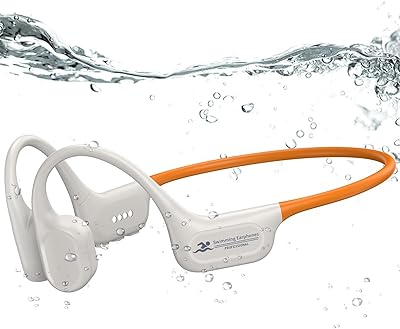
Hostena X26 Bone Conduction Swimming Headphones
78%
83%
Waterproof Reliability
71%
Underwater Audio Performance
62%
Bone Conduction Sound Quality
88%
Comfort & Fit
86%
Battery Life
More
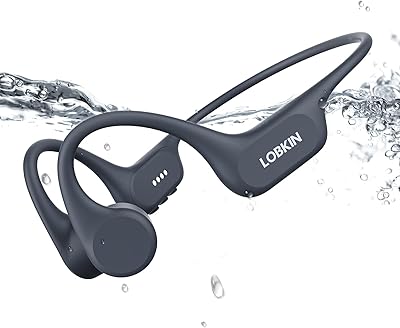
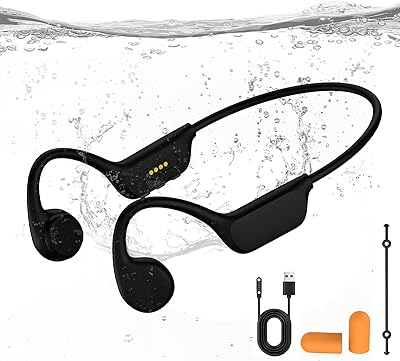
LOBKIN X21 Bone Conduction Swimming Headphones
75%
91%
Waterproof Reliability
84%
Fit & Stability
58%
Audio Quality
78%
Battery Life
67%
Onboard MP3 Usability
More
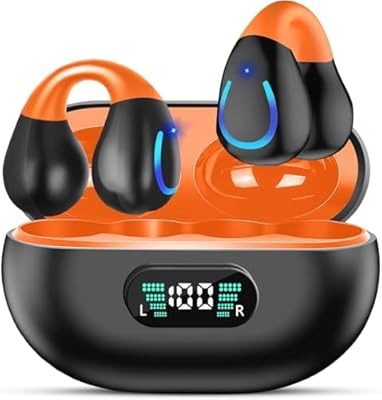
KOPIDOE X7 32GB Bone Conduction Swimming Headphones
78%
88%
Waterproof Performance
84%
Fit & Stability
61%
Audio Quality
86%
Underwater Usability
83%
Battery Life
More
NUPLEA Q71 Open-Ear Clip-On Earbuds
71%
83%
Wearing Comfort
79%
Stability During Exercise
62%
Sound Quality
44%
Sound Leakage
57%
Microphone & Call Quality
More
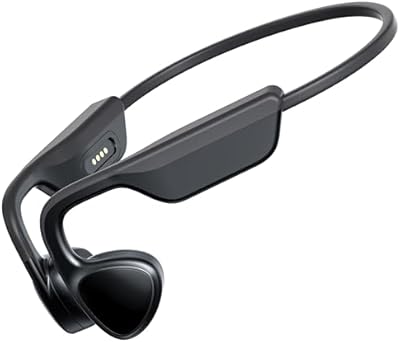
Raycon Bone Conduction Headphones RBB842
74%
91%
Water Resistance
93%
Situational Awareness
87%
Battery Life
63%
Audio Quality
82%
Fit & Stability
More
Qyzue S27 Bone Conduction Headphones
79%
91%
Comfort & Wearability
88%
Fit & Stability
86%
Battery Life
67%
Sound Quality
83%
Bluetooth Connectivity
More
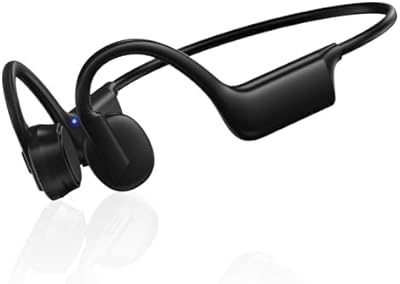
PSIER X11 Bone Conduction Headphones
77%
88%
Comfort & Wearability
84%
Secure Fit During Activity
61%
Sound Quality
93%
Open-Ear Situational Awareness
52%
Sound Leakage
More
Ogogrs K08 Bone Conduction Open-Ear Headphones
70%
81%
Comfort & Fit
58%
Sound Quality
83%
Battery Life
88%
Situational Awareness
52%
Microphone Quality
More
Enerair A20 Bone Conduction Headphones
73%
84%
Value for Money
81%
Comfort & Fit
63%
Sound Quality
88%
Water & Sweat Resistance
76%
Battery Life
More
IFECCO X25 Bone Conduction Headphones
78%
91%
Value for Money
84%
Comfort & Fit
58%
Sound Quality
86%
Battery Life
79%
Bluetooth Connectivity
More

FAQ

No — Bluetooth does not function underwater, and this is true of virtually all wireless headphones, not just these. To listen in the pool, you load your music onto the 32GB internal storage beforehand and switch to MP3 mode before getting in the water. It is a simple two-mode system, but understanding that distinction upfront saves a lot of frustration.

You plug the headphones into your computer using the included magnetic charging cable, and the device shows up as a standard USB storage drive. From there, you drag and drop your audio files directly into the folder — no special app or software required. iTunes M4A files, MP3s, WAV, and FLAC all transfer without conversion.

Most users find they stay secure once properly fitted, thanks to the neckband design combined with the adjustable silicone rope that comes in the box. The key is taking a few minutes to get the neckband tension and rope length right before your first serious session. After that initial adjustment, flip turns are generally not an issue.

They are entirely optional depending on your use case. In the pool, some swimmers find that water noise entering the open ear canal is distracting enough to warrant them; others do not notice it at all. For running, cycling, or office use, you almost certainly will not want them — they are specifically helpful for reducing background splash noise while swimming.

Yes, but only in Bluetooth mode on land. The built-in microphone with echo cancellation handles standard calls reasonably well for everyday conversations. Do not expect studio-grade clarity, but for a quick call during a run or at your desk, it works fine.

The IP68 rating is based on fresh water testing, so saltwater performance is less guaranteed. Salt is corrosive over time, and ocean waves can create pressure and turbulence beyond controlled lab conditions. If you do swim in the sea, rinse them thoroughly under fresh running water afterward and let them air-dry completely before your next session.

The switch is done using the physical button controls on the unit — the instruction manual covers the exact sequence, which involves holding a button for a few seconds to toggle modes. Most people get comfortable with it after a session or two. Just make sure you switch to MP3 mode before you enter the water.

A thorough rinse under fresh running water right after swimming is the most important step, since chlorine residue can degrade materials over time. After rinsing, wipe them down gently with a soft cloth and let them air-dry before placing them on the magnetic charger. Avoid soap or chemical cleaners near the transducer areas.

The sensation takes one or two sessions to get used to; instead of sound coming into your ears, you feel it as gentle vibrations on your cheekbones. Podcasts, audiobooks, and spoken-word content come through clearly, but bass-heavy music will sound noticeably flatter than what you get from in-ear headphones — that is simply a physical limitation of the technology, not a defect. If you go in with realistic expectations, the adjustment period is usually quick.

The eight-hour rating is measured at 60% volume, which is a reasonable midpoint for most listeners. At higher volumes or in colder temperatures, expect closer to six or seven hours. For the majority of training schedules, one charge easily covers a full week of workouts without needing a daily top-up.