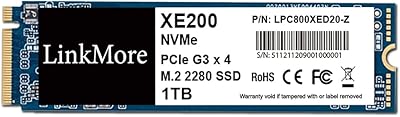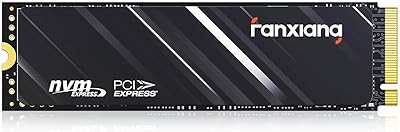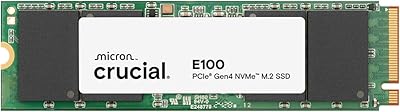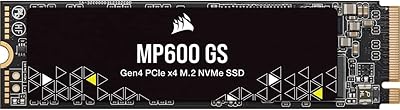



Overview

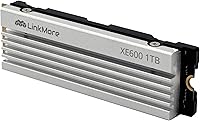
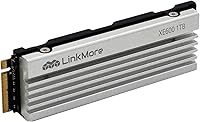
The LinkMore XE600 1TB Gen4 NVMe M.2 SSD enters a crowded storage market as a cost-conscious option aimed squarely at PS5 owners ready to expand beyond the console's built-in capacity. It's sold under the LinkMore label but manufactured by Moment Semiconductor in Taiwan — a detail worth knowing for anyone who does their homework on lesser-known brands. The 1TB sweet spot makes practical sense: large enough to hold a meaningful game library without paying a premium for capacity most users won't immediately fill. What sets it apart from comparable drives is that it ships with a heatsink already attached, and the full lineup scales all the way to 8TB for those who want more room to grow.

Features & Benefits

Running on PCIe Gen4 x4 with NVMe 1.4, the XE600 reaches peak sequential read speeds of 7,200 MB/s — a clear step above Gen3 drives, though keep in mind that figure reflects ideal, controlled conditions rather than the mixed workloads of actual gaming. One thing worth flagging: the product description lists a write speed of 600 MB/s, while the official spec table shows 6,500 MB/s — a discrepancy LinkMore should address openly. The pre-installed heatsink is a genuine plus inside the PS5 chassis where airflow is tight, and the M.2 2280 form factor drops straight into the expansion bay without any adapter. The drive is rated dust and shock resistant, though NAND type remains undisclosed.

Best For

This Gen4 NVMe drive makes the most sense for PS5 owners who have chewed through the console's base storage and want a practical upgrade without spending heavily. It's also a reasonable pick for PC builders who want heatsink and drive bundled together in one purchase. That said, it's not the right call for anyone who demands verified endurance ratings or wants a well-known NAND supplier behind their storage. If you're a casual-to-moderate gamer who cares more about fitting more titles on the drive than chasing peak benchmark numbers, the XE600 fits that bill well. Performance enthusiasts and professional workstation users would be better served by more established alternatives with documented long-term specs.

User Feedback

With a 4.7-star average across more than 600 ratings, buyer sentiment around this PS5 SSD upgrade skews strongly positive. The most consistent praise is about how smooth the PS5 installation experience is — the drive slots in cleanly, and the console recognizes it without issue. Real-world gaming performance, from what buyers report, holds up respectably under normal play conditions. On the other side, a few users raise concerns about long-term reliability, which is a fair point for any newer brand still building its track record. Warranty support responsiveness is another area that warrants more observation over time. Encouragingly, no widespread thermal issues appear in the feedback, suggesting the heatsink handles heat load well in practice.

Pros

  • Ships with a pre-installed aluminum heatsink, saving you the trouble of sourcing one separately.
  • Slots directly into the PS5 M.2 expansion bay with no adapter or extra hardware required.
  • Gen4 speeds are more than sufficient for smooth PS5 game loading and quick data transfers.
  • A 4.7-star average across 600+ reviews reflects consistently positive real-world buyer experiences.
  • The 1TB capacity comfortably holds a solid game library without demanding constant storage juggling.
  • Manufactured in Taiwan by Moment Semiconductor, offering more production transparency than many budget-tier alternatives.
  • Available in capacities ranging up to 8TB, so upgrading storage later stays within the same product family.
  • Dust and shock resistance ratings add a layer of everyday durability confidence beyond basic SSD offerings.

Cons

  • The NAND type is not publicly disclosed, making independent long-term endurance assessment nearly impossible.
  • A write speed discrepancy between the product description and the spec table remains unexplained by LinkMore.
  • As a newer brand, LinkMore has a limited track record compared to established names like Samsung or WD.
  • The 7,200 MB/s peak read speed reflects ideal lab conditions; sustained real-world gaming loads run noticeably lower.
  • Warranty support responsiveness has not been widely tested or documented by the broader buyer community yet.
  • Independent third-party benchmark coverage for this specific drive is scarce, limiting pre-purchase research options.
  • The brand's short market history makes confident long-term durability predictions difficult to form.

Ratings

Our team analyzed verified global buyer reviews for the LinkMore XE600 1TB Gen4 NVMe M.2 SSD using an AI-assisted process that actively filters out incentivized, bot-generated, and low-signal feedback to surface what real users genuinely experienced. The scores below reflect both the standout strengths and the honest pain points that emerged across hundreds of validated purchases. Nothing has been softened — if buyers ran into friction, it shows in the numbers.

PS5 Compatibility
93%
Buyers consistently report a plug-and-play experience inside the PS5, with the drive recognized immediately after the on-screen format prompt. The M.2 2280 form factor fits the expansion bay perfectly, and no one has needed an adapter or workaround to get it seated correctly.
A small number of users noted that the heatsink's added thickness required extra care when reattaching the PS5 side panel, and those unfamiliar with the console internals found it slightly intimidating the first time around.
Installation Ease
91%
The most frequently praised aspect across all buyer feedback is how straightforward the physical installation is — both for PS5 and PC. The pre-attached heatsink eliminates an extra assembly step that competing drives often leave to the buyer.
PC builders with tightly packed motherboards occasionally reported that the heatsink's height created clearance conflicts with nearby slots or GPU backplates, requiring some creative re-routing that added time to the build process.
Value for Money
88%
Buyers repeatedly call out the price-to-spec ratio as the primary reason they chose this drive over more recognizable names. Getting a Gen4 x4 interface, a heatsink, and 1TB of storage in a single package at this price point is genuinely competitive in the current market.
The value equation weakens slightly for buyers who later discover the NAND type is undisclosed, since that uncertainty makes it harder to assess true cost-per-gigabyte over the drive's lifespan compared to drives with fully published endurance ratings.
Thermal Management
86%
The pre-installed aluminum heatsink performs well under typical gaming workloads, and there are virtually no buyer reports of heat-related throttling during normal PS5 play sessions. Users who had previously used bare drives without any thermal cover noticed an appreciable improvement in sustained transfer consistency.
During prolonged large-file operations — such as transferring a 100GB game between drives — a handful of buyers noted that surface temperatures climbed more than expected, suggesting the heatsink handles steady-state gaming better than it handles peak sequential write workloads.
Read Performance
83%
Game load times on the PS5 feel snappy and responsive to the majority of buyers, which is the metric that matters most in daily console use. For typical gaming patterns — loading levels, streaming open-world assets, switching between titles — the Gen4 interface delivers a clear improvement over older Gen3 drives.
Buyers who ran benchmarks found that peak sequential read speeds fell below the advertised 7,200 MB/s ceiling under real-world mixed workloads, which is expected behavior for any NVMe drive but can still feel like a discrepancy when the spec sheet is front and center during the purchase decision.
Write Performance
71%
29%
For the file operations most PS5 users actually perform — installing games from disc or the PlayStation Store, copying saves — write performance is more than adequate and users rarely notice any bottleneck in practice.
The conflicting speed figures in the product listing (600 MB/s in the description body versus 6,500 MB/s in the spec table) create genuine confusion for buyers trying to evaluate write performance before purchase, and LinkMore has not publicly clarified the discrepancy.
Build Quality
78%
22%
The physical construction feels solid and the heatsink is well-attached out of the box, with no reports of it arriving loose or misaligned. The dust and shock resistance ratings add a reassuring baseline for buyers handling the drive during installation.
Because the NAND type is not disclosed, it is genuinely difficult to assess the underlying component quality with confidence. Buyers who research storage hardware in depth find this opacity frustrating, particularly when comparing the drive against competitors with fully published technical specs.
Brand Trust
63%
37%
The 4.7-star average across 600-plus reviews provides a meaningful — if still relatively short — public track record, and no widespread failure wave has emerged in buyer feedback. Knowing that Moment Semiconductor manufactures the drive in Taiwan adds a thin layer of production transparency.
LinkMore simply does not have the years of independently documented reliability data that brands like Samsung, WD, or Seagate carry. For buyers who have been burned by off-brand drives before, the absence of that history is a real hesitation point that the rating score honestly reflects.
Long-term Durability
67%
33%
Short-term failure rates appear low based on current buyer feedback, and most users report the drive functioning normally over months of regular gaming use. The shock and dust resistance ratings contribute positively to day-to-day handling confidence.
Without a disclosed NAND type or published TBW (terabytes written) endurance rating, there is no reliable way to project how this drive will hold up over two to five years of heavy use — a gap that directly caps the durability score regardless of the positive short-term signals.
PC Compatibility
79%
21%
The drive works correctly in any desktop or laptop with an M.2 PCIe Gen4 slot, and backwards compatibility with Gen3 motherboards means it is not limited to the newest hardware. PC buyers who needed a heatsink-included drive appreciated saving that extra sourcing step.
The heatsink's added height is a recurring friction point for PC builders with low-clearance M.2 slots or boards where multiple M.2 slots are stacked close together, and a small segment of buyers ended up removing the heatsink entirely to achieve a clean fit.
Documentation Accuracy
54%
46%
The spec table itself — when taken in isolation — lists figures that are internally consistent with what a PCIe Gen4 x4 NVMe drive should deliver, giving buyers a usable baseline if they know where to look.
The contradictory write speed figures between the product description and the spec table are a significant credibility issue that several buyers flagged unprompted in their reviews. For a brand still building trust, that kind of listing inconsistency is particularly costly, and it has not been corrected or clarified publicly.
Warranty & Support
61%
39%
LinkMore indicates technical support is available through their website, and buyers who contacted the brand for pre-purchase questions generally reported receiving a response. The drive is manufactured by an established semiconductor company, which provides some underlying accountability.
Post-purchase warranty responsiveness is not yet well-documented in buyer feedback, which is a concern for anyone factoring in long-term ownership costs. Buyers used to the clearly published multi-year warranties of tier-one brands may find the support infrastructure here noticeably thinner.
Packaging & Presentation
74%
26%
Buyers generally report that the drive arrives well-protected and that the heatsink is factory-attached cleanly without adhesive gaps or misalignment. The straightforward, no-frills packaging keeps costs in check without feeling cheap.
There is no installation guide included in the box, and the product documentation is minimal — a minor but recurring complaint among first-time M.2 installers who expected at least a basic quick-start reference card in the package.

Suitable for:

The LinkMore XE600 1TB Gen4 NVMe M.2 SSD is a well-matched option for PS5 owners who have run out of space on the console's built-in storage and want a solid-performing upgrade without paying flagship prices. If you're a casual-to-moderate gamer who accumulates titles over time — especially large modern releases that regularly exceed 50GB each — the 1TB capacity gives you meaningful breathing room. PC builders hunting for a Gen4 drive that ships with a heatsink already attached will also appreciate not having to source one separately. The drive installs directly into the PS5's M.2 slot without any adapter, keeping the process approachable even for first-timers. Budget-aware buyers who are open to giving a newer brand a fair shot in exchange for competitive specs will find the value proposition here genuinely attractive.

Not suitable for:

The LinkMore XE600 1TB Gen4 NVMe M.2 SSD is not the right call for buyers who place long-term reliability confidence above all else. LinkMore is a newer brand with a limited public track record, and the manufacturer does not disclose the NAND type used in the drive — a detail that matters to anyone who cares about endurance ratings over years of sustained use. There is also a notable discrepancy in the product listing itself: the description body quotes a write speed of 600 MB/s while the spec table shows 6,500 MB/s, and that kind of documentation inconsistency is a yellow flag for detail-oriented buyers. Power users running intensive workstation tasks, video editing pipelines, or heavy sustained data transfers would be better served by a drive from a brand with a longer, independently verified performance record. If brand pedigree and fully documented specifications are non-negotiable, more established Gen4 alternatives are worth the extra investment.

Specifications

  • Capacity: The drive offers 1TB of usable storage, with a small portion reserved by the manufacturer for formatting overhead and internal performance functions.
  • Interface: It uses a PCIe Gen4 x4 interface, the current high-performance M.2 standard, and is fully supported by the PlayStation 5 expansion slot.
  • Protocol: The drive runs on the NVMe 1.4 protocol, delivering lower latency and significantly higher throughput than older SATA-based solid state drives.
  • Form Factor: Built to the M.2 2280 specification at 80mm in length, which is the standard size accepted by most modern PC motherboards and the PS5 expansion bay.
  • Read Speed: Peak sequential read speed is rated at up to 7,200 MB/s under controlled test conditions; real-world gaming workloads will produce lower figures depending on the operation type.
  • Write Speed: The official spec table lists peak sequential write speed at up to 6,500 MB/s, though an inconsistency in the product listing shows 600 MB/s in the description body — the 6,500 MB/s figure aligns with drives of this interface class.
  • Heatsink: An aluminum heatsink comes pre-installed on the drive to manage thermal load during sustained use, which is particularly relevant inside the thermally constrained PS5 enclosure.
  • PS5 Support: The drive is officially listed as compatible with the PlayStation 5 M.2 expansion slot and installs without any additional adapter or bracket.
  • Manufacturer: Produced by Moment Semiconductor, Inc., a Taiwan-based chipmaker, and brought to market under the LinkMore brand name.
  • Origin: Manufactured in Taiwan, which the brand cites as a quality indicator for chip selection and assembly consistency.
  • Durability Ratings: The drive carries dust and shock resistance ratings, offering baseline protection against physical impact and particulate ingress during everyday handling and operation.
  • Weight: The complete unit including the pre-installed heatsink weighs approximately 1.23 ounces, keeping it lightweight despite the integrated thermal solution.
  • Dimensions: Physical dimensions measure 3.15 x 0.94 x 0.41 inches, consistent with the M.2 2280 standard and compatible with most expansion slot clearances.
  • Color: The drive ships in black, with the aluminum heatsink finished in a matching dark tone for a clean appearance in open-chassis PC builds.
  • Capacity Range: The XE600 lineup spans from 500GB to 8TB across available variants, giving buyers room to select a storage tier that genuinely matches their usage needs.
  • NAND Type: The manufacturer does not publicly disclose the NAND flash type used in this drive, so TLC or QLC classification cannot be independently confirmed from available product information.
  • Amazon Ranking: The drive holds a Best Sellers Rank of #113 in the Internal Solid State Drives category on Amazon, based on the most recently available listing data at time of publication.

Related Reviews
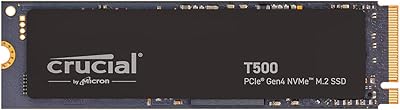
Crucial T500 1TB Gen4 NVMe M.2 SSD
84%
93%
Sequential Read & Write Speed
89%
Random I/O Performance
91%
Gaming Performance
67%
Thermal Management
96%
Installation Ease
More
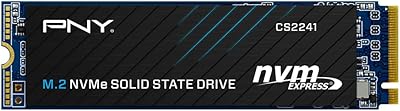
PNY CS2241 1TB NVMe SSD
81%
88%
Sequential Read Performance
74%
Sequential Write Performance
87%
Real-World Boot Speed
84%
Gaming Load Times
89%
Value for Money
More
Crucial E100 1TB M.2 NVMe SSD
77%
91%
Value for Money
86%
Read Performance
62%
Sustained Write Speed
89%
Installation Experience
88%
Compatibility
More
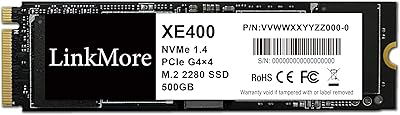
LinkMore XE400 500GB NVMe SSD
78%
88%
Read Speed Performance
74%
Write Speed Performance
93%
Value for Money
91%
Installation Ease
71%
PS5 Compatibility
More
Fanxiang S690Q 1TB NVMe SSD PCIe Gen4 M.2
86%
88%
Performance for Gaming
91%
Read Speed
83%
Heat Dissipation
92%
Ease of Installation
90%
PS5 Compatibility
More
LinkMore XE200 1TB PCIe Gen3 NVMe M.2 SSD
86%
88%
Performance
90%
Installation Ease
92%
Value for Money
85%
Read Speed
78%
Write Speed
More
Corsair MP600 GS 1TB PCIe Gen4 NVMe M.2 SSD
87%
94%
Performance
91%
Speed (Read/Write)
88%
Installation & Setup
89%
Compatibility
72%
Thermal Management
More
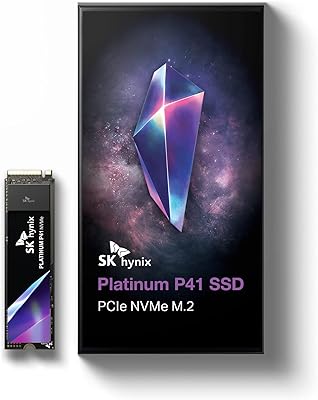
SK hynix Platinum P41 1TB PCIe NVMe Gen4 M.2 SSD
88%
94%
Performance (Read/Write Speeds)
91%
Reliability & Endurance
93%
Gaming Performance
85%
Value for Money
88%
Installation & Setup
More
Ediloca EN705 1TB NVMe M.2 SSD
81%
88%
Sequential Read Performance
61%
Sustained Write Speed
93%
PS5 Compatibility
91%
Installation Experience
86%
Value for Money
More
Vansuny X15 1TB NVMe M.2 SSD
77%
82%
Read & Write Performance
89%
Value for Money
91%
Installation Ease
58%
Brand Reliability
86%
Capacity Utility
More

FAQ

Yes, it slots straight into the PS5 M.2 expansion bay with no adapter needed. The M.2 2280 form factor is exactly what Sony designed the slot to accept, and the pre-installed heatsink already satisfies Sony's requirement for a thermal cover on expansion drives. You will need a small Phillips-head screwdriver to remove the console side panel, but the drive itself is a clean, direct fit.

It genuinely does, especially inside the PS5. The console's M.2 slot sits in a fairly enclosed section of the chassis, and Sony explicitly recommends using a drive with some form of heat management. Sustained read and write operations — like loading a large open-world game or copying files — generate real heat, and without thermal management that can cause the drive to throttle its speed. Having the heatsink already attached saves you extra cost and removes the guesswork of sizing and fitting a separate one.

That inconsistency is worth calling out plainly. The product description body states 600 MB/s for write speed, but the official spec table lists 6,500 MB/s. Based on the PCIe Gen4 x4 interface this drive uses, 6,500 MB/s is the figure that makes technical sense — 600 MB/s would be in line with an older SATA drive, not a Gen4 NVMe. LinkMore has not publicly addressed the discrepancy, so refer to the spec table as your working reference and keep in mind that peak figures reflect ideal conditions.

It works in any device with an M.2 PCIe Gen4 slot, which covers a wide range of modern PC motherboards. If your board only supports Gen3, the drive will still operate — just at Gen3 speeds rather than Gen4 peaks. One thing to check before buying: the pre-installed heatsink adds some height to the drive, and on boards where the M.2 slots are closely spaced, it may conflict with a neighboring component or slot cover.

That is a fair question and deserves a straight answer. LinkMore lacks the decades-long public track record that brands like Samsung or WD carry, and the NAND type is not disclosed, which limits independent durability assessment. That said, the 4.7-star average across more than 600 buyers is a meaningful signal, and no widespread failure patterns have emerged in public feedback. If you need the reassurance of a brand with extensively documented reliability history, a more established name is worth the premium. For casual-to-moderate gaming use where value matters, the trade-off is reasonable.

LinkMore does not disclose that publicly, which is a real gap for buyers who care about write endurance over time. TLC NAND typically offers better sustained performance and longer rated lifespan than QLC, and QLC drives tend to slow down more noticeably once the cache fills during large sequential writes. Without official confirmation from the manufacturer, there is no reliable way to determine which is used here. If NAND transparency matters to your buying decision, a brand that publishes complete spec sheets would serve you better.

Not at all. The M.2 expansion slot operates independently from the PS5's internal built-in storage, so the installation process does not touch your existing games, saves, or user data. Once the drive is physically installed and you power on the console, the PS5 automatically prompts you to format it — a process that takes about a minute. After that, it shows up as a separate storage destination that you can manage freely from the console's storage settings menu.

It is straightforward even if you have never opened your console before. Power down the PS5 fully, remove the white side panel — it unclips without tools — then unscrew the small expansion bay cover and the standoff screw inside. Insert the drive at roughly a 30-degree angle into the M.2 slot, press it flat, and secure it with the standoff screw. Reattach the side panel, power the console on, and follow the on-screen prompt to format the drive. Most people complete the process in under 10 minutes.

You can generally expect somewhere around 900GB to 930GB of accessible space after the file system reserves its portion for formatting and management overhead. Since the PS5 operating system lives on the internal drive rather than the expansion drive, that full usable space is available entirely for games and media. Given that modern titles regularly land between 50GB and 100GB each, a 1TB expansion drive gives you room for roughly 10 to 18 large releases before you need to start rotating titles.

Based on the available buyer feedback, thermal complaints are not a recurring concern, which suggests the pre-installed heatsink handles heat adequately during standard gaming sessions. That said, sustained large-file transfers — like moving a 100GB game between drives — will push temperatures higher than typical game loading, and that is normal behavior for any NVMe drive under heavy sequential load. Ensuring your PS5 has adequate airflow around it matters as much as the drive's own heatsink, particularly during extended play sessions.

Where to Buy