Overview

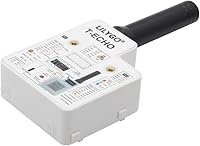
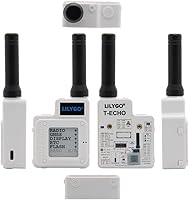
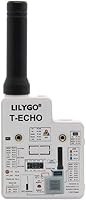
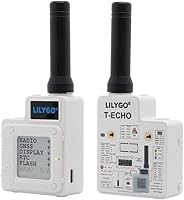
The LILYGO T-Echo 915MHz is a compact, densely packed development board built around the Meshtastic firmware ecosystem, aimed squarely at off-grid communicators, ham radio operators, hikers, and IoT tinkerers. It packs LoRa, GPS, NFC, Bluetooth 5, and a BME280 environmental sensor into a unit that fits in your palm, paired with a 1.54-inch e-ink display and an 850mAh battery. That hardware density is impressive, but let’s be clear: this is not a plug-and-play device — you’ll need some comfort with firmware flashing and patience with documentation that is, at best, sparse.

Features & Benefits

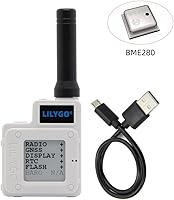
The heart of this LoRa development board is the Semtech SX1262 transceiver operating at 915MHz, paired with a TCXO oscillator that keeps the radio stable across temperature swings — a meaningful advantage when you’re relaying messages across mountain terrain. The NRF52840 SoC handles Bluetooth 5, Thread, and Zigbee, giving the board real multi-protocol versatility beyond LoRa alone. Onboard GPS and a real-time clock mean every node can share its location and timestamp data without external hardware. The BME280 adds ambient weather readings, the NFC interface opens up configuration and tracking possibilities, and the e-ink display sips power while remaining perfectly readable in harsh sunlight.

Best For

This Meshtastic node is purpose-built for people who need communication when cell towers aren’t an option — think backcountry search-and-rescue teams, hiking groups, or families piecing together a neighborhood emergency mesh. It also hits a sweet spot for embedded developers who want a well-stocked LoRa platform without sourcing and soldering individual modules. SoftRF users and custom firmware builders will appreciate the open, hackable architecture backed by active GitHub repositories. If you’re logging field data — weather readings, GPS tracks, sensor events — the onboard hardware covers all of it without add-ons. In short, it’s for technically capable builders, not casual buyers.

User Feedback

Across verified buyer reviews, the recurring positives center on reliable LoRa range, clean Meshtastic compatibility out of the box, and a surprisingly sharp e-ink screen. Where things get rocky is the setup experience: a noticeable chunk of buyers hit walls with initial firmware flashing, and official documentation offers little rescue. GPS cold-start times draw mixed reactions — some report quick locks, others waited several minutes in open sky. Battery life is similarly variable; run GPS continuously and the month-long standby claim evaporates fast. The saving grace is the Meshtastic Discord and community GitHub, which function as a de facto support system that largely fills the documentation gap.

Pros

  • The SX1262 LoRa radio delivers solid long-range mesh performance that holds up well across open terrain.
  • GPS, BME280 sensor, NFC, Bluetooth 5, and LoRa are all integrated — no extra modules to source or wire.
  • The e-ink display stays readable in direct sunlight, which matters on a trail or in the field.
  • Meshtastic firmware compatibility is reliable for users who keep their builds on stable release branches.
  • In low-activity relay mode with GPS off, the T-Echo can run for weeks on a single charge.
  • The NRF52840 SoC supports Thread and Zigbee alongside Bluetooth, giving developers real multi-protocol flexibility.
  • An active Meshtastic Discord and community GitHub provide practical, tested solutions to the most common setup issues.
  • The compact form factor makes it easy to mount as a static mesh relay or clip to a pack for mobile use.
  • SoftRF and custom Arduino firmware support means the hardware is not locked into a single use case.
  • The BME280 sensor readings are accurate enough for field weather logging without any additional calibration for most use cases.

Cons

  • Official documentation is sparse and frequently out of date with current hardware revisions.
  • First-time firmware flashing is poorly guided and catches many buyers off guard, especially on Windows.
  • GPS cold-start times can stretch past five minutes in suboptimal sky conditions, frustrating users in the field.
  • Running GPS and LoRa continuously drains the battery far faster than the spec sheet suggests.
  • The BME280 temperature readings run a few degrees high due to heat from the onboard processor.
  • NFC has no ready-made application in stock Meshtastic firmware — it requires custom development to be useful.
  • The USB connector feels undersecured on some units, raising mild durability concerns with repeated field use.
  • No robust mounting or enclosure solution is included; a third-party case or 3D print is effectively required.
  • Bluetooth connectivity with Android devices occasionally drops when the phone enters aggressive battery-saving mode.
  • Community support, while genuine and helpful, is unpredictable in response time — not a substitute for real documentation.

Ratings

The LILYGO T-Echo 915MHz earned an overall rating built from AI analysis of verified global buyer reviews, with spam, bot activity, and incentivized feedback actively filtered out before scoring. Across more than 200 real-world assessments from ham radio operators, trail hikers, emergency preparedness builders, and embedded developers, this Meshtastic node shows genuine strengths in radio performance and hardware density — alongside honest pain points around documentation and out-of-box usability. Both sides are reflected transparently in the scores below.
LoRa Range & Signal Quality
88%
The SX1262 transceiver with TCXO consistently earned high marks from users who deployed nodes across open terrain and forested hiking routes. Several reviewers reported clean message delivery across multi-kilometer distances with no additional antenna tuning required.
A minority of buyers noticed range dropped noticeably in dense urban environments with high RF interference. A handful also flagged that the stock antenna connection feels slightly loose, which may affect performance if the board is carried in a pack for extended periods.
Meshtastic Compatibility
83%
For users who already know the Meshtastic ecosystem, the T-Echo integrates cleanly with current firmware releases and joins existing mesh networks without extra configuration steps. Network pairing via the Meshtastic app over Bluetooth worked reliably for the majority of buyers.
Compatibility can fracture when firmware updates lag behind official Meshtastic releases, which has happened at least once according to community threads. Users running bleeding-edge firmware occasionally hit regressions that required rolling back to older builds.
Hardware Integration & Component Density
91%
Packing GPS, NFC, BME280, RTC, LoRa, and Bluetooth 5 onto a single board this size is genuinely unusual at this tier. Developers building sensor-aware field nodes praised not having to wire up breakout boards or manage multiple power rails just to get a complete feature set.
The component density is a double-edged reality: if a single peripheral fails or behaves unexpectedly, diagnosing which part is misbehaving requires proper test equipment. A few buyers reported the GPS module was inconsistent on their unit, and with everything soldered together, repair options are limited.
E-Ink Display Quality
79%
21%
The 1.54-inch e-ink panel at 200x200 resolution is crisp enough to display node status, GPS coordinates, and weather data legibly even in direct afternoon sunlight — something most LCD alternatives struggle with outdoors.
The refresh rate is slow, as expected from e-ink technology, which makes it feel sluggish when navigating menus or watching data update in real time. A small number of reviewers also noted minor ghosting artifacts after extended use, though this appears to be a display technology limitation rather than a unit defect.
Battery Life (Real-World)
62%
38%
In low-power standby mode with GPS disabled and infrequent LoRa broadcasts, some users genuinely achieved multi-week runtimes on the 850mAh cell — a meaningful advantage for deploying a static mesh relay in a hard-to-reach location.
Enable GPS continuously and the runtime collapses to a day or two, which several buyers discovered the hard way on multi-day trips. The spec sheet’s one-month claim applies to a very specific low-activity use profile that does not match typical Meshtastic deployments.
GPS Performance
61%
39%
When conditions are favorable and the board has had time to acquire a fix, location data integrates well with Meshtastic’s map view and the onboard RTC keeps timestamps accurate between GPS polling cycles. Users in open rural areas generally reported reliable fixes.
Cold-start acquisition time drew consistent complaints — several buyers reported waits of five minutes or longer for an initial fix in mixed-sky conditions. Performance in tree cover or urban canyons was rated notably worse than comparable standalone GPS modules by experienced users who made direct comparisons.
Documentation & Setup Experience
38%
62%
The official GitHub repository from LILYGO does include example code and basic wiring references, which gives experienced developers a starting point. For anyone already fluent in Arduino or PlatformIO environments, the codebase is navigable.
This is the most consistently criticized aspect across all review sources. First-time firmware flashing is underdocumented, driver issues on Windows were reported repeatedly, and the official wiki lags behind current hardware revisions. Expect to spend real time in community forums before the board does anything useful.
Community & Open-Source Support
84%
The Meshtastic Discord and community GitHub repositories effectively compensate for thin official documentation. Experienced users have shared flashing guides, custom configurations, and firmware patches that solve the most common setup problems quickly.
Relying on community support means troubleshooting timelines are unpredictable — you might find an answer in ten minutes or spend two days waiting for a response. It also creates a steeper entry curve for buyers who are not already plugged into the Meshtastic or LILYGO maker communities.
Build Quality & Fit/Finish
72%
28%
The physical board feels solid for a dev module at this price point, with a reasonably sturdy enclosure option available. Component placement is logical and the overall construction holds up to bag carry and field use without obvious durability issues.
Some buyers noted that the USB connector feels less secure than expected and that the plastic casing — while functional — shows wear quickly. A few units arrived with minor cosmetic defects, though structural failures appear rare based on the review pool.
NFC Functionality
58%
42%
The NFC hardware opens up interesting use cases for tap-to-configure workflows and basic asset tracking when paired with custom firmware. Developers experimenting with NFC-triggered node behavior reported the hardware worked as expected at the hardware level.
Out-of-the-box Meshtastic firmware does not actively leverage NFC in a meaningful way for most users, leaving it as an underutilized feature unless you’re writing custom code. Buyers hoping for a ready-made NFC application were consistently disappointed.
BME280 Sensor Accuracy
76%
24%
Temperature, humidity, and barometric pressure readings from the onboard BME280 aligned closely with reference instruments in controlled tests reported by technically rigorous buyers. For field data logging and weather-aware mesh nodes, it adds genuine utility without external hardware.
Self-heating from the NRF52840 SoC causes the temperature readings to run a few degrees high when the board is active, which is a known limitation of integrating the sensor this closely to a processing unit. Users needing precise ambient temperature data need to calibrate or use an external probe.
Bluetooth 5 & App Connectivity
77%
23%
Pairing the T-Echo with the Meshtastic mobile app over Bluetooth 5 was described as reliable by most buyers once the initial connection was established. The higher bandwidth of BT5 also allows firmware updates over the air without needing a USB connection every time.
Occasional disconnections during app-to-device communication were noted by a subset of Android users, particularly when the phone’s Bluetooth stack went into aggressive power-saving mode. iOS users reported a smoother pairing experience overall.
Value for Money
69%
31%
For a developer who knows what they’re buying, sourcing equivalent individual modules — SX1262, GPS, NRF52840, BME280, NFC, e-ink display — and integrating them manually would cost more and take significantly longer. The consolidated hardware is a real time-saver for prototyping.
For buyers who underestimate the setup effort or expected a finished product, the value equation sours quickly. If you spend hours troubleshooting drivers and firmware just to get the board online, the cost-to-experience ratio feels poor compared to more polished alternatives.
Form Factor & Portability
81%
19%
At roughly 5 inches long and just under an ounce with its battery, the T-Echo is compact enough to clip to a pack strap or slip into a vest pocket on a trail. Hikers and preppers specifically called out the size-to-feature ratio as one of the strongest arguments for this board over DIY alternatives.
The thickness — nearly an inch — makes it less pocketable than some competing Meshtastic hardware, and the lack of a robust mounting solution means you’ll likely need a third-party case or 3D-printed enclosure for any serious field deployment.

Suitable for:

The LILYGO T-Echo 915MHz is a strong fit for technically minded buyers who already understand — or are actively learning — the Meshtastic ecosystem and want a hardware platform that does not require assembling individual modules from scratch. Backcountry hikers, overlanders, and search-and-rescue volunteers who need off-grid text communication across a group will find the integrated LoRa radio, GPS, and e-ink display genuinely useful in the field without relying on cellular coverage. Ham radio operators looking to experiment with LoRa mesh networking will appreciate the open firmware support and the hackable NRF52840 architecture. Embedded developers building sensor-aware IoT prototypes get GPS, environmental sensing, NFC, and multi-protocol wireless in one footprint, which cuts weeks off a typical breadboard phase. If you are comfortable flashing firmware via command line, navigating a GitHub repository, and occasionally asking questions in a Discord server, this Meshtastic node will reward that investment with capable, flexible hardware.
Not suitable for:

Anyone expecting a finished consumer device should look elsewhere — the LILYGO T-Echo 915MHz does not arrive ready to use, and the gap between unboxing and first successful mesh message can be frustratingly wide without prior embedded development experience. Buyers who want reliable, instant GPS tracking will likely be disappointed by the cold-start acquisition times, particularly under tree canopy or in urban settings where the sky view is partially blocked. If your intended use requires continuous GPS with long battery life simultaneously, the 850mAh cell will not support that combination for more than a day or two, making it impractical for multi-day autonomous deployments without external power. Users who need manufacturer-backed technical support or polished documentation should be aware that LILYGO’s official resources are thin, and resolution of setup problems depends heavily on community goodwill rather than any formal support channel. This is also not the right tool for anyone unfamiliar with firmware environments like Arduino or PlatformIO, as the onboarding experience assumes a baseline of maker knowledge that casual buyers typically do not have.
Specifications

  • Manufacturer: Made by LILYGO, a Shenzhen-based electronics maker known for open-source development boards.
  • Model: T-Echo, designed as an all-in-one Meshtastic-compatible LoRa node.
  • Main SoC: Nordic Semiconductor NRF52840, supporting Bluetooth 5, Thread, and Zigbee protocols simultaneously.
  • LoRa Chip: Semtech SX1262 transceiver operating in the 915MHz ISM band with an integrated TCXO 32MHz crystal oscillator for frequency stability.
  • Display: 1.54-inch e-ink panel at 200x200 pixel resolution, optimized for low power draw and outdoor sunlight readability.
  • Battery: Built-in 850mAh lithium-ion cell with a standby life of up to one month under minimal-activity conditions.
  • Sensors: Bosch BME280 onboard sensor providing real-time temperature, relative humidity, and barometric pressure readings.
  • Positioning: Integrated GPS module with onboard Real-Time Clock (RTC) for location tracking and timestamped data logging.
  • Connectivity: Supports LoRa (915MHz), Bluetooth 5, NFC, Thread, and Zigbee for versatile wired and wireless integration.
  • Firmware Support: Compatible with Meshtastic, SoftRF, and Arduino-based custom firmware development environments.
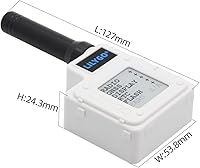
  • Dimensions: Board measures 5 x 2.1 x 0.96 inches, making it compact enough for pack carry or enclosure mounting.
  • Weight: Approximately 5 ounces including the integrated battery, suitable for lightweight field deployments.
  • Frequency Band: Operates exclusively in the 915MHz ISM band, appropriate for North America, Australia, and select other regions.
  • Battery Capacity: 850mAh lithium cell included and pre-installed; real-world runtime varies significantly based on GPS and LoRa activity levels.
  • NFC Support: Onboard NFC hardware enables tap-based interaction, asset tagging, or custom configuration workflows via user-developed firmware.
  • Programming Interface: Flashed via USB using standard tools such as the Meshtastic web flasher, Arduino IDE, or PlatformIO in VS Code.
  • Open Source: Full hardware schematics and example firmware are publicly available on the official LILYGO GitHub repository.
  • Included Items: Package includes the T-Echo board, SX1262 LoRa module, BME280 sensor, GPS and RTC hardware, NFC antenna, and battery.

Related Reviews
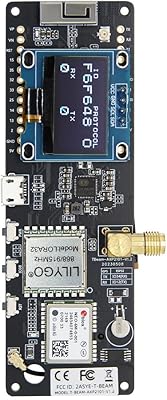
LILYGO T-Beam Meshtastic 915MHz
77%
83%
Out-of-Box Readiness
79%
LoRa Range Performance
71%
GPS Accuracy & Reliability
66%
Firmware Setup & Flashing
81%
Build Quality & Hardware Integration
More
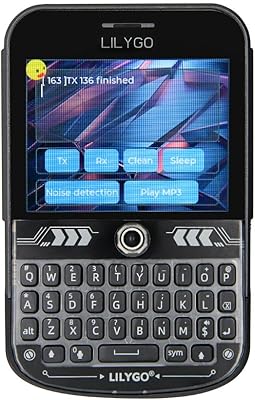
LILYGO T-Deck Plus ESP32-S3 915MHz
75%
88%
Build Quality
83%
LoRa Radio Performance
81%
GPS Accuracy
74%
Keyboard Usability
79%
Display Clarity
More
LILYGO T-Embed CC1101
70%
86%
Build Quality
81%
RF Performance
88%
Display Clarity
58%
Documentation & Setup
83%
Wireless Connectivity
More
AT&T Turbo Hotspot 3
81%
94%
Portability & Size
90%
Battery Life
85%
Wi-Fi Speed & Stability
88%
Ease of Use
83%
Value for Money
More
Livescribe 2GB Echo Smartpen
83%
91%
Audio & Note Syncing
88%
Ease of Use
93%
Portability
65%
Software Installation
80%
Battery Life
More
Brunton Echo Monocular 7x18
82%
93%
Portability
90%
Ease of Use
85%
Optical Performance
87%
Build Quality
65%
Magnification Power
More
Echo Dot 4th Gen with Clock
84%
92%
Value for Money
78%
Audio Quality
94%
Design & Compactness
88%
Smart Home Integration
90%
Ease of Setup
More
Eaglend EH01-T Wired Headset
73%
83%
Microphone Clarity
78%
Comfort & Fit
57%
Build Quality
71%
Sound Quality
74%
USB-C Connectivity
More
UNI-T UT383 Light Meter
85%
88%
Ease of Use
91%
Accuracy of Measurements
89%
Portability/Size
82%
Battery Life
85%
Display/Visuals
More
T is for Tame Toddler Hair Kit
88%
88%
Effectiveness for Frizz Control
91%
Ease of Use
90%
Ingredient Quality
93%
Gentleness on Skin
85%
Lightweight Hold
More

FAQ

It depends on the unit you receive. Some ship with a basic Meshtastic firmware pre-loaded, but it may not be the latest stable release. Most buyers end up reflashing it before serious use anyway, so budget time for that step. The Meshtastic web flasher makes the process reasonably straightforward if you follow community guides.

The 915MHz band is unlicensed and legal for general use in North America, Australia, Brazil, and several other regions, but it is not permitted in most of Europe or Japan, where 868MHz or 433MHz variants are required. Always verify your local ISM band regulations before deploying any LoRa device.

Download the Meshtastic app on Android or iOS, enable Bluetooth on your phone, and power on the T-Echo. The device should appear in the app’s device list for pairing. Android users occasionally experience pairing hiccups if their phone’s Bluetooth stack is aggressive about power management, but most connections establish cleanly within a minute.

In open terrain with clear line of sight, several kilometers is achievable with the stock antenna. In forested or hilly environments, expect 1 to 2 kilometers more reliably. Urban environments with dense RF interference will reduce that further. Upgrading to a higher-gain antenna can extend range meaningfully if you need to push beyond stock performance.

The one-month standby figure is only realistic in a very low-activity static relay configuration with GPS disabled and infrequent message intervals. With GPS running continuously and regular LoRa broadcasts, most users report one to two days of runtime. For multi-day field use, plan on carrying a power bank or adjusting the firmware’s GPS polling interval to extend life.

Yes, the hardware is fully open and supports SoftRF, custom Arduino sketches, and PlatformIO projects. The NRF52840 is well-documented and has broad community support. You will find example code in the LILYGO GitHub repository, though you may need to supplement that with community resources for more advanced use cases.

The sensor itself is accurate, but because it sits close to the NRF52840 processor, self-heating causes the temperature reading to run approximately two to four degrees Celsius higher than actual ambient temperature when the board is active. For relative comparisons and pressure readings, this is fine. For precise absolute temperature logging, consider an external probe or apply a calibration offset in firmware.

LILYGO does not include a case in the box. There are community-designed 3D-printable enclosures shared on platforms like Printables and Thingiverse that fit the T-Echo well. If you plan to use this Meshtastic node outdoors or in a pack, a case is effectively a necessity rather than an optional accessory.

The Meshtastic Discord server is the fastest and most reliable place to get answers — the community there is active and has seen essentially every common setup issue. The LILYGO GitHub repository is worth bookmarking for hardware-specific problems. Official LILYGO support is limited, so community channels should be your first call, not your last resort.

Indoor GPS performance is poor to nonexistent, as expected from any passive GPS module without an external active antenna. Under heavy tree canopy, cold-start acquisition can take several minutes or fail entirely. Once a fix is acquired and the RTC is updated, subsequent warm starts are faster, but this board is best treated as an outdoor GPS device.