Overview

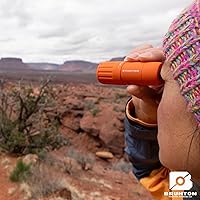
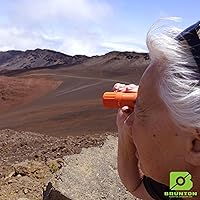
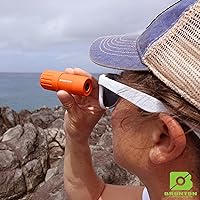
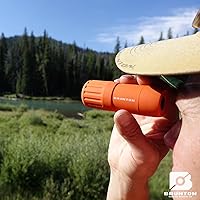
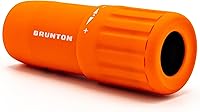
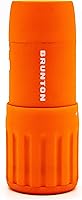
The Brunton Echo 7x18 Monocular has been a quiet staple in the mid-range optics market since it launched in 2012 — not flashy, not cutting-edge, just a dependably compact scope that does what it promises. Built around 7x magnification and an 18mm objective lens, it hits a practical sweet spot for anyone wanting a quick optical boost without hauling binoculars on every outing. The orange colorway is a genuinely smart choice outdoors — easier to spot in a pack or on a rocky trail than matte black. Just be clear about what this is: a portable convenience tool, not a precision instrument for serious fieldwork.
Features & Benefits

The Echo 7x18 uses BAK-4 prism glass, which at this tier is worth mentioning — it handles light transmission better than cheaper BK-7 alternatives and helps deliver reasonably crisp images in good daylight. The multi-coated optics reduce glare when scanning bright ridgelines or open water. Physically, this pocket scope weighs just 1.76 oz and measures about 3.3 inches long, so it genuinely disappears into a jacket pocket. The 181-foot field of view at 1,000 yards gives enough width to track moving subjects without constant repositioning, and the close focus of 13 inches is a handy bonus for inspecting nearby plants, insects, or trail details.

Best For

This compact monocular makes the most sense for people who want an optical option without adding meaningful weight or bulk to their kit. Day hikers and travelers are the obvious fit — toss it in a hip pocket and pull it out when something catches your eye on the trail or across a valley. Casual birdwatchers and sports spectators who just want a functional view, not pro-grade resolution, will find it perfectly adequate. Backpackers counting every gram will appreciate it staying under 2 oz. It also makes a solid starter gift for a teenager or curious beginner where practicality matters more than peak optical performance.

User Feedback

Across more than 500 ratings averaging 4.0 out of 5, the consensus is positive but measured. Most buyers highlight the size-to-performance ratio as the real selling point — for something this small and light, the daytime image quality is genuinely useful. The rubber armor gets consistent praise for making it feel sturdy without adding heft. On the downside, eyeglass wearers have flagged limited eye relief as a real inconvenience, and several reviewers found the included accessories and carrying case underwhelming for the price. Low-light use is where expectations need adjusting — this is firmly a daytime-only tool, and the 18mm objective lens simply cannot gather enough light for dusk or dawn observation.

Pros

  • Weighs under 2 oz and fits in any pocket, making it genuinely grab-and-go ready.
  • The rubber-armored body handles trail drops and rough handling without obvious damage.
  • BAK-4 prism glass delivers noticeably sharper daytime images than basic entry-level competitors.
  • Multi-coated optics reduce glare effectively when scanning bright open landscapes or water.
  • Close focus down to 13 inches adds an unexpected macro capability for trail naturalists.
  • The 181-foot field of view at 1,000 yards makes scanning wide terrain fast and easy.
  • The orange colorway is a practical outdoor choice — easy to spot if set down on a rock or in a pack.
  • Over 500 verified reviews back up a consistent 4.0 rating, signaling reliable real-world satisfaction.
  • The Echo 7x18 offers a close-focus range that many competing pocket scopes at this tier simply do not match.
  • Seven-power magnification is stable enough to hold steady without a tripod, even with slight hand movement.

Cons

  • Low-light performance is genuinely weak — dusk and dawn use will leave most buyers disappointed.
  • Eye relief is too short for eyeglass wearers to comfortably access the full field of view.
  • Image sharpness deteriorates noticeably toward the edges, which becomes obvious during wide scanning.
  • The included carrying case is thin and poorly padded — not trustworthy for protecting the optic in a packed bag.
  • The polymer frame, while functional, does not inspire confidence during extended hard-use outdoor trips.
  • Focus wheel adjustment at close range is sensitive and easy to overshoot, requiring practice to master.
  • No waterproofing or fog-proofing makes it a poor choice for consistently wet outdoor environments.
  • The narrow cylindrical body can feel insecure during sustained single-handed use, especially with larger hands.
  • Accessories overall feel like an afterthought — the lens cloth and lanyard are minimal and basic.
  • Buyers seeking higher magnification for distant subjects will find 7x limiting with no zoom option available.

Ratings

The Brunton Echo 7x18 Monocular earns its place as one of the more consistently reviewed pocket scopes in its category, and our AI-generated scores reflect that — built by analyzing verified global buyer feedback while actively filtering out incentivized reviews, bot patterns, and outlier submissions. What you see below is an honest breakdown of where this compact monocular genuinely delivers and where real users have run into friction. No category has been softened; the pain points are as visible as the strengths.
Portability
94%
Users repeatedly describe this as one of the lightest optical tools they have ever carried. At under 2 oz and small enough to slip into a jeans pocket, it disappears into a kit bag without a second thought — hikers and travelers in particular love that it adds virtually no load to a day pack.
A handful of buyers feel that the compact form factor comes at the cost of a secure, ergonomic grip during extended use, especially when wearing gloves in colder conditions. The slim profile can feel a little precarious for users with larger hands.
Optical Clarity (Daytime)
76%
24%
In good daylight, the multi-coated optics and BAK-4 prisms produce a noticeably crisp center image that holds up well for scanning landscapes, tracking birds in flight, or watching wildlife across an open field. Most casual users find the sharpness more than sufficient for recreational use.
Edge sharpness is where this pocket scope shows its mid-range limits — the image softens noticeably toward the periphery, which becomes apparent when scanning wider scenes. It is fine for a quick look, but repeated side-by-side comparisons with pricier optics reveal the gap quickly.
Low-Light Performance
47%
53%
The BAK-4 prism does a reasonable job compared to entry-level alternatives, and on overcast but bright days the image remains usable. Users who limit use to mid-morning through mid-afternoon generally do not encounter major issues.
The 18mm objective lens simply cannot gather enough light for dusk, dawn, or shaded forest conditions — this is a fundamental physics constraint, not a defect. Multiple reviewers who expected binocular-level low-light performance were genuinely disappointed, especially hunters and serious birders.
Build Quality & Durability
82%
18%
The rubber armor coating over the polymer body earns consistent praise from outdoor users who have accidentally dropped or knocked this scope on trails. It does not feel hollow or cheap in hand, and the tactile grip is a genuine functional advantage in wet or dusty conditions.
The polymer frame is not going to inspire confidence in buyers coming from full-metal optics. A few long-term reviewers noted wear on the rubber coating after a couple of years of hard use, and the eyecup feels less refined than the main body construction suggests.
Magnification Usability
78%
22%
Seven-power is a practical, versatile choice — strong enough to bring distant subjects meaningfully closer without the hand-shake sensitivity that plagues higher-magnification monoculars. Users find it easy to locate subjects quickly and hold the image steady without a tripod.
For buyers specifically seeking higher magnification, 7x can feel modest. Those wanting to observe distant sporting events or identify birds at serious range sometimes wish for at least 10x, and there is no zoom mechanism to compensate.
Eye Relief & Eyeglass Compatibility
53%
47%
Users without corrective eyewear generally find the eye placement comfortable and the exit pupil easy to acquire. For quick, casual glances the experience is smooth enough that most non-eyeglass users never flag it as a concern.
Eyeglass wearers are a recurring source of criticism in the review pool. The eye relief is tight enough that spectacle users frequently report struggling to see the full field of view without removing their glasses, which is a meaningful inconvenience in real outdoor scenarios.
Field of View
79%
21%
A 181-foot field of view at 1,000 yards is genuinely wide for a 7x monocular at this size, and users who use it for scanning open coastlines, hillsides, or sports fields appreciate that they can sweep an area without constantly repositioning the scope.
Buyers transitioning from binoculars may still find the single-tube field of view spatially disorienting at first. In dense environments like woodland, the narrower-feeling tunnel view compared to full binoculars can make it harder to track fast-moving subjects.
Close Focus Capability
83%
The ability to focus down to around 13 inches is a genuine surprise at this price tier, and nature walkers love using it to inspect flowers, insects, fungi, or rocky textures up close. It adds a macro-like dimension that most buyers do not expect from a travel monocular.
Achieving sharp focus at very close distances requires a steady hand and some patience to dial in. A few users noted that the focus wheel adjustment at close range feels slightly sensitive, making it easy to overshoot the sharp focus point.
Value for Money
81%
19%
The consensus across hundreds of reviews is that this pocket scope delivers a fair return for its asking price. Travelers, occasional birdwatchers, and casual outdoor users feel they are getting a functional, durable, and compact optical tool without overpaying for features they would not use.
Buyers who stretch to purchase this expecting near-binocular performance sometimes feel the value equation tips the wrong way. If your use case involves frequent low-light viewing or demands sharp edge-to-edge clarity, slightly more money spent on a better-specified monocular would serve you better.
Grip & Handling
74%
26%
The rubber armor finish gives the body a secure, non-slip feel that most users appreciate on trail — particularly when hands are sweaty or damp. Pulling it quickly out of a pocket and getting a stable hold is fast and instinctive for most hand sizes.
The body is narrow by design, and users with larger hands find sustained single-handed use slightly fatiguing. There is no dedicated thumb rest or contoured grip, so it can feel a little featureless compared to monoculars with more ergonomic shaping.
Focus Mechanism
71%
29%
The central focus wheel is accessible and reasonably smooth for quick adjustments in the field. Most users can go from pocket to focused image within a few seconds, which matters when watching wildlife that is not going to wait around.
The focus action has a somewhat narrow sweet spot and a few reviewers describe it as slightly stiff when the unit is cold. Long-term users also mention that consistent, precise fine-tuning requires practice, especially for anyone upgrading from binoculars with diopter adjustments.
Included Accessories
44%
56%
The package does include a carrying case, lanyard, and lens cloth, which means you have at least the basics covered straight out of the box. The lanyard in particular is practical for keeping the scope accessible around the neck during active use.
The carrying case draws consistent criticism — described as flimsy, poorly padded, and barely adequate for protection during travel. The lens cloth is minimal, and the overall accessory kit feels like an afterthought relative to what competing products in the same range typically include.
Weather & Outdoor Resilience
68%
32%
The rubber-armored body handles light rain splashes and dusty trail conditions without obvious damage, and users report that exterior cleaning is straightforward. For fair-weather outdoor use, resilience is not a concern most buyers raise.
This is not a waterproof or fog-proof optic, and that limitation is relevant for serious outdoor use. Buyers planning to use it in consistently wet environments — kayaking, coastal hiking, or rainy-season travel — will likely need to manage exposure carefully or look at sealed alternatives.
Size & Pocket Fit
91%
At 3.3 inches long and 1.3 inches wide, the Echo 7x18 fits in virtually every pocket tested by reviewers — shirt pockets, hiking trouser side pockets, and small belt pouches all work. Multiple users specifically call out that they forget it is even there until they need it.
The narrow cylindrical profile means it can roll around in shallower pockets or slide to the bottom of a pack. Without a belt clip or attachment point beyond the lanyard loop, secure hands-free carry takes a little improvisation.

Suitable for:

The Brunton Echo 7x18 Monocular is built for people who want an optical boost on demand without committing to the size, weight, or cost of full binoculars. Travelers are an ideal match — whether you are scanning a mountain ridge, watching wildlife on safari, or trying to read a distant sign in an unfamiliar city, this pocket scope earns its keep without taking up meaningful bag space. Day hikers and backpackers who count every ounce will appreciate that it clocks in under 2 oz and fits in a shirt pocket with room to spare. Casual birdwatchers who head out on weekend walks rather than dedicated birding expeditions will find the 7x magnification and wide field of view more than adequate for spotting species in open terrain. It also makes a genuinely thoughtful gift for teenagers or beginners who are curious about optics — the rugged build handles the inevitable knocks, and the price does not make accidental damage a catastrophe.

Not suitable for:

The Brunton Echo 7x18 Monocular is a purposefully limited tool, and buyers who need more than casual daytime performance will likely find its constraints frustrating rather than acceptable. Serious birders who spend hours scanning tree canopies or tracking fast-moving species at distance will quickly run into the edge softness and modest light-gathering of the 18mm objective lens. Low-light users — hunters glassing at dusk, wildlife watchers active at dawn, or anyone in dense forested environments — should look elsewhere, as the small objective simply cannot compensate for low ambient light regardless of the prism quality. Eyeglass wearers face a specific pain point: the eye relief is tight enough that seeing the full field of view with spectacles on is genuinely awkward, not just mildly inconvenient. Anyone expecting the accessory package to include a quality protective case will also be disappointed — the included case is thin and offers minimal real-world protection for travel in a checked bag or a rough pack.

Specifications

  • Magnification: The scope delivers 7x magnification, bringing distant subjects seven times closer than the naked eye.
  • Objective Lens: The objective lens measures 18mm in diameter, gathering light for daytime viewing in bright to moderate conditions.
  • Prism Type: BAK-4 borosilicate crown glass prisms are used internally, offering better light transmission and edge clarity than BK-7 alternatives at this tier.
  • Optics Coating: Lenses are multi-coated to reduce surface reflections, improving contrast and color fidelity in bright outdoor environments.
  • Field of View: The field of view spans 181 feet at 1,000 yards, providing a wide enough sweep to track moving subjects across open terrain.
  • Close Focus: Minimum focus distance is approximately 13 inches, allowing the user to observe nearby subjects such as insects, plants, or small objects.
  • Weight: The unit weighs 1.76 oz, making it one of the lightest optical tools available in the monocular category.
  • Dimensions: The body measures 3.3 x 1.3 x 1.3 inches, compact enough to fit in a standard shirt or trouser pocket.
  • Frame Material: The chassis is constructed from a lightweight polymer with a full rubber armor exterior for impact resistance and grip.
  • Color: Available in Orange, a practical outdoor colorway that improves visibility if the scope is set down on a trail or rocky surface.
  • Eye Relief: Eye relief is limited at this specification tier and is not optimized for extended use by eyeglass wearers.
  • Waterproofing: This monocular is not rated as waterproof or fog-proof and should be kept dry in wet field conditions.
  • Model Number: The official model identifier is F-ECHO7018-OR, specific to the orange variant of the Echo 7x18 series.
  • Manufacturer: Designed and sold by Brunton Sporting Goods, a U.S.-based outdoor optics brand with a long history in field instruments.
  • First Available: This product was first listed for sale in July 2012, giving it over a decade of real-world user feedback to draw from.
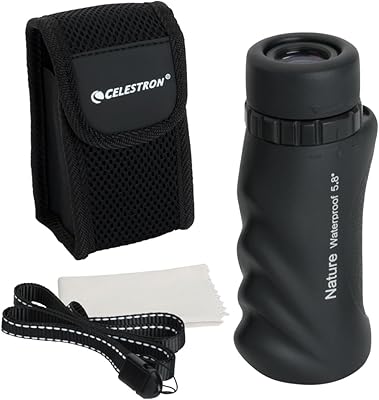
  • In Box Contents: The package includes the monocular unit, a soft carrying case, a neck lanyard, and a lens cleaning cloth.
  • User Rating: The product holds a 4.0 out of 5 rating based on more than 500 verified reviews across global marketplaces.
  • Category Rank: It ranks at approximately #257 in the Monoculars subcategory, reflecting consistent mid-tier commercial performance.

Related Reviews
Starscope 10x42 Monocular
85%
88%
Optical Quality
91%
Ease of Use
94%
Portability & Weight
85%
Build Durability
70%
Smartphone Compatibility
More
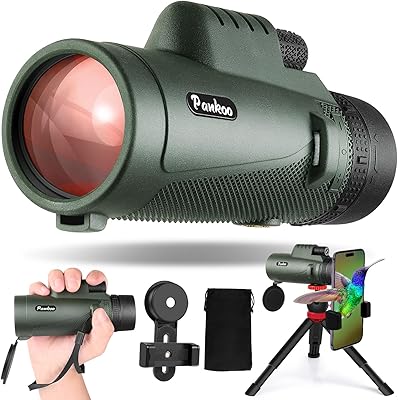
Pankoo 16x52 Monocular
74%
74%
Optical Clarity
71%
Magnification Performance
52%
Low-Light Performance
77%
Build Quality & Durability
81%
Waterproofing & Fog Resistance
More
SVBONY SV42 8x42 Monocular
85%
88%
Magnification Performance
94%
Portability and Size
86%
Build Quality and Durability
83%
Image Clarity and Field of View
91%
Waterproof and Fogproof Reliability
More
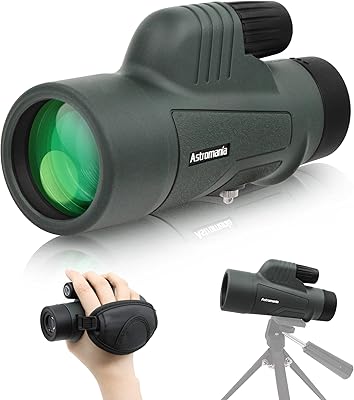
Astromania 12X50 BAK4 Monocular
86%
88%
Image Clarity
92%
Build Quality
94%
Waterproof Performance
90%
Portability
85%
Ease of Use
More
Pankoo 40x60 Monocular
73%
74%
Optical Clarity
68%
Magnification Performance
66%
Low-Light Performance
71%
Build Quality
78%
Waterproofing & Weather Resistance
More
OLIMT 8x25 Monocular Telescope
87%
91%
Optical Clarity
88%
Build Quality & Durability
93%
Portability & Weight
89%
Waterproof Performance
84%
Ease of Use
More
Leica Monovid 8x20 Monocular
85%
94%
Optical Clarity
96%
Build Quality
91%
Portability & Size
88%
Close-Focus & Macro Performance
89%
Weather & Fog Resistance
More
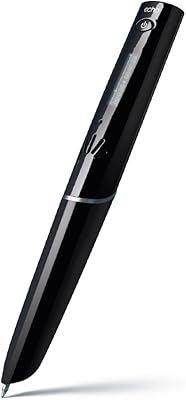
Livescribe Echo 2GB Smartpen
74%
91%
Tap-to-Replay Accuracy
88%
Build Quality & Durability
79%
Audio Recording Quality
53%
Dot-Paper Dependency
58%
Software & Desktop Experience
More
Gosky 15x55 Monocular
73%
83%
Optical Clarity
54%
Image Stability
79%
Build Quality
86%
Waterproofing
61%
Focus Mechanism
More
Celestron Nature 10x25 Monocular
79%
83%
Optical Clarity
61%
Low-Light Performance
88%
Build Quality
91%
Weather Resistance
94%
Portability & Size
More

FAQ

It depends on what you mean by serious. For casual weekend walks where you want to get a closer look at birds in open fields or along a shoreline, the Echo 7x18 works just fine. But if you are regularly birding in woodland, trying to identify species at long range, or going out at dawn and dusk, the 18mm objective and limited low-light capability will frustrate you. Dedicated birders are usually better served by a larger-objective binocular.

Honestly, it is one of the more common complaints from buyers. The eye relief on this pocket scope is on the shorter side, which means eyeglass wearers often cannot see the full field of view without removing their glasses. If you wear corrective lenses and cannot comfortably take them off for a quick look, this might not be the most comfortable fit for you.

A fair binocular in the same price range will generally produce a brighter, more stable, and more detailed image — two eyes and a larger combined objective lens area make a real difference. This compact monocular trades optical performance for portability. The image in good daylight is genuinely usable and respectable for the size, but it should not be your primary optic if image quality is the priority.

No, it is not waterproof or fog-proof. The rubber armor protects against knocks and provides a good grip in light rain, but the optics themselves are not sealed against moisture ingress. If you are regularly out in wet environments or around water, you should either protect it carefully or look at a sealed, waterproof alternative.

You get the monocular itself, a soft carrying case, a lanyard for wearing it around your neck, and a small lens cloth. The case in particular is something buyers frequently mention — it is functional but thin, and not something you would want to rely on for serious impact protection in a full travel bag.

Surprisingly close — down to around 13 inches, which is much shorter than many monoculars at this size and price. That makes it genuinely useful for inspecting flowers, insects, fungi, or any nearby detail on the trail, almost like a hand-held magnifier with serious range on the other end of the spectrum.

Yes, comfortably. At 3.3 inches long and just over an inch wide, it fits in standard trouser pockets, jacket pockets, and even shirt breast pockets without creating a noticeable bulge. A lot of users specifically note that they forget it is there until they need it, which is exactly the point of a tool this size.

For most casual uses — hiking, travel, wildlife watching in open areas, watching sporting events — 7x is actually a really practical choice. Higher magnification like 10x or 12x amplifies hand shake significantly, meaning you need a very steady hand or a support to get a usable image without a tripod. Seven power is stable enough to hold freehand and still brings subjects meaningfully closer.

Most users find it holds up well to normal outdoor abuse — drops on dirt or rock, being shoved in and out of pockets, and exposure to dust. A small number of long-term reviewers mention wear on the coating after a couple of years of heavy use, but for typical recreational use the armor is a genuine functional advantage over uncoated alternatives.

It is a solid choice for a curious teenager or young adult. The build is tough enough to survive typical rough handling, the size makes it easy to carry on school trips or family hikes, and the optics are capable enough to make the experience genuinely engaging rather than frustrating. For younger children it may require some adult guidance on focusing, but from early teens upward most users will get it working without trouble.

Where to Buy