Overview

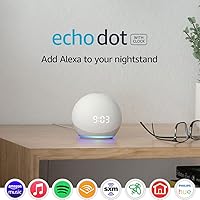
The Amazon Echo Dot 4th Gen Smart Speaker arrived in 2020 with a notable design shift — out went the flat puck, in came a compact sphere that sits more naturally on a nightstand or desk. The Glacier White finish is clean and unobtrusive, blending into most bedroom decors without demanding attention. What separates this version from the standard Dot is the built-in LED clock display, which shows the time, active alarms, and timers at a glance. Be clear-eyed about one thing going in: this is a convenience-first device, not an audio powerhouse. The 1.6-inch driver has real limits, and anyone prioritizing serious music listening should know that before buying.
Features & Benefits

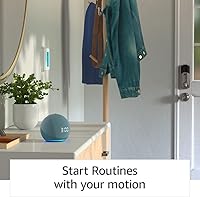
The tap-to-snooze gesture on the top of the unit sounds minor until you're half-asleep at 6 a.m. and just need five more minutes without reaching for your phone. The LED display earns its keep in low-light situations — bright enough to read across the room, subtle enough not to bother you at 2 a.m. Alexa handles the daily workload without fuss: play a podcast, check the forecast, set a cooking timer, or dim your smart bulbs before bed. The motion-triggered routines are an underrated feature — walk into the kitchen each morning and your lights, news briefing, and coffee maker can all kick on automatically. A 3.5mm output is there if you want better external audio.

Best For

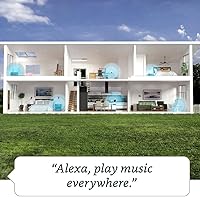
This bedside smart speaker is a natural fit for anyone looking to replace both their clock radio and phone alarm with something smarter. If you're just getting started with smart home tech — a few smart bulbs, maybe a plug or two — the 4th Gen Dot is a low-stakes entry point for voice control without committing to a pricier hub. It also makes sense in multi-room households where you want Alexa coverage in a guest room or kitchen without paying for a full-size Echo. The accessibility features — Adaptive Listening, adjustable speaking rate, hands-free calling — make this clock-equipped Echo Dot a particularly thoughtful option for older family members who find small screens or app interfaces frustrating.

User Feedback

Owners consistently praise how readable the clock face is in a dark room — it hits the right balance between visible and non-intrusive. Setup earns high marks too; most buyers report having it running in under five minutes. The loudest criticism centers on sound: at higher volumes or with bass-heavy tracks, the driver hits a wall fast. Some buyers also raise concerns about Amazon Sidewalk, a shared network feature that's enabled by default and uses a small portion of your internet bandwidth — worth knowing, and easy to turn off anytime inside the Alexa app under Settings. The 90-day warranty is a recurring frustration, especially when competitors cover a full year. The spherical design lands well aesthetically, though a handful of users note it stands taller than they anticipated.

Pros

  • The LED clock face is clear and easy to read in a dark room without producing an irritating glow at night.
  • Setup is genuinely fast — most users have the device connected and ready in under five minutes.
  • Tap-to-snooze on the top surface is a small but practical physical shortcut that earns its keep every morning.
  • Motion-triggered Alexa routines can automatically fire lights, appliances, or news briefings the moment you enter a room.
  • The Drop In and intercom features make whole-home voice communication between Echo devices quick and hands-free.
  • A 3.5mm line-out jack lets you route audio to a better external speaker whenever sound quality matters more.
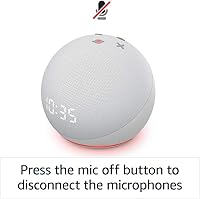
  • The hardware microphone off button provides a tangible privacy control that goes beyond software-only solutions.
  • Alexa supports a wide range of third-party smart home devices and skills, including Spanish language interaction.
  • Software security updates are guaranteed for at least four years after the device is last sold as new.
  • The spherical redesign sits neatly on a nightstand and comes in clean, neutral finishes that suit most decors.

Cons

  • Audio quality hits a noticeable ceiling at moderate-to-high volumes, particularly with bass-heavy or dynamic tracks.
  • The default 90-day warranty is short compared to the one-year coverage standard among many competing smart speakers.
  • Amazon Sidewalk is enabled out of the box and shares a small portion of your internet bandwidth with nearby devices — disabling it requires a manual opt-out inside the Alexa app.
  • The spherical form factor stands taller than many buyers expect, which can be a problem on shelves with limited vertical clearance.
  • Alexa is tightly coupled to the Amazon ecosystem, making this a poor fit for Google Assistant or Apple HomeKit households.
  • Bluetooth pairing is not supported for speakers that require a PIN code, which can trip up users with older audio equipment.
  • Hands-free voice control over Bluetooth does not work with Mac OS X devices, a limitation that is easy to miss before purchasing.
  • There is no built-in Zigbee or Matter hub, so local smart home control without a separate hub is not possible.
  • Extended warranty coverage beyond 90 days requires an additional purchase, which adds cost for buyers who want standard long-term protection.

Ratings

Our AI rating system analyzed thousands of verified buyer reviews for the Amazon Echo Dot 4th Gen Smart Speaker across global markets, actively filtering out incentivized, bot-generated, and spam submissions to surface only authentic user sentiment. The scores below reflect what real owners experienced after weeks and months of daily use — not first impressions — and both the genuine strengths and the recurring frustrations are weighted transparently. No category has been softened to protect the overall score.

Sound Quality
58%
42%
For podcasts, radio, news briefings, and ambient background music at low-to-moderate volume, the 4th Gen Dot holds its own without complaint. Vocals come through clearly, and spoken word content in particular — audiobooks, weather briefings, morning news — is handled cleanly in a bedroom or kitchen setting where you just need audio without fuss.
Push the volume past roughly 60 percent or play anything bass-heavy and the single 1.6-inch driver hits its ceiling quickly — distortion creeps in and the sound thins out noticeably. Buyers who want this to serve as their primary music speaker in a living room or home office will be consistently underwhelmed.
Smart Home Integration
88%
This clock-equipped Echo Dot connects reliably with a wide range of smart home devices — lights, locks, thermostats, plugs — and Alexa routines make coordinating multiple devices across a home feel genuinely effortless. Users who have invested time building out their Alexa ecosystem report that extending it to a new room with this device is one of the smoothest expansions they have made.
Compatibility is effectively limited to the Alexa ecosystem, which creates real friction in households split between platforms — partial Google Nest functionality is possible through workarounds, but it rarely feels fully integrated. There is also no built-in Zigbee hub, meaning local smart home control without a separate hub remains out of reach.
LED Display & Clock
91%
The LED clock face is the feature users mention most positively, especially its legibility in a pitch-dark bedroom without being disruptive to sleep. Seeing active timers and alarms displayed at a glance — without asking Alexa to read them aloud — is a small but consistently praised convenience that becomes part of the daily routine fast.
A subset of users find the display too bright even at its dimmest automatic setting in very dark rooms, requiring a manual adjustment in the app. The display is also limited to time, alarms, and timers — there is no ambient information mode for weather, calendar events, or custom data the way some competing smart displays offer.
Setup & Ease of Use
93%
Nearly every reviewer flags setup as a highlight — plug it in, open the Alexa app, and most users are fully operational in under five minutes, even those who describe themselves as not particularly tech-savvy. Amazon Wi-Fi Simple Setup handles network connection smoothly in most cases, removing the need for manual credential entry on supported routers.
Users who switch Wi-Fi networks or update their router password face a reconnection process that can become fiddly on less common network configurations. A small but consistent group of reviewers also reports the device occasionally missing wake words in louder environments, requiring them to reposition the unit or repeat themselves.
Value for Money
84%
For the combination of a reliable clock, Alexa assistant, smart home control, and a usable speaker in a compact footprint, this bedside smart speaker consistently earns praise for delivering more practical utility per dollar than many alternatives at a comparable price tier. Users who factor in the replaced clock radio and phone charger habits feel the value equation is strong.
The 90-day default warranty undercuts the value case somewhat — buyers whose units fail outside that window feel the price-to-coverage ratio is poor compared to competitors offering a full year standard. Budget-focused buyers also note that the clock-display variant carries a small premium over the standard Dot, and some question whether the LED display alone justifies the difference.
Voice Recognition
86%
Alexa wake word detection on this device holds up well in typical bedroom conditions — it picks up commands from across the room at conversational volume and rarely fires false positives that interrupt sleep or quiet moments. Adaptive Listening mode, which gives users more time to finish speaking before Alexa responds, meaningfully improves accuracy for those who speak at a slower pace.
In louder environments — a busy kitchen with running appliances or a room with a TV on — missed wake words become noticeably more frequent than in a quiet bedroom. Some users also flag occasional misinterpretations that trigger unintended smart home actions, especially when multiple devices share similar-sounding names in the Alexa app.
Design & Aesthetics
79%
21%
The spherical redesign is broadly well-received, with most users considering it a meaningful aesthetic improvement over the older flat puck shape. The Glacier White colorway blends cleanly into neutral bedroom and kitchen decors, and the fabric finish feels solid and premium relative to the price point.
A recurring complaint is that the sphere stands taller than buyers anticipate from product photos, which causes clearance issues on nightstands with overhead shelving or space constraints. A handful of reviewers also note that the top surface around the tap-to-snooze area picks up dust and fingerprints more visibly than expected.
Privacy Controls
77%
23%
The physical microphone off button is one of the more trusted hardware privacy features on any Echo device — users can see the indicator light shift color and know with certainty that the mics are disconnected, not just software-muted. The ability to review and bulk-delete voice recordings through the Alexa app gives privacy-conscious buyers a meaningful and transparent level of control.
Amazon Sidewalk ships enabled by default and quietly shares a small slice of home bandwidth without proactive disclosure — many buyers only discover this after reading the fine print, which erodes trust. Opting out through the Alexa app is straightforward, but users consistently argue that a data-sharing feature should require active opt-in rather than an opt-out.
Connectivity
83%
Dual-band Wi-Fi support on both 2.4 and 5 GHz bands helps the device avoid the congestion issues that can frustrate 2.4-only smart speakers in homes with many connected devices. Bluetooth audio streaming via A2DP works reliably for sending audio between a phone and the device or routing playback to an external Bluetooth speaker.
Bluetooth pairing is blocked for any speaker that requires a PIN code for connection, which catches users off guard when attempting to pair older audio equipment. Hands-free voice control over Bluetooth also does not function on Mac OS X devices, a limitation that narrows the use case for Mac-heavy households without much warning.
Alexa Responsiveness
87%
Day-to-day Alexa response speed is one of the most consistently praised aspects in user feedback — music commands, timer setting, smart home triggers, and general questions are handled quickly and accurately in the vast majority of interactions. Users who rely on morning routines particularly note how dependable the responses feel compared to earlier Echo hardware generations.
Compound or multi-step commands can trip Alexa up, requiring users to break instructions into separate requests, which some find repetitive after a while. Third-party skill performance is also inconsistent — certain skills load slowly or behave unpredictably in ways that feel disconnected from the otherwise solid core responsiveness of the device.
Accessibility Features
82%
18%
Adaptive Listening, which gives users more time to finish speaking before Alexa responds, is a standout feature for older adults and people with speech-related accessibility needs that few competing smart speakers match at this price. The adjustable speaking rate — triggered simply by saying Alexa, speak slower — removes a common frustration for users who find the default pace too fast.
Most accessibility features require manual setup and are not surfaced prominently during the initial guided installation, meaning the users who would benefit most from them often never discover they exist. Some reviewers also note that Kindle Read Aloud, while useful in concept, occasionally stumbles on formatting-heavy books in ways that interrupt the listening experience.
Motion Routines
76%
24%
Motion-triggered automation is a feature that consistently surprises users who did not expect it at this price point — walking into a bedroom to find the lights already on, or entering the kitchen to a running news briefing, are the kinds of automations that make the device feel actively intelligent rather than passive.
The motion sensor sensitivity and detection range are not user-configurable, which means it can trigger routines in open floor plans when someone walks nearby rather than actually entering the intended room. Setting up complex multi-device automations through the Alexa app also carries a learning curve that less tech-savvy buyers find discouraging at first.
Warranty & Support
52%
48%
Amazon customer support for Echo devices is generally considered responsive, and the option to purchase extended coverage at checkout for one, two, or three years adds meaningful flexibility for buyers who want longer-term peace of mind. The guaranteed software security update commitment for at least four years post-sale also provides baseline confidence in the device's long-term viability.
The default 90-day limited warranty is the most frequently cited frustration across user feedback, especially when buyers realize competitors routinely offer a full year as standard at similar price points. Units that develop faults between three months and one year — a realistic window for electronics — leave owners with no manufacturer recourse unless they purchased a paid extension upfront.
Intercom & Calling
78%
22%
Drop In and whole-home intercom features work reliably within an established Echo household — announcing from the kitchen that dinner is ready and having it play instantly in the bedroom is a genuinely practical daily use case that frequent users integrate without thinking about it. Free calling to US, Canada, and Mexico phone numbers through Alexa Calling adds unexpected utility.
Drop In requires contacts to explicitly enable the feature from their end, and the setup process for calling permissions with non-Echo users can feel overly complex for what should be a simple connection. International calling support is notably restricted, leaving users outside North America with a significantly diminished version of the calling feature.
Nightstand Utility
89%
As a combined clock, alarm system, sleep timer, white noise source, and bedside assistant, the 4th Gen Dot is hard to argue against for nightstand placement — it genuinely replaces several separate devices without cluttering a bedside table. The tap-to-snooze function earns repeated mentions as something users did not know they wanted until they had it.
The spherical form factor sits taller on a nightstand than many buyers expect from product images, creating clearance issues on shelves with limited vertical space. Users who prefer a completely dark sleeping environment must also actively disable the LED display through the app — a step that is not immediately obvious and is not flagged during setup.

Suitable for:

The Amazon Echo Dot 4th Gen Smart Speaker is an excellent fit for anyone who wants a bedroom companion that pulls triple duty as a clock, alarm, and voice assistant without crowding the nightstand. It works particularly well for people just beginning to explore smart home automation — if you already have a few smart bulbs, a connected thermostat, or a smart lock, this is a logical and affordable way to start controlling them by voice. Households already invested in the Amazon ecosystem will find it a cost-efficient way to push Alexa coverage into an additional room, whether that is a guest bedroom, a home office, or a kitchen. Older adults and accessibility-focused users will appreciate features like Adaptive Listening, adjustable speaking rate, and hands-free calling, all of which reduce the friction of daily interactions. Light audio listeners who want background music, news briefings, or white noise without needing high-fidelity output will also get solid everyday value from this device.
Not suitable for:

The Amazon Echo Dot 4th Gen Smart Speaker is not the right pick for anyone whose primary goal is audio quality. The single 1.6-inch driver simply cannot deliver room-filling sound, and listeners who enjoy bass-heavy music or want volume without distortion will find the experience falls short quickly. Buyers who are uncomfortable with always-on microphone devices in the home should think carefully before committing — a hardware mic-off button exists, but this is still a voice-activated product at its core. People deeply embedded in the Google Assistant or Apple HomeKit ecosystem will find Alexa compatibility limited and the overall experience less cohesive than staying within their existing platform. The default 90-day warranty is also a meaningful drawback for buyers who expect at least a year of manufacturer protection as standard, and unlike some competing devices, the 4th Gen Dot does not include a built-in smart home hub for local device control.
Specifications

  • Form Factor: Spherical enclosure measuring 3.9 x 3.9 x 3.5 inches (100 x 100 x 89 mm), a full redesign from the flat puck shape used in previous generations.
  • Weight: Weighs 12.3 oz (351.3 g); actual weight may vary slightly depending on manufacturing process.
  • Speaker Driver: Houses a single 1.6-inch full-range driver tuned for balanced vocal reproduction and moderate bass response at typical listening volumes.
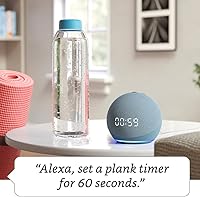
  • LED Display: Front-facing LED clock shows the current time, active alarms, and countdown timers at a glance without requiring any voice or touch interaction.
  • Tap-to-Snooze: A physical tap gesture on the top surface of the unit snoozes or dismisses an active alarm without requiring a voice command.
  • Wi-Fi: Supports dual-band Wi-Fi (802.11a/b/g/n/ac) on both 2.4 GHz and 5 GHz bands; ad-hoc and peer-to-peer network configurations are not supported.
  • Bluetooth: Supports A2DP for stereo audio streaming and AVRCP for voice-based remote control of connected mobile devices; speakers requiring a PIN code for pairing are not compatible.
  • Audio Output: Includes a 3.5mm line-out jack for connecting an external powered speaker or audio system; an audio cable is not included in the box.
  • Voice Assistant: Runs Amazon Alexa with full support for English and Spanish language interactions, third-party skills, and a broad range of smart home integrations.
  • Privacy Controls: Equipped with a hardware microphone off button that physically disconnects the microphones, complemented by wake-word-only activation and voice history deletion through the Alexa app.
  • Motion Detection: Built-in motion sensor supports location-triggered Alexa routines, enabling automated actions such as turning on lights or starting a news briefing when someone enters a room.
  • Power Supply: Ships with a 15W glacier white power adapter; the device requires a constant wired power connection and does not support battery operation.
  • Warranty: Covered by a 90-day limited manufacturer warranty, with optional 1-year, 2-year, and 3-year extended warranties available for separate purchase in the U.S.
  • Security Updates: Amazon guarantees software security updates for at least four years after the device is last listed as a new unit on their websites.
  • App Compatibility: The companion Alexa app works with Fire OS, Android, and iOS devices, and is also accessible through a standard web browser on desktop.
  • Release Year: Launched in 2020 as the fourth generation of the Echo Dot line, introducing the spherical enclosure and the LED clock display as a variant option.

Related Reviews

Amazon Echo Dot Kids Smart Speaker
76%
91%
Ease of Setup
88%
Child Engagement
86%
Design & Aesthetics
84%
Parental Controls
82%
Content Value
More
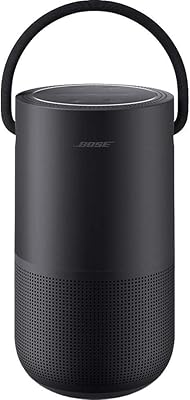
Bose Portable Smart Speaker
78%
88%
Sound Quality
83%
Portability
74%
Battery Life
91%
Build Quality
84%
Voice Assistant Performance
More
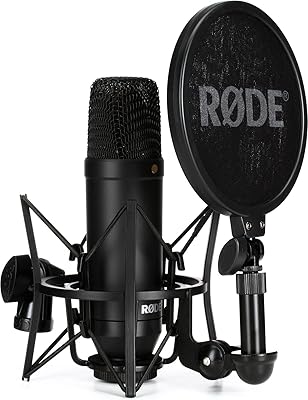
Rode NT1 4th Gen Condenser Microphone
85%
96%
Audio Clarity
94%
Self-Noise Performance
88%
Build Quality
93%
Vocal Recording
84%
Value for Money
More
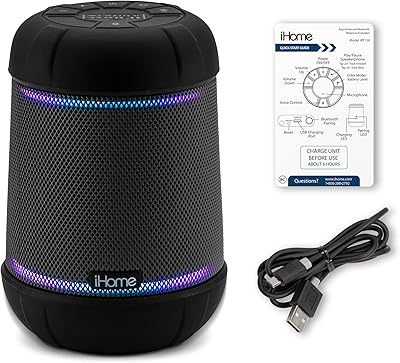
iHome iBT158 Portable Bluetooth Speaker
76%
91%
Waterproofing
88%
LED Lighting
86%
Value for Money
74%
Battery Life
63%
Sound Quality
More
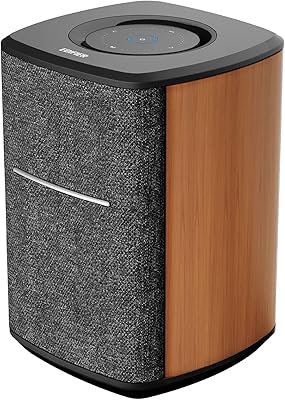
Edifier MS50A WiFi Bookshelf Speaker
70%
81%
Sound Quality
94%
Privacy Design
88%
Streaming Compatibility
47%
App Experience
53%
Setup & Onboarding
More
Amazon Basics V216US Computer Speakers
75%
96%
Ease of Setup
88%
Value for Money
71%
Sound Quality
47%
Bass Response
58%
Build Quality
More
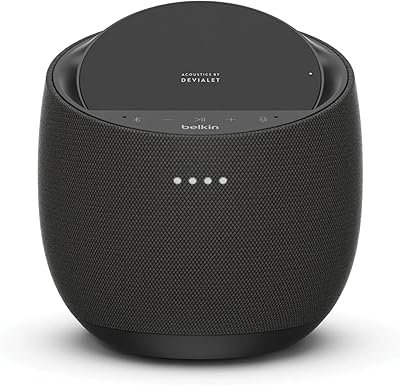
Belkin SOUNDFORM Elite Smart Speaker
84%
91%
Sound Quality
89%
Wireless Charging Performance
72%
Alexa Integration
85%
Bluetooth Connectivity
88%
Build Quality
More
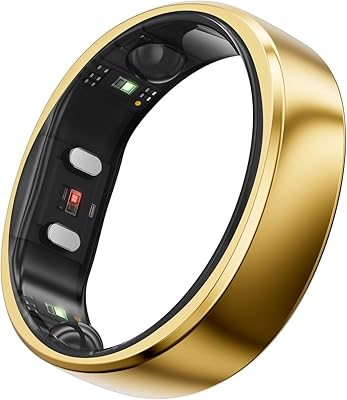
RingConn Gen 2 Smart Ring
84%
91%
Battery Life
88%
Comfort and Wearability
85%
Sleep Apnea Monitoring
78%
App Experience
90%
Water Resistance
More
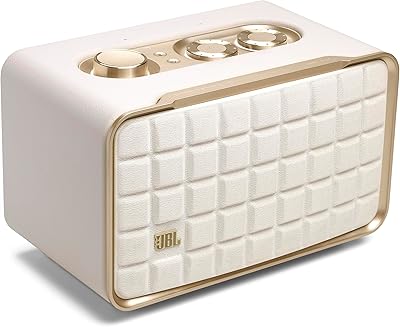
JBL Authentics 200 Smart Home Speaker
79%
93%
Build Quality
86%
Sound Quality
84%
Bass Performance
81%
Smart Integration
62%
App Experience
More
Samsung HW-LS60D Music Frame Smart Speaker
71%
91%
Design & Aesthetics
61%
Audio Quality
88%
Samsung Ecosystem Integration
83%
Setup & Installation
57%
App & Smart Controls
More

FAQ

You will need the Alexa app during initial setup to connect it to your Wi-Fi network — that app runs on Android, iOS, or any standard web browser. Once the setup is done, the device works completely independently. You can ask questions, play music, set alarms, and control smart home devices without ever picking up your phone again.

No, Prime is not required for the core experience. Setting alarms, asking Alexa questions, controlling smart home devices, making calls, and using thousands of skills are all free. Amazon Music with ads is included out of the box; Prime Music, Spotify, and other premium services require their own separate subscriptions.

Sidewalk is enabled by default, but opting out is straightforward. Open the Alexa app, tap More, then go to Settings, then Account Settings, and select Amazon Sidewalk — toggle it off from there. The whole process takes about 30 seconds, and your device continues working normally once it is disabled.

Yes, there is a 3.5mm line-out jack on the back of the unit. Run a standard aux cable from there to any powered speaker or audio system and Alexa will route audio through it. The cable is not included in the box, but any generic 3.5mm cable will work fine. This is the most practical upgrade for anyone who wants better sound without buying a larger Echo.

The display adapts its brightness to the ambient light in the room, so it automatically dims in darkness. Most users find the default nighttime level comfortable and non-intrusive. You can also manually adjust the brightness through the Alexa app if the automatic setting does not suit your preference.

Both options work. You can call other Echo devices or anyone using the Alexa app hands-free, and you can also place calls to standard phone numbers in the US, Canada, and Mexico at no additional charge through Alexa Calling. The Drop In feature is great for quick, intercom-style communication with other Echo devices around your home.

Some Google Nest devices do work with Alexa through third-party integrations, but the level of compatibility varies by product. Native Google Assistant functionality is not supported, and deep Nest ecosystem features may not transfer over cleanly. The safest approach is to search for your specific device model in the Alexa app under Add Device before committing to the purchase.

At low-to-moderate volumes it handles spoken content, podcasts, and casual background music reasonably well. The single 1.6-inch driver starts to show its limits when you push the volume up or play bass-heavy tracks — compression and some distortion become noticeable. Think of this as a smart assistant that can also play music, rather than a music speaker that happens to have Alexa built in.

For nearly everything it does, yes — Alexa relies on cloud processing, so voice commands, music streaming, smart home control, and calls all require a working internet connection. If your Wi-Fi goes out, Alexa will not respond to voice requests. The LED clock display will, however, continue showing the correct time even without connectivity.

You will need to reconnect the device through the Alexa app, which involves putting it into setup mode and entering your new network credentials — typically a two-minute process. If you have Amazon Sidewalk enabled, it may temporarily use a neighboring Sidewalk network to help the device stay online while you sort out the credentials, which can make the transition smoother.