Overview

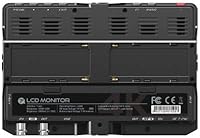
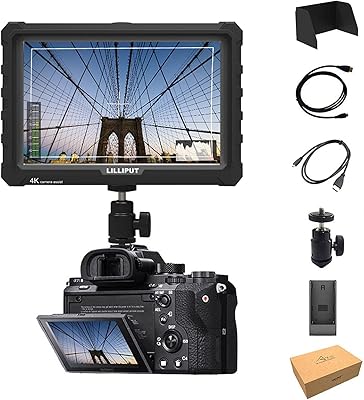
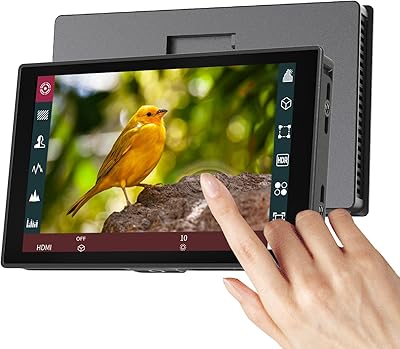
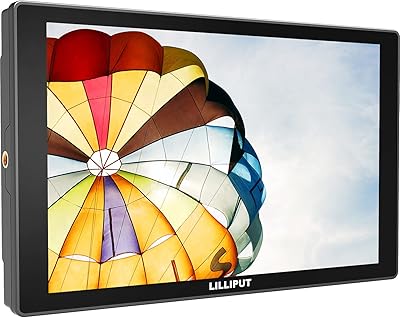
The Lilliput H7S 7″ On-Camera Monitor is a field monitor built to hold its own in bright outdoor conditions and on busy production sets. At 7 inches, it occupies a practical middle ground — large enough for accurate focus and exposure checks, compact enough to balance on most rigs without fighting the camera's center of gravity. In a market where SmallHD and Atomos dominate the conversation, the H7S positions itself as a budget-conscious alternative with a competitive spec sheet. The dual battery plate is an unusual structural choice that addresses a real pain point: sustaining a high-brightness panel on a single power source. That said, a 3.7-star average across 64 reviews suggests real-world performance doesn't always match the spec sheet.
Features & Benefits

At 1800 cd/m², the brightness on this Lilliput field monitor is strong enough to keep the panel legible in direct midday sun — though it's worth noting that some competing monitors now push beyond 2000 nits. The 1920x1200 resolution runs slightly wider than standard 16:9, giving you a touch of extra real estate for overlays without crowding the image. Both HDMI 1.4B and 3G-SDI include loop outputs, so feeding a recorder or second monitor downstream requires no extra hardware. HDR monitoring covers HLG and ST 2084, and the LUT system is genuinely practical — eight pre-loaded camera log profiles plus six user-uploadable slots means most common log formats are accessible without digging through menus mid-shoot.

Best For

The H7S makes the most sense for shooters who spend real time outdoors — documentary crews, event videographers, or anyone running a single-camera setup on a gimbal where sunlight readability is non-negotiable. The SDI I/O also makes it relevant on more structured sets where signal routing to a recorder matters. Colorists and DITs on smaller productions will appreciate the LUT preview capability without needing a dedicated grading display. If your camera shoots in Sony S-Log, Canon Log, or a similar profile covered by the built-in presets, you can pull up a usable on-set image with minimal configuration. Where it makes less sense is in controlled studio environments where color accuracy outweighs raw brightness.

User Feedback

With a 3.7-star rating across 64 reviews, sentiment on this 7-inch camera monitor is genuinely mixed and worth taking seriously. The most consistent praise centers on brightness and SDI value for the price, with several reviewers noting the panel holds up outdoors where cheaper monitors wash out entirely. The criticism, though, is harder to dismiss. Build quality concerns appear regularly — loose ports, plasticky construction, and a touchscreen that can feel sluggish under pressure. Menu navigation draws repeated complaints about being clunky and unintuitive. Some users also flag color accuracy inconsistencies and friction when importing custom LUTs. These complaints appear spread across different purchase dates, which points to systemic rather than batch-specific problems.

Pros

  • The 1800-nit panel holds up in direct sunlight where most monitors in this price range fail.
  • Both HDMI and 3G-SDI inputs include loop outputs, making signal routing to recorders straightforward.
  • Eight built-in camera log LUT presets cover the most common formats without manual import.
  • The 1920x1200 resolution gives slightly more screen real estate than standard 16:9 panels.
  • HDR monitoring with HLG and ST 2084 support is genuinely useful for modern camera workflows.
  • Six user-uploadable LUT slots allow custom color pipeline integration on more complex shoots.
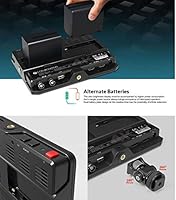
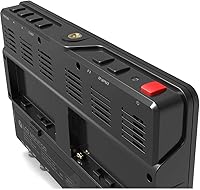
  • The dual battery plate design keeps the monitor running continuously during power swaps.
  • At its price point, the SDI connectivity alone is competitive with significantly more expensive options.
  • The 7-inch screen size strikes a workable balance between visibility and on-rig portability.

Cons

  • Build quality feels below average for a professional tool, with loose ports and plasticky construction reported by multiple buyers.
  • The touchscreen is sluggish and unreliable under real shooting conditions, especially in fast-paced environments.
  • Menu navigation is clunky and unintuitive, requiring more button presses than competitors to reach common settings.
  • Color accuracy inconsistencies have been noted, making the H7S unreliable for critical exposure or grading reference.
  • Custom LUT import can be frustrating and finicky, with several users reporting compatibility issues.
  • At 1800 nits, brightness is no longer class-leading — newer competing monitors push beyond 2000 nits.
  • Negative feedback is spread across different purchase dates, suggesting these are not early-batch issues.
  • The dual battery plate adds noticeable bulk and weight that can disrupt compact or gimbal-based rig setups.
  • A 3.7-star average across 64 reviews reflects a meaningful gap between spec sheet promise and real-world reliability.
  • High-brightness operation combined with dual battery dependency increases running costs and logistical complexity on longer shoots.

Ratings

The scores below reflect our AI-driven analysis of verified global user reviews for the Lilliput H7S 7″ On-Camera Monitor, with spam, bot activity, and incentivized feedback actively filtered out before scoring. Each category has been weighted against real-world shooting scenarios reported by working videographers, not casual observers. Both the genuine strengths and the recurring pain points are represented without softening either side.

Outdoor Brightness
83%
The 1800-nit panel is the single most praised feature across the review pool — users shooting weddings, sports, and documentary content in full daylight consistently report that the image stays usable where competitor monitors in the same price tier wash out entirely. For run-and-gun crews who cannot control their environment, this is a meaningful functional advantage.
A growing number of reviewers note that 1800 nits is no longer the benchmark it was when the H7S launched in 2020, with newer monitors in the same category now reaching 2000 nits or beyond. In extreme midday sun without any hood attachment, some users still find themselves struggling with glare on the panel surface itself.
Build Quality
47%
53%
A minority of users report that the physical chassis holds up adequately for studio or low-impact field use, and the overall form factor feels appropriately sized for a 7-inch monitor. A few long-term owners note no structural failures after moderate regular use.
Build quality is the most consistently flagged weakness across the entire review set — users report loose port connections, a plasticky feel that does not inspire confidence on a professional rig, and general construction that feels mismatched with the monitor's feature claims. These concerns appear in reviews from multiple purchase windows, ruling out a single bad production batch.
Connectivity & I/O
79%
21%
Having both HDMI 1.4B and 3G-SDI with corresponding loop outputs is a legitimately strong specification for this price range — users frequently highlight the ability to feed a recorder downstream without additional splitters as a workflow benefit that saves time and gear on smaller productions. Event and documentary shooters in particular find the SDI loop-out indispensable.
Some users report that the physical port connections feel less secure than expected, with SDI connectors occasionally requiring reseating during shoots. A small number of reviewers flag compatibility edge cases with certain cameras over HDMI, though these appear to be isolated rather than systemic.
Touchscreen Responsiveness
41%
59%
The touchscreen functions adequately for basic navigation in calm, controlled conditions, and users who primarily use physical buttons report fewer frustrations with the interface overall.
Touchscreen responsiveness is one of the most persistent complaints in the review pool — multiple users describe missed taps, delayed responses, and a general unreliability that becomes genuinely problematic when you need to change a setting quickly between takes. On cold days or when wearing gloves, the panel is effectively non-functional as a touch interface.
Menu & Interface Usability
44%
56%
Once users invest time in learning the menu layout, most report being able to locate essential functions like brightness and LUT selection reliably. The physical button layout is considered usable by reviewers who prefer hardware controls over touch navigation.
The menu system is widely described as clunky, poorly organized, and requiring too many inputs to reach common settings — a real problem on fast-paced shoots where every second between setups counts. Compared to the operating systems on SmallHD or Atomos monitors at similar or slightly higher price points, the H7S interface feels several generations behind.
Color Accuracy
56%
44%
For exposure monitoring and basic composition work, the color rendering is considered acceptable by a portion of reviewers, particularly when using the built-in camera log LUT presets to convert log footage to a viewable image on set.
A recurring thread in the negative reviews involves color accuracy discrepancies — users attempting to use the H7S as a reference display report shifts in hue and inconsistent panel behavior that make it unreliable for color-critical decisions. This limits its role on more demanding productions where reference accuracy matters.
3D LUT Support
62%
38%
The combination of eight factory-loaded camera log presets and six user-uploadable slots is considered genuinely useful by DITs and camera operators who want to preview a graded image without a separate display. For shooters working in common Sony or Canon log formats, the built-in presets often work acceptably without any manual configuration.
Custom LUT import frustrates a meaningful number of users — file compatibility issues and an unclear import process result in failed loads that are difficult to troubleshoot without the manual. Some reviewers report that certain .cube files produced by DaVinci Resolve load inconsistently or not at all.
Power System
71%
29%
The dual battery plate design is a legitimate differentiator — users on long all-day shoots appreciate the ability to hot-swap batteries without powering down the monitor, which is particularly valuable when running at peak brightness where single-battery runtime drops noticeably.
The dual plate system adds meaningful bulk and rear-weight to the monitor, which several gimbal and lightweight rig operators flag as a balance issue. Users who predominantly shoot in short sessions find the added mass an unnecessary trade-off when a single plate would suffice.
HDR Monitoring
67%
33%
Support for both HLG and ST 2084 at multiple nit levels gives the H7S credibility for monitoring HDR-captured footage on set, and users shooting for HDR delivery appreciate having the option without paying flagship monitor prices.
Real-world HDR monitoring accuracy is difficult to verify without a calibrated reference, and some reviewers express skepticism about whether the panel's color consistency is sufficient to make HDR mode decisions trustworthy. It functions as a useful indicator rather than a precision reference tool.
Resolution & Sharpness
74%
26%
The 1920x1200 panel delivers a sharp, clear image that users find adequate for focus checking and peaking overlays at normal monitor viewing distances. The slightly wider-than-16:9 format gives a touch of extra vertical space for waveforms or histograms without cropping the main image.
At 7 inches, pixel density is sufficient but not exceptional — users accustomed to higher-end monitors with similar resolutions note that fine focus confirmation on critical shots can still be uncertain, and the panel does not compete with higher pixel-density options at the same screen size.
Value for Money
58%
42%
For buyers who specifically need SDI loop-out and high brightness at a budget price point, the H7S does deliver a combination of features that would cost significantly more from established brands. Reviewers who focus purely on the spec-to-price ratio tend to rate it more favorably than those prioritizing polish.
The overall value proposition is undercut by the reliability and usability concerns — a monitor that frustrates you during a shoot or develops port issues after moderate use is not actually saving you money. Several reviewers conclude that spending more on a SmallHD or Atomos entry-level option would have been the smarter long-term decision.
Rig Compatibility
72%
28%
Standard 1/4-inch mounting threads mean the H7S integrates with most existing monitor arms, cheese plates, and articulating arms without requiring proprietary adapters. Users with established rig setups report dropping it in without significant reconfiguration.
The added rear bulk from the dual battery plate can create balance challenges on smaller rigs and is particularly problematic for gimbal operators trying to maintain precise payload calibration. A few users also note that the mounting point position requires adjustment when transitioning between horizontal and vertical rig configurations.
Long-Term Reliability
43%
57%
A subset of reviewers who use the H7S primarily in studio or low-impact environments report adequate durability over extended ownership, suggesting the monitor can hold up when not subjected to the stresses of outdoor field production.
Long-term reliability concerns are significant — port loosening, touchscreen degradation, and general wear appear in reviews from users across different purchase periods, indicating these are not manufacturing anomalies but design or materials choices that limit the monitor's working lifespan under regular professional use.
Setup & Initial Configuration
61%
39%
Getting a basic signal displayed on screen is straightforward — plug in via HDMI or SDI and the monitor detects the input without complicated handshaking procedures. Users running simple single-camera monitoring setups are generally up and running quickly.
Configuration beyond the basics — loading LUTs, calibrating HDR modes, or setting up monitoring overlays — involves navigating menus that many users describe as poorly documented and counterintuitive. The manual is frequently criticized as insufficient for resolving common setup questions.

Suitable for:

The Lilliput H7S 7″ On-Camera Monitor is a practical choice for outdoor-focused video crews who need a high-brightness display without spending flagship money. Documentary shooters, event videographers, and run-and-gun operators working in harsh sunlight will benefit most from the 1800-nit panel, which stays legible where lower-tier monitors simply wash out. The SDI input and loop output add genuine value for operators who need to feed a recorder or second display downstream without additional splitters or adapters. Camera operators shooting in Sony S-Log2, Canon Log, or similar formats will find the built-in LUT presets save real time on set. The dual battery plate design is a meaningful advantage for anyone running the monitor at full brightness for extended periods, since a single battery drains fast under that load. Budget-conscious DITs on smaller productions who want on-set LUT preview capability — without a dedicated grading monitor — will also find the H7S punches reasonably above its price tier.

Not suitable for:

The Lilliput H7S 7″ On-Camera Monitor is harder to recommend for buyers who prioritize build quality, color accuracy, or a polished user experience over raw brightness. Studio-based operators and narrative DPs who need a reference-grade display for critical color decisions should look at purpose-built monitoring solutions from SmallHD or Atomos, where panel calibration and interface reliability are more consistently controlled. The touchscreen and menu system have drawn sustained criticism across reviews, which becomes a real problem in fast-paced shoots where you need to change settings quickly under pressure. Anyone working in a controlled interior environment — where the high-nit output is unnecessary — will find the tradeoffs around build quality and interface harder to justify. The dual battery plate setup, while useful for power continuity, adds bulk and weight that may not suit compact rig builds or gimbal operators trying to keep total payload down.
Specifications

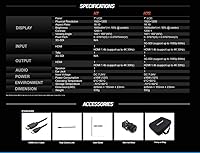
  • Screen Size: The panel measures 7 inches diagonally, offering a practical viewing area for focus peaking, waveforms, and image monitoring on a standard camera rig.
  • Resolution: Native resolution is 1920x1200 pixels, which is slightly wider than standard 1080p and provides additional screen space for overlaid monitoring tools.
  • Peak Brightness: The display reaches a peak brightness of 1800 cd/m², designed to maintain legibility when shooting in direct sunlight or high-ambient-light environments.
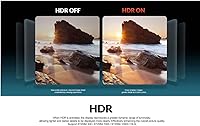
  • HDR Support: The monitor supports HDR monitoring via HLG and ST 2084 standards at 300, 1000, and 10000 nit tone-mapping levels.
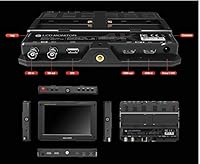
  • Video Input: Accepts video signal via HDMI 1.4B and 3G-SDI, covering the most common camera output formats used in professional video production.
  • Video Output: Both HDMI and 3G-SDI inputs are paired with corresponding loop outputs, allowing signal passthrough to a recorder or secondary monitor without additional hardware.
  • LUT Support: Includes 8 factory-loaded camera log presets and 6 user-definable LUT slots for importing custom color transforms from a supported file format.
  • Power Design: Uses a dual battery plate configuration so one battery can be swapped while the other powers the monitor, preventing operational interruption during extended shoots.
  • Package Dimensions: The packaged unit measures 12.48 x 9.33 x 3.62 inches, reflecting the monitor body plus mounting hardware and accessories included in the box.
  • Weight: The packaged weight is 2.45 pounds; actual monitor weight will be lighter but the dual battery plate system adds bulk compared to single-plate designs.
  • Model Number: The official model designation is H7S, as assigned by the manufacturer Lilliput for this specific monitor variant.
  • Manufacturer: Produced by Lilliput, a Chinese manufacturer with an established catalog of field monitors, touchscreen displays, and broadcast monitoring equipment.
  • Market Availability: The H7S was first listed for sale in August 2020 and remains actively available as of the time of this review, with no discontinuation announced.
  • Aspect Ratio: The 1920x1200 panel uses a 16:10 aspect ratio rather than the standard 16:9, which provides a slightly taller viewing area when monitoring native widescreen footage.
  • BSR Ranking: The H7S holds a Best Sellers Rank of #337 in the Video Monitors category on Amazon, indicating moderate market presence within its segment.

Related Reviews

Lilliput A7S 7″ Camera Field Monitor
76%
84%
Image Clarity
61%
Build Quality
71%
Brightness & Outdoor Use
88%
Monitoring Assist Tools
57%
Menu Usability
More
ZEROXCLUB B3C 3-Camera Wireless Backup Camera System
76%
84%
Video Signal Reliability
83%
Image Quality
76%
Night Vision Performance
71%
Installation Experience
88%
Weather & Build Durability
More
Camecho Vehicle Backup Camera 7″ Monitor
85%
88%
Ease of Installation
85%
Image Quality
83%
Build Quality
90%
Night Vision Performance
87%
Display Clarity
More
Hikity 7″ Backup Camera with Monitor Kit
86%
89%
Image Clarity
73%
Night Vision Performance
94%
Installation Ease
90%
Build Quality
91%
Weather Resistance
More
NEEWER F700 7″ Field Monitor
78%
91%
Outdoor Visibility
86%
Touch Screen Responsiveness
54%
Fan Noise
88%
3D LUT Support
89%
Battery & Power Versatility
More
Portkeys HD7T 7″ Field Monitor
77%
91%
Outdoor Brightness
88%
Value for Money
89%
Monitoring Tool Set
67%
Touchscreen Responsiveness
72%
Panel Resolution & Clarity
More
Lilliput A11 10.1″ Camera Monitor
81%
83%
Image Clarity & Resolution
61%
Brightness & Outdoor Visibility
91%
Connectivity & Signal Compatibility
86%
Build Quality & Durability
88%
Mounting Versatility
More
NEEWER F100 7-inch Field Monitor
78%
83%
Image Quality
66%
Outdoor Visibility
71%
Build Quality
68%
Ball Head & Mounting
78%
Battery Life
More
Portkeys BM7 II DS 7″ Camera Monitor
77%
91%
Outdoor Brightness & Visibility
88%
Camera Control Integration
72%
Wireless Control Reliability
84%
Color Accuracy & LUT Support
63%
Software & Menu Usability (CINENORM OS)
More
VILTROX DC-L2 7″ 4K Camera Field Monitor
86%
93%
Display Quality
89%
Portability
70%
Battery Life
85%
Ease of Use
88%
Build Quality
More

FAQ

At 1800 nits it performs noticeably better than budget monitors in bright conditions — most reviewers confirm the image stays readable outdoors. That said, 1800 nits is no longer the ceiling for this price category, so if you are shooting in extreme midday sun you may still want to shade the monitor when precision matters.

Yes, the H7S includes built-in LUT presets for common Sony and Canon log formats, so you can apply a display transform and see a rec.709-style image on set without loading anything manually. If your specific log variant is not covered by the eight factory presets, you can upload a custom LUT into one of the six user-defined slots.

The monitor is designed to draw from one battery at a time, so when that battery runs low you can swap it out while the second plate keeps power flowing without interrupting your shot. In practice this is useful for all-day shoots where running at high brightness drains a standard V-mount or Gold Mount battery faster than you might expect. The trade-off is that the dual plate adds physical bulk to the rear of the monitor.

The Lilliput H7S 7″ On-Camera Monitor supports HDMI and 3G-SDI inputs with their respective loop outputs, but you would typically use one input signal at a time and loop it out to a downstream device like a recorder. Running both inputs simultaneously is not a standard use case for this class of monitor.

This is one of the more consistent criticisms from actual users — the touchscreen can feel sluggish and sometimes unresponsive, particularly when navigating deeper menu options under time pressure. For everyday adjustments it works, but if you rely heavily on touch interaction for in-the-moment changes, the experience may frustrate you compared to monitors with more refined interfaces.

The H7S uses a standard 1/4-inch thread mount configuration common to most field monitors, so it should be compatible with the vast majority of monitor arms, articulating arms, and cheese plate setups already in your kit. Check the specific mounting point placement against your rig geometry before assuming a direct drop-in fit.

Yes, the monitor supports user-uploaded LUTs in the .cube format, which is the standard output from most color grading applications including DaVinci Resolve. There have been some user reports of compatibility issues with certain LUT sizes or formatting, so it is worth testing your files before relying on them on a paid shoot.

SmallHD and Atomos generally offer more refined build quality, more intuitive operating systems, and better color accuracy out of the box. The H7S competes primarily on raw brightness and SDI connectivity at a lower entry cost. If interface polish and long-term durability matter more than saving money upfront, the established brands are the safer investment.

Not reliably. Several users have flagged color accuracy inconsistencies, and this 7-inch camera monitor is better suited for monitoring exposure, focus, and composition than for making critical color decisions. If accurate color reference is essential to your workflow, a properly calibrated dedicated display is the more appropriate tool.

It warrants genuine caution. A 3.7 average across 64 reviews reflects a meaningful number of buyers who encountered real problems, not just isolated bad luck. The complaints around build quality, touchscreen reliability, and menu usability appear consistently across different purchase periods, which suggests they are not isolated manufacturing defects. It does not mean the monitor is unusable, but going in with lowered expectations on those specific fronts is wise.

Where to Buy