Overview

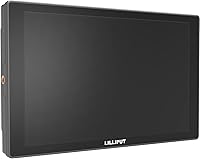
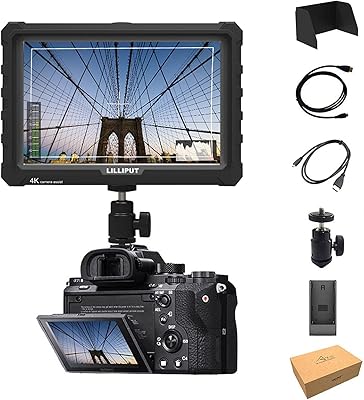
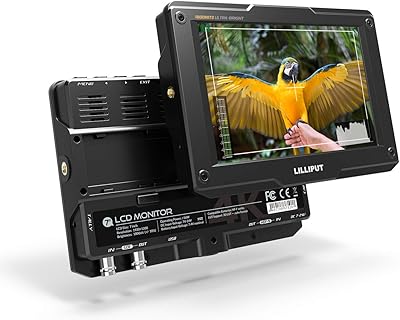
The Lilliput A11 10.1″ Camera Monitor sits in a competitive mid-range bracket where working videographers want real functionality without the premium price tags attached to brands like SmallHD or Atomos. At 10.1 inches, the screen is large enough to judge focus and exposure on a busy set, yet compact enough to mount on a camera body or cage without throwing off your rig's balance. Lilliput has been manufacturing camera accessories long enough to earn credibility among professionals, and this field monitor reflects that experience. It pairs with most major 4K and FHD camera systems, making it a flexible option across a wide range of production environments.
Features & Benefits

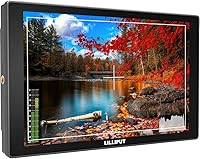
The panel runs at 1920×1200 native resolution — not 4K, despite what the name implies. To be clear, the 4K refers to the signal it can accept via HDMI 1.4b (up to 4K 30Hz), not what the screen itself renders. That distinction matters when evaluating sharpness for critical focus work. Still, the full-lamination technology visibly reduces the air gap between glass layers, cutting reflections compared to non-laminated alternatives. With 320 cd/m² brightness and a 1000:1 contrast ratio, it handles interior and shaded exterior shoots reliably. The loop output on both HDMI and SDI is genuinely useful on set, letting you feed a recorder or second monitor without splitting signal. A 175° viewing angle also keeps colors consistent when crew members monitor off-axis.

Best For

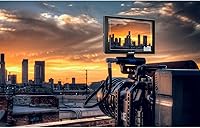
This camera monitor makes the most sense for solo videographers and small crews who need a dedicated reference screen but aren't ready to spend on a top-tier option. ENG operators and broadcast shooters will appreciate the SDI connectivity, which isn't always available at this price point. Indie documentary filmmakers shooting with Sony, Canon, or Blackmagic cameras will find the 4K HDMI input covers most situations comfortably. At under 1.5 pounds, it's light enough for gimbal-mounted rigs where every ounce directly affects stabilization performance. If you're currently relying on your camera's built-in LCD for focus and framing decisions, the Lilliput A11 is a meaningful step up in usable screen size and image clarity.

User Feedback

Owners consistently highlight build quality and color accuracy as standout positives, with several noting that the laminated panel handles outdoor reflections noticeably better than non-laminated screens they've used before. Broadcast users frequently praise the SDI and HDMI flexibility for location work. On the critical side, a recurring complaint is that direct sunlight visibility falls short — 320 cd/m² isn't enough for bright outdoor conditions without some form of shading. A handful of buyers have also flagged the on-screen menu and button layout as unintuitive until you spend time with it. That said, long-term owners generally report solid long-term reliability, with few accounts of hardware issues after months of regular field use.

Pros

  • Both HDMI and SDI inputs are supported simultaneously, covering a wide range of camera systems in a single monitor.
  • The full-lamination panel noticeably reduces reflections compared to non-laminated alternatives, improving usability in mixed lighting.
  • Loop output on both signal types removes the need for external splitters when chaining a recorder and monitor together.
  • At under 1.5 pounds, this field monitor balances well on gimbals and shoulder rigs without requiring major counterweight adjustments.
  • The 1920×1200 resolution delivers sharper detail than most camera-mounted LCD screens, making focus evaluation significantly more reliable.
  • A 175-degree viewing angle keeps the image consistent for crew members monitoring from off-axis positions on set.
  • Long-term owners report consistent performance across multiple productions without notable hardware degradation.
  • VESA 75mm and 1/4-inch mounting options make it compatible with a broad range of cages, arms, and rig systems.
  • SDI support across 3G, HD, and SD formats makes this camera monitor genuinely versatile in broadcast and ENG contexts.

Cons

  • Direct sunlight renders the screen difficult to read without a separate monitor hood, which adds cost and bulk.
  • The on-screen menu layout has a steep learning curve that can slow down adjustments during live or fast-paced shoots.
  • Stock mounting hardware feels underdeveloped relative to the chassis quality and often needs to be replaced for heavy rigs.
  • The 8-bit panel is not suitable for evaluating log footage or making reliable color decisions in the field.
  • HDMI input is limited to 4K at 30Hz, leaving out operators who shoot high-frame-rate 4K content.
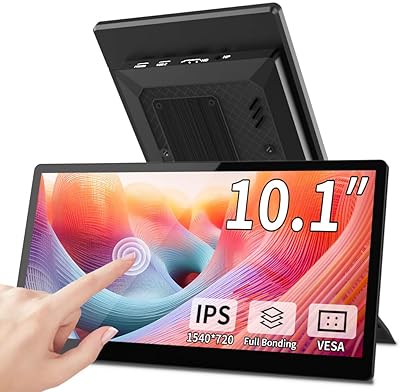
  • No touchscreen functionality means navigating settings always requires physical buttons, which slows workflow compared to competing monitors.
  • Isolated reports of backlight inconsistencies surfacing after extended heavy use suggest panel longevity may vary under sustained heat.
  • The included documentation is minimal, and new users often need to rely on third-party resources to understand the full feature set.

Ratings

The scores below for the Lilliput A11 10.1″ Camera Monitor were generated by our AI system after analyzing verified buyer reviews from multiple global marketplaces, with spam, bot-submitted, and incentivized feedback actively filtered out. Each category reflects real-world usage patterns reported by working videographers, broadcast operators, and indie filmmakers. Both the strengths that keep buyers recommending this monitor and the friction points that cause hesitation are represented transparently in every score.

Image Clarity & Resolution
83%
Owners frequently note that the 1920×1200 panel delivers noticeably sharper detail than the built-in screens on most mirrorless cameras, making it far easier to judge critical focus during a shoot. The full-lamination technology reduces the visual gap between glass layers, which translates to a cleaner, more defined image in real working conditions.
Some users with backgrounds in high-end monitoring point out that the 8-bit panel shows its limits when grading or evaluating subtle color gradients on set. It is a solid reference tool, but not a substitute for a color-critical display in post-production environments.
Brightness & Outdoor Visibility
61%
39%
In shaded exteriors, studio environments, and interior locations, the 320 cd/m² output is generally sufficient for accurate monitoring. Users shooting in controlled lighting conditions rarely mention brightness as a concern, and the laminated panel does help by cutting ambient reflections.
Direct sunlight is a consistent pain point across buyer reviews. Multiple owners report needing to shade the monitor with a hood or reposition entirely when shooting outside on sunny days, which is a meaningful limitation for run-and-gun documentary or event work.
Connectivity & Signal Compatibility
91%
The combination of HDMI 1.4b and 3G-SDI inputs covers an impressively wide range of camera systems, from consumer mirrorless bodies to broadcast-grade camcorders. Users especially appreciate that both inputs accept loop output, allowing them to chain a recorder or second monitor without any additional hardware.
HDMI input tops out at 4K 30Hz, which means users shooting at higher frame rates in 4K will need to drop resolution or accept a downscaled signal feed. A small number of buyers also noted occasional handshake delays when hot-swapping HDMI sources mid-shoot.
Build Quality & Durability
86%
The Glass+Glass construction gives the body a noticeably solid feel that buyers consistently describe as reassuring for field use. Long-term owners who have carried this monitor across multiple productions report no significant hardware failures or structural issues after extended regular use.
A few users noted that the physical buttons on the housing feel slightly plasticky compared to the otherwise sturdy chassis, and some reported minor flex in the button panel under repeated use. The overall build is strong, but small fit-and-finish details reveal the mid-range positioning.
Mounting Versatility
88%
Support for 1/4-inch screw holes, VESA 75mm, and gimbal brackets gives this monitor genuine flexibility across cage systems, tripod arms, and stabilizer rigs. Gimbal users in particular appreciate the lightweight body, noting that the sub-1.5-pound weight does not significantly impact balance on popular 3-axis systems.
Several buyers mentioned that the included mounting hardware feels basic and that third-party brackets are often needed to achieve a truly secure fit on heavier rigs. The stock bracket works for straightforward setups but may require supplementing for more complex configurations.
Color Accuracy
78%
22%
For a monitor in this price bracket, color reproduction is regarded as reliable enough for exposure monitoring and general on-set reference work. Users shooting with standard color profiles on Sony, Canon, and Blackmagic cameras report that skin tones and saturated hues look consistent and usable.
Colorists and users working with log footage have flagged that the 8-bit panel lacks the tonal depth needed for accurate log-to-Rec.709 evaluation. It is adequate for reference monitoring but should not be the primary tool for color-critical decision making.
Viewing Angle Performance
84%
The 175-degree wide viewing angle means that crew members standing to the side of a monitor can still read exposure and framing without significant color shift. On busy sets where the director and camera operator are rarely looking at the screen from the same position, this proves genuinely practical.
While the wide angle holds up well at moderate off-axis positions, some users note that extreme side angles do introduce a slight brightness roll-off. It is not a dealbreaker in real shooting situations, but it is worth knowing for setups where the monitor will be viewed from very steep angles.
Menu Interface & Usability
63%
37%
Once users invest time learning the menu structure, most report that accessing key functions like aspect ratio, peaking, and false color becomes reasonably fast. The available monitoring tools are practical and cover the core needs of a field operator without being buried too deeply.
The initial learning curve is steeper than buyers expect, with several noting the button layout and menu logic feel counterintuitive at first. A handful of reviewers specifically described frustration with accessing frequently used settings during live shoots where there is no time to navigate multi-level menus.
Size & Portability
89%
At just under 10 inches wide and weighing 1.21 pounds, this field monitor strikes a balance that solo shooters and small crews consistently praise. It is large enough to provide real monitoring value without the bulk that makes some 10-inch monitors awkward on a shoulder rig or small tripod setup.
Users who primarily shoot with compact mirrorless bodies have noted that the monitor can feel slightly oversized on lighter camera setups, particularly when paired with smaller lenses. It is a minor ergonomic consideration rather than a functional flaw.
SDI Input Quality
85%
Broadcast and ENG users specifically call out the SDI input as a strong reason to choose this monitor over HDMI-only alternatives at a similar price. Support for 3G-SDI, HD-SDI, and SD-SDI in a single unit makes it unusually versatile for operators who work across multiple production environments.
A small number of users who work primarily with SD-SDI legacy equipment reported occasional signal recognition inconsistencies, though these appear to be edge cases rather than a widespread issue. The SDI performance for 3G and HD sources has drawn very few complaints.
Value for Money
81%
19%
Against the backdrop of significantly more expensive options from SmallHD and Atomos, buyers regularly describe this camera monitor as delivering solid performance at a fraction of the cost. For operators who need reliable SDI and HDMI connectivity without investing in a flagship monitor, the value proposition holds up well.
Buyers who compare it directly to entry-level Atomos recorders or SmallHD Focus units note that those alternatives offer features like built-in recording or touchscreen interfaces that the Lilliput A11 does not. Whether the price difference is justified depends heavily on which features a buyer actually needs in the field.
Long-Term Reliability
82%
18%
Users who have owned this monitor for a year or more across multiple productions generally report that it continues to perform consistently without any notable degradation in panel quality or connectivity reliability. It earns a reputation as a dependable workhorse rather than a flashy short-term purchase.
There are isolated reports of minor backlight inconsistencies appearing after extended heavy use, though these are not a dominant theme in the feedback. As with most LCD-based field monitors, panel longevity under sustained outdoor heat remains a variable that is difficult to predict across all use conditions.
Loop Output Functionality
87%
The ability to loop both HDMI and SDI signals simultaneously is one of the most practically praised features by users who run multi-monitor setups or record externally while monitoring on set. It removes the need for additional signal splitters, which simplifies cable management on tight rigs.
A small subset of users noted that the loop output can introduce a very slight signal delay in specific downstream recording setups. This is uncommon and largely depends on the downstream device, but it is worth testing before committing the loop output to a critical recording chain.
Setup & Installation
77%
23%
Physically setting up the monitor on a rig or cage is quick and straightforward thanks to the multiple mounting options. Most users report that getting a signal up and running from a camera takes only a few minutes, even when switching between SDI and HDMI sources.
The initial software and menu configuration takes longer than many buyers anticipate, and the lack of a comprehensive printed manual has been flagged by several users as a shortcoming. Online resources help fill the gap, but a clearer setup guide included in the box would improve the out-of-box experience.

Suitable for:

The Lilliput A11 10.1″ Camera Monitor is a strong fit for solo videographers, small production crews, and broadcast operators who need a capable reference display without the overhead cost of top-tier brands. ENG shooters and documentary filmmakers will find the dual HDMI and SDI connectivity particularly valuable, since it covers both modern mirrorless cameras and traditional broadcast camcorders within a single unit. Indie filmmakers working on tight budgets who need to step up from relying on a camera's built-in LCD will immediately notice the difference in usable screen real estate and image clarity. Its sub-1.5-pound weight makes it a sensible choice for anyone running a gimbal or shoulder rig where every gram affects balance. The loop output on both signal types also makes it a practical hub in multi-device setups where a recorder and monitor need to share the same source.

Not suitable for:

Buyers who regularly shoot in bright outdoor environments should approach the Lilliput A11 10.1″ Camera Monitor with realistic expectations, as the 320 cd/m² brightness ceiling becomes a genuine obstacle under direct sunlight without an additional monitor hood. Colorists or operators who need to make critical color grading decisions on set will find the 8-bit panel insufficient for evaluating subtle tonal differences or log footage with confidence. Users who prioritize a touchscreen interface or built-in recording functionality will need to look at more expensive alternatives from Atomos or SmallHD that bundle those features natively. Anyone expecting plug-and-play simplicity from day one may find the menu system frustrating until they invest time learning the layout. It is also not the right tool for high-frame-rate 4K monitoring, since the HDMI input caps at 4K 30Hz.
Specifications

  • Screen Size: The display measures 10.1 inches diagonally, offering a practical balance between on-set visibility and portability for field use.
  • Native Resolution: The panel runs at 1920×1200 pixels natively, delivering a pixel density well above what most camera-mounted LCDs can produce.
  • Panel Type: An 8-bit LCD panel with full lamination technology eliminates the air gap between the glass layers, reducing internal reflections and improving perceived sharpness.
  • Brightness: Maximum brightness is rated at 320 cd/m², which performs reliably in interior and shaded exterior environments but can be challenged by direct sunlight.
  • Contrast Ratio: A 1000:1 contrast ratio provides adequate separation between shadows and highlights for on-set exposure monitoring and framing reference.
  • Viewing Angle: The wide-view panel supports a 175-degree horizontal and vertical viewing angle, minimizing color and brightness shift for off-axis viewers on set.
  • HDMI Input: One HDMI 1.4b input accepts signals up to 4K at 30Hz, making it compatible with the majority of current mirrorless and cinema camera outputs.
  • SDI Input: A single BNC connector supports 3G-SDI, HD-SDI, and SD-SDI signal formats, covering a broad range of broadcast and professional camera systems.
  • Loop Output: Both the HDMI and SDI inputs provide corresponding loop outputs, allowing the signal to be passed through to a second monitor or external recorder without a splitter.
  • VGA Input: A VGA port is included as an additional input option for compatibility with legacy video sources or alternative production environments.
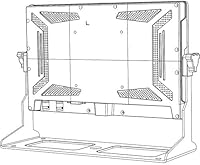
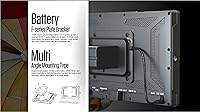
  • Mounting Options: The monitor supports 1/4-inch screw hole mounting, VESA 75mm pattern attachment, and gimbal bracket compatibility for flexible rig and arm configurations.
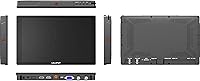
  • Dimensions: The unit measures 9.92 × 6.18 inches in footprint with a depth of 0.98 inches, keeping the overall profile slim for cage and arm mounting.
  • Weight: At 1.21 pounds, this field monitor is light enough for use on gimbals and shoulder rigs without significantly affecting balance or counterweight requirements.
  • Build Construction: The exterior uses a Glass+Glass construction approach that reinforces the panel surround and contributes to the monitor's solid, low-flex feel in hand.
  • Manufacturer: The A11 is designed and manufactured by Lilliput, a company with an established history in professional camera monitor and accessory production.
  • Model Number: The official model designation is A11-10.1, which distinguishes it within Lilliput's broader A-series field monitor lineup.
  • Availability: This monitor has been commercially available since September 2019, giving it a multi-year track record of verified buyer feedback across global markets.

Related Reviews

Losuudy L-A5 Wired Backup Camera System with 10.1″ Monitor
88%
88%
Ease of Installation
93%
Image Quality
91%
360° Coverage
85%
Build Quality
89%
Durability (Waterproof & Night Vision)
More
podofo 10.1-inch Portable TFT LCD Monitor
72%
83%
Value for Money
61%
Image Quality
88%
Ease of Setup
91%
Input Versatility
54%
Build Quality
More
LILLIPUT A7S 7″ Camera Field Monitor
84%
88%
Display Quality
91%
Portability & Weight
86%
Brightness in Outdoor Conditions
80%
Customizability of Buttons
83%
Durability & Build Quality
More
Thinlerain 10.1 Inch FHD Monitor
83%
85%
Display Quality
91%
Portability
88%
Setup & Installation
80%
Build Quality
92%
Connectivity Options
More
Qcvoruno QC101A 10.1″ Security Monitor
87%
88%
Display Clarity
95%
Input Compatibility
91%
Portability
82%
Audio Quality
89%
Ease of Setup
More
ELECROW 10.1 Inch Touchscreen Monitor
86%
88%
Display Quality
80%
Touchscreen Responsiveness
94%
Portability
92%
Ease of Setup
85%
Build Quality
More
Haiway SM10.1 10.1-inch Security Monitor
72%
88%
Ease of Setup
91%
Input Connectivity
67%
Display Clarity
49%
Glare & Screen Surface
72%
Build Quality
More
AISHICHEN 10.1-Inch IPS Mini Monitor
70%
78%
Value for Money
86%
Connectivity & Inputs
89%
Raspberry Pi Compatibility
73%
Display Clarity
61%
Build Quality
More
Magedok T101F 10.1-inch Portable Touchscreen Monitor
72%
88%
USB-C Connectivity
63%
Touch Accuracy
79%
Display Quality
84%
Aspect Ratio Fit
76%
Setup Experience
More
WEILAILIFE 5MP Wireless Security Camera System with 10″ Monitor
85%
91%
Video Quality
87%
Night Vision Performance
85%
App Usability
93%
Installation & Setup
82%
Build Quality
More

FAQ

It accepts a 4K signal — specifically up to 4K at 30Hz via HDMI — but the panel itself renders at 1920×1200 native resolution. That means the incoming 4K image is downscaled to fit the screen. It is still sharper and more detailed than most camera LCDs, but it is not a true 4K display.

Yes, in most cases. The HDMI 1.4b input is broadly compatible with Sony Alpha series cameras, as well as Canon, Nikon, Blackmagic, and other manufacturers that output standard HDMI video signals. Just confirm your camera outputs a signal at or below 4K 30Hz over HDMI and you should have no issues.

The monitor is designed to switch between inputs rather than display both simultaneously. You can have cables connected to both ports and switch between them via the menu, but it will only show one source at a time.

Very useful if you want to run a signal to both a monitor and an external recorder without buying a signal splitter. You connect your camera to the monitor's input, then run a second cable from the loop output to your recorder. It keeps your cable run clean and your gear count low.

In shaded outdoor locations or overcast conditions, it holds up reasonably well. In direct sunlight, it struggles — most users in bright outdoor environments end up adding a monitor hood to reduce ambient light hitting the screen. If you shoot frequently in harsh sunlight, it is worth budgeting for a hood alongside the monitor.

The Lilliput A11 10.1″ Camera Monitor includes basic mounting hardware, but many users find that third-party arms or brackets suit their specific rig better. It supports 1/4-inch thread holes, VESA 75mm spacing, and gimbal brackets, so there is broad compatibility with aftermarket solutions.
There is a learning curve, and that is the honest answer. The button layout and menu logic are not immediately intuitive, and several users mention fumbling with settings during their first few shoots. Once you have spent time with it and memorized the key paths, it becomes manageable — but it is not as quick to navigate as higher-end monitors with touchscreens.

The main trade-offs come down to features versus price. Competing options from Atomos often include built-in recording, while SmallHD units tend to offer touchscreen interfaces and more polished software. This camera monitor does not have either, but it costs considerably less. If you need SDI connectivity and a reliable reference image without those extras, it represents solid value in its tier.

The monitor accepts power via a standard Sony NP-F style battery plate or DC input, which is the industry-standard power format for field monitors. Battery availability and inclusion can vary by seller configuration, so it is worth confirming what is included with the specific listing before ordering.

Yes, its 1.21-pound weight makes it a practical choice for gimbal-mounted use. Operators using it on Ronin and Crane series gimbals generally report that balancing is manageable. The key is to mount it securely using a good quality cold shoe arm or dedicated monitor bracket to prevent vibration affecting the image during movement.

Where to Buy