Overview

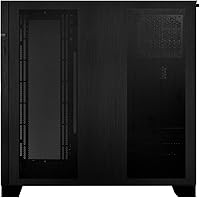
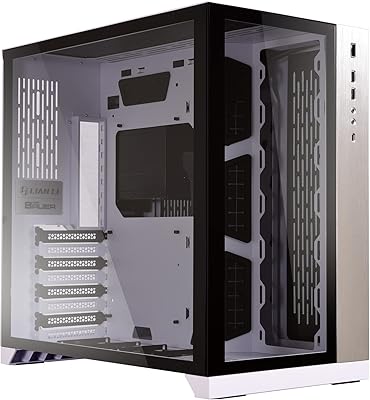
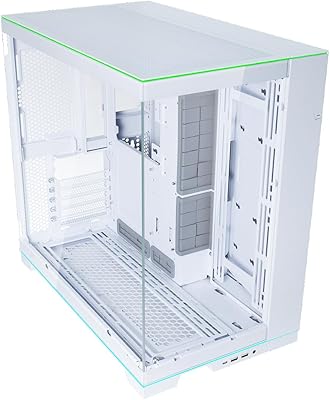
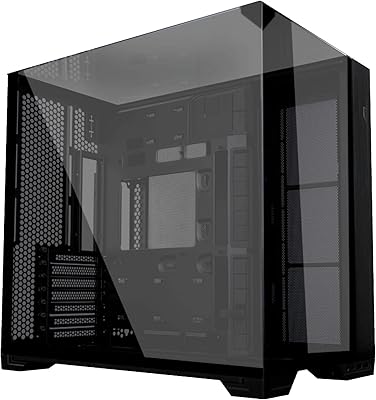
The Lian Li O11 Dynamic EVO XL Case is Lian Li's most ambitious take on the O11 platform — a full tower designed for enthusiast builds that demand serious cooling headroom and plenty of room to grow. What sets this Lian Li enclosure apart from its siblings is the reversible chassis design, letting builders flip the layout to suit their space without sacrificing structural integrity. Both front and side panels are tempered glass, giving the interior an open, gallery-like quality. Fair warning though: at over 42 pounds, this is a genuinely hefty enclosure. Its #16 ranking in Computer Cases and a 4.7-star rating from hundreds of buyers reflects that the size and weight come with real substance behind them.
Features & Benefits

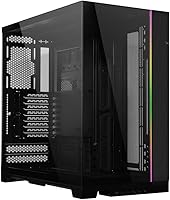
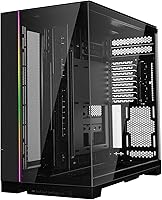
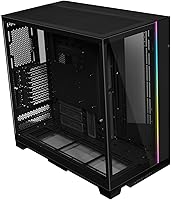
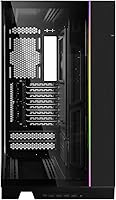
The adjustable motherboard tray is one of those features that sounds minor until you're actually planning a 420mm radiator loop — having three height positions means you can dial in clearance without forcing awkward workarounds. Triple 420mm radiator support is rare in any consumer case; this full tower handles it across multiple mounting zones. The mesh openings on the top and side have been noticeably expanded compared to earlier O11 versions, which translates to better passive airflow even before fans spin up. The removable front pillar opens up the view without weakening the frame, and dual-layer cable clips along vertical grommets make routing surprisingly tidy. Built-in ARGB strips sync to most modern motherboards — a nice bonus for aesthetics.

Best For

This full tower is built for a specific kind of builder — someone running an E-ATX motherboard, planning a serious custom loop, or simply refusing to compromise on cooling capacity. The three-height tray adjustment and multi-zone radiator support make it a natural fit for custom water cooling setups where 420mm rads are part of the plan. The reversible chassis adds real flexibility for users working with awkward desk layouts or side-facing builds. Gamers and content creators who want hardware that performs and looks the part will appreciate the glass-heavy design. If you're building a long-term platform rig and want a case you won't outgrow quickly, the O11 EVO XL is worth serious consideration.

User Feedback

Buyers are largely satisfied, with the 4.7-star average backed by consistent praise for build quality and the amount of space available for routing cables and fitting large cooling hardware. Many users specifically call out how cleanly cables can be tucked away once you use the vertical grommet system. On the flip side, a few recurring gripes do show up: the sheer size makes it unwieldy during solo assembly, and a handful of buyers found the IO module placement or the reversible chassis orientation mildly confusing at first. Most agree the price reflects what you get for an enthusiast-tier enclosure, though those on tighter budgets occasionally flag it as a stretch.

Pros

  • Triple 420mm radiator support gives custom loop builders room that virtually no other consumer full tower can match.
  • The three-position adjustable motherboard tray solves real clearance problems when fitting large rads alongside E-ATX boards.
  • Expanded top and side mesh openings deliver meaningfully better passive airflow than the previous O11 generation.
  • Dual-layer cable clips along vertical grommets make cable routing genuinely flexible rather than just technically possible.
  • The reversible chassis is a rare feature that actually serves builders with specific desk or room layout requirements.
  • Tempered glass on both front and side panels gives hardware showcasing builds a clean, uncluttered presentation.
  • Build quality is consistently praised — the chassis feels solid and well-machined, not hollow or lightweight.
  • The removable front pillar opens up the view without weakening the structural frame, a smart engineering trade-off.
  • ARGB strips sync reliably with major motherboard ecosystems, adding ambient lighting without requiring extra controllers.
  • At its price tier, buyers running high-end components consistently report that the investment holds up over multiple build cycles.

Cons

  • No front-panel USB-C port is a real omission that buyers notice immediately and cannot easily work around.
  • At over 42 pounds empty, solo assembly is genuinely awkward — a second person is practically a requirement.
  • The large interior volume means stock PSU cables from many brands run short, forcing extensions or modular upgrades.
  • Reversible chassis documentation is unclear enough that first-time encounters with the feature often require outside research.
  • Dust filters are coarse enough that fine particulates pass through over time, requiring more frequent cleaning than expected.
  • The mesh-forward design sacrifices acoustic damping — noise levels under load are higher than closed-panel alternatives.
  • IO module placement options, while flexible, are not well-explained and created confusion for a notable share of buyers.
  • Footprint is large enough that it will not fit under standard desks or on typical shelving without prior measurement.
  • The price reflects enthusiast-tier specs, but builders not using E-ATX or multi-rad setups pay for capacity they will never access.
  • Tempered glass panels show fingerprints quickly and need regular wiping to maintain the clean look they are designed to deliver.

Ratings

The Lian Li O11 Dynamic EVO XL Case earns its place near the top of the full tower category, and the scores below reflect what real builders around the world actually experienced — not marketing claims. Our AI analyzed verified purchase reviews globally, actively filtering out incentivized, bot-generated, and low-quality submissions to surface patterns that matter to serious buyers. The results are candid: this Lian Li enclosure earns high marks in most areas, but a few genuine friction points are reflected honestly in the numbers.
Build Quality
93%
Buyers consistently describe the chassis as feeling exceptionally solid — no flex in the panels, tight tolerances on the glass, and a weight distribution that signals serious materials. The steel frame holds up well even when builders are wrestling with heavy 420mm radiators and dense cable runs.
A small number of users reported minor cosmetic scuffs on arrival, likely attributable to shipping rather than manufacturing. The sheer weight also means any flex during solo assembly is amplified — a second pair of hands is almost required.
Cooling Performance
91%
The expanded mesh openings on the top and side create noticeably better airflow than the previous O11 iteration, and the triple 420mm radiator support gives custom loop builders room that almost no other consumer case matches. Users running high-TDP CPUs and GPUs report stable thermals even under sustained load.
Out of the box with no fans included, buyers on air cooling need to plan their fan configuration carefully to take full advantage of the improved mesh. Passive airflow alone will not compensate for a poorly planned fan layout in such a large interior volume.
Cable Management
88%
The dual-layer cable clips mounted along vertical grommets drew genuine praise from experienced builders who have struggled with routing in other cases. The flexibility to position clips anywhere along the run means cable paths can be planned around the specific components rather than forced into fixed positions.
The sheer interior size means longer cable runs are often needed, and shorter stock cables from some PSU brands can fall short. A handful of builders noted that the grommet placements, while flexible, require planning upfront — improvising mid-build gets awkward.
Radiator & Liquid Cooling Support
94%
Triple 420mm support across multiple mounting zones is the headline specification for a reason — it genuinely sets this full tower apart from nearly everything else at this price tier. Builders running dual or triple rad loops consistently praised the clearances and the adjustable tray height for making complex configurations manageable.
The layout flexibility, while impressive, comes with complexity. First-time custom loop builders reported that planning which radiator goes where — and at what tray height — requires research before buying components. The case rewards those who plan ahead and challenges those who do not.
Motherboard Compatibility
89%
E-ATX support up to 280mm width means this Lian Li enclosure accommodates some of the largest consumer motherboards available, including server-derived boards popular in high-core-count workstation builds. The three-position tray height adjustment adds genuine versatility for boards with tall VRM heatsinks or chunky rear IO shrouds.
Standard ATX and micro-ATX builds will fit without issue, but the interior feels oversized for anything smaller than a full ATX board. Some buyers on smaller form factors found the extra space created cable routing challenges rather than advantages.
Aesthetic & Tempered Glass
87%
Front and side tempered glass panels give the build a clean, open look that showcases hardware effectively. The removable front pillar in particular drew appreciation from buyers who wanted an unobstructed view of their loop or GPU without dealing with a cluttered frame edge.
Tempered glass is fingerprint-prone, and maintaining that clean look requires regular wiping — especially on the side panel which sits at eye level for most desk setups. A couple of buyers noted the glass arrived with fine scratches under certain lighting, though this appeared to be isolated incidents.
ARGB Lighting
76%
24%
The built-in ARGB strips sync reliably with major motherboard ecosystems including ASUS Aura, MSI Mystic Light, and Gigabyte RGB Fusion. For builders who want cohesive lighting without adding third-party controllers, it covers the basics well.
The ARGB implementation is functional rather than spectacular — the strips add ambient glow but do not produce the kind of dramatic effect that dedicated ARGB fans or GPU lighting does. Buyers who came in expecting a lighting showpiece were mildly underwhelmed; those treating it as a bonus were satisfied.
Ease of Assembly
71%
29%
Toolless panel removal and the movable IO module genuinely speed up the build process for experienced builders. The interior is spacious enough that component access rarely requires removing something already installed, which is a real advantage during staged builds.
The reversible chassis, while cleverly designed, added confusion for some builders encountering it for the first time. The IO module placement options also generated questions in user comments — not because it is poorly designed, but because the documentation does not explain the choices clearly enough.
Dust Filtration
79%
21%
Three dust filters covering the key intake points — including a fully open bottom panel — provide reasonable long-term protection without drastically restricting airflow. Buyers running dusty environments appreciated having filters on the bottom PSU intake specifically.
The filters are effective but not particularly fine-mesh, meaning they catch large particulates well but allow finer dust through over time. Cleaning frequency in typical home environments runs to about once a month, which a few buyers considered more maintenance than expected.
IO Port Selection
68%
32%
The front IO provides two USB 2.0 and two USB 3.0 ports alongside the audio header, covering daily-use cases like plugging in peripherals, drives, and headsets without reaching around the back of the machine.
The absence of a USB-C front panel port is a genuine gap at this price and size tier — it is the most common criticism in user reviews specifically about the IO. Buyers who regularly use USB-C devices for data transfer or charging found this frustrating enough to mention it unprompted.
Value for Money
82%
18%
Most buyers who completed large enthusiast builds concluded that the pricing is justified by the cooling capacity, build quality, and longevity of the platform. The case regularly draws comparisons to pricier alternatives in the full tower segment, often coming out ahead on raw feature count.
For buyers not running E-ATX boards or multi-radiator loops, the value equation weakens considerably — they are paying for headroom they will never use. A few budget-conscious buyers noted feeling that the price reflected aspirational specs rather than features relevant to their specific build.
Size & Footprint
63%
37%
The large interior pays dividends during the build — there is room to work, room to route, and room for upgrades that smaller cases would never accommodate. Builders with spacious desks or floor-mounted setups had no complaints whatsoever.
At over 24 inches tall and nearly 26 inches deep, this full tower dominates any space it occupies. Multiple buyers flagged that it did not fit under their desks or on standard shelving, and a few returned it purely because the footprint was incompatible with their room layout.
Reversible Chassis Design
84%
The ability to flip the chassis orientation is a genuine differentiator that buyers with specific desk setups genuinely used. Those with side-vented rooms or GPU-showcase priorities found it unlocked configurations that would require a completely different case otherwise.
Not everyone found a reason to use the reversible feature, and a small segment of buyers felt the added design complexity slightly complicated an otherwise straightforward build. The payoff is real but niche — it rewards buyers who specifically planned for it.
Fan & Radiator Bracket Flexibility
86%
Movable fan brackets and the multi-directional power button give builders meaningful control over airflow direction and component orientation. Experienced builders appreciated being able to adapt the bracket positions to match their loop design rather than conforming to a fixed layout.
The flexibility does add steps to the initial setup — unlike fixed-position cases where the configuration is implicit, this Lian Li enclosure asks builders to make deliberate choices early in the process. Novice builders occasionally found the number of options more overwhelming than empowering.
Noise Levels
72%
28%
With a well-balanced fan curve and the expanded mesh intake doing real work, the O11 EVO XL can run relatively quietly under moderate loads. Builders who invested in quality fans reported impressively low noise floors given the cooling output.
The mesh-forward design means there is less acoustic damping than closed-panel cases — this is a common trade-off in airflow-optimized builds, and buyers expecting near-silent operation without fan tuning were occasionally caught off guard. It is not a quiet case by default.

Suitable for:

The Lian Li O11 Dynamic EVO XL Case is purpose-built for enthusiast builders who are not willing to compromise on cooling capacity or long-term expandability. If you are planning a custom liquid cooling loop — especially one involving 420mm radiators — this full tower is one of the few consumer cases that can accommodate that level of hardware without requiring workarounds. Builders working with E-ATX motherboards will immediately appreciate the adjustable tray height, which prevents the clearance headaches that plague larger boards in fixed-position cases. The reversible chassis design also adds genuine value for anyone with a specific desk orientation or room layout where a standard left-facing build does not work well. Content creators and power users investing in a platform they plan to keep and upgrade over several years will find the interior generous enough to absorb hardware generations without running out of room. If showing off your hardware matters to you — clean cable routing behind glass panels, visible loop tubing, RGB-synced lighting — the O11 EVO XL was clearly designed with that audience in mind.
Not suitable for:

The Lian Li O11 Dynamic EVO XL Case is a poor fit for anyone working with spatial constraints, whether that is a small desk, a shelving unit with fixed dimensions, or a bedroom setup where floor space is limited — at nearly 26 inches deep and over 24 inches tall, it simply dominates any environment it occupies. Buyers building standard ATX or micro-ATX systems with conventional air cooling will find themselves paying for headroom they will never realistically use, which weakens the value proposition considerably. Those expecting front-panel USB-C connectivity will be disappointed — this Lian Li enclosure lacks it entirely, which is a noticeable omission at its price point. If you are a first-time builder or someone who prefers a straightforward, configure-and-go experience, the flexibility of the movable brackets, reversible chassis, and multi-position tray can feel more like homework than convenience. Budget-focused buyers who do not need E-ATX support or multi-radiator cooling capacity would likely be better served by a smaller, more focused case at a lower price.
Specifications

  • Form Factor: Full tower chassis designed to accommodate motherboards up to E-ATX specification at 280mm width.
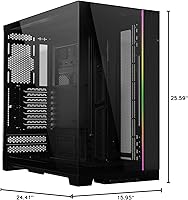
  • Dimensions: The case measures 24.41″ long × 15.95″ wide × 25.59″ tall, making it one of the larger consumer full towers available.
  • Weight: Empty unit weight is 42.6 pounds, reflecting the heavy-gauge steel and dual tempered glass panel construction.
  • Motherboard Support: Compatible with E-ATX (up to 280mm), ATX, Micro-ATX, and Mini-ITX motherboards.
  • Radiator Support: Supports up to three 420mm radiators simultaneously across top, front, and bottom mounting positions.
  • Panel Material: Both the front and side panels are constructed from tempered glass for hardware visibility and structural rigidity.
  • Chassis Design: Features a fully reversible chassis orientation, allowing builders to mirror the layout to suit their desk or room configuration.
  • Motherboard Tray: Adjustable tray with three discrete height positions to accommodate varying fan and radiator stack combinations.
  • Airflow Design: Top mesh panel opening is enlarged by 14.5% and side mesh by 14% compared to the prior generation, with a fully open bottom panel.
  • Dust Filters: Three dust filters are included, covering the bottom PSU intake and key mesh intake areas.
  • Cable Management: Three dual-layer cable clips that can be mounted anywhere along vertical grommets for flexible routing configurations.
  • ARGB Lighting: Built-in ARGB lighting strips are included and support synchronization with major motherboard RGB ecosystems.
  • USB Ports: Front IO provides two USB 2.0 ports and two USB 3.0 ports alongside a standard audio header.
  • PSU Mount: Power supply is bottom-mounted, keeping the unit's center of gravity low and isolating PSU heat from primary components.
  • Cooling Method: Supports both air cooling and liquid cooling configurations, including custom open-loop and AIO setups.
  • Front Pillar: The front structural pillar is fully removable to allow an unobstructed view of internal components without affecting chassis rigidity.
  • IO Module: The IO module and power button are multi-directional and movable, enabling placement flexibility based on chassis orientation.
  • Color: Available in black with a matte finish on the steel panels and black-tinted tempered glass.
  • Model Number: Official model identifier is O11DEXL-X, also listed as O11DEXL-X_US for the North American market variant.
  • Brand: Manufactured by Lian Li, a Taiwan-based chassis and cooling brand with over two decades in the enthusiast PC market.

Related Reviews

Lian Li PC-O11DW 011 Dynamic Gaming Computer Case
88%
94%
Build Quality
91%
Cooling Performance
89%
Cable Management
88%
Ease of Assembly
90%
Aesthetic Appeal
More
Lian Li O11D EVO RGB E-ATX Gaming Case
86%
91%
Build Quality
93%
Cooling Performance
89%
Cable Management
88%
Aesthetics/Design
85%
Ease of Assembly
More
Lian Li O11 Vision Compact
80%
91%
Build Quality
94%
Aesthetic Design
89%
Back-Connect Motherboard Support
86%
Cooling Performance
74%
Cable Management
More
Lian Li LANCOOL 207 Digital Mid-Tower PC Case
81%
93%
Airflow Performance
91%
Build Quality
78%
LCD Screen Functionality
86%
Cable Management
89%
Fan Performance Out of the Box
More
Lian Li LANCOOL 205M Mesh Mid-Tower Case
83%
93%
Airflow Performance
81%
Build Quality & Materials
91%
Ease of Assembly
88%
Cable Management
84%
Included Fans & Lighting
More
Lian Li A3-mATX-WD Mini-Tower PC Case
81%
91%
Build Quality & Materials
88%
Airflow & Thermal Performance
86%
GPU Compatibility & Clearance
82%
Cable Management
89%
PSU Flexibility
More
Lian Li LANCOOL 216 E-ATX PC Case
86%
94%
Cooling Performance
92%
Airflow Design
89%
Cable Management
85%
Ease of Installation
91%
GPU Compatibility
More
Lian Li Lancool III RGB White Mid-Tower Case
88%
94%
Cooling Performance
88%
Build Quality
92%
Design and Aesthetics
85%
Ease of Installation
91%
Airflow Optimization
More
Lian Li LANCOOL 215 X White Mid Tower Case
84%
89%
Cooling Performance
92%
Build Quality
88%
Aesthetic Appeal
75%
Cable Management
91%
Motherboard Compatibility
More
Lian Li LANCOOL 217
Lian Li LANCOOL 217
81%
91%
Airflow Performance
88%
Noise Levels
93%
Build Quality
94%
Aesthetic Design
86%
Cable Management
More

FAQ

Yes, the Lian Li O11 Dynamic EVO XL Case is designed specifically to accommodate E-ATX boards up to 280mm in width. The adjustable motherboard tray also gives you three height positions to work with, which is especially useful when a large board is combined with tall VRM heatsinks or a thick top radiator stack. No modifications are required for standard E-ATX form factors.
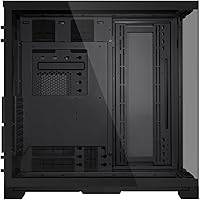
Yes, the case supports up to three 420mm radiators simultaneously across the top, front, and bottom positions. That said, fitting all three at once requires careful component selection — particularly GPU length and CPU cooler height — so plan your loop layout before ordering parts. Most builders running dual 420mm rads have no clearance issues at all.

The chassis can be flipped so the tempered glass side faces the opposite direction, which is useful if your desk is positioned against a wall on the right side or if you simply prefer a mirrored layout. It is a genuine structural feature, not just a cosmetic option. Some builders found the initial setup slightly confusing, so checking Lian Li's official build guide before starting is worth the few minutes it takes.

Honestly, it can be. At nearly 26 inches deep and over 24 inches tall, this full tower will not slide under most standard desks and will dominate a typical 60-inch desktop surface. Measure your available space carefully before ordering — many returns were driven purely by footprint surprises rather than product defects.

No, the front IO does not include a USB-C port, which is the single most common complaint from buyers at this price tier. You get two USB 2.0 and two USB 3.0 ports, plus an audio header. If USB-C front access is important to your workflow, this is a genuine limitation worth factoring into your decision.

It depends on your PSU brand and cable kit. The large interior means cable runs to the motherboard and GPU are longer than in a mid tower, and some stock cables — particularly from non-modular or budget PSUs — will fall short. If you are running a modular unit, check the cable length specs or budget for an extension kit before your build day.

The mesh-forward design prioritizes airflow over acoustic dampening, so this Lian Li enclosure is not a quiet case by default. With a well-tuned fan curve and quality fans, noise levels are manageable, but do not expect the hushed operation you would get from a case with foam lining and solid panels. Builders who want near-silent systems should look at dedicated silent cases instead.

You can technically build solo, but at 42.6 pounds empty — and more with components installed — maneuvering the case during assembly is significantly easier with two people. Laying it on its side to seat the motherboard, then standing it upright to fit radiators and route cables, is where the weight becomes a real logistical challenge. Having a helper is strongly recommended.

The three included filters do a solid job catching larger dust particles but are not fine enough to stop smaller debris indefinitely. In a typical home environment, cleaning every three to four weeks is a reasonable cadence. The bottom filter and side mesh filters are accessible without tools, so cleaning is quick once you have the process down.

It is a nice bonus rather than a headline reason to buy. The built-in strips sync reliably with ASUS Aura, MSI Mystic Light, Gigabyte RGB Fusion, and similar ecosystems, and they add a clean ambient glow to the interior. If you already have an RGB-heavy build, they integrate well. If lighting is not important to you, they are easy to ignore or disable through your motherboard software.

Where to Buy