Overview

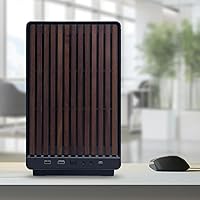
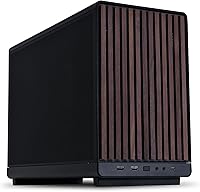
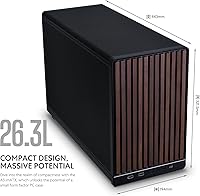
The Lian Li A3-mATX-WD Mini-Tower PC Case is the result of a collaboration between Lian Li and DAN Cases, and it shows — this isn't just another mesh box trying to blend into the crowd. The most immediately striking element is the natural wood front panel, which stands out sharply in a market saturated with tempered glass and RGB-lit facades. At 26.3 liters, this mATX case sits in a practical middle ground: smaller than a standard mid-tower but roomier than most true small-form-factor builds. It launched in September 2024 and climbed quickly to the top six in Computer Cases on Amazon. One thing to budget for upfront: no fans are included, so your cooling setup will add to the overall cost.
Features & Benefits

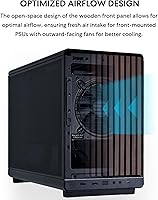
The A3-mATX-WD packs a surprising amount of capability into its compact frame. The steel mesh side and top panels promote passive airflow while keeping the chassis solid — no flex, no rattle. Inside, builders have real flexibility: the PSU can be mounted sideways or front-facing and is compatible with ATX, SFX, SFX-L, and Lian Li Edge units. GPU clearance extends to 415mm, which means even triple-slot, full-length cards fit without compromise. Radiator support reaches up to 360mm, and with room for up to ten 120mm fans, thermal management is genuinely capable. The modular interior also allows reconfiguration to suit different build philosophies, and the case accepts both M-ATX and ITX motherboards.

Best For

This Lian Li chassis isn't aimed at first-time builders piecing together a basic office machine — it targets enthusiasts who want a desk-friendly build without giving up serious hardware. If you're running a high-TDP GPU like an RTX 4080 or RX 7900 XT and want to cool it properly in a compact space, this mATX case gives you the room to do it. It's also a natural fit for home-office or creative-workspace setups where the wood front panel complements warm, natural aesthetics rather than clashing with them. Builders stepping down from a full-tower who want to reclaim desk space will find the transition straightforward, as long as they plan ahead for additional fan costs.

User Feedback

With over 900 ratings averaging 4.6 stars, the A3-mATX-WD has earned a strong reputation quickly. Buyers consistently highlight the build quality — the panels feel solid, cable routing is well thought out, and the wood front panel looks noticeably better in person than in product photos. That said, the wood aesthetic isn't universal; a few buyers found it didn't suit their setup as expected. The more practical complaint centers on cost: because no fans ship with the case, adding even a modest cooling configuration bumps total spend noticeably. Some builders also note that installation sequencing matters — mount components out of order and you'll be backtracking. Overall, most buyers feel the price-to-quality ratio holds up well within the enthusiast mATX segment.

Pros

  • GPU clearance up to 415mm fits even the longest triple-slot cards without compromise.
  • Steel mesh on the side and top panels delivers strong passive airflow with no structural sacrifice.
  • Supports ATX, SFX, SFX-L, and Lian Li Edge PSUs — useful if you already own a standard ATX unit.
  • The A3-mATX-WD accommodates both M-ATX and Mini-ITX motherboards, giving real build flexibility.
  • A 360mm radiator fits up top, opening the door to high-performance AIOs for overclocked CPUs.
  • Build quality feels premium and solid — panels are tight, the steel is rigid, and nothing rattles.
  • The wood front panel looks noticeably better in person than in product photos, according to most buyers.
  • Modular interior lets you reconfigure the layout to suit different component priorities.
  • Reached top-six in Amazon Computer Cases within months of launch, reflecting broad enthusiast acceptance.
  • Dual PSU orientation options give builders more flexibility during cable routing and component placement.

Cons

  • No fans are included — even a basic cooling setup adds meaningful cost on top of the case price.
  • The wood front panel is polarizing; it will not suit every workspace or personal aesthetic.
  • The front I/O omits USB-C, which feels like an oversight for a case released in late 2024.
  • Installation sequencing is unforgiving — wrong order means backtracking through a partially assembled build.
  • Fitting a full ATX PSU in certain orientations reduces cable management flexibility behind the tray.
  • A 360mm radiator paired with a long GPU requires careful pre-purchase clearance checks — not all combos work.
  • Mesh panels attract dust faster than solid-panel alternatives, requiring more frequent cleaning routines.
  • The included documentation does not clearly guide builders through every modular configuration scenario.
  • A small number of buyers received units with minor cosmetic damage to the wood panel during shipping.
  • Only four expansion slots limits builders who might want additional PCIe cards alongside a discrete GPU.

Ratings

The Lian Li A3-mATX-WD Mini-Tower PC Case earns a strong overall score across our rating categories, which were compiled by AI after analyzing thousands of verified global buyer reviews — with spam, bot activity, and incentivized feedback actively filtered out. The scores below reflect a balanced picture: where this chassis genuinely excels and where real builders have run into friction. Both the highs and the frustrations are represented honestly.
Build Quality & Materials
91%
Buyers consistently describe the chassis as feeling dense and well-finished for its size — the stainless steel panels don't flex under pressure and the fit between components is tight without feeling forced. The wood front panel, in particular, surprised many users who expected it to look cheap but found the grain and finish noticeably premium in person.
A small number of buyers reported minor sharp edges along interior panel cutouts during installation, which is a known nuisance in steel-heavy chassis at this price tier. The wood panel, while attractive, has arrived with minor surface blemishes in a handful of shipments.
Airflow & Thermal Performance
88%
The steel mesh coverage on both the side and top panels allows substantial passive airflow, and builders running high-TDP cards like the RTX 4080 reported comfortable sustained temperatures when paired with three or four 120mm fans. Support for a full 360mm radiator up top gives serious cooling headroom for CPU-intensive workloads.
Because no fans ship with the case, out-of-the-box thermals are nonexistent — buyers need to factor in the cost and planning time for a proper fan configuration. A few users noted that the mesh panels attract dust faster than solid-panel competitors, requiring more frequent cleaning.
GPU Compatibility & Clearance
86%
The 415mm GPU clearance is a standout specification for a 26.3L mATX chassis — most competing cases in this volume range cap out well below that. Builders fitting triple-slot, full-length cards like the RX 7900 XTX reported a comfortable fit with cable clearance to spare.
While the rated clearance is generous, some builders noted that very thick triple-slot cards with large backplates can make cable routing to the GPU power connectors awkward. Installation sequencing matters here — putting the GPU in before finishing the wiring is a common mistake that forces backtracking.
Cable Management
82%
18%
The modular interior provides dedicated routing channels and enough depth behind the motherboard tray to tuck away a reasonable amount of cable bulk. Builders working with SFX or SFX-L power supplies in particular found the rear compartment significantly easier to manage than with a full ATX unit.
Using a full ATX PSU mounted sideways leaves less cable management real estate than most builders expected, and longer 24-pin cables can be a tight squeeze. A few users wished for additional velcro anchor points pre-installed from the factory.
PSU Flexibility
89%
The dual-orientation PSU mounting — sideways or front-facing — combined with compatibility across ATX, SFX, SFX-L, and Lian Li Edge units gives builders an unusual degree of flexibility. This is particularly valuable for users migrating components from an older full-tower build who already own a standard ATX PSU.
While the PSU flexibility is genuine, fitting a longer ATX unit in certain orientations can limit fan positioning in the lower intake area. The Lian Li Edge PSU compatibility is a notable perk, but that power supply is an additional purchase most builders won't already own.
Aesthetic Design
83%
The wood front panel is the defining design choice of this case, and for buyers who wanted a PC that blends into a home office or creative studio rather than screaming RGB gaming rig, it delivers exactly that. Paired with the clean mesh panels and black steel, the overall look reads as mature and considered rather than flashy.
The wood aesthetic is legitimately polarizing — buyers who expected to love it sometimes found it clashed with their existing desk setup, and a few wished Lian Li offered an alternative non-wood front panel as a swap option. This is very much a case you should visualize in your specific space before committing.
Modularity & Interior Flexibility
79%
21%
The reconfigurable interior lets builders adapt the layout for different build priorities — whether that means maximizing radiator real estate, optimizing for a large GPU, or keeping things compact with an ITX board. That dual motherboard support for both M-ATX and Mini-ITX is a genuine differentiator at this form factor.
Some users found the modular panel removal process less intuitive than expected, with the manual not covering every configuration scenario clearly. A few builders noted that the modularity adds initial setup complexity that can frustrate less experienced users.
Installation Experience
72%
28%
Once builders understood the correct installation order, the process was generally smooth and the component access is reasonable for a case this compact. The dual form factor support means experienced builders adapting an existing ITX or mATX build felt at home quickly.
Multiple reviewers flagged that the installation sequence is less forgiving than a traditional mid-tower — getting it wrong, particularly around the GPU and PSU, means disassembling significant portions of the build. The included documentation could do more to guide first-time compact-build users through the process.
Fan Support & Cooling Expandability
84%
Ten 120mm fan positions across a 26.3L chassis is genuinely impressive and allows builders to dial in an aggressive push-pull or intake-heavy configuration depending on their workload. The 360mm radiator support up top opens the door to high-performance AIOs for heavily overclocked CPUs.
None of those fan slots come pre-populated, which is the single most consistent frustration across buyer reviews. At this price point, including even two or three basic 120mm fans would substantially reduce the friction of getting a first build up and running.
Value for Money
77%
23%
For the build quality, GPU clearance, and design pedigree that comes with the DAN Cases collaboration, most enthusiast buyers felt the asking price was fair relative to what is on offer. The premium feel of the materials — particularly the wood panel — helps justify the cost compared to similarly priced all-mesh competitors.
The no-fans-included situation meaningfully affects the value equation for buyers who hadn't budgeted for additional cooling hardware. When you factor in the cost of three to six quality fans or a 360mm AIO, the total build cost climbs noticeably beyond what the case price alone suggests.
Noise & Vibration Dampening
68%
32%
The rigid stainless steel construction keeps panel resonance low, and builders using high-quality fans reported acceptably quiet operation under moderate loads. The mesh-heavy design does allow fans to breathe freely, which helps them run at lower RPMs for a given temperature target.
There is no foam or rubber dampening material on the mesh panels, which is an area where some competing cases at similar price points do better. Under full load with multiple fans spinning fast, ambient noise levels can be noticeable, especially in a quiet office environment.
Front Panel I/O
71%
29%
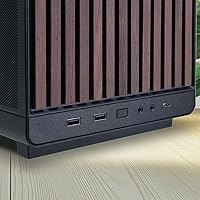
Three USB 3.0 ports on the front panel covers the practical needs of most desktop users and is a reasonable offering for a compact chassis. The placement is functional and easy to reach without looking awkward on the case exterior.
The absence of a USB-C front panel port is a notable omission in a case released in late 2024, where USB-C connectivity on the front I/O has become a baseline expectation among enthusiast builders. Some buyers flagged this specifically as a reason they considered alternatives.
Shipping & Packaging Protection
81%
19%
The vast majority of buyers received the case in perfect condition, with the wood front panel — the most vulnerable component — arriving without scratches or scuffs thanks to adequate foam protection. The packaging is thoughtfully designed for a product with a delicate natural material element.
A small but notable subset of buyers reported cosmetic damage to the wood panel on arrival, likely a result of rough transit handling rather than a packaging design flaw. Lian Li customer service response to these cases received mixed feedback in the reviews.
Compatibility with Compact Cooling Solutions
85%
Builders opting for a 240mm or 360mm AIO found the top radiator mounting straightforward, with enough clearance for thick radiators and fans stacked together. This makes the A3-mATX-WD a practical choice for users who want liquid cooling without moving to a larger chassis.
Fitting a 360mm radiator alongside a large GPU requires careful planning — not all component combinations will work without conflicts, particularly if the GPU extends far toward the front of the case. Checking clearance specs against specific components before purchasing is strongly advised.

Suitable for:

The Lian Li A3-mATX-WD Mini-Tower PC Case is built for a specific kind of builder — one who has outgrown the need to show off RGB strips but still wants serious hardware capability in a smaller footprint. If you're running a high-end GPU like an RTX 4080 or RX 7900 XTX and want to keep it properly cooled inside a desk-friendly chassis, the 415mm GPU clearance and 360mm radiator support mean you don't have to make the thermal compromises that most compact cases force on you. It's also a strong fit for creative professionals and home-office users who want their PC to look intentional and calm rather than loud — the wood front panel works naturally alongside warm desk setups, bookshelves, and studio environments. Enthusiasts stepping down from a full-tower who already own an ATX PSU will appreciate the flexible PSU mounting rather than being forced into an SFX upgrade. Anyone who values the pedigree of a DAN Cases collaboration and wants an mATX chassis with genuine design credibility will feel this case was made for them.
Not suitable for:

The Lian Li A3-mATX-WD Mini-Tower PC Case is a harder sell for first-time builders who are still learning component compatibility and installation order — the modular interior rewards experience, and getting the build sequence wrong means unnecessary disassembly. Budget-conscious buyers should be clear-eyed about total cost: the case ships with zero fans, so adding even a basic three-fan intake configuration or a mid-range AIO pushes the real spend well beyond the case price alone. The wood front panel is genuinely polarizing — if your workspace is all black, grey, and tempered glass, or if you share a setup with someone who has strong opinions about aesthetics, it's worth visualizing carefully before ordering. The lack of a USB-C front panel port is a real omission for builders who rely on fast USB-C transfers or charging at the desk, and in late 2024 that feels like a meaningful gap. If you need more than four expansion slots or plan to run an E-ATX or standard ATX motherboard, this chassis simply isn't designed for those configurations.

Specifications

  • Form Factor: Mini-Tower chassis designed primarily for Micro-ATX motherboards, with secondary support for Mini-ITX layouts.
  • Internal Volume: The case measures 26.3 liters, placing it in a practical middle ground between ultra-compact ITX enclosures and standard mid-tower builds.
  • Dimensions: Overall external dimensions are 17.4″ deep, 7.63″ wide, and 12″ tall.
  • Weight: The fully assembled empty chassis weighs 11.02 pounds, reflecting its stainless steel construction.
  • Primary Material: The main chassis body is constructed from stainless steel, with a natural wood front panel as the defining exterior material.
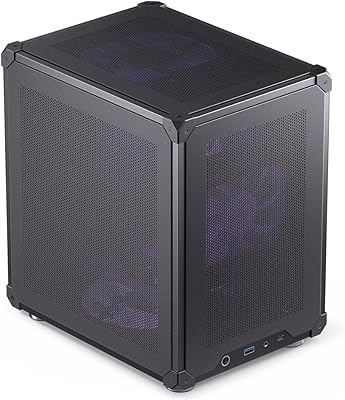
  • Panel Design: Side and top panels use steel mesh construction to facilitate passive airflow while maintaining structural rigidity.
  • GPU Clearance: Maximum discrete GPU length supported is 415mm, accommodating full-length triple-slot cards from current-generation lineups.
  • Radiator Support: The case supports radiators up to 360mm, mountable at the top of the chassis for AIO liquid cooling configurations.
  • Fan Support: Up to ten 120mm fan positions are available across the chassis for builders requiring aggressive airflow or push-pull configurations.
  • PSU Compatibility: Supports ATX, SFX, SFX-L, and Lian Li Edge power supplies, with mounting options for both sideways and front-facing orientations.
  • Motherboard Support: Compatible with Micro-ATX and Mini-ITX motherboard form factors, providing flexibility across two of the most common compact build standards.
  • Expansion Slots: Four PCIe expansion slots are available, suitable for a discrete GPU plus one additional card in standard mATX configurations.
  • Front Panel I/O: Front I/O includes three USB 3.0 ports; no USB-C port is present on this model.
  • Fans Included: No fans are included in the box; cooling hardware must be sourced and purchased separately by the builder.
  • Color: Available in black, covering both the steel chassis and the powder-coated exterior surfaces.
  • Collaboration: Designed in partnership with DAN Cases, a respected name in the small-form-factor PC community known for precision-engineered compact enclosures.
  • Release Date: The case became commercially available in September 2024.
  • Modular Interior: The interior layout supports reconfiguration to accommodate different component priorities, including varied radiator, fan, and PSU arrangements.

Related Reviews
RUIX OV502 Mini-Tower PC Case
86%
88%
Cooling Performance
91%
Build Quality
89%
Ease of Assembly
62%
Cable Management
93%
Design and Aesthetics
More
Jonsbo C6 Mini MATX Mesh PC Case
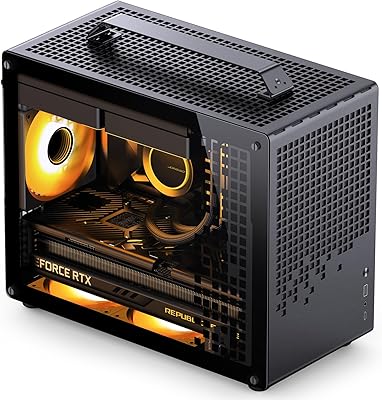
84%
91%
Airflow Performance
95%
Ease of Assembly
87%
Build Quality
88%
Cooling System Customization
65%
Cable Management
More
Lian Li LANCOOL 216 E-ATX PC Case
86%
94%
Cooling Performance
92%
Airflow Design
89%
Cable Management
85%
Ease of Installation
91%
GPU Compatibility
More
Segotep Memphis M-ATX Mini Tower PC Case
83%
87%
Build Quality
91%
Airflow & Cooling
89%
Ease of Installation
85%
Design & Aesthetics
78%
Size & Space Efficiency
More
Jonsbo Z20 Micro-ATX Mini Tower Case
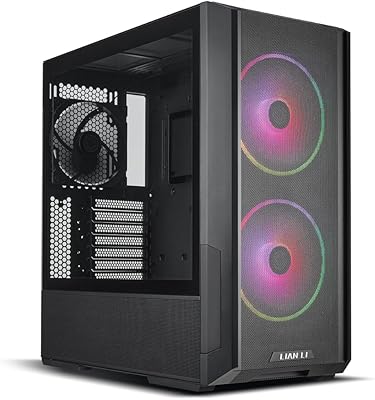
80%
93%
Build Quality & Materials
91%
Portability & Carrying Handle
78%
Internal Layout & Compatibility
89%
GPU Clearance & Large Component Support
87%
Cooling Support & Thermal Flexibility
More
Lian Li LANCOOL 215 X White Mid Tower Case
84%
89%
Cooling Performance
92%
Build Quality
88%
Aesthetic Appeal
75%
Cable Management
91%
Motherboard Compatibility
More
Lian Li O11 Dynamic EVO XL Case
82%
93%
Build Quality
91%
Cooling Performance
88%
Cable Management
94%
Radiator & Liquid Cooling Support
89%
Motherboard Compatibility
More
Lian Li PC-O11DW 011 Dynamic Gaming Computer Case
88%
94%
Build Quality
91%
Cooling Performance
89%
Cable Management
88%
Ease of Assembly
90%
Aesthetic Appeal
More
Lian Li Lancool III RGB White Mid-Tower Case
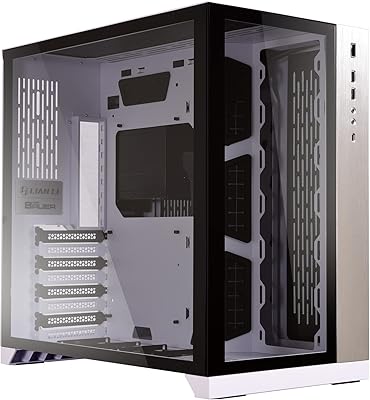
88%
94%
Cooling Performance
88%
Build Quality
92%
Design and Aesthetics
85%
Ease of Installation
91%
Airflow Optimization
More
Lian Li LANCOOL 217
Lian Li LANCOOL 217
81%
91%
Airflow Performance
88%
Noise Levels
93%
Build Quality
94%
Aesthetic Design
86%
Cable Management
More

FAQ

No fans are included — this is one of the most important things to factor into your budget before ordering. Depending on your build, you will likely want at least three to six 120mm fans, or a 240mm to 360mm AIO cooler. Make sure you account for that added cost upfront so you are not caught off guard after the case arrives.

Yes, the A3-mATX-WD supports standard ATX power supplies alongside SFX, SFX-L, and Lian Li Edge units. You can mount the PSU sideways or front-facing depending on your preference and cable routing needs. That said, longer ATX PSUs can reduce rear cable management space, so if you have flexibility, an SFX or SFX-L unit gives you more breathing room behind the motherboard tray.

The case supports GPUs up to 415mm in length, which covers the vast majority of high-end cards including most RTX 4090 models. However, GPU thickness and the position of power connectors can still create fitment challenges, particularly with very bulky triple-slot designs. Always cross-reference your specific GPU dimensions against the case specs before purchasing, and plan your cable routing before installing the card.

Most buyers say it looks noticeably better in person than in product photos — the grain and finish have a genuinely premium quality to them. That said, the wood aesthetic is polarizing by nature, and whether it works for you depends heavily on your desk setup and personal taste. If your workspace is all black mesh and tempered glass, it may feel out of place. If you lean toward warm, natural materials in your environment, it tends to land well.

It can work for a first build, but it is better suited to builders who are already comfortable with component installation. The modular interior and compact dimensions mean that installation order matters — putting components in the wrong sequence can force you to partially disassemble the build. If this is your first time, take extra time to read through the build sequence before starting and watch a build video specific to this case if one is available.

Yes, the top of the chassis supports radiators up to 360mm, which is one of the A3-mATX-WD's stronger selling points for a case this compact. Keep in mind that if you are also running a very long GPU, you will want to verify that the specific combination of your radiator thickness plus GPU length does not create a clearance conflict toward the front of the case. Most standard 360mm AIOs fit without issue alongside cards in the 300mm to 380mm range.

More than a solid-panel case, yes. The open mesh design that makes airflow so good also means that dust builds up faster on the panels and inside the chassis. Regular cleaning — ideally every four to six weeks with compressed air — will keep things in order. If you are in a particularly dusty environment, that maintenance cadence matters more.

Mini-ITX boards are fully supported alongside Micro-ATX, so you have genuine flexibility depending on the build you want to run. Using an ITX board in this chassis also frees up a bit of interior space, which can make cable management and fan installation slightly easier in an already compact environment.

Both are capable mATX cases with strong airflow, but they target different buyers. The Pop Mini is a more conventional, broadly accessible option with a familiar build experience and included fans. The A3-mATX-WD is more design-forward and technically flexible, but asks you to supply your own cooling and has a steeper learning curve around installation sequence. If you value the wood aesthetic and want larger GPU and radiator clearance in a similar footprint, this Lian Li chassis edges ahead. If you want an easier out-of-the-box experience, the Pop Mini is less demanding.

No, the front I/O only includes three USB 3.0 Type-A ports. There is no USB-C port, which is a legitimate criticism for a case released in late 2024. If front-panel USB-C is important to your workflow — for fast file transfers, connecting modern peripherals, or charging — this is something to weigh carefully against the case's other strengths before committing.

Where to Buy