

Overview

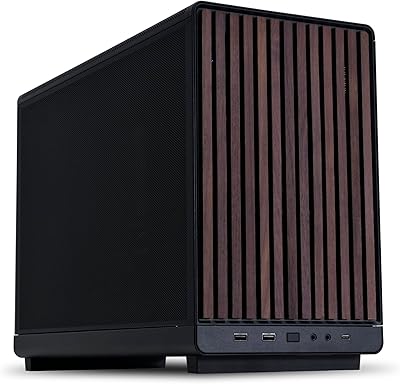
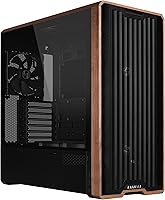
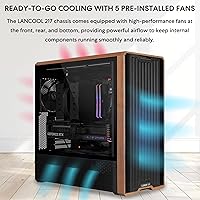
The Lian Li LANCOOL 217 arrived in early 2025 and immediately caught attention for doing something most case makers won't bother with — using genuine walnut wood accent panels on a mid-tower ATX build. Lian Li has a solid reputation for well-engineered cases, and this walnut wood case fits neatly into their lineup as a design-forward option that doesn't ask you to compromise on airflow. It ships with five pre-installed fans, which is genuinely uncommon at this price tier, and it supports back-connect motherboards out of the box. For builders tired of choosing between looks and performance, that combination is hard to ignore.

Features & Benefits

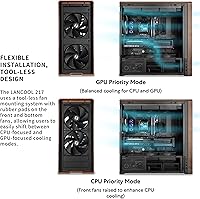
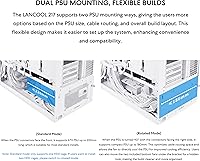
The fan setup is where this Lian Li mid-tower does real work. The two front-mounted 170mm PWM fans can move a serious volume of air without spinning aggressively, which keeps noise levels in check during typical workloads. What's clever is the adjustable positioning — slide both fans upward and they direct airflow more squarely at the CPU, useful if you're running a high-TDP processor without a custom loop. A 140mm exhaust fan at the rear and two reversed-blade 120mm fans round out the ventilation path. The dual PSU mounting options are a practical touch too, letting you rotate the power supply to hide cabling more easily depending on your build layout.

Best For

This walnut wood case makes the most sense for builders who want their rig to look like it belongs in a room, not just a battlestation. If you're building around an ASUS BTF or MSI Project Zero board, the back-connect support is a natural fit — no extra effort required to keep the interior clean. It's also worth considering if noise is a priority; 170mm fans at low RPM run noticeably quieter than a cluster of 120mm fans working harder for equivalent airflow. That said, check your PSU length first — units longer than 220mm won't fit, which rules out certain high-end models.

User Feedback

Reception to the LANCOOL 217 has been strong — 4.7 stars from over 160 ratings is a solid early signal for a case launched just months ago. Builders repeatedly describe the wood paneling as genuinely high quality, not the kind of thin veneer that feels cheap up close. Stock fan performance earns consistent praise too, with most users reporting no urgency to swap anything out. On the downside, at over 23 lbs the case is heavy enough that moving it solo mid-build can be awkward. The front I/O is also limited to two USB 3.0 ports, which feels slightly sparse for a modern mid-tower. Neither issue is a dealbreaker, but both are worth knowing going in.

Pros

  • Five pre-installed PWM fans means most builders won't need to buy any additional cooling hardware.
  • The 170mm front intake fans deliver strong airflow without running at aggressive, noisy speeds.
  • Genuine walnut wood panels are dense and well-finished — nothing about them feels like an afterthought.
  • Back-connect motherboard support makes cable-free interiors achievable without extra planning or effort.
  • Adjustable front fan positions let you shift airflow toward the CPU without buying new hardware.
  • Dual PSU mounting orientations give real flexibility for hiding cables based on your build layout.
  • Toolless fan mounting speeds up the build process and makes future swaps quick and painless.
  • Two physical power buttons are a thoughtful touch for floor-placed or less accessible setups.
  • At a 4.7-star average across over 160 verified ratings, buyer satisfaction is unusually consistent for a new release.
  • The steel chassis feels rigid and well-aligned throughout — no panel flex or loose fitment reported.

Cons

  • PSU length is capped at 220mm, which excludes several popular high-wattage modular power supplies.
  • Only two USB 3.0 ports on the front panel — no USB-C is a noticeable gap for a 2025 case.
  • At over 23 lbs empty, solo handling during a build or transport is genuinely awkward.
  • No vibration dampening pads included, which can amplify resonance if the case sits on a hard desk surface.
  • Radiator clearance is limited — serious custom-loop builders should verify their specific radiator thickness before buying.
  • The tempered glass side panel picks up fingerprints quickly and needs frequent wiping to stay presentable.
  • Internal cable routing space behind the tray gets tight with dense or fully modular cable sets.
  • The wood finish options are limited to two — buyers wanting a non-wood exterior have no variant to choose from.

Ratings

The Lian Li LANCOOL 217 scores here reflect AI analysis of verified global buyer reviews, with spam, bot activity, and incentivized feedback actively filtered out before scoring. Across categories ranging from thermal performance to build quality, both the standout strengths and the real-world friction points are weighted honestly. The result is a picture of where this walnut wood case genuinely delivers — and where a few rough edges remain.

Airflow Performance
91%
Buyers running demanding GPU and CPU combos report noticeably stable thermals using only the stock fans. The two 170mm front intakes push a substantial volume of air without needing to spin at aggressive speeds, and the layout covers both the CPU and GPU zones effectively.
The reversed-blade 120mm side fans are functional but a small number of users found them less impactful than expected compared to the dominant 170mm front fans. Those with very high-TDP setups occasionally swapped them out for higher-static-pressure alternatives.
Noise Levels
88%
Running large-diameter fans at lower RPM is genuinely quieter in day-to-day use — builders using this Lian Li mid-tower for home office work consistently mention how unobtrusive it is under moderate loads. Stock fan noise is rarely flagged as a complaint.
At full fan speed during sustained stress loads, the 170mm fans are audible, though not harsh. A handful of users noted the case does not include vibration dampening pads, which can amplify any resonance through a desk surface.
Build Quality
93%
The steel chassis feels rigid and well-finished, with no flex reported at the panel joints. Reviewers specifically call out the walnut wood accent panels as genuinely dense and premium — not a thin decorative film that peels over time.
A few buyers noted minor sharp edges on internal mounting points during the build process, which is not uncommon in steel cases but worth flagging. The tempered glass panel, while clear, attracted fingerprints more readily than some competing cases.
Aesthetic Design
94%
The combination of real wood paneling with a clean black steel exterior lands well outside the typical RGB-heavy case aesthetic. Builders placing systems in living rooms or on desks alongside furniture report that it blends in naturally rather than demanding attention.
The wood finish is only available in dark walnut or light beech — there is no all-metal option for buyers who like the case layout but want a more traditional look. Some users also felt the front panel design was understated to the point of being plain from certain angles.
Cable Management
86%
Back-connect motherboard support is the headline here — builders using ASUS BTF or MSI Project Zero boards found the interior almost entirely cable-free without extra effort. The dual PSU mounting orientations also help route cables behind the tray more naturally.
For standard motherboard builds, the cable routing channels are adequate but not exceptional. A few users with modular PSUs and dense cable sets noted that the rear compartment gets tight, particularly near the PSU area when routed front-facing.
Fan Included Value
89%
Shipping with five PWM fans pre-installed is a genuine cost saver — at this price tier most competitors include two or three at best. Builders on tighter budgets appreciated not having to immediately budget for additional fans after purchase.
The included fans, while functional, are Lian Li house-brand units rather than enthusiast-tier options. Users who prioritize maximum static pressure for dense radiator setups will likely replace at least some of them regardless.
PSU Compatibility
62%
38%
The dual mounting orientations give builders flexibility that similarly priced cases often skip. Rotating the PSU to face inward makes cable hiding considerably easier for mid-length power supplies and is a thoughtful inclusion.
The 220mm PSU length cap is a real constraint that affects several popular high-wattage units. Builders pairing this case with flagship-tier PSUs — particularly modular units from EVGA, Seasonic, or Corsair with longer form factors — need to check compatibility carefully before buying.
Motherboard Compatibility
87%
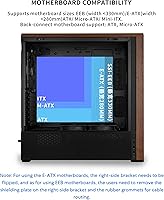
Standard ATX support covers the vast majority of consumer boards, and the interior layout gives enough clearance for tall CPU coolers and wide GPU configurations. Back-connect board support works without requiring any case modifications.
Extended-ATX boards are not supported, which is a niche limitation but worth noting for workstation-style builds. A small number of users also flagged that some larger aftermarket coolers pushed very close to the side panel.
Front I/O & Connectivity
58%
42%
The dual power buttons are a genuinely practical touch for floor-placed builds or setups where the top of the case is less accessible. Button feel and placement were rarely criticized by buyers.
Only two USB 3.0 ports on the front panel is a noticeable gap in 2025, where USB-C front I/O has become a baseline expectation in this price range. Multiple reviewers called this out as the most dated-feeling aspect of an otherwise modern case.
Build Experience
84%
Toolless fan mounting speeds up the building process noticeably, and the interior layout is logical enough that builders of intermediate skill reported no frustrating surprises. Component fitment was consistently described as tight and well-aligned.
At over 23 lbs, solo handling during a full build gets awkward — especially when tilting or repositioning the case with components installed. A second pair of hands is genuinely helpful here, which not every builder has available.
Thermal Layout Flexibility
82%
18%
The ability to shift both front 170mm fans upward for CPU-focused airflow is a practical option that most cases at this tier don't offer. It gives builders a way to tune cooling behavior without buying additional hardware.
Radiator support, while present, is not as generous as dedicated water-cooling cases. Users planning a full custom loop should verify clearances for their specific radiator thickness before committing to this case.
Weight & Portability
53%
47%
The weight reflects the use of genuine steel and real wood rather than cost-cut plastics, so it reads more as a material quality indicator than a design flaw. For a stationary desk build, it is not a day-to-day concern.
At 23.1 lbs empty, transporting this walnut wood case to a LAN event or even moving it between rooms solo is genuinely inconvenient. For buyers who regularly move their rig, this is a meaningful drawback relative to lighter aluminum-chassis alternatives.
Value for Money
83%
Five pre-installed fans, real wood panels, back-connect motherboard support, and a solid steel chassis in a single mid-range purchase adds up to a strong package on paper. Most buyers felt the asking price was fair given what ships in the box.
Competitors like Fractal Design offer comparable airflow configurations with more front I/O at similar prices. The wood aesthetic commands a slight premium, so buyers who are indifferent to aesthetics may find better bang-for-buck elsewhere.

Suitable for:

The Lian Li LANCOOL 217 is a strong pick for builders who care about how their system looks in the room as much as how it performs. If you're building a home office or living room PC and want something that doesn't scream gaming rig, the walnut wood paneling genuinely fits into adult spaces without compromise. It's particularly well matched to anyone adopting back-connect motherboards like the ASUS BTF or MSI Project Zero lineup — the case is designed with that kind of clean interior in mind, so you're not fighting the build process to get tidy results. Quiet operation is another real draw here: the large-diameter front fans keep noise manageable under everyday workloads, which matters if your PC sits on a desk next to you for eight hours a day. Builders at the mid-to-high-end of the market who want premium materials without spending flagship money will also find the value proposition easy to justify given everything that ships in the box.

Not suitable for:

There are a few scenarios where the LANCOOL 217 is the wrong tool for the job, and it's worth being upfront about them. The 220mm PSU length cap will catch some builders off guard — several popular high-wattage modular units from Seasonic, Corsair, and others exceed that limit, so you'll need to verify compatibility before buying rather than after. If you move your PC frequently — to LAN events, between rooms, or into storage — the 23-plus-pound empty weight makes this case a genuine inconvenience compared to lighter aluminum alternatives. Connectivity-minded users should also take note: only two USB 3.0 ports on the front panel is a limitation that feels dated in 2025, especially if you rely on front I/O for drives, headsets, or regular device charging. And if the wood aesthetic holds zero appeal for you, there's little reason to choose this Lian Li mid-tower over competitors that offer comparable airflow performance with more front-panel I/O options at a similar price.

Specifications

  • Form Factor: Mid-Tower ATX, compatible with standard ATX motherboards and smaller form factors including Micro-ATX and Mini-ITX.
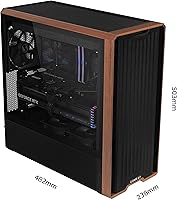
  • Dimensions: The case measures 18.97″ long by 9.37″ wide by 19.8″ tall, making it a full-sized mid-tower with a moderate footprint.
  • Weight: The empty case weighs 23.1 lbs, reflecting its steel chassis construction and real wood panel materials.
  • Front Fans: Two 170x30mm PWM fans are pre-installed at the front intake position, designed to move high air volume at lower rotational speeds.
  • Rear Fan: One 140mm PWM fan is pre-installed at the rear exhaust position to expel warm air from the main chamber.
  • Side Fans: Two 120mm reversed-blade PWM fans are included, mounted to direct airflow across internal components from the side.
  • Total Fans: Five PWM fans come pre-installed in the case, an unusually complete out-of-box cooling configuration for this price tier.
  • Fan Mounting: All fan positions use toolless mounting, allowing fans to be removed, repositioned, or replaced without a screwdriver.
  • PSU Mounting: Supports both front-facing and rotated PSU orientations to accommodate different cable management preferences and build layouts.
  • PSU Max Length: Power supply units up to 220mm in length are supported — units exceeding this measurement will not fit the case.
  • Panel Material: Accent panels are made from genuine walnut wood, available in dark walnut or light beech finish depending on the variant selected.
  • Chassis Material: The main structure is constructed from alloy steel, providing rigidity and durability across the frame and internal mounts.
  • Motherboard Support: Supports standard ATX boards natively and is also compatible with back-connect motherboards such as the ASUS BTF and MSI Project Zero series.
  • Front I/O: The front panel includes two USB 3.0 Type-A ports and dual power buttons for convenient access from multiple case orientations.
  • Power Buttons: Two physical power buttons are included on the front panel, accommodating builds where the case is placed on the floor or in a non-standard position.
  • GPU Clearance: The interior layout is designed to accommodate modern high-end GPUs, with the front fan positioning adjustable to improve clearance and airflow targeting.
  • Fan Adjustability: Both front 170mm fans can be raised into a CPU-focused position, redirecting primary airflow toward the processor rather than splitting it between CPU and GPU.
  • Color Option: The black variant reviewed here carries the model designation LAN217X; a lighter finish option with beech wood accents is also available separately.

Related Reviews
Lian Li LANCOOL 207 Digital ATX Case
85%
92%
Cooling Performance
88%
Build Quality
85%
Ease of Setup
89%
Cable Management
78%
LCD Screen Functionality
More
Lian Li LANCOOL 216 E-ATX PC Case
86%
94%
Cooling Performance
92%
Airflow Design
89%
Cable Management
85%
Ease of Installation
91%
GPU Compatibility
More
Lian Li LANCOOL 205M MESH Micro ATX Case
84%
91%
Cooling & Airflow
88%
Build Quality
84%
Ease of Installation
90%
Cable Management
86%
Aesthetics & RGB Features
More
Lian Li Lancool III RGB White Mid-Tower Case
88%
94%
Cooling Performance
88%
Build Quality
92%
Design and Aesthetics
85%
Ease of Installation
91%
Airflow Optimization
More
Lian Li LANCOOL 215 X White Mid Tower Case
84%
89%
Cooling Performance
92%
Build Quality
88%
Aesthetic Appeal
75%
Cable Management
91%
Motherboard Compatibility
More
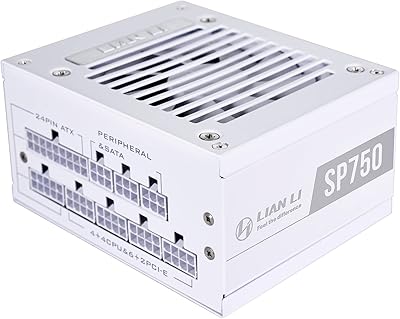
Lian Li SP750 White SFX Power Supply
84%
92%
Power Efficiency
88%
Noise Level
90%
Build Quality
91%
Modular Cable Management
85%
Compactness for Small Builds
More
Lian Li EDGE 1000W Platinum Power Supply
89%
94%
Performance
97%
Energy Efficiency
90%
Build Quality
89%
Cooling Performance
92%
Modular Design
More
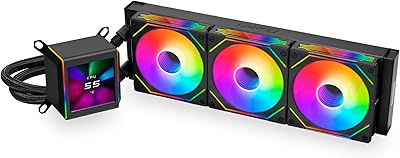
Lian Li GA II LCD 360MM AIO
88%
92%
Cooling Performance
88%
Noise Level
90%
Ease of Installation
94%
Customizability of LCD Screen
89%
RGB Effects and Aesthetics
More
Lian Li A3-mATX-WD Micro ATX Case
85%
88%
Build Quality
91%
Cooling Performance
85%
Modularity & Customization
92%
Aesthetic Appeal
89%
Airflow Efficiency
More
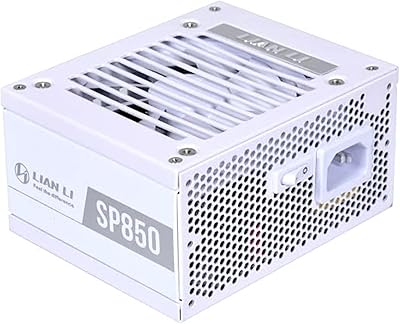
Lian Li SP850 White 850W SFX Power Supply
86%
93%
Performance
91%
Energy Efficiency
88%
Build Quality
90%
Modular Design & Cable Management
89%
Compatibility with High-End GPUs
More

FAQ

It ships with five PWM fans already installed — two 170mm at the front, one 140mm at the rear, and two 120mm on the side. For most builds you won't need to buy anything extra unless you're replacing them with a specific brand or adding liquid cooling.

The case supports PSUs up to 220mm in length, so you'll want to check your specific model's dimensions before ordering. The Corsair HX1000i is around 200mm, so that one fits fine — but some fully modular high-wattage units from Seasonic and others push past 220mm and won't clear the mounting area.

It's real wood — buyers consistently confirm this in their reviews. The panels have genuine grain texture and density that you can feel, which is notably different from the vinyl-wrapped or printed plastic accents you see on cheaper cases.

Standard ATX boards fit without issue, but extended ATX (E-ATX) is not supported. Most enthusiast-tier boards from ASUS ROG, MSI MEG, and Gigabyte Aorus that stick to standard ATX dimensions will be fine — just verify your board's exact form factor before ordering.

Under normal gaming workloads the stock fans are quiet enough that most users don't notice them over other ambient noise. At full fan speed during extended stress testing they're audible, but not harsh or high-pitched the way smaller fans tend to be at equivalent speeds.

Radiator support exists but it's not the case's primary strength — you should verify your specific radiator's thickness and fitting clearances before committing to a custom loop build. This case is better optimized for air cooling with its large-fan configuration than for dense radiator setups.

Yes — having two power buttons is specifically designed for this scenario. One is positioned for standard desk use and the other is accessible when the case is placed on the floor or in a cabinet-style placement where the top isn't easy to reach.

The wood accents are integrated into the panel design rather than being a removable add-on, so you can't cleanly swap them out for a plain steel look. If the aesthetic doesn't work for your space long-term, you'd be replacing the full side or front panel rather than just peeling off a trim piece.

It's a reasonably builder-friendly case — toolless fan mounting, a logical interior layout, and back-connect motherboard support all reduce friction during assembly. The main things to watch are the PSU length check upfront and the weight when tilting or repositioning during the build, which is easier with a second set of hands.

The front panel has two USB 3.0 Type-A ports — there is no USB-C port on the front I/O, which is a genuine limitation for a 2025 case at this price point. If front USB-C access matters to you, that's worth factoring into your decision before buying.