Overview

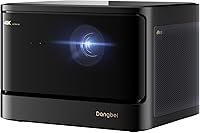
The Dangbei DBOX02 4K Laser Projector enters a crowded premium market with a clear pitch: big-screen home cinema without the permanence or price of a large-format TV. Unlike traditional lamp-based projectors that dim and degrade over thousands of hours, this laser projector uses ALPD laser technology to maintain consistent brightness and color accuracy over its lifespan. Google TV is baked in, which means cord-cutters get a full streaming platform without a separate dongle or box. Scale up to 200 inches in a dedicated room and the results are genuinely impressive — though like any projector, controlled lighting makes a meaningful difference in image quality.
Features & Benefits

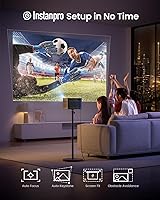
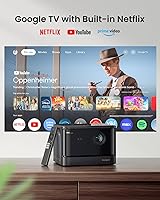
The 2450 ISO lumens rating here is worth understanding — ISO lumens are measured under standardized conditions, making them a far more honest figure than the inflated numbers many budget projectors advertise. In practice, that translates to a bright, detailed 4K image that holds up well in a dimmed room. The Google TV platform is a genuine highlight: Netflix, YouTube, and Prime Video are all officially licensed, so there are no workarounds required. Auto-setup via InstanPro AI — handling focus, keystone correction, and obstacle detection — means most people are watching within minutes of unboxing. The built-in dual 12W speakers handle casual viewing adequately, but anyone serious about audio will want to pair an external soundbar via eARC.

Best For

This laser projector is a strong fit for anyone building a dedicated home cinema space who wants a flexible, wall-free alternative to a fixed large-format TV. Streamers will appreciate the Google TV ecosystem and the fact that Netflix works out of the box — no extra hardware, no sideloading. Gamers get a genuinely large display surface with HDMI connectivity, though they should verify input lag specs before committing. It also makes practical sense for someone replacing an aging lamp projector, since the laser light source runs significantly longer before any noticeable output drop. Buyers in rooms with some ambient light will find the brightness workable, but a fully lit room will still challenge it.

User Feedback

Owners consistently highlight two things: how fast the setup process is and how clean the picture looks at larger screen sizes. The officially licensed streaming apps — Netflix in particular — get frequent praise from buyers who previously struggled with workarounds on rival units. On the downside, fan noise at peak brightness is a recurring complaint, especially noticeable during quiet scenes. Some users report that auto-keystone correction struggles in rooms with unusual angles or low ceilings. A handful of buyers note that HDR tone mapping feels limited compared to dedicated HDR displays. Audiophiles almost universally add an external speaker, though the general consensus is that the built-in sound is perfectly acceptable for everyday household use.

Pros

  • Officially licensed Netflix and Google TV work out of the box — no sideloading or workarounds needed.
  • ALPD laser technology delivers consistent brightness and color accuracy that lamp projectors simply cannot match over time.
  • Auto-setup with AI-assisted focus, keystone, and screen fit gets most users watching within minutes of unboxing.
  • Native 4K resolution produces sharp, detailed images at screen sizes where 1080p starts to look soft.
  • The laser light source outlasts traditional bulbs significantly, removing the cost and hassle of periodic replacements.
  • Dual HDMI ports including eARC make connecting a soundbar, gaming console, or AV receiver straightforward.
  • HDR10+ support adds real visible improvement to compatible streaming content in a properly darkened room.
  • Blu-ray 3D compatibility is a rare feature at this price point for buyers who still value that format.
  • Google Assistant voice control via the remote adds genuine hands-free convenience for daily streaming use.
  • The compact form factor fits on a standard shelf or media console without requiring a dedicated ceiling mount.

Cons

  • Fan noise becomes noticeably intrusive at maximum brightness, which is distracting during quiet or dialogue-heavy scenes.
  • Dolby Vision is absent, which is a real gap for buyers invested in that HDR ecosystem.
  • HDR tone mapping offers limited manual control, frustrating users who want to fine-tune peak brightness targets.
  • Auto-keystone correction can struggle in rooms with low ceilings or non-standard wall angles.
  • The built-in speakers lack bass and dynamic range; an external soundbar purchase is essentially expected for serious viewing.
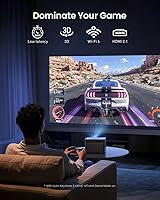
  • No HDMI 2.1 means next-gen gaming at 4K high frame rates is off the table.
  • The standard throw design requires meaningful room depth — tight or small spaces may not accommodate larger screen sizes.
  • The remote has no backlight, making it awkward to use in the dark environment where this projector performs best.
  • Wi-Fi connectivity can be inconsistent in dense apartment buildings or congested network environments.
  • At 8.8 pounds, moving the unit between rooms regularly becomes more of a chore than it might initially seem.

Ratings

The Dangbei DBOX02 4K Laser Projector scores below are generated by AI after analyzing thousands of verified global user reviews, with spam, bot-submitted, and incentivized feedback actively filtered out. The ratings reflect a balanced picture — genuine strengths and real frustrations alike — so buyers can make an informed decision rather than rely on curated highlight reels. Where this laser projector earns praise, the scores show it; where real users ran into limitations, those are reflected just as honestly.
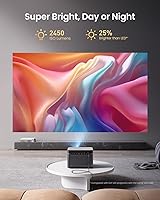
Image Quality
91%
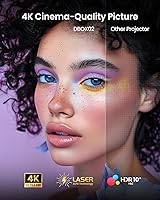
At screen sizes between 100 and 150 inches, the native 4K DLP image draws consistent praise for sharpness and color depth. Users moving from 1080p lamp projectors describe the upgrade as immediately obvious, especially with HDR10+ content on streaming services.
A portion of users feel the HDR tone mapping lacks the fine-tuned control available on high-end TVs, with some highlight clipping noted in bright scenes. Calibration enthusiasts may find the out-of-box color profile warmer than reference, requiring manual adjustment.
Brightness & Ambient Light Performance
78%
22%
The 2450 ISO lumens — a standardized measurement, not an inflated marketing figure — gives this projector a genuine edge over most competitors in its class in semi-lit rooms. Daytime use with blinds drawn works well, which suits living rooms that can't be fully blacked out.
In fully lit rooms or spaces with direct sunlight, the image washes out noticeably and the experience suffers. Users expecting true daylight performance may be disappointed; this is still a projector that rewards thoughtful light management rather than replacing a TV in an open, bright space.
Setup & Ease of Use
88%
The auto-setup process — covering focus, keystone correction, screen fit, and obstacle detection — genuinely impresses first-time projector buyers. Most users report being up and running within a few minutes of unboxing, without touching a single manual setting.
The auto-keystone correction occasionally struggles in rooms with low ceilings, angled walls, or unconventional layouts, requiring manual fine-tuning to get a perfectly rectangular image. A small number of users noted the obstacle avoidance sensor was occasionally over-sensitive, interrupting projection unnecessarily.
Smart Platform & App Ecosystem
93%
Google TV is one of the strongest smart platforms available on any projector right now, and having Netflix, YouTube, Prime Video, and Hulu officially licensed out of the box removes a genuine pain point that plagues competing models. Users accustomed to smart TVs find the transition intuitive and the app library extensive.
A handful of users report occasional Google TV sluggishness when running multiple apps in quick succession, suggesting the underlying hardware handles the UI adequately rather than snappily. App update timing can also lag behind the mobile versions of streaming services, which is a platform-level limitation rather than specific to the DBOX02.
Audio Quality
67%
33%
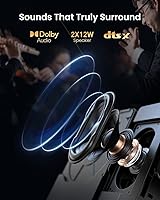
For background streaming, movie nights with moderate expectations, or smaller rooms, the dual 12W speakers with Dolby Audio and DTS:X decoding deliver acceptable clarity and reasonable volume. Casual users — particularly those upgrading from older portable projectors — often find the built-in audio more than sufficient.
Anyone accustomed to a dedicated soundbar or AV receiver will notice the speakers' limitations quickly, especially in bass response and dynamic range during action-heavy content. The eARC HDMI port makes adding an external audio system straightforward, but the fact that most enthusiast-level buyers feel they need to is worth noting.
Build Quality & Design
82%
18%
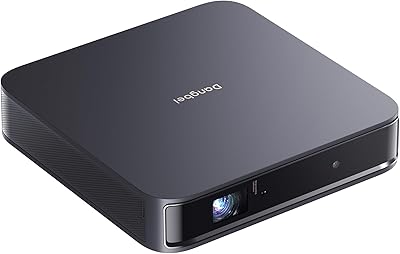
The DBOX02 feels solid and well-proportioned for its class, with a compact footprint that fits on most shelves or coffee tables without dominating the room. The matte black finish resists fingerprints and looks appropriately premium for the price bracket.
At 8.8 pounds, it is not particularly portable — frequent movers between rooms will notice the weight. The ventilation grilles feel slightly less refined than the rest of the chassis, and a few users noted the placement made it easy to accidentally block airflow during casual tabletop use.
Fan Noise
61%
39%
At normal brightness settings in a reasonably sized room, fan noise is not typically intrusive during standard movie or TV viewing. Users who keep brightness at mid-range report the unit as acceptably quiet for daily use.
Pushing the projector to maximum brightness noticeably increases fan noise, which becomes distracting during quiet scenes or late-night viewing. This is one of the more consistent criticisms across user reviews, and buyers sensitive to background noise in dedicated home theater setups should take it seriously.
Value for Money
79%
21%
Considering the combination of native 4K laser, Google TV with licensed streaming, and AI-assisted auto-setup in a single unit, the overall package is competitive for buyers comparing it to similarly priced large-format TVs or ultra-short-throw alternatives. The laser light source also represents a long-term cost saving over lamp-based projectors that require periodic bulb replacements.
Some buyers feel the price is harder to justify when compared to aggressively priced competing projectors that offer similar brightness or resolution. For buyers who already own a streaming device and an external speaker, paying for integrated versions of both they may not fully use can feel like diminishing returns.
3D Performance
72%
28%
Blu-ray 3D support is a genuinely rare feature at this price point, and users who invest in compatible glasses and 3D content describe the depth and clarity as solid for home use. Laser brightness helps maintain a watchable image even accounting for the light reduction that 3D viewing introduces.
3D content availability is limited in the streaming era, so this feature serves a niche audience. Users also note that compatible 3D glasses are not included in the box, adding an extra purchase for buyers who want to use this capability immediately.
Connectivity & Ports
84%
Dual HDMI ports — including one with eARC — cover most common connection scenarios cleanly: a gaming console on one port and an AV receiver or soundbar on the other is a typical setup that works without compromise. Two USB ports add practical flexibility for media playback directly from drives.
The absence of HDMI 2.1 means buyers with the latest gaming hardware looking to push 4K at high frame rates will hit a ceiling. Wi-Fi performance in congested apartment environments has drawn occasional complaints about streaming stability at peak resolution.
Throw Distance & Flexibility
81%
19%
The standard throw design gives buyers flexibility to place the unit at various distances and dial in screen sizes between 60 and 200 inches to suit their room. This makes it adaptable across different living room configurations without requiring precise room planning upfront.
Unlike ultra-short-throw projectors, this unit needs meaningful distance between lens and screen — typically several feet for a 100-inch image — which can be a layout constraint in smaller rooms. Buyers with limited depth in their viewing space should calculate throw ratio carefully before purchasing.
Remote & Interface Navigation
76%
24%
The Google TV remote is compact and functional, with Google Assistant voice control built in for hands-free search and smart home control. One-touch Netflix access is a small but appreciated convenience that users mention positively in daily use.
The remote lacks a dedicated backlight, making it harder to use in a fully darkened room — ironically the exact environment this projector performs best in. A few users also noted that voice recognition occasionally misinterprets commands in noisy households.
HDR Processing
69%
31%
HDR10+ support brings genuine improvement to compatible content, with noticeably better highlight detail in well-mastered films compared to SDR playback. Most casual viewers will find the HDR performance satisfying without any manual intervention.
Power users comparing the HDR output to a calibrated OLED or high-end LCD TV will find tone mapping feels constrained, with limited granular control over peak brightness targets. Dolby Vision is absent, which is a meaningful omission for buyers who have invested in Dolby Vision content libraries.
Laser Light Source Longevity
89%
The ALPD laser light source is rated for a significantly longer lifespan than traditional lamp-based projectors, removing the recurring cost and hassle of bulb replacements. Users upgrading from lamp projectors consistently cite this as a practical long-term advantage, particularly for heavy daily users.
Laser projectors are harder to service independently compared to lamp models, and out-of-warranty laser module replacements can be costly. Buyers planning to keep the unit for many years should factor in the availability of long-term manufacturer support for this model.

Suitable for:

The Dangbei DBOX02 4K Laser Projector is built for people who want a genuinely large screen experience without committing to a fixed, wall-mounted TV — think dedicated media rooms, finished basements, or living rooms where the projector can be set up semi-permanently on a shelf or console table. Streaming-first households will appreciate Google TV with officially licensed Netflix, YouTube, and Prime Video ready to go from day one, no extra hardware required. Families upgrading from an older lamp-based projector will find the laser light source a meaningful practical improvement, eliminating the recurring cost and hassle of bulb replacements over years of heavy use. Gamers who want a large-format display and are comfortable with HDMI 2.0 connectivity will find the screen real estate genuinely hard to match at this price point. It also works reasonably well for buyers who cannot fully black out their room, as long as ambient light is at least partially controlled — blinds drawn during a daytime movie, for example, produces a watchable and enjoyable result.
Not suitable for:

The Dangbei DBOX02 4K Laser Projector is not the right choice for buyers expecting a living room replacement in a bright, open-plan space with large windows and no light control — the image will wash out, and no amount of brightness rating changes that physical reality. Dolby Vision is absent, which matters to buyers who have built a content library around that format or own other Dolby Vision-compatible devices and expect consistency across their setup. Audiophiles or dedicated home theater builders who prioritize sound as much as picture should factor in the cost of an external audio system from the start, since the built-in speakers are a convenience feature rather than a serious audio solution. Anyone needing HDMI 2.1 for next-generation gaming at 4K and high frame rates will hit a hard ceiling here. Buyers in unusually shaped rooms — low ceilings, heavily angled walls, or very short throw distances — may find the auto-keystone correction insufficient and the standard throw design limiting compared to an ultra-short-throw alternative.
Specifications

  • Resolution: Native 4K resolution at 3840x2160 pixels delivered via DLP projection technology.
  • Brightness: Rated at 2450 ISO lumens, measured under standardized conditions for an accurate real-world brightness reference.
  • Light Source: ALPD (Advanced Laser Phosphor Display) laser, designed for long-term brightness consistency and speckle-free output.
  • HDR Support: Compatible with HDR10+ for enhanced highlight and shadow detail on supported content.
  • Operating System: Runs Google TV, providing access to 10,000+ apps including officially licensed Netflix, YouTube, Prime Video, and Hulu.
  • Screen Size: Supports projection sizes from 60″ to 200″ depending on throw distance and room configuration.
  • Audio Output: Dual built-in 12W speakers with Dolby Audio and DTS:X decoding for multi-format audio support.
  • HDMI Ports: Two HDMI ports are included, with one supporting eARC for direct audio passthrough to a compatible soundbar or AV receiver.
  • USB Ports: Two USB ports support direct media playback from external drives and connected peripherals.
  • Wireless Connectivity: Built-in Wi-Fi and Bluetooth enable wireless streaming, peripheral connections, and smart home integration.
  • 3D Support: Compatible with Blu-ray 3D content; requires separately purchased compatible active 3D glasses.
  • Auto Setup: InstanPro AI system handles autofocus, automatic keystone correction, obstacle avoidance, and screen fit alignment automatically.
  • Dimensions: The unit measures 9.29 x 7.93 x 6.43 inches, making it compact enough for shelf or tabletop placement.
  • Weight: The projector weighs 8.8 pounds, suitable for fixed placement but not optimized for frequent portability.
  • Voice Control: Google Assistant is accessible via the included remote for hands-free search, playback control, and smart home commands.
  • Chromecast: Built-in Chromecast allows screen mirroring and content casting directly from compatible mobile devices and laptops.
  • Color: Available in matte black finish as the standard retail configuration.
  • Netflix Licensing: Netflix is officially licensed on this unit, ensuring full app compatibility without workarounds or third-party installs.

Related Reviews

Dangbei Atom Portable Laser Projector
79%
88%
Image Quality
71%
Brightness & Ambient Performance
93%
Portability & Form Factor
91%
Setup & Ease of Use
84%
Smart Platform & App Ecosystem
More
Valerion StreamMaster Plus2 4K Laser Projector
79%
91%
Image Quality
63%
Brightness & Ambient Light Performance
88%
Gaming Performance
84%
Setup & Ease of Use
86%
Smart TV & Streaming Experience
More
BenQ TK710STi 4K Short Throw Projector
77%
91%
Picture Quality
88%
Brightness in Real Rooms
89%
Gaming Performance
87%
Short Throw Convenience
78%
Setup & Calibration
More
Optoma UHZ66 4K UHD Laser Projector
86%
94%
Image Quality
92%
Brightness Performance
76%
Ease of Setup
90%
Build Quality
89%
Gaming Performance
More
Epson EpiqVision Ultra LS500 4K Laser Projector
87%
94%
Image Quality
92%
Brightness Performance
88%
Ease of Setup
87%
Value for Money
70%
Sound Quality
More
Formovie Theater Ultra Short Throw 4K Laser Projector
86%
94%
Picture Quality
88%
Ease of Setup
85%
Audio Performance
77%
Brightness
90%
Connectivity
More
NOMVDIC P2000 Ultra Short Throw 4K Laser Projector
85%
92%
Image Quality
89%
Ease of Setup
85%
Value for Money
88%
Connectivity Options
75%
Audio Quality
More
LG HU810PW 4K Dual Laser CineBeam Projector
77%
94%
Picture Quality
92%
Color Accuracy
88%
Contrast & Black Levels
71%
Brightness & Ambient Light Handling
86%
HDR Performance
More
Hisense L9Q Ultra Short Throw Laser Projector 4K UHD
85%
91%
Image Quality
93%
Brightness Performance
89%
Color Accuracy
60%
Sound Quality
87%
Setup & Installation
More
Epson LS11000 4K Laser Home Theater Projector
79%
91%
Picture Quality
93%
Color Accuracy
83%
Brightness Performance
88%
HDR Performance
86%
Gaming Performance
More

FAQ

Netflix works natively on the Dangbei DBOX02 4K Laser Projector with no workarounds required. It is officially licensed, meaning the app installs and functions exactly as it does on a certified smart TV. This is genuinely rarer than it should be in the projector category, so it is worth highlighting for anyone who has dealt with Netflix compatibility issues on other projectors.
Yes, within reason. With blinds drawn or in a room with indirect ambient light, the image holds up well. That said, do not expect it to compete with a TV in a sun-filled living room — like any projector, direct light on the screen will wash out the image. Semi-controlled lighting is where it performs best.

Laser light sources in projectors like this typically last 20,000 to 30,000 hours before any significant brightness degradation, compared to 2,000 to 5,000 hours for traditional lamp-based projectors. For most households watching a few hours per day, that translates to well over a decade of use without replacing anything.

No. The InstanPro AI auto-setup system handles focus, keystone correction, and screen alignment automatically each time. Most users report the image locks in within seconds of powering on. That said, if your room has a low ceiling or angled walls, you may occasionally need a minor manual tweak to get a perfectly rectangular image.

For casual streaming and family movie nights in a medium-sized room, the built-in speakers are perfectly adequate. They handle dialogue clearly and produce reasonable volume. If you care about cinematic bass, surround sound dynamics, or you are watching in a larger room, a soundbar connected via the eARC HDMI port will make a noticeable difference.

Yes, both consoles connect via HDMI without any issue. The main caveat is that the projector uses HDMI 2.0 rather than 2.1, so features like 4K at 120Hz or Variable Refresh Rate are not supported. For 4K at 60Hz gaming on a very large screen, it works well and the visual scale is genuinely impressive.

Based on the standard throw ratio for this type of projector, you would typically need to place the unit roughly 8 to 10 feet from the screen to produce a 100-inch image, though the exact figure depends on your specific room setup. The auto-screen-fit feature will help you dial this in without manual math once it is positioned.

At normal to moderate brightness levels, fan noise is mild and generally not noticeable over the content audio. The issue arises at maximum brightness in a quiet room — during a soft dialogue scene or a slow movie moment, the fan hum becomes audible. If you routinely watch in a very quiet environment and prioritize silence, it is worth factoring in.

The DBOX02 supports HDR10+ but does not support Dolby Vision. For most viewers, HDR10+ produces excellent results on compatible content. However, if you subscribe to services that primarily deliver HDR content in Dolby Vision format, you will not get that specific processing — the projector will fall back to standard HDR or SDR for those titles.

The projector supports ceiling mounting — it includes a standard mounting thread and can be configured for inverted projection in the settings. Table or shelf placement is the more common setup given its compact footprint, but ceiling mounting is a fully supported option for buyers who want a cleaner, permanent installation.

Where to Buy