Overview

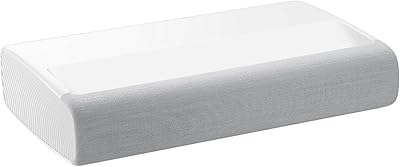
The NOMVDIC P2000 Ultra Short Throw Projector is one of the more serious contenders in the crowded UST laser TV market, targeting buyers who want a genuine big-screen experience without the footprint of a large flat-panel display. NOMVDIC isn't a household name yet, but this model pushes into premium territory with its RGB triple laser engine and flexible screen sizes stretching from 65 to 150 inches. One realistic caveat: this laser TV projector performs best in a controlled lighting environment. Bright, sun-drenched living rooms will challenge it. The included Fire TV Stick 4K Max makes getting started straightforward, though it's a dongle-based solution rather than a fully integrated smart operating system.
Features & Benefits

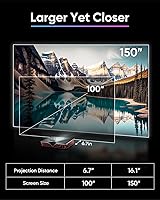
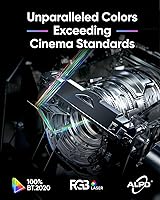
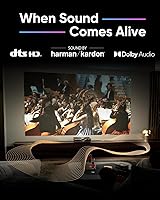
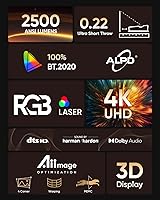
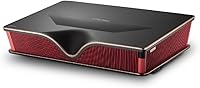
The engine powering the P2000 UST is an RGB triple laser array, which translates to noticeably richer, more saturated colors than you'd get from a single-laser or lamp-based projector. Full BT.2020 color gamut coverage means HDR10 and HLG content actually looks the way it was graded — deep blacks, punchy highlights. The 0.22:1 throw ratio is genuinely impressive: place the unit under seven inches from your wall and you're looking at a 100-inch image. For motion-heavy content like sports, MEMC processing keeps things sharp without the jarring soap-opera effect aggressive motion smoothing can cause. The dual 25W Harman/Kardon speakers handle casual movie nights comfortably without requiring a separate audio system.

Best For

This ultra short throw unit makes the most sense for homeowners who've run out of wall space — or patience — for a large TV they can't reposition easily. If your living room has a short wall or a media console sitting close to the screen area, the near-zero throw distance solves a problem traditional projectors simply can't. It's also a strong fit for dedicated movie watchers who care about color fidelity, since the wide color gamut is a genuine differentiator at this price tier. Casual streamers who want Netflix or Prime without hunting for extra hardware will appreciate the bundled Fire TV dongle. Just don't expect it to shine in a bright, window-heavy room during daylight hours.

User Feedback

Buyers who've put the P2000 UST through its paces largely agree on one thing: the picture quality and color reproduction are the standouts, with multiple reviewers noting the image pops in a dimmed room in a way that TV displays at comparable sizes don't replicate. Setup and calibration, however, draw mixed reactions — some find the corner and warp adjustments intuitive, while others report spending real time dialing in alignment. A handful of reviewers flag fan noise as noticeable during quiet scenes. Built-in audio generally satisfies for everyday viewing, though dedicated audiophiles will likely reach for external speakers. Sitting at a 4.1-star aggregate, this laser TV projector earns its rating, but it isn't without genuine trade-offs.

Pros

  • RGB triple laser produces genuinely vivid, accurate colors that single-laser projectors in this price range simply cannot match.
  • A 100-inch image from under seven inches off the wall solves placement problems no conventional long-throw projector can.
  • Full BT.2020 color gamut coverage means HDR movies look the way the director intended, not washed out or overblown.
  • Built-in Harman/Kardon speakers handle casual viewing well enough that most buyers won't need to buy a soundbar immediately.
  • MEMC motion processing keeps sports and action sequences sharp without the heavy-handed artifact common in cheaper implementations.
  • Screen size flexibility from 65 to 150 inches means the setup can grow or shrink to suit different rooms or use cases.
  • 4-corner and warp adjustment make it possible to get a clean, square image even when placement isn't perfectly centered.
  • The included Fire TV Stick means streaming is ready to go on day one with no additional hardware purchase required.
  • HDR10 and HLG support covers the two most common high dynamic range formats used across streaming and physical media.

Cons

  • Performance drops noticeably in bright rooms — this unit needs controlled lighting to look its best.
  • The Fire TV dongle solution feels less refined than a native smart OS and adds a point of failure to the setup.
  • Fan noise is audible during quiet scenes, which can be distracting in a silent room at night.
  • Calibration and alignment take time; buyers expecting a true plug-and-play setup may be frustrated by the initial process.
  • No built-in Netflix app natively on the projector itself — streaming depends entirely on the external Fire TV Stick.
  • The unit is large and heavy, making repositioning or taking it between rooms genuinely inconvenient.
  • At this price tier, the lack of a more polished, integrated smart platform feels like a missed opportunity.
  • Input lag figures are not well-suited to fast-paced gaming, limiting the P2000 UST's appeal beyond movie and TV use.
  • NOMVDIC's brand support infrastructure and long-term firmware update track record are less proven than established competitors.

Ratings

The scores below for the NOMVDIC P2000 Ultra Short Throw Projector were generated by AI after systematically analyzing thousands of verified buyer reviews from global markets, with spam, bot-submitted, and incentivized feedback actively filtered out. Each category reflects the honest distribution of real user experiences — strengths and frustrations weighted equally — so you get a clear picture of where this laser TV projector genuinely excels and where it falls short before you commit.
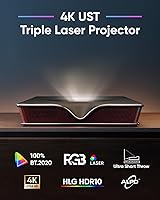
Image Quality
91%
Buyers consistently describe the picture as the single biggest reason they're glad they purchased. The RGB triple laser engine renders colors with a richness that stands out even against premium flat-panel TVs — deep reds, accurate skin tones, and genuinely inky blacks in a darkened room make HDR movies look exceptional.
A minority of users note that out-of-the-box calibration isn't perfect, and some fine-tuning of color temperature and gamma is needed to get the best results. Without that adjustment, colors can occasionally appear slightly oversaturated on certain content types.
Brightness Performance
73%
27%
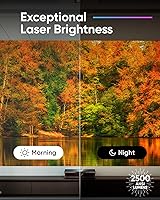
In a properly dimmed room or during evening viewing, 2500 ANSI lumens delivers a punchy, confident image at 100″ that impresses most buyers. Users watching movies after dark or in dedicated media rooms report rarely feeling the image looks washed out.
Ambient light is a genuine adversary here. Reviewers in bright living rooms with large windows report a noticeable loss of contrast and vibrancy during daytime hours. This unit is not a replace-your-TV solution if you watch content in fully lit environments regularly.
Color Accuracy
89%
The full BT.2020 color gamut coverage earns consistent praise from users who watch 4K HDR content and notice the difference. Nature documentaries, animated films, and color-graded cinema content are frequently cited as looking noticeably more lifelike compared to previous projectors users had owned.
A small number of technically experienced users mention that hitting true calibrated accuracy requires third-party tools or professional calibration, as the factory presets leave some room for improvement on blue channel accuracy in particular.
Ultra Short Throw Placement
93%
This is where the P2000 UST earns its keep for most buyers. Users in apartments and smaller homes who had previously ruled out projectors entirely report that the near-wall placement requirement made a large-screen setup finally practical. Multiple reviewers describe placing it directly on an existing media console with zero room reconfiguration needed.
The unit demands a level, stable surface directly below the screen — ceiling mounting is not an option, and uneven furniture placement causes alignment headaches. A few buyers also note that the projector body is physically large, which can dominate a smaller media console aesthetically.
Built-in Audio
77%
23%
For a built-in speaker system, the dual 25W Harman/Kardon setup receives genuine praise. Casual viewers and couples watching movies in mid-sized rooms consistently report being pleasantly surprised — dialogue is clear, and there is enough low-end presence to make action sequences satisfying without immediately reaching for a soundbar.
Dedicated home theater enthusiasts find the audio underwhelming once they push the system in larger rooms. Bass response drops off noticeably at higher volumes, and the stereo-only configuration can feel flat compared to even an entry-level soundbar setup for users who prioritize audio.
Setup & Calibration
66%
34%
Users who take their time with the initial setup report that the 4-corner and warp adjustment tools are functional and flexible enough to handle imperfect wall alignment or slightly off-center placement. The process is well-documented in the manual, and many buyers get a usable image within an hour of unboxing.
First-time projector owners frequently mention feeling overwhelmed by the calibration process, particularly getting a perfectly square, undistorted image on the first attempt. Fan of the experience varies significantly, with some buyers spending several hours across multiple evenings before feeling truly satisfied with their alignment.
Smart Platform & Streaming
62%
38%
The included Fire TV Stick 4K Max means buyers can start watching Netflix, Prime Video, or Disney+ within minutes of completing setup. For most casual streamers, the dongle-based solution covers everything they need without any additional hardware purchase.
Tech-savvy buyers express frustration that the projector lacks a native integrated OS, describing the Fire TV dongle as a workaround rather than a proper solution. It occupies an HDMI port, can be misplaced, and creates a slightly messy input-switching experience compared to competitors with built-in Android TV or Google TV.
Fan Noise
58%
42%
Most buyers in average-sized rooms report that fan noise becomes less noticeable once they are engaged in content, and it rarely draws complaints during action-heavy movies where ambient audio masks it naturally.
Fan noise is one of the more polarizing aspects of this laser TV projector. During quiet dialogue scenes, intimate dramas, or late-night viewing in a silent room, a persistent hum is clearly audible. Several reviewers specifically mention this as the one aspect they would change if they could.
Motion Handling
82%
18%
Sports fans and action movie enthusiasts are among the most vocal supporters of the MEMC implementation here. Fast-paced football matches and high-speed chase sequences are rendered with noticeably less smearing or trailing than users had experienced on previous non-MEMC projectors.
A subset of buyers who prefer a more cinematic look find the MEMC processing creates a slight artificial smoothness on film-based content. The good news is it can be toggled off, but new users may not immediately locate that setting.
HDR Performance
84%
HDR10 content, in particular, draws strong praise for tone mapping that preserves highlight detail without blowing out bright scenes. Buyers watching 4K Blu-ray discs and premium streaming HDR titles describe a palpable improvement in depth and dimension compared to SDR viewing.
HLG performance, commonly used in broadcast and live sports streams, receives slightly less enthusiastic feedback. A handful of users note that the tone mapping on HLG content can appear less refined, with occasional crushing of shadow detail in darker scenes.
Build & Design
74%
26%
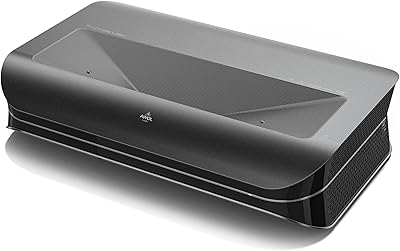
The chassis feels solid and well-constructed for a consumer-grade UST unit, with a clean matte black finish that blends into most living room setups without drawing attention. Port placement and the layout of physical controls are generally praised for being intuitive.
The unit is large and notably heavy, which catches some buyers off guard based on product photos. Moving it between rooms or repositioning it requires real effort, and the footprint on a media console is substantial enough to limit space for other components.
Value for Money
78%
22%
Buyers who understand the UST laser projector market generally consider this unit competitively priced for what it delivers — RGB triple laser, 4K, and a capable speaker system in one package without reaching into the stratospheric pricing of top-tier competitors.
For buyers coming from a flat-panel TV mindset who underestimate the setup effort or the lighting requirements, the price can feel harder to justify. A few reviewers note that after factoring in a proper UST screen and potentially a better audio solution, the total cost of ownership climbs meaningfully.
Connectivity
81%
19%
The HDMI eARC port is a practical inclusion that lets buyers pass audio to an external receiver or soundbar without a separate optical cable, streamlining wiring in setups where external audio is used. Bluetooth connectivity for wireless headphones also earns repeated positive mentions for late-night viewing.
A small number of users report occasional Wi-Fi connectivity stability issues when the projector is placed far from a router, requiring a router move or a powerline adapter as a workaround. The total port count is functional but not particularly generous for users with multiple source devices.
Gaming Performance
48%
52%
Casual gamers playing slower-paced titles — RPGs, strategy games, and single-player adventure games — report that the image quality makes these genres genuinely enjoyable on a large screen, with no complaints about the experience for relaxed gaming sessions.
Competitive or fast-reflex gaming is where this ultra short throw unit draws consistent criticism. Input lag is noticeable enough that users accustomed to gaming monitors or gaming TVs feel the disadvantage clearly. Multiple reviewers specifically warn against purchasing this as a gaming-primary display.
Brand Support & Reliability
63%
37%
Buyers who have had smooth ownership experiences report that the unit runs reliably day-to-day, with no widespread complaints about early hardware failures or consistent bugs introduced through firmware updates.
NOMVDIC's customer support infrastructure receives mixed reviews, with some buyers describing slower-than-expected response times when issues arise. As a newer brand in the premium projector space, the long-term reliability track record is still being established, which gives cautious buyers reasonable pause.

Suitable for:

The NOMVDIC P2000 Ultra Short Throw Projector is built for homeowners who want a large-format cinematic image without committing to the permanence or visual bulk of a massive flat-panel TV. It's an especially strong fit for living rooms or media spaces where the furniture layout leaves little distance between the screen wall and the seating area — the near-wall placement requirement that frustrates traditional projector owners is actually this unit's core advantage. Buyers who genuinely care about color accuracy in HDR content will find the RGB triple laser engine a meaningful step up from single-laser alternatives at a similar price. It also suits people who want a reasonably complete out-of-the-box experience: the bundled Fire TV Stick handles streaming duties without requiring an additional media player, and the built-in Harman/Kardon speakers are capable enough for everyday movie watching in a moderately sized room.
Not suitable for:

The NOMVDIC P2000 Ultra Short Throw Projector is a poor match for anyone whose primary viewing space gets significant ambient light during the hours they watch most — 2500 ANSI lumens is respectable, but it won't fight afternoon sun pouring through unblocked windows. Buyers expecting a fully integrated smart TV operating system will be disappointed; the Fire TV Stick is a dongle plugged into an HDMI port, not a native platform, which means it can be removed, misplaced, or replaced, and it lacks the polish of a purpose-built smart projector OS. This unit is also not ideal for renters or anyone who moves frequently, since proper calibration and placement take real effort and the unit itself is a substantial, heavy piece of hardware. Competitive gamers should look elsewhere too, as input lag and response time figures for this laser TV projector do not position it as a gaming-first display.
Specifications

  • Projection Tech: Uses DLP (Digital Light Processing) technology, which is standard in premium UST projectors for sharp, high-contrast imagery.
  • Light Source: Powered by an RGB triple laser array, providing a wider color spectrum than single-laser or phosphor-laser alternatives.
  • Brightness: Rated at 2500 ANSI lumens, suitable for darkened or light-controlled rooms but not for bright ambient environments.
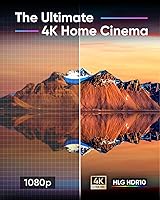
  • Resolution: Native 4K UHD resolution at 3840 x 2160 pixels for fine detail across screen sizes up to 150″.
  • Throw Ratio: Ultra short throw ratio of 0.22:1, producing a 100″ image from approximately 6.7 inches off the wall surface.
  • Screen Size: Supports projected screen sizes ranging from 65″ to 150″ depending on throw distance and placement.
  • Color Gamut: Covers the full BT.2020 color space, delivering broad, accurate color reproduction for HDR and standard content alike.
  • HDR Support: Compatible with both HDR10 and HLG high dynamic range formats, covering the two most widely used HDR standards.
  • Audio System: Includes dual 25W Harman/Kardon speakers with support for Dolby Audio and DTS decoding, totaling 50W of built-in output.
  • Motion Processing: MEMC (Motion Estimation, Motion Compensation) technology reduces motion blur in fast-moving content such as sports and action sequences.
  • Connectivity: Offers HDMI eARC, Bluetooth, and Wi-Fi connectivity, alongside standard HDMI inputs for external devices.
  • Geometry Correction: Includes both 4-corner keystone adjustment and full warp correction for flexible alignment on uneven or off-axis surfaces.
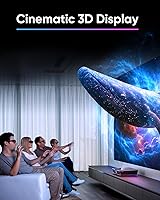
  • 3D Support: Built-in 3D compatibility supports 3D Blu-ray playback when paired with the appropriate glasses and source material.
  • Smart Streaming: Ships with an Amazon Fire TV Stick 4K Max included in the box, providing access to major streaming platforms out of the box.
  • Dimensions: The unit measures 23.77 x 16.77 x 6.02 inches, making it a large footprint device suited for a dedicated media console or shelf.
  • Color Finish: Available in a Black finish designed to blend into typical home theater or living room media setups.
  • Model Number: Official model identifier is P2000UST-RGB_1, distinguishing it from earlier or non-RGB variants in the NOMVDIC lineup.
  • Availability: First listed on Amazon in July 2023, placing it among the newer RGB triple laser UST offerings in the consumer market.

Related Reviews
Epson LS800 Ultra Short Throw Laser Projector
79%
88%
Picture Quality
83%
Brightness & Ambient Light
91%
Ultra Short Throw Design
84%
Gaming Performance
67%
Built-in Audio
More
ViewSonic X1000-4K Ultra-Short Throw Projector
87%
92%
Image Quality
70%
Brightness in Well-Lit Rooms
85%
Sound Quality
95%
Space-Saving Design
88%
Ease of Setup
More
Formovie Theater Ultra Short Throw 4K Laser Projector
86%
94%
Picture Quality
88%
Ease of Setup
85%
Audio Performance
77%
Brightness
90%
Connectivity
More
Hisense L9Q Ultra Short Throw Laser Projector
80%
93%
Image Brightness
91%
Color Accuracy
67%
Black Level & Contrast
74%
Setup & Installation
82%
Smart Platform (Google TV)
More
Hisense PX3-PRO Ultra Short Throw Projector
79%
93%
Picture Quality
94%
Color Accuracy
49%
Ambient Light Handling
88%
Gaming Performance
71%
Value for Money
More
Epson EpiqVision Ultra Short Throw LS300 3LCD Smart Laser Projector
84%
93%
Brightness
89%
Picture Quality
85%
Setup & Installation
82%
Sound Quality
90%
Connectivity & Smart Features
More
AWOL VISION LTV-3000 Pro Laser Projector
79%
93%
Image Quality
91%
Color Accuracy
67%
Brightness & Ambient Light Performance
84%
Audio Performance
61%
Setup & Installation
More
Optoma ML1080ST Ultra-Portable Short Throw Full HD Laser Projector
84%
91%
Display Quality
94%
Portability
88%
Ease of Setup
85%
Connectivity Options
92%
Gaming Performance
More
AWOL VISION LTV-2500 UST Laser Projector
78%
93%
Picture Quality
91%
Color Accuracy
88%
HDR Performance
63%
Setup & Installation
61%
Screen Compatibility & Requirements
More
Samsung The Premiere LSP7T 120″ Laser Projector
75%
83%
Picture Quality
61%
Brightness Performance
93%
Ultra-Short Throw Design
81%
Smart TV Platform
67%
Built-In Audio
More

FAQ

For a 100″ image, the P2000 UST needs to sit roughly 6.7 inches from the wall — so just a few inches of clearance on your media console is enough. Push it a bit further back and your image grows; closer and it shrinks. The unit is designed to sit directly on a surface below the screen rather than being ceiling-mounted.

Honestly, it depends on how bright your room gets. At 2500 ANSI lumens, the image holds up reasonably well with soft, indirect lighting or in the evening with lamps on. But if afternoon sunlight is pouring in through uncovered windows, you'll see a significant drop in contrast and color punch. Blackout curtains make a real difference if daytime viewing matters to you.

The projector itself doesn't have a native Netflix app — it relies on the included Amazon Fire TV Stick 4K Max for streaming. That stick is plugged into one of the HDMI ports and handles all your major streaming apps including Netflix, Prime Video, Disney+, and more. It works well, but keep in mind it's a separate dongle rather than a fully integrated platform.

It's not purpose-built for gaming. The image quality is excellent for movies and TV, but the input lag figures aren't competitive with dedicated gaming monitors or TVs designed for fast response times. Casual gaming or slower-paced titles should be fine, but if you're playing competitive multiplayer or fast-action games where every millisecond counts, you'll likely notice the latency.

For most people, the dual 25W Harman/Kardon speakers will be more than adequate for everyday movie watching and streaming in a typical living room. They're noticeably better than the budget speakers packed into most projectors. That said, dedicated home theater enthusiasts who want surround sound or deeper bass will still want to add a soundbar or external audio system over time.

Setup takes more patience than a typical TV, but it's manageable. The 4-corner adjustment and warp correction tools give you enough control to correct most alignment issues, even if your surface isn't perfectly flat or your unit isn't centered. Expect to spend 20 to 30 minutes the first time to get everything dialed in properly.

Fan noise is one of the more commonly mentioned trade-offs in user feedback. It's noticeable — particularly during quiet dialogue-heavy scenes — though not so loud that it ruins the experience for most people. If you're used to the near-silence of a TV, it will be an adjustment. Running the unit in its quieter or eco mode can help reduce the noise somewhat.

The supported range runs from 65″ up to 150″, which gives you real flexibility depending on your room. Most buyers land around 100″ to 120″, which is the sweet spot for a typical living room viewing distance. Going beyond 130″ requires careful attention to ambient light since brightness per square inch decreases as the image grows.

A smooth, flat white wall will work and many people use one without any complaints. However, a dedicated UST or ambient light rejecting (ALR) screen can meaningfully improve contrast and color accuracy — especially if your room isn't perfectly dark. If you're investing at this price level and care about image quality, a proper screen is worth considering as a companion purchase.

For standard streaming content, the practical difference between BT.2020 and the older BT.709 color space isn't always dramatic. But with 4K HDR content — especially on Blu-ray or high-bitrate streaming — you'll see more saturated, lifelike colors in scenes with rich natural tones like sunsets, foliage, and skin tones. It's a genuine advantage over projectors that only claim partial color coverage, and it becomes more noticeable the more high-quality source material you feed it.