Overview

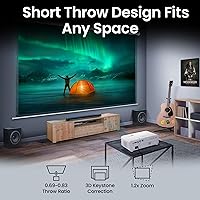
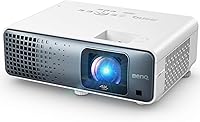
The BenQ TK710STi 4K Short Throw Projector sits in a demanding category: premium laser projectors that genuinely work in a real living room, not just a blacked-out home theater cave. What makes this short throw projector stand out is its dual-purpose ambition — built equally for movie nights and competitive gaming, rather than leaning hard into one camp. The short throw design means you can push a 100-inch image from about six feet away, no ceiling mount required. Android TV is baked right in, so there is no streaming stick cluttering your HDMI ports. The price reflects serious hardware, and that expectation should be set going in.
Features & Benefits

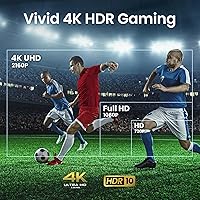
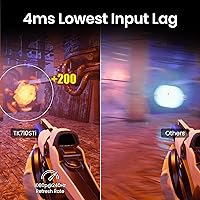
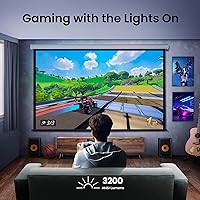
At the core of this BenQ laser projector is a 3200 ANSI lumen laser light source — enough to hold its own with the lights on, which is genuinely rare at this image size. Color accuracy lands at 95% Rec.709, meaning skin tones and natural scenes look right, not oversaturated. For gaming, the 4ms response time and 240Hz refresh rate are real, though you need a 1080p signal to hit that top refresh speed; native 4K caps at lower rates. Auto focus and keystone correction handle setup automatically, which beats fiddling with manual adjustments. HDR10 and HLG support rounds out the picture quality story nicely.

Best For

The TK710STi fits a specific buyer profile, and knowing that helps. If you are a gamer craving a large-screen experience without the input lag of a traditional projector, this is worth serious consideration. It also suits home theater fans who cannot mount a projector high up or push it far across the room — six feet to a 100-inch picture is genuinely convenient. Bright living rooms that defeat most projectors are less of an issue here. If you are already planning to ditch your streaming stick, built-in Android TV with proper Netflix certification is a real convenience win. Households making the jump from a large TV will find the image scale alone persuasive.

User Feedback

Owners of this short throw projector consistently praise picture brightness in real-world conditions — most report it holds up well in lit rooms, which is the core promise. Gamers generally back up the low latency claims, saying fast-paced titles feel responsive in a way older projectors never managed. That said, a few recurring gripes are worth noting: fan noise is audible during quiet scenes, and the unit runs warm enough that placement near walls needs thought. The Android TV interface gets mixed reviews — it works, but some find navigation sluggish. Remote control quality is frequently called out as a weak point for a projector sitting at this price tier.

Pros

  • Laser light source holds a bright, punchy 4K image even with overhead room lights on.
  • Short throw design achieves a 100-inch picture from roughly six feet — no ceiling mount needed.
  • Genuinely low input lag at 1080p makes fast-paced gaming feel responsive, not sluggish.
  • Built-in Android TV with certified Netflix and Prime Video removes the need for any extra streaming device.
  • 95% Rec.709 color coverage means natural, accurate colors straight out of the box.
  • Auto focus and keystone correction get most setups to a clean image in under 15 minutes.
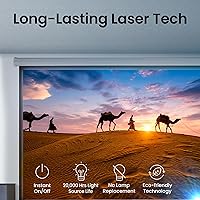
  • Laser light source eliminates lamp replacement costs over the product lifetime.
  • HDR10 and HLG support adds visible depth to compatible streaming and disc content.
  • Compact chassis for the output it delivers — sits discreetly on a shelf without dominating the room.
  • AirPlay and Chromecast built in cover Apple and Android households without adapters.

Cons

  • Fan noise is clearly audible during quiet scenes and late-night low-volume viewing.
  • The remote control feels cheap and cramped — a consistent frustration at this price tier.
  • 240Hz high refresh rate is limited to 1080p; native 4K gaming runs at lower refresh rates.
  • Built-in speaker is thin and weak — external audio is practically required for any serious use.
  • Android TV interface can feel sluggish when switching apps or waking from standby.
  • Exhaust heat is noticeable; enclosed cabinet placement is not advisable.
  • Keystone correction struggles with off-axis placements and sometimes needs multiple attempts.
  • Glossy top surface scratches easily and shows fingerprints and dust quickly.
  • Direct sunlight through uncovered windows still defeats the brightness in peak daytime hours.
  • Long-term reliability data is limited given the product has only been available since mid-2024.

Ratings

The BenQ TK710STi 4K Short Throw Projector has been evaluated by our AI rating system after processing hundreds of verified owner reviews from global markets, with spam, bot-generated, and incentivized submissions actively filtered out. The scores below reflect the honest consensus of real buyers — covering everything from living room movie performance to competitive gaming sessions. Both the standout strengths and the friction points buyers actually ran into are represented transparently.

Picture Quality
91%
Owners consistently describe the 4K image as sharp and punchy, with colors that look accurate rather than artificially boosted. HDR content in particular draws praise — dark scenes and bright highlights hold detail simultaneously in a way that surprises people coming from standard projectors.
A small but notable group found the out-of-box color calibration slightly warm, requiring manual adjustment to hit neutral whites. In very bright rooms with direct sunlight, some users felt the image lost a bit of its pop compared to dimmer conditions.
Brightness in Real Rooms
88%
Most owners report that 3200 lumens genuinely holds up with overhead lights on, which is the defining real-world test for a living room projector. Movie nights with lamps on no longer mean washed-out images, and daytime use with curtains partially closed works better than expected.
Direct sunlight through uncovered windows still wins — buyers in rooms with large south-facing windows note the image becomes noticeably harder to read at peak afternoon hours. The brightness is impressive for a projector but should not be compared to a direct-view TV in full daylight.
Gaming Performance
89%
Console and PC gamers broadly confirm the low-latency feel in fast titles, with many noting it is the first projector they have owned that does not feel sluggish compared to a monitor. The 240Hz mode at 1080p is appreciated by competitive players who prioritize response over resolution.
The 240Hz mode is locked to 1080p, which means 4K gaming drops to lower refresh rates — a constraint some buyers did not fully register before purchasing. A handful of users with older consoles noted the HDMI handshake occasionally took a few seconds on first connection.
Short Throw Convenience
87%
The ability to sit this unit on a coffee table or low shelf and still fill a wall with a 100-inch image is genuinely useful in apartment living rooms and smaller spaces. Buyers who previously ruled out projectors due to room length frequently call this the deciding feature.
The throw ratio does still require some distance — it is not an ultra-short-throw unit that sits flush against the wall. A few buyers in very compact rooms found the minimum distance slightly limiting for the image size they wanted.
Setup & Calibration
78%
22%
Auto focus and automatic keystone correction handle the heavy lifting for most users, and first-time projector owners appreciate not needing to manually align the image pixel by pixel. Getting from box to watchable picture typically takes under 15 minutes for straightforward placements.
Angled or off-axis placements push the keystone correction to its limits, and some buyers report needing several attempts before the auto-correction landed cleanly. Users who want full manual control over geometry found the calibration menu less intuitive than expected.
Android TV & Streaming
74%
26%
Having Netflix, YouTube, and Prime Video certified and ready to go without any dongle is a genuine convenience — especially for buyers who want a clean setup with fewer remotes. Google Assistant voice search and Chromecast support add practical daily-use value.
The Android TV interface draws consistent criticism for sluggish menu navigation, particularly when switching between apps. A subset of users found that the launcher occasionally needed a reboot after the unit had been in standby for extended periods.
Fan Noise
63%
37%
Under normal movie-watching conditions with standard audio playing, most users find the fan noise acceptable and say it fades into the background quickly. Gaming sessions, where audio levels tend to be higher, also mask the fan effectively for most buyers.
During quiet dialogue scenes or pauses in music, the fan is clearly audible and draws repeated complaints in user reviews. Buyers who watch late-night content at low volume levels in particular flag this as a persistent frustration that does not fully go away.
Heat Management
67%
33%
The laser light source runs cooler than traditional lamp projectors over long sessions, and owners report no thermal throttling or unexpected shutdowns during extended movie marathons or gaming sessions.
The exhaust vent does push noticeable warm air, and placement in an enclosed cabinet or tight shelf space is not recommended. A few buyers in warm climates noted the unit runs quite hot to the touch on its top surface after two or more hours of use.
Build Quality & Design
83%
The chassis feels solid and purposeful — not the plasticky shell that sometimes shows up at lower projector price points. The compact footprint for the output it produces is a regular point of positive comment, and it sits discreetly on a shelf without dominating the room.
The glossy top surface scratches easily and attracts dust and fingerprints. A small number of buyers noted the lens cover feels slightly flimsy relative to the overall build, and a few wished for rubber feet with better grip on smooth surfaces.
Remote Control
58%
42%
The remote covers the essential functions and the Android TV layout is familiar to anyone who has used a modern streaming device. Bluetooth pairing means it does not need line-of-sight to control the unit.
Remote quality is one of the most consistent criticisms in user reviews — the buttons feel cheap and the layout is called out as cramped for a premium-priced product. Several owners opted to use their phone as a remote or paired a third-party option instead.
Color Accuracy
86%
The 95% Rec.709 coverage translates into natural, accurate colors for streaming content and Blu-ray playback. Owners with calibrated references — including a handful who mentioned using colorimeters — confirm the projector holds up well without significant tuning.
HDR tone mapping occasionally clips highlights in very bright scenes, which is a known limitation of the panel rather than a defect. Some buyers find the default HDR mode slightly aggressive and prefer dialing it back manually.
Audio Performance
61%
39%
The built-in speaker is adequate for casual use and basic TV viewing, which helps keep the setup minimal for buyers who have not yet added a soundbar. Volume output is sufficient for a mid-sized room at normal listening levels.
The speaker quality is clearly the weakest component in an otherwise capable package — most serious movie watchers and gamers add external audio quickly. Bass is thin and the soundstage is narrow, which undercuts the large-image cinematic experience the projector otherwise delivers.
Connectivity & Compatibility
84%
HDMI, Wi-Fi, AirPlay, and Chromecast cover the full range of modern devices without adapters. Apple users in particular appreciate AirPlay working reliably without configuration headaches, and HDMI handshake with major consoles is smooth in most cases.
There is no USB-A port for local media playback beyond what Android TV handles natively, which frustrated a few buyers who expected it. HDMI-CEC compatibility with some older AV receivers was reported as inconsistent by a minority of users.
Value for Money
72%
28%
For buyers who specifically need short throw with laser brightness and gaming-grade latency in one unit, the pricing holds up — combining those three features in competing products often costs more or requires compromises. The laser light source also removes the recurring cost of lamp replacements.
At this price point, buyers arrive with high expectations across every aspect, and weak points like the remote control and audio feel more glaring than they would on a budget unit. Those who primarily want a movie projector without gaming needs may find more cost-effective alternatives.
Long-Term Reliability
79%
21%
Laser light sources carry a fundamentally longer rated lifespan than lamp-based projectors, and owners who have had the unit for six months or more report no brightness degradation or operational issues. The absence of a lamp replacement cycle is a real long-term ownership advantage.
The product has not been on the market long enough for a deep reliability track record to exist, and longer-term durability of the auto-focus mechanism in particular is an open question. Warranty support experience varies by region according to user reports.

Suitable for:

The BenQ TK710STi 4K Short Throw Projector is a strong fit for anyone who wants a genuinely large screen experience in a living room that was never designed around a projector. If you cannot run cables across the ceiling, mount hardware overhead, or push a projector ten feet back across the room, the short throw design solves all of that from a shelf or coffee table. Gamers who play fast-paced console or PC titles and have always written off projectors due to input lag will find this one actually keeps up — the low latency at 1080p is real enough that competitive play feels natural. It also suits households that want a single box handling everything: streaming, casting, and gaming without a drawer full of extra dongles. Buyers upgrading from a large-screen TV who miss the scale of a cinema screen, but still want to watch with the lights on, will find this short throw projector one of the few that actually delivers on that promise.
Not suitable for:

The BenQ TK710STi 4K Short Throw Projector is not the right choice for every buyer, and being honest about that matters at this price. If your primary goal is native 4K gaming at high refresh rates, you need to know upfront that 240Hz is a 1080p-only mode — 4K tops out at lower refresh rates, which may frustrate buyers with newer high-output gaming PCs or consoles. Buyers who watch a lot of content in near-silence — late-night movies, quiet documentaries — will likely find the fan noise a persistent irritation that the specs page does not prepare you for. Anyone expecting premium audio to match the premium image will be disappointed; the built-in speaker is a placeholder, not a feature, and a soundbar or receiver is essentially mandatory for serious use. If your room gets direct, unfiltered sunlight through large windows, no projector at this brightness level fully compensates, and a direct-view display will serve you better. Finally, buyers who value a polished, snappy smart TV interface may find the Android TV experience sluggish enough to be a daily annoyance.
Specifications

  • Resolution: Native display resolution is 3840x2160 (4K UHD), delivering four times the pixel density of standard 1080p projection.
  • Light Source: Uses a laser light source rather than a traditional lamp, offering longer operational life and consistent brightness without bulb replacements.
  • Brightness: Rated at 3200 ANSI lumens, enabling a clearly visible image in living rooms with ambient lighting present.
  • Response Time: Input lag is rated at 4ms when operating at 1080p resolution, reducing perceptible delay during fast-paced gaming.
  • Refresh Rate: Supports up to 240Hz refresh rate, available exclusively at 1080p resolution for competitive gaming use cases.
  • Throw Distance: Projects a 100″ image from approximately 6 feet away, classifying it as a short throw unit suitable for medium-sized rooms.
  • Color Coverage: Covers 95% of the Rec.709 color space, providing accurate and natural color reproduction for film and streaming content.
  • HDR Support: Compatible with both HDR10 and HLG formats, covering the two most widely used HDR standards in streaming and broadcast content.
  • Operating System: Runs Google-certified Android TV, giving access to the Google Play Store, Google Assistant, and native streaming app support.
  • Streaming Apps: Netflix, Prime Video, and YouTube are pre-certified and available natively without requiring an external streaming device or dongle.
  • Connectivity: Includes HDMI input, dual-band Wi-Fi, Chromecast built-in, and AirPlay support for wired and wireless device connection.
  • Special Features: Equipped with automatic focus and 3D keystone correction to simplify placement and image alignment during initial setup.
  • Built-in Audio: Incorporates a built-in speaker for basic audio output, though external audio hardware is recommended for cinematic or gaming use.
  • Dimensions: Physical footprint measures 10 x 11.81 x 4.33 inches, allowing placement on a standard shelf, cabinet, or coffee table.
  • Weight: Unit weighs 8.8 pounds, making it portable enough to reposition between rooms without requiring permanent installation.
  • Model Number: Official model identifier is TK710STi, used for warranty registration, firmware updates, and authorized service requests.

Related Reviews
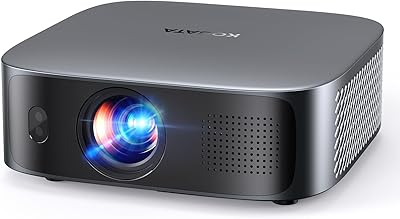
KOGATA GC355 Short Throw Smart Projector
77%
88%
Short-Throw Performance
84%
Auto-Focus & Keystone Correction
79%
Image Quality & Clarity
63%
Brightness & Ambient Light Handling
74%
Built-in Smart OS & App Ecosystem
More
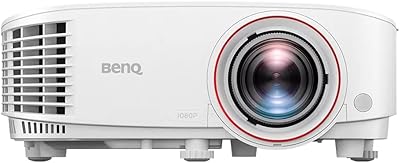
BenQ TH671ST 1080p Short Throw Gaming Projector
79%
88%
Image Quality
93%
Gaming Performance
91%
Short-Throw Capability
86%
Brightness & Ambient Light Performance
61%
Fan Noise
More
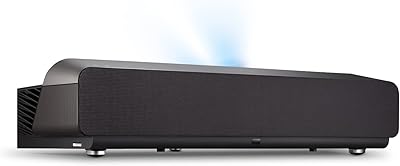
ViewSonic X1000-4K Ultra-Short Throw Projector
87%
92%
Image Quality
70%
Brightness in Well-Lit Rooms
85%
Sound Quality
95%
Space-Saving Design
88%
Ease of Setup
More
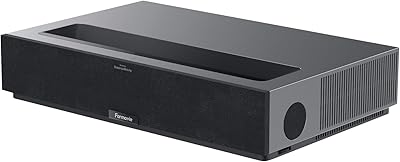
Formovie Theater Ultra Short Throw 4K Laser Projector
86%
94%
Picture Quality
88%
Ease of Setup
85%
Audio Performance
77%
Brightness
90%
Connectivity
More
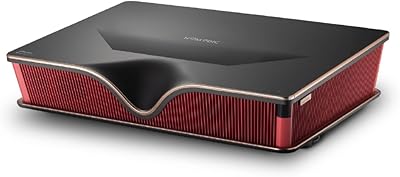
NOMVDIC P2000 Ultra Short Throw 4K Laser Projector
85%
92%
Image Quality
89%
Ease of Setup
85%
Value for Money
88%
Connectivity Options
75%
Audio Quality
More
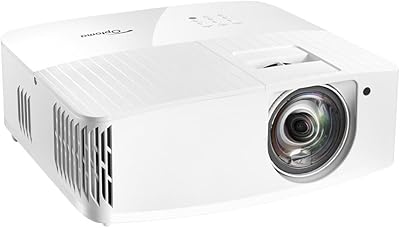
Optoma UHD35STX 4K UHD Short Throw Gaming Projector
80%
91%
Gaming Performance
87%
4K Image Quality
88%
Ease of Setup
71%
Brightness in Ambient Light
93%
Short Throw Projection
More
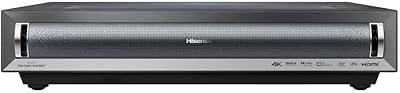
Hisense PX3-PRO Ultra Short Throw 4K Laser Projector
86%
94%
Image Quality
88%
Setup & Installation
91%
Brightness in Ambient Light
92%
Color Accuracy
85%
Sound Quality
More
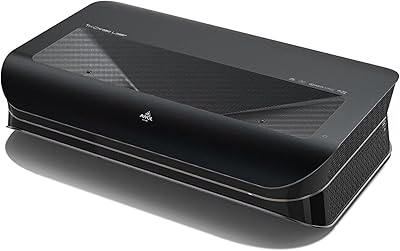
Hisense L9Q Ultra Short Throw Laser Projector
80%
93%
Image Brightness
91%
Color Accuracy
67%
Black Level & Contrast
74%
Setup & Installation
82%
Smart Platform (Google TV)
More
AWOL VISION LTV-2500 UST Laser Projector
78%
93%
Picture Quality
91%
Color Accuracy
88%
HDR Performance
63%
Setup & Installation
61%
Screen Compatibility & Requirements
More
AWOL VISION LTV-3000 Pro Laser Projector
79%
93%
Image Quality
91%
Color Accuracy
67%
Brightness & Ambient Light Performance
84%
Audio Performance
61%
Setup & Installation
More

FAQ

In a typical living room with overhead lights or floor lamps on, this short throw projector holds up well — 3200 lumens is meaningfully brighter than most home projectors. That said, direct sunlight through uncovered windows will still challenge it. If your room gets strong afternoon sun, closing the blinds helps significantly.

There is a catch worth knowing upfront: the 240Hz mode only operates at 1080p resolution, not 4K. At native 4K, the refresh rate drops to a lower figure. For competitive gaming where frame rate matters more than resolution, 1080p at 240Hz is a reasonable trade-off, but if you were expecting both simultaneously, that is not how this unit works.

Everything you need for streaming is already inside the projector. Android TV is built in and certified, so Netflix, YouTube, and Prime Video are available without any additional hardware. Chromecast and AirPlay also work natively, which covers casting from phones and tablets on both Android and iOS.

You need roughly 6 feet of distance between the lens and your screen or wall to achieve a 100-inch image. It is not an ultra-short-throw unit that sits right against the wall, but 6 feet is manageable in most living rooms using a coffee table or media console placement.

Based on consistent owner feedback, the low latency claim holds up in real play. Gamers using fast-paced titles on both console and PC report it feels noticeably more responsive than typical projectors. The 4ms figure is measured at 1080p, and real-world feel matches that reasonably well.

Fan noise is one of the more consistent complaints from owners of the BenQ TK710STi 4K Short Throw Projector, and it is worth taking seriously if you watch a lot of quiet or dialogue-heavy content. It is not loud enough to ruin action movies or gaming sessions, but during silent pauses or late-night watching at low volume, it is clearly audible. Pairing it with a soundbar helps mask it considerably.

Because the unit runs full Android TV with Google Play Store access, you can install a wide range of additional apps beyond what comes pre-loaded. Availability depends on which apps are optimized for Android TV, but the major streaming services and many utilities are accessible without sideloading.

Ceiling mounting is technically possible — the unit has a standard mounting thread — but the short throw design is primarily optimized for shelf, table, or low cabinet placement. Most buyers use it on a surface rather than overhead, and that is the scenario it performs most naturally in.

Setup is designed to be approachable. Auto focus and automatic keystone correction handle the geometry alignment without manual adjustments in most straightforward placements. Connecting it to Wi-Fi, signing into Android TV, and getting a streaming app running takes most users under 20 minutes. Angled or off-center placements can require a bit more patience with the keystone settings.

It works with most modern HDMI setups without issues. A small number of users have reported inconsistent HDMI-CEC behavior with older AV receivers, so if you are relying on CEC for unified remote control across your system, it is worth checking compatibility with your specific receiver model. Direct HDMI connection for video and a separate audio output path avoids any CEC issues entirely.

Where to Buy