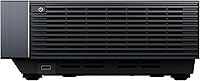
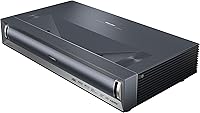
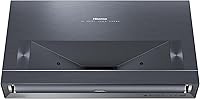
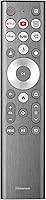
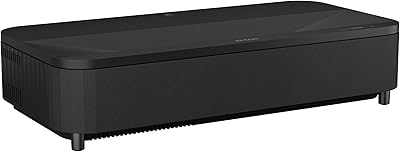
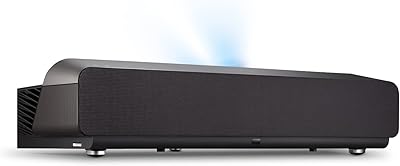
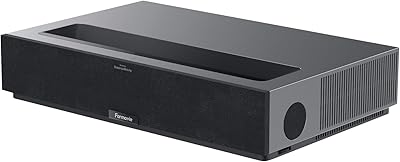
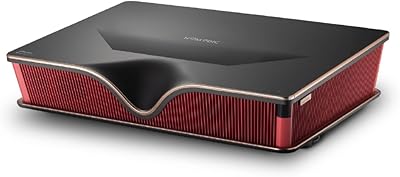
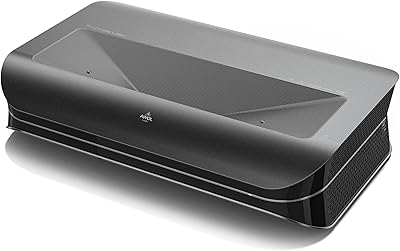
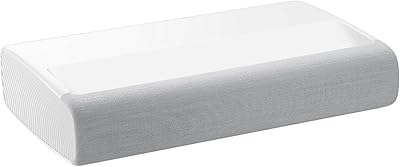
Overview

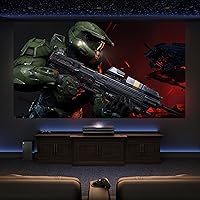
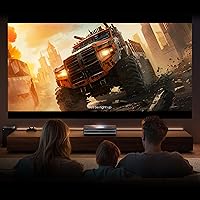
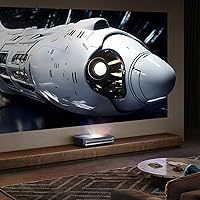
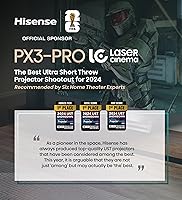
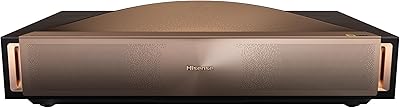
The Hisense PX3-PRO Ultra Short Throw Projector is Hisense's most serious push into the premium UST space — a triple-laser machine aimed squarely at home theater enthusiasts who want big-screen impact without punching holes in their ceiling. Unlike traditional long-throw projectors that demand careful room planning, this unit sits inches from the wall and throws up to 150 inches of image with no ceiling mount required. The UST market is crowded, but few competitors combine triple-laser optics with Xbox certification and Google TV at this tier. That said, the price is substantial, and buyers expecting casual use or bright living rooms should weigh their options carefully.
Features & Benefits

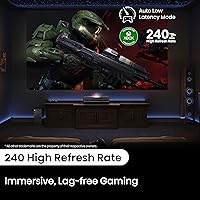
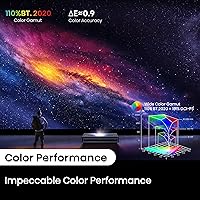
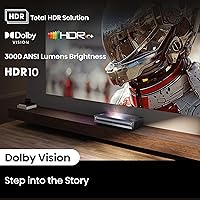
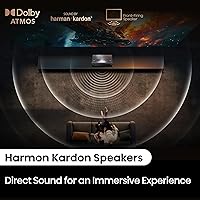
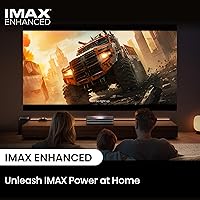
What separates the PX3-PRO from cheaper UST options starts with the light source. A full red-green-blue laser array — rather than the single or dual-laser setups found in more affordable units — produces colors that feel genuinely accurate rather than pushed. Hisense claims 110% BT.2020 coverage, which is wider than most OLED panels can manage. The native 4K DLP panel keeps fine detail sharp at large sizes, and the 240Hz refresh rate with low input lag makes a real difference in fast-paced gaming. Dolby Vision handles dynamic HDR scene by scene, while IMAX Enhanced certification means supported content is mixed specifically for home playback. The built-in Harman Kardon speakers are respectable, but a dedicated soundbar will still serve Dolby Atmos properly.

Best For

This triple-laser UST projector makes the most sense for people who genuinely cannot — or simply will not — build a dedicated screening room. Apartment renters and condo owners with a compact living space can set it on a media console and get 100-plus inches of 4K with no structural modifications. It also suits console gamers seriously. The Xbox certification is not just a logo; the 240Hz ceiling and calibrated input latency mean fast-paced titles feel genuinely responsive on a massive screen. Cinephiles in rooms with controlled lighting will find the color fidelity hard to argue with. And if you currently run a separate streaming device alongside a large TV, this Hisense laser projector consolidates both.

User Feedback

With only 69 ratings and a 4.6-star average at the time of writing, the feedback pool is still small enough that firm conclusions should come with a caveat. Buyers consistently call out color richness and sheer image size as the standout strengths — several mention replacing a large OLED without looking back. The most common criticism involves ambient light sensitivity; like most UST projectors, the PX3-PRO loses contrast noticeably in a bright room, and some buyers were caught off guard without window shading. Fan noise gets occasional mentions, though most find it tolerable. Gaming feedback is largely positive, with Xbox owners praising the responsive feel. The built-in speakers split opinion — fine for background viewing, less so for a serious movie night.

Pros

  • Full red-green-blue triple-laser engine delivers color accuracy that outpaces most consumer displays on the market.
  • 110% BT.2020 coverage means HDR and Dolby Vision content looks genuinely rich rather than approximated.
  • No ceiling mount or long throw distance required — setup is as simple as placing it on a shelf near the wall.
  • 240Hz refresh rate and low input lag make the PX3-PRO a credible choice for competitive and casual gaming alike.
  • Native 4K DLP panel keeps images sharp and detailed all the way up to 150 inches.
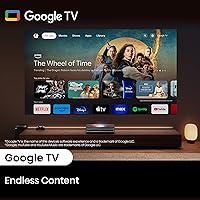
  • Google TV is a fully featured smart platform, eliminating the need for an external streaming device.
  • IMAX Enhanced and Dolby Vision certifications ensure compatible titles play back with the intended mastering.
  • A 4.6-star average from verified buyers suggests real-world satisfaction holds up beyond spec-sheet promises.
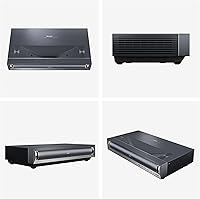
  • Compact footprint relative to screen output — under 22 inches wide and under 20 pounds for a 150-inch-capable projector.
  • AI upscaling handles sub-4K streaming content gracefully, so non-native sources still look respectable at large sizes.

Cons

  • Ambient light is a genuine adversary — contrast degrades noticeably in bright rooms and shaded windows become effectively mandatory.
  • The price places this well above entry and mid-tier UST competitors, making the value case harder for casual viewers to justify.
  • Built-in speakers are adequate for background TV but fall short for dedicated home theater audio at this price tier.
  • Fan noise, while tolerable to most buyers, is noticeable during quiet scenes and may irritate sensitive listeners in small rooms.
  • Only 69 ratings currently exist, so long-term reliability and durability data is still limited compared to more established models.
  • No battery or portable power option — this is strictly a fixed-installation unit, ruling out outdoor or multi-room flexibility.
  • Setup requires a flat, stable surface at a precise distance from the wall; uneven furniture or textured walls can complicate alignment.
  • At nearly 20 pounds, repositioning or moving the unit regularly is less convenient than it might appear from product photos.
  • Sub-4K streaming services delivered via Wi-Fi will rely on AI upscaling, which is good but not a substitute for native 4K sources.
  • Buyers in very bright or open-plan living spaces may need to invest in blackout shading to get the performance the specs promise.

Ratings

The scores below are generated by AI after analyzing verified global buyer reviews for the Hisense PX3-PRO Ultra Short Throw Projector, with spam, bot-generated, and incentivized feedback actively filtered out to ensure every rating reflects genuine ownership experience. Each category score is weighted against the full distribution of praise and criticism in the review pool — not smoothed into comfortable averages. Both the standout strengths and the recurring frustrations are transparently represented in the numbers you see here.

Picture Quality
93%
Owners consistently single out the sheer scale and clarity of the 4K image as the defining reason they chose this projector over a large flat panel. At 100 inches and beyond, fine detail in 4K streaming and disc content stays crisp and well-defined — a result of the native DLP micromirror system rather than resolution upscaling alone.
Picture quality is highly dependent on viewing conditions and drops noticeably in anything brighter than a dim room, which catches some buyers off guard. A small subset of reviewers also noted the faint rainbow artifact that DLP technology can produce in peripheral vision, though sensitivity to this varies considerably from person to person.
Color Accuracy
94%
The full red-green-blue triple-laser engine covering 110% BT.2020 is where the PX3-PRO most clearly outpaces single and dual-laser competitors — skin tones, saturated landscapes, and HDR highlights land with a richness buyers describe as closer to a professional reference display than a typical consumer projector. Color consistency across the full image size is notably strong.
Out-of-box calibration, while generally accurate, may not fully satisfy color-critical workflows without manual fine-tuning of white balance and gamma. A handful of reviewers noted slight color uniformity shifts near the edges of very large image sizes, though this appears to be screen-surface and distance dependent rather than a consistent manufacturing flaw.
Ambient Light Handling
49%
51%
In a properly darkened room or during evening viewing with window shading drawn, contrast and color saturation perform impressively for a reflective display technology. Buyers who set up in dedicated media rooms or basement home theaters report consistently high satisfaction with the image under those controlled conditions.
Ambient light is the single most common source of buyer disappointment in the review pool — contrast collapses in bright rooms, and the 3,000-lumen output does not compensate for direct daylight the way a high-brightness flat panel would. Buyers who assumed the projector would work well in a sun-filled living room without window shading were consistently let down.
Gaming Performance
88%
Xbox Series X owners in particular report a noticeably responsive feel during gameplay, with motion clarity that holds up well at 120Hz and the Designed for Xbox certification translating into a streamlined setup with minimal manual latency configuration. Fast-paced titles on a 100-plus-inch screen represent a genuinely different gameplay experience that buyers find hard to return from.
The 240Hz maximum is impressive in spec terms, but content actually running at that refresh rate from a console is still limited in practice — most buyers will spend the majority of their time at 60Hz or 120Hz. A handful of reviewers noted that the lowest latency mode requires manually switching picture presets, which is a friction point that should be more automatic at this price tier.
Value for Money
71%
29%
For buyers upgrading from a single-laser UST projector or a large LCD TV, the triple-laser color performance and 240Hz gaming capability represent a meaningful step up that justifies the premium over cheaper alternatives. The all-in-one package — combining Google TV, Dolby Vision, Harman Kardon speakers, and Xbox certification — does eliminate several additional purchases that competing setups would require.
The price sits firmly at the high end of the consumer UST segment, and buyers who do not need the gaming certification or extreme color gamut coverage will find capable alternatives at a substantially lower cost. The relatively small review pool also makes long-term reliability harder to assess, which is a genuine risk consideration when making a significant investment in a relatively new product.
HDR Performance
91%
Dolby Vision and IMAX Enhanced content look noticeably more controlled and layered on this Hisense laser projector than on lamp-based or single-laser alternatives — highlights feel intentional rather than clipped, and shadow gradients retain visible detail. The combination of dynamic tone mapping and wide color gamut makes demanding reference content genuinely rewarding to watch.
HDR10 content without Dolby Vision metadata is handled competently but does not reach the same peak impact as Vision-enabled titles, and the gap becomes more apparent on material with very high dynamic range. Buyers streaming HDR over compressed Wi-Fi connections will find the real-world HDR advantage less apparent than it is with native 4K disc or locally stored sources.
Setup & Installation
84%
Not needing a ceiling mount or a purpose-built dark room is a practical advantage that most buyers underestimate until they experience it — many report getting a usable image within minutes of unboxing. The Google TV interface makes the initial software configuration approachable even for buyers with no prior projector experience.
Getting the image precisely level and square can require patience since the unit must sit on a perfectly flat surface at the correct horizontal distance from the wall, with limited keystone correction available. Buyers using textured walls, angled ceilings, or uneven furniture reported spending considerably more time on alignment than they expected.
Build Quality
79%
21%
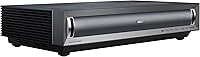
The chassis feels solid and appropriately weighted for its class, with a low-profile design that sits unobtrusively on a media console without looking out of place in a living room. Fit and finish draw favorable comparisons to competing UST units from other premium brands among buyers who have owned multiple projectors.
At just under 20 pounds, repositioning the unit is more physically cumbersome than its compact footprint suggests, which becomes relevant whenever furniture is rearranged or the projection distance needs adjusting. Several reviewers noted the remote control feels noticeably lighter and less premium than the projector body itself — a small but consistent complaint at this investment level.
Google TV Platform
86%
Google TV is one of the more fully featured smart TV platforms available, and having it integrated natively eliminates the need for an external streaming device for the vast majority of buyers. App availability, cross-service voice search, and Chromecast support all function reliably according to most reviewers, making the out-of-box software experience largely frictionless.
Google TV's ad-heavy and recommendation-cluttered home screen is a recurring frustration among buyers who prefer a leaner, content-focused interface — though this is a platform-wide design issue rather than specific to this unit. Occasional app update delays and minor UI lag under heavy multitasking have also been flagged by a small number of reviewers.
Audio Quality
67%
33%
The Harman Kardon speakers produce cleaner, fuller audio than most built-in projector systems at lower price points, and for casual TV streaming or background viewing they hold up reasonably well day-to-day. Dolby Atmos decoding is genuinely active rather than a passive badge, and spatial cues are audible from the built-in array during well-mixed content.
At this price tier, buyers reasonably expect audio performance to at least approach the visual ambition of the unit, and most find the built-in speakers fall short during serious movie viewing. Bass response is limited and the soundstage is narrow for a 100-plus-inch viewing experience — a dedicated soundbar effectively becomes a necessary companion rather than an optional upgrade.
Input Lag
87%
In dedicated game mode, the PX3-PRO delivers low enough latency that console gaming feels natural and reactive rather than sluggish or visually disconnected from controller input. This is reinforced both by the Xbox certification compliance requirements and by consistent positive first-hand accounts from gamers in the review pool who tested it with time-sensitive titles.
Enabling game mode disables portions of the AI processing pipeline and picture enhancement features, so buyers chasing the absolute lowest latency will need to accept a somewhat less refined image. The trade-off is subtle for most content, but it is a real one that perfectionists expecting both maximum responsiveness and maximum picture quality simultaneously will encounter.
Connectivity
83%
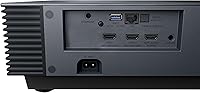
The combination of HDMI, USB, Ethernet, Wi-Fi, and Bluetooth covers the connection needs of most buyers without requiring additional adapters or hubs. Ethernet availability is a particularly welcome option for those who want stable 4K streaming throughput without depending on household Wi-Fi signal quality.
The total number of HDMI ports can feel restrictive for buyers with multiple simultaneous devices — a gaming console, a soundbar, and a backup streaming stick can fill available inputs quickly and necessitate a switch. Buyers planning to connect premium audio equipment via eARC should verify specific port capabilities before purchasing.
Fan Noise
63%
37%
During action-heavy content or scenes with a strong audio mix at normal living room volumes, the fan noise blends sufficiently into the background that most buyers stop noticing it after the first few sessions. Owners who watch primarily in the evenings with content playing at standard volume report it as a non-issue in practice.
In quiet dialogue-heavy scenes, late-night low-volume viewing, or very small rooms where the unit sits close to seating, the fan hum becomes clearly audible and is the most consistently mentioned hardware complaint across the review pool. It is not severe enough to ruin a viewing session, but it is a permanent background presence that buyers sensitive to ambient noise will need to consciously accept.
Longevity & Reliability
77%
23%
Triple-laser light sources are rated for far longer service lives than lamp-based systems, and there are no consumable bulbs to replace over the ownership period — a meaningful practical and cost advantage over time. Early buyers report no hardware failures or measurable output degradation after several months of regular use.
The product launched in late 2024 and currently has fewer than 100 reviews, so long-term reliability data does not yet exist in any meaningful volume. Buyers making a significant investment at this price point are effectively early adopters who cannot draw on an established multi-year track record to assess failure rates or durability under sustained use.

Suitable for:

The Hisense PX3-PRO Ultra Short Throw Projector is built for buyers who want a genuine TV replacement at a scale no flat panel can match without a full room renovation. It is especially well-suited to apartment dwellers and condo owners who cannot run cables across a ceiling or mount hardware on a wall — the ultra short throw design means you simply place it on a media unit and push it close to the wall. Xbox Series X owners and console gamers who have always wanted a large competitive display will find the 240Hz ceiling and low input lag genuinely useful, not just a spec sheet talking point. Cinephiles who watch in a reasonably controlled lighting environment will appreciate color accuracy that rivals or surpasses many premium OLED displays, particularly for HDR and Dolby Vision content. If you currently juggle a separate streaming stick, a large TV, and a sound system and want to consolidate into one cleaner setup, this triple-laser UST projector with Google TV built in covers most of that ground on its own.

Not suitable for:

The Hisense PX3-PRO Ultra Short Throw Projector is a poor fit for buyers who live with a lot of natural light and are unwilling or unable to manage it during viewing sessions. At 3,000 lumens the image holds up well in dim conditions, but in a sun-drenched living room without curtains, contrast drops and colors wash out noticeably — this is a physics limitation shared by all UST projectors, not a flaw unique to this unit. Budget-conscious shoppers should also think twice; the price sits firmly in premium territory, and cheaper single or dual-laser UST alternatives exist if color gamut precision and Xbox certification are not priorities. Buyers who depend heavily on a dedicated surround sound setup should know the built-in Harman Kardon speakers, while decent, will not satisfy serious audio expectations without a separate soundbar or receiver. Finally, anyone wanting a truly portable or battery-powered projector for outdoor use will find this 19.8-pound unit impractical — it is designed to sit in one place and stay there.
Specifications

  • Light Source: Uses a full red-green-blue triple-laser engine (TriChroma LPU) rather than a single or dual-laser array, enabling wider color accuracy and a significantly longer rated lifespan than lamp-based or hybrid laser systems.
  • Resolution: Native 4K UHD at 3840 x 2160 pixels, delivered via a DLP system with 2.07 million micromirrors for consistent sharpness and fine detail across all supported screen sizes.
  • Brightness: Rated at 3,000 ANSI lumens, which is sufficient for dim or controlled-light environments but will show measurable contrast loss in rooms with significant ambient light.
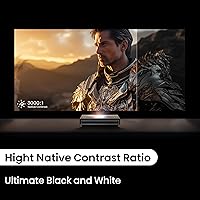
  • Contrast Ratio: Specified at 3000:1, providing visible separation between dark and bright image areas when the unit is used in a properly shaded room.
  • Color Gamut: Covers 110% of the BT.2020 color space, which exceeds the gamut coverage of most consumer OLED and LCD displays and enables highly faithful HDR and wide-color rendering.
  • Projection Size: Supports diagonal image sizes from 80″ to 150″, achieved by positioning the unit just inches from the wall with no ceiling mount or extended throw distance required.
  • Refresh Rate: Supports up to 240Hz, reducing motion blur during fast-paced gaming and sports content compared to standard 60Hz or 120Hz display setups.
  • HDR Support: Compatible with Dolby Vision, HDR10, and IMAX Enhanced, allowing dynamic and static HDR metadata from streaming services and disc sources to be processed and displayed accurately.
  • Audio System: Integrates Harman Kardon speakers with Dolby Atmos decoding, providing built-in output adequate for casual viewing, though a dedicated soundbar is advisable for serious home theater listening.
  • Smart Platform: Runs Google TV natively, giving access to major streaming apps, Google Assistant voice control, and Chromecast Built-in without requiring any external streaming device.
  • Connectivity: Equipped with HDMI, USB, Ethernet, Wi-Fi, and Bluetooth, covering wired and wireless connections for consoles, external storage, audio systems, and network access.
  • Display Tech: Built on DLP (Digital Light Processing) with 2.07 million micromirrors, contributing to sharp edge definition and stable color uniformity at large projection sizes.
  • Throw Distance: Ultra short throw design produces a large image from approximately 7 to 20 inches away from the projection surface, eliminating the deep room distances required by conventional projectors.
  • AI Upscaling: Onboard AI upscaler processes sub-4K content from streaming services or connected devices into a 4K output, improving perceived sharpness when native 4K sources are unavailable.
  • Gaming Cert: Carries the official Designed for Xbox certification, confirming tested compatibility and optimized low-latency performance with Xbox Series X and Xbox Series S consoles.
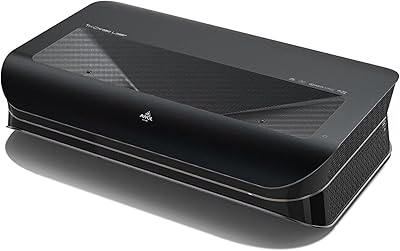
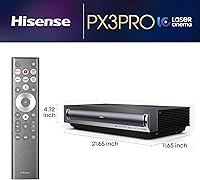
  • Dimensions: Measures 21.7 x 11.7 x 4.8 inches, sized to sit on a standard media console or TV stand without requiring custom furniture or additional mounting hardware.
  • Weight: Weighs 19.8 pounds, positioning it as a fixed-installation unit intended for a permanent spot in a living room or dedicated viewing space rather than regular relocation.

Related Reviews

Hisense L9Q Ultra Short Throw Laser Projector
80%
93%
Image Brightness
91%
Color Accuracy
67%
Black Level & Contrast
74%
Setup & Installation
82%
Smart Platform (Google TV)
More
AWOL VISION LTV-3000 Pro Laser Projector
79%
93%
Image Quality
91%
Color Accuracy
67%
Brightness & Ambient Light Performance
84%
Audio Performance
61%
Setup & Installation
More
Epson LS800 Ultra Short Throw Laser Projector
79%
88%
Picture Quality
83%
Brightness & Ambient Light
91%
Ultra Short Throw Design
84%
Gaming Performance
67%
Built-in Audio
More
ViewSonic X1000-4K Ultra-Short Throw Projector
87%
92%
Image Quality
70%
Brightness in Well-Lit Rooms
85%
Sound Quality
95%
Space-Saving Design
88%
Ease of Setup
More
NOMVDIC P2000 Ultra Short Throw Projector
75%
91%
Image Quality
73%
Brightness Performance
89%
Color Accuracy
93%
Ultra Short Throw Placement
77%
Built-in Audio
More
Formovie Theater Ultra Short Throw 4K Laser Projector
86%
94%
Picture Quality
88%
Ease of Setup
85%
Audio Performance
77%
Brightness
90%
Connectivity
More
AWOL VISION LTV-2500 UST Laser Projector
78%
93%
Picture Quality
91%
Color Accuracy
88%
HDR Performance
63%
Setup & Installation
61%
Screen Compatibility & Requirements
More
Optoma ML1080ST Ultra-Portable Short Throw Full HD Laser Projector
84%
91%
Display Quality
94%
Portability
88%
Ease of Setup
85%
Connectivity Options
92%
Gaming Performance
More
Epson EpiqVision Ultra Short Throw LS300 3LCD Smart Laser Projector
84%
93%
Brightness
89%
Picture Quality
85%
Setup & Installation
82%
Sound Quality
90%
Connectivity & Smart Features
More
Samsung The Premiere LSP7T 120″ Laser Projector
75%
83%
Picture Quality
61%
Brightness Performance
93%
Ultra-Short Throw Design
81%
Smart TV Platform
67%
Built-In Audio
More

FAQ

Very close — typically somewhere between 7 and 20 inches from your wall or screen surface depending on the image size you want. For around 100 inches, you are looking at roughly 10 to 12 inches of distance. That means a standard media console pushed near the wall is all you need, which is exactly the appeal of the ultra short throw format.

Not at its best, honestly. Like all UST projectors, the PX3-PRO performs significantly better when ambient light is managed. In a bright room with open windows you will notice contrast drop and colors wash out. If you watch primarily in the evenings or can close blinds during daytime use, the results are excellent. If your space is always flooded with light and there is no practical way to shade it, a high-brightness flat panel may be the more reliable choice.

A smooth, flat, matte-white painted wall will work at a basic level, but a dedicated projection screen makes a real difference — particularly for color accuracy and contrast. For best results with any ambient light present, an ALR (Ambient Light Rejecting) screen designed specifically for ultra short throw projectors is worth the additional investment. It is one of those accessories that noticeably closes the gap between good and great.

Google TV is built directly into the unit — no streaming stick, Chromecast, or external box needed. You get native access to Netflix, Disney+, YouTube, and other major services from the moment it is set up. Google Assistant voice search is also available, which makes browsing content across platforms considerably easier.

For the overwhelming majority of console gamers it holds up well. The Designed for Xbox certification requires verified latency compliance, not just logo placement. The 240Hz ceiling also helps with motion clarity during fast gameplay. Hardcore competitive players who obsess over single-digit millisecond differences should look up confirmed game-mode figures, but for general console and casual competitive gaming this projector is genuinely responsive.

The fan is audible, especially in quiet scenes or when the room is otherwise silent. That said, most owners report it recedes into the background once content is playing at a reasonable volume. It is not disruptive during typical movie or TV watching, but if you are particularly sensitive to background hum or watch a lot of very quiet, dialogue-heavy content, it is something worth knowing about before you buy.

They are genuinely better than the speakers found in most projectors at lower price points, and for everyday streaming and background TV they are fine. For movies with strong audio design or music listening, however, a dedicated soundbar with Dolby Atmos passthrough will make a meaningful difference. Given what this triple-laser UST projector does visually, pairing it with good audio does it more justice.

It comes down to what matters most to you. A premium OLED in this price range will deliver better black levels and hold up far better in a bright room. The projector, by contrast, gives you a 100 to 150-inch image that no consumer flat panel at any price can touch. If screen scale and immersion in a controlled environment are your priorities, the projector wins clearly. If consistent performance across varied lighting conditions is more important, OLED has the practical advantage.

Triple-laser light sources of this type are commonly rated for approximately 25,000 hours before output drops to half its original brightness, though Hisense has not published a confirmed official figure for this specific model. At four hours of daily use, 25,000 hours represents well over a decade of normal ownership. In realistic terms, the laser lifespan is unlikely to be a concern for the typical buyer.

The Xbox branding is an official partnership and optimization certification, not an exclusivity restriction. You can connect a PlayStation 5, Nintendo Switch, or any other HDMI-capable device and it will work without issue. The image quality, refresh rate support, and low-latency benefits all still apply regardless of which console you plug in.

Where to Buy