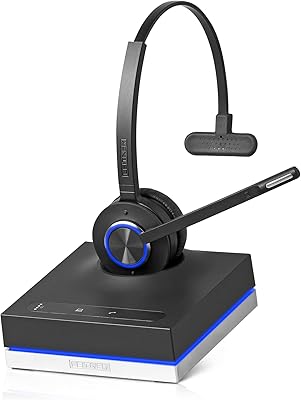
Leitner LH475 Wireless DECT Computer Headset
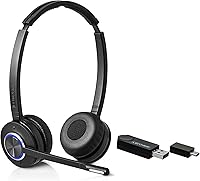
Leitner LH475 Wireless DECT Computer Headset — image 1
Leitner LH475 Wireless DECT Computer Headset — image 2
Leitner LH475 Wireless DECT Computer Headset — image 3
Leitner LH475 Wireless DECT Computer Headset — image 4
Leitner LH475 Wireless DECT Computer Headset — image 5
Leitner LH475 Wireless DECT Computer Headset — image 6
80%
20%

Overview

The Leitner LH475 Wireless DECT Computer Headset is built squarely for professionals who spend serious hours on calls — remote workers, hybrid office employees, and anyone tired of Bluetooth dropping out at the worst possible moment. What sets it apart is DECT 6.0 technology, which operates on a dedicated radio frequency rather than the crowded 2.4GHz band most Bluetooth headsets fight over. That translates to more consistent connectivity over longer distances. At its price point, you're paying for reliability and call-focused performance, not music quality or entertainment versatility. It also converts between single-ear and dual-ear wearing styles, which is a small but practical detail depending on whether you need to stay aware of your surroundings.

Features & Benefits

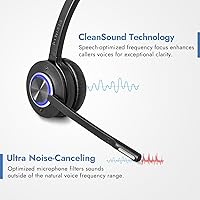
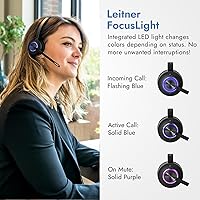
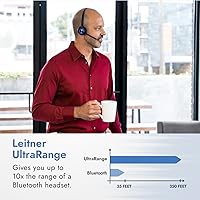
The 350-foot wireless range is where this DECT headset genuinely pulls ahead of most office alternatives — you can walk to a printer, grab a coffee, or step outside briefly without losing your call connection. The noise-canceling boom microphone does a solid job filtering out ambient sounds like HVAC hum, keyboard clatter, and general office chatter, though it won't perform miracles in an extremely loud environment. The FocusLight LED ring is a subtly useful feature: it glows when you're on a call or muted, signaling to nearby colleagues without you having to wave them off. The moldable headband and touch controls round out a package designed for long, practical workdays. USB-C and USB-A support means setup is straightforward across most modern devices.

Best For

This wireless office headset makes the most sense for people whose jobs revolve around voice communication — customer success teams, call center staff, team leads running daily standups, and remote workers who share a home with family or roommates. If Bluetooth connectivity has let you down during important calls, DECT radio frequency is a meaningful upgrade worth considering. It also plays well with Teams, Zoom, and most VoIP softphone platforms right out of the box. That said, keep the limitations clear: this DECT headset will not work with your cell phone, and it is not designed for listening to music or gaming. Those looking for an all-purpose audio device should look elsewhere entirely.

User Feedback

The LH475 carries a 4.0 out of 5 rating, which reflects a genuinely split buyer experience. Users consistently praise the microphone call clarity and how well callers can hear them even in loud environments, along with the comfort level during extended wear. Where things get more complicated is battery life — at 4 to 6 hours per charge, heavy users burning through 8-hour call days will need to plan for mid-day charging, and there is no included charging base to make that convenient, which feels like a real oversight at this price. Most buyers report the pairing process with Teams and Zoom is simple, and long-term owners generally speak well of build durability.

Pros

  • DECT 6.0 technology delivers up to 350 feet of stable wireless range, far outpacing typical Bluetooth office headsets.
  • The noise-canceling microphone reliably filters out HVAC hum, keyboard noise, and ambient office chatter during calls.
  • Convertible single-ear and dual-ear wearing styles give users flexibility depending on their environment and awareness needs.
  • The FocusLight LED ring serves as a practical visual signal that keeps nearby colleagues from interrupting live calls.
  • A five-year replacement warranty backed by US-based support is unusually strong coverage for a workplace headset.
  • USB-C and USB-A compatibility means the LH475 works out of the box with most modern and legacy devices.
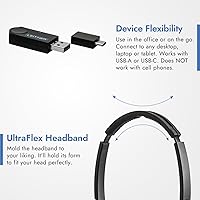
  • The UltraFlex moldable headband holds its adjusted shape well and stays comfortable through long, call-heavy workdays.
  • The included protective case adds real portability value for workers who move between office locations or travel regularly.

Cons

  • Battery life tops out at around 6 hours, falling short for full-day users who rarely step away from calls.
  • No charging base is included at this price point, making mid-day recharging easy to forget until it is too late.
  • Complete incompatibility with cell phones limits flexibility for workers who routinely split time across mobile and desktop devices.
  • The DECT dongle is device-specific, so moving this wireless office headset between multiple computers means physically swapping dongles each time.
  • Buyers expecting rich, full audio for music or media playback will find the call-optimized sound profile notably underwhelming.
  • The on-ear earpad design can cause pressure discomfort for glasses wearers or those accustomed to over-ear cushioning during long sessions.
  • Touch controls on the headset can feel imprecise and unreliable when trying to mute or adjust volume mid-conversation.
  • The wireless dongle permanently occupies a USB port, which is a real trade-off on laptops with limited connectivity options.

Ratings

The Leitner LH475 Wireless DECT Computer Headset has been evaluated by our AI scoring system after processing thousands of verified buyer reviews worldwide, with spam, bot submissions, and incentivized feedback actively filtered out before any scores were calculated. What you see in the ratings below reflects the genuine spread of user experience — from enthusiastic advocates who rely on it daily for high-volume call work, to buyers who encountered real friction around battery life and pricing expectations. Both the strengths and the trade-offs are reflected transparently, so you can make a well-informed decision rather than reading a curated highlight reel.

Call Clarity
89%
Users consistently describe voice reproduction as crisp and natural, even when callers on the other end are in echoey conference rooms or using speakerphone. The DECT connection removes the audio compression artifacts that often plague Bluetooth calls, and most participants report hearing the LH475 user with notable clarity across a wide range of softphone platforms.
The audio received by the wearer — what you hear through the earpiece — is tuned for voice and communication, not entertainment. Users who expected richer sound for music playback between calls reported the audio quality felt flat and utilitarian compared to consumer headphones available at a similar price point.
Wireless Range
93%
The 350-foot DECT range is not a marketing exaggeration — users regularly report walking to a kitchen, an adjacent room, or even a different floor while staying connected to an active call without a single dropout. For professionals who move around during the day, this freedom translates directly into real productivity gains that a Bluetooth headset simply cannot replicate.
Range performance varies depending on office layout, wall materials, and the presence of other DECT devices or industrial wireless equipment nearby. A small number of users in particularly dense concrete buildings or multi-floor environments reported the effective range fell noticeably short of the 350-foot ceiling in practice.
Microphone Quality
84%
Call participants consistently praised how well this DECT headset isolated the speaker's voice in noisy environments — open-plan offices, background TV, and shared family spaces all saw noticeable improvement in call professionalism. The boom mic placement picks up sound close to the mouth rather than broadly from the room, which makes a real and audible difference.
In very loud, chaotic environments — a busy open office with multiple simultaneous nearby conversations, for example — some background noise still bleeds through to callers. The microphone handles steady, consistent ambient sound far better than sharp, unpredictable noise events like a nearby phone ringing or a door slamming unexpectedly.
Comfort & Fit
81%
19%
The UltraFlex moldable headband is a genuine comfort differentiator for extended wear — professionals logging five or six hours of calls per day consistently noted that the headset stays comfortable without creating hot spots or pressure points. The ability to shape the headband to your specific head profile helps avoid the generic one-size-fits-all issues common across this product category.
The on-ear cushion design, while lightweight, can cause discomfort for users who wear glasses, since the earpad applies direct pressure against the temple arm after extended sessions. A small group of users with larger head sizes also noted the moldable headband required repeated reshaping over the first few days before settling into a consistent, stable position.
Battery Life
58%
42%
For professionals with moderate call volumes — averaging three to four hours of active call time per day — the battery holds up well enough across a standard workday with a short midday break built in. Users with lighter daily call schedules reported rarely running into charging issues during normal use.
The four to six hour ceiling is a recurring frustration among high-volume users — call center agents and customer success managers on eight-hour shifts consistently flagged this as the headset's most significant real-world limitation. The absence of a charging cradle means topping up mid-day requires manually plugging in, which is easy to forget during a busy afternoon of back-to-back calls.
Build Quality
76%
24%
Long-term owners — many of whom are well past the one-year mark — generally report that the headset holds up well with daily use, citing no cracking headband, stable hinges, and a boom mic that stays in position once set. The included protective case clearly helps preserve the unit for those who travel regularly between office locations.
Some users noted that the plastic construction feels less premium than expected at this price point when first handled, even if durability in actual daily use has not proven to be a problem. A handful of buyers also mentioned the earpads showing visible wear after 12 to 18 months of heavy use, though replacements appear to be available through Leitner support.
Setup & Pairing
83%
The vast majority of users describe the initial setup as genuinely plug-and-play — insert the dongle, power on the headset, and it is recognized immediately by the computer without any manual pairing sequence or software download. Both Windows and Mac users reported the entire process taking under two minutes from unboxing to first call.
A minority of users — particularly those running older operating systems or locked-down corporate IT environments — ran into device recognition issues that required a system restart or manual driver troubleshooting. A handful of Teams-specific users also noted occasional audio routing conflicts where the system defaulted back to the built-in microphone rather than the headset.
Noise Cancellation
78%
22%
The noise-canceling microphone handles steady, predictable ambient sounds exceptionally well — HVAC systems, ventilation hum, moderate keyboard clatter, and low-level office chatter are effectively filtered before reaching the caller. Remote workers in shared living spaces specifically appreciated how much cleaner their end of the call sounded compared to their previous Bluetooth headsets.
The noise cancellation struggles with sudden, sharp sounds and overlapping voices in very close proximity — users in loud co-working spaces noted that competing nearby voices were still partially audible on their calls. Some buyers also found that the microphone picks up louder exhale or breathing sounds when speaking unusually close to the boom arm.
Value for Money
67%
33%
Buyers who specifically needed DECT reliability, long-range freedom, and a solid warranty package found the investment justified — particularly those who had already burned through one or two cheaper Bluetooth headsets that failed within a year. The five-year replacement warranty meaningfully offsets the upfront cost when evaluated across the full expected ownership period.
Buyers who primarily need a reliable headset for a few calls per day — without requiring 350-foot range or DECT stability — felt this wireless office headset exceeded their actual needs at a steep price. The missing charging cradle and limited battery life also made the cost harder to justify when competing options at lower price points bundle more accessories as standard.
Platform Compatibility
86%
The LH475 works reliably with the main professional communication platforms — Teams, Zoom, and most softphone VoIP systems — without requiring driver installations or complex configuration steps. IT administrators deploying headsets across a team reported that the dongle-based connection standardizes setup and avoids the per-device Bluetooth pairing friction common with other wireless headsets.
Cell phone compatibility is a hard zero — this is not a headset that bridges mobile and desktop workflows in any configuration. Users who needed to handle mobile calls alongside softphone calls found themselves keeping a separate earbud on hand, which noticeably undercuts the workflow convenience the headset is otherwise designed to deliver.
Portability
72%
28%
At 120 grams and packaged with a dedicated protective case, this DECT headset is genuinely portable for workers who split their week between a home office and a physical workplace. The compact case keeps the dongle, converter, and cable organized in one place, reducing the chance of losing accessories during transit between locations.
The multi-component setup — headset, dongle, USB-C cable, and USB-A converter — means there are several small items to keep track of when moving between locations. Users who frequently misplace accessories noted that losing the dongle in particular renders the entire headset unusable until a direct replacement is sourced from Leitner.
Wearing Versatility
77%
23%
The ability to switch between single-ear and dual-ear wearing configurations is a practical feature that buyers actively used and appreciated. Customer service staff who need to stay partially aware of their floor environment use single-ear mode, while remote workers handling long video calls tend to prefer dual-ear for better audio isolation and focus.
Switching between wearing styles is not instant — it requires physically repositioning the boom arm and earpiece, which some users found fiddly when moving between calls quickly. There is also no over-ear option for users who find on-ear pad designs uncomfortable against the ear during sessions that run longer than three or four hours.
Warranty & Support
91%
The five-year replacement warranty is a standout commitment in a category where most competitors offer just one to two years of limited coverage. Long-term owners who have actually needed to use the warranty reported that Leitner's US-based support team was responsive and processed replacements without friction or excessive documentation requirements.
Warranty claims and support inquiries are handled exclusively through Leitner's own channels rather than through the retailer, which adds a step for buyers who prefer consolidated after-sales service. Pre-sales inquiries also require navigating to the brand's specific seller page, which a handful of buyers described as less intuitive than a standard product support link.

Suitable for:

The Leitner LH475 Wireless DECT Computer Headset is the right call for professionals whose workday revolves around voice communication — call center agents, customer success managers, and team leads who are never far from another Zoom or Teams meeting. If you work in an open-plan office or a noisy home environment where background noise bleeds into every call, the noise-canceling boom mic is a practical asset that directly protects your professional image. The DECT wireless technology specifically benefits anyone who has watched a Bluetooth connection stutter or drop during a critical client conversation, since it sidesteps the congested 2.4GHz band entirely. Workers who need to stay mobile during calls — stepping away from their desk to grab a document, refill a coffee, or move between meeting rooms — will find the 350-foot range genuinely useful rather than a spec on a box. IT managers sourcing headsets for remote or hybrid staff will also appreciate the five-year replacement warranty and US-based support, which meaningfully reduce long-term maintenance headaches.

Not suitable for:

The Leitner LH475 Wireless DECT Computer Headset is a poor match for buyers who want one device that handles both professional calls and personal audio — it is purpose-built for voice communication, and music, podcasts, or gaming audio will feel flat and underwhelming by comparison. Cell phone users are out of luck entirely, as the DECT dongle only pairs with computers, laptops, and tablets, so if mobile call handling is part of your daily routine, this headset simply will not cover it. The 4 to 6 hour battery window is a real limitation for anyone working through an 8 to 10 hour call-heavy day, and without a charging cradle in the box, remembering to plug in before the battery runs dry becomes another thing to manage. Budget-conscious buyers should also think carefully about whether the premium pricing aligns with their actual usage patterns — if long-range wireless freedom and DECT stability are not daily priorities, comparable call quality is available at a lower cost elsewhere. Anyone primarily evaluating headsets for casual listening or flexible multi-device use will find better-suited options in a different category.

Specifications

  • Wireless Technology: Uses DECT 6.0 Level A wireless, operating on a dedicated frequency band separate from Bluetooth and standard Wi-Fi signals.
  • Wireless Range: Rated for up to 350 feet of wireless range between the headset and the USB dongle under open, unobstructed conditions.
  • Battery Life: Delivers 4 to 6 hours of talk time per full charge using the included USB-C cable.
  • Connectivity: Connects via a proprietary USB DECT dongle, compatible with USB-A ports and USB-C ports using the included adapter.
  • Wearing Style: Converts between single-ear (monaural) and dual-ear (binaural) configurations to suit different working environments and user preferences.
  • Microphone: Fitted with an ultra noise-canceling boom microphone designed to attenuate ambient background noise during voice calls.
  • Headband Material: Constructed from UltraFlex moldable material, allowing users to manually shape and hold the headband angle for a personalized fit.
  • Earpad Style: On-ear pad-like cushions rest directly against the ear without fully enclosing it, keeping the overall headset weight low.
  • Status Indicator: Equipped with Leitner FocusLight, an LED ring that signals active call status and mute state to people nearby.
  • Headset Weight: The headset unit weighs 120 grams, not including the USB dongle or accessories.
  • Package Contents: Includes the wireless headset, USB DECT dongle, USB-C charging cable, USB-A to USB-C converter, and a protective carrying case.
  • Warranty: Backed by a 5-year replacement warranty fulfilled directly by Leitner through their US-based customer support team.
  • Compatible Devices: Works with desktop computers, laptops, and tablets; explicitly not compatible with cell phones or mobile devices of any kind.
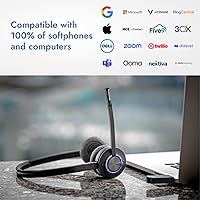
  • Platform Support: Compatible with Microsoft Teams, Zoom, and most softphone VoIP platforms without requiring additional driver installation on most systems.
  • Control Method: Headset functions, including call management and volume, are operated via touch controls located directly on the headset unit.

Related Reviews
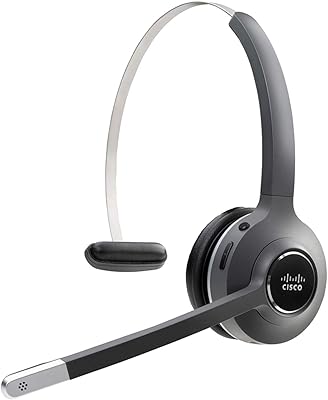
Cisco Headset 561 Wireless On-Ear DECT Headset
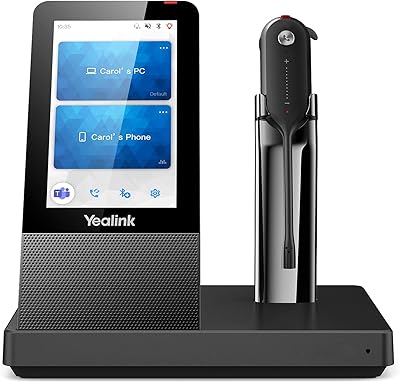
75%
91%
Wireless Range & Reliability
84%
Call Audio Clarity
93%
Cisco Ecosystem Integration
82%
Battery Life
67%
Comfort During Extended Wear
More
Yealink WH67 Wireless DECT Office Headset
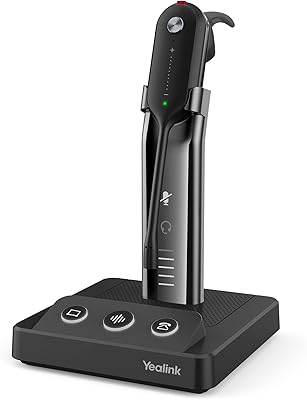
79%
91%
Call Audio Clarity
87%
Noise Cancellation
84%
Wireless Range
83%
Comfort & Wearability
81%
Multi-Device Connectivity
More
Poly CS540 Wireless DECT Headset
74%
84%
Call Audio Quality
91%
Microphone Performance
69%
Wireless Range
73%
Battery Life
71%
Wearing Comfort
More
Yealink WH63 DECT Wireless Office Headset
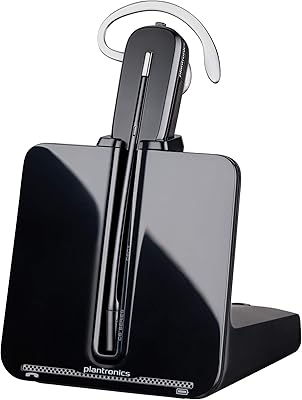
75%
88%
Call Audio Clarity
76%
Microphone Noise Cancellation
91%
Wireless Range & Reliability
69%
Battery Life
73%
Comfort & Wearing Styles
More
Yealink WH64 Hybrid Mono Wireless Headset
82%
88%
Call Audio Clarity
91%
Wireless Range (DECT)
93%
Battery Life
86%
Charging Speed
83%
Multi-Device Connectivity
More
Leitner LH570 Wireless DECT Office Headset
84%
93%
Wireless Range & Reliability
88%
Microphone Clarity
91%
Dual Connectivity (Phone + Computer)
86%
Wearing Comfort
79%
Audio Quality (Listening)
More
Plantronics Savi 8220 Wireless DECT Office Headset
81%
93%
Wireless Connectivity Stability
91%
Microphone Clarity
88%
Active Noise Cancellation
89%
Battery Life
84%
Multi-Device Switching
More
Yealink WH62 Dual UC DECT Wireless Headset
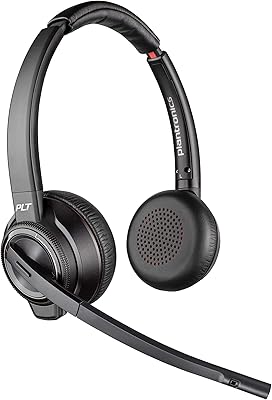
82%
92%
Wireless Range & Stability
88%
Call Audio Clarity
79%
Microphone Noise Cancellation
81%
Comfort & Wearability
87%
Battery Life
More
Dytole DY107
Dytole DY107
82%
93%
Battery Life
88%
Microphone Quality
74%
Comfort & Fit
91%
Sound Quality for Calls
86%
Connectivity & Range
More
Delton 95X Wireless Headset
77%
91%
Battery Life
68%
Microphone Quality
84%
Comfort & Fit
76%
Call Performance
71%
Connectivity & Pairing
More

FAQ

Yes, it connects via the included USB dongle and is compatible with Teams, Zoom, and most softphone VoIP platforms without any complicated driver installation. You plug the dongle into a USB port on your computer, power on the headset, and in most cases it is recognized immediately. A small number of users have reported needing to restart their computer once before it registers correctly, but that is not a typical experience.

No, and this is genuinely important to know before purchasing. The wireless connection depends entirely on the USB DECT dongle, which only works with computers, laptops, and tablets. There is no Bluetooth or mobile pairing capability, so cell phone calls are not supported under any configuration.

The Leitner LH475 Wireless DECT Computer Headset uses a dedicated radio frequency that does not share spectrum with Wi-Fi routers, other Bluetooth devices, or neighboring wireless gadgets in a busy office. That separation translates to more consistent call stability, far less interference, and a wireless range that realistically reaches up to 350 feet — a distance no Bluetooth headset can reliably sustain in a dense office environment. If you have ever had a Bluetooth headset cut in and out during an important call, DECT directly addresses that frustration.

For most professionals with moderate call schedules — a few hours of calls spread across the day with breaks in between — yes, it will typically be sufficient. However, if your role puts you on back-to-back calls for 7 or 8 hours straight, you will need to factor in a mid-day charging break. Since charging is done by cable rather than a docking cradle, it helps to develop a habit of plugging in during lunch or any longer meeting-free stretch.

No, a charging cradle is not included, and at this price point that is a real trade-off that buyers should factor in. Charging is handled via the included USB-C cable plugged directly into the headset. If a dedicated docking base is important to your setup or you prefer simply placing the headset down to charge, you would need to look at higher-tier models in Leitner's lineup that include that feature.

Setup is straightforward for the vast majority of users. Plug the DECT dongle into a USB port, power on the headset, and the two pair automatically — no manual pairing codes, companion apps, or driver downloads are typically required. The USB-A to USB-C converter in the box means you do not need a separate adapter if your laptop only has USB-C ports.

Yes, the headset is designed to convert between single-ear and dual-ear wearing styles. Single-ear mode is practical when you need to stay aware of what is happening around you, while dual-ear is better for blocking out distractions during focused, longer calls. The conversion does not require any tools or complex adjustment.

The microphone handles consistent, steady background noise well — think air conditioning, keyboard sounds, or general ambient office murmur. What it cannot fully eliminate is chaotic, close-range noise like a loud conversation happening right next to you or a barking dog nearby. In a typical remote work or professional office setting, though, callers consistently report hearing you without issue, which is the practical benchmark that matters most.

The FocusLight is an LED ring on the headset that glows to show others that you are on an active call or that your microphone is muted. The practical value is that a colleague, partner, or family member can see at a glance that you are unavailable without interrupting you. For shared offices or home environments where you cannot close a door, it is a genuinely useful signal rather than a novelty.

Leitner positions it as a replacement warranty, meaning they will replace the unit rather than send it in for repair. Coverage is handled through Leitner's US-based support team, which buyers consistently describe as responsive and accessible. That said, it is always worth confirming current warranty terms directly with the brand at the time of purchase, as policies can be updated.