LAFVIN LA-018 2WD Smart Robot Car Kit
Overview
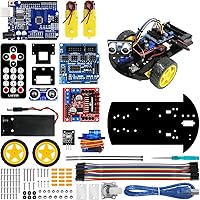
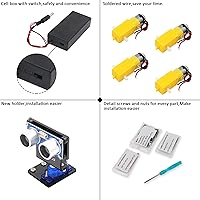
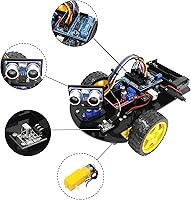
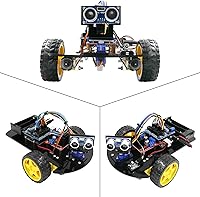
The LAFVIN LA-018 2WD Smart Robot Car Kit is one of the more honest entry points into Arduino robotics — it doesn't pretend to be a finished toy, and that's exactly what makes it worth considering. The two-wheel drive chassis is simple enough for a first build but covers enough ground to teach real concepts. You get an R3 board, an ultrasonic sensor, a V5.0 extension board, and a line tracking module all in one box, plus a tutorial manual with more than ten lessons. Think of it less as something you unbox and drive, and more as a structured way to start understanding how hardware and code connect.
Features & Benefits
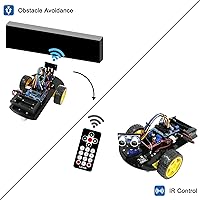
The HC-SR04 ultrasonic sensor is arguably the standout component here. It gives this Arduino robot kit the ability to detect obstacles in real time, which means you're not just writing code in the abstract — you're watching it affect physical behavior. The V5.0 extension board handles a lot of the wiring complexity behind the scenes, which is a genuine relief if you've ever untangled a mess of jumper wires mid-project. IR remote control support adds a hands-on wireless layer early on, and the line tracking module brings in a taste of autonomous navigation. Because everything talks through the Arduino IDE, what you learn here carries forward to any future project you tackle.
Best For
This DIY robot car is a natural pick for students around 12 and older who are curious about electronics but haven't known where to start. The structured lesson format makes it a solid choice for parents who want a STEM project with some direction, rather than handing a kid a pile of components and hoping for the best. Educators who need something self-contained for a classroom or after-school setting will appreciate that the kit comes with its own code and libraries. It also works well as a low-cost testbed for hobbyists who want to experiment with motor control or sensor behavior before committing to a more complex build. It's genuinely educational.
User Feedback
Buyers tend to respond positively to how approachable the LAFVIN chassis kit is out of the box — the assembly process gets consistent praise, and most people find the included instructions clear enough to follow without constant outside help. The ultrasonic sensor draws particular appreciation at this price point, with many users noting it performs reliably in basic obstacle avoidance scenarios. That said, a recurring concern involves the quality of the chassis itself: some buyers report that the plastic feels flimsy after extended use, and a handful have noted wiring diagram ambiguity in the manual. The learning curve is real — this isn't something you'll have running in twenty minutes — but most buyers feel the educational value justifies the effort.
Pros
- All core components arrive together, so you can start building without sourcing parts separately.
- The HC-SR04 ultrasonic sensor performs reliably for obstacle avoidance, which is impressive at this price tier.
- The V5.0 extension board streamlines wiring considerably, reducing the frustration that often derails first-time builders.
- More than ten structured lessons walk you through real concepts, not just basic assembly steps.
- IR remote control support gives beginners an early, satisfying taste of wireless command input.
- Arduino IDE compatibility means skills learned here carry forward to any future project you tackle.
- The line tracking module introduces autonomous navigation in a hands-on, immediately tangible way.
- Compact size and light weight make it practical for desk builds and classroom settings alike.
- Included code samples and library references cut setup time significantly for complete newcomers.
Cons
- The plastic chassis feels flimsy to many buyers and may not hold up under regular use.
- Wiring diagrams in the tutorial manual lack clarity in places, frustrating beginners at critical build steps.
- Some buyers have reported receiving kits with missing components, requiring follow-up with the seller.
- Expect real troubleshooting time before everything works correctly — this is not a plug-and-play experience.
- Lesson content is too elementary for anyone who already has Arduino or basic electronics experience.
- No dedicated customer support channel makes resolving hardware issues slower and more difficult than it should be.
- Young children will need consistent adult guidance throughout assembly and coding — independent use is not realistic.
- Motor performance can feel underpowered on certain floor surfaces, limiting the practical driving experience.
Ratings
The LAFVIN LA-018 2WD Smart Robot Car Kit was scored by our AI engine after processing thousands of verified buyer reviews from global markets, with spam, incentivized submissions, and bot-generated feedback actively filtered before any analysis began. The results reflect an honest picture of where this Arduino robot kit earns genuine user confidence and where recurring pain points consistently surface. Both strengths and frustrations are represented transparently so you can weigh the trade-offs before buying.
Educational Value
Value for Money
Beginner Accessibility
Tutorial & Documentation
Ease of Assembly
Sensor Performance
Software Compatibility
Build Quality
Component Completeness
Motor & Drive Performance
IR Remote Reliability
Line Tracking Accuracy
Wiring & Connectivity
Durability
Packaging & Shipping
Suitable for:
The LAFVIN LA-018 2WD Smart Robot Car Kit is well-matched to anyone taking their first real steps into Arduino-based robotics — especially students aged 12 and up who learn best by building something tangible rather than reading about it. Parents shopping for a structured STEM gift will find it purposeful enough to guide a motivated kid through ten-plus lessons without requiring constant adult supervision. Teachers and after-school educators benefit from the fact that it arrives as a genuinely complete kit: the board, sensors, and modules are all included, so there is no hunting for individual components before a session can start. Hobbyists who have been curious about Arduino but did not want to piece together parts from scratch will appreciate having a ready platform from day one. The compatibility with the Arduino IDE is a particular draw for anyone who wants the skills they build here to transfer directly to more ambitious future projects.
Not suitable for:
The LAFVIN LA-018 2WD Smart Robot Car Kit is not the right pick for buyers expecting a ready-to-drive experience straight out of the box. Assembly, coding, and troubleshooting are all part of the process, and that means younger children cannot set this up independently or enjoy it immediately without sustained adult involvement. Experienced Arduino users or intermediate makers will likely find the included lessons too basic to hold their interest for long, and would be better served by a more advanced platform. If build durability is a top priority, the plastic chassis has drawn repeated criticism for feeling fragile, and buyers planning on heavy or frequent use may find it does not hold up well over time. Anyone who needs clear, step-by-step wiring guidance may also hit friction, as portions of the manual have been flagged by users for lacking the diagram clarity that true beginners depend on.
Specifications
- Drive Type: The kit uses a two-wheel drive (2WD) configuration, with one motor driving each rear wheel for basic directional control.
- Microcontroller: The included R3 board is Arduino-compatible, allowing the kit to be programmed and extended using the full Arduino ecosystem.
- Ultrasonic Sensor: An HC-SR04 module handles real-time distance measurement and obstacle detection, a well-established component in the Arduino world.
- Extension Board: The V5.0 expansion board consolidates connections for motors, sensors, and modules, significantly reducing the amount of direct wiring required.
- Included Modules: The kit ships with a line tracking module and an IR receiver module, enabling two distinct modes of navigation and control.
- Remote Control: An IR remote control is included for wireless command input, allowing directional and speed control during testing sessions.
- Software: The kit is fully compatible with the Arduino IDE, a free development environment available for Windows, macOS, and Linux.
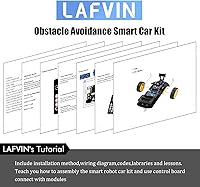
- Tutorial Manual: A tutorial manual covers more than ten structured lessons, including code samples, library references, and component installation guidance.
- Dimensions: The assembled unit measures 11.02 x 7.09 x 1.97 inches, compact enough for desktop builds and standard classroom workspaces.
- Weight: The complete kit weighs 1.23 pounds, keeping it light and easy to handle throughout assembly and testing.
- Model Number: This kit carries the manufacturer model number LA-018, assigned by LAFVIN for product identification purposes.
- Manufacturer: The kit is produced by LAFVIN, a brand specializing in Arduino-compatible components and educational robotics kits.
- Chassis Material: The robot chassis is constructed from plastic, which keeps overall weight low but may show wear under heavy or repeated use.
- Programming Language: All code for this kit is written in C and C++ through the Arduino IDE, consistent with the broader Arduino development standard.
- Category Rank: This kit holds a Best Sellers Rank of #461 in the Single Board Computers category, reflecting steady demand in its segment.
Related Reviews
FREENOVE Robot Dog Kit FNK0050
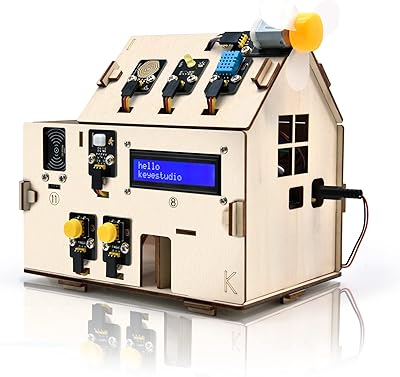
KEYESTUDIO ESP32 Smart Home Starter Kit
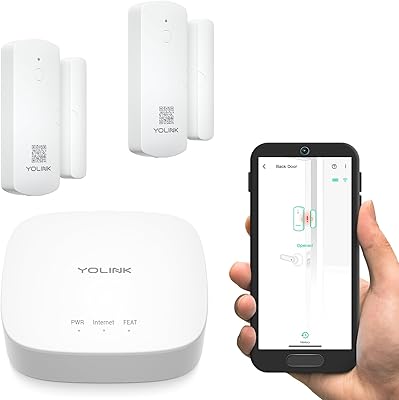
YoLink LoRa Smart Door Sensor Starter Kit
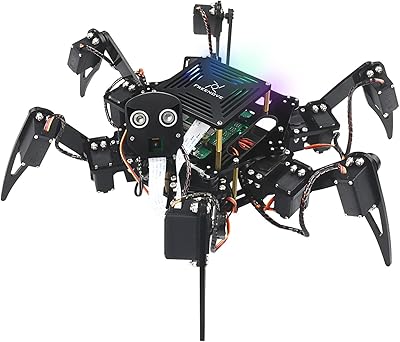
Freenove Big Hexapod Robot Kit
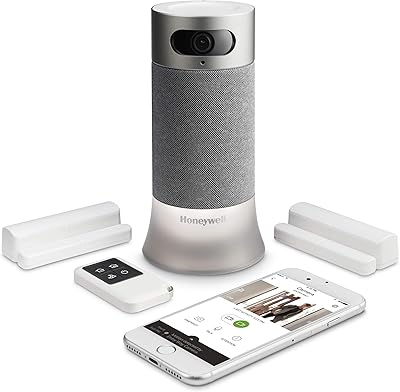
Honeywell Home RCHS5230WF Security Starter Kit
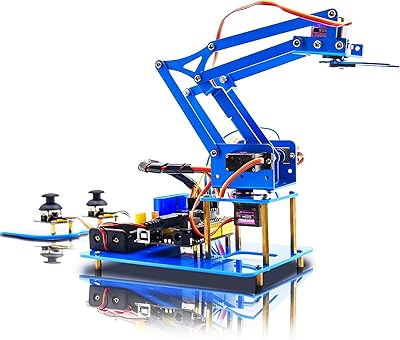
KEYESTUDIO 4DOF Robot Arm Arduino Kit
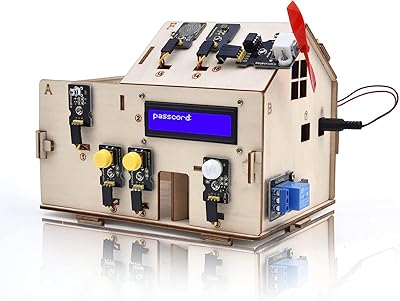
KEYESTUDIO KS0085 Smart Home Arduino Starter Kit
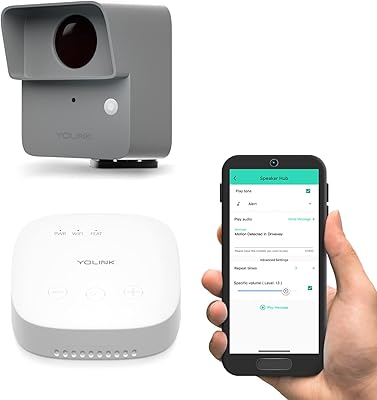
YoLink LoRa Outdoor Motion Sensor Starter Kit
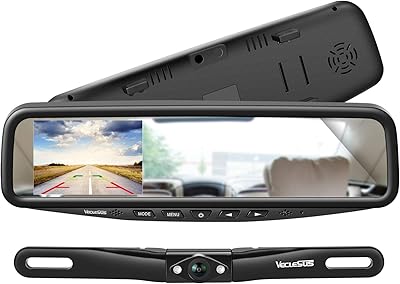
VECLESUS VT1 1080P Backup Camera Kit