Overview

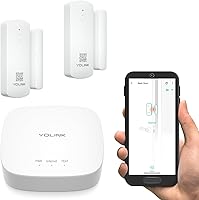
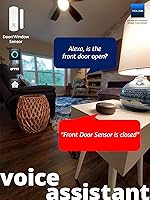
The YoLink LoRa Smart Door Sensor Starter Kit is one of the more practical entry points into long-range home security without a subscription — the box includes one hub, two door sensors, and batteries, so there is nothing extra to buy before you start. What separates it from typical Wi-Fi or Zigbee options is LoRa radio technology, which is designed for range rather than raw data speed. At its price point, it directly competes with systems that charge a monthly fee for basic monitoring. It also supports Alexa, IFTTT, and Home Assistant, making it easy to fold into a broader smart home setup.
Features & Benefits

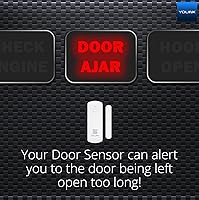
The standout here is range. LoRa radio reaches up to a quarter mile in open air — which, in practice with walls and trees in the way, still comfortably covers a detached garage or barn that sits well outside typical hub range. The door left-open reminder is more useful than it sounds: set your own time threshold and get an alert before the fridge has been quietly open for an hour. Battery life is rated up to five years on included AAA cells, and the offline device pairing is a genuine differentiator — two sensors can trigger a local siren even when your internet is down. Setup takes minutes via a quick QR scan.

Best For

This LoRa door sensor kit makes the most sense for homeowners with property that stretches beyond standard Wi-Fi coverage — think detached garages, outbuildings, or larger rural lots. It suits anyone tired of paying a recurring monitoring fee just to get basic alerts; self-monitoring is built in. Home Assistant and IFTTT users will appreciate the clean integration into existing automations. Families keeping watch over medicine cabinets or gun safes will find the instant alerts genuinely practical. Renters and small business owners benefit most from the tool-free adhesive mount, which leaves no holes and moves with you. If you need sensors on exterior gates, note that an outdoor-rated variant exists separately.

User Feedback

Buyers consistently praise the range reliability — especially those placing sensors on detached outbuildings — and most find the initial setup quick and uncomplicated. The app draws more mixed reactions: it works well enough for daily use but lacks the polish of competing platforms, and some advanced automations still require a cloud connection rather than running locally. Battery longevity holds up for most users, though a handful report faster drain in colder outdoor conditions. The more important caveat is hub dependency: without the hub online, you lose cloud-based alerts entirely, which catches some buyers off guard. A few owners simply add a second hub as a precaution. The included sensors are also rated for indoor use, so outdoor gate applications call for the outdoor-rated version.

Pros

  • LoRa radio reaches well beyond the range of typical Wi-Fi sensors, covering detached outbuildings with ease.
  • No monthly subscription required — self-monitoring works out of the box with no hidden ongoing costs.
  • The door left-open reminder is genuinely useful for fridges, side doors, and pool gates with a user-defined time threshold.
  • Up to 5-year battery life on standard AAA alkaline cells means minimal maintenance once installed.
  • Device-to-device pairing keeps local automations running even when the internet or power goes down.
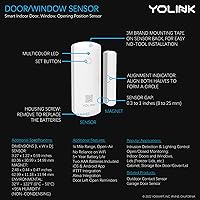
  • QR code setup and pre-applied 3M adhesive make installation a matter of minutes, with no tools needed.
  • The hub supports 300-plus YoLink devices, so the starter kit can grow into a full property-wide system.
  • Works with Alexa, IFTTT, and Home Assistant for users who want to weave sensors into broader automations.
  • Batteries are included and pre-installed, so the system is ready to configure straight out of the box.

Cons

  • The companion app lacks the polish of mainstream security platforms and can feel clunky for less tech-savvy users.
  • Advanced automations and cloud alerts require an active internet connection, reducing offline functionality.
  • The hub is a single point of failure — if it loses power or connectivity, remote notifications stop entirely.
  • Included sensors are rated for indoor use only; outdoor monitoring requires purchasing a separate product.
  • Real-world range drops noticeably in the presence of walls, trees, or metal structures versus the open-air spec.
  • The hub itself requires a wired power source, adding a setup consideration that sensor-only kits avoid.
  • Some users report faster-than-expected battery drain in colder environments, diverging from the rated estimate.
  • The ecosystem is proprietary, so expanding the system locks you further into the YoLink product line.

Ratings

Our AI rating system analyzed thousands of verified global purchases of the YoLink LoRa Smart Door Sensor Starter Kit, actively filtering out incentivized reviews, duplicate accounts, and bot-generated feedback to surface what real buyers actually experienced. The scores below reflect both the genuine strengths that keep this long-range sensor system consistently well-rated and the friction points that prevent it from being a universal recommendation. Nothing has been smoothed over — the wins and the frustrations are represented equally.

Wireless Range
93%
This is the single most praised aspect of the YoLink starter kit across all buyer segments. Owners covering detached garages, barns, and outbuildings report rock-solid connectivity at distances where every previous sensor they tried had simply dropped out. For rural properties and larger suburban lots, this range reliability is what makes the system worth buying at all.
The quarter-mile figure is strictly an open-air maximum, and real-world performance drops noticeably with concrete walls, metal structures, or multiple floors between sensor and hub. A handful of buyers in dense urban buildings or older brick construction report the range advantage shrinks more than expected, occasionally requiring hub repositioning.
Ease of Setup
88%
Getting the first sensor online is genuinely fast — scan the QR code, name the device, peel the adhesive backing, press it to the door frame. Most buyers describe the initial setup as taking under ten minutes total, which is well below average for a hub-based system. The pre-installed batteries remove one more friction point that often trips up unboxing experiences.
The ease drops off once you move beyond basic placement into configuring automations or integrating with Home Assistant. A portion of buyers found the app navigation confusing when setting up the door left-open reminder or pairing devices together for offline automation, and the in-app help documentation is thin in places.
Battery Life
79%
21%
For sensors placed on low-to-medium traffic doors — a side entrance, a medicine cabinet, a garage — the battery performance is genuinely impressive by smart sensor standards. Multiple long-term owners report going two to three years without a single battery change, which removes the nagging maintenance cycle that frustrates owners of competing systems.
The five-year claim draws skepticism from buyers using sensors on high-traffic doors or in colder climates, where real-world drain is measurably faster. A vocal subset of reviewers placed sensors in unheated garages through winter and saw battery levels drop at a pace more consistent with two years than five, making the headline figure feel optimistic for certain use cases.
Value for Money
84%
When buyers factor in the absence of a monthly subscription, the value calculation shifts significantly in this long-range sensor system's favor. Getting a hub, two sensors, and batteries ready to run for a one-time cost — with no recurring fees — compares favorably against subscription-dependent competitors where annual fees can exceed the hardware cost within two years.
The up-front cost requires buying into the YoLink hub ecosystem, which creates lock-in. Buyers who want to expand beyond two sensors quickly find the total system cost climbing, and the hub itself becomes a sunk cost that makes switching to another platform more painful than it initially appears.
App Experience
61%
39%
The app handles the core job — viewing sensor status, receiving push notifications, and setting the door left-open reminder — without significant issues for most users. Those who stick to straightforward monitoring find it functional enough to not get in the way, and the device status dashboard updates reliably under normal conditions.
Polish is the recurring complaint. Navigation logic feels inconsistent, and the UI lags behind what buyers expect after using Ring, Arlo, or even mid-tier competitors. Advanced features like device-to-device pairing configuration and alert scheduling require multiple non-obvious steps, and the app has drawn repeated criticism for not improving meaningfully despite the product's multi-year market presence.
Offline Reliability
86%
The device-to-device pairing capability is a genuine differentiator that earns real goodwill from buyers who have experienced internet outages. Pairing a door sensor directly to a siren means the local alert fires even when the router is down or the power flickers — a feature that competing Wi-Fi systems simply cannot match and one that matters most to users treating this as a security layer.
Offline capability only extends to paired device actions; you will not receive any phone notification while your internet is down, which limits its usefulness as a remote alert system during outages. Some buyers also note that initial pairing setup for offline mode is buried in the app and not clearly documented, so the feature goes unused by a portion of owners who would benefit from it.
Build Quality
74%
26%
The sensors feel appropriately solid for their price tier — not premium, but not cheap either. The magnet and sensor body align cleanly on standard door and window frames, and the housing tolerates the occasional bump or accidental knock without the casing cracking or the magnet losing calibration.
The plastic finish and overall construction feel noticeably utilitarian next to higher-end sensor brands, and the hub in particular looks dated. A subset of buyers who care about aesthetics note that the sensors are visible and not subtle, which matters in living spaces even if it is less of an issue in a garage or utility room.
Hub Dependency
58%
42%
For buyers who understood going in that this is a hub-based system, the hub functions reliably and the 300-plus device capacity makes it a worthwhile central investment. Those who add a second hub for redundancy report a noticeably more robust setup with no single point of failure in their monitoring chain.
The hub's role as a mandatory intermediary for cloud features catches a meaningful number of buyers off guard — product listings do not always make this clear. If the hub loses power or connectivity, all remote alerts stop, which is a significant limitation for buyers who intended this as a serious security layer rather than a convenience tool.
Sensor Versatility
77%
23%
Beyond doors, buyers have put these sensors to creative use on fridges and chest freezers, medicine cabinets, gun safes, and storage lockers — and the door left-open reminder proves especially practical in those contexts. The compact form factor fits on most cabinets and appliances without looking awkward or requiring any modification.
The indoor-only rating is a hard limit that frustrates buyers who did not read the specs carefully before purchasing. Anyone wanting to monitor an exterior gate, pool enclosure, or barn door in variable weather conditions must source a separate outdoor-rated model, which adds cost and complexity to what initially felt like a complete starter solution.
Smart Home Integration
81%
19%
Home Assistant support is the strongest integration point, and technically inclined buyers report clean, stable entity behavior that holds up through Home Assistant updates. IFTTT applets work reliably for straightforward conditional automations, and Alexa integration covers voice-based status checks and routine triggers without noticeable lag.
Google Home compatibility is absent, which is a dealbreaker for a portion of the smart home market. The depth of integration also varies by platform — IFTTT support is broad but shallow, and buyers wanting local API access or Matter compatibility will find the ecosystem more closed than they hoped.
Alert Customization
76%
24%
The configurable door left-open reminder stands out as a genuinely thoughtful feature — setting a custom threshold per sensor means the fridge sensor can alert at five minutes while the garage door alerts at thirty, all managed independently. Push notification delivery is timely and consistent under normal network conditions.
Alert customization beyond timing thresholds is limited within the native app. Buyers who want scheduled quiet hours, per-alert sound customization, or multi-contact notification routing often find themselves pushing everything through IFTTT to compensate, which adds complexity and introduces occasional automation delays.
Scalability
82%
18%
Starting with two sensors and a hub that supports over 300 devices gives this system a realistic long-term growth path. Buyers who began with the starter kit and gradually added water leak sensors, outlet monitors, and additional door sensors describe the expansion as straightforward, with new devices joining quickly through the same QR scan process.
Scalability comes with ecosystem lock-in, and YoLink's product line, while broad, is a proprietary island. Buyers who later want to consolidate under a platform like Zigbee2MQTT or Z-Wave will find their YoLink investment non-transferable, and the hub-per-building model can add up in cost for truly large properties.
Installation Experience
87%
The pre-applied 3M adhesive is a small but meaningful quality-of-life decision — there is no hunting for tape, no measuring, and no drilling. Renters and small business owners in particular appreciate that mounting is fully reversible, and the adhesive holds reliably on painted drywall, metal doors, and wood frames without leaving marks.
Adhesive mounting has limits: textured, porous, or dusty surfaces hold less reliably, and a few buyers in older homes with uneven or flaking paint reported sensors shifting or falling over time. Screw mounting is technically possible but requires sourcing your own hardware, which is an unnecessary friction point for something that should be covered in the documentation.

Suitable for:

The YoLink LoRa Smart Door Sensor Starter Kit is a strong fit for homeowners whose property extends beyond the reach of standard Wi-Fi — if you have a detached garage, a barn, a shed, or a back gate that sits 200 feet or more from your router, this long-range sensor system solves a problem most competing products simply cannot. It is equally well-suited to anyone who has grown tired of paying a monthly fee just to receive a basic open or closed alert, since self-monitoring is fully built in at no recurring cost. Home Assistant and IFTTT users will find the integration clean and practical for building real automations rather than just passive notifications. Families who want discreet alerts on medicine cabinets, liquor storage, or gun safes will appreciate how quickly sensors can be placed without tools or drilling. Renters and small business owners who need a portable, no-damage setup also get a lot of value from the pre-applied adhesive and the QR-based installation process.
Not suitable for:

Buyers expecting a fully polished, consumer-grade app experience comparable to Ring or SimpliSafe may find the YoLink LoRa Smart Door Sensor Starter Kit falls short — the platform is capable but has the feel of a product built for enthusiasts rather than first-time smart home users. The included sensors carry an indoor rating only, so anyone needing to monitor an exterior gate, a pool enclosure, or a metal outbuilding door exposed to weather will need to purchase the separate outdoor-rated variant. It is also worth noting that the hub is central to the entire system — lose power to it or lose your internet connection, and cloud-based alerts stop working, which is a real consideration for anyone treating this as a primary security layer. Those looking for professional monitoring, emergency dispatch integration, or a camera-based system will need to look elsewhere entirely. If you only need to monitor one interior door inside a standard apartment, this long-range sensor system is likely more infrastructure than the situation calls for.
Specifications

  • Sensor Technology: Both door sensors use LoRa (Long Range) radio communication, which prioritizes range and low power consumption over high data throughput.
  • Max Range: Rated up to 0.25 miles (approximately 1,320 feet) in open air between sensor and hub, with real-world range varying based on obstacles.
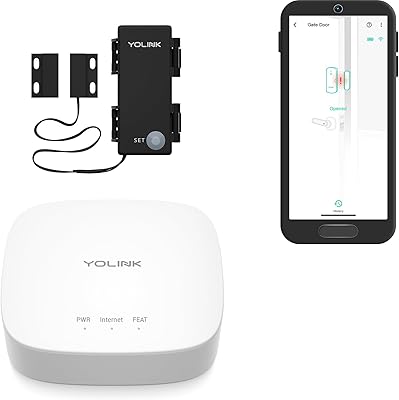
  • Kit Contents: The kit includes one YoLink hub, two indoor door and window sensors, and all required batteries pre-installed.
  • Battery Type: Sensors run on AAA alkaline batteries, included and pre-installed, with a manufacturer-rated life of up to 5 years under normal use.
  • Hub Power: The hub requires a wired power connection and is not battery-operated; sensors are fully battery-powered.
  • Dimensions: The hub measures 4.33 × 4.33 × 1.06 inches; individual sensor dimensions are compact enough for standard door and window frames.
  • Total Weight: The complete kit weighs 15 ounces including hub, two sensors, and batteries.
  • Mounting Method: Sensors ship with 3M brand adhesive tape pre-applied, enabling tool-free, no-drill installation on most smooth surfaces.
  • Setup Method: Each sensor is added to the system by scanning its QR code through the YoLink smartphone app, with no manual pairing codes required.
  • Compatible Platforms: The system integrates with Amazon Alexa, IFTTT, and Home Assistant for voice control and third-party automation workflows.
  • Hub Capacity: A single YoLink hub can support over 300 compatible YoLink devices across the full product line, including sirens, outlets, and temperature sensors.
  • Offline Capability: Two or more YoLink devices can be paired directly to each other, allowing local automated actions to continue even when the internet or power is unavailable.
  • Sensor Application: The included sensors are rated for indoor use on doors, windows, cabinets, fridges, freezers, and other lidded enclosures.
  • Control Method: Devices are controlled and monitored via the YoLink smartphone app; select integrations also support remote and voice control.
  • Alert Type: The system supports open and closed state alerts, plus a configurable door left-open reminder triggered after a user-defined duration.
  • Cloud Supervision: The hub continuously monitors all connected devices for online presence, signal strength, and battery level via a 24/7 cloud server.
  • Part Numbers: The kit combines model numbers YS1603-UC (hub) and YS7704-UC (door sensor), with two sensor units included per kit.
  • First Available: This product was first listed on Amazon in September 2019, indicating an established product with multiple years of real-world user feedback available.

Related Reviews

YoLink LoRa Outdoor Motion Sensor Starter Kit
75%
93%
Wireless Range
88%
Ease of Setup
67%
App Reliability
62%
False Trigger Rate
79%
Battery Life
More
YoLink LoRa Smart Outdoor Contact Sensor & Hub Starter Kit
83%
93%
Battery Life
91%
Ease of Installation
89%
Range & Connectivity
87%
Smart Home Integration
88%
Value for Money
More
YoLink YS7201 LoRa Vibration Sensor
72%
91%
Wireless Range
88%
Value for Money
83%
Setup & Installation
79%
App & Notifications
76%
Detection Reliability
More
Tapo T31 KIT Smart Door Sensor Kit
78%
91%
Ease of Setup
88%
Notification Reliability
86%
Battery Life
63%
Hub Dependency
84%
Value for Money
More
KEYESTUDIO ESP32 Smart Home Starter Kit
76%
83%
Beginner Accessibility
61%
Content Depth & Longevity
72%
Documentation Quality
78%
Component Quality
81%
Assembly Experience
More
Honeywell Home Smart Home Security Starter Kit
81%
92%
Ease of Setup
89%
Alexa Integration
85%
Video Quality
78%
App Functionality
88%
Motion Detection
More
KEYESTUDIO KS0085 Smart Home Arduino Starter Kit
75%
83%
Build Quality
58%
Instruction Clarity
88%
Sensor Variety
62%
Bluetooth App
91%
Educational Value
More
Actpe Wireless Motion Sensor Driveway Chime
69%
93%
Ease of Setup
88%
Value for Money
76%
Detection Reliability
81%
Wireless Range
61%
Battery Life
More
S&Z TOPHAND 48in x 80in MDF Barn Door with 8FT Sliding Door Hardware Kit
85%
85%
Assembly Ease
90%
Durability
70%
Weight/Installation
92%
Waterproof Surface
88%
Design & Aesthetics
More
Acure Brightening Starter Kit
85%
88%
Effectiveness in Brightening
91%
Gentleness on Sensitive Skin
84%
Texture and Feel
86%
Absorption and Finish
75%
Fragrance
More

FAQ

No, there is no subscription required. Basic open and closed alerts, door left-open reminders, and app notifications are all included at no recurring cost. You self-monitor, which is exactly the point for a lot of buyers who are tired of paying for simple alerts.

In most cases, yes — 150 feet is well within practical range for this long-range sensor system, even accounting for walls. The quarter-mile figure is an open-air maximum, so real-world range will be shorter with obstructions, but the LoRa radio is meaningfully stronger than Wi-Fi-based sensors. Most users report solid connectivity at distances where standard smart home sensors fail entirely.

Any devices you have paired together using the device-to-device pairing feature will continue to operate locally without an internet connection. For example, a door sensor paired to a siren will still trigger the siren even if your router is offline. However, cloud-based push notifications to your phone will not work until connectivity is restored.

The hub is required for full functionality, including app control, push notifications, and cloud supervision. Sensors can trigger other YoLink devices locally through direct device-to-device pairing without the hub, but you will not receive phone alerts or app access without it. This is an important detail that catches some buyers off guard.

The sensors included in the YoLink LoRa Smart Door Sensor Starter Kit are rated for indoor use only. YoLink does offer a separate outdoor-rated sensor designed for gates, pool enclosures, and weathered environments, but that is a different product and sold separately. Using the indoor sensors in direct exposure to rain or extreme temperatures is not recommended.
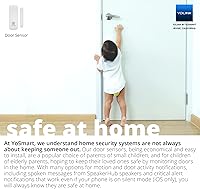
Setup is genuinely straightforward — you download the app, scan the QR code on each sensor, give it a name, and peel the backing off the pre-applied adhesive. Most people have it running in under ten minutes. The app itself has a learning curve for advanced features, but getting basic door alerts working is simple enough for most users.

YoLink has an official Home Assistant integration available through HACS (Home Assistant Community Store) and as a native integration in recent Home Assistant versions. Once connected, your sensors appear as standard entities you can use in automations, dashboards, and scripts just like any other device. It is one of the more reliable third-party integrations this long-range sensor system offers.

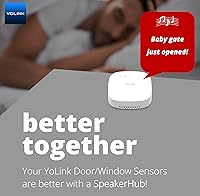
It is an alert that fires if a door or window stays open longer than a time threshold you define — you set it to whatever makes sense, whether that is two minutes for a fridge or thirty minutes for a side door. You configure it inside the app per sensor, and it can trigger a push notification, an Alexa announcement, or even a paired YoLink SpeakerHub playing a tone or message.

Yes, the hub included in the kit supports over 300 YoLink devices, so you can add more door sensors, motion sensors, sirens, water leak detectors, and other products from the YoLink lineup at any time. You simply scan the new device in the app and it joins the existing hub. For very large properties, you can also add a second hub to extend coverage.

For most indoor use cases with moderate activity, the battery life holds up well — a significant number of long-term owners report no battery changes after two or three years of use. That said, sensors in high-traffic locations or colder environments tend to drain faster than the rated estimate. The figure assumes average usage patterns, so your mileage will vary depending on how frequently the sensor triggers each day.

Where to Buy