KEYESTUDIO ESP32 Smart Home Starter Kit

Overview
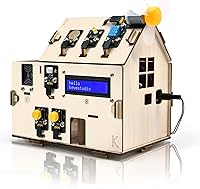
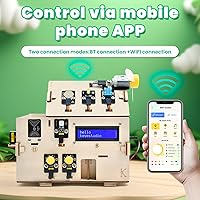
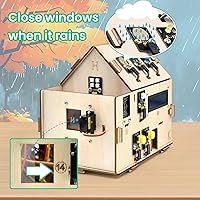
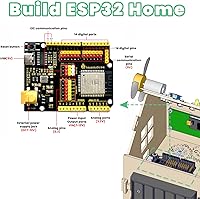
The KEYESTUDIO ESP32 Smart Home Starter Kit is one of the more thoughtfully designed entry points into IoT learning at this price point, and it stands apart from typical kits by giving you something physical to construct. Instead of wiring components to a bare breadboard, you assemble a wooden house model that holds real sensors and modules — which makes the whole experience feel like a project rather than a textbook exercise. Before ordering, set your expectations: the kit arrives completely unassembled, and you will need six AA batteries that are not included. The ESP32 microcontroller at its core supports both Wi-Fi and Bluetooth, which is what makes real smartphone control scenarios possible for a 15-and-up audience.
Features & Benefits
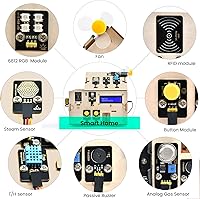
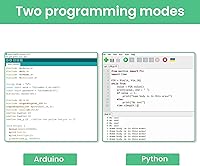
What sets this coding starter kit apart from similarly priced alternatives is its dual language support — you can code in C through the Arduino IDE or switch to MicroPython, which is an uncommon option at this tier. Across 13 structured projects, you will work with PIR motion sensors, a gas alarm circuit, temperature and humidity sensors, and a relay that lets your phone toggle a fan or light. The online tutorial system means documentation stays current, but it requires a stable internet connection — worth considering if you plan to work offline. FreeRTOS multitasking support lurks under the hood for anyone curious enough to push beyond the guided projects.
Best For
This home automation learning kit makes the most sense for first-time electronics learners — teens and adults with little or no background who want structured guidance rather than a blank canvas. If you are a parent or teacher shopping for a STEM gift that builds real skills, this fits naturally. It also works well for hobbyists who have touched basic Arduino projects and want to step into wireless and IoT territory. Where it falls short: experienced makers who already know ESP32 will blow through the projects quickly and may feel underwhelmed. You will need patience for the initial assembly and reliable internet access — both matter more here than the hardware specs suggest.
User Feedback
With a 4.0-star average across more than 100 ratings, this ESP32 smart home kit sits in honest, earned territory — good, but not without real complaints. Buyers consistently praise the organized component layout inside the box and the genuine satisfaction of assembling a working structure from scratch. The tutorial quality earns positive mentions too. On the downside, the web-only documentation is a friction point for anyone without steady internet, and the missing batteries catch buyers off guard at unboxing. A handful of intermediate users report running out of challenge after the first few projects. Customer support from KEYESTUDIO is generally described as reachable and helpful, which matters when you hit a wall mid-project.
Pros
- Supports both C and MicroPython, giving learners two real coding paths rather than locking them into one.
- The wooden house assembly makes the learning experience feel like a real project, not just a wiring exercise.
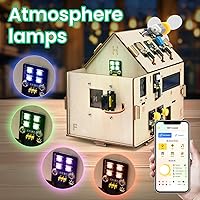
- Wi-Fi and Bluetooth connectivity allow genuine smartphone control, which keeps motivation high.
- Thirteen structured projects provide a clear progression that prevents beginners from getting lost.
- Component organization inside the box is consistently praised — nothing feels thrown in loose.
- FreeRTOS support gives curious learners room to explore multitasking concepts well beyond the basics.
- Online tutorials are regularly maintained and more current than printed manuals typically are.
- KEYESTUDIO customer support is generally responsive, which matters when troubleshooting mid-build.
- Covers practical real-world sensors — motion, gas, temperature, humidity — not just blinking LEDs.
- Compact package size makes it easy to store, gift-wrap, or bring to a classroom setting.
Cons
- Six AA batteries are required but not included — an easy oversight that delays your first session.
- All documentation is online only; no internet access means no instructions when you need them most.
- Intermediate users tend to outgrow the guided projects quickly, leaving little room for long-term exploration.
- The unassembled format can frustrate buyers who expected a ready-to-use kit out of the box.
- No paper manual is included, which can be a dealbreaker for learners who prefer offline reference materials.
- The 13 projects, while solid, do not cover advanced IoT concepts like cloud integration or MQTT protocols.
- Younger teens may need adult assistance during the initial assembly and code-uploading steps.
- Component labels and tutorial language occasionally assume familiarity with basic electronics terms.
- No batteries and no pre-loaded code means the first-use experience requires more setup than rivals at this tier.
Ratings
The KEYESTUDIO ESP32 Smart Home Starter Kit earned an overall 4.0-star consensus across 114 verified ratings, and our AI-driven scoring system has analyzed that feedback — actively filtering out incentivized reviews and bot patterns — to surface what real buyers actually experienced. The scores below reflect both what this coding starter kit genuinely gets right and where it leaves users wanting more, so you can make an informed call before spending your money.
Beginner Accessibility
Content Depth & Longevity
Documentation Quality
Component Quality
Assembly Experience
Wireless Functionality
Programming Language Support
Packaging & Organization
Value for Money
Customer Support
Setup Complexity
Build Durability
Sensor Variety & Realism
Onboarding Speed
Suitable for:
The KEYESTUDIO ESP32 Smart Home Starter Kit is a strong match for anyone who learns best by building something tangible rather than reading theory. Teens and adults with no prior electronics background will appreciate the structured, project-by-project progression — it removes the paralysis that comes with a blank ESP32 board and no direction. Parents shopping for a meaningful STEM gift will find this more engaging than a passive coding app, since the recipient ends up with a physical wooden model that actually responds to their phone. Self-taught hobbyists who have dabbled in basic Arduino but never worked with Wi-Fi or Bluetooth projects will also get genuine value here, as the wireless connectivity features push into territory that simpler kits never reach. Educators looking for a classroom or after-school demonstration tool will find the modular sensor components and bilingual coding support — both C and MicroPython — a practical curriculum asset.
Not suitable for:
Anyone expecting a plug-and-play experience should look elsewhere — the KEYESTUDIO ESP32 Smart Home Starter Kit arrives completely unassembled, requires six AA batteries you have to source yourself, and relies entirely on online tutorials rather than any printed manual. If your internet access is unreliable, that documentation dependency becomes a genuine obstacle rather than a minor inconvenience. Experienced makers or hobbyists who already have ESP32 projects under their belt will likely exhaust the 13 guided projects faster than expected and feel the kit lacks depth for continued exploration. Younger children under 15 are not the intended audience; the assembly steps and coding concepts assume a level of patience and reading comprehension that typically comes later. Finally, buyers who prefer open-ended experimentation over guided exercises may find the structured format more constraining than freeing.
Specifications
- Brand: Manufactured by KEYESTUDIO, a brand operated by Shenzhen Keyestudio Technology Co., Ltd., also marketed under the Keyes name.
- Model Number: This kit is identified by model series KS5009, with the specific variant designated KS5009-2.
- Microcontroller: Powered by an ESP32 chip designed by Espressif Systems, supporting dual-core processing with integrated Wi-Fi and Bluetooth radios.
- Connectivity: Includes onboard Wi-Fi and Bluetooth, enabling wireless communication between the kit and smartphones or other networked devices.
- Operating System: Runs FreeRTOS, a real-time operating system that supports multitasking and is widely used in embedded IoT devices.
- Languages: Compatible with C programming via the Arduino IDE and MicroPython, giving learners two distinct and industry-relevant coding paths.
- Guided Projects: Includes 13 structured projects covering sensors, alarms, wireless control, and environmental monitoring, progressing from simple to more complex scenarios.
- Form Factor: Components are designed to mount inside a laser-cut wooden house enclosure that the user assembles from scratch.
- Dimensions: The packaged kit measures 11.1 x 8.27 x 2.52 inches, making it compact enough to store on a standard shelf.
- Weight: The complete package weighs approximately 2.2 pounds, including all electronic components and the wooden housing pieces.
- Power Source: Requires 6 AA batteries for operation; batteries are not included in the package and must be purchased separately.
- Documentation: All assembly guides and coding tutorials are provided exclusively online — no printed manual is included in the box.
- Target Audience: Designed for learners aged 15 and up, including teens, adults, and educators with beginner-to-intermediate electronics experience.
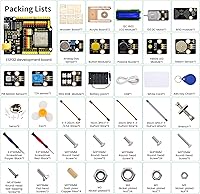
- Included Sensors: The kit includes a PIR motion sensor, gas sensor, temperature and humidity sensor, LED modules, relay, and push buttons among its components.
- Assembly Status: The kit ships fully unassembled and with no code pre-loaded; users must assemble the hardware and upload all code themselves.
- RAM Type: The board uses LPDDR RAM, consistent with the ESP32 module specification for low-power embedded applications.
- Processor Brand: The processing unit is manufactured by Espressif Systems, the company behind the widely adopted ESP32 and ESP8266 chipset families.
- Seller Rank: Holds a Best Sellers Rank of #377 in the Single Board Computers category on Amazon at the time of this review.
- User Rating: Carries an average rating of 4.0 out of 5 stars based on 114 customer ratings on Amazon.
- First Available: This product was first listed for sale on Amazon in July 2022, giving it a multi-year track record of buyer feedback.
Related Reviews
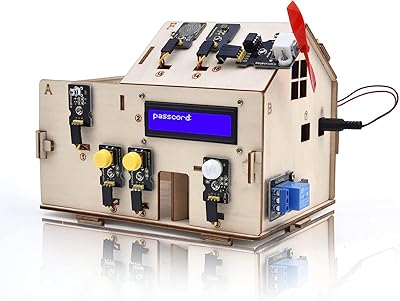
KEYESTUDIO KS0085 Smart Home Arduino Starter Kit
Honeywell Home RCHS5230WF Security Starter Kit
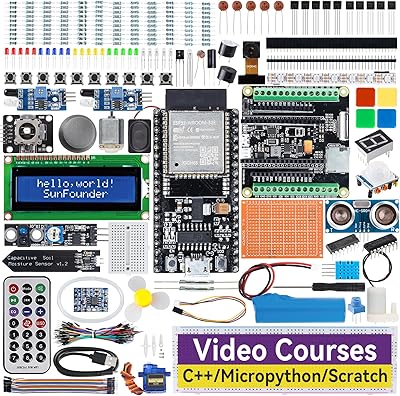
SunFounder ESP32 Ultimate Starter Kit
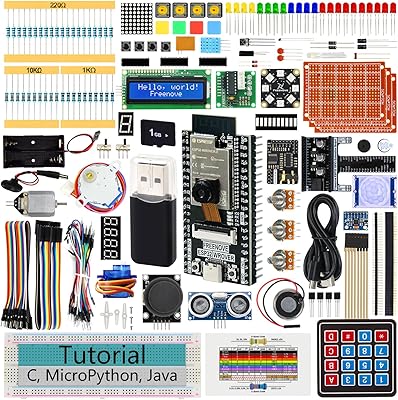
Freenove ESP32-WROVER CAM Board Ultimate Starter Kit (FNK0047B)
YoLink LoRa Smart Door Sensor Starter Kit
KEYESTUDIO 4DOF Robot Arm Arduino Kit
YoLink LoRa Outdoor Motion Sensor Starter Kit
YoLink Outdoor Contact Sensor Hub Starter Kit

Acure Brightening Starter Kit Skincare Set