Overview

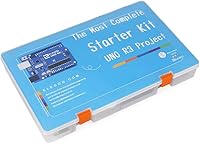
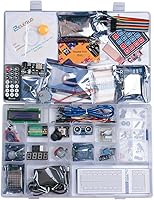
The ELEGOO UNO R3 Most Complete Starter Kit (200+ Components) has quietly held its ground as one of the best-selling Arduino bundles since its 2016 launch — and for good reason. Where most entry-level kits hand you a board and a handful of LEDs, this learning bundle throws over 200 components across 63 distinct types into a compartmentalized carrying case that actually keeps things organized. The UNO R3 board is a clone, not official Arduino hardware, but it's fully compatible with the Arduino IDE and works with both UNO R3 and R4 projects. Just go in with clear eyes: this is a structured learning platform for beginners, not a tool for seasoned engineers.
Features & Benefits

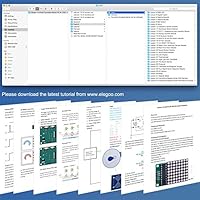
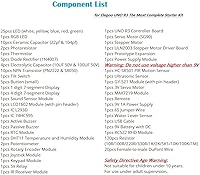
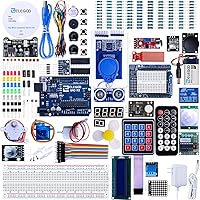
What makes this Arduino starter kit stand out is how genuinely self-contained it is. The included PDF tutorial walks through more than 30 lessons, with all project code provided — so you are not hunting GitHub for examples on day one. All the sensor and display modules arrive pre-soldered, which is a real time-saver. The component range is impressive: you get multiple motor types including a stepper with its driver board, communication modules like an RFID reader and a PIR motion sensor, LCD and seven-segment displays, and a power supply module built right in. A USB cable, 9V battery connector, and wall adapter round it out. You open the box and start building.

Best For

This learning bundle is a natural fit for first-time Arduino learners — students, curious adults, or parents looking to introduce kids to physical computing with a structured curriculum rather than a loose bag of parts. If you've been meaning to get back into electronics after years away, the lesson-based format makes reentry far less intimidating. Makers who want to prototype diverse ideas — think RFID door locks, motion-triggered alerts, or motor-driven mechanisms — will appreciate not needing a separate parts order to get started. It's also a solid companion to popular online Arduino courses, giving you real hardware to follow along with rather than just watching videos. Not ideal for advanced developers; that's simply not what it's designed for.

User Feedback

Buyers consistently point to component variety and value as the standout strengths, and it's hard to argue with that consensus given what's packed into the case. The tutorial gets particular praise from self-taught beginners, though a few users flag occasional translation quirks in the instructions and the fact that code arrives on a CD — a format that feels out of place today. A small number of reviewers report a DOA component or two; with 200+ parts that's statistically unsurprising, and most find replacements cheap and easy to order. ELEGOO's customer support is generally cited as responsive when issues do arise. The overall verdict across thousands of ratings lands firmly positive, making it a frequent recommendation in hobbyist communities.

Pros

  • Over 200 components across 63 types means you can explore motors, sensors, displays, and communication modules without separate orders.
  • The structured 30-plus lesson PDF tutorial with pre-written code removes the steepest part of the Arduino learning curve.
  • All sensor and display modules arrive pre-soldered, so beginners focus on wiring and logic rather than soldering iron technique.
  • The compartmentalized hard case keeps components organized across multiple sessions — a practical advantage most rival kits skip entirely.
  • Full Arduino IDE compatibility means the ELEGOO kit works seamlessly with the vast ecosystem of online tutorials and community projects.
  • Rare module inclusions like an RFID reader, gyroscope, and PIR motion sensor expose beginners to real-world sensing applications early.
  • Three motor types in one bundle — including a stepper with driver board — give learners hands-on experience with different actuation methods.
  • Both a wall adapter and a 9V battery connector are included, so projects can run tethered or independently from day one.
  • ELEGOO's customer support reputation is broadly positive, providing a reasonable safety net when the occasional component arrives faulty.
  • The kit has remained a top-ten bestseller in its category since 2016, a track record that reflects consistent buyer satisfaction over time.

Cons

  • Code and lesson files ship on a CD, which is impractical for the many modern laptops that lack an optical drive.
  • Tutorial translations into English occasionally read awkwardly, creating confusion at critical steps for absolute beginners.
  • Most module types are included as single units, leaving no margin if a component fails mid-project and a replacement is not on hand.
  • The CH340 USB chip driver can require a manual installation step on some Windows systems, a frustrating surprise for first-time users.
  • Jumper wire quality is inconsistent — loose DuPont connectors can cause intermittent connections that are genuinely difficult to diagnose.
  • No Wi-Fi or Bluetooth modules are included, meaning IoT-oriented projects require additional purchases almost immediately after the basics are mastered.
  • Component quantities for passive parts like resistors are adequate for tutorials but thin for anyone running repeated or parallel experiments.
  • The LCD1602 display uses a direct pin header rather than an I2C backpack, consuming a disproportionate number of breadboard rows and wires.
  • The kit has a natural learning ceiling — motivated beginners will outgrow it within months and need a more capable board or expanded parts library.
  • A minority of buyers report one or two non-functional components on arrival, which is a genuine frustration even when replacements are cheap.

Ratings

The ELEGOO UNO R3 Most Complete Starter Kit (200+ Components) earns its reputation as a top-tier beginner bundle through consistent real-world performance across thousands of verified global purchases. The scores below were generated by AI after systematically analyzing authenticated buyer reviews worldwide, with active filtering applied to remove incentivized, bot-generated, and spam feedback. Both the genuine strengths that keep this learning bundle in hobbyist wishlists and the friction points that frustrate a vocal minority are reflected transparently in every category.
Component Variety
93%
Buyers repeatedly express surprise at the sheer range packed into a single box — motors, RFID modules, gyroscopes, displays, and a full passive component assortment. For hobbyists who want to jump between project types without placing multiple parts orders, this breadth is a genuine convenience that saves both time and money.
Having 63 component types sounds impressive until you realize some arrive in very limited quantities, meaning you can prototype a concept but may hit a wall if a component fails or your project needs more than one unit. A few niche users found certain modules too basic for intermediate-level builds.
Value for Money
91%
When buyers price out the components individually, the all-in-one cost of this Arduino starter kit consistently looks favorable. The inclusion of a power supply module, servo motors, an RFID reader, and a structured tutorial alongside the board makes the bundle feel well-priced for what a beginner actually needs to get started.
Some buyers who already own an Arduino board and partial component sets feel they are paying for redundancy. At its price point, expectations run high, and the occasional DOA component — even just one or two — stings more than it would in a cheaper kit.
Tutorial Quality
78%
22%
The PDF tutorial with 30-plus structured lessons is a genuine differentiator. Self-taught beginners consistently praise the logical progression from simple LED circuits up to more advanced modules like the gyroscope and RFID reader, and having all project code pre-written removes a major barrier for anyone who has never touched C++ before.
The tutorial has clear limitations: the English translation occasionally reads awkwardly, which can confuse absolute beginners at critical steps. The code and lesson files ship on a CD, which is increasingly impractical for laptops without optical drives, and a handful of lessons lack enough explanation to stand alone without supplementary online resources.
Board Quality & Compatibility
84%
The included UNO R3 controller board performs reliably for the vast majority of starter projects, and its full compatibility with the Arduino IDE means beginners can follow virtually any popular online tutorial without hardware headaches. It works with both UNO R3 and R4 project configurations, which adds flexibility.
Transparency matters here: this is a clone board, not genuine Arduino hardware. Most beginners will never notice the difference, but purists and educators in formal settings sometimes prefer official hardware for consistency and long-term support guarantees. Driver installation on certain Windows versions can require an extra manual step that trips up some users.
Packaging & Organization
88%
The compartmentalized hard case is one of those features that sounds minor until you have owned a kit that came in a flimsy bag. Buyers who work across multiple sessions genuinely appreciate being able to close the case and return to an organized workspace, with the bonus box for small parts like LEDs and resistors solving a real problem.
The case is reasonably sized but not infinitely expandable — once you start adding extra components you have sourced independently, the tidy organization quickly breaks down. A small number of buyers noted that the foam inserts or dividers shifted during shipping, arriving with parts loose in the box.
Ease of Setup
86%
Pre-soldered modules are a smart design choice for a beginner-focused kit. New learners can go from unboxing to their first blinking LED project in under an hour, and the USB connection to a computer for programming is plug-and-play on most systems. The breadboard-based wiring approach keeps early experiments non-destructive and forgiving.
The initial driver setup for the CH340 USB chip on the UNO R3 clone board can confuse Windows users who are not comfortable navigating device manager settings. The tutorial does address this, but the explanation is brief, and this step generates a disproportionate share of beginner frustration in forum discussions.
Component Quality
74%
26%
The majority of components function correctly straight out of the box, and active parts like the servo motors, RFID module, and DHT11 sensor tend to perform well for their intended tutorial purposes. For a learning context where absolute precision is less critical than functional results, the quality is broadly appropriate.
This is the category where the kit takes its most consistent criticism. A meaningful minority of buyers report one or two non-functional components on arrival — most commonly passive components like resistors or small modules. While individually cheap to replace, tracking down a single faulty part in a large kit can be a frustrating experience for a first-time hobbyist.
Sensor & Module Depth
89%
The ELEGOO kit punches above its weight class in sensor variety. The inclusion of a PIR motion sensor, ultrasonic distance sensor, gyroscope module, sound sensor, and water level sensor gives beginners exposure to real-world sensing applications that usually require separate purchases or a more expensive bundle.
Depth is limited by quantity — most modules are included as single units, so there is no margin for error if one fails. Advanced users who want to chain multiple sensors into a complex system will find the single-instance approach restrictive and will quickly outgrow what this learning bundle can practically support.
Motor & Actuator Inclusion
87%
Three motor types in one kit is genuinely rare at this price tier. The SG90 servo, the stepper motor paired with its ULN2003 driver board, and a smaller 3V servo give learners hands-on exposure to different actuation principles that map directly to real robotics and automation projects.
The motors are entry-level components, appropriate for learning but not for building anything that needs reliable torque or precision. The stepper motor in particular is better suited for understanding the concept than for driving an actual mechanism, and the servo horns and mounting hardware are not included, limiting immediate project possibilities.
Display & Output Options
85%
Having both a 16x2 LCD module and multiple seven-segment display options in the same kit lets beginners explore different output methods in a single learning session. The MAX7219 LED matrix driver adds a more visual and satisfying output experience that tends to keep learners engaged and motivated.
The LCD1602 module ships with a pin header rather than an I2C backpack, which means beginners use up a significant number of breadboard rows and jumper wires just for the display. This wiring complexity is manageable but adds cognitive load during early lessons when new learners are already absorbing a lot of new information.
Communication Module Range
82%
18%
The RC522 RFID module alone tends to surprise new buyers — it is a sophisticated inclusion that unlocks genuinely interesting access-control and identification projects. Paired with an IR receiver and a remote control, the kit covers both short-range wireless protocols that appear in countless practical applications.
Bluetooth and Wi-Fi connectivity are absent, which is a noticeable gap for learners who quickly aspire to IoT projects after completing the basics. Buyers who want to connect their Arduino builds to smartphones or the internet will need to purchase separate modules, which may feel like an unanticipated cost after investing in this bundle.
Power Supply Options
80%
20%
Including both a 9V wall adapter and a 9V battery connector means this Arduino starter kit can run tethered or independently, which matters when building projects that need to sit away from a desk. The dedicated power supply module with selectable 3.3V and 5V outputs adds flexibility that cheaper kits entirely omit.
The warning not to exceed 9V input is important but easy to overlook in the bundled documentation, and using the wrong power source is a common way beginners damage components. The wall adapter cable length is functional but short, which limits where you can physically set up your workspace during early experiments.
Jumper Wire & Breadboard Quality
71%
29%
The 65-piece jumper wire set covers most basic circuit layouts, and the full-size breadboard has solid contact retention that keeps connections stable through repeated prototyping sessions. Most buyers find the quantity adequate for working through the included lessons without running out of wires mid-project.
Jumper wire quality is a known weak point: the DuPont connectors on some units are loose enough to cause intermittent connections, which is particularly maddening when debugging a circuit. Several buyers have noted that replacing the bundled wires with a higher-quality third-party set immediately improved their troubleshooting experience.
Long-Term Learning Value
77%
23%
For a beginner who commits to working through the full lesson sequence, this learning bundle provides a meaningful foundation in embedded programming, circuit design, and sensor integration. The component variety means the kit stays useful well beyond the tutorial, supporting independent project ideas for months after purchase.
The kit does have a natural ceiling. Once learners complete the lessons and start tackling more ambitious projects, they will quickly find themselves needing additional components, shields, or a more powerful board like a Mega or an ESP32-based alternative. It is a strong starting point, not a long-term platform.

Suitable for:

The ELEGOO UNO R3 Most Complete Starter Kit (200+ Components) is purpose-built for anyone standing at the entry point of electronics and embedded programming — and it genuinely delivers on that promise. Students working through a school curriculum, self-taught hobbyists following YouTube channels, and curious adults who have always wanted to understand how circuits and microcontrollers work will all find a structured, low-friction path here. Parents looking for a meaningful STEM gift for a teenager will appreciate that the kit is guided and self-contained rather than a loose pile of unmarked parts. STEM educators who need a reliable, repeatable hands-on resource for classroom or workshop settings will find the lesson-based PDF tutorial a practical starting framework. If you already have some projects in mind — a motion-triggered alarm, an RFID access system, a small display-based gadget — this learning bundle gives you the physical components to prototype those ideas without placing a dozen separate orders first.
Not suitable for:

The ELEGOO UNO R3 Most Complete Starter Kit (200+ Components) was designed with beginners in mind, and that focus creates real limitations for anyone who has moved past the fundamentals. Intermediate or advanced makers who already own an Arduino-compatible board and a basic component library will find significant overlap and limited incremental value here. Engineers or developers who specifically require genuine Arduino-branded hardware — for institutional compliance, reproducible research, or formal education settings with strict equipment policies — should be aware that the included UNO R3 board is a clone, not official Arduino hardware. Anyone whose project ambitions already include Wi-Fi, Bluetooth, or cloud connectivity will hit a wall quickly, as the kit includes no wireless networking modules and has no upgrade path built in. Professionals evaluating tools for production prototyping or high-precision applications should look elsewhere entirely — this is a teaching platform, and its components are specified accordingly.
Specifications

  • Component Count: The kit includes more than 200 individual components spanning 63 distinct types, covering passive components, active modules, sensors, displays, and actuators.
  • Controller Board: The included board is an ATmega328P-based UNO R3 clone, fully compatible with the Arduino IDE and functional with both UNO R3 and UNO R4 project configurations.
  • Dimensions: The packaged kit measures 13.7 x 8.4 x 1.85 inches, sized to fit a standard shelf or desk storage space without difficulty.
  • Weight: The complete kit with case and all components weighs 2.15 pounds, making it portable enough to carry between a classroom and home workspace.
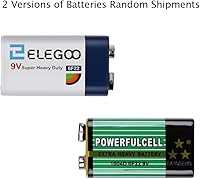
  • Power Options: Power delivery supports a bundled 9V 1A wall adapter and a 9V battery connector with DC jack; input voltage must not exceed 9V to avoid component damage.
  • Connectivity: The controller board connects to a host computer via USB, using a CH340 USB-to-serial chip that requires a driver installation on some Windows systems.
  • Tutorial Format: Learning materials are provided as a PDF with more than 30 structured lessons, with all project source code included on a CD and available for download from ELEGOO's website.
  • Motors Included: Three motor types are bundled: an SG90 servo, a 3V servo, and a stepper motor paired with a ULN2003 driver board for bipolar stepping experiments.
  • Display Modules: Display options include an LCD1602 module with pin header, a 1-digit 7-segment display, a 4-digit 7-segment display, and a MAX7219 LED matrix driver module.
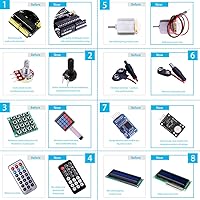
  • Communication Modules: Wireless and sensing communication is covered by an RC522 RFID reader, an HC-SR501 PIR motion sensor, a GY-521 gyroscope and accelerometer module, and an IR receiver with remote.
  • Storage Case: Components are housed in a compartmentalized hard plastic case with a dedicated bonus box for small loose parts such as LEDs, resistors, buttons, and ICs.
  • IDE Compatibility: The board and all included modules are tested for compatibility with the Arduino IDE, supporting standard C and C++ sketch programming used across the Arduino ecosystem.
  • Sensor Modules: Environmental and proximity sensing is represented by a DHT11 temperature and humidity sensor, an HC-SR04 ultrasonic distance sensor, a sound sensor module, and a water level sensor.
  • Resistor Assortment: The passive component set includes resistors in ten values ranging from 10 ohms to 1 megaohm, with quantities up to 30 units per value for common circuit needs.
  • First Available: The kit was first listed for sale in March 2016 and has maintained continuous availability since, reflecting long-term manufacturer commitment to the product line.
  • Bestseller Rank: The kit holds a top-10 ranking in the Single Board Computers category on Amazon, a position sustained across years of competitive market activity.
  • Prototype Support: A full-size breadboard, 65-piece jumper wire set, female-to-male DuPont wires, and a prototype expansion board are included to support circuit building and experimentation.
  • Additional Modules: Supplementary modules include a 5V relay, a rotary encoder, a keypad module, an RTC real-time clock module, a sound sensor, and a power supply module with selectable 3.3V and 5V output.

Related Reviews
Vilros Arduino Uno Starter Kit
82%
92%
Value for Money
88%
Ease of Use
90%
Component Quality
85%
Instruction Manual
82%
Learning Curve
More
Vilros Raspberry Pi 4 Starter Kit 8GB

82%
93%
Out-of-Box Readiness
88%
Value for Money
84%
Thermal Management
86%
Accessory Completeness
89%
Power Supply Quality
More
Acure Brightening Starter Kit
85%
88%
Effectiveness in Brightening
91%
Gentleness on Sensitive Skin
84%
Texture and Feel
86%
Absorption and Finish
75%
Fragrance
More
Arduino Starter Kit K000007
84%
91%
Component Quality
93%
Project Book Quality
92%
Beginner Accessibility
72%
Value for Money
74%
Scope & Depth of Projects
More
MakarttPro Acrylic Starter Kit for Beginners
86%
88%
Ease of Use for Beginners
91%
Precision and Control with Kolinsky Brush
85%
Self-Leveling Powder Performance
87%
Long-Lasting Nail Adhesion
82%
Application Time/ Drying Speed
More
VOFEL BB Glow Starter Kit
84%
89%
Effectiveness in Skin Brightening
87%
Hydration and Moisture Retention
92%
Ease of Use for At-Home Microneedling
78%
Pore Shrinking Results
84%
Anti-Aging Benefits Over Time
More
Gelish MINI Complete Basix Kit
87%
91%
Ease of Use
87%
Long-Lasting Results
90%
Effectiveness of Adhesion
92%
Convenience for At-Home Use
88%
Quality of Finish
More
Saie SaieGlow Starter Makeup Kit
90%
94%
Hydration & Skin Feel
88%
Glow & Radiance
91%
Ease of Application
97%
Vegan & Cruelty-Free Quality
89%
Buildability & Versatility
More
Narrative Cosmetics Starter Effects Kit
86%
88%
Ease of Use for Beginners
92%
Realism of Effects
74%
Scar Wax Application
90%
Versatility of Bruise Wheel
85%
Quality of Ingredients
More
SunFounder ESP32 Ultimate Starter Kit

80%
88%
Value for Money
91%
Tutorial & Documentation Quality
79%
Component Quality
63%
Ease of Setup
67%
Camera Module Performance
More

FAQ

No prior experience is needed. The included tutorial starts from absolute basics — how to connect an LED, how to read a sensor — and builds up gradually over 30-plus lessons. All the project code is provided, so you are not expected to write programs from scratch until you feel ready. Most complete beginners are up and running within an hour of unboxing.

It is not an official Arduino board — it is a clone based on the same ATmega328P chip and designed to be fully compatible with the Arduino IDE and the broader Arduino ecosystem. For learning purposes and hobby projects, the practical difference is negligible. That said, if your school, institution, or employer specifically requires genuine Arduino-branded hardware, this kit will not satisfy that requirement.

Yes. ELEGOO makes the tutorial PDF and all project code available for download directly from their website, so the CD is not your only option. Most experienced buyers recommend going straight to the download rather than dealing with the disc at all. Just search for the ELEGOO UNO R3 resources page or check the documentation that ships with the kit for the current download link.

First, double-check the wiring and the relevant tutorial step — a surprisingly large number of apparent failures turn out to be connection issues on the breadboard. If a component is genuinely faulty, ELEGOO's customer support is generally responsive and will often replace individual parts. Individual passive components like resistors and LEDs are also extremely cheap to source locally or online if you need a quick replacement.

It is one of the better-suited kits for exactly that purpose. The structured tutorial gives a teenager a clear starting point rather than an overwhelming pile of parts with no direction. That said, the tutorial does have some translation quirks in places, so pairing it with free online resources like the Arduino Project Hub or beginner YouTube channels is a good idea to fill any gaps.

Absolutely — this is one of the strongest use cases for this learning bundle. The component variety means you are unlikely to hit a hardware gap when following popular online courses. The board's full Arduino IDE compatibility ensures that any sketch or library referenced in a course will work without modification. Just keep in mind that some advanced courses may eventually call for shields or modules not included here.

The kit is largely self-contained for power. You get a 9V 1A wall adapter, a 9V battery with a DC connector, and a USB cable for board programming. For most of the tutorial projects, the USB connection to your computer provides all the power needed. The battery is mainly useful when you want a project to run independently away from a desk.

The hard plastic case holds up well to normal use — it is not a flimsy cardboard box. The compartment dividers keep most components separated reliably, and the bonus parts box is genuinely useful for the smaller loose items like LEDs and resistors. The one practical limitation is that once you start accumulating extra components beyond what shipped in the kit, the built-in organization starts to feel tight.

The Arduino IDE runs on Windows, macOS, and Linux, so the programming side is fully cross-platform. The CH340 USB chip driver is the one potential wrinkle — on macOS it may require a manual driver installation step, and on some Linux distributions you may need to configure serial port permissions. Neither issue is difficult to resolve, and the ELEGOO support forums have clear guides for both.

There is enough variety to support independent project work for several months beyond the tutorial. Modules like the RFID reader, gyroscope, and motor driver open up genuinely interesting builds that are not covered in the lessons. Eventually most motivated learners find they want more component quantities, additional sensors, or a more capable board — but that is a natural progression, not a flaw in the kit itself.