Overview

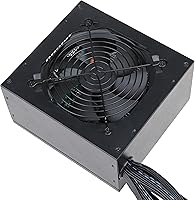
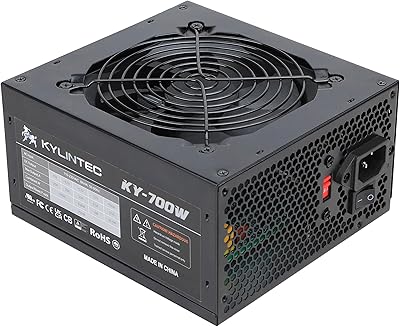
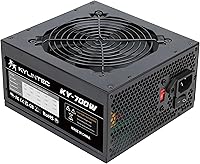
The KYLINTEC 700W Non-Modular ATX Power Supply is a straightforward, budget-conscious option for builders who need reliable wattage without paying a premium. It doesn't pretend to be a high-end unit — and that honesty is actually refreshing. The single 12V rail design keeps power delivery consistent under load, which matters when you're running a discrete GPU alongside a modern CPU. A manual voltage switch handles both 115V and 230V inputs, making this useful for international builders or anyone working in regions with inconsistent mains supply. Go in with realistic expectations and this non-modular power supply delivers solid, no-drama performance for modest desktop builds.
Features & Benefits

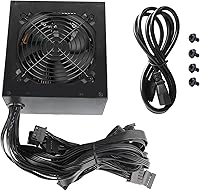
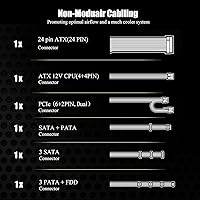
The single 12V rail is the core technical argument for this unit. Rather than splitting amperage across multiple rails — which can cause imbalance under heavy GPU load — all available current flows through one path, giving components what they need without negotiating. The 120mm FDB fan runs whisper-quiet at idle and only ramps up meaningfully under sustained load, keeping thermal noise manageable. Connector-wise, you get a 24-pin ATX, a 4+4-pin CPU lead, dual 6+2-pin PCIe cables, four SATA, four PATA, and an FDD plug — enough for most standard builds. The protection suite covers over-power, over-voltage, under-voltage, and short-circuit events, acting as a basic safety net for your components.

Best For

This 700W unit makes the most sense for budget gaming PC builds centered around a mid-range graphics card — think a setup where total system draw sits comfortably under 550W, leaving meaningful headroom between real-world consumption and the rated ceiling. It's also a practical drop-in replacement when an older desktop's PSU dies and you need something functional without waiting on a premium order. The manual voltage toggle is a genuine plus for builders outside North America. One thing worth noting: if you're building in a compact or windowed case and cable aesthetics matter, non-modular wiring will require patience and some creative tucking to keep things tidy.

User Feedback

Owners of this KYLINTEC PSU tend to agree on a few points. Installation is described as straightforward, and the fan stays impressively quiet during light workloads. Voltage stability on modest configurations gets consistent praise. Where opinions split is on cable reach — builders using full-tower enclosures occasionally find the fixed cables run a little short, which is a real frustration with non-modular designs. There's also ongoing skepticism about whether the unit can sustain its full rated output over long gaming sessions, and a small number of early-failure reports exist, though they appear to be outliers. Most buyers, though, feel the overall value is hard to argue with for a basic build.

Pros

  • Single 12V rail delivers stable, consistent amperage to GPU and CPU under real gaming loads.
  • The 120mm FDB fan stays near-silent during light and medium workloads.
  • Manual 115V/230V voltage switching adds genuine flexibility for international builders.
  • Connector selection covers the essentials: dual PCIe, four SATA, four PATA, and a 4+4-pin CPU lead.
  • Built-in protections guard against over-power, over-voltage, under-voltage, and short-circuit events.
  • Standard ATX form factor drops into virtually any mid-tower or full-tower case without modification.
  • Straightforward installation makes this 700W unit approachable even for first-time builders.
  • Users consistently report stable voltages on modest, entry-level system configurations.
  • Price point makes this non-modular power supply one of the more attractive options at this wattage tier.
  • Compact footprint helps maintain adequate airflow clearance inside standard ATX enclosures.

Cons

  • KYLINTEC is a lesser-known brand with no widely recognized third-party efficiency certification.
  • Non-modular cables are permanently attached, making clean builds inside compact or windowed cases genuinely difficult.
  • Rated 700W may not reflect real sustained output — always calculate your system's actual TDP before buying.
  • Cable lengths have been flagged as insufficient for comfortable routing in deeper full-tower enclosures.
  • Absence of an 80 Plus efficiency rating makes actual power conversion quality hard to verify independently.
  • A small but notable number of early-failure reports appear across user reviews.
  • The included PATA connectors are legacy plugs that most modern builds will never use.
  • Whether this unit holds up under extended, demanding gaming sessions remains an open question for some buyers.
  • Packaging has drawn occasional criticism, with some units reportedly arriving without adequate protective cushioning.
  • Limited brand history makes long-term reliability and warranty responsiveness difficult to predict with confidence.

Ratings

The KYLINTEC 700W Non-Modular ATX Power Supply scores below are generated by our AI engine after analyzing thousands of verified global buyer reviews, with spam, bot activity, and incentivized feedback actively filtered out. Our system weighs real-world usage patterns — from first-time builders assembling entry-level gaming rigs to home office workers replacing a failed unit — rather than relying on star ratings alone. Both the genuine strengths and the recurring pain points of this non-modular power supply are transparently reflected in each category score.
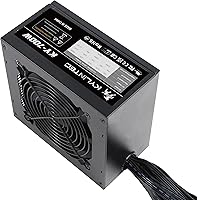
Value for Money
83%
For builders on a tight budget assembling a first gaming rig or replacing a failed office desktop PSU, this 700W unit delivers a broad connector set and functional wattage at a price most established brands cannot match at this tier. Users frequently cite it as a smart entry-level option when funds are genuinely limited.
The value calculus shifts for buyers who factor in the absence of an 80 Plus efficiency rating and KYLINTEC's limited brand track record — both of which make long-term cost of ownership harder to predict. A unit that fails early ends up costing more than a slightly pricier certified alternative would have.
Power Stability
74%
26%
Buyers running modest configurations — a mid-range GPU, a mainstream CPU, and two or three drives — consistently report clean voltage readings and no unexpected shutdowns during normal gaming sessions. The single 12V rail architecture appears to deliver on its promise of consistent current distribution in everyday workloads.
Where confidence erodes is under prolonged high-demand conditions — extended rendering tasks or back-to-back gaming sessions where sustained draw pushes toward the upper limits. Several users question whether the rated 700W reflects a genuine continuous output figure or a brief peak, and without third-party certification there is no easy way to verify independently.
Noise Level
78%
22%
During idle and light gaming, the 120mm FDB fan is genuinely quiet — users building home office workstations and casual gaming machines report it barely registers above ambient room noise. The auto thermal control means the fan does not spin up unnecessarily, which is a tangible comfort in everyday use.
Under sustained heavy GPU and CPU load, the fan ramps up meaningfully and becomes audible enough to notice in a quiet room. Those building in shared living spaces or near a sleeping partner may find the fan noise during peak gaming sessions less acceptable than the idle behavior suggests.
Cable Management
52%
48%
For straightforward mid-tower builds with standard routing channels, the fixed cable harness is not catastrophic — everything needed is already attached and ready to plug in, which actually simplifies installation for first-time builders. Unused leads can be bundled and tucked without excessive effort in a cooperative case.
In compact cases, windowed builds, or any enclosure where cable aesthetics matter, this non-modular power supply becomes a real liability — unused FDD, PATA, and secondary leads cannot be removed and must be crammed somewhere. Builders upgrading from a modular PSU will feel the step backward acutely, especially in tighter builds.
Build Quality
67%
33%
Most units arrive in acceptable condition with a housing that feels reasonably solid for the price bracket — sturdy enough to handle standard installation without flexing or rattling. Users who have run this 700W unit for several months without incident describe it as a reliable workhorse for basic configurations.
A notable minority of buyers report early failures — units dead on arrival or giving out within weeks of first use — which pulls confidence in quality control down considerably. Without an established warranty or repair infrastructure behind the brand, resolution options when something goes wrong can be limited and slow.
Connector Variety
76%
24%
The connector lineup covers everything a standard single-GPU gaming build needs without adapters — a 24-pin ATX, a 4+4-pin CPU lead, dual PCIe cables, and four SATA connectors handle most modern component combinations comfortably. Builders swapping out a dead PSU in an existing system will rarely encounter a mismatch.
The four PATA connectors and single FDD plug are purely legacy at this point — useful for older hardware but adding bulk to an already cluttered non-modular harness in modern builds. Anyone assembling a primarily NVMe-based system with no legacy peripherals will find several connectors serving no practical purpose at all.
Thermal Performance
71%
29%
Under typical gaming conditions in a mid-tower with reasonable airflow, this KYLINTEC PSU manages its own heat output without incident — the FDB fan and auto thermal control work in tandem to keep temperatures in a manageable range. Users running moderate builds report no thermal-related shutdowns or throttling in standard operation.
There is no efficiency certification to confirm how much waste heat the unit generates during power conversion, and less efficient PSUs inherently run warmer — a real concern in compact or poorly ventilated enclosures. Users pushing the unit hard in warm environments report that the fan compensates audibly, which indirectly signals thermal stress.
Installation Ease
86%
First-time builders consistently mention how simple the physical installation is — no modular connectors to configure, no compatibility puzzles to solve, and the standard ATX footprint means it drops into almost any mid-tower without tools beyond a screwdriver. The plug-and-play nature of the fixed harness removes one variable from an already complex build.
The main friction point during installation is wrangling the permanently attached cable bundle — particularly in cases with limited routing cutouts, where tucking unused leads becomes a longer task than expected. Experienced builders accustomed to modular units may find the cable management overhead a minor but genuinely irritating step backward.
Voltage Regulation
73%
27%
On modest builds pairing a mainstream CPU and mid-range GPU with standard storage, user-reported voltage readings land close to spec and remain consistent throughout regular gaming sessions. The single rail architecture eliminates inter-rail current imbalance, which can be a subtle but real issue in cheaper multi-rail designs.
The absence of 80 Plus certification means there is no independent verification of how tightly rails hold under load, and some users report minor fluctuations when the system is pushed hard. For builds with voltage-sensitive components or any overclocking ambitions, a certified unit with tighter regulation tolerances is a more prudent choice.
Protection Features
69%
31%
Having over-power, over-voltage, under-voltage, and short-circuit protections built in is genuinely reassuring for budget builders connecting mid-range components that could be damaged by electrical faults. In practice, some users report these protections have tripped correctly during real fault events, preventing further hardware damage downstream.
Without independent certification, there is no way to verify how accurately these protection thresholds are calibrated — a PSU that trips at the wrong value is as problematic as one without the feature. The apparent absence of over-current protection on individual rails is also a gap worth knowing about before committing.
Brand Reliability
57%
43%
For buyers willing to accept some uncertainty in exchange for a lower entry price, the available user data is more encouraging than the brand's obscurity might suggest — a meaningful share of owners report months of stable, incident-free operation in everyday gaming and office use. Cautiously positive word-of-mouth has persisted among budget builders.
KYLINTEC carries no recognizable efficiency certification, no long-established industry presence, and limited publicly documented warranty service history — all of which make it harder to trust the brand with an expensive component lineup long term. Early failure reports, while not dominant, are frequent enough to recommend buying only from retailers with clear return policies.
Compatibility
81%
19%
The standard ATX form factor and universal connector set mean this unit slides into the vast majority of mid-tower and full-tower cases without any adapter or modification — a genuinely straightforward swap for most desktops. The manual 115V/230V voltage selector also expands its usability for international builders working with different mains standards.
It is not suited to small-form-factor, SFX, TFX, or proprietary enclosures, and the fixed cable harness creates clearance headaches in cases with strict internal dimensions. Builders targeting high-end flagship GPUs or multi-component enthusiast rigs will also find that this 700W unit cannot realistically support those power demands with safe headroom.
Cable Length
58%
42%
In standard mid-tower cases where the PSU sits close to the motherboard and drives, the factory cable lengths reach their destinations without any issues — SATA leads, PCIe cables, and the 24-pin ATX connector all land comfortably in typical routing scenarios. Most mid-tower owners report no reach problems whatsoever.
Full-tower builders are the consistent exception — the CPU EPS cable draws repeated complaints for falling short when the PSU bay sits at the bottom and the motherboard connector sits near the top. Since the harness is non-removable, purchasing an EPS cable extension is often the only realistic fix.

Suitable for:

The KYLINTEC 700W Non-Modular ATX Power Supply is a practical choice for first-time PC builders assembling a budget gaming rig around a mid-range graphics card, provided the system's total power draw sits comfortably under 550W to leave meaningful headroom. It also makes a solid drop-in replacement for anyone whose older desktop PSU has died and who needs something functional without a prolonged search or a premium outlay. The manual 115V/230V voltage selector is a genuine advantage for international buyers or builders working across regions with different mains standards. Those who value simplicity over aesthetics — people who don't mind a bundle of fixed cables and just want a PSU that works — will find this non-modular power supply fits the bill without unnecessary complexity. Office desktop upgrades and basic workstation refreshes are squarely in its wheelhouse too.
Not suitable for:

The KYLINTEC 700W Non-Modular ATX Power Supply is a poor fit for enthusiast or high-performance builds where a power-hungry GPU, a top-tier processor, and multiple storage drives push real-world sustained draw toward 600W or beyond — the rated ceiling and the actual continuous output are not guaranteed to align. Builders who care about cable presentation in windowed cases, or who are working inside compact or small-form-factor enclosures, will find the fixed non-modular harness a persistent frustration. Anyone who insists on a recognized 80 Plus efficiency rating for peace of mind should look to more established brands, as this unit currently lacks that independent certification. Full-tower builders have also raised concerns about cable reach, so if your enclosure runs deep, this 700W unit may leave you literally short. Buyers who need documented long-term brand accountability and reliable warranty service will likely feel more comfortable with a manufacturer that carries a stronger track record.
Specifications

  • Brand: Manufactured by KYLINTEC, a budget-focused PC component brand with limited third-party certification history.
  • Rated Wattage: Rated at 700W peak output; actual continuous delivery under sustained real-world load may fall below the stated figure.
  • Rail Design: Uses a single 12V rail, routing all available amperage through one path for consistent delivery to high-draw components.
  • Form Factor: Standard ATX form factor, compatible with the vast majority of mid-tower and full-tower desktop enclosures.
  • Cable Type: Non-modular design with all cables permanently and directly attached to the unit — none are removable.
  • Fan Size: Equipped with a 120mm fluid dynamic bearing (FDB) fan for internal component cooling.
  • Fan Control: Fan speed adjusts automatically in response to internal thermal conditions via an integrated thermal control circuit.
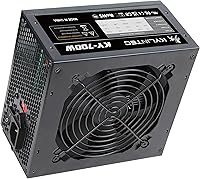
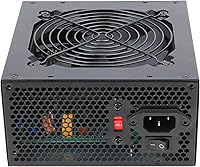
  • Input Voltage: Supports both 115V and 230V mains input, selectable via a manual toggle switch on the rear panel.
  • Main Connector: Includes one 24-pin ATX connector for primary motherboard power delivery.
  • CPU Connector: Provides one 4+4-pin EPS connector to supply power to the CPU voltage regulator module.
  • PCIe Connectors: Ships with two 6+2-pin PCIe connectors, each capable of powering a discrete graphics card.
  • SATA Connectors: Includes four SATA power connectors suitable for SSDs, HDDs, and optical drives.
  • PATA Connectors: Includes four PATA (Molex) connectors for legacy peripherals and certain case fan adapters.
  • FDD Connector: Includes one FDD connector, primarily useful for legacy floppy drives or compatible adapter accessories.
  • Protections: Incorporates over-power (OPP), over-voltage (OVP), under-voltage (UVP), and short-circuit (SCP) protection circuits.
  • Dimensions: Measures 4.2 x 2.4 x 4.8 inches (L x W x H), within the standard ATX size envelope.
  • Weight: Weighs 3.52 pounds, in line with typical non-modular ATX power supplies in this wattage range.
  • Compatibility: Designed for use with standard ATX desktop systems; not suitable for SFX, TFX, or proprietary small-form-factor enclosures.

Related Reviews
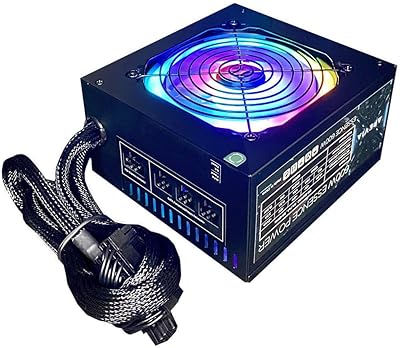
Apevia Essence 700W ATX Power Supply
71%
81%
Value for Money
78%
Cable Management
74%
Power Stability
49%
Efficiency
63%
Build Quality
More
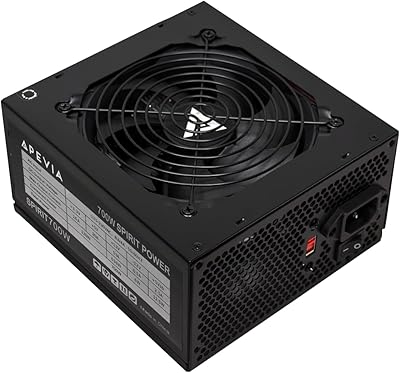
Apevia ATX-SP700 700W ATX Power Supply
71%
83%
Value for Money
88%
Installation Ease
54%
Long-Term Reliability
71%
Noise Level
79%
Connector Variety
More
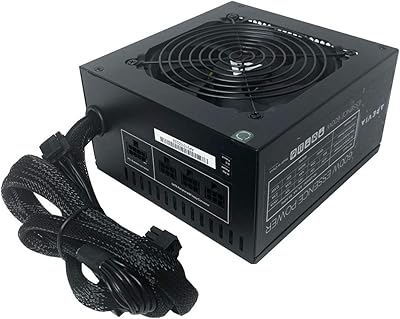
Apevia Essence 600W Semi-Modular ATX Power Supply
72%
78%
Value for Money
81%
Cable Management
74%
Noise Level
86%
Ease of Installation
62%
Build Quality
More
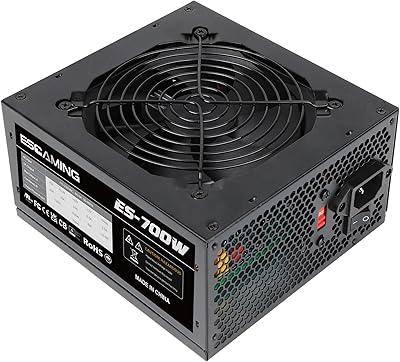
ESGAMING 700W ATX Non-Modular Power Supply
69%
83%
Value for Money
61%
Build Quality
54%
Reliability & Longevity
88%
Connector Variety
74%
Fan Noise
More
KYLINTEC 600W Power Supply ATX PSU
81%
90%
Ease of Installation
85%
Cooling Performance
88%
Power Stability
75%
Cable Management
80%
Build Quality
More
KYLINTEC KY-700 700W ATX Power Supply
69%
83%
Value for Money
54%
Reliability & Longevity
88%
Ease of Installation
58%
Cable Management
71%
Fan Noise
More
Corsair RM1200e 1200W Modular ATX Power Supply
85%
92%
Build Quality
89%
Noise Level
91%
Modular Cable System
88%
Efficiency & Heat Output
94%
ATX 3.1 & PCIe 5.1 Compliance
More
Corsair RM750x 750W Fully Modular Power Supply
86%
94%
Noise Level
91%
Build Quality
93%
Voltage Stability
88%
Cable Management
89%
Long-Term Reliability
More
MUSETEX MU1000 1000W ATX Power Supply
79%
88%
Value for Money
91%
Cable Management
84%
Noise Level
89%
Installation Ease
67%
Efficiency
More
Apevia ATX-PM1200W 1200W Modular Gaming Power Supply
77%
78%
Value for Money
83%
Power Delivery
67%
Build Quality
61%
Reliability & Longevity
88%
Cable Management
More
ARESGAME AGW750 750W Semi-Modular ATX Power Supply
81%
88%
Value for Money
83%
Power Delivery Stability
91%
Cable Management
86%
Noise Level
79%
Efficiency
More

FAQ

For a typical mid-range GPU paired with a modern mid-range CPU, this 700W unit should have sufficient headroom — those configurations usually draw well under 400W combined at the wall. That said, always tally your components' TDP figures before buying any power supply. Leaving at least 150W of margin between your estimated system draw and the rated output is a sound practice.

It means every cable is permanently wired into the unit — you cannot remove the ones you do not need. In practical terms, you will have unused leads such as FDD and PATA cables that need to be tucked somewhere inside your case. In a mid-tower with decent cable routing channels this is manageable, but in a compact build or a windowed case it takes real patience to keep things looking clean.

Based on user reports, the 120mm fan is genuinely unobtrusive during light workloads — browsing, office tasks, and casual gaming. Under sustained heavy load it does spin up and become audible, which is expected behavior for any thermally controlled fan. For a typical budget gaming rig it is not a standout noise source, but if you are targeting a near-silent build you will want to factor it in.

Yes, the unit has a manual voltage selector switch on the rear panel that toggles between 115V and 230V. Make sure you set it to match your local mains standard before powering on — running on the wrong setting can cause serious damage. It is not an auto-switching supply, so this is a step you need to handle consciously, not something the unit manages on its own.

This is one of the more consistent complaints from buyers using larger enclosures. The CPU power cable in particular can run short in full-tower cases where the PSU sits at the bottom and the EPS connector sits near the top of the motherboard. If you are building in a full-tower, measure the distance from your PSU bay to your CPU connector and compare it against the cable length before committing to this unit.

In plain terms: over-power protection (OPP) shuts the unit down if the system draws more than it can safely handle. Over-voltage (OVP) and under-voltage (UVP) protection trip when a voltage rail drifts too far from its target, which could otherwise damage your CPU, GPU, or storage. Short-circuit protection (SCP) cuts power instantly if a fault creates a direct short anywhere in the system. Together they act as a basic electrical safety net — useful, though not a substitute for a high-quality certified unit in a demanding build.

It competes primarily on price rather than pedigree. Established brands at a comparable tier typically carry an 80 Plus efficiency certification, giving you an independent benchmark for power conversion quality — something this unit lacks. If stretching a tight build budget is the priority, the value proposition is real and user feedback backs it up for modest configurations. If you want certified efficiency and the backing of a brand with a longer, documented track record, spending a bit more on an entry-level option from Seasonic, Corsair, or a similar name is worth considering.

For most standard single-GPU gaming setups, the connector lineup covers everything you need: one 24-pin ATX, one 4+4-pin CPU lead, two 6+2-pin PCIe cables, four SATA connectors, four PATA connectors, and one FDD plug. You can power a motherboard, a mid-range GPU, a couple of drives, and your case fans without running short. The FDD connector and most of the PATA leads will likely go unused in a modern build, which is worth keeping in mind when routing cables.

The majority of buyers report stable, uneventful operation over months of regular use. A minority of reviews do mention early failures — units that did not work out of the box or that gave out within the first few weeks of use. This is a known risk with lower-cost units from less-established manufacturers. Purchasing from a retailer with a clear return and replacement policy is a sensible precaution, and keeping your system draw well within the unit's rated capacity helps reduce stress on the components over time.

No, this non-modular power supply does not carry an 80 Plus or equivalent third-party efficiency certification. That means there is no independently verified figure for how efficiently it converts AC mains power into DC power for your components. In practice, a less efficient PSU generates more heat and draws more from the wall to deliver the same usable wattage — a minor concern on a budget build, but worth knowing if efficiency or long-term running costs matter to you.