Overview

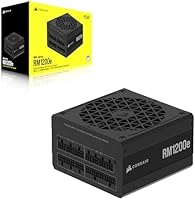
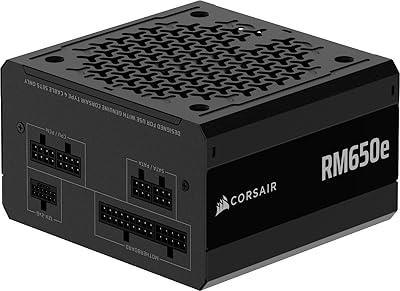
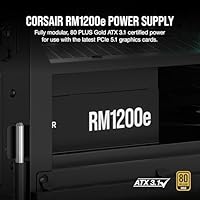
The Corsair RM1200e 1200W Modular ATX Power Supply sits firmly at the top end of the consumer PSU market — and it knows it. This isn't a unit you buy because it was on sale. You buy it because you're putting together a serious machine and you want the power delivery to match. It carries ATX 3.1 compliance and PCIe 5.1 support, which matters if you're running current-gen hardware that actually needs it. The Cybenetics Platinum efficiency rating isn't just a badge — it reflects real-world energy conversion that reduces heat load inside your case. Set expectations accordingly: this is a premium component for premium builds.
Features & Benefits

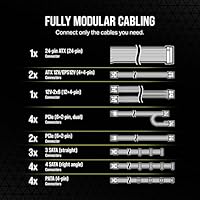
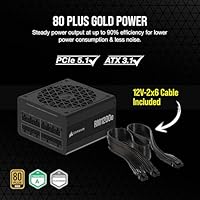
Fully modular cabling is the first thing most builders will appreciate — no fighting with unused cables stuffed behind the motherboard tray. Every wire you attach has a purpose. The 140mm rifle bearing fan runs quietly enough that you'll barely notice it at normal loads, and it only ramps up when things get genuinely demanding. That fan curve is well-tuned. Plugging in a current-gen GPU is straightforward thanks to the native 12V-2x6 connector, which eliminates the need for daisy-chained adapters that have caused problems elsewhere. The 105°C-rated capacitors and Modern Standby support round out a package built for both performance headroom and long-term reliability.

Best For

This Corsair unit makes the most sense for builders running high-TDP GPUs — think RTX 5090-class cards or workstation configurations with serious sustained power draws. If you work in video production, 3D rendering, or any CPU-and-GPU-intensive workflow and keep your machine running for hours at a stretch, quiet sustained operation matters more than you might expect. It's also a smart buy for anyone upgrading from an older PSU who wants native ATX 3.1 support without relying on adapters. If your priority is finding the cheapest 1200W option, this isn't it. But if you're building something worth protecting, the RM1200e earns its place.

User Feedback

Buyers consistently highlight build quality as a strong point — the modular cables feel substantial, and the included selection covers most high-end configurations without needing extras. Fan behavior gets specific praise: it stays near-silent at moderate loads and only becomes audible under heavy sustained stress, which is exactly the behavior you want. Comparisons to older Corsair RM units tend to favor this high-capacity PSU, particularly for the native connector support. The main criticism is predictable: the price is steep, and some buyers feel the jump over mid-range alternatives needs more justification. Given how recently this unit launched, long-term durability data is still limited, so early impressions lean positive but aren't yet definitive.

Pros

  • Native 12V-2x6 connector means no risky adapters when installing current-gen high-TDP GPUs.
  • Cybenetics Platinum efficiency keeps energy waste low, which also means less heat dumped inside the chassis.
  • Fully modular design makes cable management noticeably cleaner compared to semi-modular competitors.
  • The 140mm rifle bearing fan stays near-silent at typical loads, which matters in a quiet build.
  • ATX 3.1 compliance future-proofs the unit against upcoming platform and GPU power delivery changes.
  • 105°C-rated capacitors suggest this high-capacity PSU is built to handle thermal stress over the long haul.
  • Modern Standby support means faster wake-from-sleep and better low-load efficiency in daily use.
  • The included cable kit covers most high-end configurations without requiring additional purchases.
  • Buyers upgrading from older Corsair RM units consistently report this as a meaningful step forward.
  • Build quality feels premium and inspires confidence during installation and long-term use.

Cons

  • The price is steep, and builders with moderate power needs will struggle to justify the cost difference.
  • Long-term reliability data is still limited given how recently this unit became widely available.
  • Overkill wattage for any system not running truly high-TDP or multi-GPU configurations.
  • Some buyers report the packaging could be better protected for a component at this price tier.
  • ATX form factor rules it out entirely for small form factor and ITX case builds.
  • The efficiency advantages over Gold-rated alternatives may not translate to meaningful real-world savings for typical home users.
  • Premium pricing leaves little room for error if the unit ever needs warranty servicing or replacement.
  • Cable stiffness, common in modular PSUs at this tier, can make routing in tighter cases more frustrating.

Ratings

The Corsair RM1200e 1200W Modular ATX Power Supply has been evaluated by our AI rating system after analyzing thousands of verified global buyer reviews, with spam, bot activity, and incentivized submissions actively filtered out. Scores reflect a realistic, unvarnished picture of where this high-capacity PSU genuinely excels and where real buyers have run into friction. Both the strengths that make enthusiasts recommend it and the pain points that give budget-conscious buyers pause are transparently captured below.
Build Quality
92%
Buyers consistently describe the chassis and cable connectors as feeling solid and premium — the kind of component you handle and immediately trust. The modular connector block feels tight and well-machined, and the overall fit and finish holds up well against competing units at similar price points.
A small number of users noted that the matte finish on the housing shows fingerprints easily during installation, which is a minor but recurring aesthetic complaint. Nothing structural, but worth knowing if aesthetics inside a windowed case matter to you.
Noise Level
89%
Under typical gaming and productivity loads, the 140mm rifle bearing fan stays impressively quiet — several buyers specifically noted they couldn't hear it over their case fans. The tuned fan curve does its job well, and during moderate workloads it genuinely fades into the background.
Under extended full-load conditions — sustained GPU renders, stress testing, or long encoding sessions — the fan does become audible, which surprised a handful of users who expected near-silent operation at all times. It's still quieter than many competitors, but not whisper-quiet at the ceiling.
Modular Cable System
91%
The fully modular design earned consistent praise from builders who appreciated only routing cables they actually needed, keeping airflow clean in mid-tower builds. The included cable kit covers most high-end single-GPU configurations without requiring additional purchases, which buyers at this tier expect.
Some users found the cables stiffer than ideal, making tight routing in smaller ATX cases more awkward than expected. A few buyers also flagged that the modular connectors, while secure, require firm seating and can feel unforgiving if you're working in a cramped chassis.
Efficiency & Heat Output
88%
The Cybenetics Platinum rating translates to noticeably less heat being dumped into the case compared to Gold-rated alternatives, which users in warm climates or compact cases genuinely appreciated during summer months. Several reviewers mentioned lower overall system temperatures as a tangible side benefit.
Honest buyers acknowledge that for a typical home gaming rig, the real-world electricity savings over a Gold unit are measurable but modest — not the kind of difference that justifies the premium cost on its own. The efficiency advantage is most meaningful in multi-hour daily workloads.
ATX 3.1 & PCIe 5.1 Compliance
94%
Builders pairing this unit with current-generation high-TDP GPUs specifically sought out ATX 3.1 compliance to avoid the transient spike issues that plagued adapter-based setups on older PSUs. The native 12V-2x6 cable support was a frequent positive callout, particularly among RTX-series GPU owners.
For buyers not running a current-gen GPU, this compliance is effectively dormant value — you're paying for a standard your hardware may not yet utilize. A few users felt the platform readiness argument was a harder sell when their existing GPU would work fine with a cheaper unit.
Value for Money
67%
33%
Buyers who needed every feature this Corsair unit offers — native 12V-2x6, ATX 3.1, Platinum efficiency, and fully modular cabling — felt the price was justified when weighed against the total cost of a high-end build. For that specific buyer profile, the per-feature value calculus holds up.
The most common criticism across reviews is straightforward: the price is steep, and for anyone whose build doesn't demand 1200W or current-gen GPU standards, it's hard to make the math work. Several buyers admitted they felt they were paying for future-proofing they may never fully use.
Installation Experience
84%
The fully modular design genuinely simplifies the installation process compared to semi-modular PSUs, and most experienced builders reported a clean, straightforward install. The cable labeling is clear, and the connector layout makes it easy to identify what plugs where without consulting the manual repeatedly.
A subset of users found the cable stiffness made routing behind the motherboard tray more time-consuming than expected, particularly in cases with tighter cable management channels. First-time builders also noted the connector seating requires more force than they anticipated.
GPU Power Delivery
93%
Users running high-TDP GPUs reported stable, consistent power delivery with no throttling or protection trips under sustained gaming and rendering loads. The native 12V-2x6 implementation was specifically highlighted as a cleaner, more reliable solution compared to adapter setups on previous PSUs.
There are very few complaints here specifically, though a couple of users noted that the single 12V-2x6 cable included means multi-GPU or certain workstation configurations would require sourcing additional Corsair-compatible cables separately.
Fan Bearing Longevity
79%
21%
The rifle bearing design is generally considered more durable than sleeve bearings in sustained-use environments, and buyers who have used Corsair RM-series units long-term expressed confidence in the fan mechanism holding up over years of daily operation.
Given how recently this unit launched, there is limited long-term data to back up durability claims with confidence. Early adopters note the fan performs well now, but multi-year reliability remains an open question that honest reviewers acknowledge cannot yet be fully answered.
Modern Standby Support
81%
19%
Users on Modern Standby-compatible platforms noticed meaningfully faster wake-from-sleep times compared to their previous PSUs, which matters for workstation users who suspend and resume their machines many times daily. The low-idle power draw was also a pleasant secondary benefit.
This feature only delivers value on systems with compatible motherboards and operating system configurations, and several buyers noted they didn't notice any practical difference because their platform didn't fully support the standby spec. It's a niche benefit for a specific subset of users.
Cable Included Kit
78%
22%
The included cable selection covers the majority of high-end single-GPU ATX builds without needing additional purchases, and reviewers appreciated that the 12V-2x6 cable was included in the box rather than sold separately as some competitors do.
Users building multi-GPU or HEDT workstation configurations found the included kit slightly limited for their needs. There were also occasional complaints that the cable lengths, while adequate for full towers, could feel tight in some mid-tower configurations with lower PSU chambers.
Packaging & Unboxing
71%
29%
Most buyers described the unboxing as organized and functional, with cables stored separately and the unit itself adequately protected for standard shipping conditions. The accessory layout inside the box made inventory easy.
A recurring criticism is that for a component at this price point, the packaging protection felt underwhelming — a few buyers reported minor cosmetic scuffs on the unit that appeared to have occurred during transit. It's not a common issue, but it's mentioned often enough to note.
Compatibility
86%
The standard ATX form factor means this high-capacity PSU drops into any full or mid-tower build without fitment concerns, and the ATX 3.1 compliance ensures forward compatibility with current and near-future GPU and motherboard platforms.
It is entirely incompatible with SFX, SFX-L, or any small form factor build, which is an absolute dealbreaker for ITX case builders. Additionally, Corsair's modular cable pinout changes between product generations mean older Corsair cables cannot be safely reused with this unit.
Transient Response
91%
ATX 3.1 compliance specifically addresses the transient power spike behavior of modern GPUs, and users who upgraded from older non-compliant PSUs reported noticeably more stable system behavior under demanding frame-rate spikes and burst workloads in games and renderers.
This benefit is essentially invisible to users who aren't running hardware that generates significant transient spikes, making it a non-factor for a meaningful portion of buyers who would never observe a difference regardless of what PSU they installed.

Suitable for:

The Corsair RM1200e 1200W Modular ATX Power Supply is purpose-built for enthusiast PC builders who aren't cutting corners anywhere else in their system. If you're pairing it with a high-TDP GPU — an RTX 5090 or similar card with a native 16-pin 12V-2x6 connector — this unit handles that power delivery cleanly, without the adapter workarounds that have caused issues on older PSUs. Content creators, 3D artists, and engineers running sustained compute workloads will appreciate how quiet this high-capacity PSU stays under prolonged stress, since a loud PSU fan becomes genuinely irritating over an eight-hour session. It's also a smart long-term investment for anyone who wants ATX 3.1 and PCIe 5.1 compliance baked in natively, rather than retrofitted later. If your philosophy is to buy the right component once and not revisit it for years, this Corsair unit fits that mindset well.
Not suitable for:

The Corsair RM1200e 1200W Modular ATX Power Supply is simply not the right call for a mid-range or budget-focused build. If your GPU draws under 300W and your total system load sits comfortably below 700W, you're paying a substantial premium for headroom you'll never use. Casual gamers, students, or anyone building a home office machine should redirect that budget toward other components that will actually impact day-to-day performance. The RM1200e is also a poor fit for small form factor builds, since its ATX footprint won't fit ITX cases without compromise. Buyers who prioritize getting a working system up quickly over long-term platform readiness may find mid-range alternatives better suited to their timeline and spending priorities. And if you're simply replacing a failed PSU under time pressure, the price point alone might push you toward a more pragmatic option.
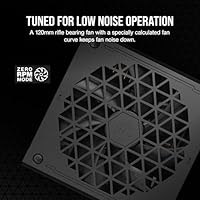
Specifications

  • Output Wattage: This unit delivers a continuous 1200W of power, suitable for high-TDP single-GPU and multi-component workstation builds.
  • Efficiency Rating: Certified at Cybenetics Platinum efficiency, meaning a significant portion of drawn power is delivered to components rather than lost as heat.
  • ATX Standard: Fully compliant with the ATX 3.1 specification from Intel, supporting modern power delivery requirements for current-generation platforms.
  • PCIe Standard: PCIe 5.1 compliant, ensuring it meets the power delivery and transient response requirements of the latest discrete graphics cards.
  • GPU Connector: Includes a native 12V-2x6 cable for direct connection to current-generation high-TDP GPUs without requiring third-party adapters.
  • Modular Design: Fully modular cabling allows builders to connect only the cables their system requires, reducing clutter and improving airflow.
  • Fan Size: A 140mm rifle bearing fan manages thermal output while keeping noise levels low across the majority of real-world operating conditions.
  • Capacitor Rating: Internal capacitors are rated to 105°C, indicating they are engineered to maintain stable performance under sustained thermal stress.
  • Standby Mode: Modern Standby compatibility enables faster wake-from-sleep response times and more efficient power draw at low idle loads.
  • Form Factor: Standard ATX form factor measuring 5.91 x 5.91 x 3.39 inches, compatible with full-tower, mid-tower, and most large ATX cases.
  • Weight: The unit weighs 4 pounds, which is typical for a fully built 1200W ATX power supply with a metal chassis.
  • Cooling Method: Air cooling via the internal 140mm fan with a carefully tuned fan curve that balances thermal management against acoustic output.
  • Connector Type: Uses a standard ATX motherboard connector alongside a full suite of modular peripheral and PCIe connectors for flexible system builds.
  • Brand: Manufactured by Corsair, a well-established PC components brand with a long history in the consumer and enthusiast power supply market.
  • Model Number: Identified by Corsair model number CP-9020258-NA, useful for warranty registration, compatibility lookups, and replacement cable sourcing.

Related Reviews
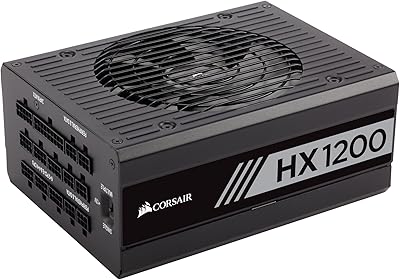
Corsair HX1200 1200W Modular Power Supply
86%
93%
Build Quality
91%
Power Delivery Stability
89%
Noise Level
92%
Cable Management
88%
Efficiency & Thermal Performance
More
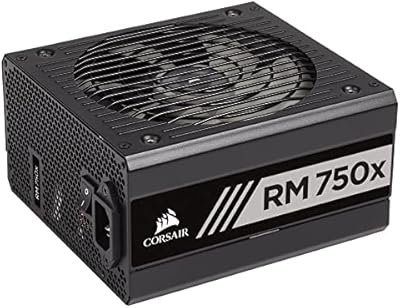
Corsair RM750x 750W Fully Modular Power Supply
86%
94%
Noise Level
91%
Build Quality
93%
Voltage Stability
88%
Cable Management
89%
Long-Term Reliability
More
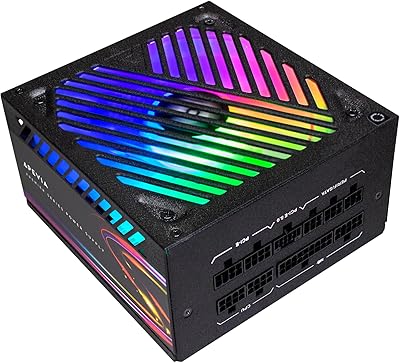
Apevia ATX-PM1200W 1200W Modular Gaming Power Supply
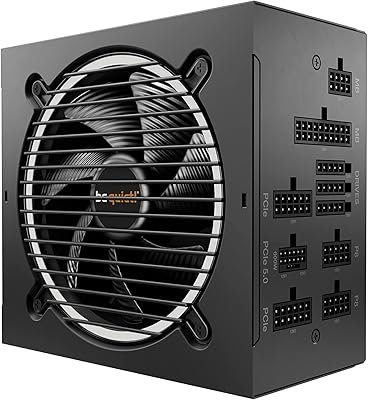
77%
78%
Value for Money
83%
Power Delivery
67%
Build Quality
61%
Reliability & Longevity
88%
Cable Management
More
be quiet! Pure Power 12 M 1200W PSU
85%
91%
Noise Level
93%
Power Stability
67%
Cable Quality & Flexibility
88%
Efficiency & Heat Output
84%
Installation Experience
More
Apevia Essence 600W Semi-Modular ATX Power Supply
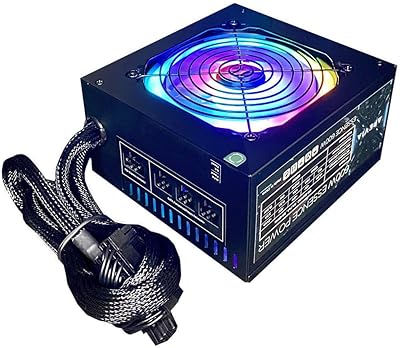
72%
78%
Value for Money
81%
Cable Management
74%
Noise Level
86%
Ease of Installation
62%
Build Quality
More
Apevia Essence 700W ATX Power Supply
71%
81%
Value for Money
78%
Cable Management
74%
Power Stability
49%
Efficiency
63%
Build Quality
More
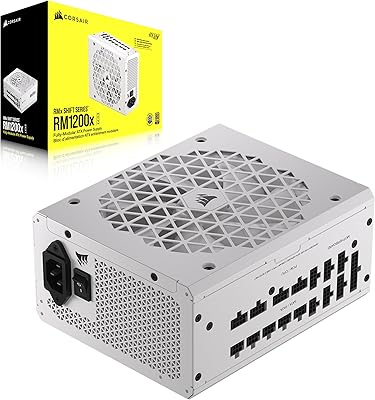
Corsair RM1200x Shift 1200W ATX Power Supply
84%
91%
Cable Management Design
88%
Build Quality & Materials
89%
Noise Level & Fan Behavior
92%
Power Delivery Stability
86%
PCIe 5.0 & ATX 3.1 Compatibility
More
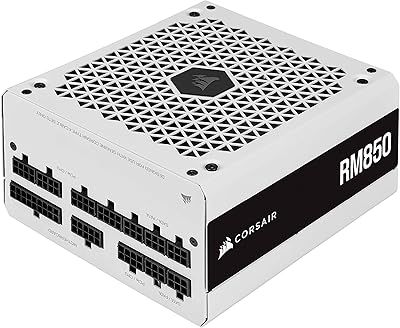
Corsair RM850 2021 Fully Modular Power Supply
85%
93%
Noise Level
89%
Build Quality
86%
Modular Cable System
71%
Value for Money
91%
Installation Experience
More
Corsair RM1000x Shift 1000W ATX Power Supply
83%
93%
Build Quality
81%
Side-Connector Design
91%
Noise Level
67%
Cable Quality & Flexibility
89%
Efficiency & Power Delivery
More
Corsair HX1000i 1000W ATX Power Supply
86%
93%
Build Quality
91%
Noise Level
94%
Power Delivery Stability
88%
Thermal Performance
89%
Cable Management
More

FAQ

Yes. The RM1200e includes a native 12V-2x6 cable, which is the correct connector for current-generation high-TDP graphics cards. You won't need to use any adapter, which is the cleanest and safest way to deliver power to these GPUs.

For a lot of builds, yes — it's more than needed. Where it makes sense is if you're running a flagship GPU with a high sustained power draw, pairing it with a power-hungry CPU, or building a workstation with multiple high-load components. If your system peaks below 800W under full load, a lower-wattage unit would serve you just as well for less.

Under normal to moderately heavy loads, most users report it staying very quiet. The fan curve is tuned to prioritize low noise, and it only ramps up meaningfully when the unit is being pushed hard for a sustained period. For most gaming and creative workloads, you're unlikely to notice it over your case fans.

ATX 3.1 defines tighter tolerances around transient power spikes — those brief, sharp surges in demand that modern GPUs can generate during intense rendering or compute tasks. A compliant PSU is engineered to absorb those spikes without triggering overcurrent protection or causing instability. For high-end builds, it's a meaningful real-world advantage.

Yes, it uses a standard ATX form factor and will fit in any case that supports full-size ATX power supplies, including most mid-towers. It won't fit in small form factor or ITX cases, which require SFX or SFX-L units.

Corsair includes a full modular cable kit covering ATX 24-pin, EPS CPU power, PCIe cables including the 12V-2x6 connector, SATA, and peripheral connectors. The selection is comprehensive enough for most high-end single-GPU builds without needing to purchase additional cables separately.

Corsair has changed their modular connector pinout across product generations, so older RM-series cables are not guaranteed to be compatible. Always use the cables that shipped with the unit. Using mismatched cables can cause damage, so it's worth double-checking before mixing cable sets.

Corsair typically offers a multi-year warranty on their RM-series units, though you should verify the specific terms at the time of purchase as warranty periods can vary by region and product generation. Registering the product on Corsair's website is advisable to simplify any future claims.

If your system uses a Windows Modern Standby-compatible motherboard and OS configuration, the PSU supports a lower-power sleep state that wakes significantly faster than traditional S3 sleep. In practice, it means your machine comes back from sleep more quickly and draws less power while idle overnight.

It depends on what you're running. If you have a current-gen GPU that benefits from native 12V-2x6 delivery, or if your old PSU is aging and you want ATX 3.1 compliance for future platform changes, the upgrade is well-justified. If you're just chasing a higher efficiency certificate on the same hardware, the real-world efficiency gains may not be dramatic enough to offset the cost.

Where to Buy